Gozo Walks: Coastal and Countryside Hiking Routes
Plan Gozo walks with cliff paths, countryside routes, bus access from Victoria, the right season, and honest notes on rocky ground and exposed sections.
On this page
Gozo gives walkers a rare combination: genuine cliff scenery, rural lanes between limestone villages and bays where you can finish the day with a swim, all within an island you can cross by bus in under an hour. The walking is mostly on rock and rough tracks rather than soft ground, so a day of 15 kilometres (9 miles) feels longer than the distance suggests.
Gozo repays planning as a walking destination in its own right, with cliff-edge routes separated from inland paths so you can pick according to your head for heights, your available hours and the season. Base villages, bus access from Victoria and the shape of a multi-day circuit around the coast all get practical treatment below, and the wider island context sits in the hiking in malta guide.
Why Gozo suits walkers
Gozo is small enough that a day walk rarely needs a car, and varied enough that a week of walking does not repeat itself. The coast delivers cliffs, coves and open sea views, while the interior offers walled lanes, terraced fields and village squares where a mid-afternoon stop makes sense. Walkers weighing this Mediterranean limestone against bigger island options can compare it with hiking in Sardinia, which pairs similar coastal cliffs with longer mountain trails.
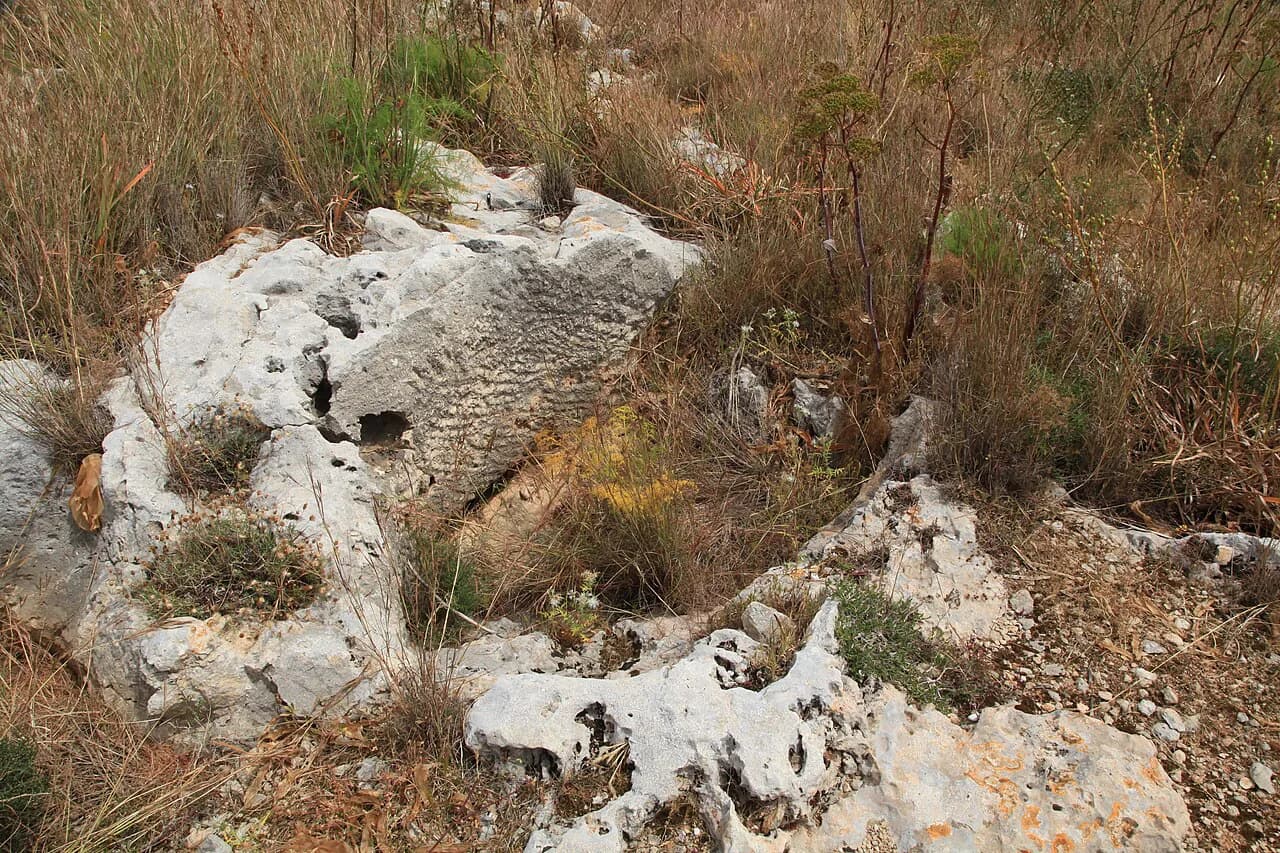
The underfoot conditions shape everything. Walks on the islands are almost entirely on rocky ground and normal trails with a little loose scree, and the rock can be sharp in places, with very few sandy stretches anywhere on route. Sturdy shoes with a stiff sole matter more here than on soft forest paths.
Most walkers rate the terrain easy to medium, with a few harder passages. If you have a mild fear of heights you can still walk the cliff routes comfortably by keeping back from the edge; a severe fear of heights is the real limiting factor on the exposed sections.
Best months to walk Gozo
The comfortable walking window runs from October to May, when temperatures stay pleasant for full days on exposed rock. January can deliver sunshine at 12 to 15 degrees Celsius (54 to 59 Fahrenheit) with some rain, which makes for fast, cool walking but changeable skies.
Spring brings flowering plants in quantity across the countryside, and it is one of the most rewarding times to be on the inland lanes. Late May already pushes the heat up: walkers who finished the circuit at the end of May found it almost too hot and were grateful for cloud cover.
Midsummer changes your day rather than cancelling it. Start at first light, keep the longest exposed cliff section for the cooler morning hours, carry more water than you think you need and plan a finish at a bay where you can cool off. Between April and November the sea is warm enough for a post-walk swim.
Where to base yourself
Victoria sits in the middle of the island and holds the main bus interchange, which makes it the most flexible base if you want a different route each day without moving luggage. Several walkers have used Victoria this way, taking buses out to trailheads in the morning and back in the afternoon.
Xlendi and Marsalforn put you on the coast, which suits early starts on cliff routes and evening swims, but you may still need a bus to reach the opposite side of the island. Sannat, in the south, works well for the southern cliffs and the rural lanes around Ta' Cenc.
For a multi-day circuit, staying in different villages along the way cuts out daily bus transfers and lets you walk the coast in sequence. Guesthouses, hotels and bed and breakfasts are spread across both islands, so the practical question is which village shortens your daily transfer rather than which has the most rooms.
Coastal walks along Gozo's cliffs
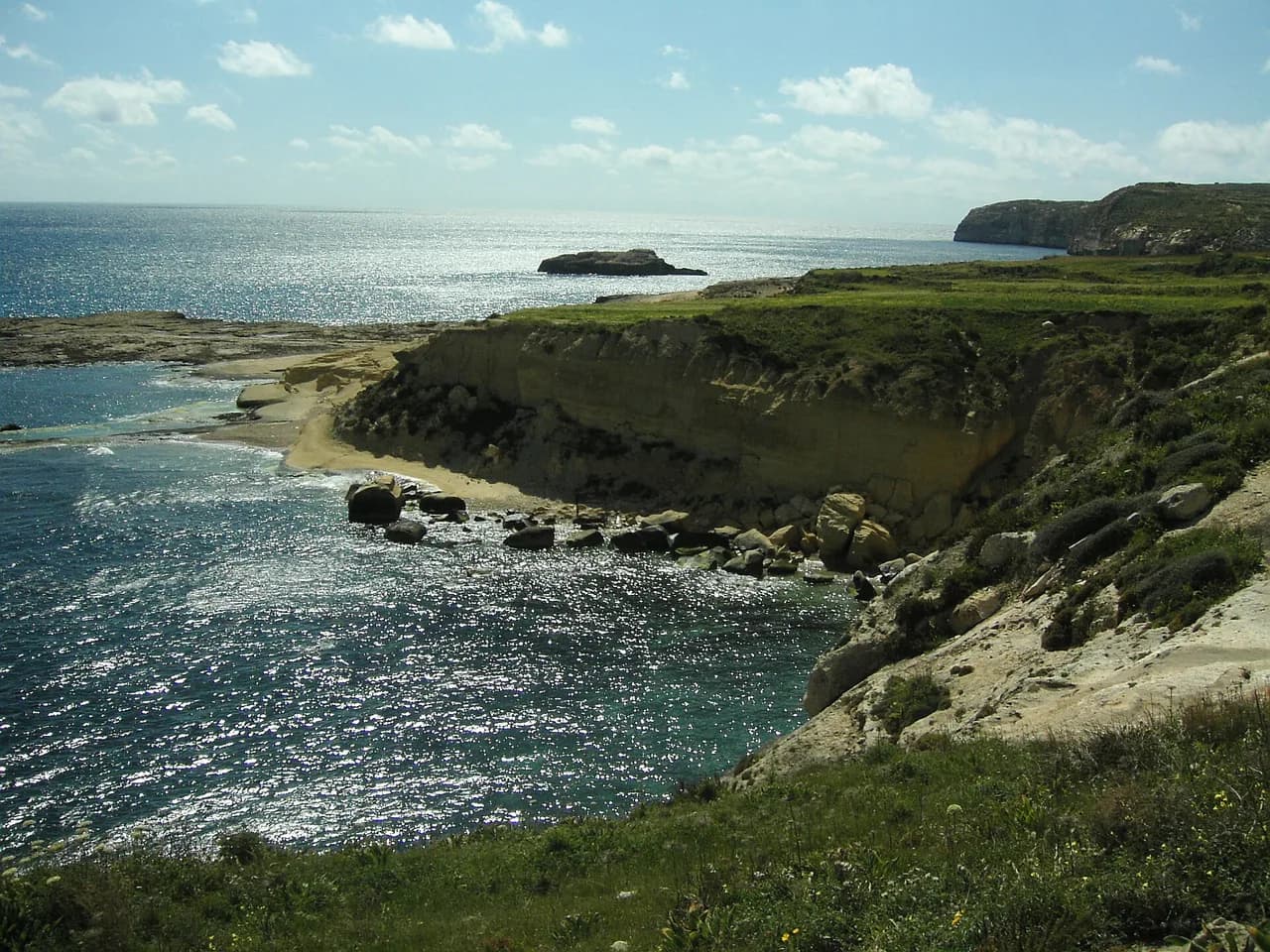
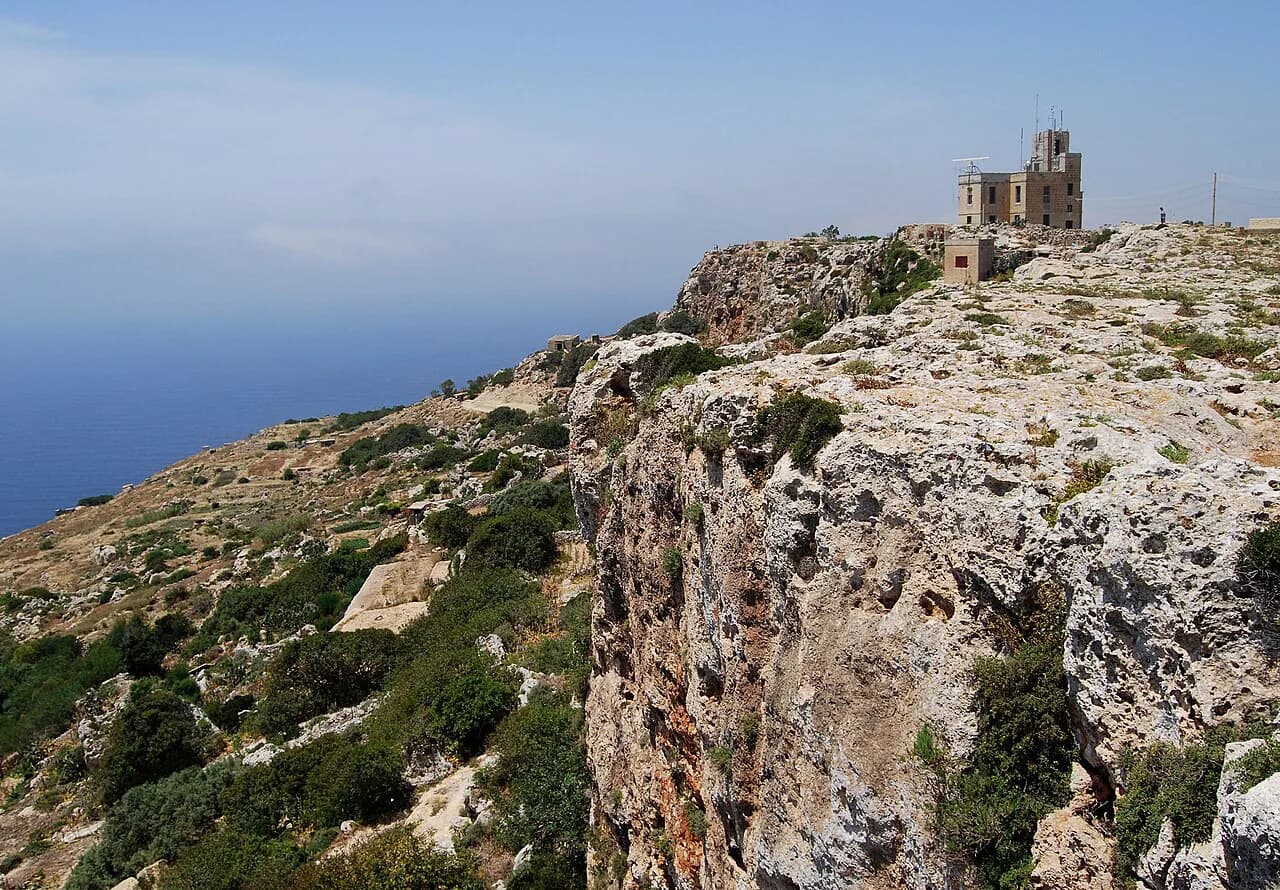
The cliff routes are the reason most walkers come. Expect a path that hugs the plateau edge, drops into occasional coves and then climbs back onto open rock, with the sea views opening up for long stretches and disappearing when the path turns inland through fields.
Exposure is real but manageable. Keep a metre or two back from the edge on windy days, take the inland alternative where a path runs close to an unfenced drop, and treat wet limestone after rain as slippery. The cliff sections are the place to slow down rather than push for distance.
This is walking for people who like big sea horizons rather than summit objectives. The reward is a day that alternates between hard rock underfoot, breeze off the water and sudden views down to deep blue bays.
Bays and low-level walking
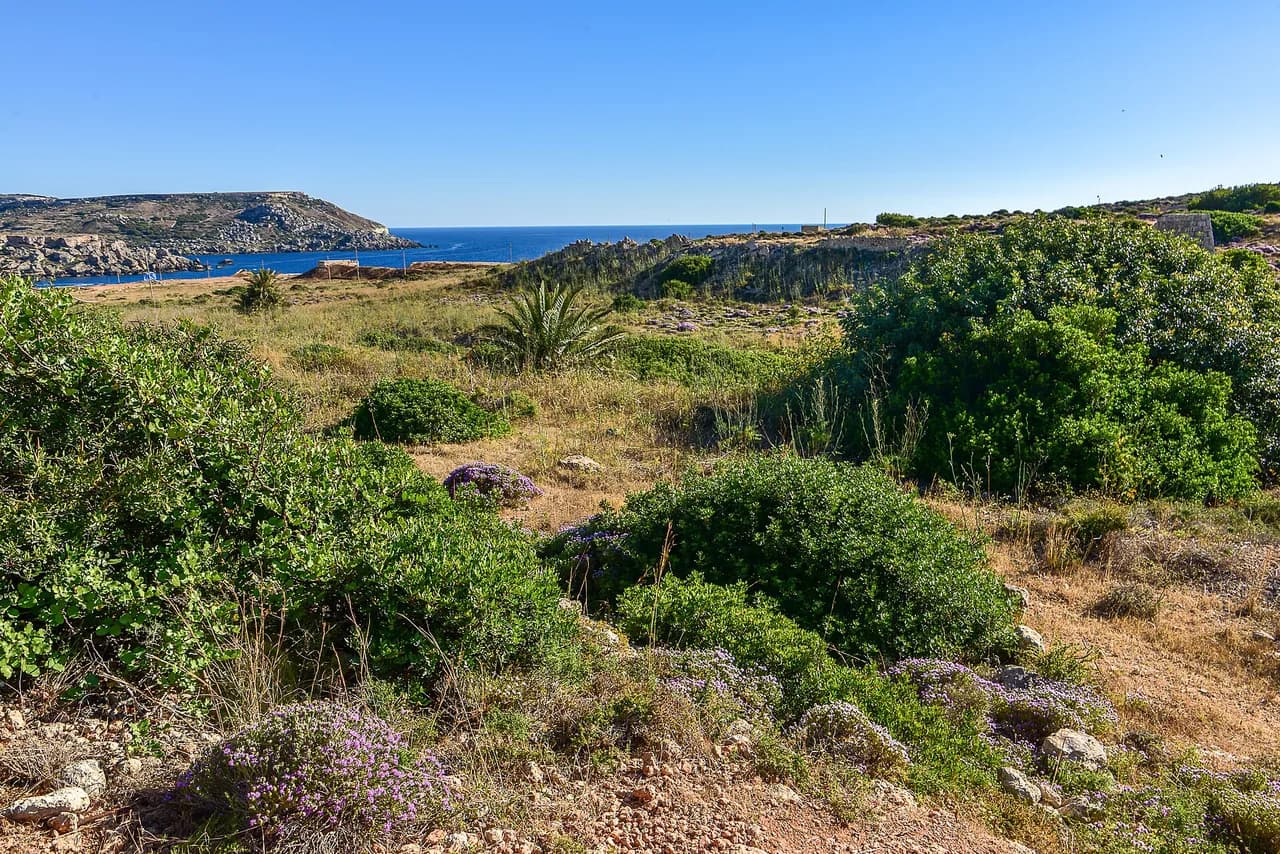
Ramla Bay is the obvious low-level target, with a sandy beach that stands out on an island of rock. Reaching it on foot gives you a red-sand finish and a swim, and the surrounding lanes make a gentler day than the cliff tops.
Other coves and inlets along the coast work as natural half-way points: a place to sit, refill from a village tap if you pass through one, and decide whether to continue or cut the day short. Because the island is compact, shortening a route is usually possible by walking inland to a village and catching a bus.
Hikers who want a structured, guided option rather than a self-planned day can join organized walks that cover the island's quieter south-east and interior. These suit people who would rather not navigate on rock and want the route logic handled for them.
Countryside and village-to-village walking
Inland Gozo is farmland, limestone walls and small settlements, and it makes for walking that is easy on the nerves if not always on the feet. You pass walled fields, chapels and village squares, with the sea appearing in glimpses between buildings.
These routes suit hot days, rest days and anyone who wants distance without exposure. Plan loops between villages so you can stop for food, and expect sections on country roads where you walk single file.
The landscape mixes culture with the walking in a way that surprises people. There are well over 300 churches and around 30 defense towers across both islands, and the typical reddish limestone blends into the fields rather than dominating them.
The Gozo Coastal Walk loop
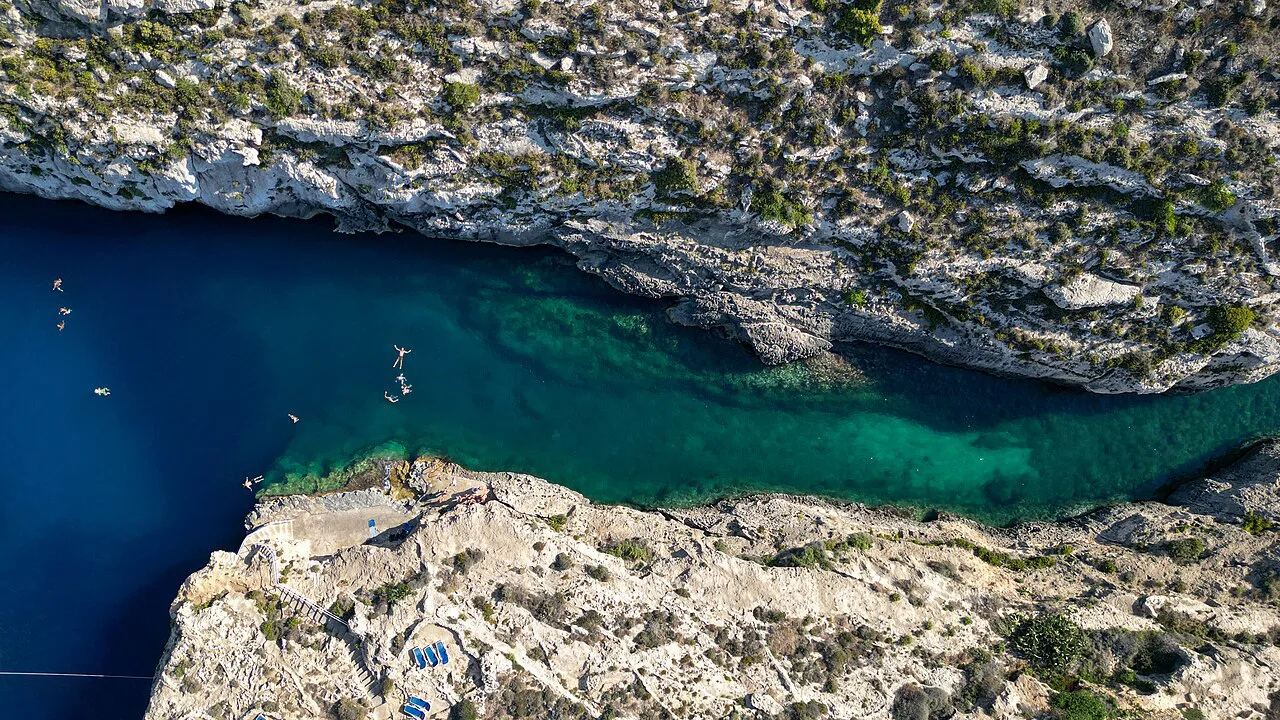
A loop around Gozo has existed for some years and is laid out as a circuit rather than a point-to-point route, which means you can start at any accessible point and walk it in either direction. One published itinerary treats the whole thing as a six-day outing with arrivals through Malta airport.
Splitting the circuit by village rather than by equal distance makes more sense. Use Victoria, Xlendi, Marsalforn and the southern villages as break points so each day ends where you sleep, and let the short days absorb the transfers.
Route status is the one thing to treat carefully. The described long-distance route does not follow an official path and therefore has no continuous signs, and walkers have reported that the tourist information office on Gozo no longer distributes an official coast path map.
Getting to trailheads
Buses run from Victoria out to the coastal villages and bays, which is how most walkers without a car reach a start point. The pattern is straightforward: ride out in the morning, walk the coast or the lanes, then pick up a return bus from the nearest village.
Route numbers, timetables and fares change, so look them up with the island's public transport operator on the day you plan to travel rather than relying on an old printout. Build in slack: a missed rural bus can mean a long wait in a small village.
Arriving on the island means the Gozo Channel ferry from Malta, which takes foot passengers as well as cars. If you are combining islands, land at Malta International Airport and treat the ferry as the start of your walking rather than an afterthought.
Distances, terrain and difficulty
Judge a Gozo day by hours on your feet, not by kilometres alone. Rough rock, constant small climbs and no shade make 15 kilometres (9 miles) with 400 metres (1,300 feet) of ascent a solid half-day to full-day outing for most walkers.
Underfoot, expect sharp limestone, loose scree in places and very little sand. Trail runners work for fit, light walkers on short routes; boots with a protective sole are the better choice for multi-day circuits with a pack.
Difficulty across the island reads as easy to medium, with a handful of harder passages. The variable is exposure and heat rather than technical ground; nothing on these routes requires scrambling skills.
Water, shade and afternoon heat
Shade is scarce on the cliff routes, so plan your water around villages and known taps instead of expecting a refill to appear. Carry more than you would on a wooded mountain walk of the same length, and drink before you feel thirsty.
Afternoon heat builds on south- and west-facing rock, which is the argument for early starts and for keeping the most exposed section for the morning. On the inland lanes, walls and buildings give broken shade that the coast does not.
Rain is uncommon but not unknown in the walking season, and a January circuit can combine sunshine with showers. A light shell and a dry bag for your phone cost little and cover the one day in ten that turns.
Signage, private land and gates
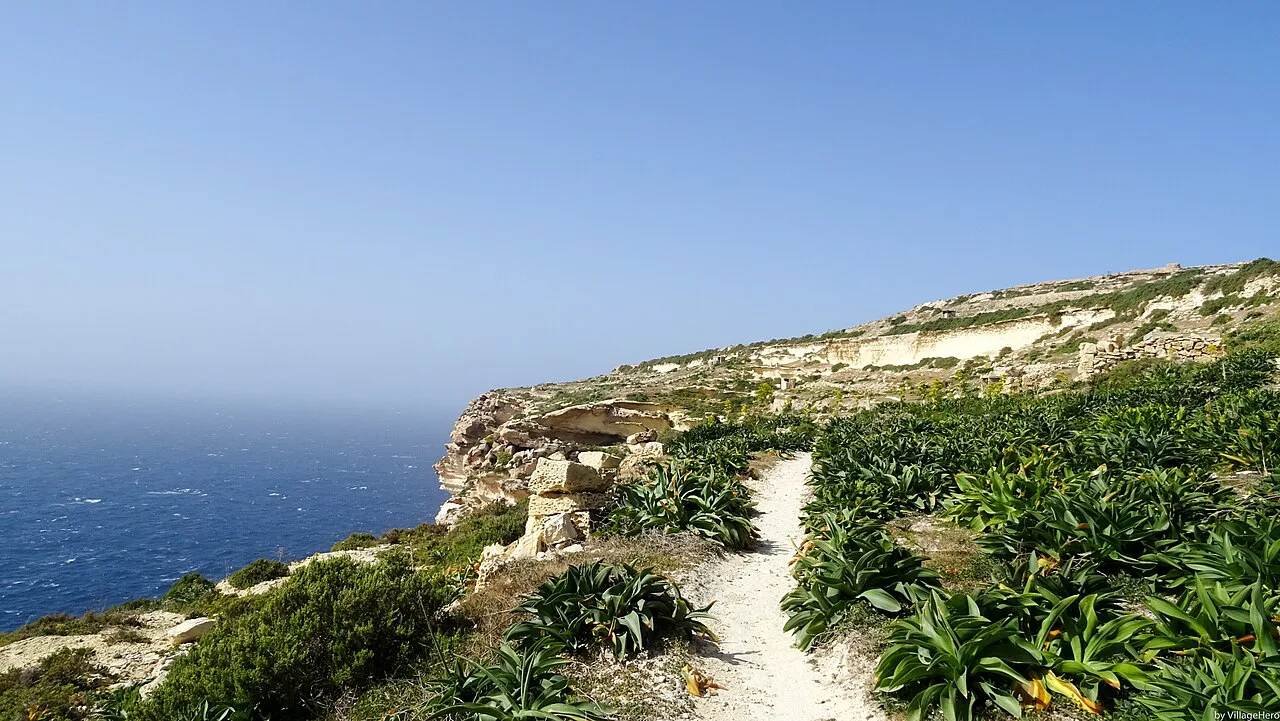
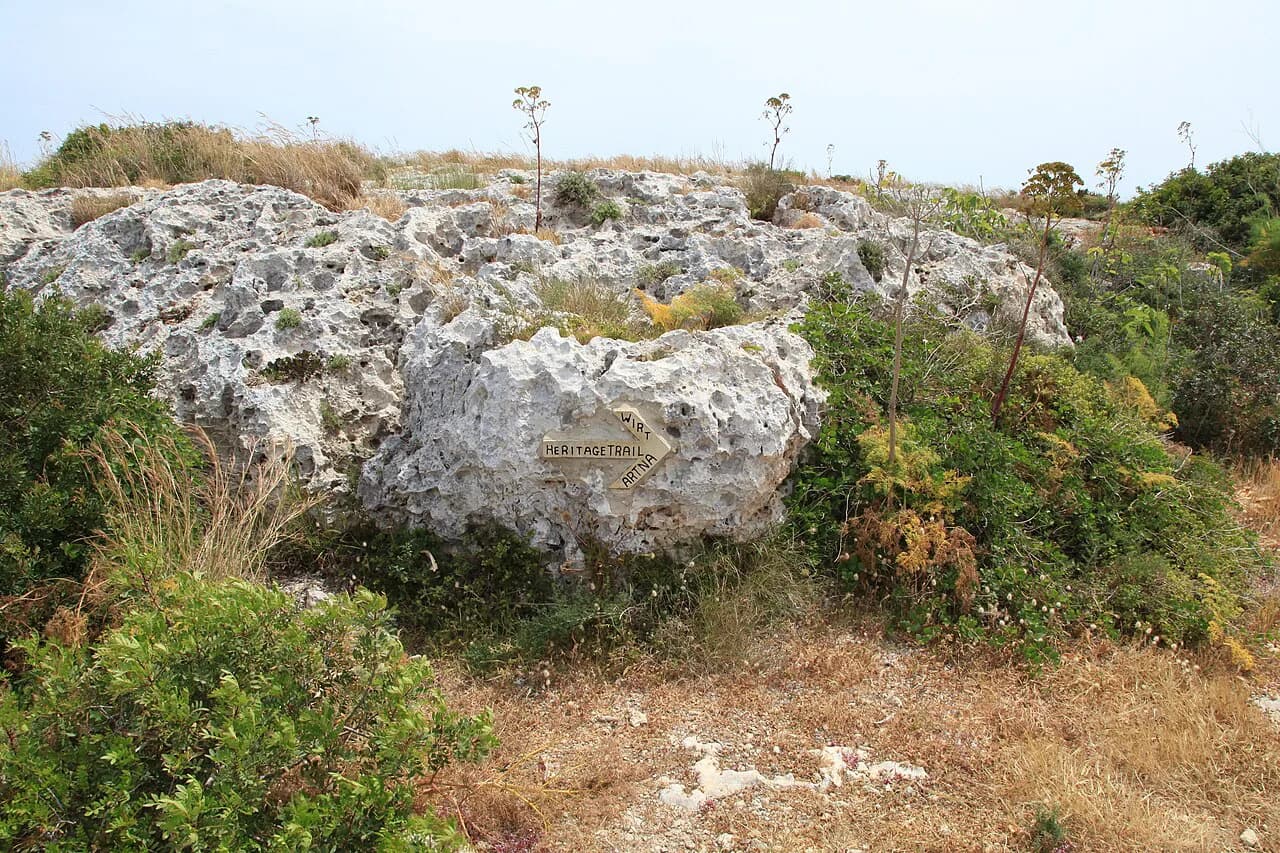
Do not expect continuous waymarks. Even where a coastal route is marked, walkers deviate from it to stay closer to the sea, and gates, fresh walls and stone barriers sometimes force detours or a short climb over an obstacle.
Private land signs are common in rural areas, and the sensible response is to respect them and take the alternative rather than argue the point. Carrying a GPS track on your phone removes most of the route-finding stress where signs are absent.
If a barrier or a sign blocks the line you planned, walk back to the last junction and take the inland lane to the next village. On an island this compact, a detour costs an hour rather than a day.
Walking gear for Gozo
Footwear is the main decision. Choose shoes or boots with a stiff sole and good grip for sharp rock, and break them in before a multi-day circuit. Sandals are fine for the village and the beach, not for a cliff path.
Sun protection is not optional between April and September: hat, high-factor sunscreen, sunglasses and a long-sleeved layer for the middle of the day. In winter and early spring, add a windproof layer and a warm mid-layer for the exposed coast.
Pack a light rucksack with water, food bought in a village, a charged phone with an offline map and a small first-aid kit. Trekking poles help on loose scree descents to the bays.
Combining Gozo with Malta
A two-island plan works well because the ferry links them directly: walk on Gozo for several days, then cross back to Malta for coastal and inland routes there. Malta is more built-up and touristy than Gozo, so expect busier roads and more development on the southern island.
Walkers often combine coast and countryside on Malta, and the island's own cliff paths reward a day or two. If you want your whole trip organized, guided and self-guided formats differ in how much logistics they take off your hands.
Beyond Malta and Gozo, the small island of Comino sits between them and can be added as a short walking day with a swim. Ferries from the Ċirkewwa ferry terminal and from Gozo make it a feasible extension rather than a separate trip.
Bird hunting season and spring walking
Bird hunting is part of rural life on Malta and Gozo, and walkers in spring encounter shooting hides, nets and, in some areas, armed hunters. Reports from walkers place the main activity in April, and the recommended approach is to avoid the most rural stretches during that month.
Hunting activity has been reported from early morning until midday, especially where paths cross private land. If you walk in spring, choose coastal routes with more open ground, keep to marked tracks and avoid confrontations if a hunter asks you to move on.
Plan Your Gozo Walking Days
Match your days to the island's shape: cliff routes in the morning, village lanes in the afternoon, and a bay at the end for a swim. Base in Victoria if you want flexibility by bus, or in Xlendi, Marsalforn or Sannat if you would rather walk out of your door onto the coast.
Walk between October and May for comfortable temperatures, start early in early summer, and treat signage as a hint rather than a guarantee by carrying an offline track. The figure to check before you go is the current circuit status and any local restrictions, which the island's tourist information office is the right place to ask about.
Frequently Asked Questions
How long does it take to walk around Gozo?
A published itinerary treats a complete circuit of Gozo as a six-day walk, with arrivals through Malta airport. You can shorten it by using buses to skip sections or by walking only part of the loop; how long it takes you depends on daily distance and how much time you spend at bays and villages.
Is Gozo good for walking holidays?
Yes. The island combines cliff paths, quiet farmland lanes and swimmable bays within a compact area, and the terrain is generally rated easy to medium with a few harder passages. Walkers with a mild fear of heights can manage the coastal routes by keeping back from the edge.
What is the best time of year to walk on Gozo?
October to May offers the most comfortable walking temperatures, with spring bringing flowering plants across the countryside. Late May can already be hot, and midsummer demands early starts, extra water and shorter exposed sections.
Can you walk between Gozo's villages and bays?
Yes. Inland lanes link villages and coastal paths drop to bays such as Ramla Bay. Because the island is small, you can usually cut a day short by walking inland to a village and taking a bus back to your base.
Do you need a car to hike on Gozo?
No. Buses run from Victoria to the coastal villages and bays, and Victoria holds the main interchange for the island. A car helps with early starts and remote trailheads, but most day walks are reachable by bus with a little planning around timetables.
Is the Gozo Coastal Walk signposted?
The long-distance route described by walkers does not follow an official path and has no continuous signs, and the island's tourist information office no longer distributes an official coast path map. Carry an offline GPS track and expect gates or walls to force occasional detours.
When is bird hunting season on Malta and Gozo?
Walkers report the main hunting activity in April, with hunting taking place from early morning until midday, especially on private land. If you plan to walk in spring, choose coastal routes with more open ground and avoid the most rural stretches during that period.
Sources
Trail notes for your next trip
Optional updates when we add or revise hiking guides.
You might also like
Continue reading
More guides you'll find useful