Hiking in the Dolomites: Where to Base Yourself and Start
Plan hiking in the Dolomites with the best day hikes by difficulty, cable cars and buses to the trailheads, hut seasons and which valley suits each trail.
On this page
The Dolomites give you cathedral-sized rock towers, milky alpine lakes and mountain huts serving dumplings and strudel, all within reach of a single day's walk. The range suits hikers who want a full day out without committing to a multi-day traverse, and it rewards anyone willing to start early.
The trails sort neatly by base valley: Cortina d'Ampezzo for Tre Cime, Sorapis and Croda da Lago, Val Gardena for Seceda and the Cinque Torri area, Val di Funes for the Adolf Munkel Trail. Pick one base per two or three days and you avoid long cross-valley drives.
Where to base yourself in the Dolomites
Cortina d'Ampezzo is the most convenient hub for the eastern Dolomites, sitting within about 40 minutes of the Tre Cime toll road and 15 minutes from Passo Tre Croci, the start of the Sorapis trail. Its central position makes it a sensible choice for first-time visitors who want several different hikes from one hotel.
Val Gardena, with Ortisei and Santa Cristina at its floor, puts you under the Seceda ridgeline and the cable cars that reach it, and the valley towns are well connected by bus. Val di Funes, north of Bressanone, is the base for the Adolf Munkel Trail and the Odle views, but it is a quieter valley with fewer services.
If your aim is the Tre Cime area specifically, staying in Cortina or Misurina beats driving in from Val Gardena for the day, since the approach from the west is long. Keep each day's hiking in one valley and you spend your time on trails rather than in the car.
Easy hikes: Adolf Munkel Trail, Seceda and Cinque Torri
The Adolf Munkel Trail in Val di Funes is the best low-effort introduction to the Dolomites, a roughly 9 km (5.6 mi) circuit with about 370 m (1,214 ft) of ascent that takes around three hours. It starts at the Zanser Alm car park on trail 6, crosses a bridge after about 20 minutes and switches to the Adolf Munkel Weg, trail 35, beneath the Odle walls.
Huts along the way make the walk a leisurely day: Geisler Alm has a terrace with a direct view of the Odle, and Gschnagenhardtalm sits just off the main line on trail 36. Day parking at Zanser Alm costs a small fee, and the lot fills early in summer.
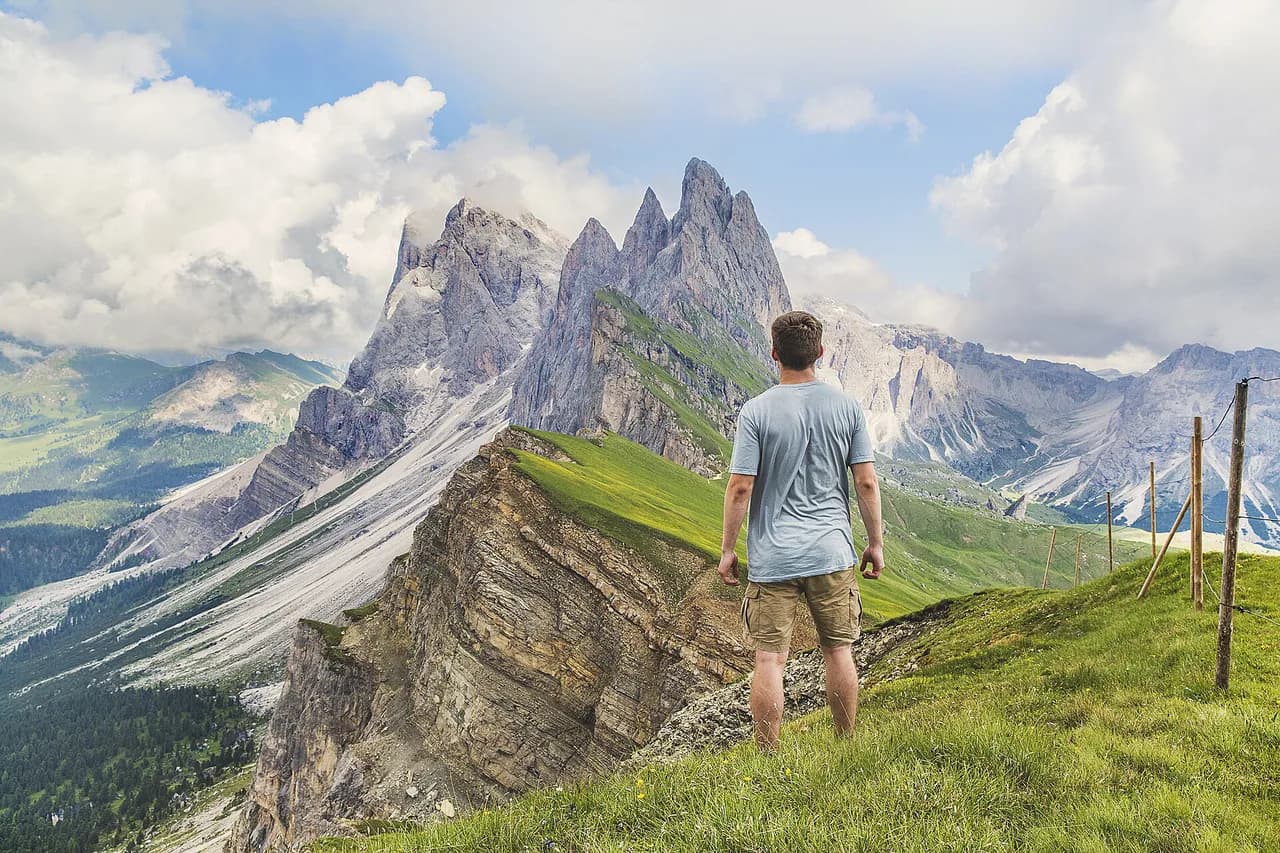
Above Ortisei, the Seceda cable car lifts you to the ridgeline in about 15 minutes, and from the top station trail 1 leads to the summit cross before paths 2 and 5 drop past Troier Hütte and Rifugio Firenze toward Col Raiser. The walk from Seceda to the Pieralongia hut is short enough for families with small children, and you can ride the Col Raiser cable car down to Santa Cristina instead of climbing back.
Cinque Torri is the shortest rewarding outing in the Cortina area: a 5 km (3.1 mi) loop through the five rock towers and First World War tunnels, and a gondola from the Falzarego road cuts most of the climb. The plateau is dense with war relics, so allow time to wander rather than treat it as a quick photo stop.
Lago di Braies is a flat 3.6 km (2.2 mi) circuit around the most photographed lake in the Dolomites, and it is busy enough that advance parking booking matters. Treat it as a short stroll on a travel day rather than the centrepiece of a hiking week.
Intermediate hikes: Tre Cime, Sorapis and Lago Federa
The Tre Cime di Lavaredo loop is the hike most people come for: about 10 km (6.2 mi), 400 m (1,312 ft) of ascent and roughly 3.5 hours from Rifugio Auronzo. You follow trail 101 past Rifugio Lavaredo to Forcella Lavaredo, descend to Rifugio Locatelli, then continue on trails 102 and 105 via Malga Langalm and Forcella Col di Mezzo.
The first stretch from Rifugio Auronzo to Rifugio Lavaredo is flat and crowded, and the path steepens on the way to Forcella Lavaredo before easing along the supply road to Rifugio Locatelli. Most groups turn back at the pass; the quieter second half holds some of the best scenery.
Lago di Sorapis is a harder half-day: about 13.5 km (8.4 mi) and 700 m (2,297 ft) of ascent taking five to six hours from Passo Tre Croci, with cable-assisted sections and narrow ledges on trail 215. The lake's milky turquoise colour is brightest with early-summer snowmelt and fades later in the season, and entering the water is prohibited.
From the lake, trail 216 climbs steeply with loose footing and short scrambles to a summit cairn, then drops into Forcella Marcoira before a rough descent joins trail 213 back to the road. If the descent sounds like too much, return the way you came on trail 215.
Croda da Lago and Lago Federa make a gentler alternative, roughly 14 km (8.7 mi) with 800 m (2,625 ft) of ascent over five to six hours from Ponte Ru Curto on trail 437. Rifugio Croda da Lago sits on the lake shore, and the full loop over Forcella Ambrizzola adds a scree section that demands careful footing.
A quieter version starts at Passo Giau, about 15 km (9.3 mi) with 930 m (3,051 ft) of ascent, crossing meadows to Lago Federa with the option of adding Monte Mondeval. Passo Giau parking fills fast, so arrive early.
Harder days: Tofana, Nuvolau, Vajolet and Puez-Odle
The Tofana di Rozes circuit is the biggest standard day in the Cortina basin, about 15 km (9.3 mi) with 1,046 m (3,432 ft) of ascent, passing two rifugi and old military fortifications beneath the peak. It is quieter than the Tre Cime loop but demands a steady pace and an early start.
The Nuvolau and Cinque Torri loop links two of the area's finest viewpoints over about 14.6 km (9.1 mi) and 804 m (2,638 ft) of ascent, climbing Nuvolau past Rifugio Averau before circling the Cinque Torri towers. A gondola up to Cinque Torri shortens the day if your legs are tired.
The Vajolet Towers hike in the Rosengarten massif covers about 8 km (5 mi) return with 650 m (2,133 ft) of ascent over five hours, starting from Malga Frommer Alm with a chairlift to Rifugio Fronza and trail 550 above. The climb to Passo delle Coronelle is steep and includes a short scramble.
The Puez-Odle Altopiano traverse is the long option, around 14 km (8.7 mi) of open high ground with few other walkers. It rewards those who have already ticked off the classics and want a full day above the treeline.
Trailheads by cable car: Seceda, Col Raiser, König Laurin and Cinque Torri
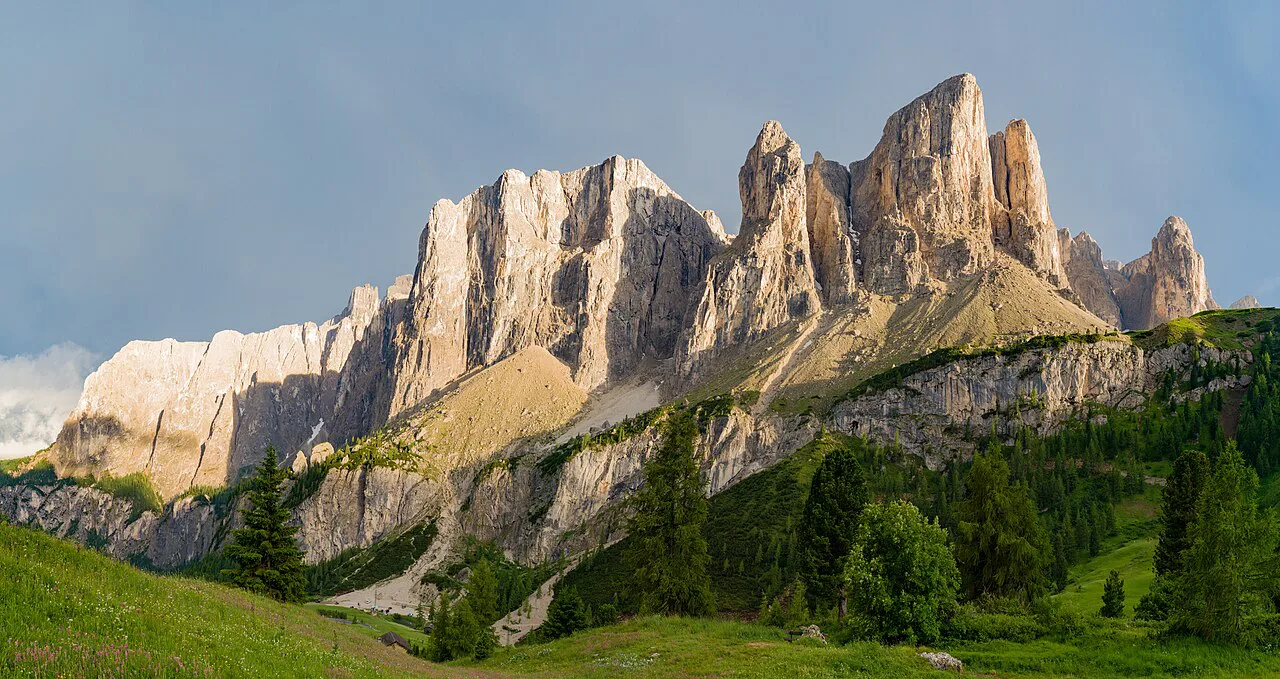
Cable cars remove most of the climbing on several Dolomites hikes, but they run seasonal schedules and charge per ride, so buy tickets online in summer and confirm the season dates with the lift operator. The Ortisei–Furnes gondola links to the Seceda cable car, and the Col Raiser lift from Santa Cristina serves the same plateau from the other side.
A one-way plan works well: ride up from Ortisei, walk across to Col Raiser and descend to Santa Cristina, then take a valley bus back; the 350 Bolzano–Val Gardena and the summer-only 352 Express connect the towns. The König Laurin chairlift above Malga Frommer Alm serves the Vajolet Towers approach, and the Cinque Torri gondola runs from the Falzarego road.
Lift prices and opening dates change from year to year, so check the season's operating dates on the lift company's own page for the season you plan to travel. In the shoulder months, lifts may close before the trails are free of snow.
Trailheads by bus and car: Tre Cime, Passo Tre Croci and Zanser Alm
The Tre Cime toll road climbs to Rifugio Auronzo and carries a charge for cars and larger vehicles that covers parking for a set period, with payment machines available when the booths are unstaffed. In the shoulder season the road is closed outside posted daytime hours and does not open at all in winter, and the hut car park can be reserved in advance.
The 444 bus from Dobbiaco runs to the Tre Cime trailhead from late June to early October and takes about 45 minutes, with advance ticket booking required in midsummer. From Passo Tre Croci, the 30/31 bus links Cortina and the Tre Cime area, and the stop is a five-minute walk from the Sorapis trailhead.
For Croda da Lago, the 30/4 Dolomiti bus from Cortina or Pescul stops at Pian del Pantan between mid-June and mid-September, and parking at Ponte Ru Curto is limited so aim to arrive before 9am. Zanser Alm is served in summer by a shuttle from Santa Maddalena, which connects to Bressanone by bus 330.
A car makes the Dolomites easier if you want to combine distant trailheads in one week, but most of the classic day hikes are reachable by bus and lift. Choose a base with a guest card and you may find local transport included; confirm the terms with your accommodation.
When to go: summer, autumn larches and shoulder-season snow
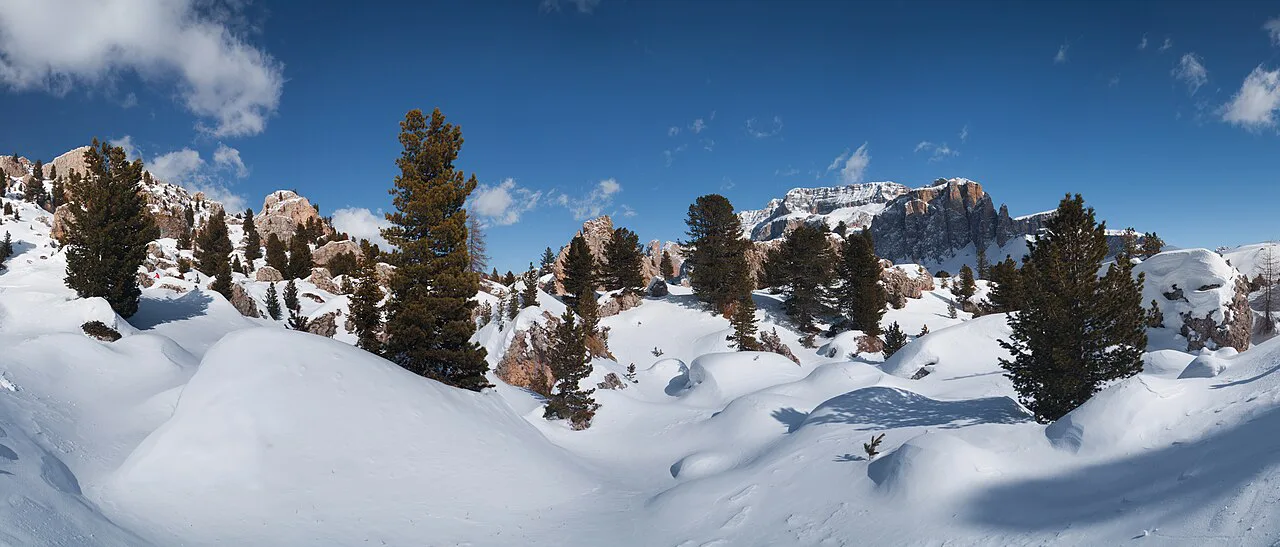
Late June to late September is the reliable hiking window, with clear mornings that build to cloud and afternoon thunderstorms. Start early, carry a shell and plan to be off exposed ground by mid-afternoon.
Autumn is the local secret: larches turn gold around Lago Federa and the Croda da Lago circuit in late October, and trails are quieter than in August. Snow can linger on high passes in early summer and return in October, so ask locally before committing to anything above the treeline.
Above roughly 2,400 m (7,875 ft), as on the Tre Cime loop, you are well above the treeline and exposed to lightning; if a storm builds, descend or wait in a hut rather than pushing on. This is the single biggest safety factor on the classic Dolomites day hikes.
Huts and rifugi: opening seasons and food on the route
Rifugi let you walk with a light pack, but their seasons are short and vary by hut. Rifugio Alfonso Vandelli near Lago di Sorapis typically opens from about June 20 to September 20, Rifugio Croda da Lago stays open into early November, and Geisler Alm usually runs from mid-May to November.
The Tre Cime loop passes five huts in summer, all serving food, drinks and toilets, so you can pack light and eat on the way. Carry cash in case card machines fail, and expect paid toilets near Rifugio Auronzo outside the main season.
Book rifugio beds ahead if you plan to stay overnight, since the popular huts fill in July and August. For a longer itinerary linking huts night after night, see this guide to hut to hut hiking dolomites, which covers stages and booking.
Risks on the trails and via ferrata options
The main hazards are predictable: cable-assisted ledges and exposure on the Sorapis trail, loose scree on the Croda da Lago loop below Forcella Ambrizzola, and sudden storms above the treeline. Carry trekking poles for the descents and turn back if the weather closes in.
Cortina is a base for some of the Dolomites' best-equipped protected climbs, including Via Ferrata Lipella, Ra Gusela, Michielli Strobel and Punta Anna, which suits advanced climbers. A first via ferrata is best taken with a local alpine guide before you tackle routes independently.
For grades, gear and guided options across the range, including the Brenta Dolomites, this Dolomites via ferrata overview sets out what each route demands. Many hikers who enjoy the cable sections on Sorapis graduate to a first ferrata the same week.
Shorter alternatives and multi-day options
Tired legs still get good days: ride the Cinque Torri gondola and walk the short loop, take trail 36 directly from Zanser Alm to Geisler Alm, or walk just to Forcella Lavaredo on the Tre Cime route and return the same way. Each shortcut keeps the best views and cuts the distance.
If you want a long-distance route rather than day hikes, the alta via 1 starts near Lago di Braies and runs south through the eastern Dolomites over several days of hut-to-hut walking. It suits fit hikers who have already tested themselves on the harder day routes above.
Guided and self-guided hiking tours can handle the logistics if you would rather not plan lifts, buses and hut bookings yourself. Compare what each format includes before you commit, since self-guided trips still require you to book beds.
Plan Your Dolomites Hiking Week
Build your week around two bases: Cortina for Tre Cime, Sorapis and Croda da Lago, and Val Gardena for Seceda and Cinque Torri. Book lift tickets and any toll-road entry in advance, and keep a spare day for weather. If you are weighing northern Italy's lakes against another mountains-and-water trip, our guide to hiking in lake garda covers trails and base towns that work the same way with a single base per few days. For a broader menu of alternatives across the continent, the Europe hiking guide's Walks in Italy: 8 Great Hikes From the Alps to the Amalfi Coast sets this range beside other Italian options.
Wake early on the popular hikes, carry a shell and cash for huts, and choose your descents to match your knees. Check the hut and lift dates once, then plan around them rather than expecting them to flex.
Explore more Dolomites hiking guides
- Adolf Munkel Trail
- Alta Via 1
- Alta Via 2
- Best Time to Hike the Dolomites
- Cadini di Misurina Hike
- Dolomites Hiking Tours
- Dolomites Via Ferrata
- Hut to Hut Hiking in the Dolomites
- Tre Cime di Lavaredo Hike
- Dolomites Day Hikes
- Lago di Braies Hike
- Easy Hikes in the Dolomites
- Lago di Carezza Hike
- Piz Boe Hike from Passo Pordoi
Frequently Asked Questions
Is hiking in the Dolomites difficult?
It ranges from short flat walks such as the Cinque Torri loop or the lakeside circuit at Lago di Braies to steep days like the Tofana di Rozes circuit with over 1,000 m of ascent. Most classic day hikes sit in the middle: five to six hours with 600 to 900 m of climbing and well-marked paths.
What is the famous hike in the Dolomites?
The Tre Cime di Lavaredo loop is the best-known, a roughly 10 km circuit from Rifugio Auronzo that circles the three peaks with several huts along the way. It is also the busiest, so start early or go in September.
What is the best month to hike the Dolomites?
Late June to late September is the reliable window, with long days and huts open. September and October bring fewer crowds and golden larches, while early summer can still hold snow on high passes.
Can a beginner hike the Dolomites?
Yes. The Adolf Munkel Trail, the Seceda to Pieralongia path and the Cinque Torri loop are all easy, well-marked and reachable by cable car. Save the Sorapis trail and the Tofana circuit until you have a few days of hill walking behind you.
Do you need a car for hiking in the Dolomites?
No for the classic day hikes: buses and lifts reach Tre Cime, Passo Tre Croci, the Seceda plateau, Col Raiser and Zanser Alm. A car helps if you want to combine distant trailheads in one trip or carry on to less-served valleys.
Which Dolomites hikes are best in autumn?
Croda da Lago and Lago Federa are the autumn favourites, with larch forest turning gold and a rifugio on the shore that stays open into early November. The Tre Cime loop is also quieter in September.
Sources
Trail notes for your next trip
Optional updates when we add or revise hiking guides.
You might also like
Continue reading
More guides you'll find useful