Best Time to Hike the Dolomites: Month-by-Month Season Guide
Plan a Dolomites hiking trip around snow-free trails, open rifugios and running lifts. Compare June, July, September and the shoulder months with confidence.
On this page
The Dolomites suit anyone who wants big limestone scenery on a day hike but also a long-distance route or a via ferrata day, and the season you pick shapes which of those is realistic. Snow clears from valley trails long before it clears from high passes, and lifts and rifugios open and close on their own timetables, so the calendar matters more than headline temperatures.
This guide builds the year around what actually limits your walking: snow at altitude, running cable cars and staffed huts. Use it to match your fitness and appetite for crowds to a month, then pick your base and route accordingly.
Why the Dolomites hiking season runs from late June to early October
The core hiking window for high routes runs roughly from late June to early October, when trails are clear and mountain infrastructure is running. Summer, from June to September, is the main season for warm-weather walking, while mid-June to early October gives the most reliable combination of open lifts and accessible paths.
Elevation splits the season further. Valleys and lower slopes clear first and hold their walking late, while north-facing passes above 2,800 m (9,200 ft) can carry snow patches into early summer. Plan high traverses for the middle of summer and keep low routes for the fringes of the season.
Autumn is not a single block either: September and mid-October usually still allow hiking, but by late October into November snow arrives and it stops being hiking season. Treat that shift as a hard edge when you book accommodation.
Early summer (late June to early July): lingering snow on high passes, huts and lifts opening
June marks the start of the season, but snow can linger on higher trails early in the month and many rifugios and cable cars do not open until mid-June. If your plan depends on a specific lift up to a ridge or plateau, build in a few days of flexibility.
By the first days of July every standard hiking trail at every elevation is snow-free, including the complete Alta Via 1 and Alta Via 2 routes. That makes early July a strong choice for a multi-day traverse: you get full hut staffing and clear paths without the peak of the school-holiday traffic.
Late June and early July reward hikers who want wildflowers and big days but can tolerate the odd snow patch on a shaded pass. Carry poles and boots that handle loose rock and wet ground rather than relying on trail runners.
July and August: full access, long daylight, afternoon storms and the busiest trails
July is when everything is operational: all trails are clear, every rifugio is staffed, and lifts run full summer schedules. Daylight runs to over 15 hours, with first light before 5:30 AM and sunset past 9:00 PM, so long stages and via ferrata detours fit comfortably into a day.
The trade-off is a reliable daily storm rhythm: clear mornings, cloud building late morning, and thunderstorms between roughly 2 and 5 PM on most days, bringing lightning, hail and sharp temperature drops. Plan to cross the highest point of your route by early afternoon and be at a rifugio or in the valley by mid-afternoon.
Crowds build from mid-July as Italian, German and Austrian school holidays begin, and August is the busiest month on the trails. Popular rifugios on the Alta Via 1 and around Cortina can fill four to six weeks ahead in this period, and parking at famous trailheads fills early in the day.
If you want the full summer experience, the first two weeks of July are the sweet spot: the same conditions with slightly fewer hikers than the second half of the month. August makes sense only if school holidays fix your dates, and early starts become the main tool for avoiding both heat and crowds.
September and early October: quieter paths, refuges closing and better photographic light
September is the calmer, quieter month: crowds thin out, early September often stays warm and sunny, and the golden autumn light is excellent for photography. For many hikers this is the best balance between weather and tranquillity.
As the month goes on, more rifugios and cable cars close for the season, and lifts and huts often shut in the first week of October. Larch forests turn gold in late September, but your route needs to stop relying on a lift or a hut lunch by early October.
Some mountain lakes, including Lago di Carezza and Lago di Sorapis, may have noticeably lower water levels as autumn progresses. If a turquoise lake is the point of the day, go earlier in the season.
For a long-distance plan like the alta via 1, September means quieter rifugios and cooler walking but fewer margins if a hut closes early. Check the individual hut calendars for your dates before finalizing stages; many rifugios stop serving by early October, so a full roster late in the season is not guaranteed.
October and November: snow arriving and most facilities closed
October can still be beautiful but colder, with early snow on some trails and far fewer lift and rifugio options. Low valley walks and forest routes remain realistic, while high plateaus and passes become a gamble.
By November most facilities close, snow begins to fall and the area sits between hiking and ski season. This is a month for low-level walking with flexible plans rather than for hut-to-hut routes.
Hikers who accept short days and uncertain weather find empty trails and low prices. Budget for rain gear and check which valleys still have open accommodation before committing to a base.
Late spring (May to early June): low valley walks and snow higher up
May is uncrowded but many cable cars, rifugios and hotels stay closed until summer, and the weather can swing from warm sun to rain or fresh snow at altitude. The lower the trail, the better the chance it is already clear.
This is a good window for valley-floor paths, lower forest walks and village-to-village routes in Cortina d'Ampezzo, Val Gardena and around Bolzano. Save ridge traverses and plateau loops for later.
Italian public holidays fall in spring too, including Liberation Day on 25 April and Labour Day on 1 May, plus Easter travel when it falls that season. Popular trailheads get busier and parking is harder on those long weekends.
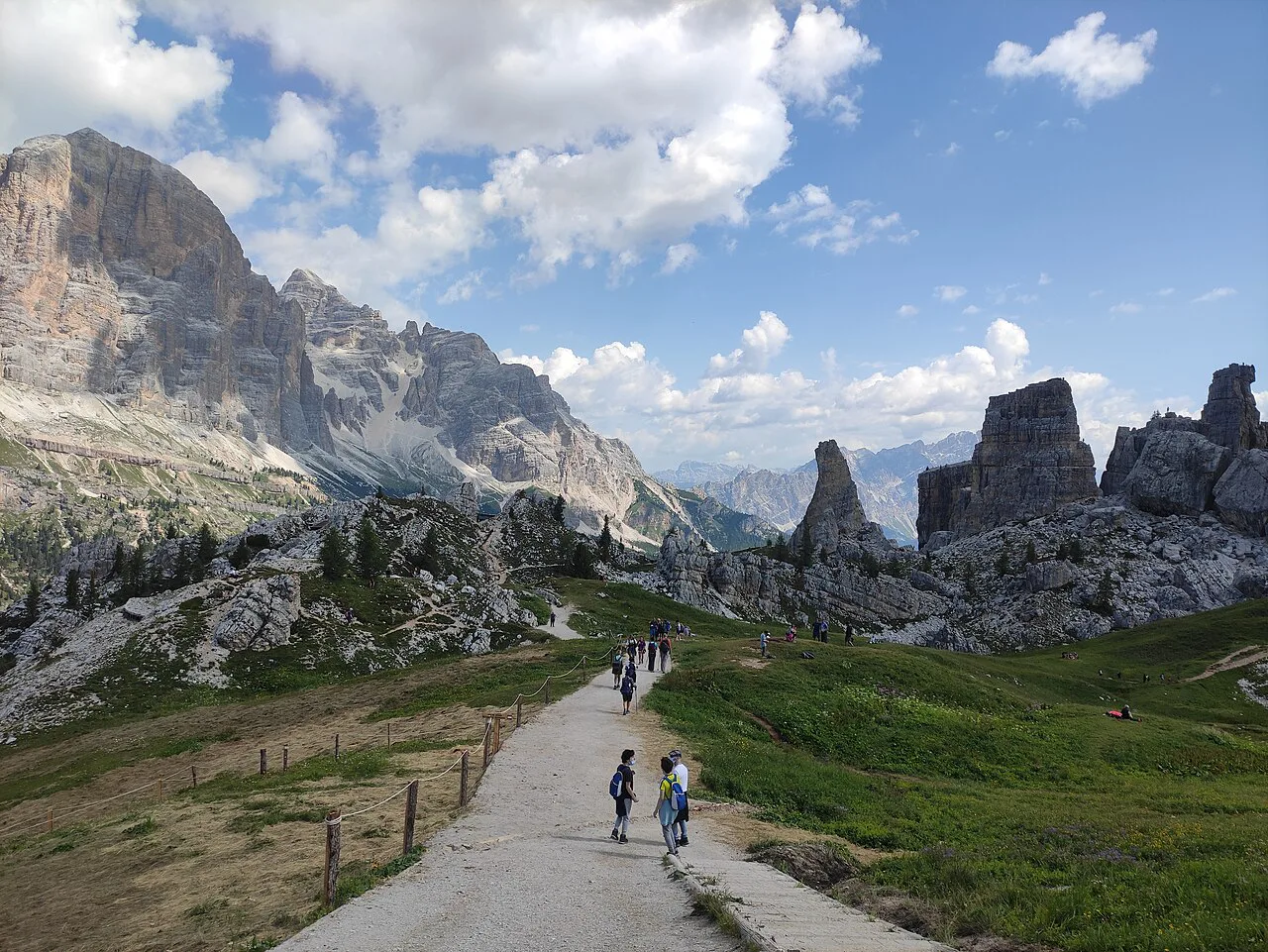
What each season means for where you can walk: valley trails, plateaus and high passes
Think in three bands. Valley trails clear first and stay walkable longest; mid-mountain plateaus such as Alpe di Siusi and the Fanes plateau open later and close sooner; high passes and summits have the shortest reliable window in midsummer.
The Fanes plateau, around 2,000 to 2,200 m (6,560 to 7,220 ft), is ringed by vertical walls and holds Rifugio Fanes and Rifugio Lavarella along the Alta Via 1 line. It is a good mid-season target because it clears later than the valleys yet does not demand the conditions of a 3,000 m summit.
High routes such as the Alta Via 2 cross the Sella massif, skirt the Marmolada and traverse the Pale di San Martino plateau, with via ferrata sections and exposed traversals. Save these for July, when dry rock and long days give the most margin, and bring via ferrata experience or a qualified guide.
Lifts and cable cars: which viewpoints depend on them and how seasonal operation shapes plans
Cable cars are core infrastructure in almost every major valley and resort, and quick access to ridges and plateaus depends on them. Seceda, Alpe di Siusi, Cinque Torri, Marmolada and Lagazuoi are among the viewpoints hikers commonly reach by lift.
Most lifts pause between the winter and summer seasons and do not run during the shoulder months, and daily first and last rides vary. The Seceda cable car, for example, climbs from Ortisei in about 15 minutes and saves more than 1,000 m (3,280 ft) of ascent, but only when it is running.
If your day relies on a lift, build a walking alternative or a valley plan into the itinerary. That way a closed lift in June or October becomes a change of route rather than a lost day.
Rifugios: when they are staffed and how far ahead to book in peak months
Rifugios are fully open and staffed through July, serving dinner, breakfast, bar service and dormitory beds, with some private rooms. Popular huts on the Alta Via 1 and around Cortina should be booked two to six weeks ahead, and weekend nights in the second half of July fill first.
Peak-season bookings on the most popular stages can fill four to six weeks ahead, sometimes earlier for weekends. If you want a hut-to-hut hiking dolomites itinerary in July or August, set your dates and reserve beds before you book transport.
Many huts expect a sleeping bag liner, and some also require a towel and slippers. Pack earplugs for full dormitories in July and August, and carry at least 1.5 litres of water on warm stages between reliable sources.
Daylight and time of day: early starts, storm windows and sunset walks
Time of day changes a Dolomites hike as much as the month. Popular viewpoints and trails are busiest in the middle of the day, especially in summer and around Italian holidays, so an early or late start buys quiet and better light.
In July, first light is before 5:30 AM and the reliable hiking window is roughly six to eight hours before clouds build. Start early enough to be off the highest ground by early afternoon, and carry a headlamp for rifugio dormitories and optional early starts.
Cable cars do not run at sunrise, so early starts on lift-served ridges mean walking up or choosing a valley route. Sunset walks from a rifugio terrace or a low pass are a good compromise when you want the light without a lift.
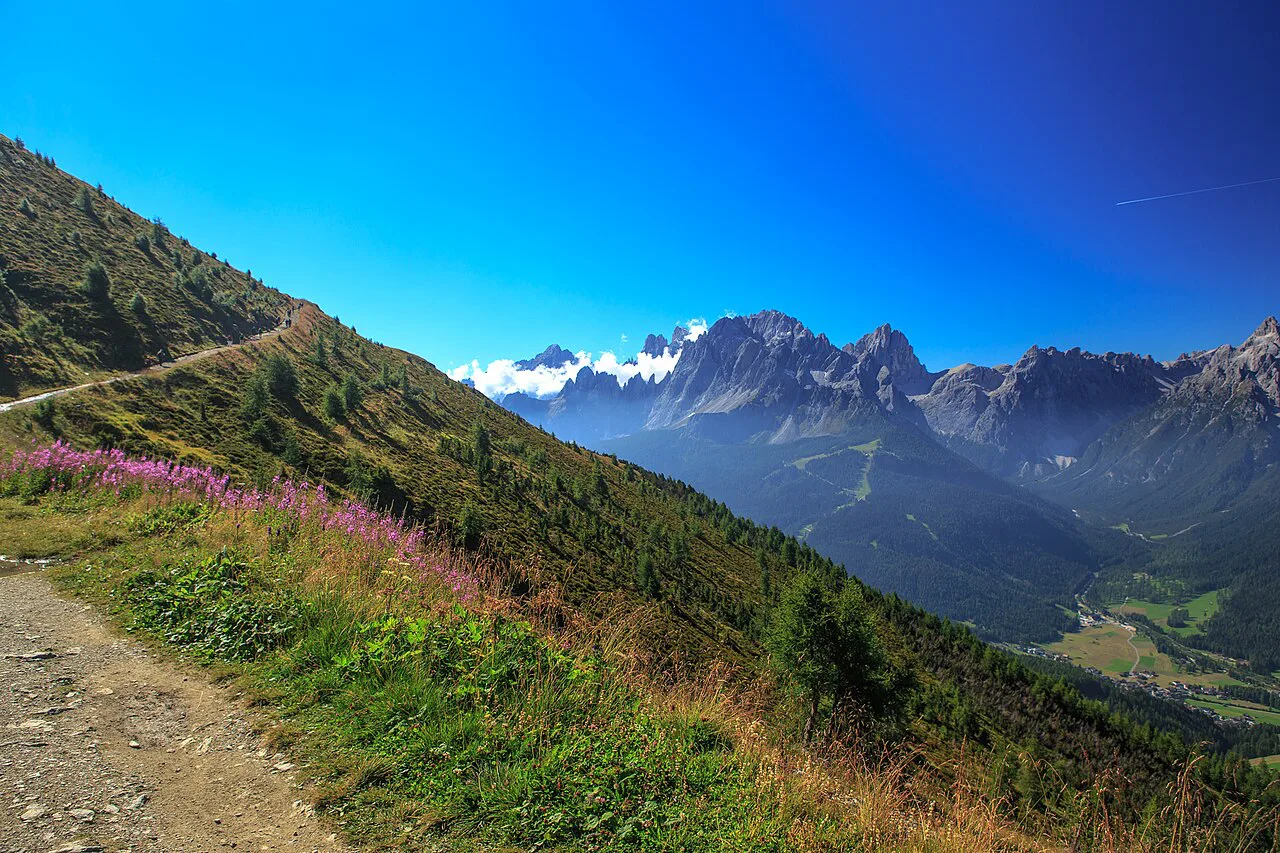
Weather to plan for: afternoon thunderstorms, temperature drops and altitude
Summer storms are a routine daily pattern, not a rare risk: lightning, hail and temperature drops of 10 to 15°C (18 to 27°F) in half an hour are possible. Plan stages to cross the highest point before early afternoon and to be under cover by mid-afternoon.
Altitude keeps summer temperatures manageable but adds cold: above 2,000 m (6,560 ft), daytime highs sit around 12 to 18°C (54 to 64°F), with nights at rifugio height dropping to 4 to 8°C (39 to 46°F). Pack a thin insulating layer and gloves even in July.
Valleys can be sunny and warm while snow still covers trails higher up, so a forecast for your base village is not a forecast for the pass. Check local mountain forecasts and radar before committing to an exposed route.
Gear for shoulder-season snow, summer storms and autumn cold
Layers are the core of a Dolomites pack: temperatures shift quickly and weather can turn from sunshine to rain or hail without much warning, even in summer. Rain gear and light gloves belong in the pack in July as much as in spring or autumn.
Sturdy boots with ankle support handle the constant loose rock and scree on descents, and trekking poles help on steep ground. Sunglasses and high-SPF sunscreen matter because ultraviolet at 2,500 m (8,200 ft) is far stronger than at sea level.
For early summer, add poles and accept that a shaded pass may still hold snow; for October, add a warm mid-layer and a headlamp for shorter days. A map or offline hiking app is worth carrying because mobile signal is unreliable in the mountains.
Where to base yourself for each season: Cortina, Val Gardena and the high plateaus
Cortina d'Ampezzo suits hikers who want the Cinque Torri, Lagazuoi and the Ampezzo basin within reach, and it is a practical base for the northern stages of the Alta Via 1. In July and August it is busy, so book accommodation well ahead.
Ortisei in Val Gardena gives access to Seceda and Alpe di Siusi, with Bolzano as the nearest city for arrivals. In spring and autumn, valley walks from these bases work when the high lifts are closed. If you want to compare bases before committing, this hiking in Val Gardena guide covers trails and village options in more detail.
The high plateaus themselves are best in midsummer, when the lifts run and huts are staffed. For a quieter autumn trip, stay in a valley village and drive or take local buses to lower trailheads instead of relying on lifts.
Hiking in the Dolomites vs the wider Alps: what makes the Dolomites distinctive
The Dolomites are a range in northeastern Italy, part of the Alps, known for dramatic limestone peaks, deep valleys and vertical rock walls. That geology gives the walking its character: broad grassy plateaus below towers of pale rock, with rifugios rather than alpine club dormitories as the main accommodation.
Compared with glaciated parts of the Alps, the classic routes here combine meadow plateaus with via ferrata terrain and short, sharp ascents by cable car. For a broader look at routes, terrain and logistics across the range, see this hiking in dolomites overview.
Places like the Odle/Geisler massif above Val di Funes offer Dolomites scenery in a quieter valley setting, and the Puez-Odle Nature Park has lower approaches that work earlier and later in the year than the highest passes.
Plan Your Trip
Choose late June to early July or September for the best trade-off between open huts, clear trails and manageable crowds. Reserve July and August for hikers who want every lift running and can start early, and treat October as a valley-walking month.
Build the trip in this order: snow-free routes first, then open rifugios, then lifts, then accommodation. That sequence matches how the season actually closes down, and it keeps your plan realistic in the shoulder months.
Frequently Asked Questions
What months can you hike in the Dolomites?
The main hiking season for high routes runs from late June to early October, with July and August offering full access and September giving quieter trails and good light. Valleys and lower forest paths extend the season into May and into late October, though snow can arrive on high ground from late October into November.
Is September a good time to hike in the Dolomites?
Yes. September brings fewer hikers, often warm early weeks and golden autumn light, and the trails are usually still in good shape. The catch is that more rifugios and cable cars close as the month progresses, so plan a route that does not depend on a lift or a hut lunch late in the month.
Is June a good time to hike the Dolomites?
June works well for valley walks and lower trails, but snow can linger on higher paths early in the month and many rifugios and cable cars do not open until mid-June. By early July all standard trails are typically clear, so plan high routes for late June at the earliest.
When do mountain huts and cable cars open in the Dolomites?
Many rifugios and lifts start their summer season in mid-June, stay fully operational through July and August, and begin closing in late September or the first week of October. Most lifts pause between the winter and summer seasons. Individual opening dates vary by operator, so check current details before planning around them.
How far ahead should I book rifugios in peak season?
In July and August, popular rifugios on the Alta Via 1 and around Cortina can fill two to six weeks ahead, and the busiest stages sometimes four to six weeks ahead, with weekends going first. Book beds before you book transport if your itinerary depends on specific huts.
What weather should I expect on a summer hike?
July and August usually follow a clear-morning pattern with cloud building late morning and thunderstorms between roughly 2 and 5 PM. Above 2,000 m (6,560 ft) daytime highs sit around 12 to 18°C (54 to 64°F), and nights at rifugio height can drop to 4 to 8°C (39 to 46°F).
Are the Dolomites expensive for a hiking trip?
Costs vary widely by valley, season and whether you sleep in rifugios or hotels, and rates for huts, lifts and rooms change by operator and year. Prices rise with demand in July and August, while late spring and autumn are cheaper. Check current rates directly with the hut or lift operator when you plan.
What is the most beautiful hike in the Dolomites?
Beauty is subjective, but the northern stages of the Alta Via 1 stand out: the Fanes plateau, the Lagazuoi tunnels and the Cinque Torri towers combine big scenery with rifugio access. The Tre Cime loop is another classic, best done in midsummer when the trails are clear and huts are open.
Sources
Trail notes for your next trip
Optional updates when we add or revise hiking guides.
You might also like
Continue reading
More guides you'll find useful