Hut to Hut Hiking in the Dolomites: Routes, Stages and Huts
Plan hut to hut hiking in the Dolomites: Alta Via 1 stages, daily distance and ascent, rifugio nights, bus and lift access, and the best months to walk.
On this page
Hut to hut hiking in the Dolomites suits walkers who want big limestone scenery, a bed and a hot dinner each night, and no tent to carry. The rifugio network is dense enough that you can string together a long traverse or a few days between two valleys, and lifts and buses mean you rarely need a car.
The classic version is the Alta Via 1, a north-to-south high route that most parties walk in nine to eleven days. Shorter slices of the same trail work well if you have a long weekend or a week, and guided formats exist for anyone who wants beds, meals and luggage handled.
What a rifugio night involves
Rifugios are staffed mountain huts that serve dinner and breakfast and rent beds, mostly in shared dormitory rooms with bunk beds. At the busiest huts you may share a room with hikers from other groups, and bathrooms are usually down the hall with hot water. Earplugs and an eye mask make a real difference to how well you sleep.
Book beds ahead for summer dates. The huts are run by alpine clubs, families and private operators rather than through one central system, so you contact each rifugio or its booking platform directly and confirm what your rate includes before you commit.
Alta Via 1: the classic traverse
The Alta Via 1 starts at Lago di Braies and finishes at La Stanga near Belluno, crossing the Dolomites from north to south over 120 km (75 mi). The route runs largely above 2,000 m (6,560 ft), tops out at 2,752 m (9,029 ft) and climbs roughly 7,300 m (23,950 ft) in total, which most hikers cover in nine to eleven days.
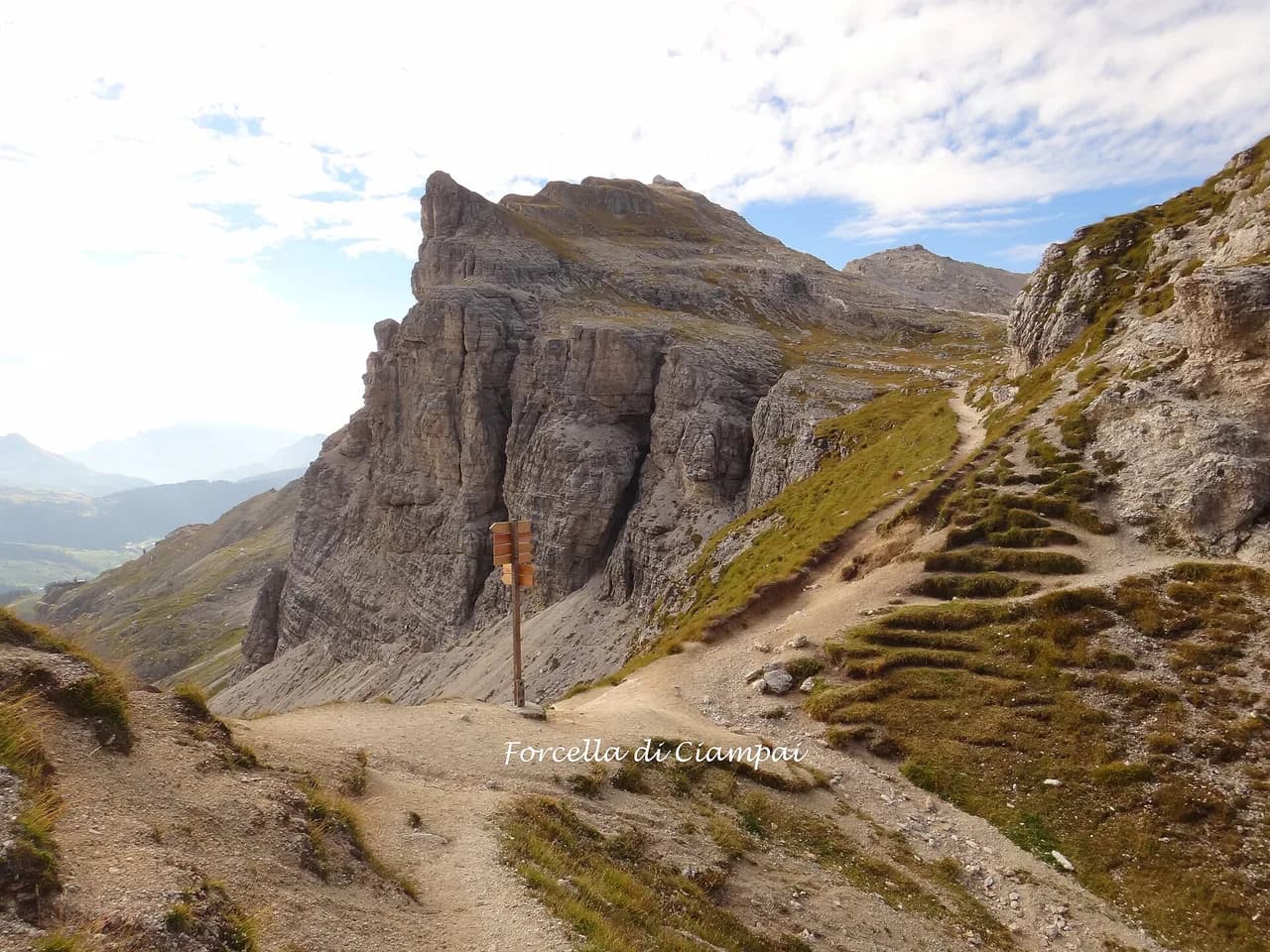
It is the least technical of the Dolomites long-distance routes: there is no rock climbing or scrambling, and the most exposed passages are secured with steel cables. That still leaves steep scree, narrow footpaths and long days, so treat it as a serious mountain trek rather than a valley walk.
Daily effort on the Alta Via 1
A typical day covers about 13 km (8 mi) with roughly 750 m (2,460 ft) of ascent, and you should be comfortable walking six to eight hours with a pack. The altitude, the rocky ground and the repeated climbs and descents make the days feel harder than the mileage suggests, so build up with back-to-back hill days before you go.
As a training target, aim to walk 10 to 15 km (6 to 9 mi) in a day with a heavy pack several times before departure. If you can manage consecutive days at that level, the hut-to-hut rhythm will feel familiar from the first stage.
The route section by section
The northern section from Lago di Braies towards Cortina d'Ampezzo passes the Falzarego pass and the Cinque Torri, and cuts close to First World War positions around Lagazuoi. Tunnels and fortifications remain in the landscape, and the descent through the Lagazuoi galleries is a slippery, cable-equipped route that calls for steady feet and a head for heights.
Between Cortina and Passo Duran the trail crosses Passo Giau and traverses ground beneath Monte Civetta and Monte Pelmo, the two big southern walls that dominate the second half. These are long, exposed walking days with few easy exits, so start early and plan to be off the high ground before afternoon weather builds.
From Passo Duran the route continues south to La Stanga, a quieter stretch that ends near Belluno rather than at a resort town. Arrange your onward bus or train before you set off, because the finish is a roadhead rather than a village with frequent services.
Hard sections and what they demand
The Forcella di Lago descent is steep, slippery gravel scree, the Lagazuoi galleries cross slick gullies on narrow rocky trail, and the Cima de Zita climb follows a ridge with drops on both sides. None of it is climbing, but each rewards poles, careful footing and a pack light enough to keep your balance.
Afternoon storms are frequent in mid-summer and can arrive fast, so cross high passes before noon and carry a waterproof layer even on clear mornings. Early and late in the season, old snow can linger in shaded hollows and on the highest passes, which is the main reason to push your start later after a heavy winter.
Fit hikers can add a via ferrata day along the route using a harness, helmet and energy-absorbing lanyard, and there are lower-grade options for anyone new to the kit. If you want steelwork without committing the whole traverse to it, the dolomites via ferrata routes are a separate day out.
Shorter options: three, four and seven days
You do not have to walk the full 120 km. A three-day version samples quieter corners, a four-day version links the signature passes and cliffs, and a seven-day version concentrates on the southern half. Pick by how much climbing your legs tolerate rather than by how many kilometres you can tick off in a week.
Shorter trips work best when you accept a road transfer at one end rather than trying to loop back on foot. Choose your slice first, then confirm which buses or lifts connect the two trailheads you have chosen.
Alta Via 2 and harder alternatives
Alta Via 2 runs from Bressanone to Croce d'Aune in about 13 stages, covering some 160 km (99 mi) and almost 12,000 m (39,370 ft) of ascent. It crosses sharp ridges and exposed slopes and includes via ferrata ground, including passages near Marmolada, so it suits experienced parties with a head for heights and steelwork kit.
If the exposed ground on Alta Via 2 is the draw, plan a dedicated day for it rather than learning as you go. A short guided introduction to the cables is the fastest way to judge whether the harder routes are for you.
Building your own rifugio loop from Val Gardena or Val di Fassa
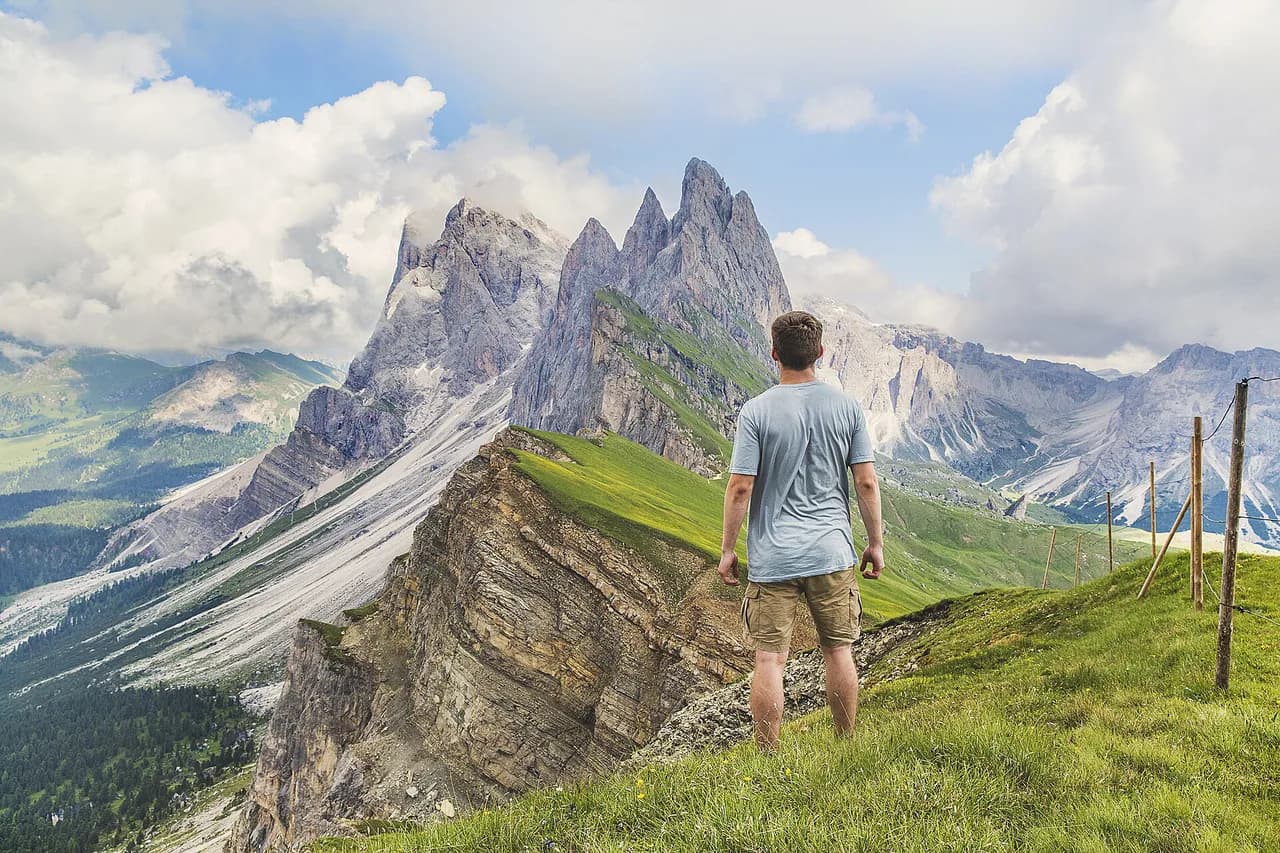
You can design a two- or three-night loop from Val Gardena or Val di Fassa by linking lifts, high huts and valley villages. In Val Gardena, a gondola from Ortisei reaches the Seceda alp, where Rifugio Fermeda sits on the slope with views across the peaks; from there you can walk between staffed huts and descend to a village bed. If you would rather compare options before committing, the Val Gardena hiking guide covers trails and base villages for the same area.
A loop works best when you climb by lift, traverse high, sleep at a hut and drop into a different valley the next day. Check the last descent times for every lift you plan to use, since missing the final car leaves you with a long walk out.
Val di Fassa gives similar access, with a cable car from Vigo di Fassa climbing to around 1,897 m (6,224 ft) at the start of the Rosengarten traverse. From there you can walk under the Vajolet towers, cross towards Passo Principe and sleep at Alpe di Tires before descending.
On the eastern side, the Odle/Geisler massif above Val di Funes offers day walks out of the same rifugio network and makes a gentler introduction to the hut system.
Getting to the trailhead at Lago di Braies
Most overseas hikers fly into Venice Marco Polo or Treviso and travel up to Cortina d'Ampezzo, which is within about two hours by car. From Cortina, public buses connect to Dobbiaco and on to Lago di Braies in summer, and trains link the Dolomites with other European cities.
Coming by rail, get off at Villabassa, about 4 km (2.5 mi) from Dobbiaco, and pick up the bus to the lake from there. Arrive the day before you start so a delayed connection does not cost you your first hut night.
Getting home from La Stanga
The southern finish at La Stanga sits on the road towards Belluno, with buses and trains onward from the Belluno area. Work out the connection before you leave the high route, and keep enough buffer to reach a station with time to spare.
If you book a guided traverse, the guiding company often collects you at Venice airport and returns you there at the end, which removes the two-ended transport problem entirely. Check what the trip actually includes before you compare it with a self-guided plan.
Lifts and cable cars on the approach
Several routes start with a lift: the Val Gardena gondolas reach high pastures above Ortisei, and the Vigo di Fassa cable car serves the Rosengarten side. Guided trips often ride gondolas to reach high trails in Puez-Odle Nature Park, and a chairlift from near La Villa shortens the climb towards the Falzarego side.
Lifts run seasonally rather than year-round, and timetables change between summer and shoulder months. Confirm the operating window with the lift operator for your dates before you build a route around a cable car.
Booking rifugios and choosing a format
Self-guided hikers book each hut themselves, carry a light pack and manage their own transfers, which gives the most flexibility and the lowest cost. Guided formats bundle beds, most meals, lift tickets and luggage transfer: one family-oriented hut-to-hut tour runs six days and five nights in the Dolomites with three nights in hotels and two in huts, and an operator price of from $4,799 per person.
A seven-day guided traverse is priced from $5,200 per person, with three hotel nights and three hut nights, daily hikes up to 9.4 mi (16 km) and up to 3,635 ft (1,110 m) of climbing. Luggage transfer is included except on one day, when you carry your overnight items.
Those figures are operator pricing for packaged trips, not a do-it-yourself budget. For a self-planned trek, ask each rifugio what its half-board rate covers and add your transport, lunches and drinks separately.
Water, cash and hut routines
Carry cash for drinks, snacks and small extras at the huts, since card machines can be unreliable at altitude. Refill bottles where the hut staff allow it, and start each day with enough water to reach the next staffed hut rather than assuming a reliable source on the way.
Boots beat trail shoes on this ground: the scree descents and long rocky days punish thin soles and weak ankle support. Keep your pack in the 25 to 45 litre range depending on how many nights you go between resupply points.
When to go
The Alta Via 1 season runs from mid-July to the end of September in a typical year. A heavy winter can leave the highest passes unsafe into late July, while August brings temperatures of 25 to 30°C above 2,000 m (6,560 ft) and frequent afternoon storms.
September is the pick for many hikers: nights turn cold and freezing is possible, but the weather is more stable and the crowds thin. At the end of the month the huts close and only basic winter rooms stay open, so plan your last night before the season ends.
Fitness and pack weight
Consecutive hut nights reward a light pack more than any other factor: every extra pound tells on the third or fourth day. Aim to keep your base weight down, wear boots you have already broken in, and test your full load on a long hill day at home.
If you are new to multi-day hiking, build up with two-day trips carrying your overnight kit. That rehearsal exposes blisters, straps that rub and layers that do not work long before you reach the Dolomites.
Plan Your Traverse
Choose the full Alta Via 1 if you have nine to eleven days and want the classic north-to-south crossing, or take a three- to seven-day slice if time is tighter. Match the route to your tolerance for scree, exposure and long days rather than to a distance target.
Book rifugio beds early, confirm what each half-board rate includes, and sort your transport at both ends before you start. With the season, the kit and the logistics settled, the walking is the simple part.
Frequently Asked Questions
How many days does hut to hut hiking in the Dolomites take?
The full Alta Via 1 is usually walked in nine to eleven days, covering 120 km from Lago di Braies to La Stanga. Shorter versions take three, four or seven days and use part of the same route with a road transfer at one end.
How hard is the Alta Via 1?
It is the least technical of the Dolomites long-distance routes, with no rock climbing or scrambling and steel cables on the most exposed passages. Expect about 13 km and 750 m of ascent per day over steep scree and narrow paths, with the Forcella di Lago descent and the Cima de Zita ridge as the hardest ground.
Do you need to book Dolomites rifugios in advance?
Yes for summer dates. Most rifugios take bookings directly or through their own platform, so contact each hut on your itinerary and confirm what your rate includes before you commit.
When do the Dolomites huts open and close?
The hut season on the Alta Via 1 runs from mid-July to the end of September in a typical year. At the end of the season the huts close and only basic winter rooms stay open, so finish before they shut.
Can you hike the Dolomites hut to hut without camping gear?
Yes. Rifugios provide beds, dinner and breakfast, so a light pack with clothing, waterproofs, water and cash covers a summer traverse. Carry your overnight items only on sections where luggage transfer is not available.
How do you reach the Alta Via 1 start at Lago di Braies?
Fly into Venice or Treviso and travel to Cortina d'Ampezzo, then take a summer bus to Dobbiaco and on to Lago di Braies. By train, get off at Villabassa and pick up the bus to the lake from there.
Sources
Trail notes for your next trip
Optional updates when we add or revise hiking guides.
You might also like
Continue reading
More guides you'll find useful