Dolomites Hiking Tours: Which Trip Type Suits You?
Compare Dolomites hiking tours by route, length and format, from Alta Via 1 and Cortina to Val Gardena and the Brenta, guided or self-guided.
On this page
The Dolomites are built for multi-day walking: waymarked trails run for days between mountain huts, and paths stay well marked throughout the summer season. That combination lets you choose a route first and a format second, whether you want to carry your own pack between rifugios or let an operator book the beds and hand you route notes.
Most organized trips run between June and mid-October, and the classic hut-to-hut itineraries cover anywhere from three hiking days to nearly two weeks. Matching the length to your available holiday and daily stamina is the single decision that most shapes the experience.
Why the Dolomites suit multi-day hiking tours
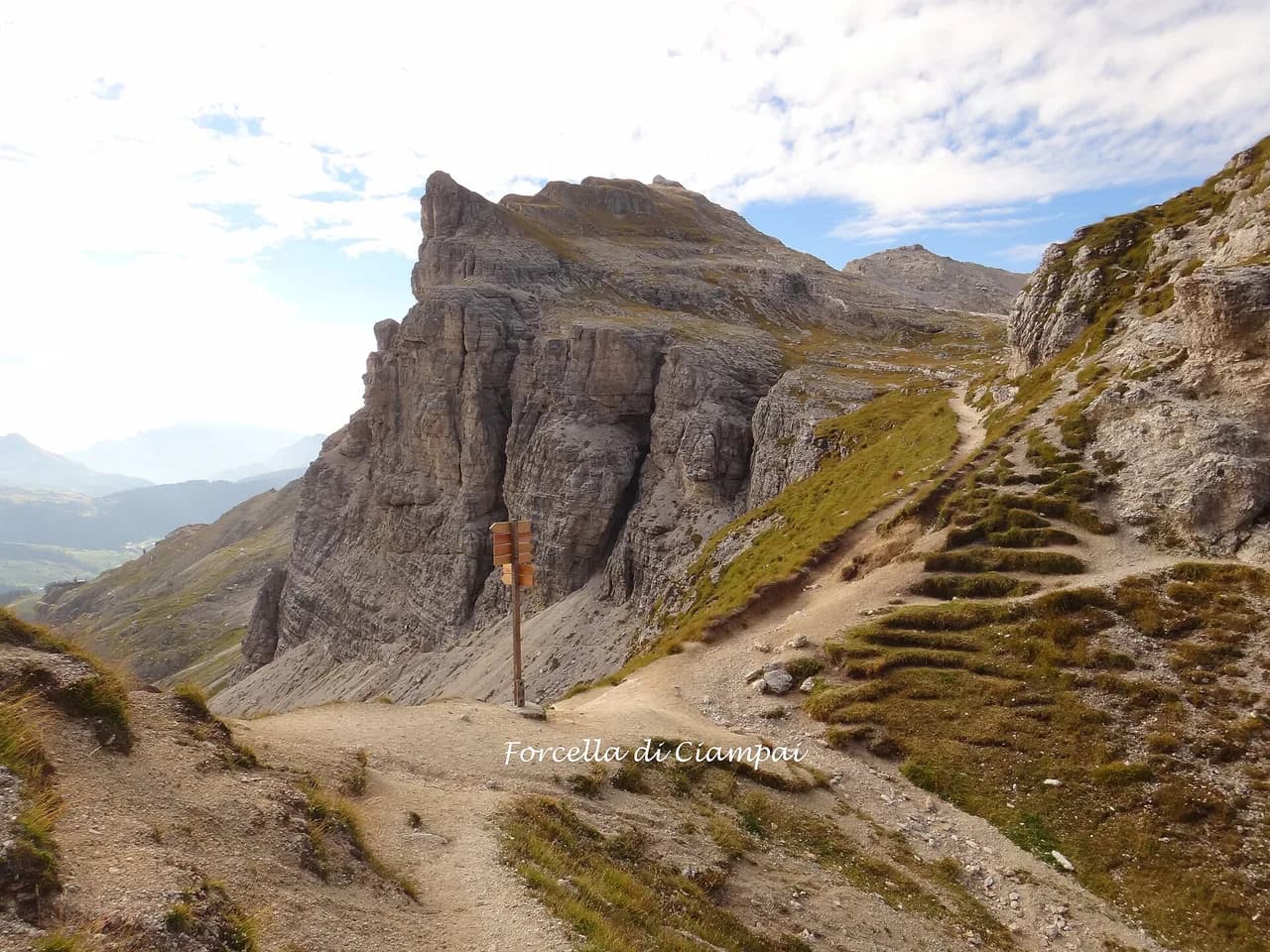
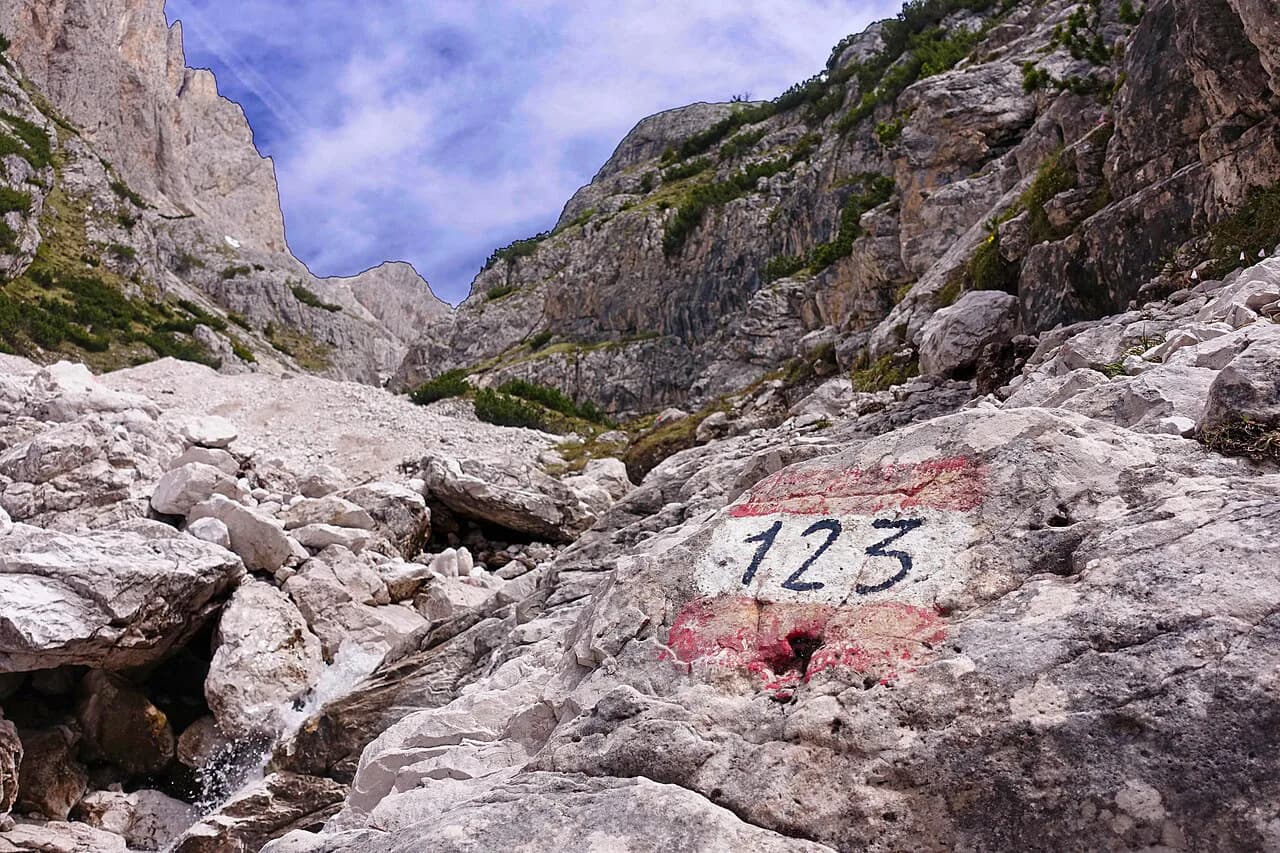
Trails here are numbered and signposted at every junction, with markers giving the direction, route number and walking time to the next pass, hut or fork. That signage means self-guided hikers can follow a route sheet without a guide, and it also keeps guided groups moving at a steady pace rather than stopping to navigate.
The hut network is the second reason the range works for tours. Rifugios sit at the right intervals for a day's walk and serve lunch and dinner as well as beds, so a 35–40 litre (about 2,100–2,400 cubic inch) pack covers clothing and snacks for a week.
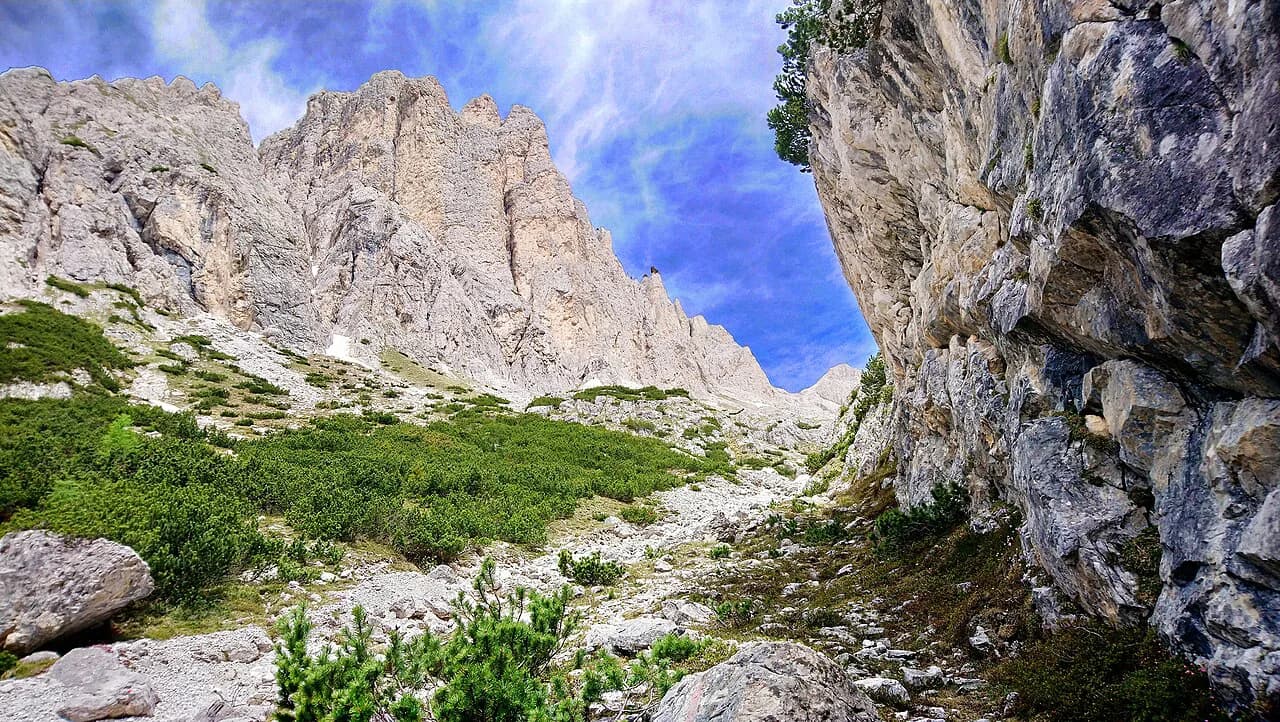
Expect a mix of terrain across a single tour: meadows and forest tracks on the approach days, then rocky plateaus and scree beneath the big walls. Early-season snow can linger on passes above 2,000 metres (6,560 feet), so build a little flexibility into the front end of a June trip.
The main tour formats compared
Self-guided hut-to-hut trips give you a fixed route with pre-booked huts, breakfast and dinner included, and a digital guidebook with turn-by-turn instructions plus a GPS app. You walk independently and at your own pace, but someone else has already secured the beds, which is the real value on popular routes.
Guided group hut-to-hut trips put you with a certified local guide and a small party of roughly four to seven hikers. Private guided versions follow the same routes on your own dates with a guide, which suits couples or friends who want navigation and local knowledge without joining a larger group.
Inn-to-inn tours swap some hut nights for hotels and guesthouses, often with private en-suite rooms and breakfast, keeping only a couple of nights in shared hut dormitories where logistics demand it. That format fits hikers who want a hot shower and a quiet room most nights but still want to walk between villages.
Multi-day guided programs cover similar ground with a wider support net: nine nights of handpicked hotels, private bus transfers, some meals, lift tickets and licensed local guides on selected walks. This suits travelers who would rather not plan transport or bookings at all.
Route chooser: which Dolomites tour fits your fitness and time
Organizers grade their tours on a difficulty scale, and the levels are worth reading before you compare lengths. Level 2 itineraries involve shorter, unfatiguing days of around four hours of walking, level 3 routes suit regularly active hikers on normal trails, and level 4 adds longer days, rougher ground or exposed sections.
As a rule, a five- to seven-day tour with five or six walking days covers a single mountain group or a compact traverse, while an eight- to twelve-day itinerary links several groups and demands more from your legs. If this is your first hut-to-hut trip, pick a level 2 or 3 route in the five- to seven-night range and save Alta Via 2 for a second visit.
Itineraries are rated on two axes, not one: fitness and technical difficulty. A level 3 technical trail is defined as good, marked mountain path with some rocky and uneven footing, while a level 5 trail means exposed, uneven ground where you use your hands for balance.
Alta Via 1 tours: Lake Braies to Belluno
The classic Alta Via 1 runs from Lake Braies to Belluno and takes in the Lagazuoi massif, Cinque Torri, Monte Pelmo and the Civetta group. It follows normal hiking trails without via ferrata and suits hikers with a normal level of training.
Operator versions of the full route run 9–11 days with 8–10 nights and start around Cortina or Dobbiaco, finishing at Belluno or Zoldo. Shorter northern and southern variants split the same line: the northern trek from Lake Braies to Monte Pelmo crosses the Fanes-Sennes-Braies Nature Park, while the southern trek starts at Passo Falzarego and heads for Cinque Torri, Monte Pelmo, lakes Coldai and Federa, Civetta and Belluno.
The southern half is the quieter option if you want wildlife and fewer people, because the mountains grow wilder the further south you walk. Whichever section you choose, plan on six to eight hours of walking a day, matching the pace most tours assume for regularly active hikers.
Because the route begins at Lago di Braies and passes a string of popular huts, beds fill early on the northern stages. If you are booking independently rather than through an operator, treat the hut reservations as the first task and the travel as the second.
Cortina d'Ampezzo tours: Cinque Torri, Lagazuoi, Nuvolau and Tre Cime
Cortina d'Ampezzo is the most convenient base for a first Dolomites tour, with short transfers to the big-name terrain. Six- to ten-day itineraries from the town link Cinque Torri, Tre Cime di Lavaredo and Lagazuoi across five to nine nights of hut accommodation.
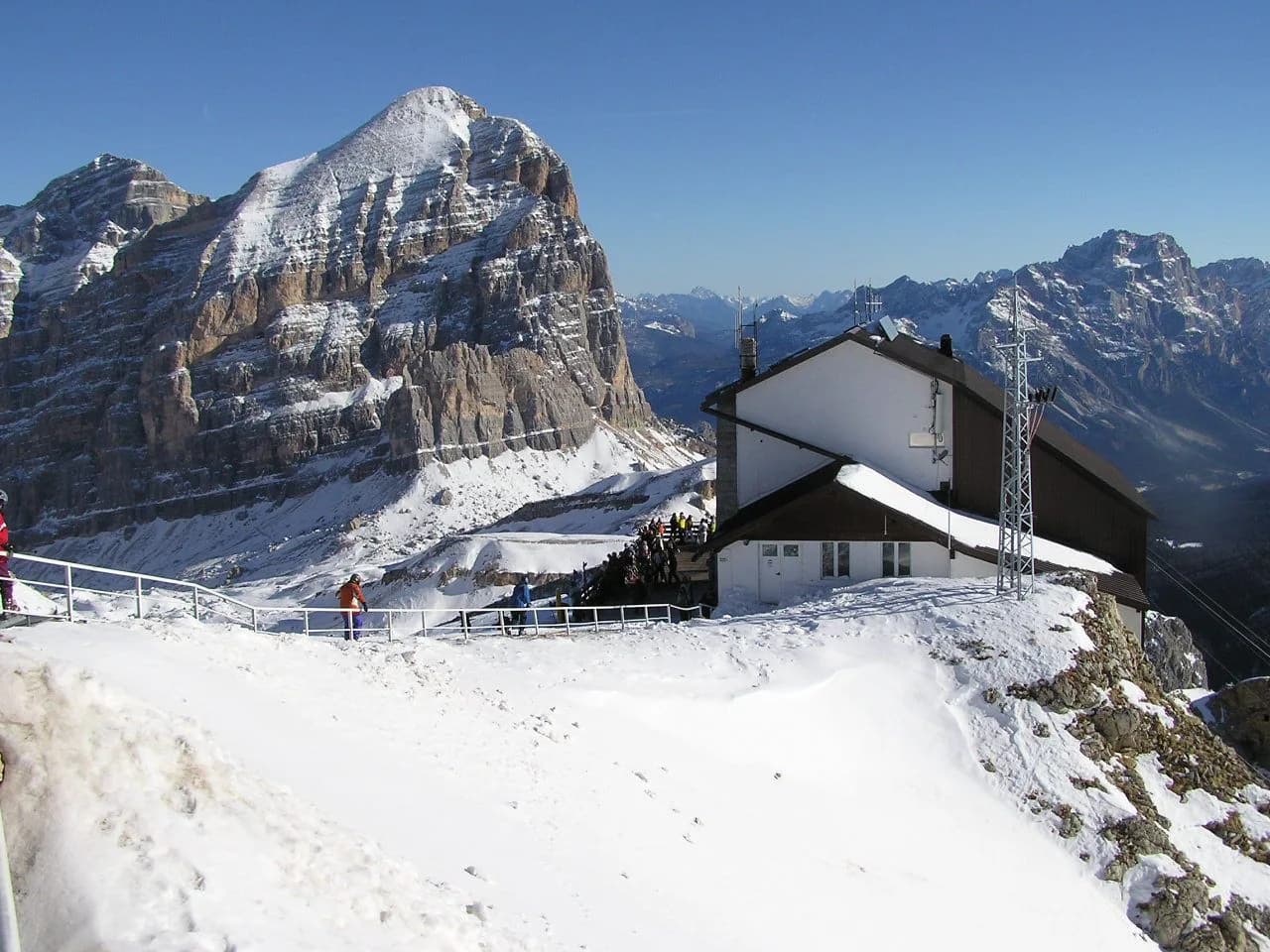
A five- to eight-day Grandview route narrows the focus to the Tofane, Nuvolau and Croda da Lago groups, walking historic trails past the Lagazuoi terrace, the Cinque Torri towers, the Nuvolau summit and lakes Limedes and Federa. It is a good choice if you want the scenery of the Cortina basin without committing to a long traverse.
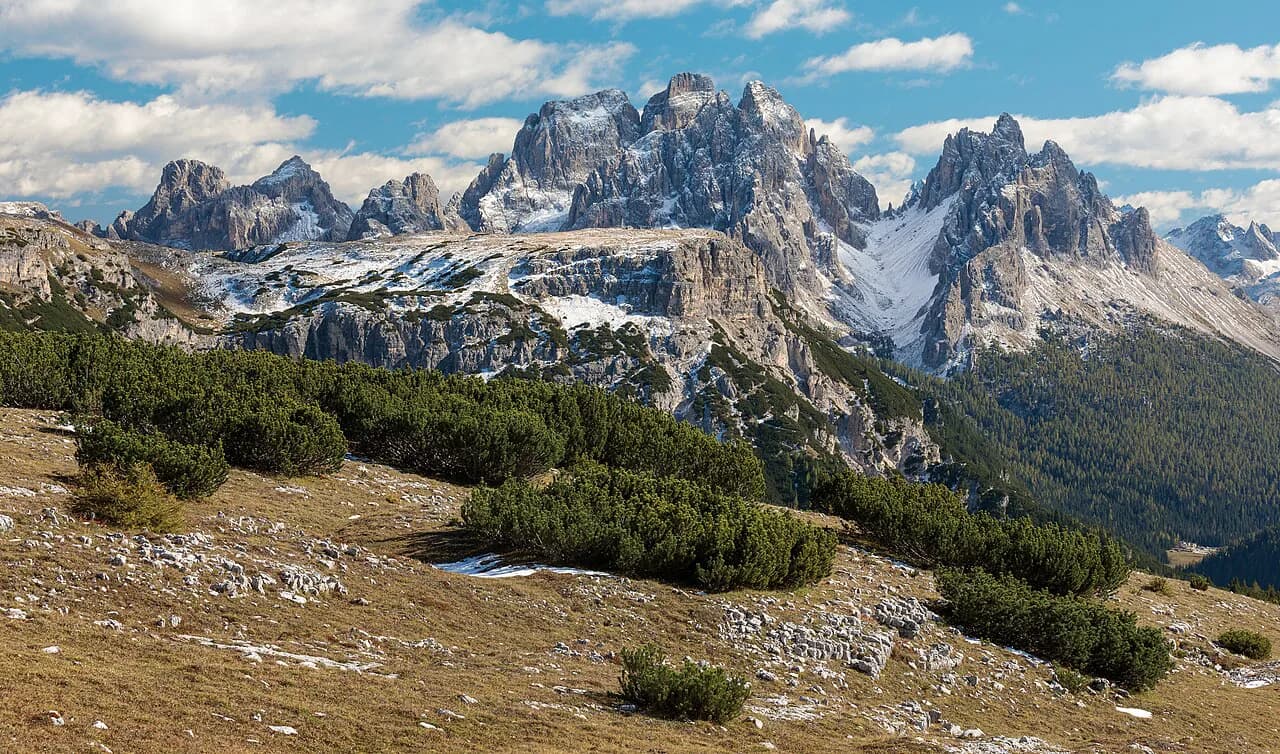
Day hikes slot neatly into a Cortina-based week. The Cinque Torri circuit starts at Passo Falzarego, about 30 minutes from town, and options run from four to eight hours; the shortest Tre Cime loop takes about four hours, while the full circuit through the Sexten Dolomites takes a full day.
Guided programs in the area typically ride the cable car to Rifugio Scoiattoli and walk a loop past First World War trenches and observation posts, and later circle Tre Cime di Lavaredo from Rifugio Auronzo, with the rocky descent toward Forcella col di Mezzo as the trickiest stretch.
Val Gardena and Alpe di Siusi tours
Val Gardena gives you the Seiser Alm plateau, Schlern, Langkofel and Rosengarten in one moderately difficult five- to seven-day itinerary, which operators position as a good first hut-to-hut choice because it crosses every altitude zone in the range. It starts in Val Gardena and finishes near the Karerpass above Carezza, and our guide to hiking in Val Gardena covers the trails and base villages in more detail.
The Puez-Odle classic trek crosses the Puez-Odle group, with rocky lunar plateaus, cliff-foot trails and three full hiking days at the core, extendable into the surrounding groups above Alpe di Siusi. For context on the trails beneath the Odle walls, the Adolf Munkel route is the best-known valley-level walk in the same massif.
A lighter Val Gardena option strings together Sciliar, Puez-Odle and Sassolungo on unfatiguing four-hour days, with four walking days as the core itinerary and optional day hikes from a Val Gardena basecamp. That structure suits families or hikers who want afternoons free.
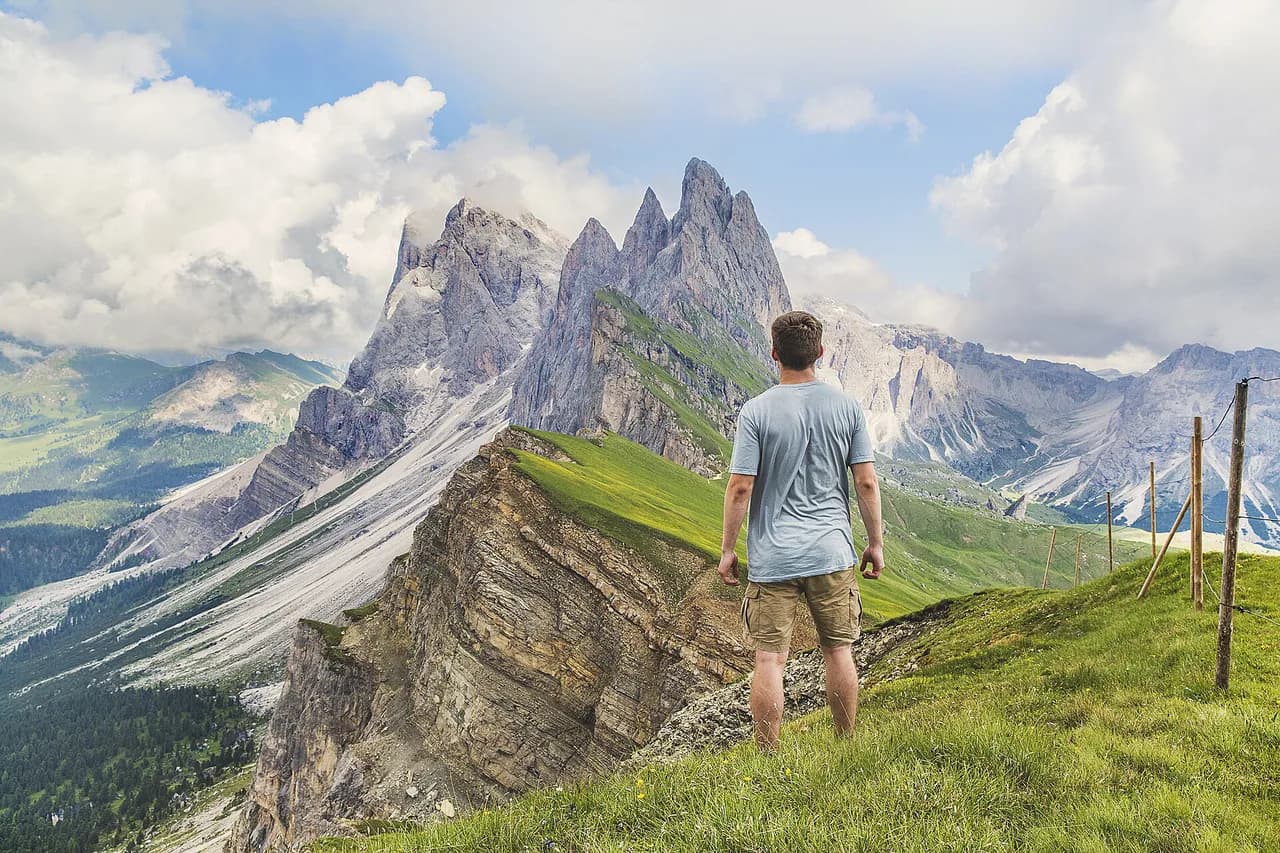
Guided weeks here use the lifts rather than long valley approaches: the Mont Sëuc cable car from Ortisei gets you onto the Alpe di Siusi meadow, and the Col Raiser lift serves the Seceda ridgeline and its Fermeda towers. Walkers on the Seceda day cover around 7.5 miles (12 km) with about 1,500 feet (460 m) of ascent.
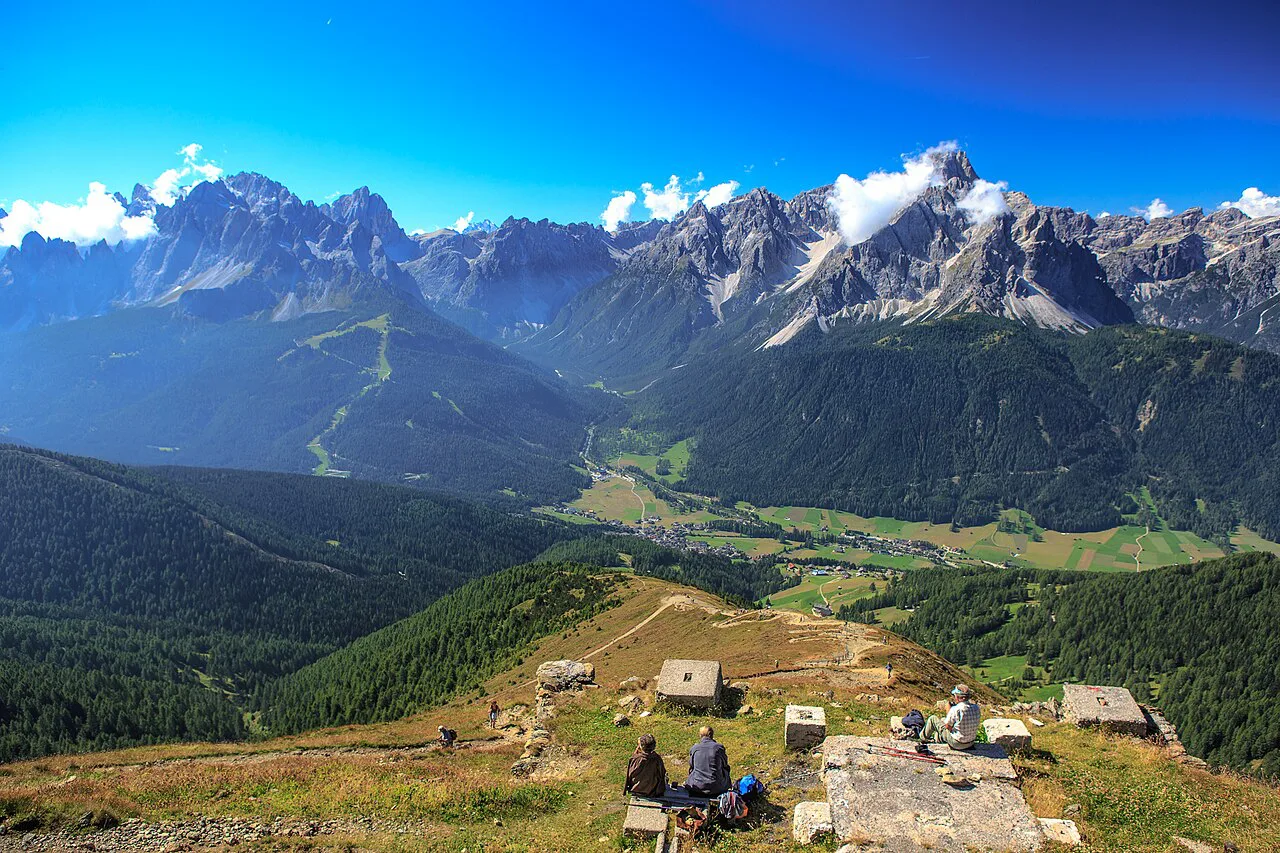
Brenta Dolomites: Adamello-Brenta treks and the Via delle Bocchette
The Brenta group is a different proposition from the rest of the range: reddish rock, enormous towers and deep gorges, with wild northern ridges as well as the famous southern walls. An eight- to eleven-day trek from Val di Sole is graded level 4, so it suits hikers who already have multi-day experience.
A gentler six- to nine-day version based in Val di Sole crosses Adamello-Presanella and the Brenta within the Adamello-Brenta Nature Park, one of the largest protected areas in the Italian Alps. It is graded level 3 and stays on hiking terrain throughout.
The Via delle Bocchette is a via ferrata itinerary, not a walking tour, threaded through the least accessible central Brenta where peaks are split by gorges and linked by protected paths and historic huts over five to seven days. Book it privately guided unless you are an experienced ferrata climber with your own kit.
Shorter Brenta days start from Madonna di Campiglio, including a seven-hour walk from Vallesinella to three mountain huts built more than a century ago, and a five-hour Pietra Grande loop that stays away from crowded trails. These work well as acclimatization or rest days inside a longer Brenta trip.
Pale di San Martino and Val di Fassa tours
The Pale di San Martino trek crosses the barren high plateau at the heart of the group on a six- to eight-day itinerary from San Martino di Castrozza, taking in views of the Pale from the Lagorai range along the way. Its lunar upper section is the reason to choose it over a meadow-based route.
The Trek of the Legends in Val di Fassa crosses Monzoni, Marmolada, Sella, Sassolungo, Antermoia and Rosengarten over six to ten days. A shorter seven- to ten-day gateway version covers the first half, from Pale di San Martino toward Marmolada and Sella, on easier trails with moderate daily distances.
A six- to seven-day traverse links Val di Fassa with San Martino di Castrozza, starting below the Marmolada and heading south through meadows to the high Pale plateau and on to the granite Lagorai group around Colbricon Lake. It is a good compromise if you want two classic areas without committing to a long route.
Wilder options: Friuli traverses and the Zoldo loop
The Friuli Dolomites are the quietest corner of the range, a compact chain of peaks with trails through largely uninhabited country. A six- to seven-day traverse from Longarone to Forni di Sopra and a seven- to ten-day wilderness trek from Pieve di Cadore both run on level 3 and level 4 grades respectively.
The Zoldo loop, based at Forno di Zoldo, follows some of the least-travelled trails in the range over six to nine days on a level 4 grade, with few lifts and little traffic. Choose it if solitude matters more to you than ticking off the famous viewpoints, and accept that resupply and escape options are thinner.
Alta Via 2 for strong hikers
Alta Via 2 links the largest groups in the range, including Sella and the Pale di San Martino, the Puez-Odle towers and the Marmolada glacier, the last major glacier in the Dolomites. Operator versions run eight to twelve days with seven to eleven nights, starting from Brixen or Val Gardena and finishing at Fiera di Primiero.
It is graded level 4, so book it only when you are comfortable with long days, sustained ascent and rougher ground than Alta Via 1 offers. The reward is the widest variety of landscape of any Dolomites long route, from glacier views to the Pale's high desert.
What a guided tour includes and who it suits
Guided programs bundle the logistics that eat planning time: hotel nights, private bus transfers between regions, breakfasts and selected dinners, lift and cable car tickets, and licensed local guides on the harder walks. You still walk the trails yourself, but someone else handles the timings and the language barrier.
They suit hikers who want a first Dolomites trip without route-finding, or who value interpretation of the First World War remains around Lagazuoi and Cinque Torri, where trenches, tunnels and observation posts sit between 2,000 and 2,800 metres (6,560–9,190 feet). Group sizes run from about six travelers with companies such as Mont Trekking to twenty on EF Adventures departures.
Expect a mix of hiking days and cultural stops: museum visits at Kronplatz, a walking tour in Cortina, and a valley-level trail on the final day if the itinerary extends beyond the mountains. Check how much walking each day actually involves, because transfer days and museum days are not hiking days.
What a self-guided tour includes
A self-guided booking typically covers the accommodation, breakfasts, dinner at the huts, a digital guidebook with route instructions and a GPS navigation app, plus support during the walk. You set your own start times and linger at viewpoints, but you also carry your own gear between overnight stops unless you add luggage transfer.
Luggage transfer is not universal: some self-guided itineraries are explicitly walking tours where you carry everything, and hikers often say afterwards that they would pay for transport next time. Ask before booking if you plan to bring a heavier camera kit or extra clothing.
Not included items usually cover tourist tax, airport transfers and extra nights, and single supplements apply where a private room is requested. Confirm what the price covers before you compare two operators, because hotel nights and hut half-board are the expensive components.
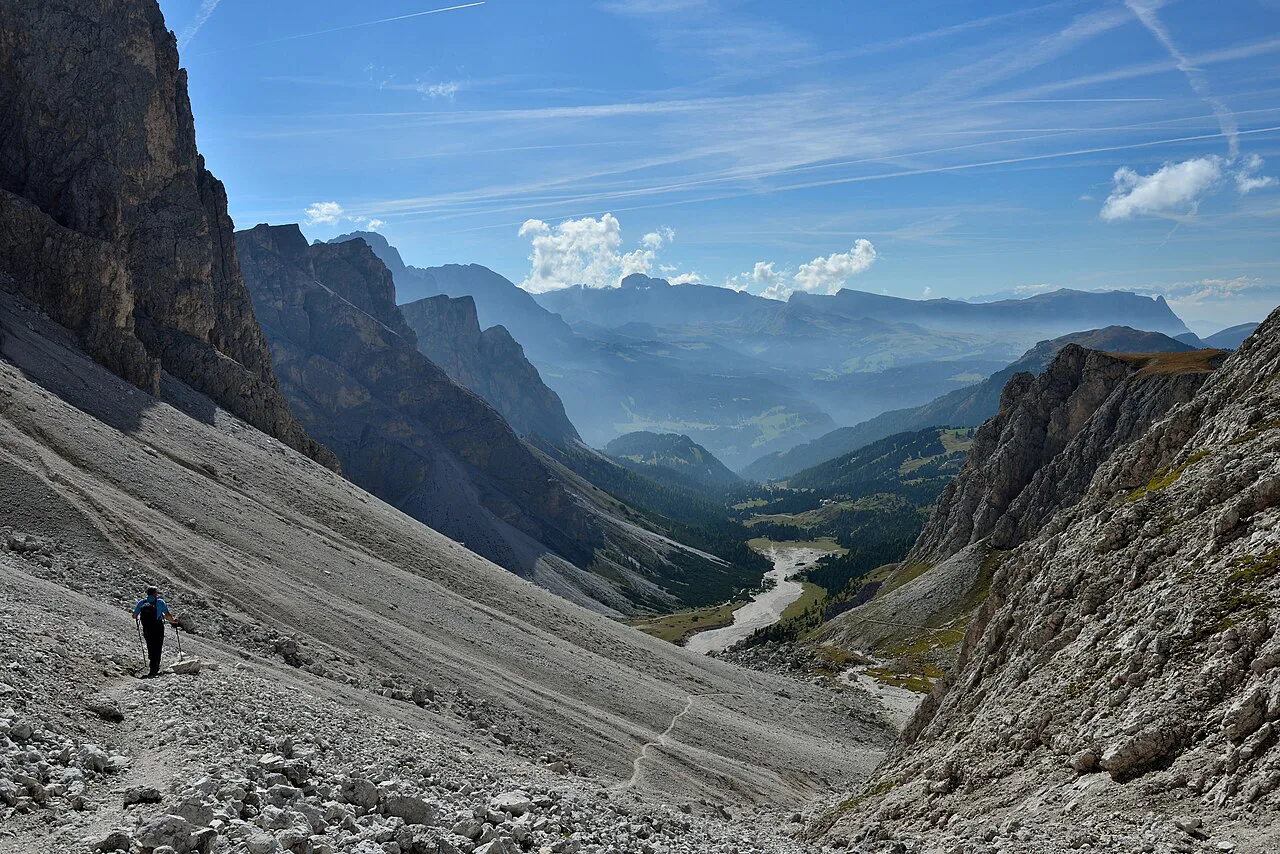
Hut life: dormitories, private rooms and what to pack
Dolomites huts are more comfortable than in most other Alpine regions, with hot showers at many properties and hearty cooking that mixes Alpine and Italian traditions, from speck and cheese to risotto and dumplings. Dormitories usually sleep six to ten guests, and most huts also keep a few private rooms for two to four people.
You do not need a sleeping bag: huts provide blankets and pillows, but bringing a sleeping liner is the norm and reduces the laundry burden. Showers exist at most huts on the main hut-to-hut routes, though water supply can depend on recent rainfall.
Pack for a 35–40 litre pack: layers, waterproofs, sun protection, a headlamp, cash for drinks and a basic first aid kit. Mobile signal is patchy away from towns and huts, and wi-fi is limited to select lodges, so download your route notes before you leave the valley.
Fees, reservations and when to book
Huts along the popular routes fill quickly, and bed availability rather than trail difficulty is what limits most summer plans. Operators advise booking as early as possible to secure places, and repeat visitors often book the following season before the current one ends.
Tour prices vary widely by format and length, so compare like with like: self-guided hut-to-hut trips sit well below private guided versions on the same route, and hotel-based inn-to-inn weeks price differently again. It is the same trade-off you weigh when choosing between sardinia walking holidays, where self-guided and guided formats also diverge in cost. Check what each price excludes, since tourist tax and transfers are commonly separate.
Camping is not part of a hut-to-hut plan: tents are prohibited in nature reserves, and the hut network means you do not need one. Book the beds and leave the tent at home.
When to go: season, snow and hut closures
Organized Dolomites hiking tours run from June to mid-October, and many operators describe the practical hiking window as mid-June to late September, depending on snow at altitude. Huts close outside the season, so multi-day routes cannot be planned in the shoulder months.
Many passes sit above 2,000 metres (6,560 feet), so early-summer trips can meet old snow on the highest crossings and late-September trips can meet fresh snow. Build a spare day into June and October bookings, and choose a lower-level route if your dates are fixed.
Afternoon thunderstorms are the other seasonal factor. If a storm is forecast, staying at the hut until it passes is the right call even if it costs a day, because exposed ridges and ironwork are no place to be caught out.
Getting to the start
Most tours start from a town with bus connections: Dobbiaco and Cortina for Alta Via 1 and Cortina itineraries, Val Gardena for the Seiser Alm and Puez-Odle routes, Val di Sole for Brenta and Adamello-Brenta treks, and San Martino di Castrozza for the Pale. Fly into Venice for the eastern Dolomites or Verona and Innsbruck for the western side, then continue by train and bus.
Local buses do a lot of the work on inn-to-inn routes, including a short ride from Dobbiaco to Lago di Braies at the start and an hour-long bus from Cortina up to Rifugio Auronzo below the Tre Cime. Check the season timetable before you commit, since services are thinner at the edges of the hiking season.
Choose Your Dolomites Tour
Start with your available days and daily stamina, then pick the format: self-guided hut-to-hut for independence, guided groups for company and interpretation, inn-to-inn for hotel comfort with a pack on your back. Alta Via 1 and the Cortina routes are the safest first choices, while Alta Via 2 and the Friuli traverses reward hikers with previous multi-day experience.
Book beds first, check what the price includes, and treat the season as a real constraint rather than a formality. Do that and the route itself becomes the easy part.
Frequently Asked Questions
What is the best time of year to hike in the Dolomites?
Organized tours run from June to mid-October, and the practical window most operators describe is mid-June to late September, depending on snow at altitude. Huts close outside the season, so multi-day routes cannot run in the shoulder months. Many passes sit above 2,000 metres (6,560 feet), which means early-summer snow can linger on the highest crossings and fresh snow can arrive in late September.
How many days do you need for a Dolomites hiking tour?
Self-guided hut-to-hut itineraries in the Dolomites cover a wide range, from three hiking days to nearly two weeks. A five- to seven-day trip with five or six walking days usually covers one mountain group or a compact traverse, while an eight- to twelve-day route links several groups. For a first visit, a five- to seven-night itinerary on a level 2 or 3 grading is the most comfortable fit.
Is a self-guided hut-to-hut tour suitable for a first-timer?
Yes, provided you match the grading to your fitness. Trails are signposted at every junction with route numbers and walking times, and self-guided packages include a digital guidebook and GPS app, so navigation is straightforward. Choose a level 2 or 3 route such as Seiser Alm to Rosengarten or the Puez-Odle trek, and leave level 4 routes like Alta Via 2 or the Brenta traverse for a second trip.
Do I need a sleeping bag in Dolomites mountain huts?
No. Huts provide blankets and pillows, but most hikers bring a light sleeping liner, which also reduces how often the huts have to wash bed linens. Dormitories usually sleep six to ten people, and many huts also keep a few private rooms for two to four guests. Hot showers are common on the main hut-to-hut routes, though water supply can depend on recent rainfall.
How much does a guided or self-guided Dolomites hiking tour cost?
Prices differ sharply by format, route length and season, and operators publish their own rates, so compare like with like rather than a single headline figure. Self-guided hut-to-hut trips generally cost less than private guided versions of the same route, and hotel-based inn-to-inn weeks price differently again. Ask each operator what is excluded, since tourist tax, airport transfers, extra nights and single supplements are often charged separately.
How fit do I need to be for the Alta Via 1?
The full Alta Via 1 runs along normal hiking trails without via ferrata and suits hikers with a normal level of training, which in practice means regularly active people who can walk six to eight hours a day. Operator versions take 9 to 11 days with 8 to 10 nights, so stamina over consecutive days matters more than any single hard stage. Shorter northern and southern sections let you test the route over five to eight days.
What should I pack for a hut-to-hut tour in the Dolomites?
A 35–40 litre (about 2,100–2,400 cubic inch) pack is enough when huts provide bedding and meals, since you carry clothing and snacks rather than a tent or food. Bring layers, waterproofs, sun protection, a headlamp, cash for drinks and a basic first aid kit, plus a sleeping liner if you prefer your own. Tents are prohibited in nature reserves, so camping gear has no place on these routes.
Sources
Trail notes for your next trip
Optional updates when we add or revise hiking guides.
You might also like
Continue reading
More guides you'll find useful