Lago di Carezza Hike: Lakeside Loop and Latemar Trails
Plan a hike at Lago di Carezza in the Dolomites: the easy lakeside circuit, the harder Latemar loop via Passo Carezza, trailhead access, and the best months.
On this page
Lago di Carezza, known in German as Karersee, is a small alpine lake beneath the Latemar peaks that gives you two very different days out from one trailhead. The lakeside circuit is short and flat enough for families and photographers, while the longer Latemar loop climbs through forest and meadow to Passo Carezza and suits hikers with a half day and some fitness. Pick by time and legs rather than by photos alone.
What the Lago di Carezza hike offers and who it suits
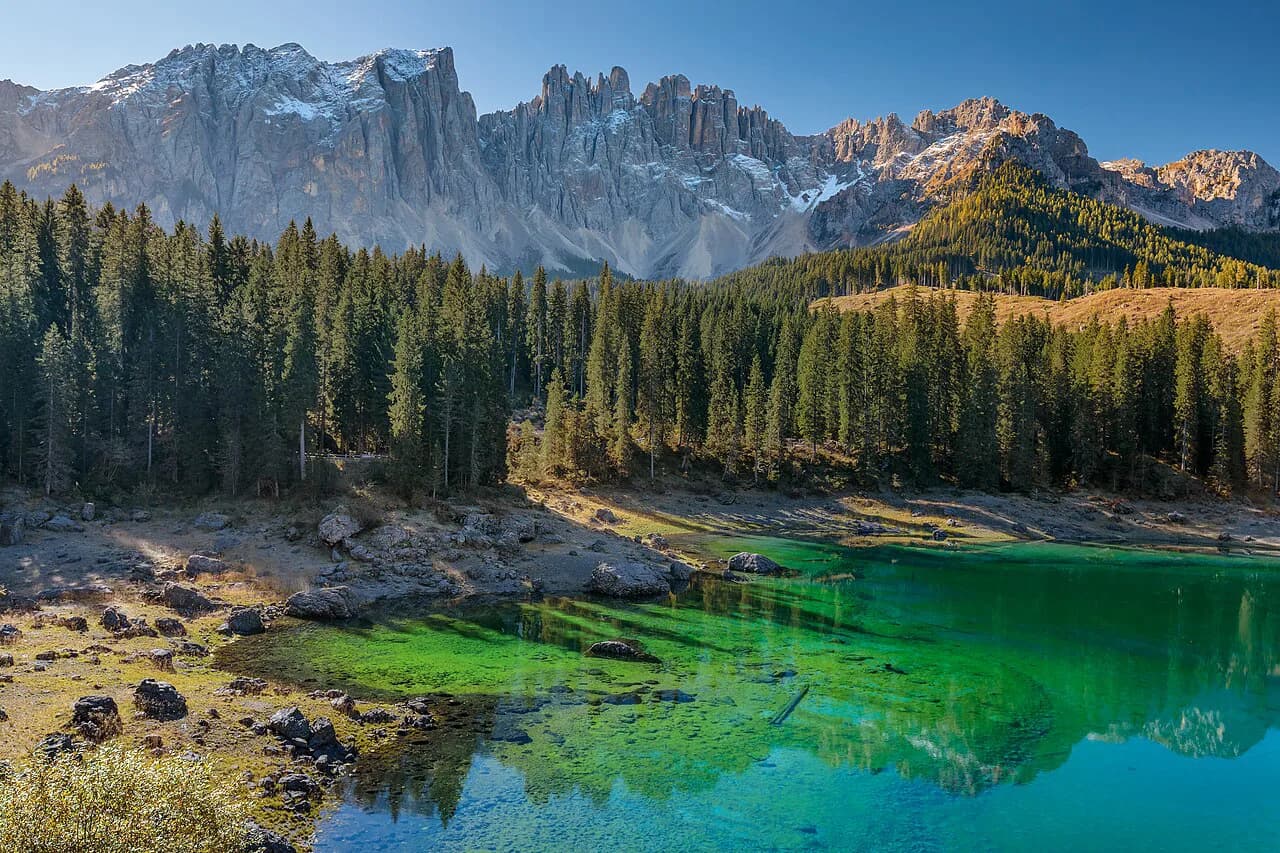
The lake sits at 1,519 metres (4,983 ft) between pine forest and the Latemar range, and its still surface mirrors the peaks when the wind drops. That reflection is the reason most people come, and it rewards an early or late arrival rather than a midday one. The circuit around the shore is a circular path, so you can walk it at an easy pace and still have the afternoon free.
Choose the lake loop if you are travelling with children, short on time, or want a gentle walk with the best views kept close. Choose the Latemar loop if you want an elevation gain, open meadow and pass views, and are happy on a route classified as hard. Neither route needs a lift or a hut night, which makes the lake a flexible stop on a wider Dolomites itinerary. If you are weighing up other alpine bases for the same kind of decision, hiking in Lake Garda offers a comparable mix of short lakeside walks and longer climbs.
Where Lago di Carezza sits in the Dolomites
The lake lies in Nova Levante in Val d'Ega, in the South Tyrol part of the Dolomites, with the Latemar range rising directly above it. Bolzano is the nearest major city and the usual approach point if you are arriving by train or plane. Because the lake is right beside the road over the pass, it works as a short stop between Bolzano and Val di Fassa as well as a destination in its own right.
How to reach the trailhead: car, SS241 and buses from Bolzano
By car, the lake is roughly a 40-minute drive from Bolzano on the SS241, the scenic road that climbs through Val d'Ega. Public buses run regularly from Bolzano and other nearby towns, which makes a car-free day realistic if you build your plan around the published timetable. Check the current South Tyrol bus times before you set out, since services thin out outside the main season.
If you are hiking elsewhere in the range afterwards, the road and bus network link the lake to the main valleys rather than to high mountain huts. For multi-day routes you will need to relocate by bus or car between valley bases; compare options in this Dolomites hiking guide before you lock in accommodation.
Parking at the lake and how long it takes
Parking sits close to the lake and fills quickly on summer weekends and public holidays, so arriving before mid-morning gives you the widest choice. Parking is free for the first 15 minutes, after which charges and any time limits apply as posted at the site on the day. If you are coming from Bolzano, the bus avoids the parking question altogether.
The lakeside circuit: distance, ascent and walking time
The lakeside circuit is a short, flat walk on a path and viewing platform beside the water, with no meaningful ascent. Treat it as an hour or less of easy walking with time added for photographs, rather than a half-day outing. The surface is straightforward underfoot, so trail shoes or sturdy trainers are enough in dry weather.
Because the lake is small, the loop is best combined with something else: a longer walk above the shore, a stop in Nova Levante, or the drive over the pass. Families often walk the circuit twice, once in each direction, at different light. If you want a full day of hiking in the Dolomites, use the lake as a warm-up and take the Latemar loop instead.
The viewing platform and the lake's colours
A viewing platform gives the classic view over the water toward the Latemar, and it is where the lake's turquoise and green tones show best in clear light. The colours shift with the angle of the sun and the state of the sky, so an overcast day flattens them while morning and late afternoon deepen them. Local legend explains the shades as the shattered pieces of a rainbow, a story worth knowing when you look down from the platform.
The longer Latemar loop via Prati di Latemar and Passo Carezza
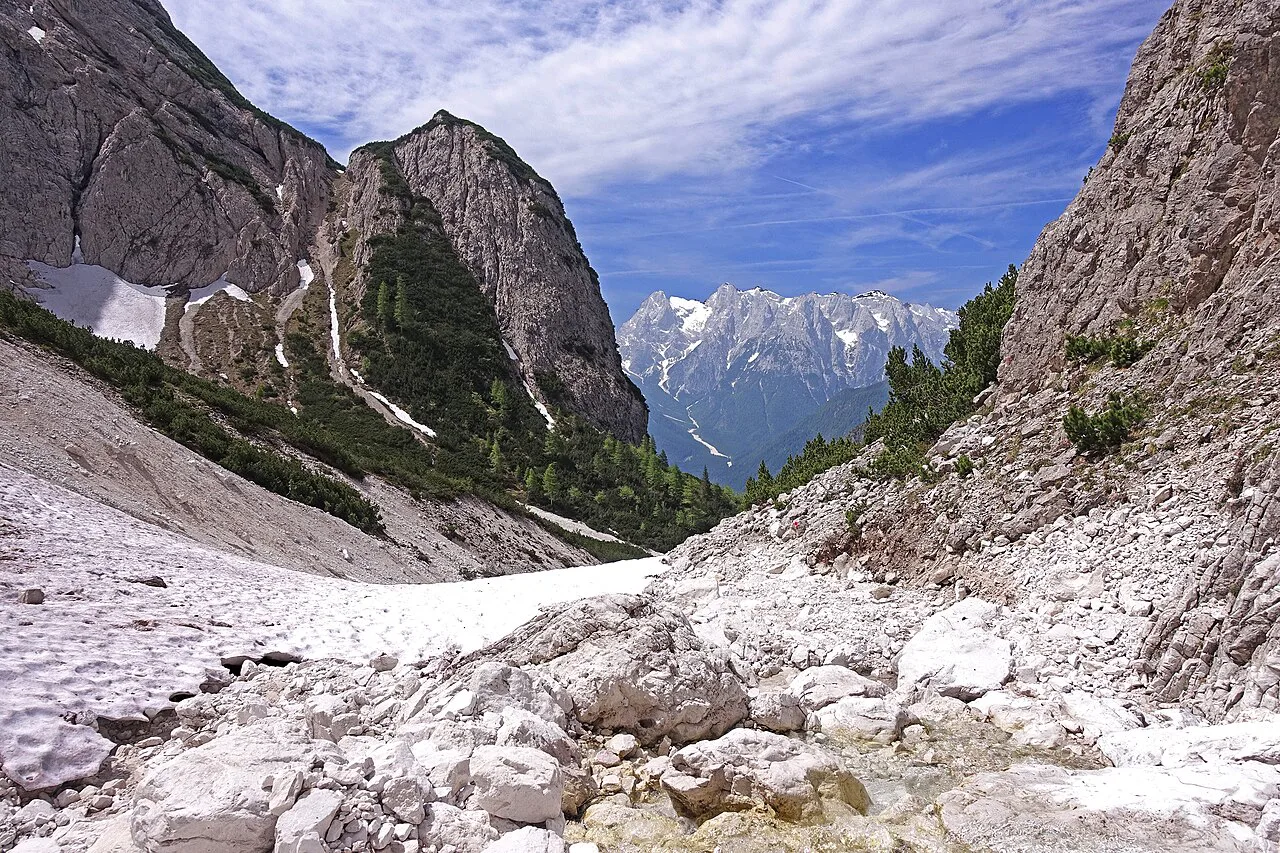
The longer circuit from Lago di Carezza through Prati di Latemar to Passo Carezza covers about 4.7 miles (7.6 km) with roughly 1,591 ft (485 m) of elevation gain, and hikers take around 2.5 to 3 hours without long stops. It is rated as a hard hike, so treat it as a proper half day rather than a stroll from the car park.
Plan the loop clockwise or anticlockwise according to where you want the sun, and carry water because the upper meadows are exposed and dry. Allow extra time if you stop at the pass for photographs, and start early enough that afternoon cloud build-up does not catch you on open ground.
Section by section: forest climb, meadow benches and pass views
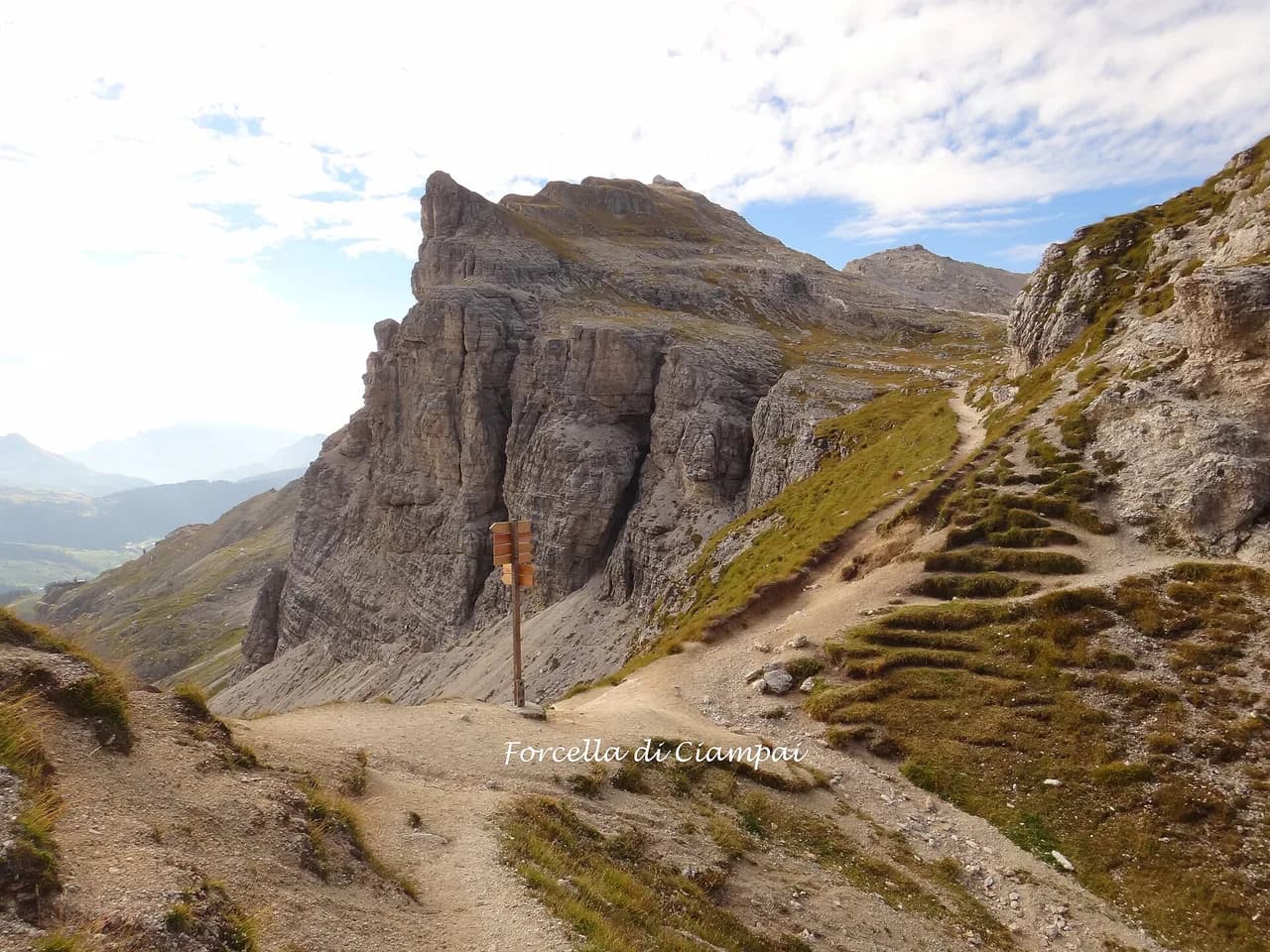
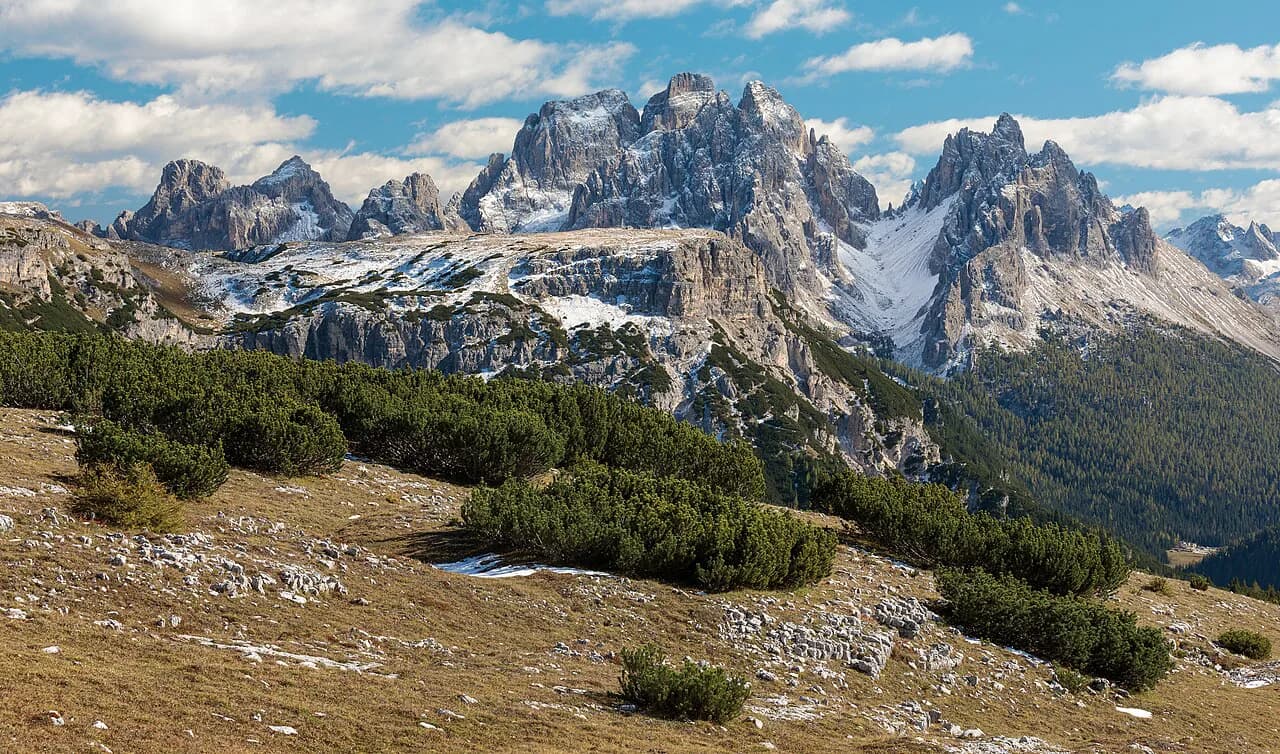
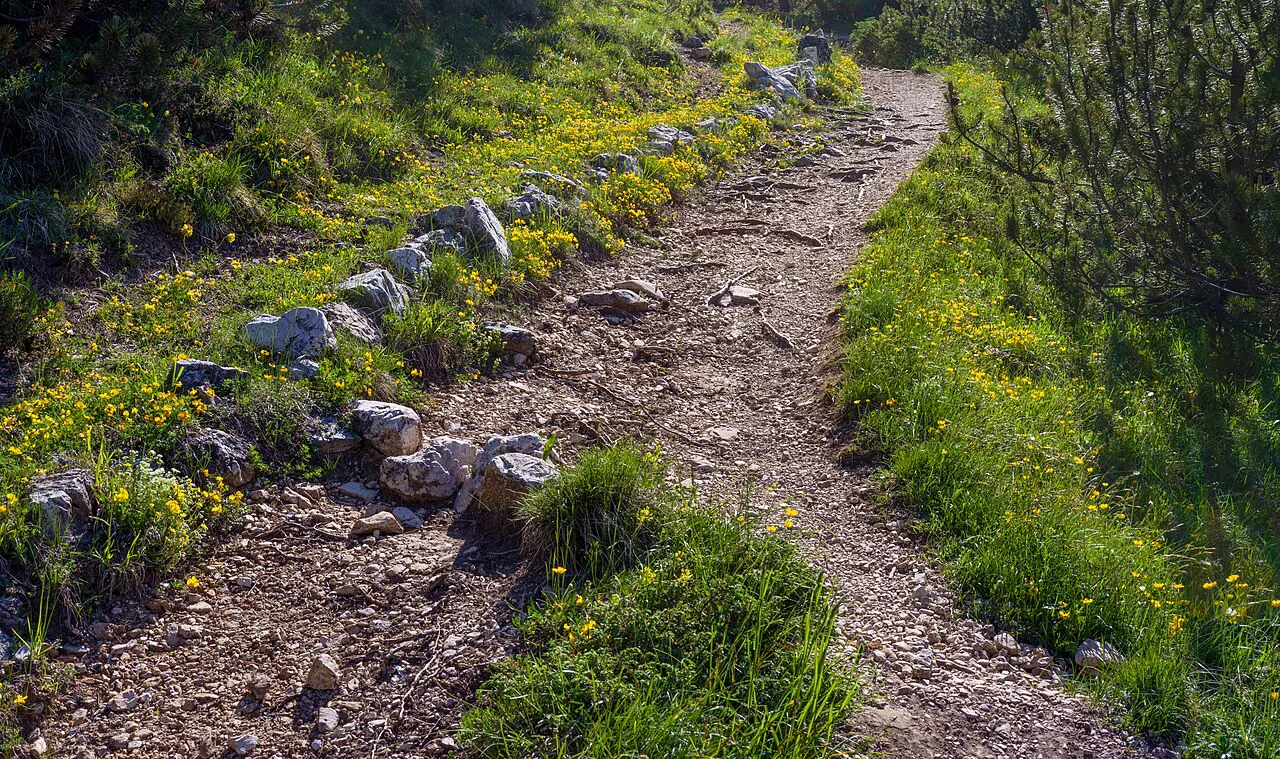
From the lake the route climbs through pine and spruce forest, gaining height steadily before the trees open onto the meadows of Prati di Latemar. Benches on the upper meadow give you a place to rest with the Latemar crest in view. From the meadow the path continues toward Passo Carezza, where the pass road and wider views open up.
The descent brings you back toward the lake through forest, closing the circuit without repeating the climb. Keep the map or route description handy on the upper section, where side tracks branch off across the meadow. In poor visibility, stay on the marked path rather than cutting across open ground.
Difficulty, exposure and the suspension bridge on the circular tour
The lakeside tour includes a suspension bridge near the lake, a highlight for hikers who enjoy a bit of movement underfoot. It is short and part of the marked circuit rather than a technical obstacle, but people uneasy with swaying bridges should take the alternative path where one is signed. The Latemar loop is the harder option: expect sustained climbing, some open and exposed meadow above the treeline, and snow lingering on the upper ground early and late in the season.
Afternoon thunderstorms are a real summer hazard in this part of the Dolomites, so aim to be back below the open meadow by early afternoon and turn around if cloud starts building over the Latemar. If you want more exposed terrain, the Dolomites via ferrata routes above the valleys need a helmet, harness and via ferrata set, and a guide if you are new to the equipment.
When to go: best months and time of day for crowds and reflections
Late spring, summer and early autumn give the most reliable weather and the most vivid lake colours, with autumn foliage adding reds and oranges to the surrounding forest. Arrive early in the morning or late in the afternoon to miss the middle-of-the-day crowds and to catch calmer water on the lake. Weekend and holiday mornings are the busiest, so shift your visit a day where you can.
Winter changes the picture: snow covers the landscape and the nearby Carezza Dolomites ski area operates for skiing, snowboarding and snowshoeing. The lake path and the higher Latemar ground then call for winter footwear and avalanche awareness, so keep ambitious objectives for the snow-free months.
Swimming and lake protection rules
Swimming in Lago di Carezza is prohibited to protect the lake's delicate ecosystem, and that rule applies however inviting the water looks on a hot day. Stay on the paths and viewing areas, and take your picnic leftovers with you to keep the shoreline clean. If you want to swim, plan a separate stop at a designated bathing lake elsewhere in the Dolomites.
Facilities, food and the Carezza Dolomites lift in winter
The lake is a roadside stop with the viewing platform and paths close to parking, so you can combine a walk with a meal in Nova Levante or at the pass rather than carrying a full day's food. In winter the Carezza Dolomites ski area above the lake runs lifts for skiers and snowboarders, and that infrastructure shapes access and parking in the snow season. Published lift dates and operating hours change by season, so confirm them with the lift operator before relying on a winter visit.
Other hikes near the lake in the Val d'Ega area
The Val d'Ega area around Nova Levante and the Latemar gives you more walking than the lake alone, with forest tracks and higher meadow routes branching from the pass road. Use the lake as a base for short days and the Latemar loop for a longer one, then move on if you want bigger objectives. Elsewhere in the Dolomites, the Alta Via 1 long-distance route starts near Lago di Braies and runs south through the range on a very different scale.
If you prefer a multi-day trip with beds booked in mountain huts, plan stages and bookings through the hut operators rather than turning up; this hut to hut hiking dolomites overview explains how the system works. Hikers wanting a valley walk through the Odle/Geisler massif should look at the Adolf Munkel Trail, which sits in the Puez-Odle Nature Park well to the northeast of Lago di Carezza.
What to wear and carry for a half-day hike at 1,519 metres
At 1,519 metres (4,983 ft) the air is cooler than in Bolzano, so pack a light shell and a warm layer even on a sunny morning. Trail shoes work for the lakeside circuit, while the Latemar loop calls for proper hiking shoes, a litre or more of water per person, and a map or offline route. Add sun protection for the open meadow, and a headlamp if you plan a late-afternoon start.
Plan Your Visit
Decide first whether you want the flat lakeside circuit or the harder Latemar loop, because the two ask for different shoes, water and time. Then fix your transport: the SS241 drive from Bolzano takes roughly 40 minutes, and buses run from Bolzano and nearby towns if you would rather not park. An early start gives you calm water, quieter paths and a safe margin before afternoon storms.
Frequently Asked Questions
How long is the hike around Lago di Carezza?
The lakeside circuit is a short, flat walk on a circular path with a viewing platform and a suspension bridge, taking well under an hour at an easy pace plus time for photographs. If you want a longer outing, the Latemar loop through Prati di Latemar to Passo Carezza takes about 2.5 to 3 hours of walking.
Is the Lago di Carezza hike easy or hard?
The lakeside circuit is easy: flat, short and suitable for families and casual walkers. The longer Latemar loop is rated as a hard hike, with sustained climbing to open meadow and pass ground above the lake, so choose it only if you have the fitness and footwear for a half day on the hill.
How do you get to Lago di Carezza without a car?
Buses run regularly from Bolzano and other nearby towns to the lake, so a car-free day is realistic if you plan around the published South Tyrol timetable. Services are thinner outside the main season, so check times with the local transport operator before you commit to a late return.
Can you swim in Lago di Carezza?
No. Swimming is prohibited to protect the lake's delicate ecosystem, and the rule applies regardless of the weather. Stay on the paths and viewing areas, and plan a swim at a designated bathing lake elsewhere if that is part of your day.
What is the best time of day to visit Lago di Carezza?
Early morning and late afternoon give you calmer water, deeper lake colours and fewer people on the paths. Midday in summer is the busiest window and the light is flatter, so shift your visit earlier or later where your schedule allows.
When is the best time of year to hike at Lago di Carezza?
Late spring, summer and early autumn bring the most reliable weather and the brightest lake colours, with autumn foliage around the shore. Winter is a different trip: the nearby Carezza Dolomites ski area operates for winter sports, and the higher ground holds snow.
Is the Latemar loop from Lago di Carezza suitable for beginners?
The Latemar loop is rated as hard, with roughly 485 metres (1,591 ft) of ascent over about 7.6 km (4.7 mi) and some open, exposed meadow. Beginners are better off on the lakeside circuit first, then returning for the loop once they know how they handle sustained climbing.
Sources
Trail notes for your next trip
Optional updates when we add or revise hiking guides.
You might also like
Continue reading
More guides you'll find useful