Grand Balcon Nord: Chamonix Hiking Route Guide
Hike the Grand Balcon Nord from Montenvers to Plan de l'Aiguille: 2h30 to 3h on a balcony path, about 400 m of ascent, with train up and cable car down.
On this page
The Grand Balcon Nord is the traverse that gives you the heart of the Mont-Blanc massif for half a day's effort: a balcony path from Montenvers (1,913 m / 6,276 ft) to Plan de l'Aiguille (2,310 m / 7,579 ft), with the Mer de Glace, the Drus and the Grandes Jorasses in view much of the way. It suits hikers in reasonable shape who want high-alpine scenery without a long climb or technical ground.
Two historic lifts do the work: the red Montenvers rack railway on the way up and the Aiguille du Midi cable car, boarded at its Plan de l'Aiguille intermediate station, on the way down. That means no car shuttle and no retracing your steps, but it also means the walk is only possible while both lifts run.
Where the Grand Balcon Nord runs
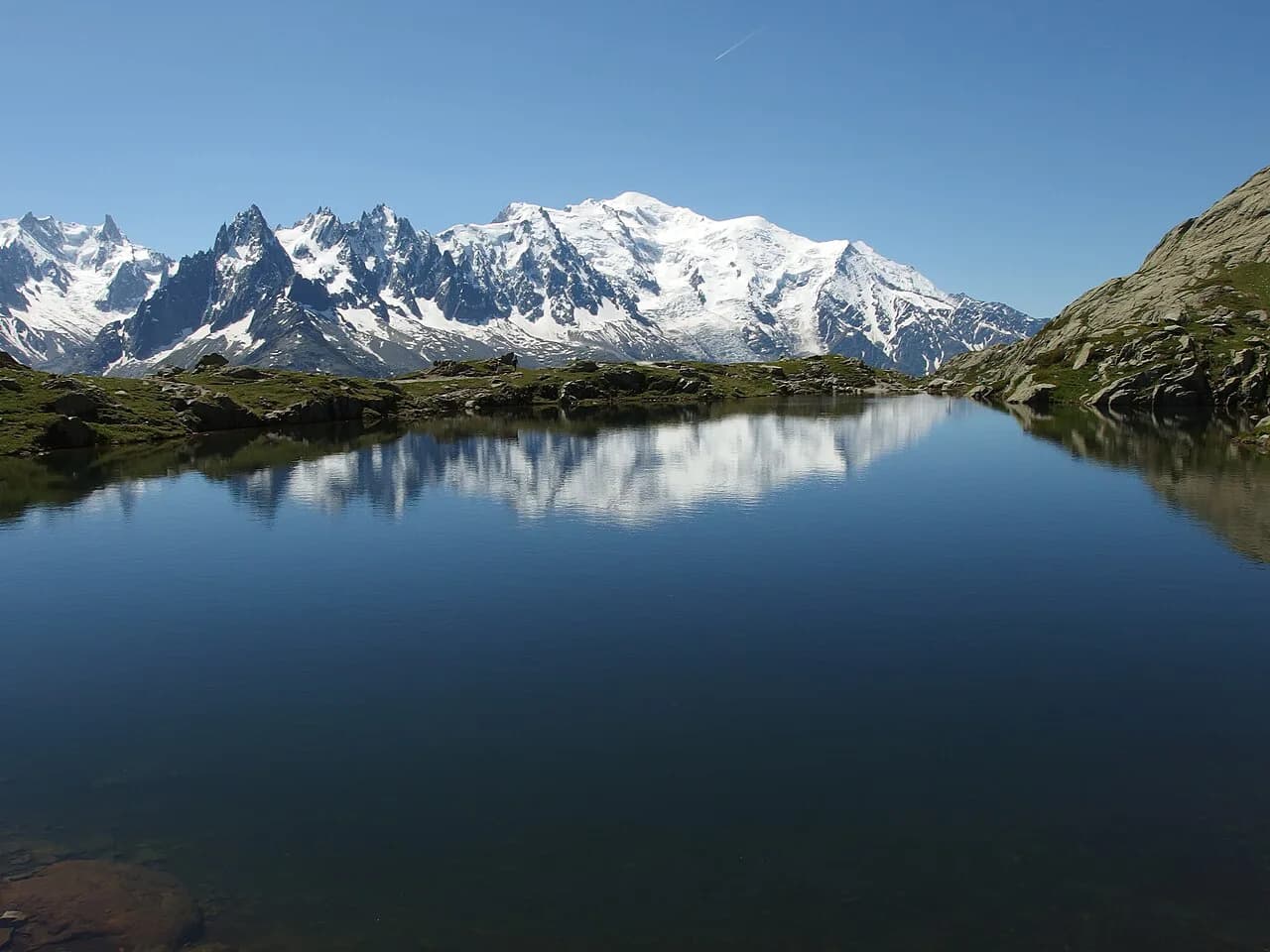
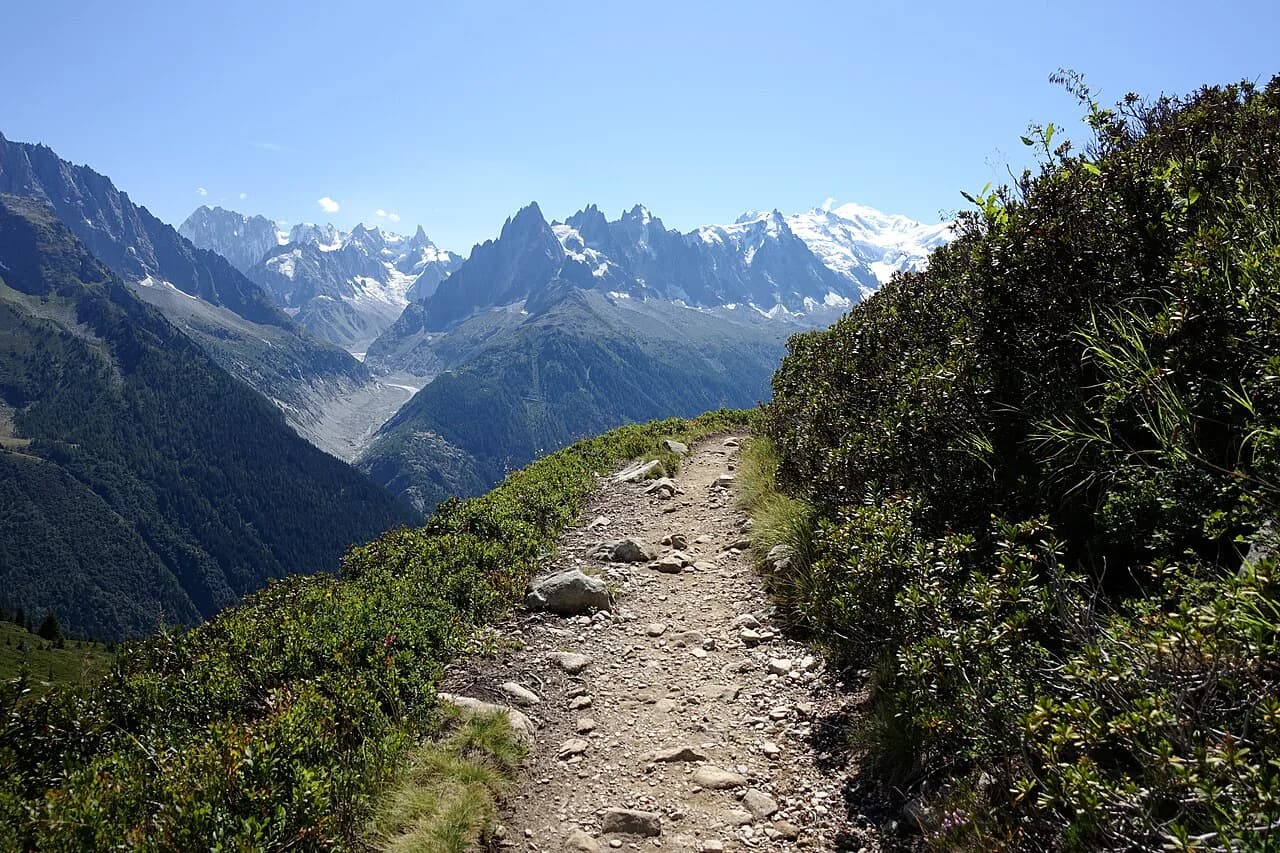
The route crosses the north side of the Chamonix valley below the Aiguilles de Chamonix, starting at the Montenvers station above the Mer de Glace and finishing at the Plan de l'Aiguille station. The Montenvers operator describes the path as a balcony route at almost constant level between the two stations, with the Mer de Glace, the Drus (3,754 m), the Grandes Jorasses (4,208 m), the Dent du Caïman (3,554 m), the Dent du Crocodile (3,640 m) and Mont Blanc (4,808 m) all coming into view.
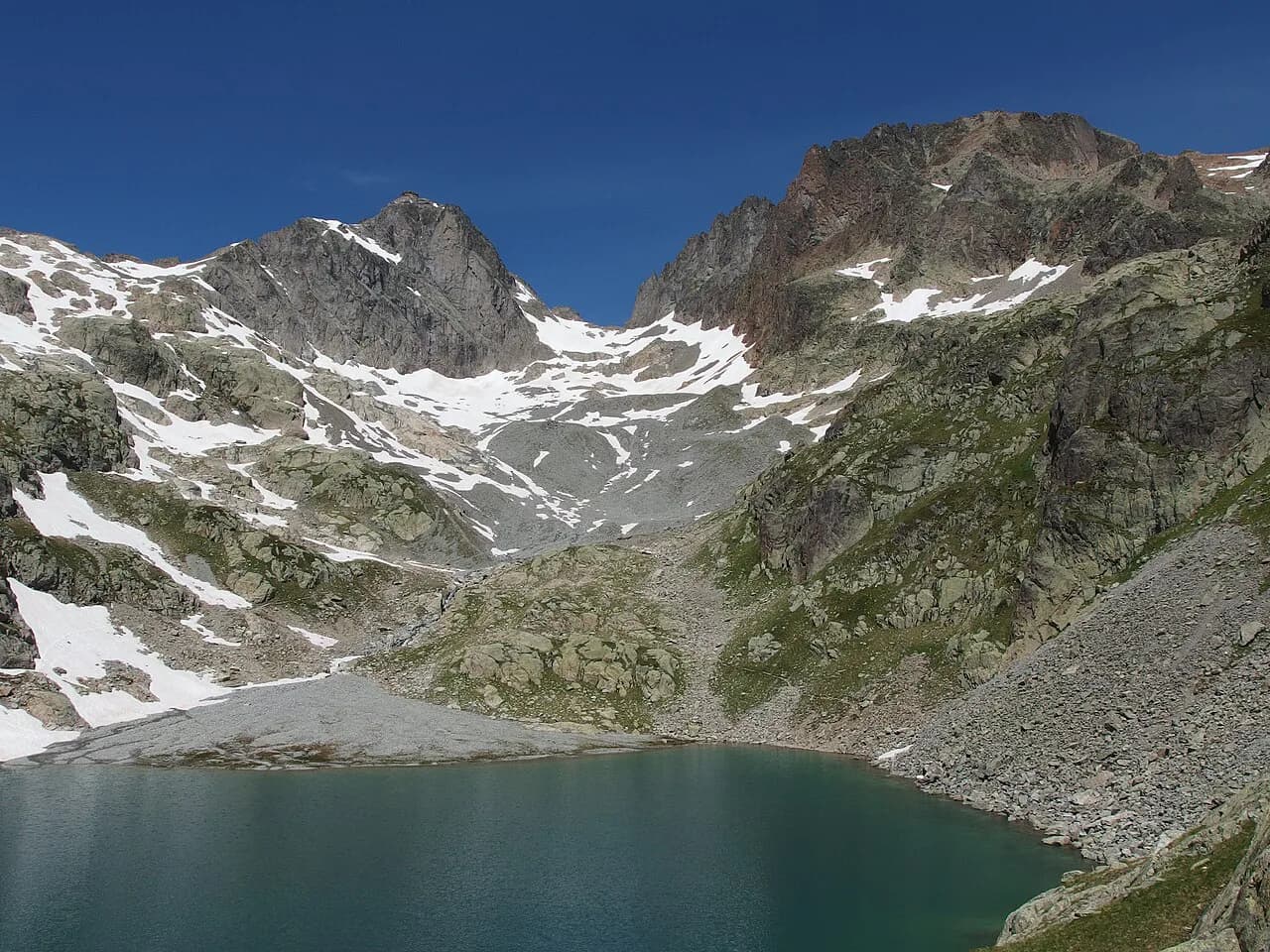
Unlike valley-floor walks, the whole traverse sits above 1,900 m (6,234 ft), so you are in high-mountain terrain from the first step off the train. Treat it as an alpine day rather than a forest stroll, even though the gradient is gentle.
Which direction to walk
Walk it from Montenvers to Plan de l'Aiguille. The Montenvers operator recommends this direction because the climbing is spread out gradually and Mont Blanc stays in your field of vision ahead rather than behind you.
Going this way also puts the one sustained climb, up to Signal Forbes, early in the day while you are fresh, and leaves the long near-level stretch to the finish. In reverse you would gain height more abruptly from the Plan de l'Aiguille side and spend the best views looking back over your shoulder.
Trailhead and lift access at Montenvers
The start is the Montenvers Mer de Glace station, reached by the rack railway from Chamonix. The train has run since 1906 and takes about 20 minutes from the valley, dropping hikers directly at the trailhead.
The Train du Montenvers publishes a summer season running from 1 June to 1 November for 2026. Outside that window the railway does not run on the published schedule, which closes the traverse as a lift-to-lift route; the Montenvers ticket page carries the current season and departure times.
There is no parking at the top station, so the practical pattern is to leave the car in Chamonix and ride up. Arrive for an early departure: in the 14 September to 1 November service the train leaves from 8:30 am with the last ascent at 4:00 pm and the last descent at 4:30 pm, so a late start squeezes the walk.
Return from Plan de l'Aiguille by cable car
The walk ends at the Plan de l'Aiguille intermediate station of the Aiguille du Midi cable car, and a direct descent to Chamonix in the cable car closes the loop. Since the up-lift and down-lift are separate operators, buy the combined hiking ticket the Montenvers operator sells, which covers the train up, the cable car down from Plan de l'Aiguille and the Mer de Glace cable car and ice cave visit.
Ticket prices are not listed in this guide; the Montenvers online ticket page lists the current fares for the train, the cable car and the combined hiking ticket. Check the last descent from Plan de l'Aiguille before you set off, since the final cable car sets your turnaround time on the balcony.
Distance, ascent and time
The Montenvers operator gives 2h30 to 3h00 of walking excluding breaks, with about 400 m (1,312 ft) of positive ascent and a total day of 4h00 to 5h00 once lifts, breaks and the ice cave visit are added. The route is mapped as a one-way walk of 4.5 to 5.7 miles (7.2 to 9.2 km), depending on the exact line taken.
Plan the day around the lifts, not just the walking time. A half-day block is realistic if you start early and skip the glacier add-ons, while a full day lets you visit the Mer de Glace ice cave and Glaciorium at Montenvers before setting out.
Route description: the climb to Signal Forbes
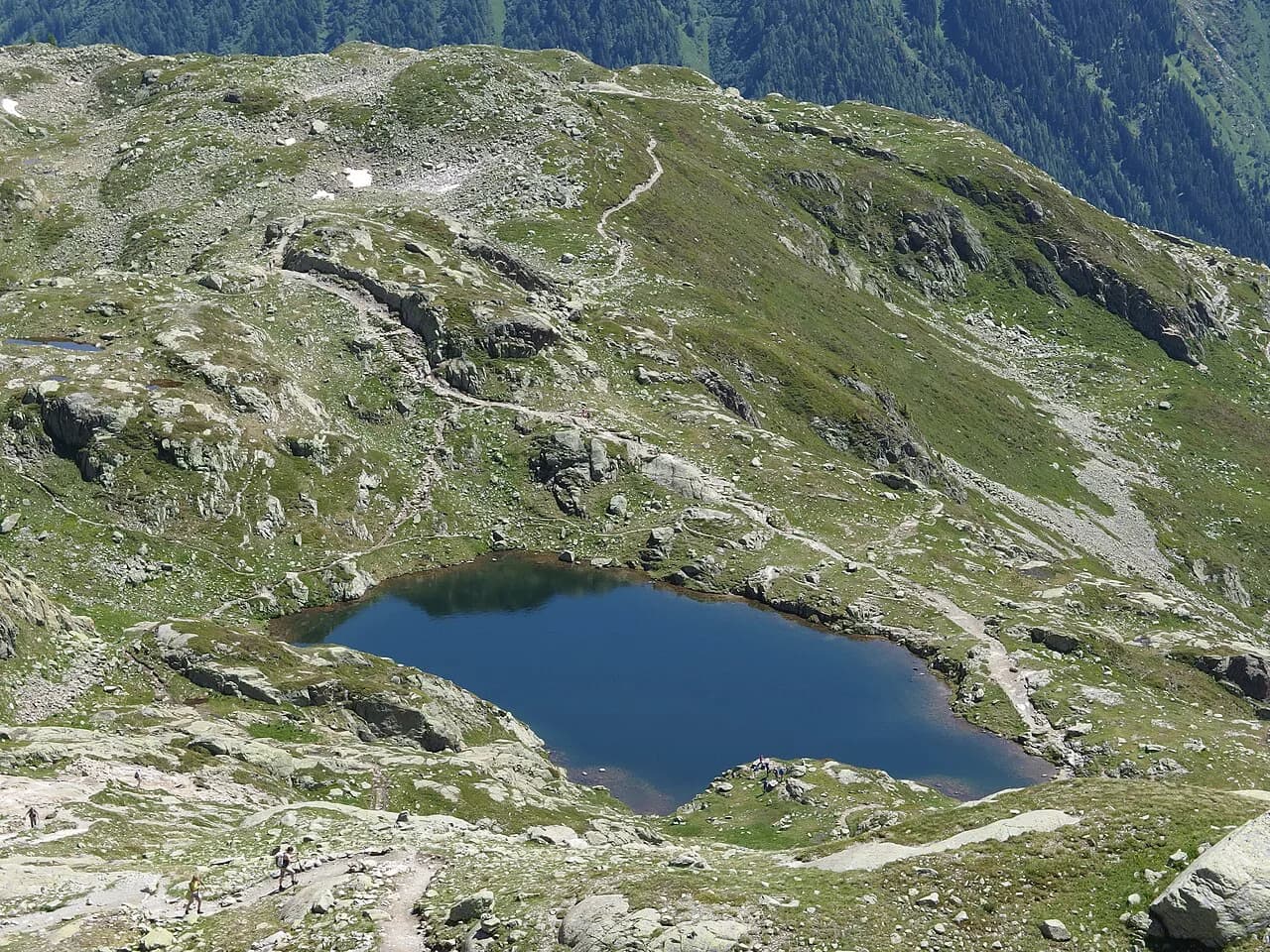
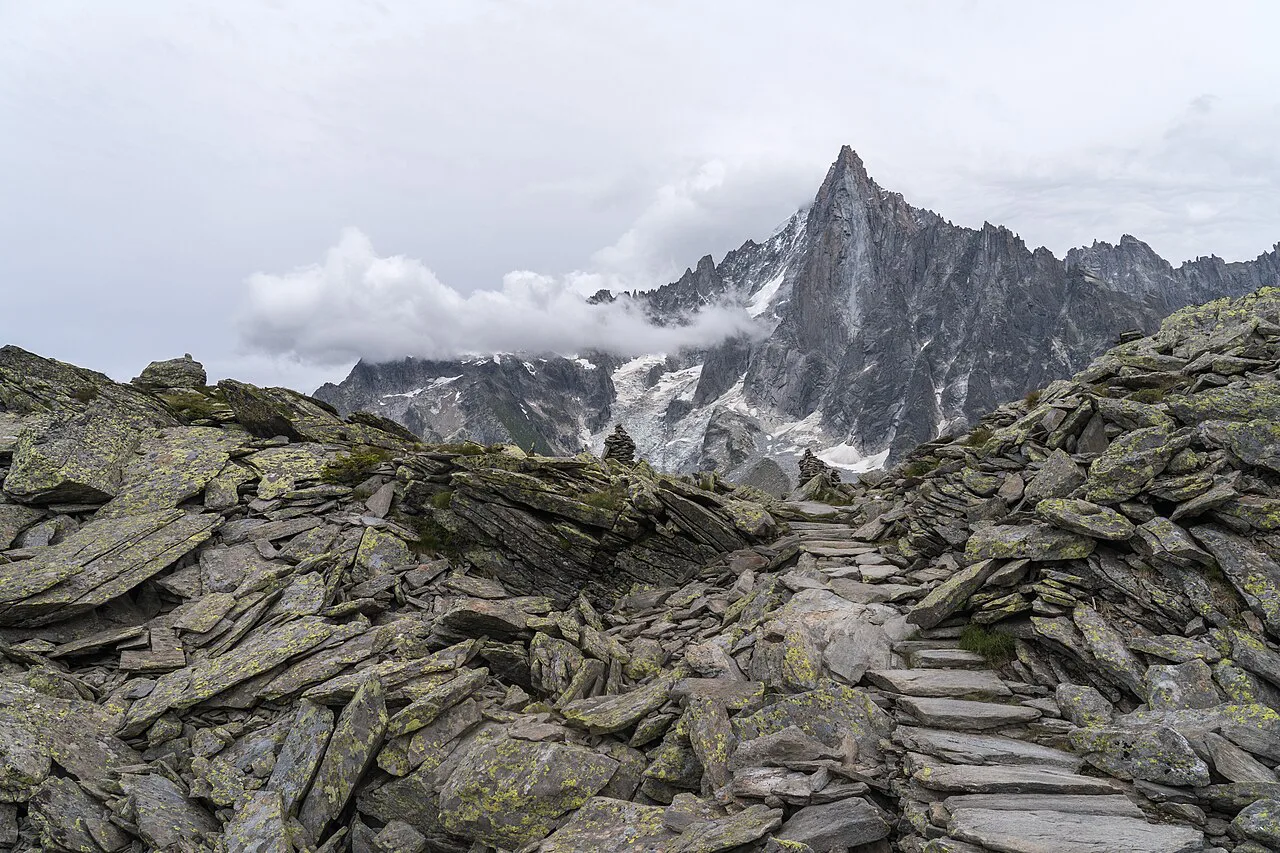
From the Montenvers station the path climbs in switchbacks through scree and alpine grass to the Signal Forbes at 2,198 m (7,211 ft). This is the steepest and most sustained section of the route, and the Montenvers operator flags it as the only real climb on an otherwise level traverse.
The viewpoint is named after the Scottish geologist James David Forbes, and it gives a 360-degree panorama over the glacier and the surrounding peaks. Take the climb steadily, since this is where most of the day's 400 m of ascent is banked.
The balcony traverse beneath the Aiguilles de Chamonix
Past Signal Forbes the trail becomes almost horizontal and runs along the base of the Aiguilles de Chamonix, passing the Aiguille de l'M (2,844 m), the Charmoz, the Blaitière, the Dent du Caïman and the Dent du Crocodile. The Mer de Glace falls away below and the granite spires stand directly above the path.
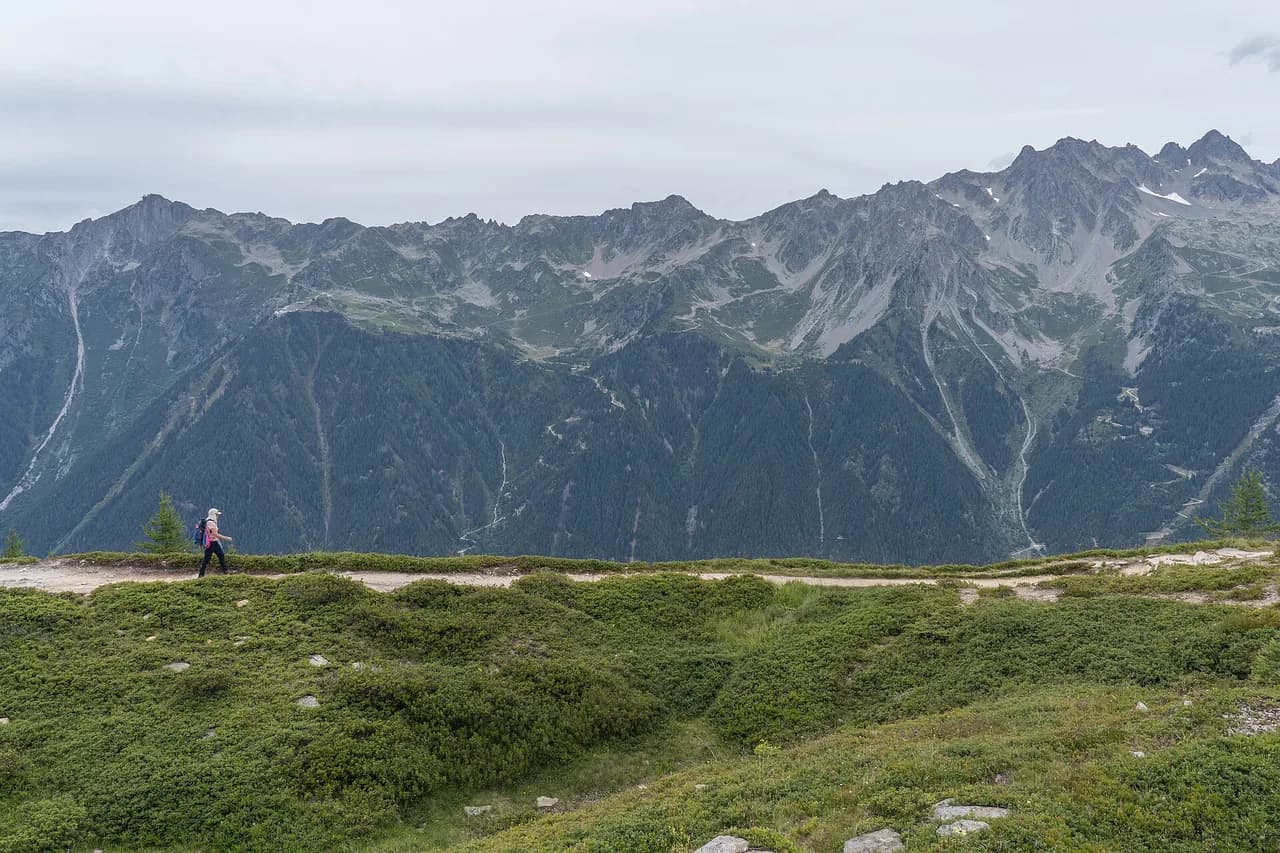
This is the section that justifies the trip: nearly flat walking with a constantly changing skyline, no scrambling and no technical gear. It is also the most exposed part of the day, so a windbreaker earns its place even on a warm morning.
Arrival at Plan de l'Aiguille and the Cosmiques ridge view
The path finishes at the Plan de l'Aiguille station, where you can take a break with a direct view of the Cosmiques ridge before riding the cable car down. Marmots are common on this stretch and ibex sometimes show, so keep your eyes off the trail for a moment here and there.
Strong hikers sometimes ride on up to the Aiguille du Midi at 3,842 m (12,605 ft) for the summit terraces before descending to Chamonix. That addition is a cable car ride rather than a hike, and the altitude hits hard, so treat it as an optional extra rather than part of the traverse.
Difficulty, footing and exposure
The route is rated easy for any reasonably fit hiker, but the Montenvers operator asks for good footing on some sections and warns that the path crosses scree, late snow and alpine meadows. Late snow can linger on the traverse into early summer, so ask at the Montenvers ticket desk about conditions on the balcony before you buy a ticket.
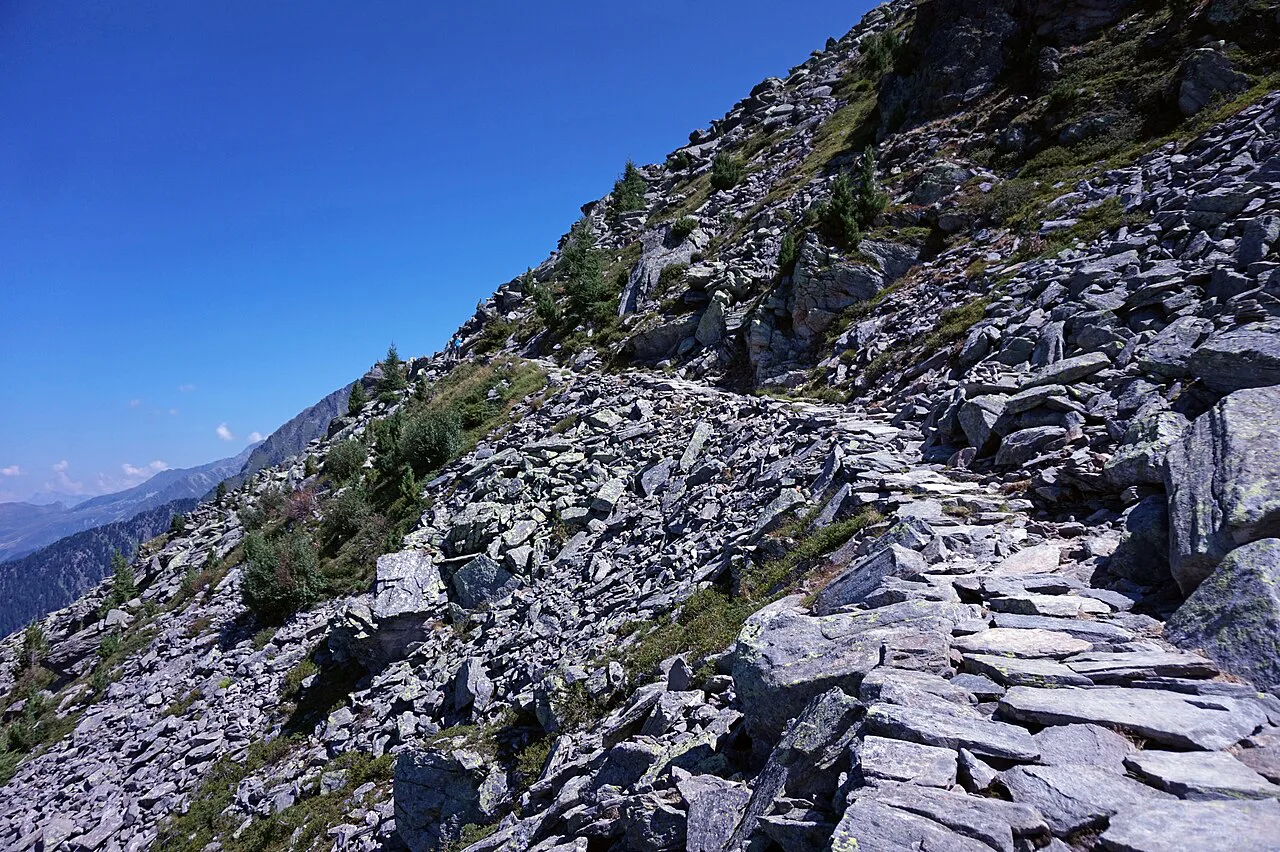
Exposure is the main consideration: the path sits above 2,000 m on an open north-facing slope with no shelter for long stretches. Weather can change fast on an exposed balcony, so carry a warm layer and a waterproof shell even when the valley is warm and sunny, and turn back rather than push through a building storm.
When to go
The Montenvers operator recommends mid-June to late October, tied to lift opening and how much snow remains on the traverse. The published 2026 railway season runs from 1 June to 1 November, so an early-June visit may find the train running while the balcony still holds snow.
Autumn maintenance narrows the window: in 2026 the Montenvers cable car is closed from 28 September to 16 October and the ice cave from 28 September to 1 November, while the railway keeps running until 1 November. If you want the cave and Glaciorium before the walk, plan around those closures; the Montenvers practical-information page lists the current dates.
What to carry above 2,000 m
The Montenvers operator's minimum kit list is good hiking shoes, plenty of water, a warm layer, a waterproof and sunglasses, with no technical equipment required. There are no huts or refuges on the traverse itself, so water and food must come from Montenvers or Chamonix rather than the path.
Sun protection matters more than most people expect at this altitude, and the path is unshaded for long sections. Pack a hat and high-factor sunscreen alongside the shell.
Adding the Mer de Glace ice cave and Glaciorium
Montenvers is more than a trailhead: the site holds the ice cave carved into the Mer de Glace, the Glaciorium exhibit and the Temple de la Nature, all visitable before you start walking. The combined hiking ticket covers the Mer de Glace cable car and the ice cave visit, so the add-ons cost little extra time if you start early.
Budget an extra hour or more if you want to see all three, and check the ice cave and cable car operating dates when you book, since both close for maintenance in some autumn weeks.
Other Chamonix hikes nearby
If you have a second day in the valley, the Grand Balcon Sud on the opposite side offers a sunnier balcony with its own lift access from Plan Praz, and the Lac Blanc hike adds a classic reflecting lake to the same massif. Both are separate outings from the Grand Balcon Nord, not extensions of it, and each has its own lift season.
For planning the rest of a Chamonix trip, including other balcony routes and valley walks, browse the wider hiking in chamonix collection, and check current prices and opening dates with the Montenvers train and Aiguille du Midi lift company before you go.
Plan Your Grand Balcon Nord Day
The Grand Balcon Nord is the best value half-day in the Chamonix valley: about 400 m of ascent, 2h30 to 3h of walking and a lift back down from the finish. Book the combined ticket, take an early train and keep the afternoon free for the ice cave or a cable car ride up to the Aiguille du Midi.
Fix your date around the mid-June to late-October window and confirm the railway and cable car seasons with the Montenvers operator before travelling. On the day, check the weather, carry water and a shell, and watch your last-cable-car time at Plan de l'Aiguille.
Frequently Asked Questions
How long does the Grand Balcon Nord hike take?
The Montenvers operator gives 2h30 to 3h00 of walking excluding breaks, and 4h00 to 5h00 for the full day including lift rides and stops. Add extra time if you want to visit the Mer de Glace ice cave or Glaciorium at the start.
Is the Grand Balcon Nord difficult?
It is rated easy for reasonably fit hikers, with about 400 m of ascent and one sustained climb to Signal Forbes. Good footing is needed on some sections where the path crosses scree and late snow, but no technical equipment is required.
Which direction should you hike the Grand Balcon Nord?
Go from Montenvers to Plan de l'Aiguille. This direction spreads the climbing gradually and keeps Mont Blanc in front of you, and it puts the Signal Forbes climb early while you are fresh.
How do you get back to Chamonix from Plan de l'Aiguille?
Take the Aiguille du Midi cable car from its Plan de l'Aiguille intermediate station down to Chamonix. A combined ticket sold by the Montenvers operator covers the train up, the cable car down and the Mer de Glace add-ons.
When is the best time to hike the Grand Balcon Nord?
Mid-June to late October is the recommended window, set by lift opening and snow on the traverse. The railway season published for 2026 runs from 1 June to 1 November, but the balcony can still hold snow at the early end.
Can you hike the Grand Balcon Nord without technical gear?
Yes. The path is a marked balcony route with no scrambling. Bring hiking shoes, water, a warm layer, a waterproof and sunglasses.
Sources
Trail notes for your next trip
Optional updates when we add or revise hiking guides.
You might also like
Continue reading
More guides you'll find useful