Grindelwald Via Ferrata: Rotstock (K2) and Nearby Iron Paths
The Rotstock via ferrata above Grindelwald is a K2 route reached from Eigergletscher, with 260 m of ascent and wide alpine views from the summit.
On this page
The Grindelwald valley holds one proper via ferrata of its own, the Rotstock, a K2 route that starts beside the Eigergletscher station and gains 260 m (853 ft) to a summit with open alpine views. It suits hikers with steady feet and some upper-body strength who want a first taste of cable-and-rung terrain without committing to a full climbing day. For a broader look at the trails around the village, the grindelwald hiking guide sets out the walking options on both valley sides.
A via ferrata is a rock route equipped with steel cable, bolts, rungs and ladders, climbed while clipped into the cable with a harness, helmet and shock-absorbing lanyard. Swiss routes are graded K1 to K6, and the scale matters more than any route's reputation: K1 and K2 lines are generally manageable for fit beginners, while K5 and K6 demand real experience and endurance.
The Rotstock Via Ferrata at a Glance
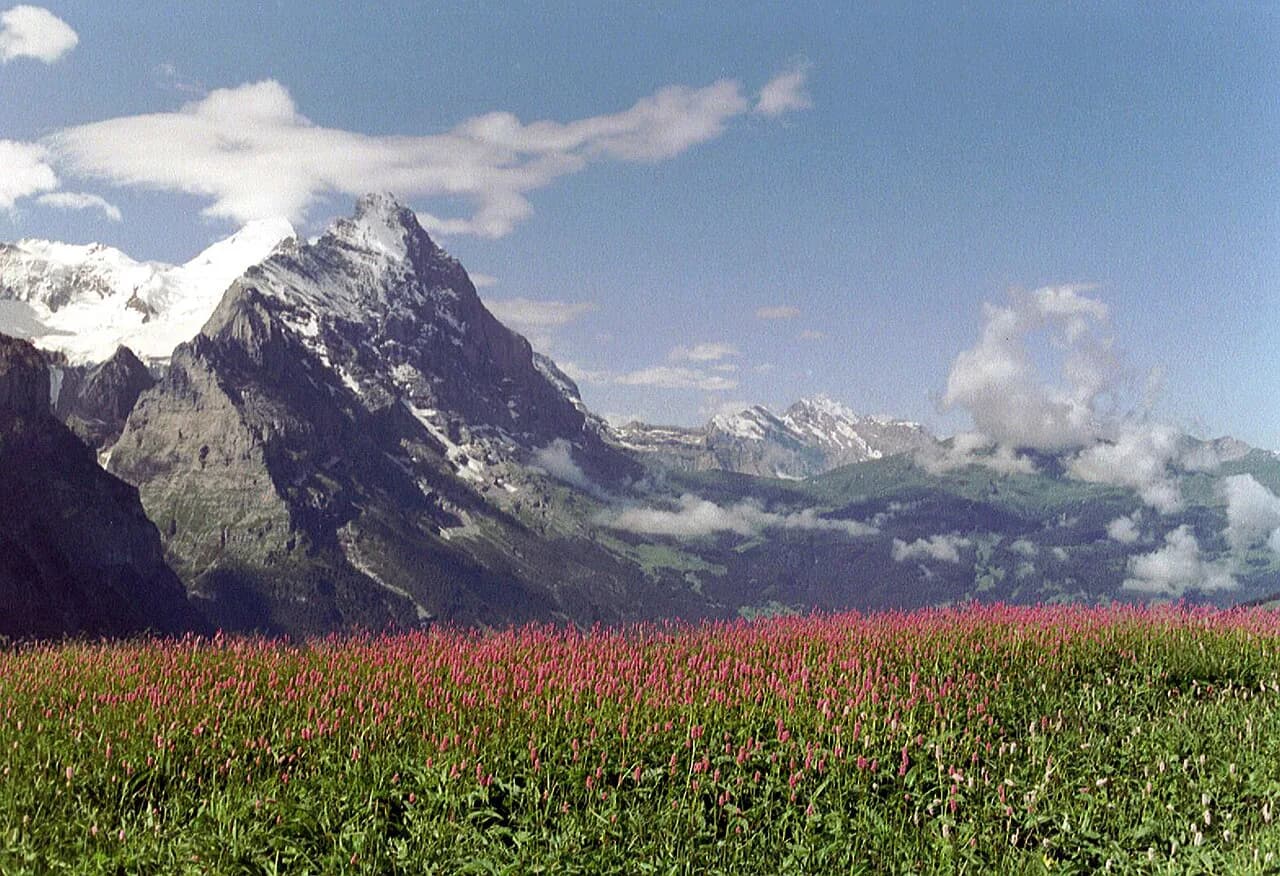
The Rotstock via ferrata is rated K2 and runs as a loop of about 2.6 km (1.6 mi) that gains 260 m (853 ft) in elevation, ending at a summit with 360-degree alpine views. It sits near the Eigergletscher station, which puts the start high on the Eiger's flank rather than in the valley floor. From the top you look across the Bernese Oberland peaks, and the return is not a protected ferrata at all.
The combination of a short distance and a low grade makes the Rotstock the natural first via ferrata in the area, but short does not mean casual: you are on a high mountain face, clipped to metal, with the Eiger North Face country around you. The ascent is the protected part and carries the effort; the descent is a walking route with ropes on the steeper sections.
Access to the Eigergletscher Trailhead
The Rotstock route begins at the Eigergletscher station above Grindelwald, reached by mountain railway from the village. The line from Grindelwald Grund climbs via Alpiglen and Kleine Scheidegg to the station, so you can ride up, do the ferrata, and ride back down without a long valley walk at either end of the day.
The same station serves hikers walking the Eiger Trail down toward Alpiglen, so expect company on the train and around the platforms even on a weekday. Check the railway's published timetable and the day's first and last connections to Eigergletscher before you commit to the ferrata, because missing the last descent turns a short outing into a long walk out. Ride up early enough that you have the full day for the route and the summit.
Rotstock Route Description
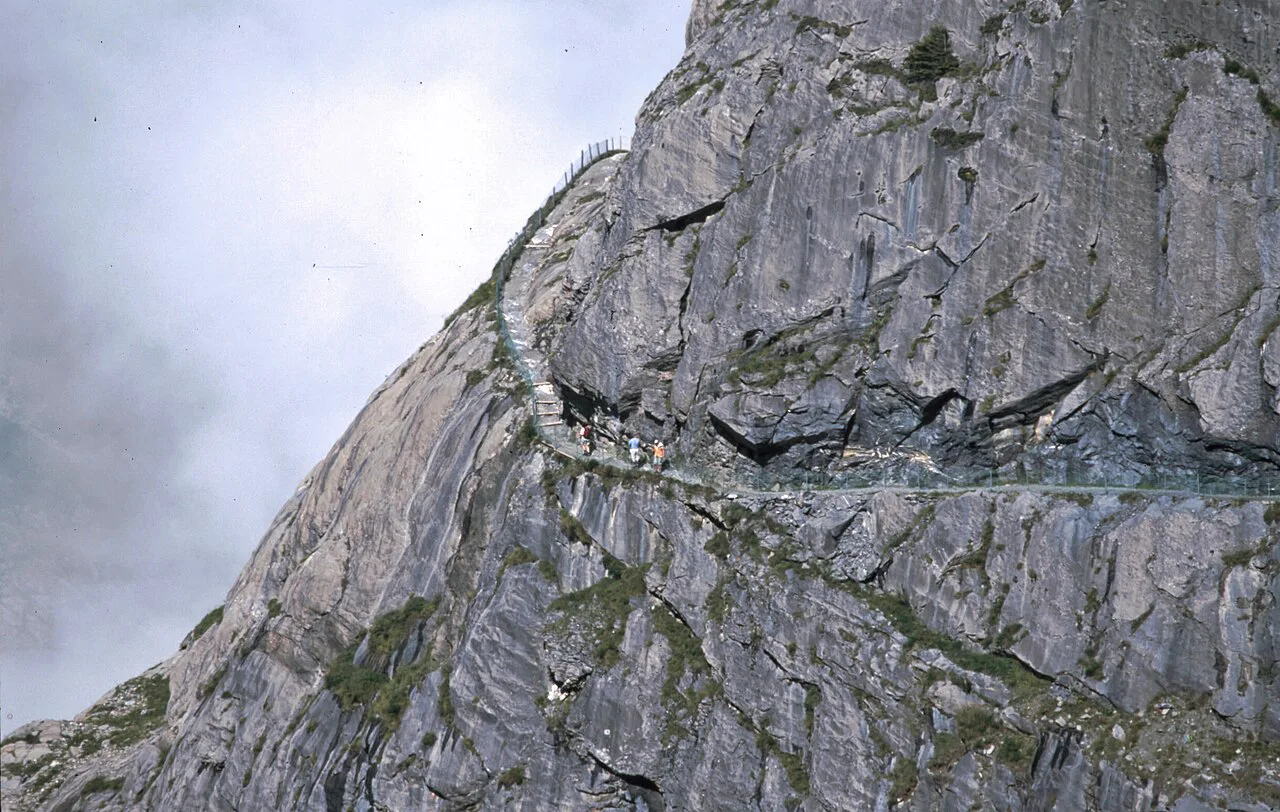
From the station the route climbs onto the rock and begins with vertical, exposed ground protected by cable, with rungs and stemples giving the hands and feet something to work with. The protected climbing is sustained rather than a single hard move, so pace yourself and keep the lanyard clipped through the rests. Fit hikers should treat the ascent as the main event of the day.
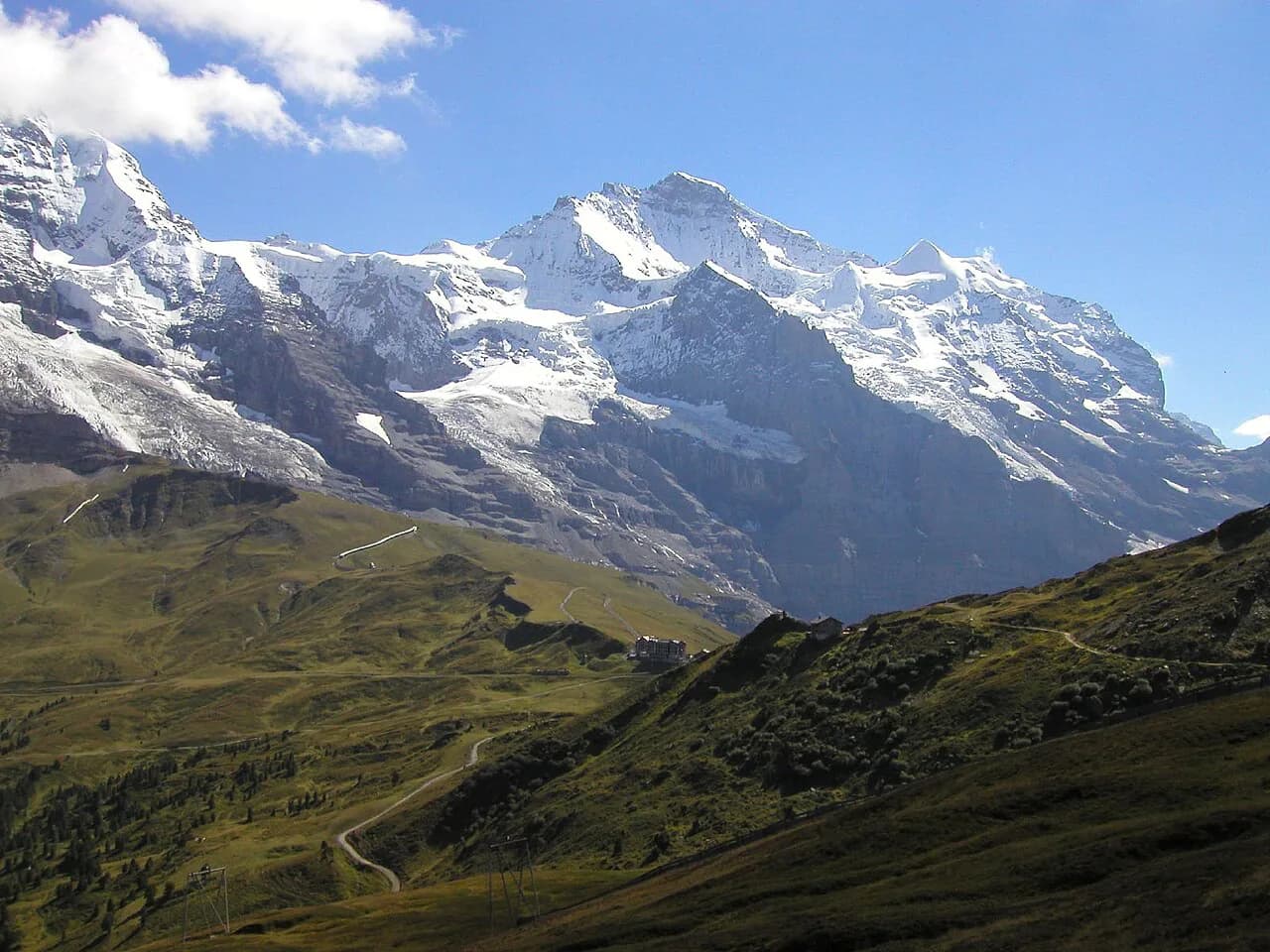
Higher up the angle eases and the line reaches open alpine ridgeline terrain, where the views open across the Jungfrau region and the peaks around Kleine Scheidegg. This is the part to enjoy once the climbing is behind you, but wind and sudden cloud can arrive fast on the ridge. Carry a shell even on a clear morning.
The Descent from Rotstock
The way down from the Rotstock summit is not a via ferrata: it is a mountain walking route, and the steeper sections are protected with ropes rather than cable. Ropes help balance, not fall arrest, so treat the descent with the same care as the climb and budget extra time for it. Many parties underestimate how much slower roped scrambling is than plain walking, so plan your train connection with slack.
Gear for the Rotstock
You need a climbing harness, a via ferrata set with a shock-absorbing lanyard and locking carabiners, a helmet and gloves; the metal cable, rungs and rock take a toll on bare hands. Sturdy footwear with a firm edge matters more than the shoe's weight, and some rental shops will refuse to rent kit to climbers in sneakers. Add layers, water, snacks, sun protection and a small pack.
Most guided trips include the via ferrata set, which removes one of the bigger equipment hurdles for a first attempt. If you buy your own, learn how the two lanyards of the set work before you are on the rock, not at the first clip.
Renting Equipment in the Grindelwald Area
Around Interlaken, sports shops rent a harness, helmet and carabiners for about 40 CHF, with shoes an extra 20 CHF; these are Interlaken-area shop rates, not prices at the Eigergletscher station. Ask about rental at Eigergletscher directly before you rely on it, since the range carried at a mountain station changes with the season. In peak season shops can pause rentals after rain, so call ahead and reserve your kit for the day.
Mürren and Lauterbrunnen have their own Intersport branches if you base on that side of the valley, and local shops in Kandersteg cover the Oeschinen route. Carrying rented gear up by cable car is normal and keeps you flexible on timing.
Mürren-Gimmelwald: The K3 Alternative in the Bernese Oberland
Outside Grindelwald but still in the Bernese Oberland, the Mürren-Gimmelwald ferrata is rated K3, runs about 2.2 km (1.4 mi) and takes roughly 3 hours, descending from Mürren to Gimmelwald the whole way. Two sections hang over a 600 m (1,970 ft) drop, which is what earns it the step up in grade from the Rotstock.
Because the line travels downhill, the effort is concentrated in exposure and descending technique rather than in climbing, and the Nepal footbridge is one of the features that makes it memorable. It is the Bernese Oberland route with guided options, which makes it a sensible choice if you want support on your first exposed outing.
Kandersteg: The K4 Step Up
Also outside Grindelwald, near Lake Oeschinen in Kandersteg, a K4 route gains 350 m (1,150 ft) and mixes vertical walls with pole crossings. The grade reflects sustained exposure rather than one technical crux, so it belongs to climbers who are already comfortable on cable and committed to heights. Treat it as a progression after a K2 or K3 day rather than a first ferrata.
Matching Grade to Experience
Start with K1 or K2 if via ferrata is new to you: these routes generally suit beginners with reasonable fitness, and the Rotstock's K2 grade fits that bracket. K3 and K4 routes add longer vertical sections and greater exposure, and a qualified guide can make a K3 a reasonable next step. Leave K5 and K6 lines, such as the Daubenhorn near Leukerbad at K5-6, until you have several seasons of cable terrain behind you.
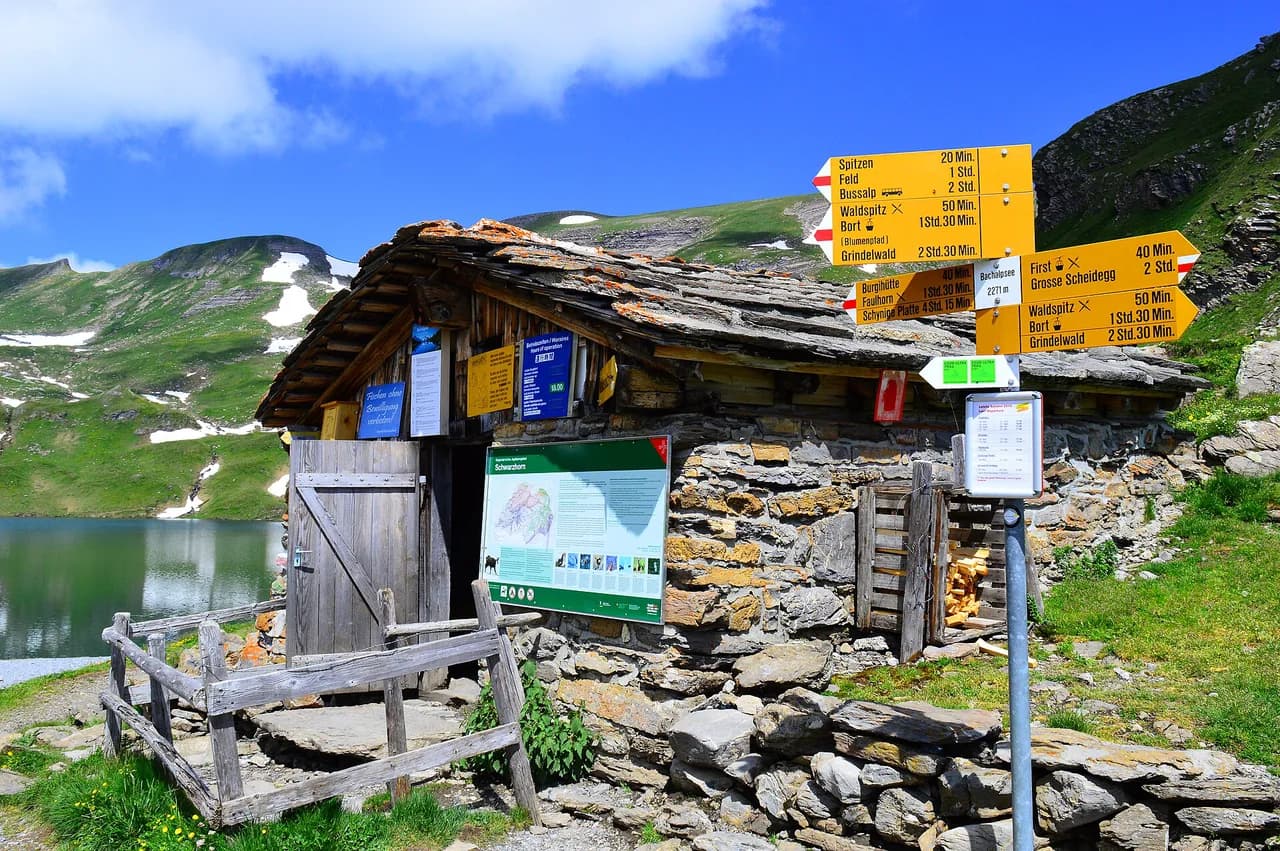
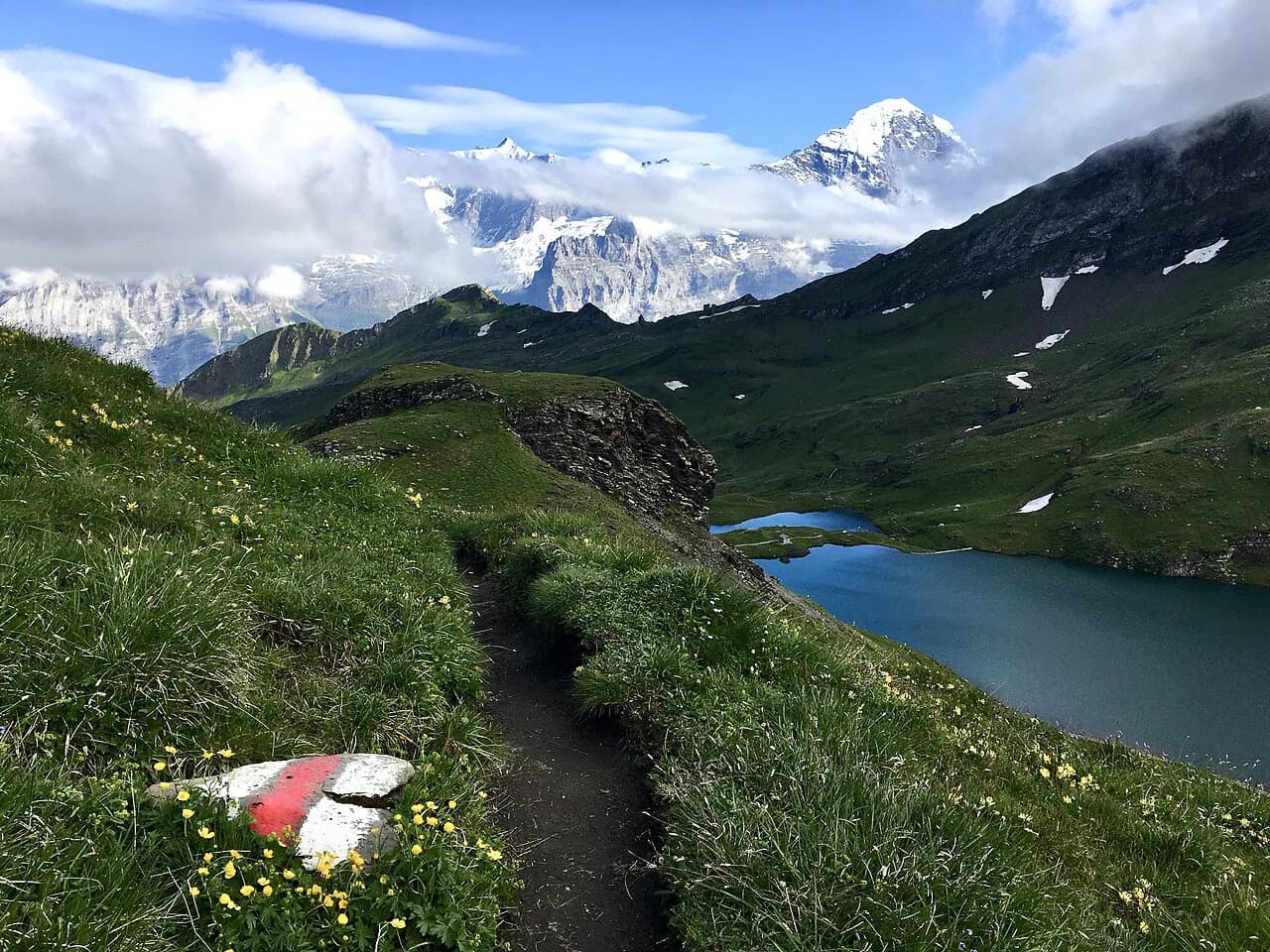
The honest test is not fitness but how you handle being on a metal stemple above a drop; if a K3 over 600 m of air sounds unpleasant rather than exciting, spend your day on the valley trails instead. The Bachalpsee Hike from Grindelwald First gives you big views without the cable, and the mannlichen to kleine scheidegg ridge walk is a gentler high route.
Short days and tired legs cause more accidents than hard moves do, so pick the grade that leaves you with margin for the descent and the train home. If you want more route options across the country, the switzerland via ferrata overview is the place to plan a progression.
Season, Snow and Storms
The general Swiss via ferrata season runs from June to October, with July through September the most reliable window; higher routes can open later when snow lingers, and October conditions turn colder with some routes closing early. Snow on the approach and the upper ridge is the practical limit on the Rotstock early and late in the season.
Mountain weather changes fast, and thunderstorms, heavy rain and strong wind make exposed metal routes hazardous. Plan a short day with a stable forecast, and turn around if the sky builds, because the cable is no place to be when lightning starts.
When to Take a Guide
Experienced via ferrata climbers can handle a K2 like the Rotstock independently if they understand the grading and use the kit correctly, while beginners and anyone on an unfamiliar harder route benefit from a qualified guide. Certified professionals on guided trips can include Swiss mountain guide or IFMGA credentials, which you can check on the individual guide profile before booking.
Bases and Logistics
Grindelwald itself is the natural base for the Rotstock, with the railway to Eigergletscher leaving from the village and its Grund station. Interlaken and Grindelwald work well as bases for the wider Bernese Oberland routes, while Leukerbad suits the Daubenhorn and Valais resorts cover the routes in their own valleys.
Switzerland's train, bus and cable car network makes most of these trailheads reachable without a car, which simplifies a ferrata day: you can ride up and walk or ride down. Plan the day around the last connection, and keep a shorter valley walk such as the glacier canyon grindelwald as a backup if the weather closes in.
Planning Your Rotstock Day
The Rotstock is the via ferrata for a Grindelwald trip: a K2 line of about 2.6 km with 260 m of ascent, reached from the Eigergletscher station, with a roped walking descent rather than a second protected pitch. Book your kit in advance, ride up early, and keep the summit and the descent within the day's margin.
Frequently Asked Questions
What grade is the Rotstock via ferrata?
The Rotstock is graded K2 on the Swiss K1-K6 scale, which puts it in the beginner-to-moderate bracket for fit hikers with some comfort on exposed ground. It is a loop of about 2.6 km that gains 260 m to a summit with 360-degree views.
How do I reach the Rotstock via ferrata from Grindelwald?
Ride the mountain railway from Grindelwald up to the Eigergletscher station, where the route begins. Check the railway's timetable for the day's connections so you do not miss the last descent.
Is the descent from the Rotstock summit protected?
No. The descent is a mountain walking route with ropes on the steeper sections rather than cable, so allow more time than you would for plain walking and mind your footing.
Can beginners do a via ferrata near Grindelwald?
Yes, the Rotstock's K2 grade is generally suitable for fit beginners, provided you use a harness, helmet and via ferrata lanyard correctly. A guided day is the sensible route if you have never clipped into a cable.
Where can I rent via ferrata gear for the Grindelwald area?
Shops around Interlaken rent harness, helmet and carabiners as a set, and some branches rent shoes too. Ask about rental at the Eigergletscher station directly before you count on it.
What is the best season for via ferrata in the Bernese Oberland?
The general Swiss season runs from June to October, with July to September the most reliable months. Snow can linger on higher routes early and late in the season.
Is the Mürren-Gimmelwald via ferrata harder than the Rotstock?
Yes. Mürren-Gimmelwald is rated K3, descends about 2.2 km from Mürren to Gimmelwald over roughly 3 hours, and includes two sections above a 600 m drop.
Do I need a guide for the Rotstock via ferrata?
Experienced via ferrata climbers can do the Rotstock independently. Beginners, or anyone unsure about exposure, should go with a qualified guide who can teach technique and judge conditions.
Sources
Trail notes for your next trip
Optional updates when we add or revise hiking guides.
You might also like
Continue reading
More guides you'll find useful