Switzerland Via Ferrata: 4 Routes, Grades and Gear
Four Swiss via ferrata routes compared by grade, length and ascent, with how to reach each start by cable car or train and what gear each one demands.
On this page
A via ferrata is the bridge between hiking and rock climbing: steel cables, iron rungs and ladders fixed to the rock, with a shock-absorbing lanyard keeping you attached the whole way. Switzerland has routes for nervous first-timers and for climbers chasing multi-hour exposure, and the difference between them comes down to grade, length and how committed the terrain feels.
The four lines below are the ones most often asked about, spread across the Bernese Oberland, central Switzerland and Graubünden. Each has a different transport chain, a different season and a different set of demands, so pick by fitness and head for heights rather than by photographs alone.
What a Swiss via ferrata involves and who each grade suits
A via ferrata is a protected climbing route equipped with steel cables, rungs, ladders and sometimes wooden walkways or suspension bridges. You wear a harness and clip a via ferrata set to the cable, moving one carabiner at a time so at least one remains attached, including when you switch between sections.
Swiss routes are graded on the SAC via ferrata scale, where the K number climbs with difficulty. K3 means fairly difficult, with steep rock that is well secured and ladders on the vertical passages; K4 steps up to sustained ladder and peg climbing that asks more of your arms and stamina.
Fitness matters as much as technique. A short cliff traverse and a 770 m (2,530 ft) ascent on ladders feel nothing alike, and several hours on fixed cable is tiring in a way ordinary hiking is not, so match the route to what you can sustain rather than to what you can briefly hang from.
Mürren to Gimmelwald: the descent route above Lauterbrunnen Valley
This is the rare via ferrata that loses height rather than gaining it. From Mürren the route traverses the cliff face above the Lauterbrunnen Valley and drops to Gimmelwald, 2.2 km (1.4 mi) of cable, ladders and rock ledges with 300 m (985 ft) of descent.
The character is set by the exposure: the rock wall falls away steeply toward the valley floor, and the route is graded K3. Two features stand out, a 60 m (200 ft) zip line and an 80 m (260 ft) Nepal suspension bridge, and there is a compulsory introductory video before you start.
The zip line may only be used when accompanied by a mountain guide, so if that element is the reason you chose this route, book a guided slot rather than turning up solo. Guided groups typically meet at Intersport Mürren and walk to the start together.
Mürren via ferrata distance, descent, grade and opening season
Mürren Tourismus publishes the route as open from 1 June to 31 October, between 09:00 and 18:00, and those dates are the ones to plan around. Outside them the route is not in operation, so a late-spring or early-November trip needs a different objective.
Allow roughly three to four hours on the route itself, on top of the walk to the start and the return from Gimmelwald. The finish in Gimmelwald means you either ride the cable car back up to Mürren or descend to Stechelberg, so build that leg into your day.
Because the line is very exposed, it suits hikers who are genuinely comfortable on vertical ground. Mürren Tourismus recommends that inexperienced climbers take a mountain guide, and the equipment list is not optional: harness, via ferrata set, helmet, slings, screw-lock carabiner, sturdy footwear and gloves.
Getting to the Mürren start by cable car and railway
Mürren is car-free, so the approach is by cable car and rail. From Lauterbrunnen, the cable car to Grütschalp connects with the Mürren railway for the climb to the village; from Stechelberg, the Schilthorn cableway also reaches Mürren.
Once in the village, walk about ten minutes along the lower village road to Sportchalet Mürren. The start is reached through the tunnel on the south side of the retaining wall by the tennis courts, which is easy to walk past if you are watching the valley instead of the wall.
Combine the approach with a wider plan for the region if you have several days. A base in Lauterbrunnen or Mürren puts this route alongside the area's ordinary trails, and the Bernese Oberland hiking in Switzerland options give you something easier for the day after.
Rotstock via ferrata on the Eiger: distance, ascent and finish at Eigergletscher
The Rotstock line climbs beside the North Face of the Eiger, gaining about 400 m (1,310 ft) on ladders and metal stairs to a panoramic summit viewpoint. As reported, the day runs roughly 5 km (3.1 mi) from the start of the Eiger Trail to the summit and back down to Eigergletscher station.
The attraction is alpine atmosphere rather than length: you are on a short route in high, serious terrain with the most famous north face in the Alps overhead. Treat the figures as reported route notes and confirm the current line and conditions with the local mountain sports school before committing to it.
Finish at Eigergletscher station and you rejoin the rail network without a long descent on foot, which makes this a neat half-day for fit hikers based in Grindelwald. It is a poor first via ferrata, though, because the exposure and altitude leave little margin for learning on the move.
Fürenalp via ferrata above Engelberg: grade, ascent and cable car finish
The Fürenalp route above Engelberg is the step up in difficulty, graded K4. Reported figures put the total climb at about 773 m (2,536 ft) from the ticket office to the top at 1,811 m (5,942 ft), much of it on ladders and metal pegs set into the rock.
The route ends high above the valley, so you either take the Fürenalp cable car down or walk, and that descent adds time to the day. The Fürenalp team states that the via ferrata usually opens at the end of May and closes at the end of October, varying with weather, so check current opening status before travelling.
Engelberg works well as a base because the cable car, ticket office and route start sit close together, keeping the logistics short. It also gives you the option of an easier day on the surrounding trails if the weather turns or your arms need a rest.
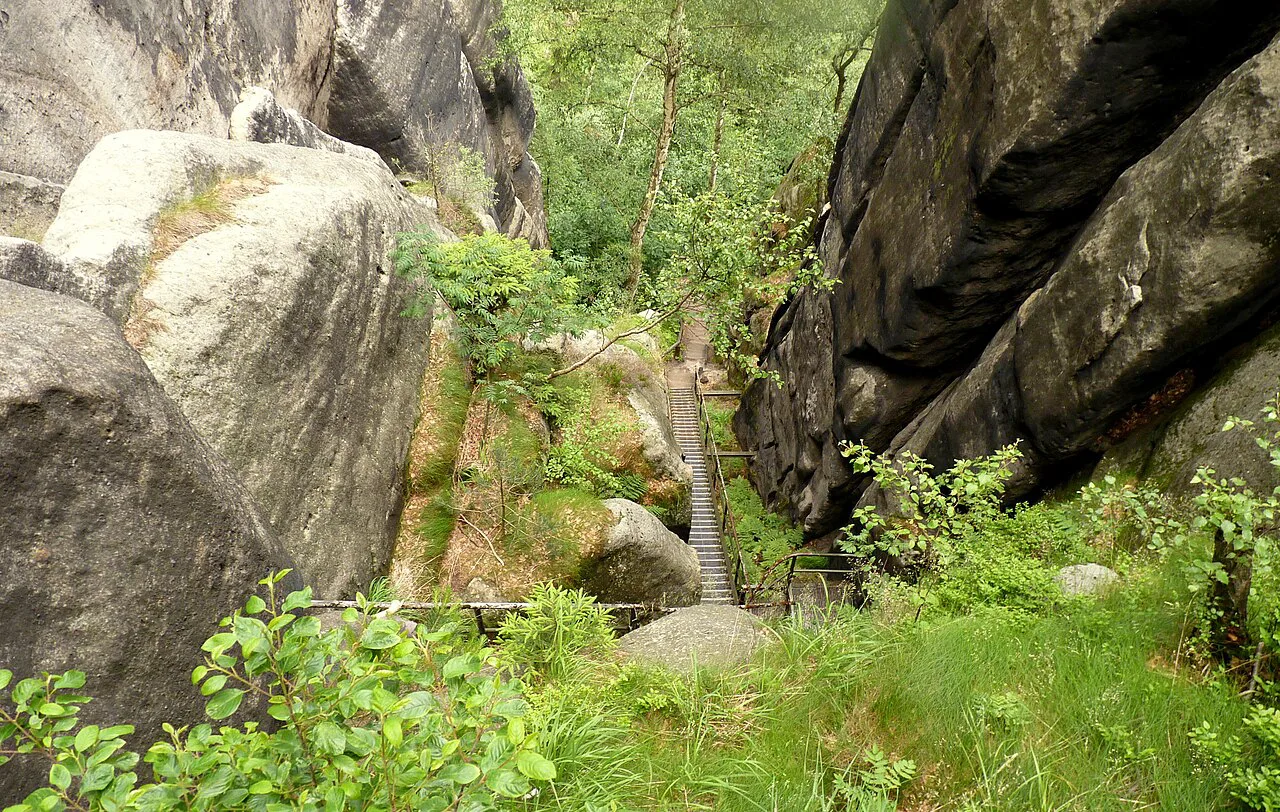
Pinut via ferrata at Flims: the 1907 original and its cliffside walkways
The Pinut via ferrata at Flims is the oldest of its kind in Switzerland, opened in 1907 and fully renovated in 2007. A century-old line that has been rebuilt is a different proposition from a rotting relic, and the tourism board maintains it.
The route's character comes from its structures rather than pure verticality. Boardwalks pass a huge rock spire, ladders climb the cliffside, and the line continues into caves and small tunnels where you can look out through gaps to Flims and the lakes below.
From the top the view takes in Crestasee and Caumasee, two of the region's clearest lakes. That makes Pinut a good choice for a mixed group, since the climbing is broken up by walking sections and the caves give natural pauses on a hot day.
Reading the SAC via ferrata scale: K3 against K4
The K scale describes how hard the protected ground is, not how long the day is. Mürren is graded K3 and Fürenalp K4, and the gap between them is the difference between steep terrain made easy by ladders and long stretches of ladder and peg climbing that load your arms continuously.
A K3 route can still be very exposed, so grade and exposure are separate judgments. Mürren is a descents route where the ground falls away for hundreds of metres, while a K4 climb such as Fürenalp is physically harder but travels upward.
Pick a K3 as your first line if you are new and comfortable with heights, and leave K4 until ladder climbing feels routine. Grading systems vary between countries, so read the Swiss grade on its own terms rather than translating it from a route you did elsewhere.
Gear: via ferrata set, harness, helmet, gloves and footwear
The minimum kit is a via ferrata set, a climbing harness, a helmet and gloves, with approach shoes or light mountaineering boots on your feet. Add slings and a screw-lock carabiner for the Mürren line, which lists them among the essentials.
Weight limits catch people out. Via ferrata sets are rated for a body weight including pack of roughly 40 kg to 120 kg (88–265 lb), and outside that range extra safety measures apply, so weigh yourself and your pack before hiring a kit.
Rental is available at Intersport in Mürren and guided trips usually include harness, set and helmet, so you do not have to buy everything for a single holiday. A 20-25 litre pack, light gloves, sunglasses and a drink bottle cover the rest of the day.
Guided or solo: when a mountain guide is worth it
Guided trips exist for the Mürren line in half-day format, with departures meeting at Intersport Mürren and groups capped at eight people. Equipment is included and the zip line can only be used with a guide, so booking solves both the permit issue and the gear question.
Solo works if you already climb and have your own kit, can judge exposure honestly, and know how to move through a cable transition without unclipping both carabiners. For a first via ferrata, or any route above your usual grade, a guide teaches the technique in a morning.
When to go and how weather changes the plan
The Mürren route runs from 1 June to 31 October and Fürenalp usually from late May to late October, both varying with the season's weather. Late spring and autumn can still bring snow or ice on shaded sections of higher routes, so ask about conditions rather than going by the calendar.
Thunderstorms are the real deal-breaker on via ferrata, because the cables and ironwork are metal and exposed. Rain makes the rock slippery, and an afternoon storm on a cliff face is dangerous, so start early, watch the forecast and turn around while retreating is still easy.
Building flexibility into your itinerary pays. If a storm wipes out your climbing day, have a valley walk or a hut night ready as a substitute; hut to hut hiking Switzerland itineraries give you that option without losing the mountain experience.
Huts, bases and where to stay for each route
Mürren and Gimmelwald sit on the route itself, with hotels and hostels in the car-free villages and Lauterbrunnen in the valley below. Mürren is the practical base because you walk to the start, and you can return by cable car from Gimmelwald.
For Fürenalp, Engelberg has beds and a bus network serving the cable car station, making a day trip straightforward from Lucerne or Zurich. Grindelwald serves the Rotstock line, with Eigergletscher station linking you back into the rail network after the summit.
Adding a multi-day trek to the trip suits hikers who want more than day routes. A Tour de Monte Rosa or a Five Lakes Walk in Zermatt gives you a contrasting week of valley walking after your days on cable.
Other Swiss via ferrata lines worth knowing
Several more lines round out a via ferrata week. Daubenhorn above Leukerbad in Valais is among the longest in the country and suits experienced climbers, while the Evolène routes in Val d'Hérens give three lines of different difficulty on the same trip.
Tälli near the Grimsel Pass offers exposed terrain and views over the surrounding dams, and the Rigidalstock line above Engelberg looks toward the Titlis glacier. For beginners and families, Saxeten in the Bernese Oberland is the gentlest option in this group.
If you would rather let someone else handle equipment and decisions, Switzerland hiking tours often bundle guided days with accommodation and transport. That format suits a first visit, while self-guided trips leave more room to choose routes day by day.
Safety on exposed ground and fixed cable
Every route here is exposed, and the risk that bites is complacency on familiar-feeling ground. Clip both carabiners through transitions one at a time, never both at once, and keep moving steadily rather than rushing the person ahead. If you want a single route written up in full detail, from grades to transport and timing, the Kandersteg via ferrata is the one to read next.
Hazards to plan around include wet rock, snow on shaded sections in early and late season, and thunderstorms arriving in the afternoon. On very exposed K3 and K4 ground, a slip matters more than a stumble on a hiking trail, so gloves, sure footing and an honest read of your own head for heights are part of the equipment.
Plan Your Swiss Via Ferrata Trip
Start with Mürren if you want a guided, equipment-included introduction and can travel between June and October; it ends in Gimmelwald, so plan the return by cable car first. Choose Fürenalp or Rotstock once ladder climbing feels familiar and you want more ascent and altitude in the day.
Pinut at Flims is the odd one out and rewards it, with boardwalks and cave tunnels packed into a short cliffside outing. Whichever you pick, set the season, the weather window and your kit before you go, and let the hiking in Switzerland pages fill the rest of the week.
Frequently Asked Questions
Which Swiss via ferrata suits a first-timer?
The Mürren to Gimmelwald route is the usual starting point when you book a guided half-day: it descends, is graded K3, and guided groups meet at Intersport Mürren with equipment included. If you are not comfortable with heights, a guide is the sensible way to test the ground.
Do you need a mountain guide for the Mürren via ferrata zip line?
Yes. The zip line section may only be used when accompanied by a mountain guide, and it remains closed at other times. The rest of the route can be done independently if you have the kit and experience.
When is the Fürenalp via ferrata open?
The Fürenalp team states the route usually opens at the end of May and closes at the end of October, with dates shifting according to weather. Check the open status before you travel, especially in a wet or cold spring.
How hard is the Fürenalp via ferrata?
It is graded K4 and climbs roughly 773 m (2,536 ft) from the ticket office to the top at 1,811 m (5,942 ft), much of it on ladders and pegs. That makes it a step up from a K3 cliff traverse and a route to attempt once ladder climbing feels routine.
Sources
Trail notes for your next trip
Optional updates when we add or revise hiking guides.
You might also like
Continue reading
More guides you'll find useful