Switzerland Hiking Tours: Which Type Suits You?
Compare guided Switzerland hiking tours, self-guided inn-to-inn walks and rail-and-hike trips, with the regions, daily distances and formats each one suits.
On this page
Switzerland rewards hikers with high meadow paths, glacier viewpoints and a transport network that reaches trailheads most mountain ranges cannot. The question for a tour is less where to walk than who handles the logistics: a leader, a booking company's route notes, or your own timetable and a rail pass.
The three formats on offer differ mainly in what happens between trailheads. A guided group moves as a unit with a leader, a self-guided inn-to-inn trip moves your bags and hands you notes, and a rail-and-hike itinerary treats trains and gondolas as the trail access.
What a Switzerland hiking tour gives you that a DIY trip does not
A tour's real value in the Alps is logistical: matching a route to your fitness, booking beds in villages where rooms fill in summer, and knowing which cable car or train cuts the dull part of a valley. Swiss public transport is synchronized across trains, buses, boats and mountain cable cars, which makes self-guided touring unusually practical here.
What you give up is flexibility: fixed dates, fixed stages and, on guided departures, a pace set for the group. Independent hikers can change plans with the weather, but they carry the booking work themselves.
The three formats: guided group, self-guided inn-to-inn, and rail and hike
A guided group trip puts a leader in front and a fixed itinerary behind you, usually with hotels and most meals bundled. Self-guided inn-to-inn walking keeps the itinerary and luggage transfer but removes the leader, leaving you with route notes, digital maps and a support line. Rail-and-hike trips string together panoramic train journeys and day walks from a series of bases.
Self-guided operators describe the package as booked by them and led by you, with chalet-style B&Bs and guesthouses rather than camping and bags moved between stops. That model suits hikers who want a planned route without a group schedule.
Guided tours: who leads, group size, pacing and activity levels
Guided outfits staff their Swiss programs with local experts and instructors who explain alpine geography, history and culture along the route, and they run small groups. Programs are graded by activity level, so the same country can appear as a gentle walking week or a spirited mountain itinerary.
One operator's Bernese Oberland-to-Valais hiking week uses gondolas and trains to reach high trailheads rather than vans, with daily hikes reaching roughly 3,500 feet (about 1,070 m) of ascent on its hardest option and a mile or two on the easiest. Read the per-day table rather than the trip title: the range within a single departure is wide.
Guided trips also handle the awkward transfers, such as a group train ride between valleys, which is where independent hikers lose the most time. The trade-off is a set departure calendar and a shared pace.
Self-guided inn-to-inn: luggage transfer, route notes and 24/7 support
Self-guided walking in Switzerland typically includes luggage transfer, detailed route notes, digital navigation and round-the-clock support, with accommodation in chalet-style guesthouses and B&Bs. You walk with a daypack and find your bag at the next stop.
This format fits long-distance routes where beds are the hard part, such as a hut-to-hut line across the Bernese Oberland or a multi-day traverse linking valleys. If you want the hut experience without booking each dormitory yourself, compare a serviced package with booking through the alpine clubs directly.
Expect to carry rain layers, boots and medication in your daypack regardless; packed lunches come from village shops or the guesthouse, and supermarket chains such as Coop and Migros keep food costs down between stages.
Rail and hike: Glacier Express and the Swiss Travel Pass as trail access
Switzerland's rail network covers roughly 3,000 miles (about 4,800 km), and the Glacier Express links the alpine spine from St. Moritz toward Zermatt over a full day of travel. Rail-and-hike itineraries pair that kind of scenic leg with short walks from the stations along the way.
A Swiss Travel Pass is the usual tool for hopping between cities, lakes and mountain regions, and it can cover museum admissions as well as transport. Whether it pays depends on how many travel days your itinerary uses, so price your actual route before buying.
For hikers, the appeal is trailhead access without a car: cog railways and cable cars climb to paths that would otherwise cost a morning of road walking, and many self-guided operators build a Glacier Express leg into their Swiss itineraries.
Matching regions to formats: Bernese Oberland, Valais, Engadin and Ticino
Group the country by what each region demands. The Bernese Oberland suits inn-to-inn walking between villages linked by rail and gondola; the Valais around Zermatt and Saas-Fee suits high glacier viewpoints reached by lift; the Engadin suits gentler valley and meadow walking from village bases; Ticino suits warmer, lower trails.
Guided programs tend to combine two regions in one departure, for example the Bernese Oberland and the Valais, using lifts and trains to move between them. If you want a single base and day hikes, choose a valley rather than a multi-region itinerary.
Bernese Oberland: Jungfrau, Grindelwald and the Trümmelbach Falls detour
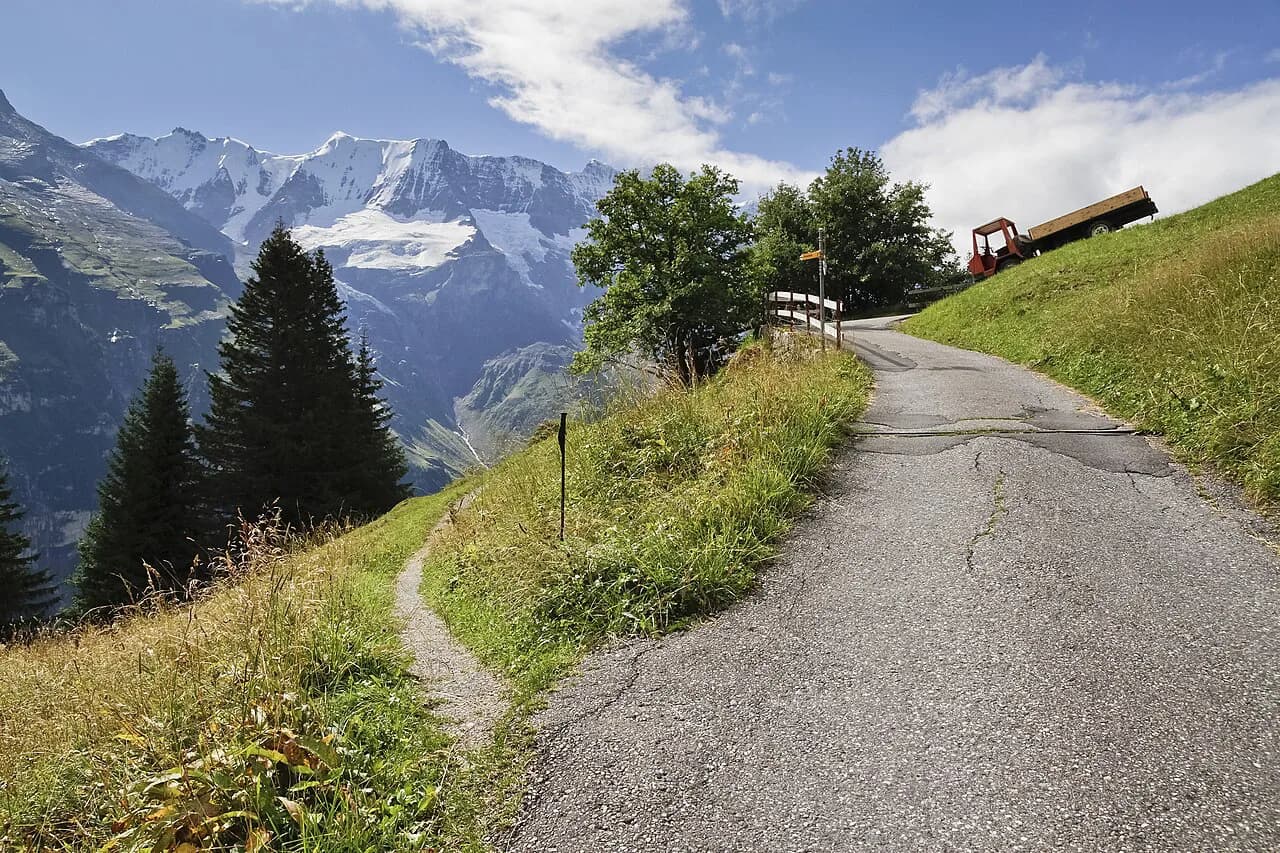
The Bernese Oberland is the classic first Swiss hiking region: meadows above Grindelwald, the Jungfrau massif and valleys reachable by cog railway or cable car. Guided itineraries in the region include the Trümmelbach Falls, a set of glacier-fed waterfalls inside the rock, as a short detour between walks.
For a self-guided week, base in a village with a station and pick stages that end at a lift or train, which keeps daily ascent manageable. Add a via ferrata day if you want exposure and have the gear and, ideally, a guide for a first route — the Via Ferrata Mürren-Gimmelwald is the best-known in the region.
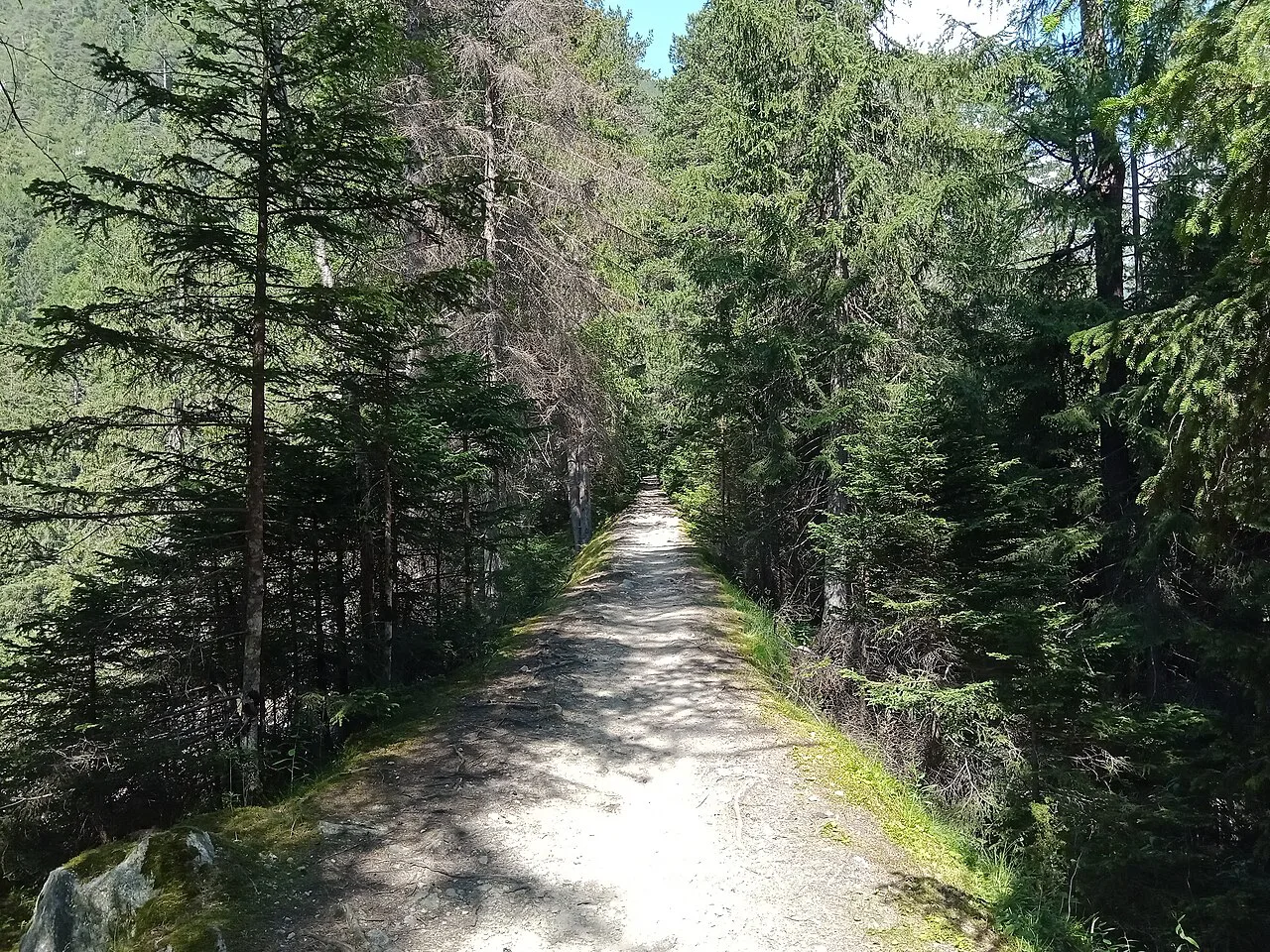
Valais: Zermatt, the Matterhorn and the Gornergrat approach
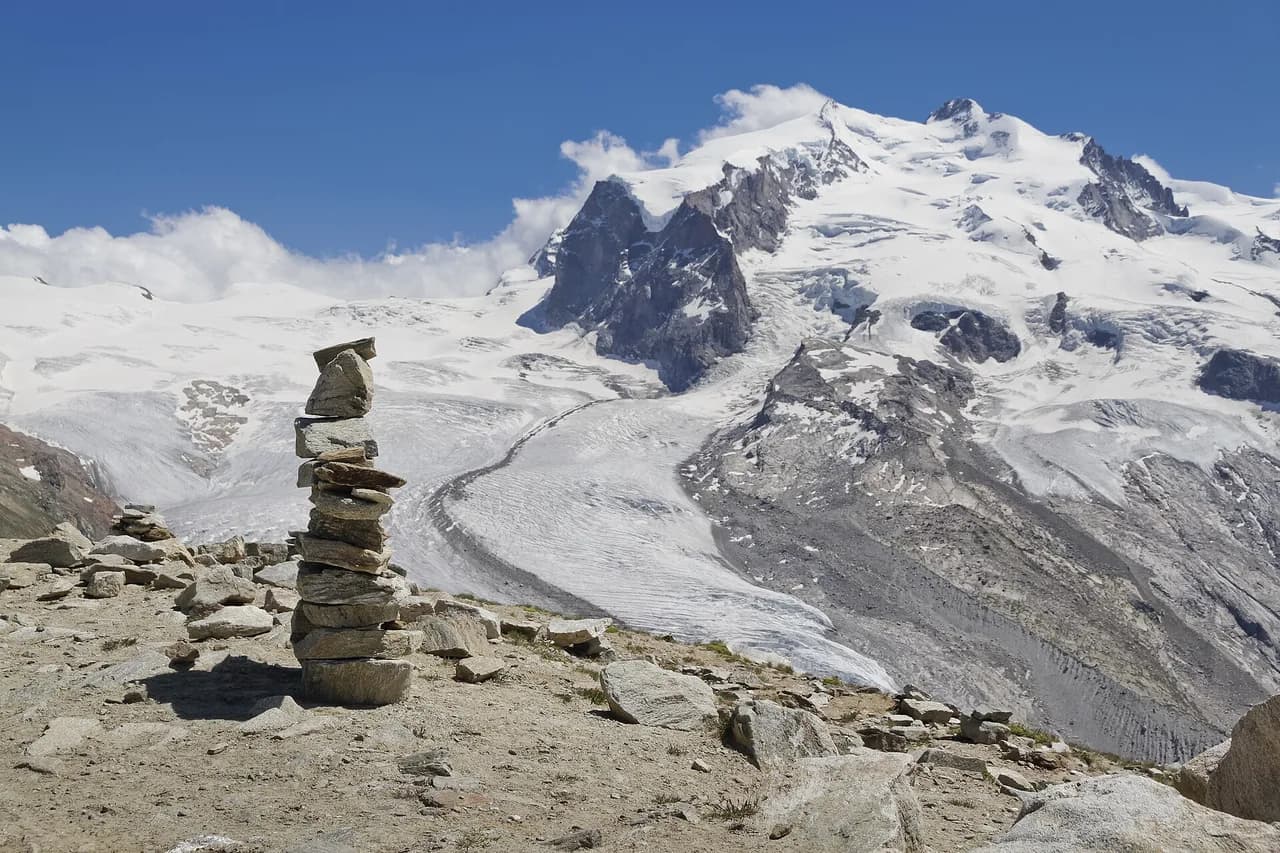
Zermatt is the natural base for the Matterhorn, with the Gornergrat cogwheel railway delivering hikers to a ridge with views over the Gorner Glacier and Monte Rosa, Switzerland's highest summit. A guided week here typically ends with a high traverse to the glacier viewpoints and a festive final dinner in town.
Day hikers can build shorter loops from the same lifts, including the Five Lakes Walk, a half-day route with Matterhorn reflections in small tarns. Check lift timetables before committing to a one-way descent.
For a multi-day challenge, the Tour de Monte Rosa circles the massif through high passes and huts, which suits self-guided hikers comfortable with snow patches early in the season.
Gemmi Pass and Leukerbad: the Bernese Oberland to Valais traverse
The Gemmi Pass is an old trade route between the Bernese Oberland and the Valais, and one guided operator crosses it between Adelboden and Leukerbad, using cable cars to skip the steepest climbs. The route includes a narrow gorge traversed on bridges and gangways, plus a glacial lake below the pass.
Walking it independently means arranging transport at both ends: a gondola above Adelboden on the Bernese side and the cable car into Leukerbad on the Valais side. The pass itself is exposed to afternoon storms, so start early and carry a shell.
Long-distance options: Via Alpina and the Walker's Haute Route
Two long routes dominate Swiss multi-day planning: the Via Alpina through the Bernese Oberland, and the Walker's Haute Route linking Chamonix with Zermatt across the Valais. Both involve hut nights, high passes and the need to book beds well ahead in July and August.
Self-guided operators package both with luggage transfer and route notes, while independent hikers book huts through the alpine clubs. Either way, plan for snow on the highest passes in June and again from late September.
Daily distances and ascent: reading activity levels and what they mean
Operator tables list distance and elevation gain per day at several levels, and the elevation figure matters more than the mileage in Switzerland. A seven-mile day (about 11 km) with 1,900 feet (580 m) of gain is a comfortable half day for a fit hiker; the same distance with 3,500 feet (1,070 m) is a full one.
Guided hiking weeks in Switzerland run from one to five miles daily on trails and dirt roads, reaching elevations up to 12,700 feet (about 3,870 m) on the highest option. At those altitudes, pace drops and weather turns faster, so an early start is the practical response.
Altitude, fitness and age: what seniors and families can realistically book
Activity levels are the honest guide: a lower-level day might be two miles with 300 feet of gain, while the top level on the same trip is six miles with 3,500 feet. Pick the trip whose middle level matches your usual weekend, not its easiest option.
For older hikers, gentle-paced guided programs with balanced activity and rest time exist, and the Swiss transport system is designed with accessibility in mind. Families do best on trips that use gondolas and trains to cut the climbs, leaving energy for the meadows.
Huts, chalets and hotels: what overnight comfort you are buying
Self-guided packages use chalet-style B&Bs and guesthouses, with breakfasts included and no camping. Guided programs typically book hotels at a mix of comfort levels, from mountain retreats to grand historic houses in Zermatt.
Hut nights on a long-distance route are a different purchase: dormitories, shared washing facilities and meals served at set times. If you want a private room every night, choose an inn-to-inn itinerary rather than a hut-to-hut one.
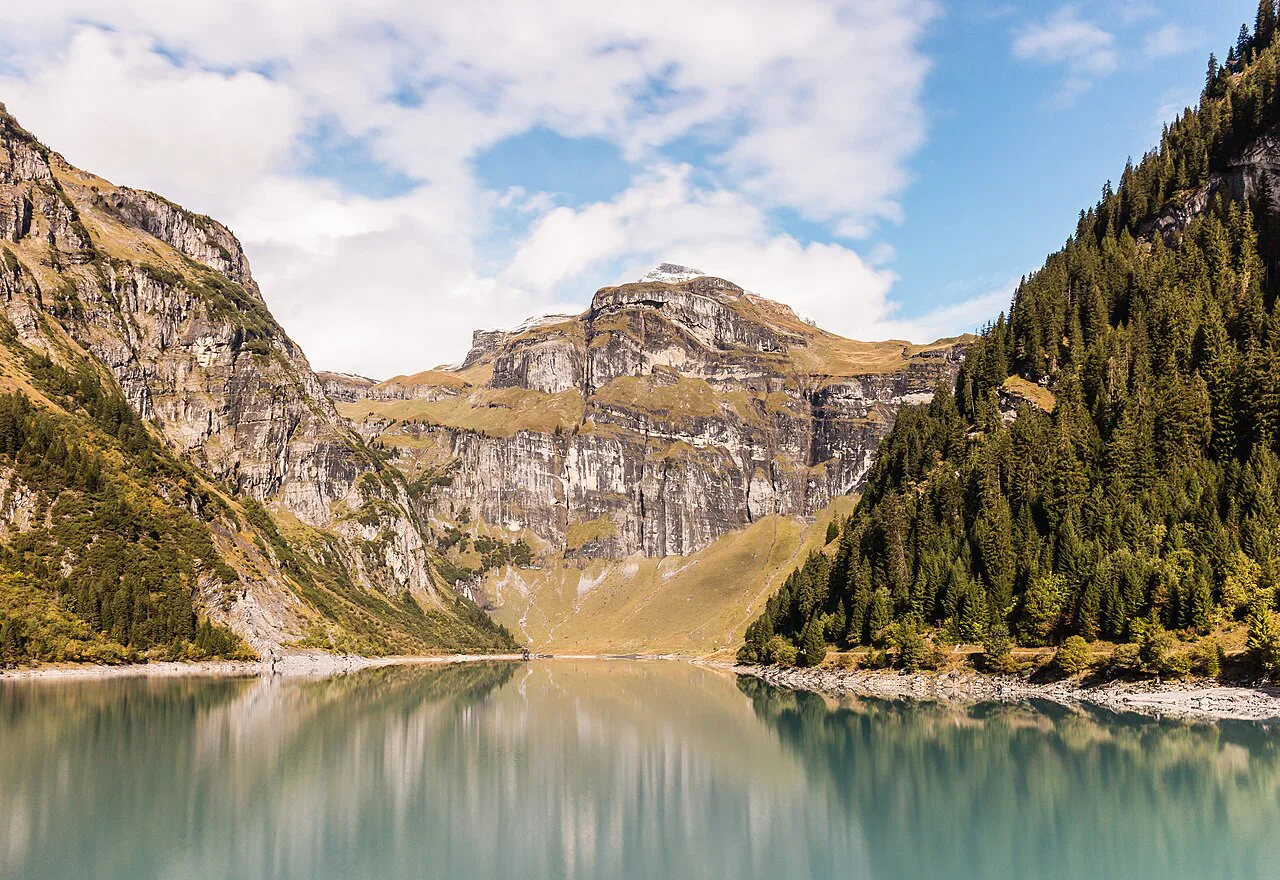
When to go: June to September versus shoulder seasons
June through September is the main season for hiking, rail journeys and alpine scenery, and it is when most guided departures run. Spring and autumn bring fewer crowds, but high passes can hold snow at both ends of the season.
If you walk in the shoulder months, choose lower valley routes and keep a flexible day for weather. Afternoon thunderstorms are common in summer, so plan summit and pass sections for the morning.
Getting to the start: Zurich, Geneva, Basel and Bern airports
Switzerland's major airports are Zurich (ZRH), Geneva (GVA), Basel (BSL) and Bern (BRN), all served by international airlines. From any of them, trains connect to Interlaken, Zermatt and the Engadin, so most tours start with a rail leg rather than a road transfer.
Operators often recommend flying into Zurich or Geneva and taking the train to the trip's start, and they ask you not to book flights until the trip details are confirmed. Match the airport to the itinerary's first valley rather than to the cheapest fare.
What typically is and is not included in a tour price
Guided journeys in Switzerland usually bundle accommodation, most meals, scenic train travel and a mix of guided excursions and free time. Self-guided packages include the walking plan, luggage transfer and supporting documents, with breakfasts each day.
Not included typically covers flights, transport to the trip start, some meals and leader gratuities. Check whether local transport and lift fares sit in the package or on your own account, since those add up over a week.
Cost factors: Swiss francs, food and transport passes
Switzerland uses the Swiss franc rather than the euro, and food, hotels and transport are expensive, so budget for those three lines first. Buying supermarket meals from Coop or Migros and checking whether a travel pass suits your route are the standard savings.
As a reference point for guided travel, one operator lists a six-day family hiking trip from $6,099 per person, double occupancy. Prices vary by program and date, so compare what each includes rather than the headline figure alone.
Choosing your tour: a short decision path
Choose a guided group if you want leaders, company and zero booking work; self-guided inn-to-inn if you want a set route and baggage handling but your own pace; rail and hike if scenery from the train matters as much as the walking. Then narrow by region: Bernese Oberland for classic meadows, Valais for glacier views, Engadin and Ticino for quieter seasons.
Plan Your Visit
Match the format to your appetite for logistics first, then pick the region and the season. A guided week in the Bernese Oberland and a self-guided traverse of the Valais can both be excellent trips; they just ask different things of you. For a base-and-day-hike version of that Bernese choice, see the Kandersteg hiking guide.
Frequently Asked Questions
Do Switzerland hiking tours include luggage transfer?
Self-guided inn-to-inn packages generally include luggage transfer between accommodations, so you walk with a daypack. Guided group trips usually move the group's bags by van or train as part of the itinerary. Check each trip's inclusion list, since day-hike programs based in one hotel do not need transfer at all.
What is the best month for a Switzerland hiking tour?
June through September is the main hiking season, with the most reliable conditions on high trails and the fullest guided departure calendars. Late June and September give quieter paths with a higher chance of snow on the highest passes. Valley routes work well in the shoulder months if you keep a weather day spare.
Are Switzerland hiking tours suitable for seniors?
Yes, provided you match the activity level to your normal walking. Several operators run gentle-paced programs with manageable distances, scenic train rides and built-in rest time, and Swiss transport is designed with accessibility in mind. Read the daily distance and ascent figures rather than the trip name.
Where should I fly into Switzerland for a hiking tour?
Zurich, Geneva, Basel and Bern all have international airports, and rail connections run from each into the Alps. Match the airport to the first valley on your itinerary, then take the train to the trailhead. Many operators advise booking flights only once trip details are confirmed.
How hard is the Via Alpina in Switzerland?
The Via Alpina through the Bernese Oberland is a multi-day high route with substantial daily ascent and descent, so it rewards hikers with prior long-distance experience. Treat it as a hut-to-hut undertaking and book beds ahead in July and August. Snow can linger on the highest passes into early summer.
How much ascent should I expect on a guided Swiss hiking week?
Operators publish per-day tables, and the range is wide: easier options can be a couple of miles with a few hundred feet of gain, while the hardest days reach several thousand feet. The same departure often offers both. Use elevation gain, not distance, to judge how a day will feel.
Sources
Trail notes for your next trip
Optional updates when we add or revise hiking guides.
You might also like
Continue reading
More guides you'll find useful