Tour Monte Rosa Guide: Plan Hut-to-Hut Hiking in Switzerland
The Tour de Monte Rosa is a 9-day hut-to-hut circuit around the Monte Rosa massif in the Valais Alps, with refuges, daily ascent and the Zermatt trek option.
On this page
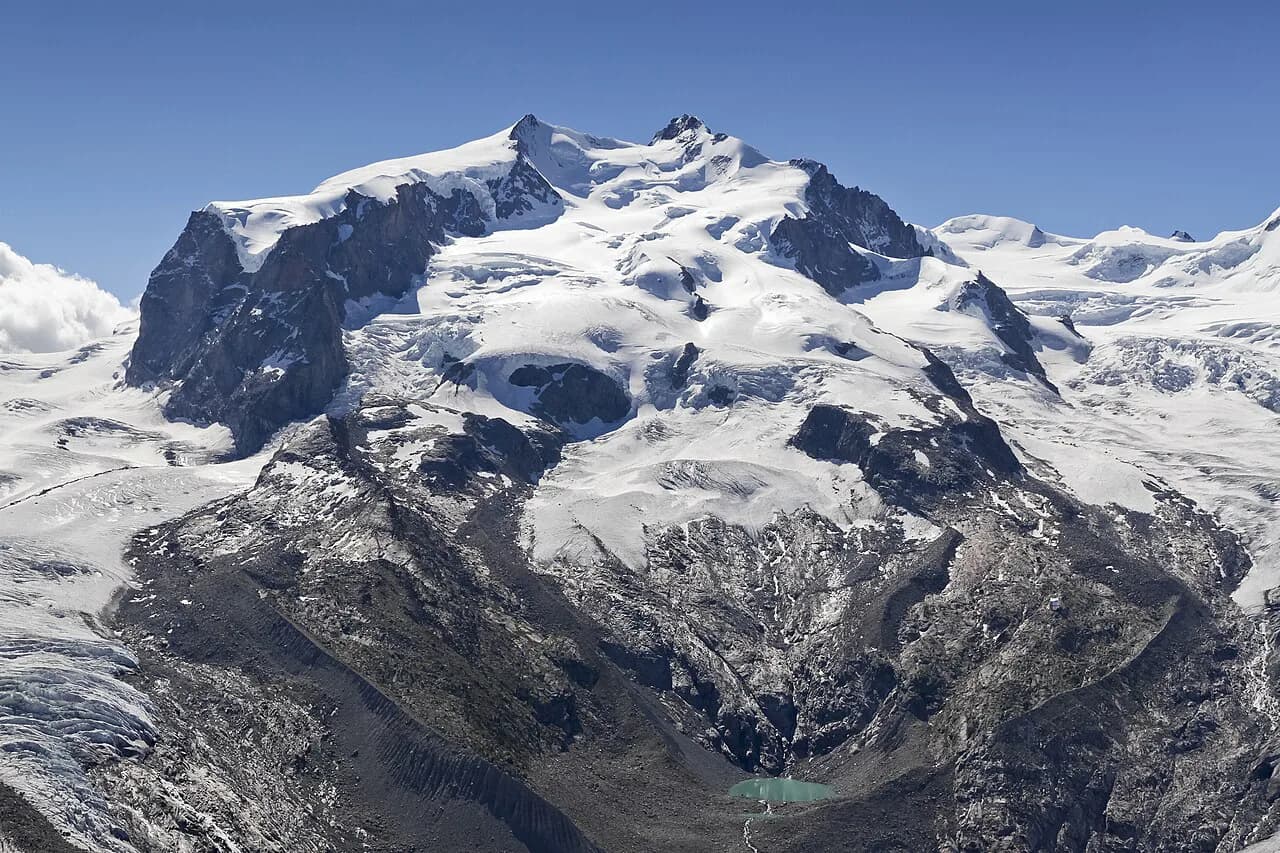
The Tour de Monte Rosa is a multi-day circuit around the Monte Rosa massif, the glaciated block of the Valais Alps that rises above Zermatt and the Matter and Saas valleys. It suits fit hikers who want sustained days of 7 to 8 hours with more than 1,000 m (3,281 ft) of climbing and descent, and who are comfortable with remote refuges and changeable high-mountain weather.
Two different routes often share this name, and choosing the right one matters. The Tour de Monte Rosa is the long circuit through Switzerland, while the Zermatt Monte Rosa Trek is a four-day loop from Zermatt that includes a crossing of the Gorner Glacier. This guide covers both, starting with the circuit and then the Zermatt stages in detail.
The circuit in brief
The Tour de Monte Rosa is described as one of the more strenuous classic Alpine treks: roughly nine days of walking, with each day averaging 7 to 8 hours and more than 1,000 m of ascent and descent, carrying your own gear. The paths are generally good mountain trails, but there is exposed ground in places, so steady footing and head comfort matter as much as fitness.
A typical arrangement splits the nights between five village guesthouses and five Alpine refuges. That mix gives you hot meals and a shower every other night or so, with dormitory nights in between, and it means you carry everything you need between stops. Trainers or hut slippers replace boots inside the refuges, and bedding is provided but not washed daily, so a silk sleeping bag liner is required.
Treat the 9-day figure as the trekking length, not the whole holiday: guided versions often run 11 days with travel days and buffers at each end. Keep daily pack weight near 8 kg (about 18 lb) in a roughly 40-litre pack by leaving the sleeping bag and mat behind, since refuges supply bedding and no camping is needed.
Where the route runs
The circuit works its way around the Monte Rosa massif through the Valais, linking the valleys and villages below the big peaks, with Zermatt as the obvious base for the northern side and for the Zermatt trek described below. If you are still choosing a region for your trip, our guide to hiking in the Swiss Alps puts the Valais alongside other Swiss mountain areas, including the Bernese Oberland, so you can compare the character of each before committing to a nine-day circuit. For a shorter, lift-assisted alternative in the Bernese Oberland, the Grindelwald hiking guide covers trails and how hard they are.
The Italian valleys on the southern side of the massif, such as Alagna, Gressoney and Macugnaga, are outside this Swiss circuit and have their own hut-based routes. They are worth knowing about if you want a different approach to the Monte Rosa massif, but they should not be confused with the Valais stages covered here.
The Tour de Monte Rosa day by day
Plan the circuit around its shape rather than a fixed list of stages: nine consecutive walking days of 7 to 8 hours, with more than 1,000 m of climbing and descent on a typical day, and self-supported carrying between refuges. That pattern means back-to-back effort rather than a rest day between hard sections, so build your itinerary with one easier stage ahead of the biggest climbing day.
You need to book refuge nights directly with each hut, and each Alpine club or private operator sets its own season and reservation system. Ask when each refuge opens and closes for your dates when you book, then align your walking days to those answers. Village guesthouses in the valleys have their own booking channels and more flexibility.
Start and finish points depend on your chosen route or your own plan, but Zermatt is the natural gateway. Arriving a day early lets you sort gear, adjust to altitude and confirm your first night's bed before walking, which matters when a slow start would compress the whole circuit.
The Zermatt Monte Rosa Trek, day by day
The Zermatt Monte Rosa Trek is a four-day circular route that starts above Zermatt at Sunnegga and ends in the village itself. The published route figure is 54.2 km (33.7 mi) with 2,842 m (9,325 ft) of ascent and 3,523 m (11,550 ft) of descent, around 22 hours of walking in total, a high point of 3,158 m (10,361 ft) and a demanding T4 grading. That T4 rating covers the glacier sections, so the numbers alone do not describe the terrain.
Day one climbs from Sunnegga station at 2,288 m (7,507 ft) via Tufternalp to the Täschhütte at 2,701 m (8,861 ft), a stage of 11 km (6.8 mi) with +764 m and -350 m. Day two covers 13.6 km (8.5 mi) with +800 m and -1,206 m over the Pfulwe, past Grindjesee and Grünsee to the Mountain Lodge Ze Seewjinu at 2,300 m (7,546 ft).
Day three is the big one: 14 km (8.7 mi) with +1,197 m and -594 m, up to Gornergratsee, along the Rotenboden path and across the Gorner Glacier to the Monte Rosa Hut at 2,883 m (9,459 ft). Day four returns 17.8 km (11.1 mi) with +507 m and -1,781 m, again over the glacier and down via Rotenboden, Riffelsee, Dossen and the Furi suspension bridge into Zermatt.
For a shorter warm-up or a rest-day alternative on the same slopes, the Five Lakes Walk in Zermatt uses the Sunnegga and Rothorn lifts and stays well below glacier terrain. It lets you test your legs and check the weather pattern before committing to four days and a glacier.
Distance, ascent and time
The Zermatt trek's published figures are the clearest planning numbers available: 54.2 km total, 2,842 m of ascent, 3,523 m of descent, 22 hours of walking and a high point of 3,158 m, all rated T4. Descent outweighs ascent by almost 700 m, which tells you the finish drops hard into the valley; expect tired legs on day four and save something for the long descent to Furi and Zermatt.
For the 9-day circuit, plan on 7 to 8 hours of walking each day and an average of over 1,000 m of ascent and descent, with 8 kg or less in your pack. That is a higher daily average than most three-day alpine routes demand, and the training question is back-to-back days rather than one big climb.
Use the time figures as walking hours, not door-to-door. Add breaks, photo stops and the slow sections on glacier or exposed ground when you build your day, and remember that the glacier crossing days in the Zermatt trek are substantially slower than the valley paths.
Huts and refuges on the route
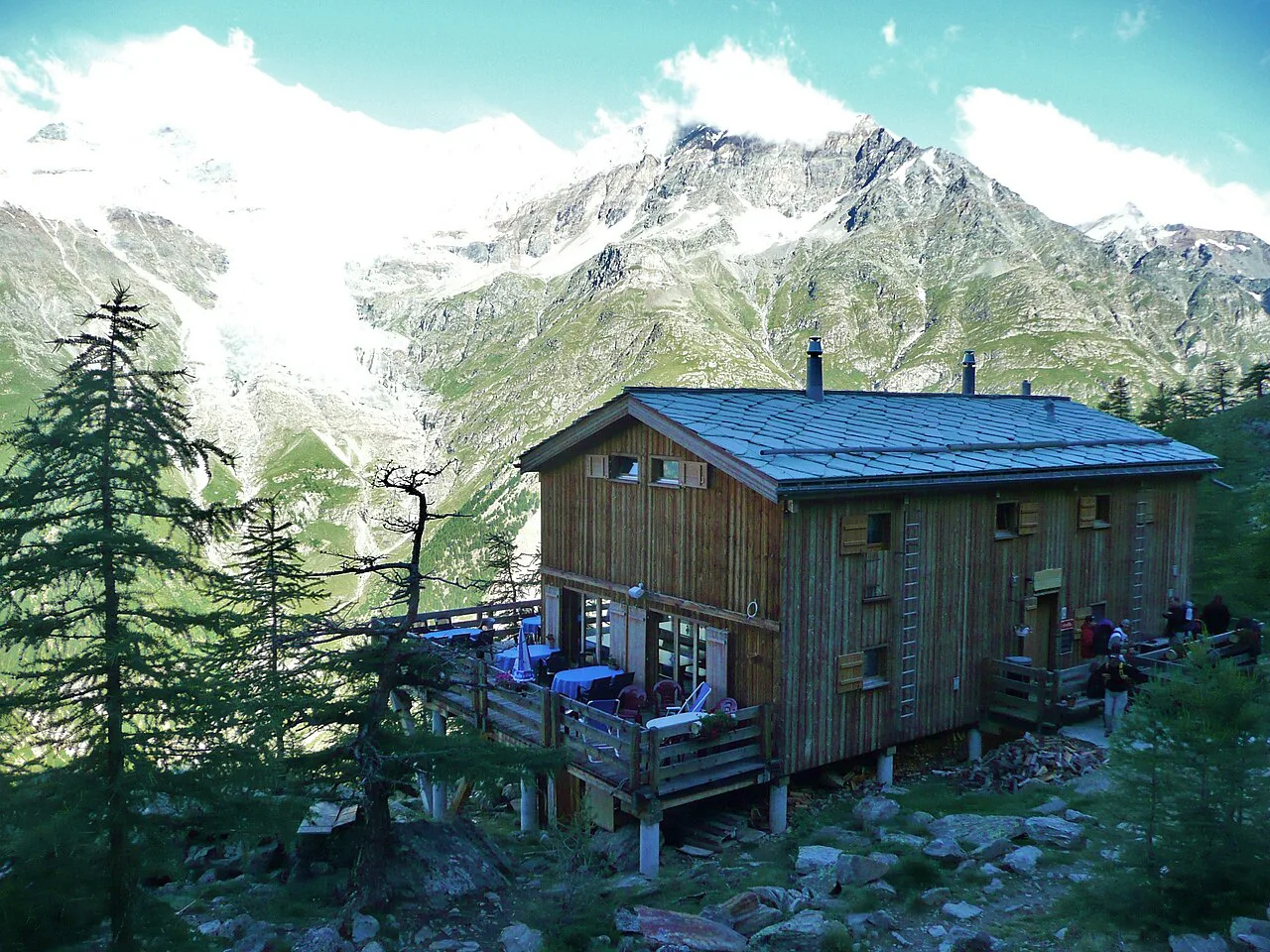
On the Zermatt trek, the Täschhütte at 2,701 m has hosted guides and alpinists since 1945, and the Monte Rosa Hut at 2,883 m is a striking modern building opened in 2009 that runs on its own energy and sleeps 120. Between them sits the Mountain Lodge Ze Seewjinu at 2,300 m, a simpler stop with rooms, home-cooked food and views, positioned between Gornergrat and the Rothorn above Zermatt.
On the full circuit, refuge nights are dormitory style, usually in bunk rooms of 4 to 16 beds, and most have hot showers and shared washing facilities. Boots stay at the door and you switch to hut shoes or slippers; bedding is supplied, so bring a liner rather than a sleeping bag. Dinner is a communal three-course affair, and lights out comes early.
Every refuge sets its own booking arrangements, and the Monte Rosa Hut, Täschhütte and Ze Seewjinu all take reservations through their own channels. Book each night before you commit to the full circuit, and if you want a wider look at how Swiss mountain-hut systems work, our hut to hut hiking guide explains the booking model and what to expect in the dormitories.
Getting to the start
Zermatt is the trailhead for the Zermatt trek. If you start on foot, the climb to Sunnegga station at 2,288 m involves 686 m (2,251 ft) of gain and takes 1.5 to 2 hours from the village. The alternative is the Sunnegga funicular, a direct connection from Zermatt that covers the same height in a few minutes; both options are published by the local tourism office, and the funicular timetable is worth checking before an early start.
Zermatt is car-free, so you arrive by train and walk or ride lifts from the station. For the 9-day circuit, confirm how you reach your chosen start village, whether by rail or postbus, and make sure the first night's bed is secure before you set out. Booking a hotel near the station for your arrival night simplifies the morning.
Glacier equipment and guides
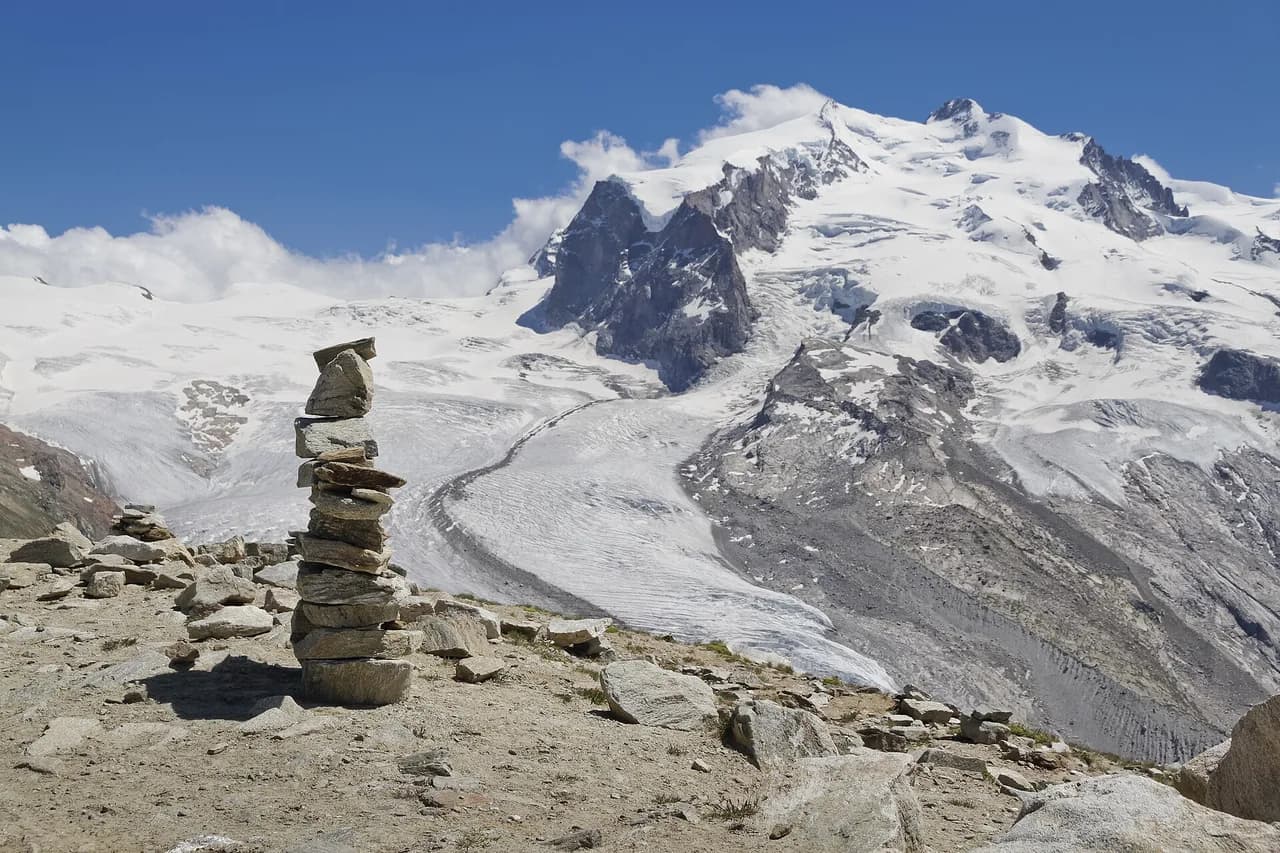
The Gorner Glacier crossing is the key decision on the Zermatt trek: the route can be booked as a package with or without guided glacier trekking on days three and four. If you take it unguided, you need crampons, a climbing harness, a rope per group of four and clothing suited to ice, and the local tourism office advises against entering glaciers without a mountain guide.
If your ambitions go beyond walking terrain, the Swiss Via Ferrata routes offer a different style of protected climbing, and our Via Ferrata Mürren-Gimmelwald page shows how cable-protected ground is graded and equipped for comparison.
Guided options from the Italian valleys reach the Margherita Hut, the highest mountain hut in Europe, on a five-day route from Alagna that crosses glacier terrain. It lies outside the Swiss circuit, but it shows the standard model for glacier travel in the massif: local IFMGA guides, small groups and a booked hut chain.
When to go
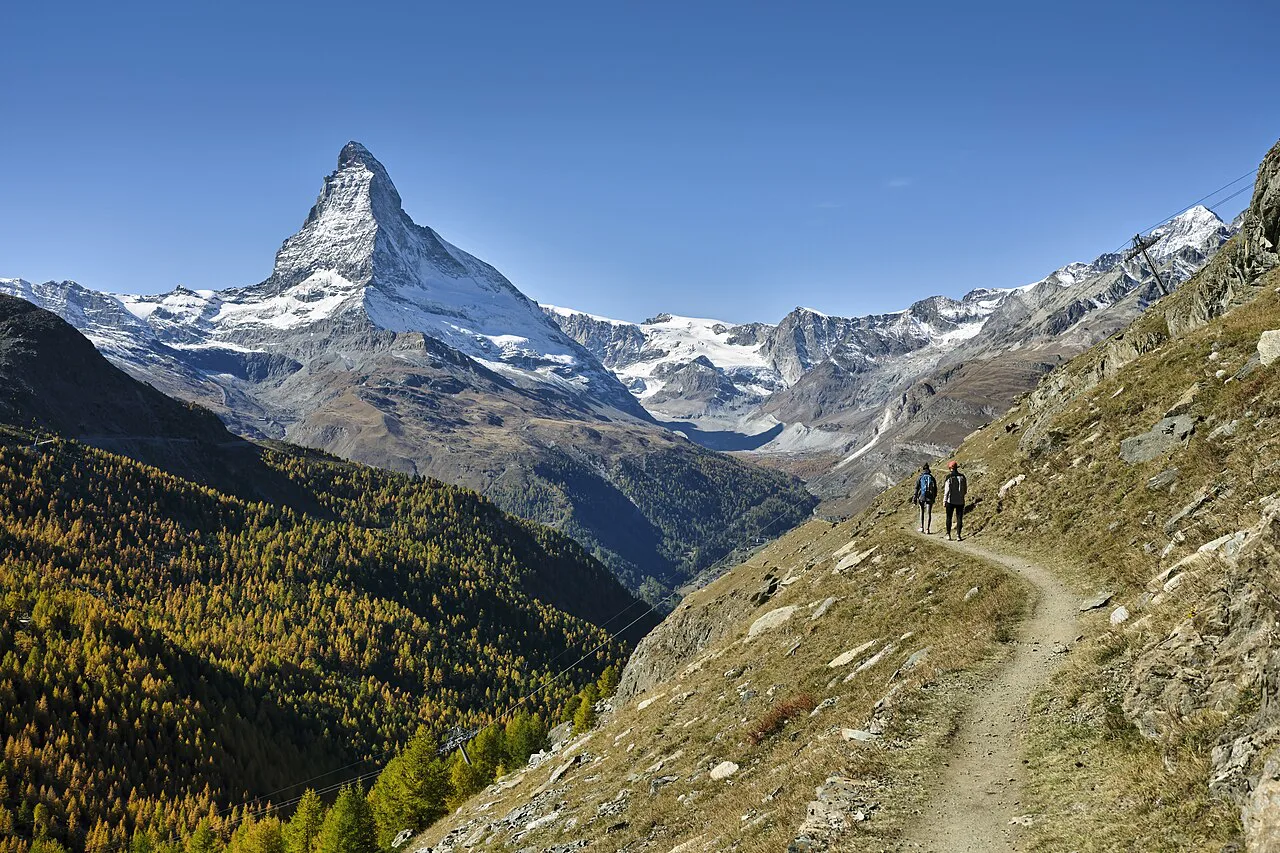
The circuit is a summer and early-autumn trek. Choose your window around stable snow and the opening of the refuges on your route, then confirm each hut's dates with its own operator. Snow lingers late on high passes, so an early-July plan and a mid-September plan call for different gear.
The Zermatt trek page lists every month of the year in its season chart for the route rather than fixed dates, so treat it as a general window and confirm the funicular and hut arrangements for your exact days. Afternoon storms build quickly at 3,000 m, so start early and aim to be off the high ground and the glacier by the middle of the day.
Late season brings crisp air and quieter paths but shorter daylight. On a nine-day circuit that compresses your buffer days, so plan to walk early rather than late.
Which trek suits you
If you want a short, sharp introduction to the massif, the four-day Zermatt Monte Rosa Trek is a compact choice with a clear start and finish in the village. It asks for a head for exposure and real glacier skill or a guided booking, but the days are known, the figures are published and you can build the trip around a single week.
For the full experience, the 9-day circuit delivers the classic tour with a mix of huts and guesthouses and a day-in, day-out rhythm that builds mountain legs. It is the harder choice on fitness and logistics, but it rewards with long traverses and remote refuge nights. Guided trekking holidays through the Swiss Alps suit hikers who want the logistics, hut bookings and daily route planning handled for them.
Training and packing for the circuit
Train for consecutive days of 7 to 8 hours with more than 1,000 m of climbing and descent, not for a single summit push. Long hill walks on back-to-back days, some of them with a heavier pack, are the most direct preparation, and cardiovascular work fills the gaps when you cannot reach the hills.
Pack around a roughly 40-litre rucksack and aim to keep it near 8 kg: trekking poles for the sustained descent, a waterproof jacket and over-trousers, a fleece, a hat and gloves, sun protection for long exposed hours, and a silk liner for the dormitories. Tap water is drinkable in villages and at refuges on the circuit, so a bladder or bottles are enough.
For glacier days, add crampons, a harness and the group rope. Boots must be stiff enough for the steel points to fit securely, and the rope system has to be practised before you are standing on ice. If in doubt about the rope work, hire a guide for the two glacier days and walk the rest on your own.
Plan Your Visit
Decide first which route you are walking: the 9-day Tour de Monte Rosa with its daily average of 7 to 8 hours and over 1,000 m of ascent and descent, or the four-day Zermatt Monte Rosa Trek with its 54.2 km and published stage figures. That choice sets your fitness plan, your equipment list and your booking calendar.
Then lock in the practical details: book each refuge directly, align your dates with when the huts are open, decide whether the Gorner Glacier days are guided or self-led, and train on consecutive hill days before you travel. Arrive in Zermatt a day early to confirm your start on the Sunnegga funicular.
Frequently Asked Questions
How many days does the Tour de Monte Rosa take?
The circuit is planned as roughly nine consecutive walking days, each averaging 7 to 8 hours with more than 1,000 m of ascent and descent. Guided holidays built around it often run longer, because travel days and buffers sit at each end of the trekking itself.
How long is the Monte Rosa Trek from Zermatt?
The Zermatt version is a four-day circular route of 54.2 km with 2,842 m of ascent, 3,523 m of descent, about 22 hours of walking and a high point of 3,158 m, graded T4. It starts at Sunnegga above the village and finishes back down in Zermatt.
Do you need a guide for the Gorner Glacier crossing?
The Zermatt route can be booked with or without guided glacier trekking on its third and fourth days, and the local tourism office advises against entering glaciers without a mountain guide. Going self-led means carrying crampons, a harness and one rope per group of four, and being practised in glacier travel.
What is the best season for the Tour de Monte Rosa?
It is a summer and early-autumn trek, so choose a window with stable snow and the refuges on your route open. Snow lingers on high passes early in the season, and afternoon storms build quickly above 3,000 m, so start early and aim to be off the high ground by midday.
How do you reach the Sunnegga trailhead from Zermatt?
Walk up from the village, gaining 686 m in 1.5 to 2 hours, or take the Sunnegga funicular, which connects Zermatt directly to the station in a few minutes. The funicular timetable is published by Zermatt tourism and is worth reading before an early start.
What gear do you need for glacier trekking on Monte Rosa?
Beyond normal hiking kit, glacier days call for crampons, a climbing harness, one rope per group of four and clothing suited to ice. Boots need to be stiff enough to hold the points securely, and the rope work should be practised before you step onto the glacier.
Sources
Trail notes for your next trip
Optional updates when we add or revise hiking guides.
You might also like
Continue reading
More guides you'll find useful