Kandersteg Via Ferrata: Allmenalp Route Grades and Timing
The Kandersteg via ferrata climbs the Allmenalp wall beside the Allmibach waterfalls. Here are the grades, access, timings and gear you need to plan the day.
On this page
The Allmenalp via ferrata is the short, spectacular option on Kandersteg's doorstep: a climb of roughly 350 m (1,148 ft) of wall that runs alongside the Allmibach and its chain of waterfalls, crosses two Nepal bridges and finishes on a sunny plateau with a mountain restaurant and a cable car. It suits climbers with via ferrata experience who want a half-day of exposed, well-secured ground rather than a long mountain day. Anyone planning a wider trip should start with the hiking in kandersteg before committing to the iron.
Where the route sits above Kandersteg
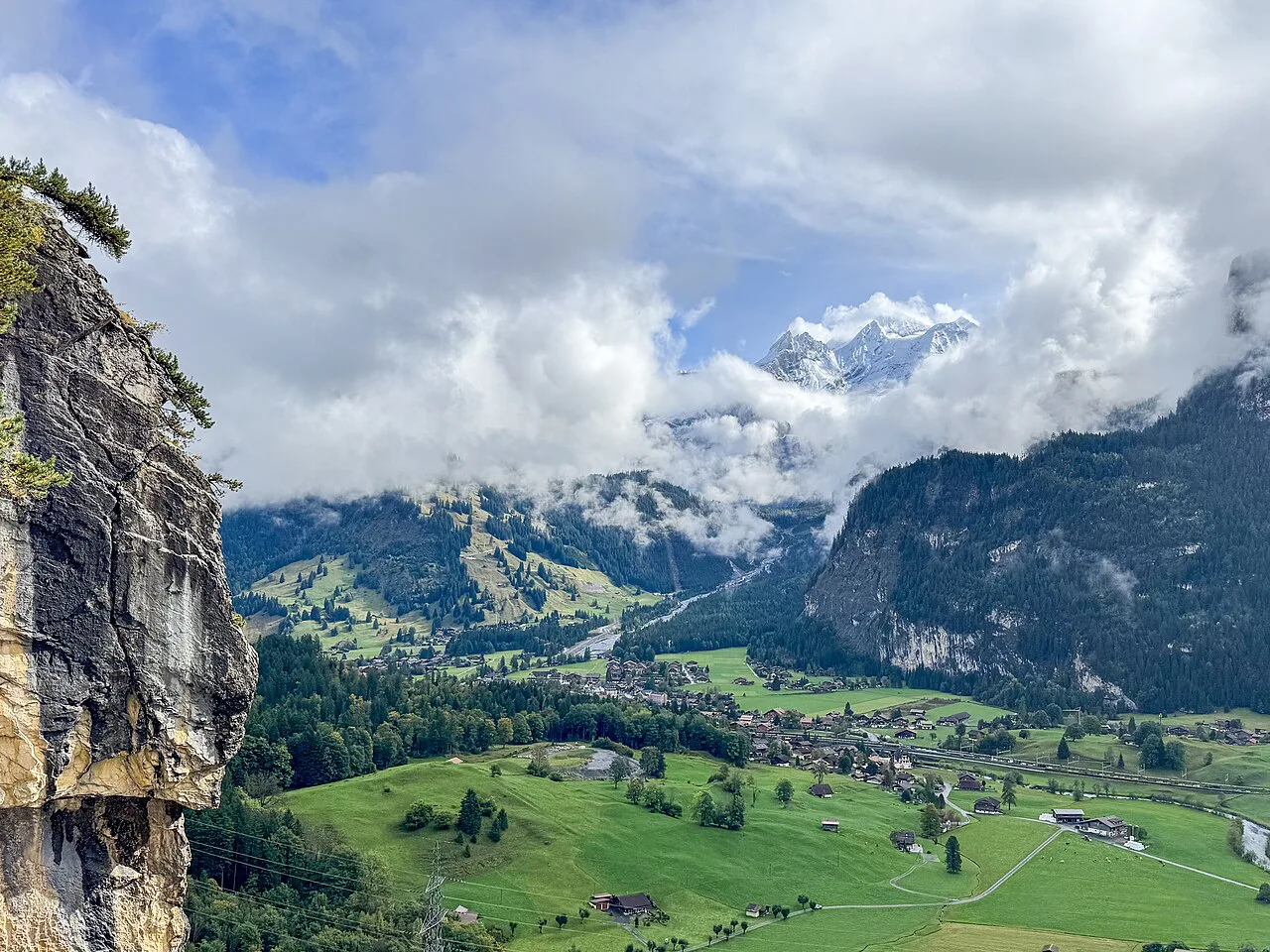
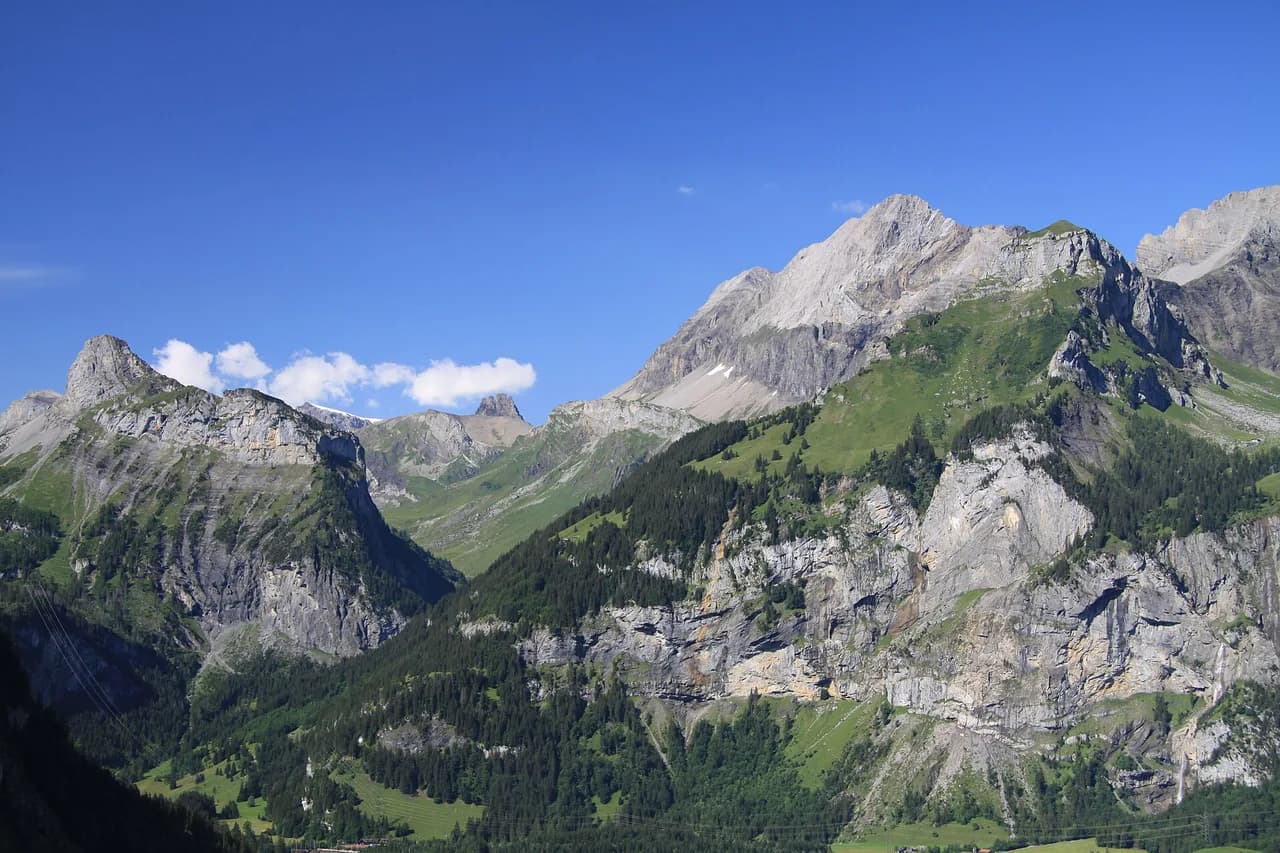
The climb takes on the east-facing wall below the Undere Allme (1,723 m / 5,653 ft), directly above the Allmenalp cable car valley station southwest of Kandersteg village. The Allmibach pours down the same slope in four waterfalls, and the ferrata stays in touch with the water for most of its length, which is why the setting feels more dramatic than the modest numbers suggest.
Because the wall faces east, it holds shade through the afternoon and catches sun in the morning. On a hot summer day, that makes a later start a real advantage rather than a compromise, and the plateau exit leaves you in open light for the descent.
Trailhead and access
The trailhead is the Allmenalp Luftseilbahn valley station at Allmenbahnstrasse 23 in Kandersteg, where a marked path leaves from the parking area in front of the lift, passes a farm and follows the Allmibach to the entry at 1,250 m (4,101 ft). The station is about a 15-minute walk from Kandersteg railway station, so a car is convenient but not necessary.
Kandersteg sits on the Bern–Lötschberg line with hourly InterCity and EuroCity connections, and drivers reach the village on the main road from Spiez or by car-train over the Lötschberg. Arriving by train keeps the day simple: you walk to the lift, climb, and ride or walk back into the village without a shuttle.
Approach to the start of the climb
From the valley station, a marked trail follows the stream for roughly 15 minutes of walking to the base of the wall, gaining about 70 m (230 ft) from the station at 1,181 m (3,875 ft). Guided groups allow around 30 minutes for the same walk while roping up, so treat it as a short warm-up rather than a stage of its own.
Distance, ascent and time
Count on 370 m (1,214 ft) of climbing on the secured route and about 450 m (1,476 ft) of total ascent including the approach, with a stated climbing time of 3:00 and a total time of 3:30. A recorded ascent of 570 m (1,870 ft) over 4.05 km (2.5 mi) in 2 hours 20 minutes shows how much faster a fit, confident climber can move through the same wall.
Add the 15-minute exit walk from the top of the ferrata to the Allmenalp cable car station, or about 1.5 hours of walking down through Ryharts and Schneitböde to Kandersteg if you skip the lift. The figures assume you climb steadily and do not queue at the bridges.
Grades explained: standard route and variations
The standard route is graded C, with many passages of B and B/C and a few metres of C, sustained but well protected by a continuous cable and steel staples. The exposed Freude herrscht variation is graded D at its hardest, with a steep opening and a long stretch of C/D before it eases near the Swiss flag.
Where the two lines split above the resting ledge and wall book, the normal route turns up the twisted ladder beside the bench and works back toward the waterfall. Freude herrscht climbs left into the overhangs and rejoins before the platform, which makes it the choice for climbers chasing exposure rather than scenery.
Guided outfits market the same wall as K4, described as very steep rocky terrain, partly highly exposed and mainly secured with wire ropes with few steps or handholds. That label is a commercial grading for the harder day, so match it against the C and D/E figures above before deciding which line you want.
Route description
A short step (A/B) leads into the main wall, which goes up (B) to an overhanging ladder (C), then a slab traverse left (B) to a second ladder (B/C). You cross under roofs to the left, climb briefly (B/C) and zigzag to the first three-cable bridge, which crosses the Allmibach at an easy A/B. Beyond the bridge, a descent beneath a large overhang brings you to a rest spot with benches and the wall book.
The normal route climbs the overhang on the revolving ladder (B/C), takes the wall stage left then in zigzags (B to C) to a grass band, and traverses right to an edge with a ladder. After a platform and a further traverse, the second rope bridge (B/C) crosses the stream with the tyrolienne strung above it, and the final wall is climbed rightward to the exit overhangs and a bench on the plateau.
One climber's account describes the opening as a vertical 90-degree wall on iron rungs and ladders, with horizontal traverses across the rungs on the most exposed stretches, then increasingly varied ground with short footbridges directly over the waterfall. The overhanging ladder under the roof and the long upper bridge are the two passages that decide whether the route feels fun or frightening.
The Nepal bridges and tyrolienne options
Two Nepal bridges, each around 30 m (98 ft) long, cross the Allmibach on three cables: one to walk on and two as handrails for your via ferrata set. Instead of the upper bridge, you can glide across the water on a tyrolienne, but read the instructions before clipping in rather than improvising at the platform.
A separate tyrolienne of about 110 m (361 ft) runs from the ferrata out to a rock knoll and back to the route, and it may only be used with a mountain guide. A guided day uses the zip line over the Allmibach as one of its highlights, which is the realistic way to add that element if you have not handled a long traverse before.
Gear and rental in Kandersteg
You need a full via ferrata kit: helmet, harness with a via ferrata set, and gloves, plus mountain boots and a shell layer for the spray and wind near the falls. Rental is available in Kandersteg's sports shops and at the Allmenalp valley station itself, so a traveler can fill the gap without carrying a kit from home.
Guided groups supply the via ferrata set and let you rent helmet and harness from the provider, and their equipment list assumes a pack of about 30 liters along with rain gear and a fleece. Carry water for the wall; the climbing time runs to three hours and more on a slow day.
Guided or self-guided
A guided day on the Allmenalp runs about 5 hours with a mountain guide, meeting at the valley station, walking to the start, climbing the walls and bridges, then riding the cable car back down. It requires good health, no fear of heights, a minimum age of 12 and at least one via ferrata already climbed, so it is a step up rather than a first lesson.
Going self-guided makes sense if you already lead C-grade ground, manage your own rope work and bridge crossings, and hold a full kit. Take a guide if you want the long 110 m tyrolienne, if nobody in your group has crossed a Nepal bridge, or if the weather is marginal and you want a professional read on conditions.
Getting down from the Allmenalp
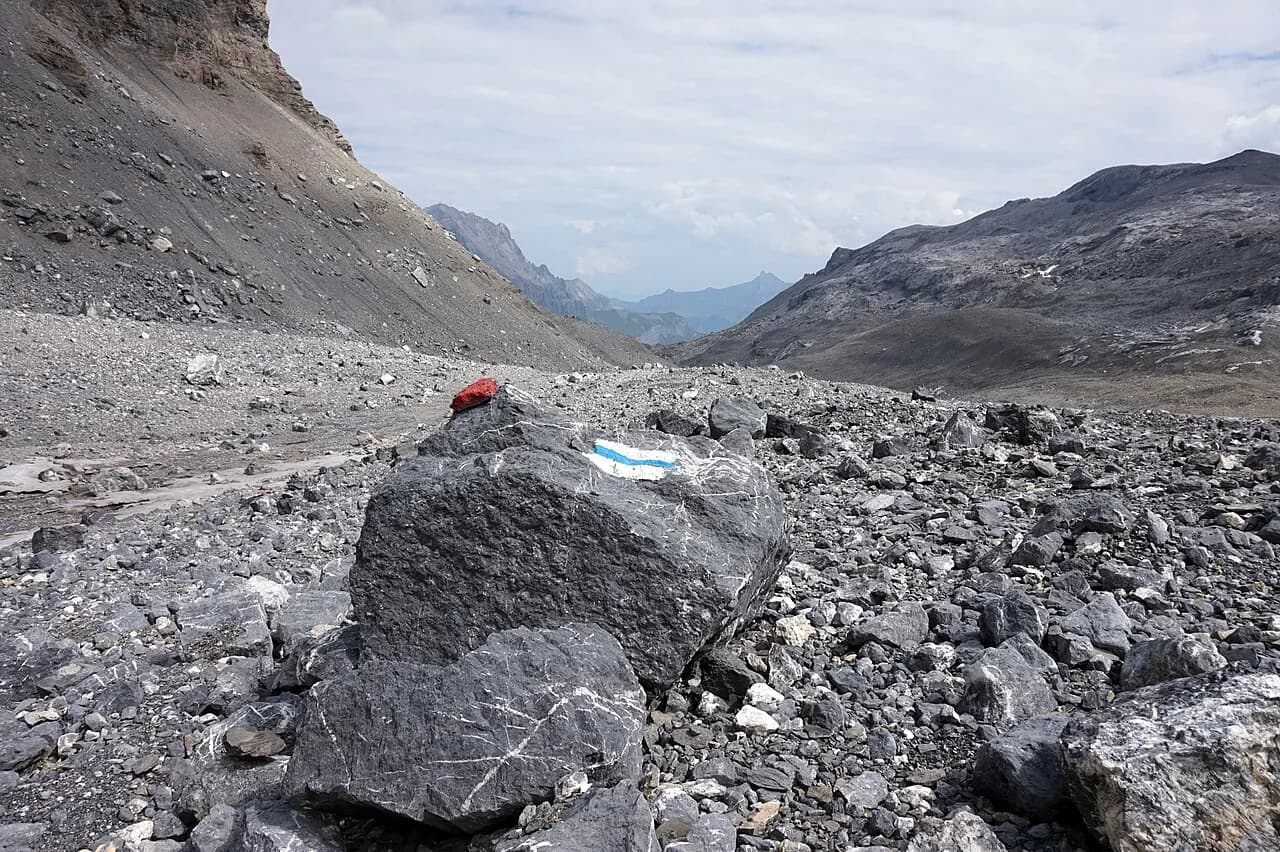
From the exit, a blue-and-white marked path reaches the Allmenalp cable car station in about a quarter of an hour, and the lift drops you back to the valley station beside your car or a short walk from the village. The plateau also has a mountain restaurant at the top station, which makes a one-way ascent with a relaxed descent the sensible plan for most visitors.
If you prefer to descend on foot, the marked route down through Ryharts and Schneitböde takes roughly 1.5 hours to Kandersteg. It is a plain walk, but tired legs after a C/D wall make the lift the safer choice when the rock has been wet.
When to go
The ferrata season is listed as 21 May to the end of October, and the cable car runs its own timetable that is worth matching to your finish time. Mid-summer afternoons put the east-facing wall in shade, but they also bring the thunderstorm risk that makes an early start the better habit in the Bernese Alps.
Outside that window the wall is not the objective to plan around; snow lingers on the plateau and the rock stays wet after autumn storms. Late May and October can still give good climbing days, but check the Luftseilbahn Kandersteg-Allmenalp timetable and the weather the day before rather than assuming a season-long service.
Hazards and honest limits
The route is highly exposed in places, offers rest ledges but no emergency exit, and the rock in the lower section has been polished by traffic, which is why extra brackets and staples were added and the normal line now sits at C rather than the old D. Once you are committed above the first bridge, the only way off is up.
Water is the other hazard. After heavy rain the Allmibach runs high and the spray makes the staples greasy, and one walker in the nearby Gasterntal found a riverside trail partly washed out after flooding, which shows how quickly these valleys respond to storms. If the stream is brown and loud, postpone the climb.
Reported accidents on this wall have involved using the zip line without the proper pulley, so treat every cable crossing as technical equipment rather than a playground. Clip in properly at each bridge, keep the set oriented, and do not ride any line that lacks the matching hardware.
Who should pick a different day
Bergsteigen.com states plainly that the route is not really suitable for nervous beginners, despite the regular ledges for resting. If you have never worn a via ferrata set, a first day on a shorter, lower-grade course will teach you more than being talked up a C wall above a waterfall.
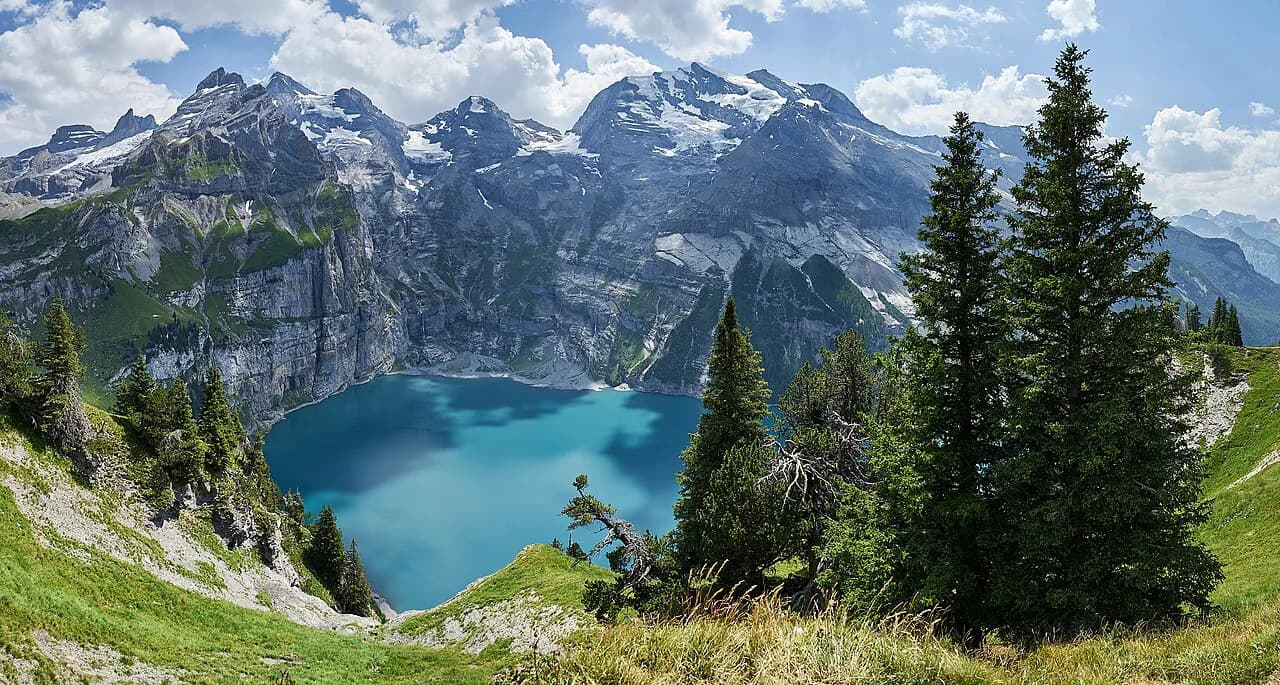
Hikers who want big views without iron should look at the Oeschinensee hike from Kandersteg or a Gemmi Pass Hike, both of which give Bernese Alps scenery on marked trails. Save the Kandersteg wall for a day when the forecast is stable, your group is experienced and everybody has the kit.
Climbers who want a second ferrata in the region often pair this one with the Via Ferrata Mürren-Gimmelwald, which uses the same skills on a longer day. Comparing the switzerland via ferrata options before you book travel keeps the itineraries realistic.
Pairing the ferrata with the Gasterntal valley
The Gasterntal makes a natural second outing: a 17.8 km (11.1 mi) out-and-back with 380 m (1,247 ft) of ascent and about 3.5 hours of walking, reaching the wild upper valley toward the Kanderfirn glacier. It is a quiet counterpoint to the crowds around the lake, and the Waldhaus in the valley meadow is famously unplugged, lit by candles and warmed by a wood stove.
Do not stack both into one day. The ferrata takes a morning and the Gasterntal half a day of its own, and the valley road and trail can be damaged by high water, so plan them on separate days and ask in the village about current conditions before setting out.
Planning your Kandersteg ferrata day
Build the day around the wall rather than a checklist: walk or drive to the Allmenalp valley station, give the approach and the climb three and a half hours, and finish with the 15-minute walk to the top station and the cable car down. A morning start and a full kit are the two decisions that most affect how the day goes.
Then use the rest of your stay on easier ground, whether that is the lake, the Gemmi or the Gasterntal, and keep a spare day in case the stream runs high. Everything else in Kandersteg, from the village bakery to the lift timetable, is easier to sort once the weather and the kit are settled.
Frequently Asked Questions
How hard is the Kandersteg via ferrata?
The standard Allmenalp route is graded C, with stretches of B and B/C, sustained exposure and a long section beside the waterfall. The Freude herrscht variation reaches D/E, and guided operators market the harder day as K4. It is not a beginner's first via ferrata, and the wall has no emergency exit once you are committed above the first bridge.
How long does the Allmenalp via ferrata take?
Plan for about 3.5 hours total including the approach, based on 3 hours on the secured route and 15 minutes of walking to the start. A fast, confident climber can complete the wall in around 2 hours 20 minutes, so your pace and any queue at the bridges decide the real time. The exit walk to the top station adds roughly 15 minutes.
Do you need a guide for the Kandersteg via ferrata?
You can climb the standard route self-guided if you already lead C-grade ground and carry a full kit. A guide is worth it for the long 110 m tyrolienne, which may only be used with a mountain guide, and for groups who have never crossed a Nepal bridge. Guided days meet at the valley station and include the via ferrata set.
When is the Allmenalp via ferrata open?
The listed ferrata season runs from 21 May to the end of October. The Allmenalp cable car keeps its own timetable, which matters for your descent, and storms or high water can make the wall a bad idea even inside the season.
Can beginners do the Kandersteg via ferrata?
The standard route is described as not really suitable for nervous beginners, despite the regular rest ledges. There is no emergency exit, the lower rock is polished, and the first pitch is a vertical wall on iron rungs. Build experience on shorter courses before climbing here.
How do you get down from the Allmenalp?
From the exit, a marked path reaches the Allmenalp cable car in about 15 minutes, and the lift returns you to the valley station near Kandersteg. On foot, the walk down through Ryharts and Schneitböde takes roughly 1.5 hours. Most climbers take the lift after a C or D wall.
Where do you start the Allmenalp via ferrata?
Start at the Allmenalp Luftseilbahn valley station on Allmenbahnstrasse in Kandersteg, about a 15-minute walk from the railway station. A marked path leads past a farm and along the Allmibach to the base of the wall at 1,250 m, a walk of around 15 minutes.
Sources
Trail notes for your next trip
Optional updates when we add or revise hiking guides.
You might also like
Continue reading
More guides you'll find useful