Levada do Caldeirão Verde (PR9) Madeira: Trail Guide
Walk Madeira's PR9 Levada do Caldeirão Verde from Queimadas through four tunnels to a 100 m waterfall, with trailhead access, distance and timing advice.
On this page
The Levada do Caldeirão Verde, waymarked PR9, is the Madeira walk for anyone who wants big scenery without big climbing. It traces a water channel cut into the São Jorge valley above Santana, passing through four tunnels before delivering you to a waterfall that drops about 100 m (330 ft) into a green pool. The return uses the same path, so the out-and-back format shapes how you plan the day.
The route suits walkers with a decent half-day free, a head for fenced drops and a working torch. Elevation gain is small, which makes it a gentler alternative to the island's high-mountain traverses and a sensible choice for a day when cloud sits on the peaks. If you are weighing this low-level levada against more demanding island trails elsewhere, hiking in Tenerife offers a useful comparison of how terrain and difficulty shape a walking day.
Where the walk starts: Queimadas Forest Park
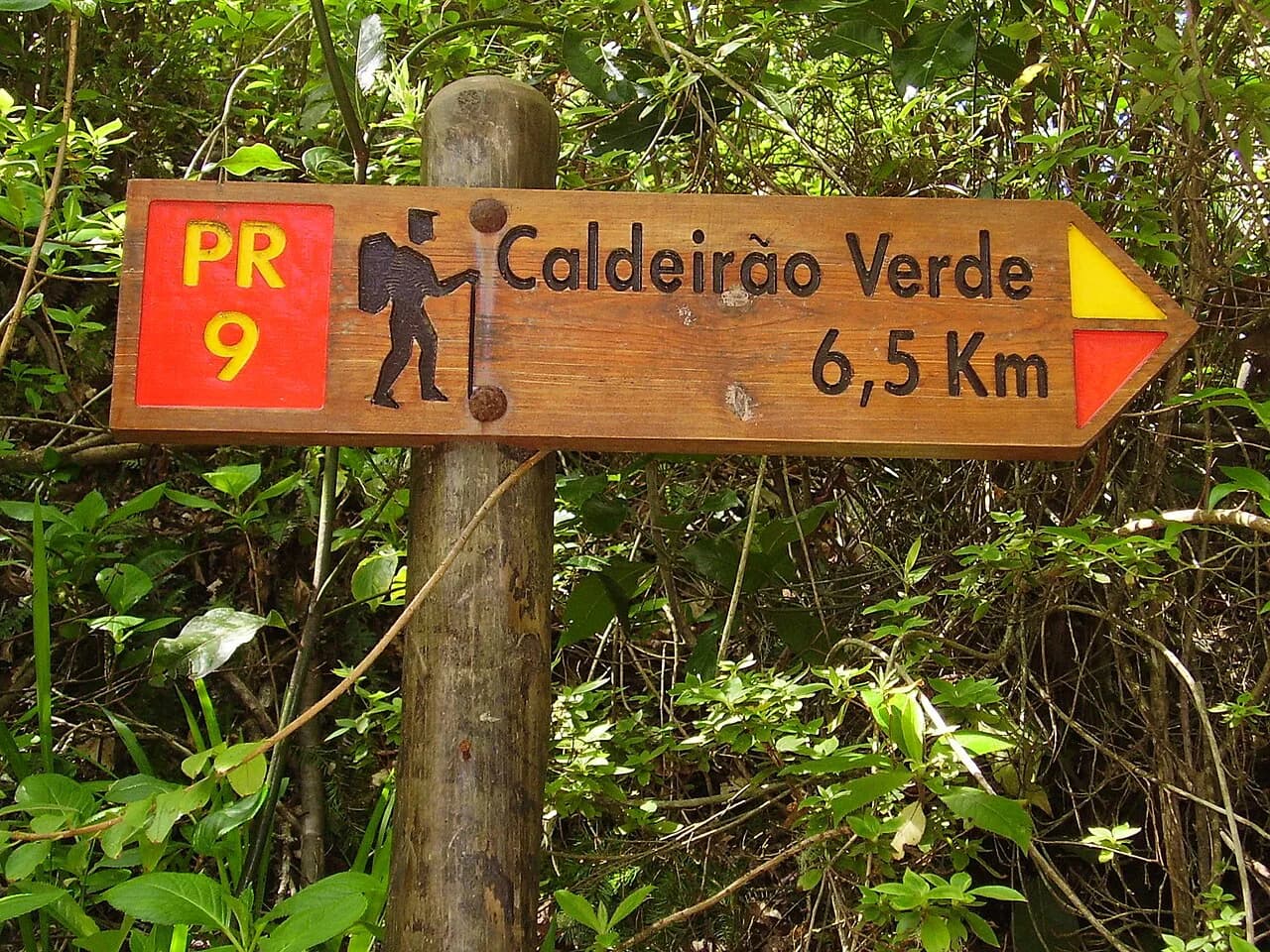
Every version of the PR9 begins at Queimadas Forest Park, in the hills just outside the Santana municipality. The car park sits beside a café, Casa de Abrigo das Queimadas, and the trail signpost stands a short walk from the parking area. Queimadas is roughly an hour's drive from Funchal by road.
The park also holds a traditional thatched house built in the early 20th century as shelter for workers and travellers on the levada, plus picnic tables. Toilets at the site have been chemical units while a new block is built. Treat the café as the last reliable stop for coffee, cake and cash before you head up the valley.
Getting to the trailhead: car, bus and transfers
Driving is the simplest approach. The Queimadas car park is paid, and you settle the parking ticket at the Casa de Abrigo café rather than at a machine on arrival, so keep some cash handy. Drive up from Santana on the forest road and park at the top; the walk begins from there.
Public transport does not reach Queimadas. Interurban buses 56, 103 and 138 run to Santana, and from the Santana bus station you need a taxi for the remaining climb to the forest park. Allow roughly two hours for the full journey from Funchal when you build the day around bus times.
Pico Transfers has run a door-to-door service from addresses in Funchal, Caniço and a few other locations twice a week, on Mondays and Thursdays. Because this is a scheduled shuttle rather than a metro-style service, confirm operating days and pickup points with Pico Transfers before you build an itinerary around it.
Distance, ascent and walking time
The one-way distance to the Caldeirão Verde waterfall is about 6.5 km (4 mi), and because the path ends at the waterfall you retrace it, giving roughly 13 km (8.1 mi) for the day. Total ascent is around 100 m (330 ft), spread so gently that the levada's near-level grade is the defining feature of the walk.
Plan on three to four hours of walking for the round trip, then add time for the tunnels, photographs and the crowd at the waterfall. The walk is rated easy on the gradient but not on the surface: the path narrows in many places, so passing other walkers takes care.
The route: levada path to the first waterfall
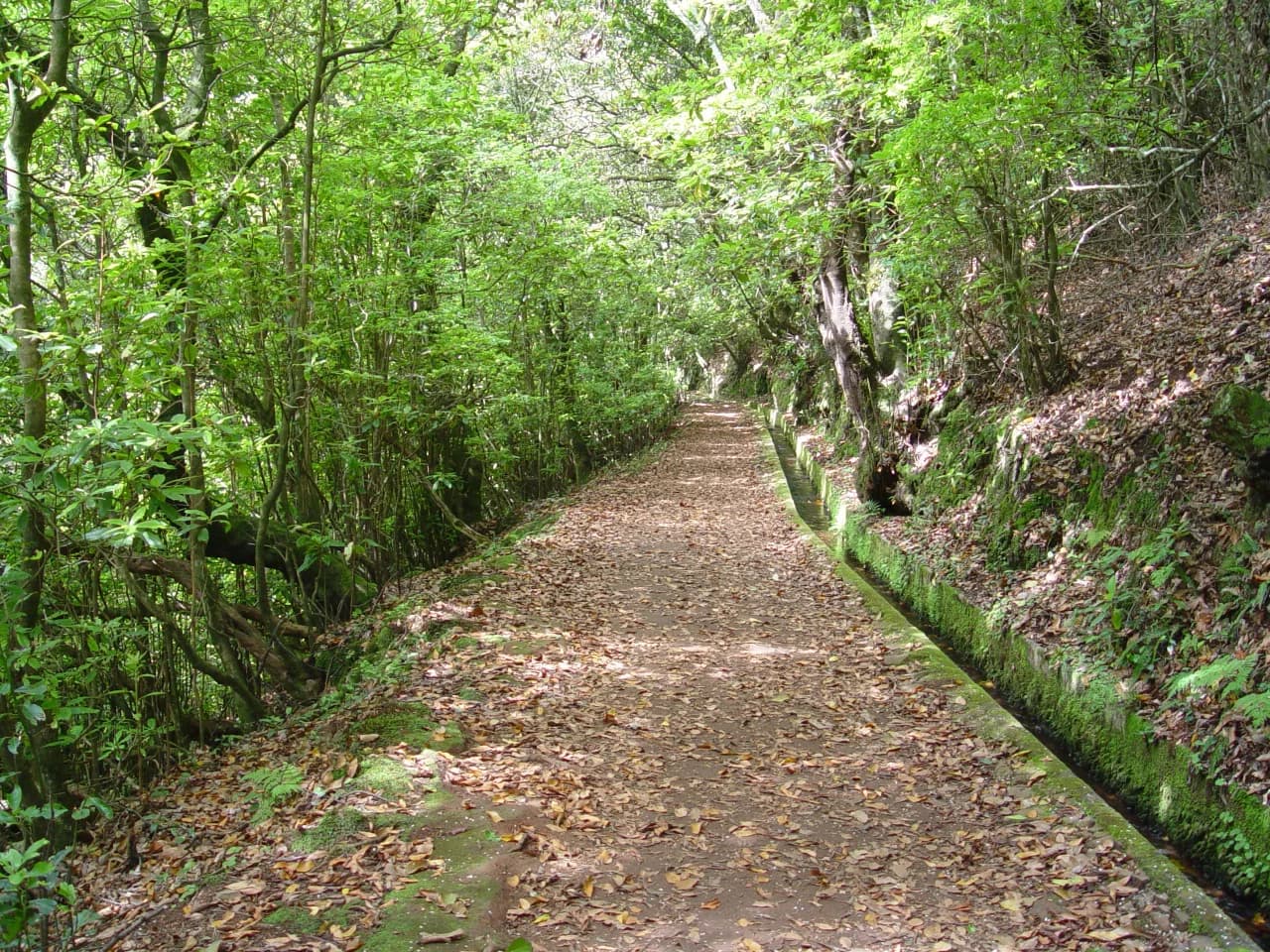
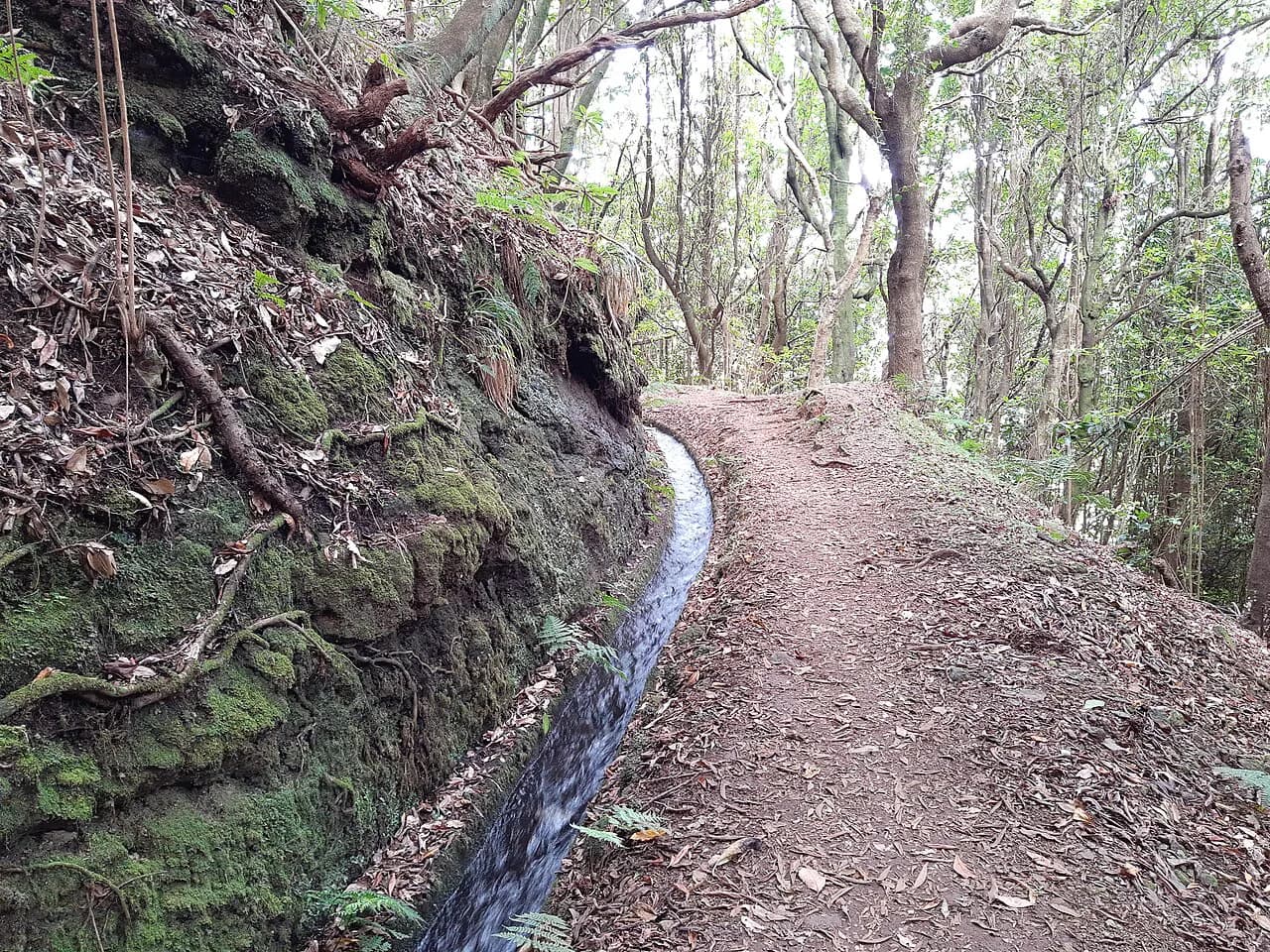
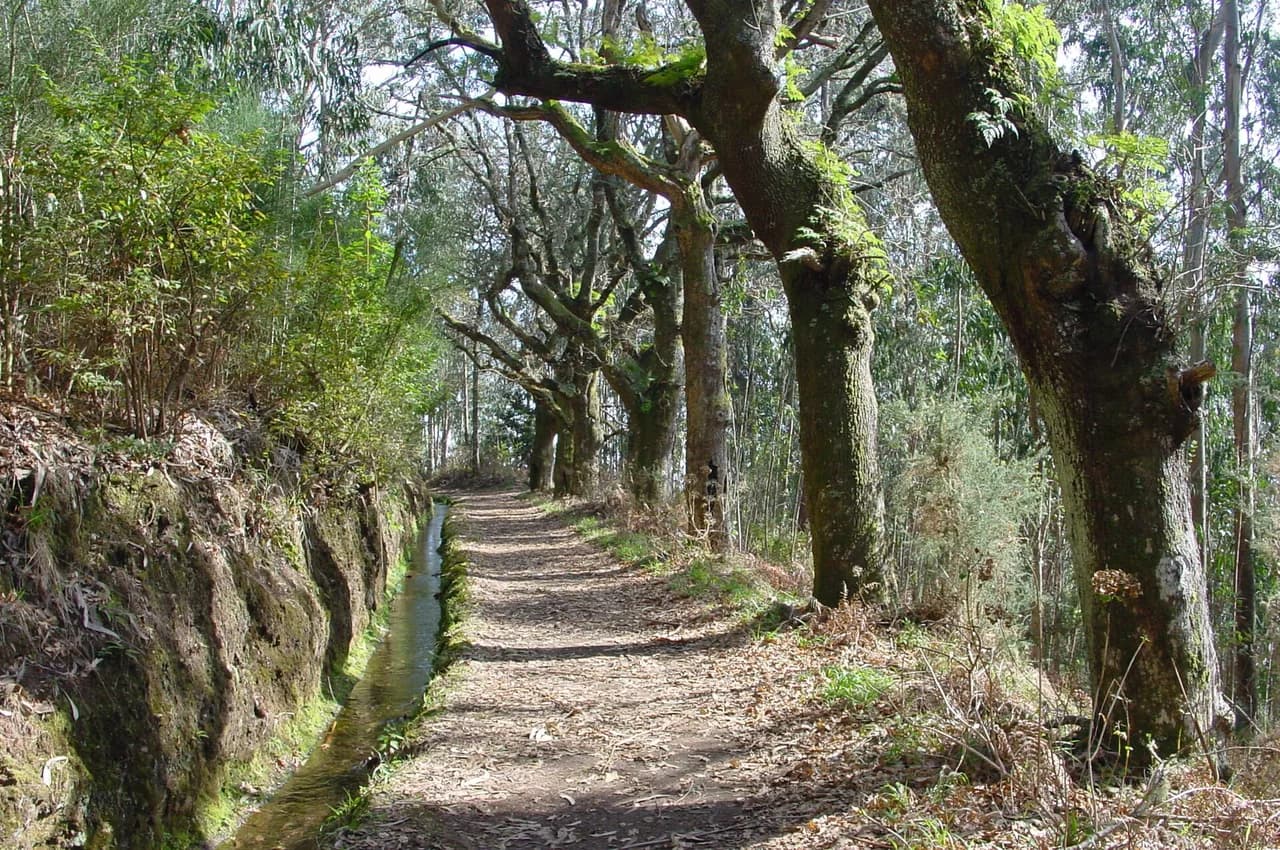
From the signpost by the café, a clear path winds along the levada under dense trees, wild branches and flowers. There is essentially one line to follow, so navigation is not the issue; the greenery closes in so tightly in places that you see only a few metres of trail ahead.
After about an hour the path narrows and you reach a first, smaller waterfall, a modest preview of the finish. The levada itself runs beside you the whole way, and water also arrives from above and underfoot, so the ground is often wet.
The four tunnels: torch, headroom and water
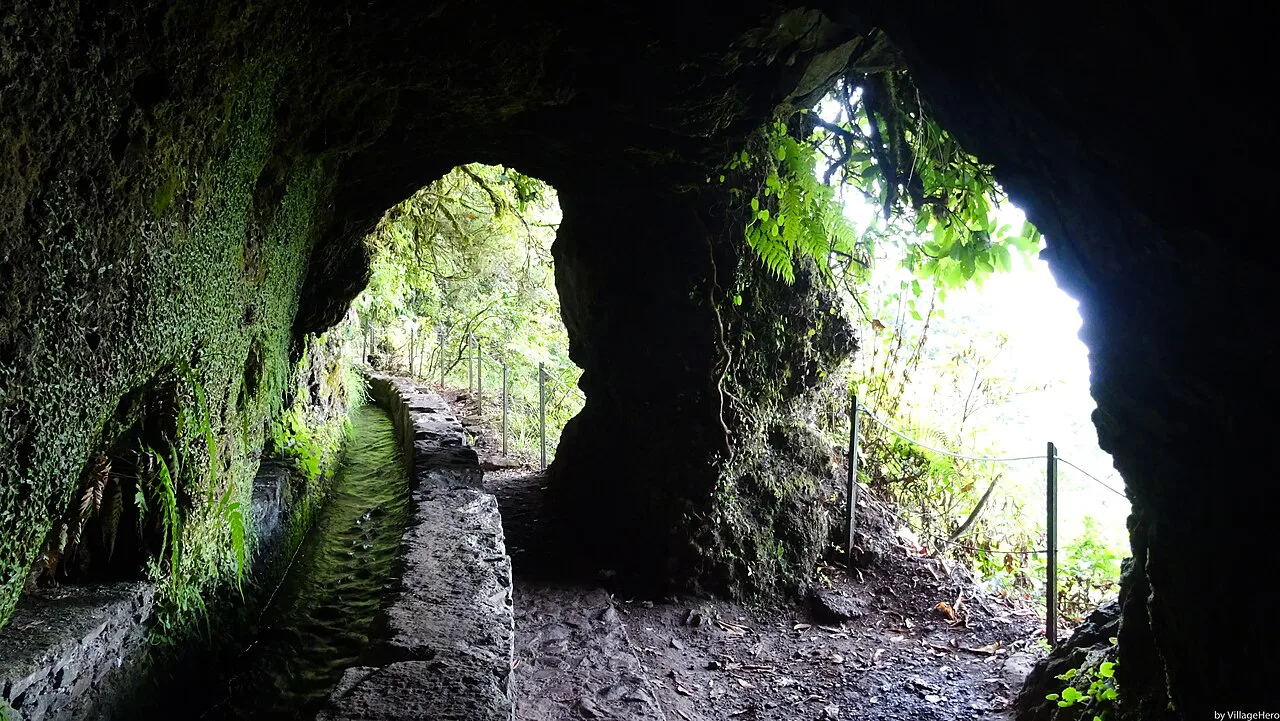
Four tunnels interrupt the route, a couple of them fairly long. A torch is required and head protection is sensible because headroom drops suddenly in places. Water often stands on the tunnel floor, sometimes deep enough to cover your shoes, though you can sometimes pick a line around the puddles.
This is the one section where the walk stops being casual. Pack a headlamp or a well-charged phone, put on shoes with grip, and accept wet feet rather than rushing through the dark. Leave the tunnels as a fixed cost in your timing: they slow the round trip more than the gradient does.
The cliffside stretch and São Jorge valley views
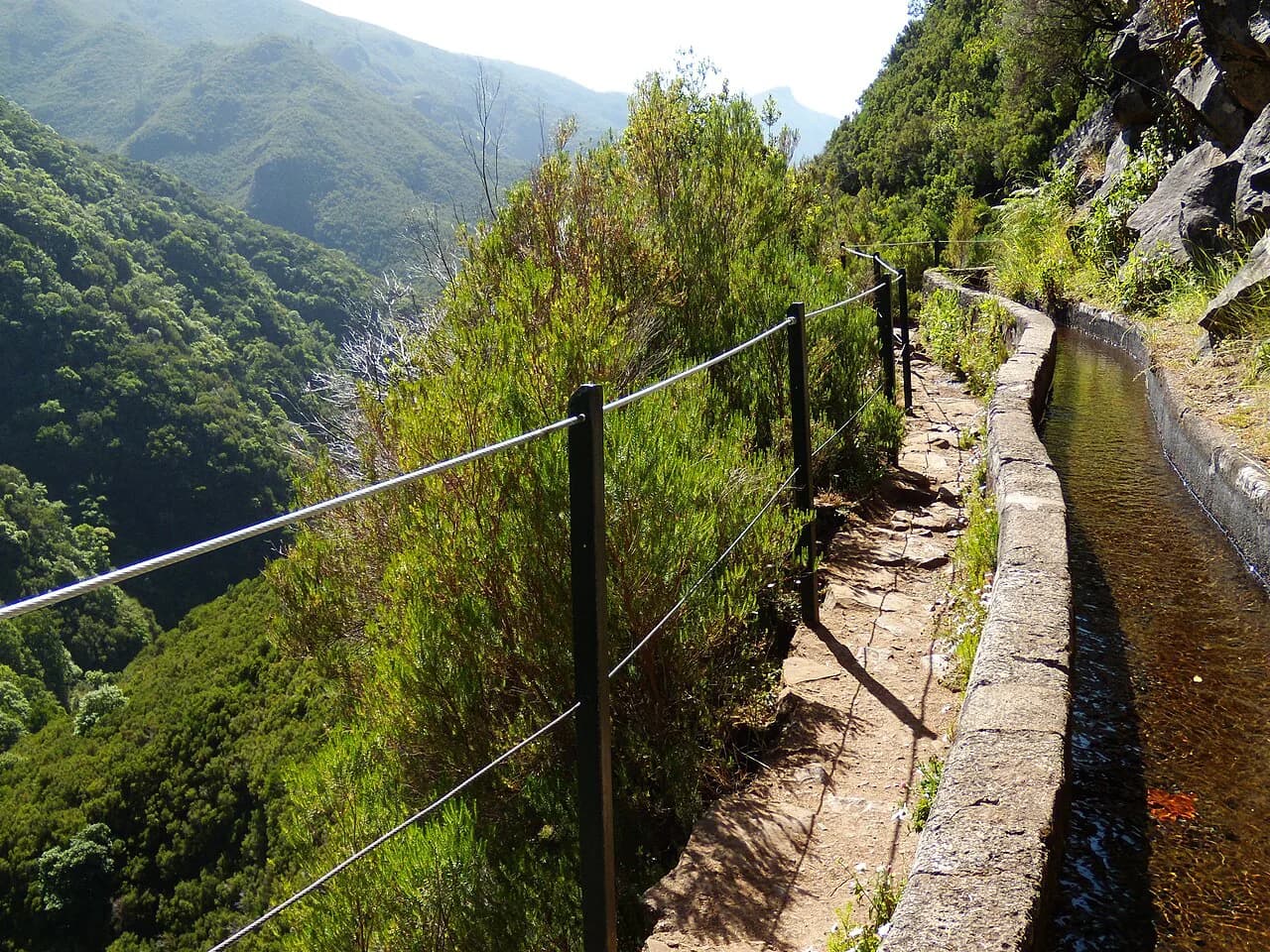
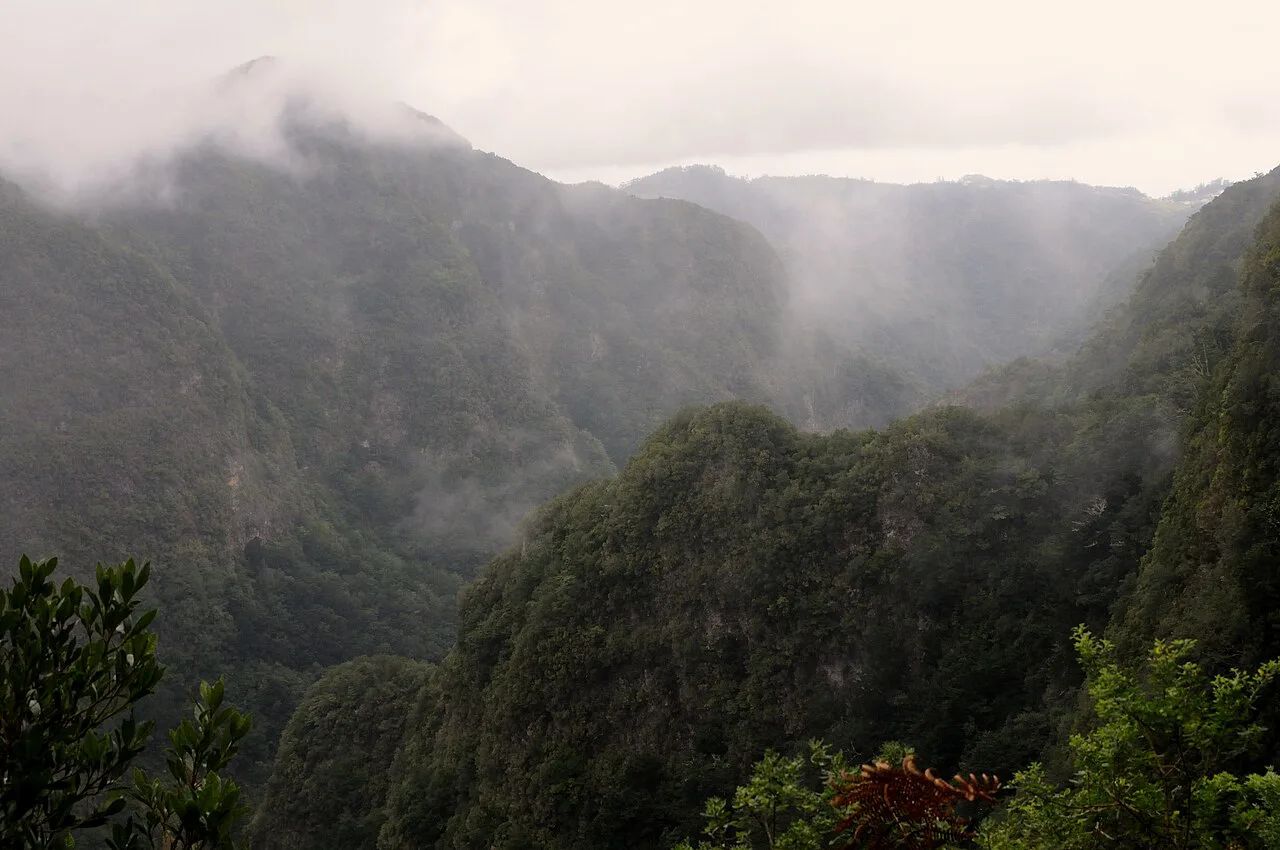
Past the last tunnel the trail rounds a cliffside and opens onto views across the São Jorge valley and the surrounding mountains. The drops on this stretch are real and fenced, but the path stays narrow, so keep your attention on your feet when you pass other walkers and save the camera for the wider ledges.
Around 4.5 km from Queimadas, at a tunnel mouth about 2 km short of the waterfall, the PR9 crosses walking route PR1.1 between Ilha and Pico Ruivo. That connection climbs steeply and constantly, so treat it as a different day out rather than a casual detour.
Arriving at the Caldeirão Verde waterfall
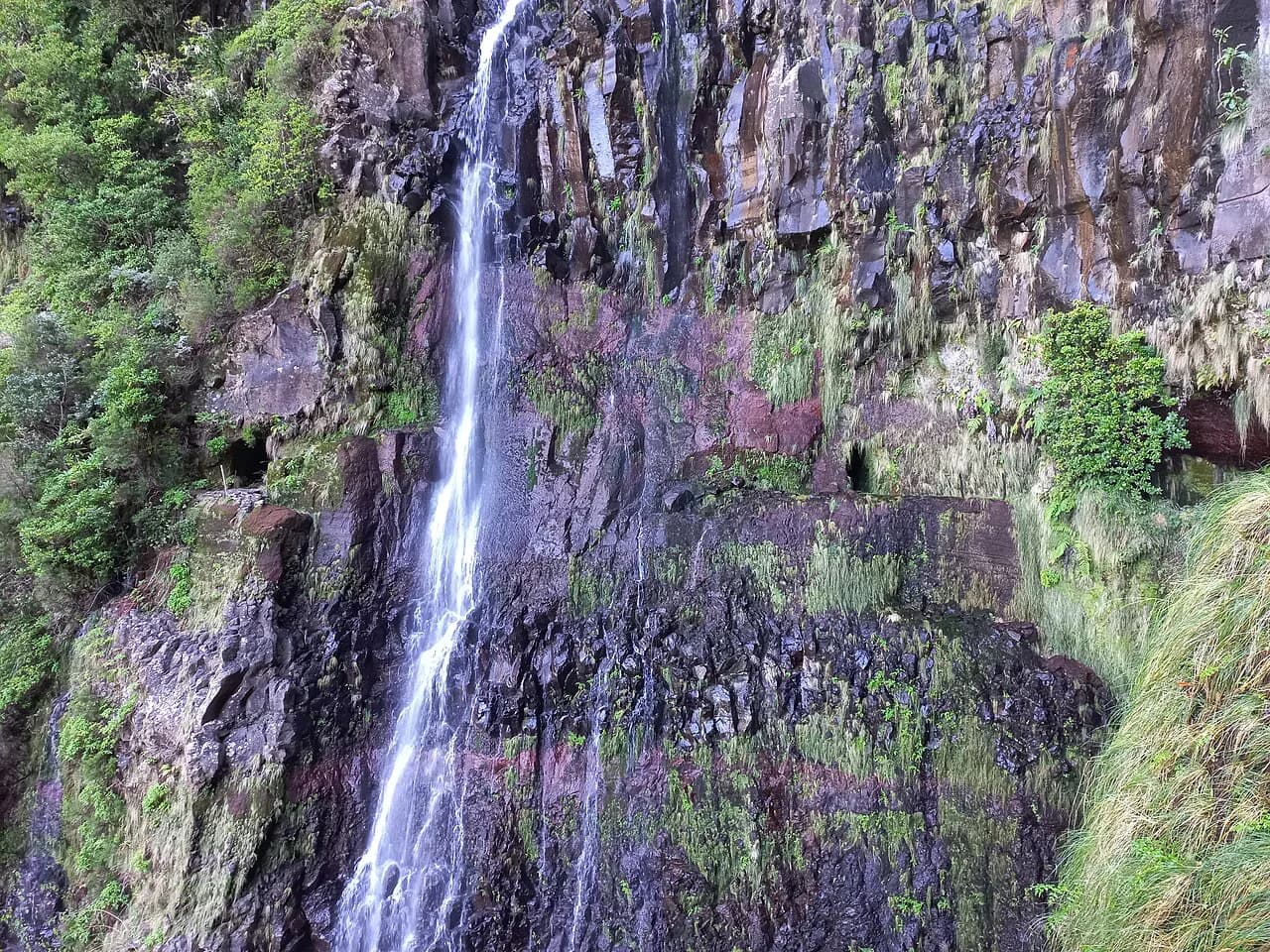
The Caldeirão Verde is a waterfall of about 100 m plunging into a small, intensely green and very cold pool. It is worth the walk, and it is popular: expect a small crowd, sometimes a large one, admiring the view at the end of the path.
Access to the lagoon area itself has been technically forbidden because of rockfall danger, with a warning notice posted before you reach it. The pool sits beneath loose ground, so admire the fall from the marked viewing area rather than scrambling down to the water.
The Caldeirão do Inferno extension
Beyond the Caldeirão Verde, a path once continued 2.5 km to the Caldeirão do Inferno through a series of waterfalls, finishing with a long staircase up a steep incline. That extension has been closed more definitively than the lagoon restriction, and most walkers skipped it even when it was open because of the demand.
With the extension shut, your only option at the waterfall is to turn around and follow the levada back to Queimadas. Budget the return leg on tired legs and treat the tunnels as the last technical obstacle of the day.
When to go: months and time of day
This corner of Madeira takes noticeably more rain than the rest of the island, so June, July and August give the best odds of a dry path. May, September and October bring fewer people with still comfortable temperatures, while early October can deliver excellent walking conditions and a quiet trail.
Start early. Midday in high summer brings the heaviest traffic at the waterfall, and an early start puts you ahead of it and gets you back to the trailhead well before dark. Afternoon conditions in the valley can turn wet quickly, and wet rock in the tunnels is where the walk gets awkward.
Facilities at Queimadas
The car park, café and picnic tables at Queimadas make the trailhead a comfortable base for the day. The café serves coffee and homemade cakes, and the picnic tables let you eat a packed lunch before or after the walk. There are no huts or refreshment stops along the levada, so carry your own food and water.
The accessible Caminho Para Todos walk also leaves from Queimadas, following the levada in the opposite direction toward Pico das Pedras on a flat route of around 2 km. It gives non-walking companions a gentle option from the same car park.
What to carry for the tunnels and drops
A headlamp is more useful than a hand torch inside the tunnels, because you may need both hands where headroom falls and the floor is wet. Add a light waterproof layer, grippy shoes and a dry bag for valuables; the levada route is wet even on a fine day.
The fenced drops on the cliffside stretch and the narrow passing places are the exposure to plan for. If anyone in your group dislikes enclosed spaces or heights, the tunnels and the cliff section are the two places to weigh before committing to the full 13 km.
Where to base yourself for the PR9
Funchal is the practical base for most visitors: it is compact, has the widest choice of accommodation and food, and sits about an hour's drive from Queimadas. Staying in or near Santana shortens the morning drive and suits anyone combining the PR9 with other walks in the island's north-east.
If you want a second levada day, the walks around Rabaçal on the Paul da Serra plateau give a contrasting high-level outing. Otherwise, keep the trip focused on the north of the island and the forest parks above Santana.
Plan Your Visit
The Levada do Caldeirão Verde is the easiest big-reward walk on Madeira: about 13 km (8.1 mi) out and back, minimal climbing, four dark tunnels and a 100 m waterfall at the end. Sort out your transport first, since the bus only gets you to Santana and the taxi ride finishes the job.
Pack a headlamp, wear shoes that grip wet rock and start early enough to be back at Queimadas in daylight. Confirm the current state of the lagoon restriction and the Caldeirão do Inferno closure with the park before you travel, then let the levada do the rest.
Frequently Asked Questions
How long is the Levada do Caldeirão Verde walk?
The path runs about 6.5 km (4 mi) one way from Queimadas Forest Park to the Caldeirão Verde waterfall, and since you return the same way the round trip is roughly 13 km (8.1 mi). Total ascent is only around 100 m (330 ft), and most walkers need three to four hours of walking time, plus stops at the tunnels and waterfall.
Do you need a torch for the Caldeirão Verde tunnels?
Yes. The route passes through four tunnels, a couple of them fairly long, and headroom drops suddenly in places, so a torch is required and some head protection is sensible. A headlamp leaves your hands free for wet, uneven ground, and waterproof footwear helps because water can stand on the tunnel floor.
Can you reach Levada do Caldeirão Verde by public transport?
Not directly. Interurban buses 56, 103 and 138 reach Santana, and from the Santana bus station you need a taxi for the climb to Queimadas Forest Park, which makes the journey from Funchal roughly two hours. Pico Transfers has run door-to-door shuttles from Funchal, Caniço and a few other locations twice a week, on Mondays and Thursdays; check current details before relying on it.
Is the path to Caldeirão do Inferno open?
The extension beyond the Caldeirão Verde toward the Caldeirão do Inferno has been closed, and the path was already a demanding add-on with a long staircase before that. With it shut, the Caldeirão Verde waterfall is the turnaround point and you retrace the levada to Queimadas. Ask the park about current status before relying on either way.
What is the best time of year to hike PR9 in Madeira?
June, July and August give the best odds of dry weather, since this part of the island is wetter than the rest. May, September and October bring fewer walkers with still comfortable temperatures. Whatever the month, start early to beat the crowds at the waterfall and to be back at the trailhead before dark.
Can you swim at the Caldeirão Verde waterfall?
Access to the lagoon area has been technically forbidden because of rockfall danger, with a warning notice posted before you arrive. The pool is very cold in any case. Admire the 100 m fall from the permitted viewing area and keep clear of the ground beneath the cliff.
How much does parking at Queimadas cost?
The Queimadas car park is paid and you settle the ticket at the Casa de Abrigo das Queimadas café rather than at a barrier machine. Rates are set locally and can change, so check the amount on site or with the park before you set out, and carry some cash.
Sources
Trail notes for your next trip
Optional updates when we add or revise hiking guides.
You might also like
Continue reading
More guides you'll find useful