Levada do Moinho to Levada Nova Waterfall Hike, Madeira
Walk Madeira's Levada do Moinho loop from Lombada da Ponta do Sol to the Levada Nova waterfall and tunnel, with distance, ascent, exposure and timing.
On this page
The Levada do Moinho to Levada Nova circuit is one of the gentlest half-days on Madeira's south coast, and the payoff is unusual: a levada cut into the cliff so you walk behind a falling curtain of water. It suits hikers who want big valley views and a bit of atmosphere without a long climb, and it works well as a first levada if you have never followed an irrigation channel before.
The route links two channels at different heights above Ponta do Sol. The lower Levada do Moinho runs out along the cliff edge with hand-railing for most of its length, then a short climb connects to the newer Levada Nova, which returns high on the opposite side of the valley with far less protection. That contrast is the thing to plan around: the outward leg is relaxed, the return needs your attention.
Where the Levada do Moinho starts on Lombada da Ponta do Sol
The walk begins at Lombada da Ponta do Sol, near the Church of the Lombada, on the hillside above the village of Ponta do Sol. The trailhead sits behind the church, reached by a small alley that drops you almost immediately onto the Levada do Moinho channel. Parking is available beside the church, and there is a toilet there, so the start needs no onward transfer once you arrive.
The first stretch passes well-kept terraced farmland, with the valley opening below and the village of Ponta do Sol visible down the slope. Because the church car park is easy to miss from the road, aim for the church itself rather than a roadside spot further downhill; walking up through the lanes adds unnecessary climbing before you have started.
Trailhead, parking and getting there from Funchal or Calheta
This is a drive-to hike. The trailhead lies on the south coast between Calheta and Funchal, which makes either town a practical base: Calheta sits closest, while Funchal means a longer run along the coastal road. Coming from Calheta, the church at Lombada is a short drive up from the coast, and parking beside it puts you at the start with no approach walk.
WalkMe lists start and end points for the trail at Ponta do Sol and includes bus directions within its app, so local buses do serve the area. Check the current route and times before you rely on them, since the schedules change with the season. A car remains the simpler option if you want to combine the walk with other hikes on the same day.
Distance, ascent and walking time for the loop
WalkMe gives the circuit as 8.5 km (5.3 miles) with 105 m (344 ft) of ascent and 106 m (348 ft) of descent, topping out at 410 m (1,345 ft) and dropping to 310 m (1,017 ft), with a walking time of about three hours. That is a moderate half-day at an easy gradient, most of the height being won in the short link between the two levadas rather than on the channels themselves.
Other figures for the same route differ. One walking guide describes a 9 km (5.6 miles) round trip with about 150 m (492 ft) of climb, taking roughly three hours including a stop at the waterfall, while AllTrails lists a 6.2-mile loop. Treat the shape of the day as fixed and the numbers as close approximations, then plan on three hours of moving time plus whatever you spend at the falls and in the tunnel.
Which way round to walk it: Moinho first, Nova back
Walk the Levada do Moinho outbound and return on the Levada Nova. The lower channel gives you the railed cliff section and the long valley views early, while the upper channel delivers the waterfall, the tunnel and the exposed traverse in the second half, when you are warmed up and paying attention. Doing it the other way round would put the unprotected ground first, on fresh legs but with less idea of what the path feels like.
One route description has you retrace the same channel back to the church, while another describes a loop that starts and finishes at the same spot behind the church. The circular version is the better day out because it avoids repeating the cliff-edge path, but keep the out-and-back in mind if you want the shortest possible exit from the waterfall.
Route description: farmland and views over Ponta do Sol
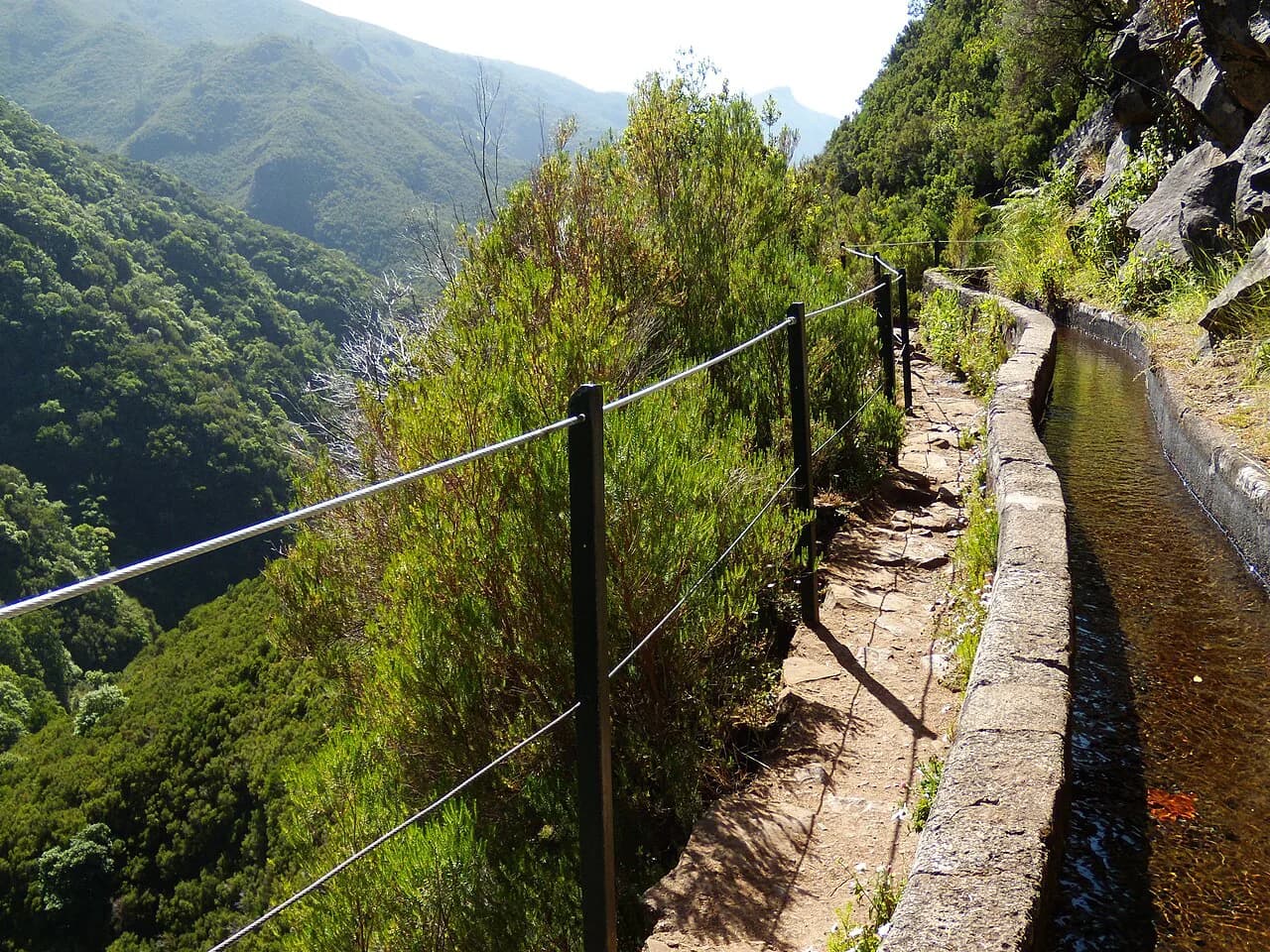
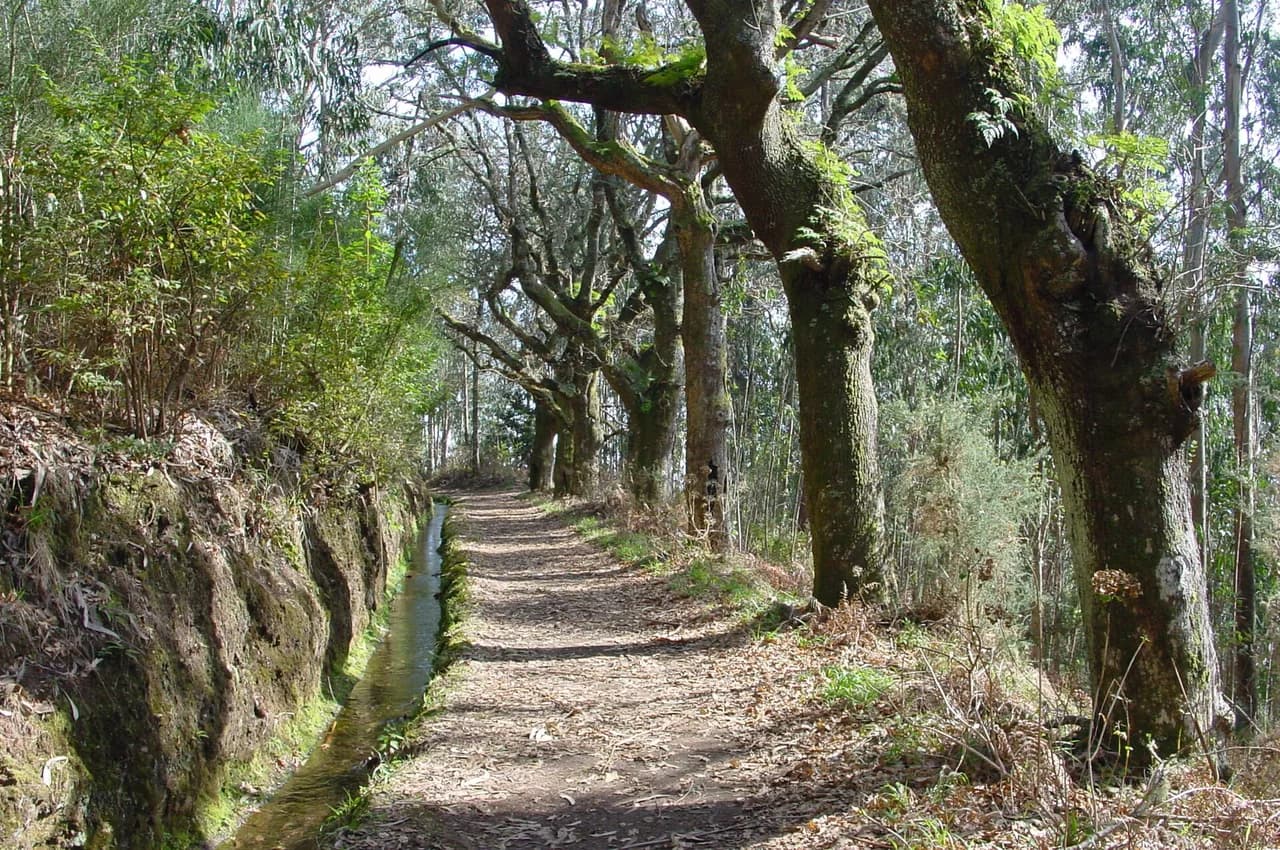
From the church the path drops onto the Levada do Moinho and follows the channel as it contours the hillside. The opening kilometres run along the cliff edge, with a hand-rail through most of it and a big drop to your right; look back often, because the ocean and the coast toward Calheta stay in view behind you. Ahead, a narrow gorge cuts between the cliffs, and the trail aims straight for it.
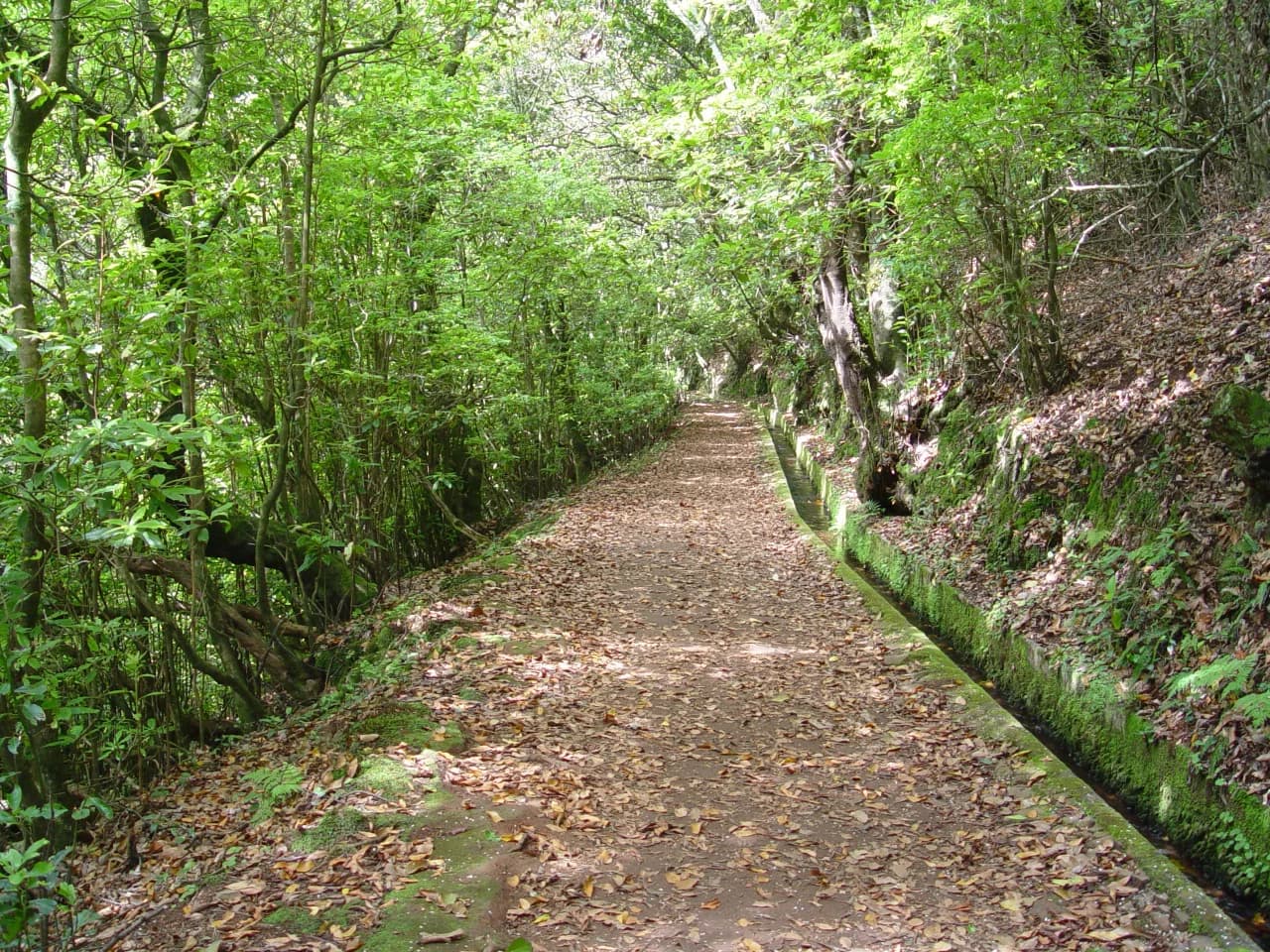
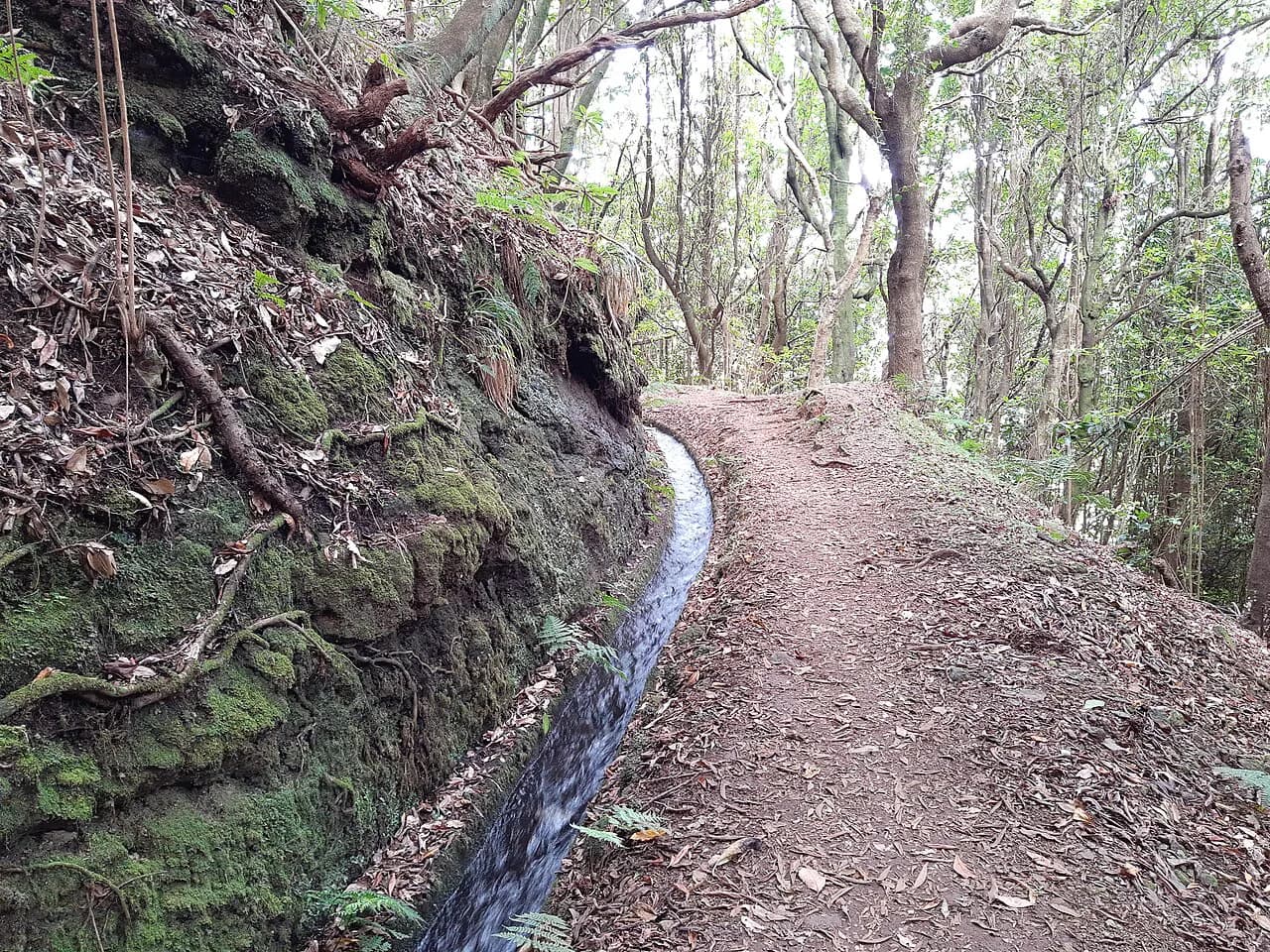
The surface is not uniform. Expect rocky dry river crossings, stepping stones, short stair sections and stretches of dirt between the concrete channel path, so the walking is easy but rarely mindless. Water runs in the levada beside you for most of the way, and the terraced fields above and below give the first section its character.
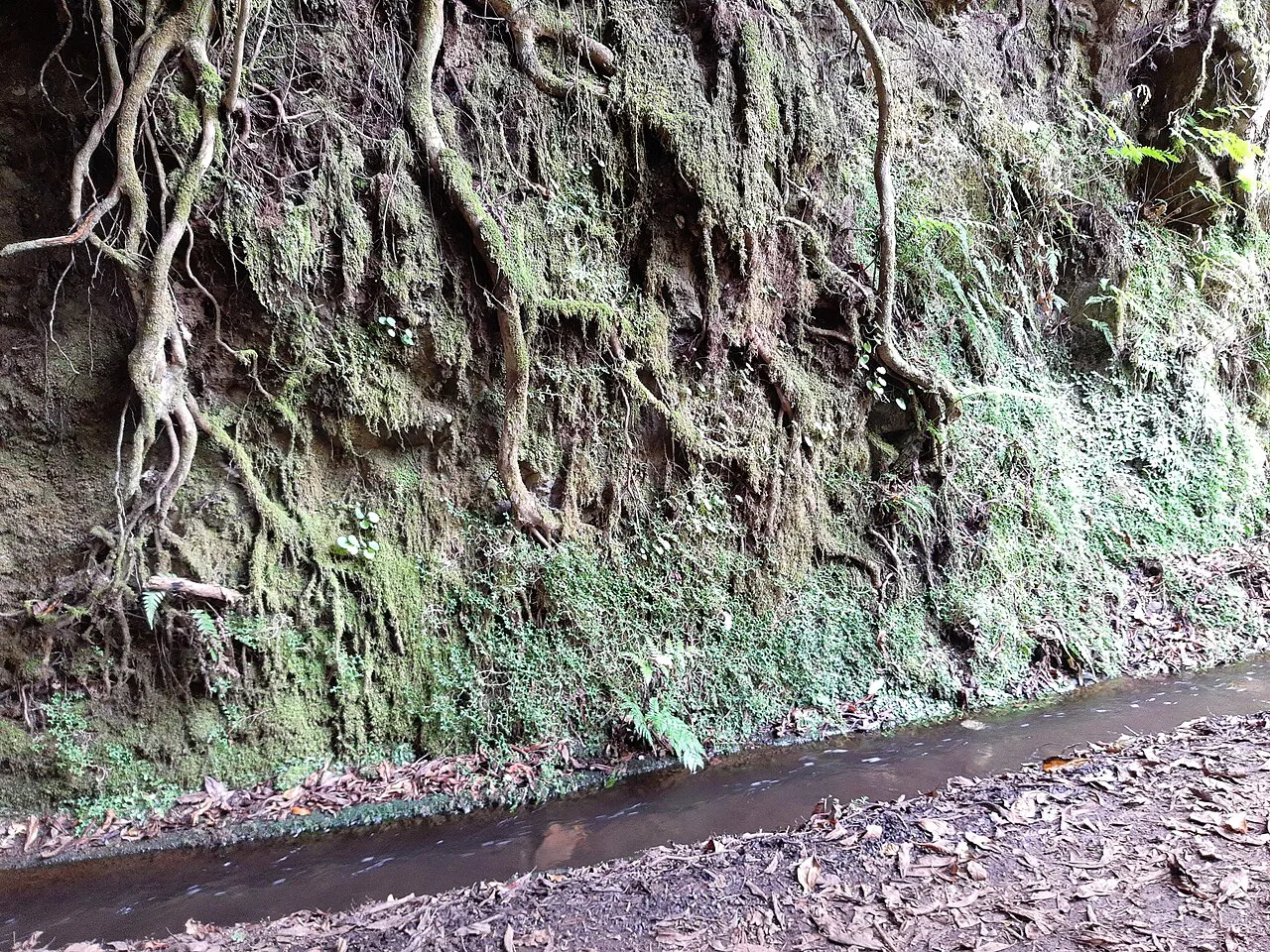
The junction: gorge waterfall or the steep stairs
At the stairs on your right, you have a decision. Going up them is the short way to the Levada Nova and skips the floor of the gorge; carrying on and dropping into the gorge takes you to a second waterfall at the head of the ravine, then across the dry riverbed and up to rejoin the Levada Nova above the stairs. The gorge version adds a modest amount of time and climbing for a quieter fall that most walkers never see.
If you only want the main falls, take the stairs: the climb is short and sharp, lasting a few minutes, and puts you on the upper channel quickly. Either way you end up on the Levada Nova heading toward the ocean, with the lower Levada do Moinho visible beneath you as a reminder of how far you have climbed.
Walking behind the Levada Nova waterfall
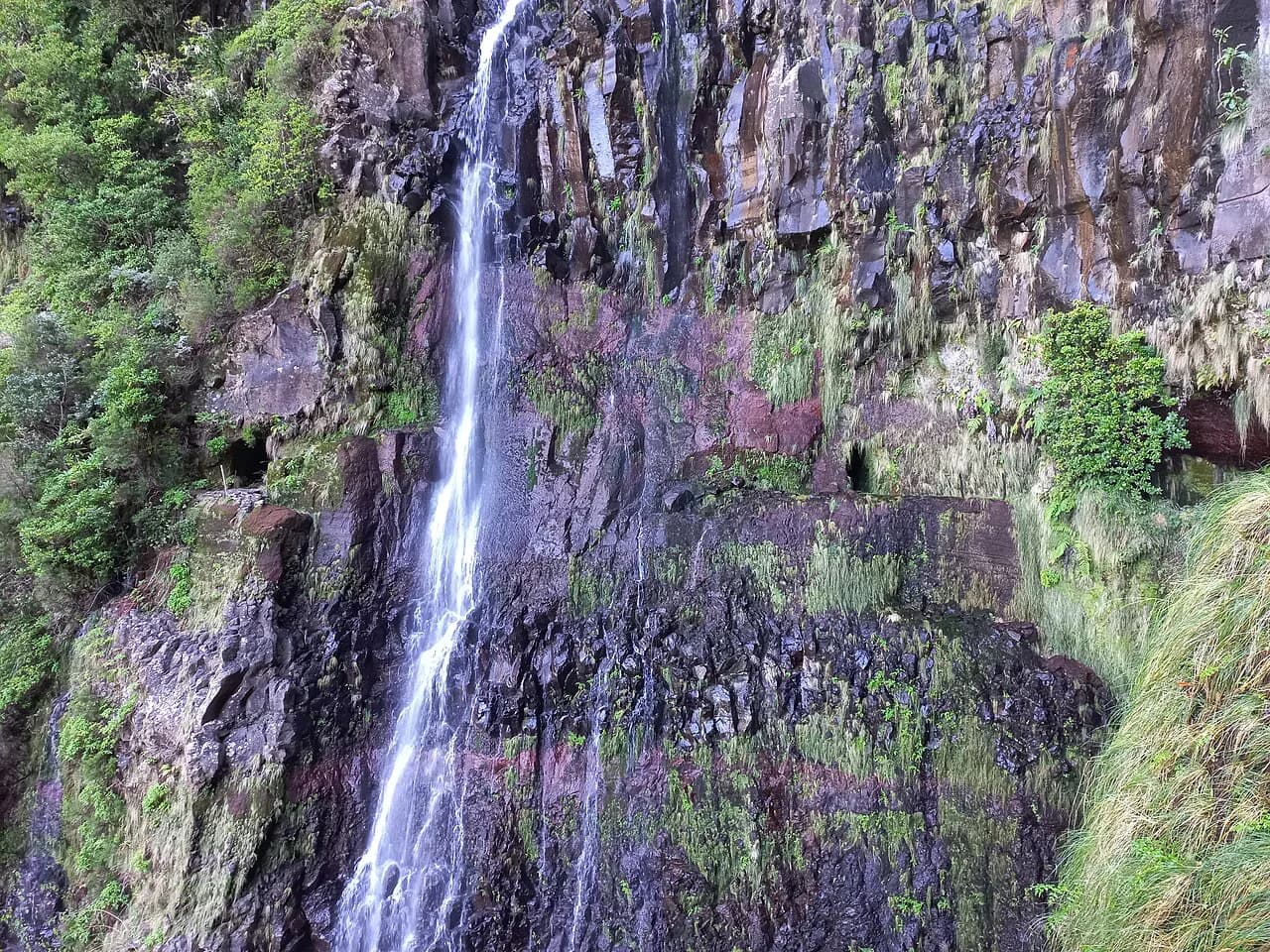
Roughly halfway round, the path swings around a corner and the water pours over the cliff above the trail. The channel has been cut into the rock so that you pass directly beneath the falling water, picking up a light shower as you go. It is the reason most people walk this route, and it makes an obvious place to stop for lunch before the tunnel.
The passage behind the falls is short and wet underfoot, and you will want a hand free for the camera rather than a rail. Keep moving through the spray rather than stopping in the middle of the flow, then find a dry ledge beyond it for the snack stop.
The 200 m tunnel and the exposed Levada Nova return
Immediately after the waterfall the route enters a tunnel about 200 m (656 ft) long, with a low roof and no light of its own. A headlamp is the right tool; a phone torch works as a minimum but leaves you one-handed on uneven ground. Put the lamp on before you enter, and watch your head for the first few metres while your eyes adjust.
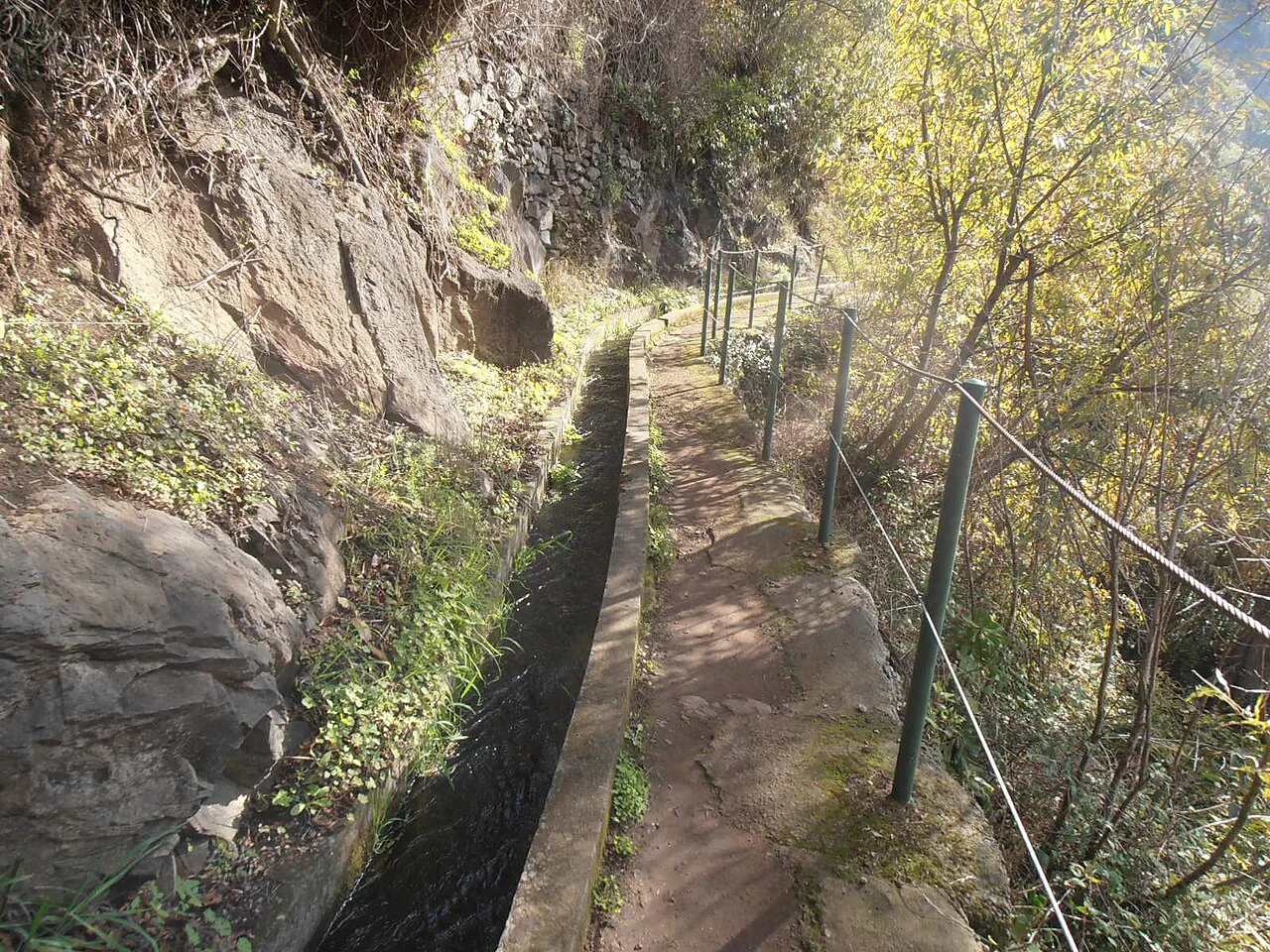
Beyond the tunnel the Levada Nova traverses toward the sea on a narrow concrete ledge, with the Levada do Moinho below and a serious drop to your right. Several stretches on this upper channel have no safety railing, and WalkMe rates the abyss sections as unsuitable for inexperienced hikers. This is where the day demands concentration: walk single file, keep the inside line, and save the looking around for the railed parts.
The path finishes a couple of blocks above the church and spills out onto the village roads. Follow the road downhill and the church where you parked appears on your right, closing the loop without any further climbing.
Exposure, water and the tunnel: what to prepare for
Treat this as a low-altitude walk with three specific demands rather than a mountain day. The Levada do Moinho cliff section is mostly railed, the Levada Nova return is partly not, and the tunnel needs light; a headlamp, grippy shoes for wet concrete and a windproof layer cover all three. Trekking poles are useful on the stairs and the riverbed but get in the way on the narrow ledge.
Drinking water is not provided along the channel, and the levada water itself is irrigation supply rather than drinking water. Carry what you need for three hours plus your stop, and refill before leaving Ponta do Sol or Calheta. Rain on the upper slopes makes the path behind the falls slick and the unrailed sections greasier, so a wet forecast is a reason to shorten the route to the stairs and the main falls.
Best months and weather on Madeira's south coast
The south coast is the driest part of Madeira, and this walk sits low enough to stay open in most conditions. Spring and autumn give the most comfortable temperatures for the exposed traverse, while summer brings stronger sun on the open channel and winter can deliver rain squalls that make the wet rock behind the waterfall the crux of the day.
Morning is the better half of the day here: the light comes across the valley toward the falls, the path is quieter, and you are off the exposed ledge before any afternoon cloud builds over the ridge. If you are visiting in a wet spell, ask at your accommodation in Ponta do Sol about conditions on the upper channel before setting out.
Where to base for this hike
Ponta do Sol is the natural base, sitting directly below the trailhead and giving you a short drive or a stiff walk up to the church. Calheta works almost as well, with a wider choice of self-catering accommodation and a beach for the afternoon. Funchal is possible as a day trip but turns a three-hour walk into a much longer outing on the coastal road.
Wherever you stay, plan the walk as a half-day and pair it with something gentler in the afternoon. The south coast road links Ponta do Sol, Calheta and the levadas above them, so a single base lets you stack several short walks into a few days without long transfers.
Nearby levadas on the south coast outside this route
The Levada do Moinho is one of many channels threaded across Madeira, and the south and central levadas give you plenty of options for the rest of the week. If you want a longer day on water channels, the Levada do Caldeirão Verde and the Levada das 25 Fontes both deliver bigger waterfalls and full-day distances. Those lie outside this route and need their own transport planning.
For high mountain ground instead of levadas, the ridge traverse between Pico do Areeiro and Pico Ruivo is the classic Madeira outing and a completely different proposition in scale and weather. If you want the same decision — short low-level channels versus a full mountain day — weighed at another island, the Tenerife hiking guide sets out the options by region and difficulty. Use it on a settled day and keep the levada walk for the cloudier ones.
Plan Your Visit
The Levada do Moinho to Levada Nova circuit is the best short levada on Madeira's south coast for hikers who want variety: farmland, a gorge, the walk behind the waterfall and a genuinely exposed return. Start at the church at Lombada da Ponta do Sol, walk the lower channel first, and take the gorge detour if you have the legs for it.
Carry a headlamp for the tunnel, keep the railed line on the upper channel, and give yourself three hours plus stops. Base in Ponta do Sol or Calheta, drive up to the church car park, and keep the rest of the day free for the coast.
Frequently Asked Questions
How long is the Levada do Moinho hike?
WalkMe gives the circuit as 8.5 km (5.3 miles) with about 105 m (344 ft) of ascent and a walking time of roughly three hours. Other listings put it nearer 9 km (5.6 miles) or 6.2 miles, so plan on a half-day including stops at the waterfall and in the tunnel.
How hard is the Levada do Moinho to Levada Nova loop?
The gradient is gentle and most of the walking is along irrigation channels on easy ground. The difficulty is in the exposure: the Levada do Moinho cliff section is mostly railed, while the Levada Nova return has unprotected stretches above a serious drop, which WalkMe rates as unsuitable for inexperienced hikers.
Where does the Levada do Moinho start and where do you park?
The walk starts at Lombada da Ponta do Sol, behind the Church of the Lombada on the hillside above the village. There is parking beside the church and a toilet there, so you can begin the trail without any approach walk.
Can you walk behind the waterfall on Levada Nova?
Yes. About halfway round, the channel is cut into the cliff so the water pours over the trail and you pass directly beneath the falls, picking up a light shower. It is short and wet underfoot, so keep your hands free for the handrail.
Do you need a headlamp for the Levada do Moinho hike?
A headlamp is the right kit for the tunnel that follows the waterfall, which runs about 200 m (656 ft) with a low roof and no lighting. A strong phone torch is the minimum, but it leaves you one-handed on uneven ground.
Which way round should you walk the Levada do Moinho loop?
Walk the lower Levada do Moinho outbound and return on the upper Levada Nova. That gives you the railed cliff section and the valley views first, then the gorge, the waterfall and the tunnel, and leaves the exposed unrailed traverse for the second half when you know how the path behaves.
What is the best time of year for this levada walk?
Spring and autumn give the most comfortable temperatures on the exposed traverse, and mornings are usually clearer and quieter than afternoons. The south coast is Madeira's driest region, but winter rain makes the rock behind the waterfall slick, so shorten the route to the stairs and the main falls in wet weather.
Sources
Trail notes for your next trip
Optional updates when we add or revise hiking guides.
You might also like
Continue reading
More guides you'll find useful