Levada Nova Hike, Madeira: Route, Waterfall and Loop Details
Plan the Levada Nova hike in Madeira from Ponta do Sol: the loop with Levada do Moinho, the walk-behind waterfall, tunnel, distance and exposed sections.
On this page
The Levada Nova loop above Ponta do Sol packs an unusual amount into a half day: two irrigation channels at different heights, terraced farmland, a narrow gorge and a waterfall chute that carries the path behind the falling water. It suits hikers who want a short, low-climbing walk with a real feature at the turn-around point, and who are comfortable on narrow paths cut into a cliff.
The circuit works because of its geometry. You walk out along the older Levada do Moinho, climb to the newer Levada Nova above it, pass the waterfall and a tunnel, then follow the upper channel back toward the village with the ocean in view. Presented here as the loop, it fits neatly into a morning, leaving the afternoon for the rest of your Madeira itinerary.
Where Levada Nova runs and who the loop suits
Both channels run from the Church of the Lombada, a hamlet in the municipality of Ponta do Sol on Madeira's south coast, roughly midway between Funchal and Calheta. The route is a circuit: Levada do Moinho first, Levada Nova on the return, with the waterfall as the pivot. The trail mapping service WalkMe describes it as moderate, 8.5 km (5.3 mi) circular, taking about 3 hours.
Treat it as a half-day walk rather than a mountain day. The climbing is modest and the path is largely level along each channel, so the challenge is footing and exposure, not fitness. If you are building a week of Madeira trails, it pairs well with a bigger ridge day such as the PR1 Madeira traverse between Pico do Areeiro and Pico Ruivo, and the same short-versus-long levada logic applies if you are planning hiking in Tenerife.
Trailhead at Lombada, Ponta do Sol: parking and orientation
Start at the Church of the Lombada. The path is not obvious from the road: it begins behind the church, where a small alley leads you onto the Levada do Moinho within a minute or two. Aim for the church itself rather than the village of Ponta do Sol below it, which sits well under the trail.
There is parking beside the church and a toilet at the trailhead, which makes for a straightforward start by car; arrive early on weekends because the spaces are limited. From Funchal or Calheta the drive is short and follows the south-coast road, which is why this walk works as an add-on to a beach or town day.
Distance, ascent, descent and walking time
WalkMe's profile gives 105 m (344 ft) of ascent and 106 m (348 ft) of descent over the 8.5 km (5.3 mi) circuit, with a high point of 410 m (1,345 ft) and a low point of 310 m (1,017 ft). Allow about 3 hours at a steady pace, plus stops at the waterfall and the gorge.
Other walkers report a slightly longer round trip of about 9 km (5.6 mi) with roughly 150 m (492 ft) of climb and 3 hours including photo stops. The figures differ because of where people start counting and how far they explore in the gorge, not because the route changes, so plan on three hours of walking and treat anything faster as a bonus.
Route description: Levada do Moinho outbound
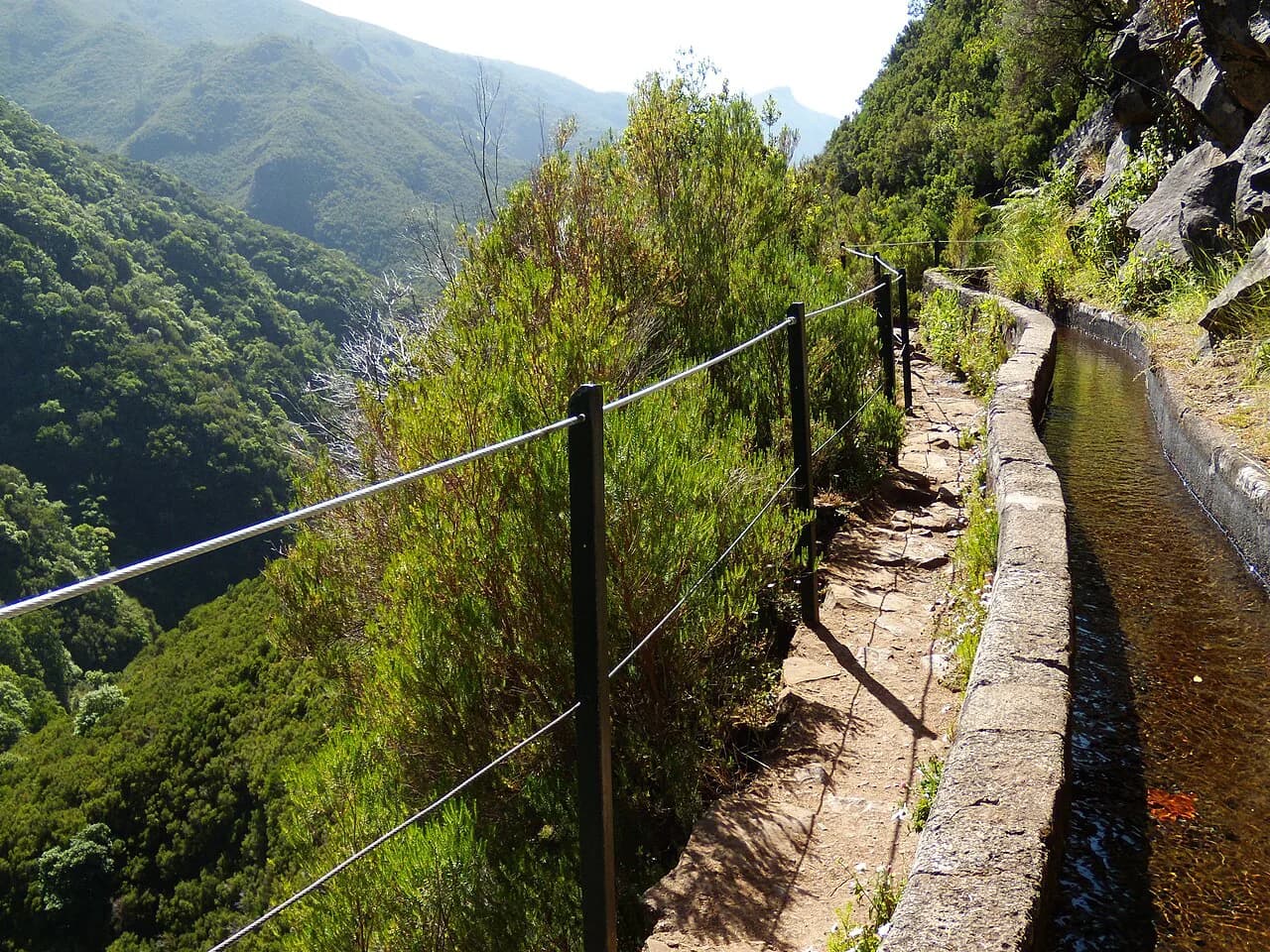
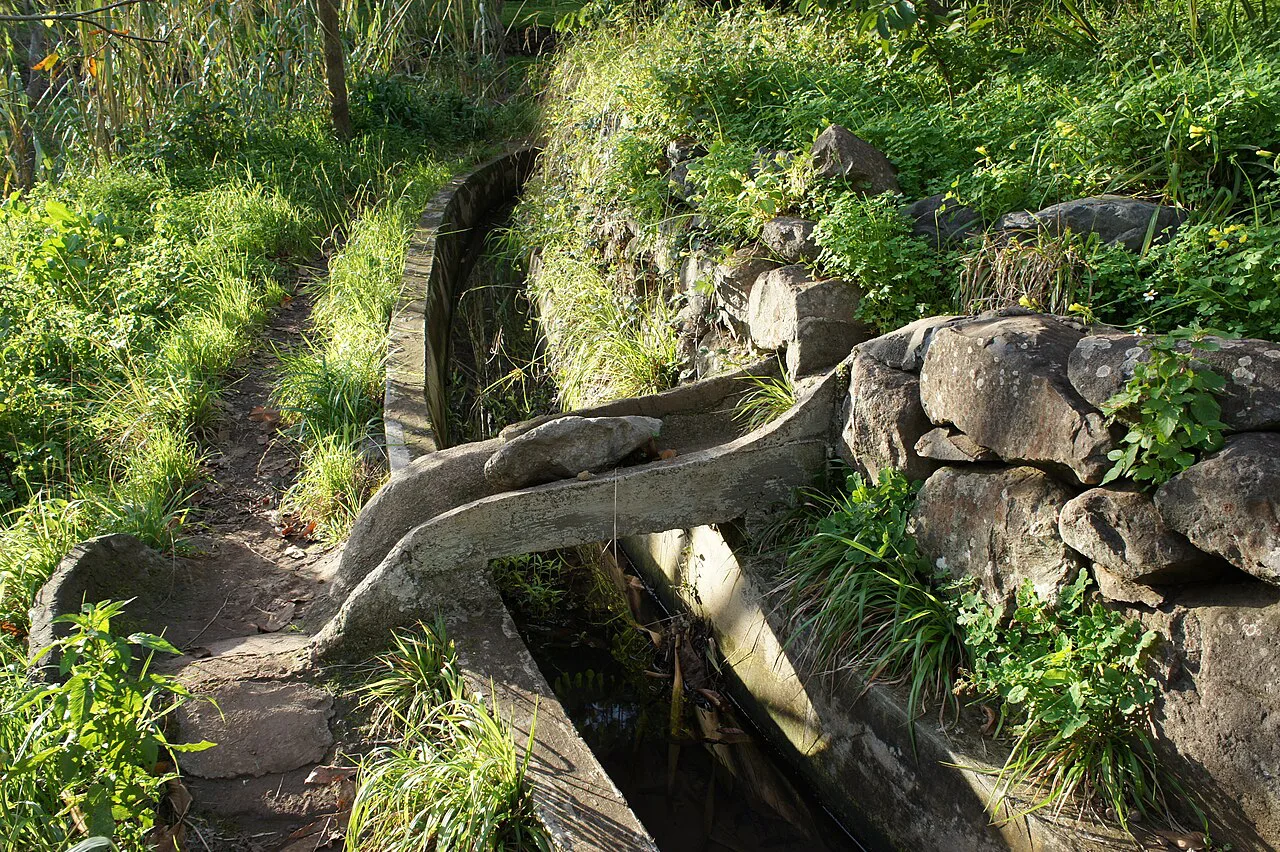
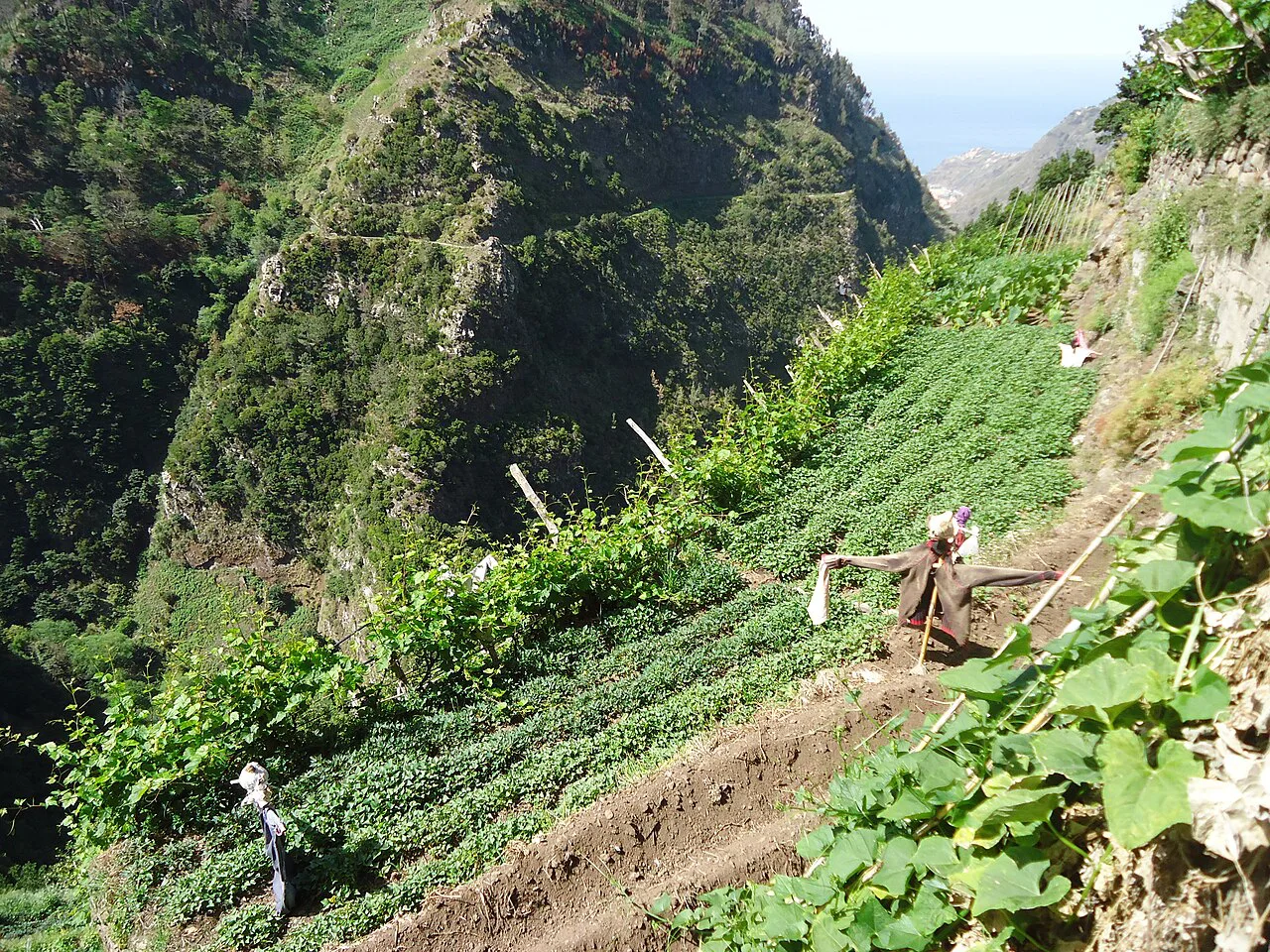
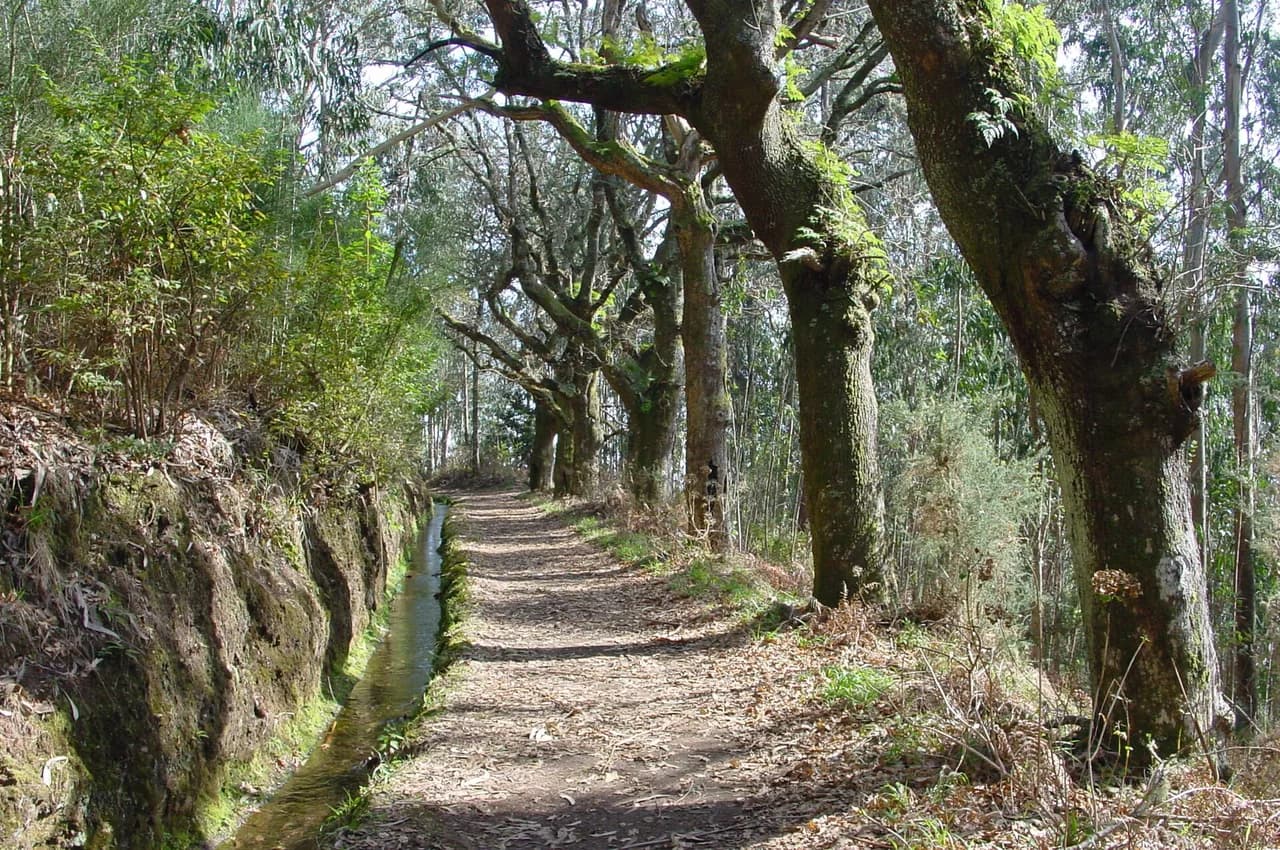
From the church, the Levada do Moinho leads you through cultivated terraces and smallholdings, with the valley opening below and the village of Ponta do Sol visible toward the sea. The channel runs along a cliff edge for the first stretch, and a handrail covers most of it, so you can enjoy the drop to your right rather than hug the wall.
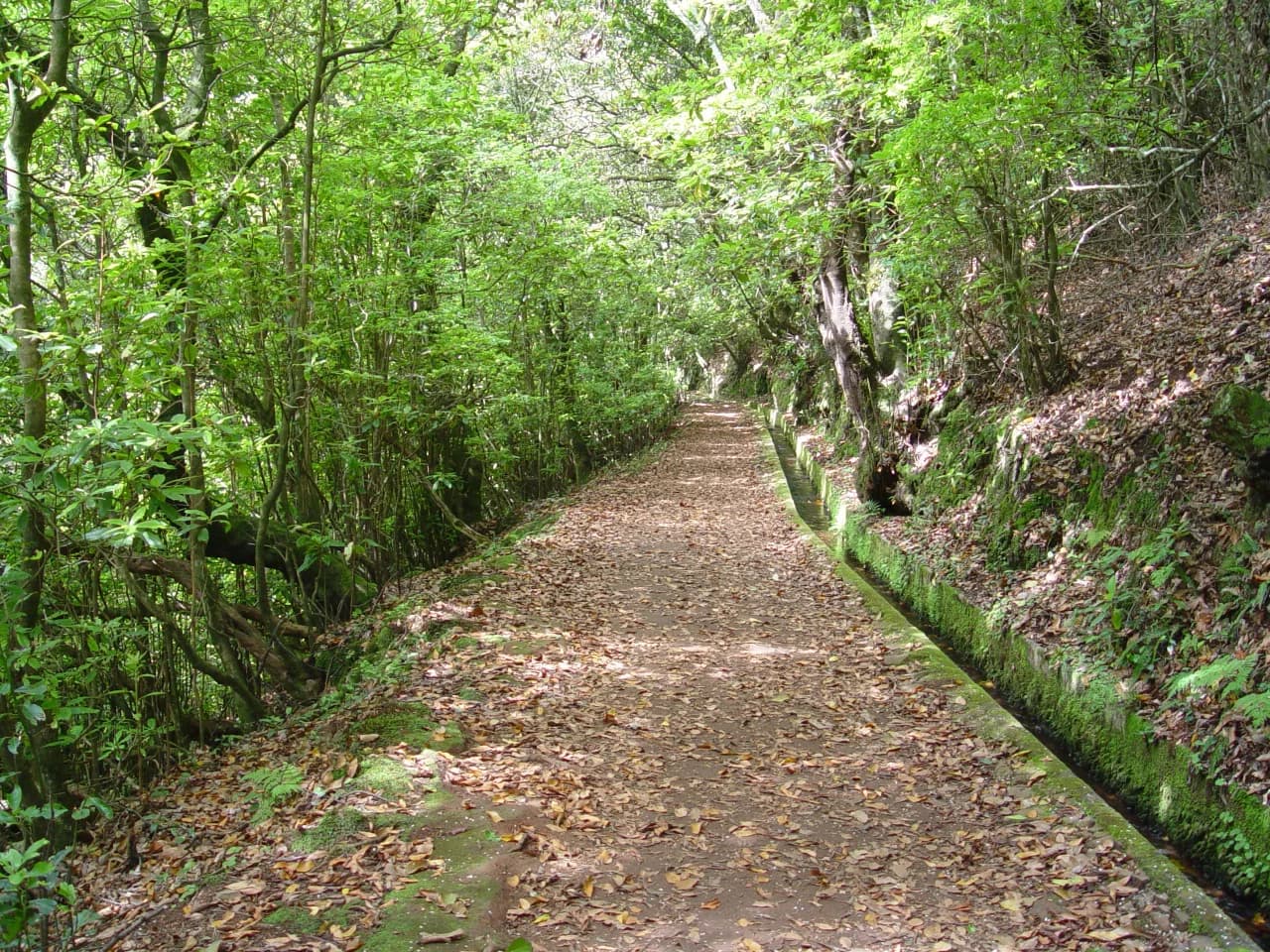
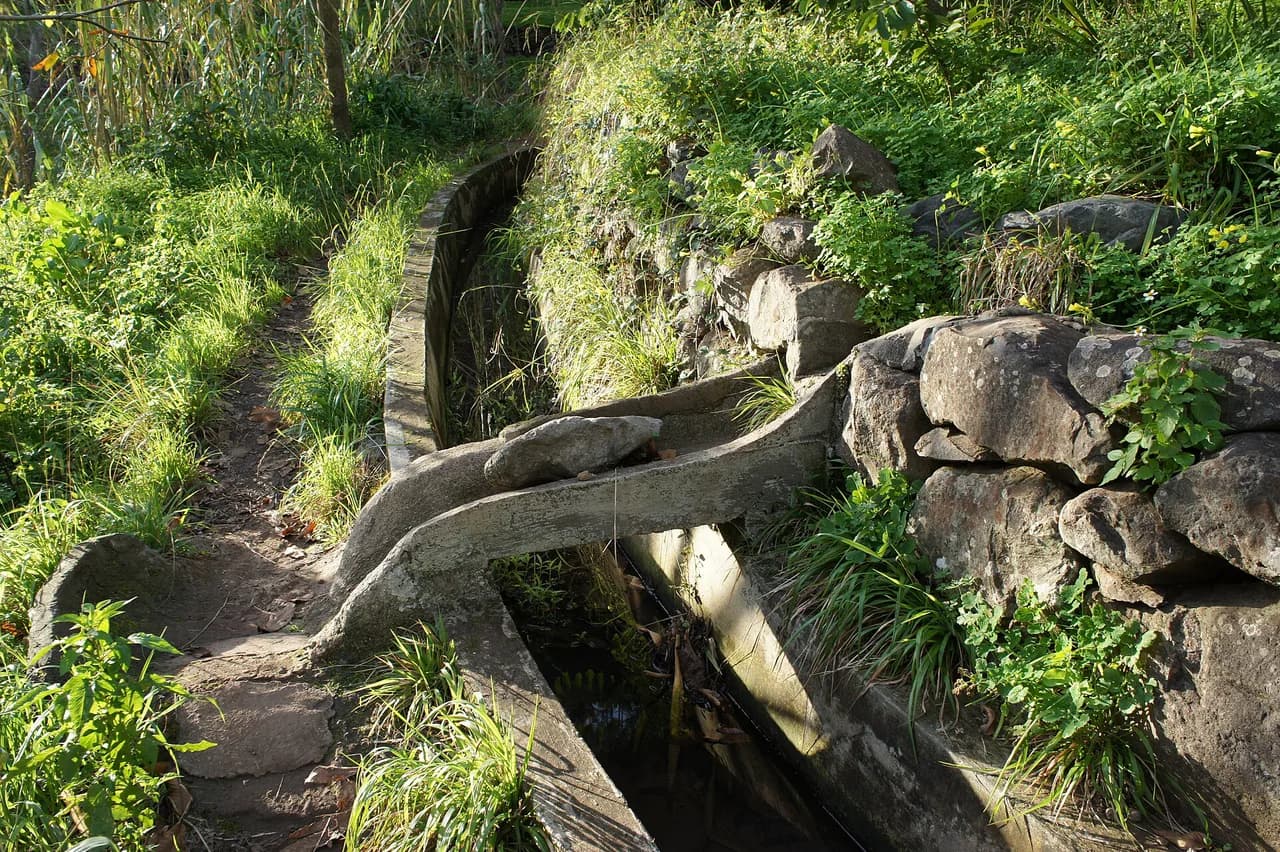
Look back often: the ocean fills the gap behind you, while ahead a narrow gorge cuts between the cliffs. The surface changes constantly underfoot, with steps, dirt sections, stepping stones and dry stream crossings, so this is not a paved promenade even though the gradients are gentle.
The climb to Levada Nova and the gorge option
About halfway around, a flight of stairs on your right climbs from the lower channel up to Levada Nova. Taking them is the quick route and brings you out near the main waterfall after a few minutes of effort.
Carrying on past the stairs instead drops you into the gorge, where a second waterfall sits at the head of a dry riverbed; you cross it and climb back up to rejoin the upper channel. This adds time and a rougher section but rewards you with a quieter feature, and it is the better choice if you have a headlamp and dry weather. Whichever you pick, the route rejoins the same upper channel.
The waterfall passage and the 200 m tunnel
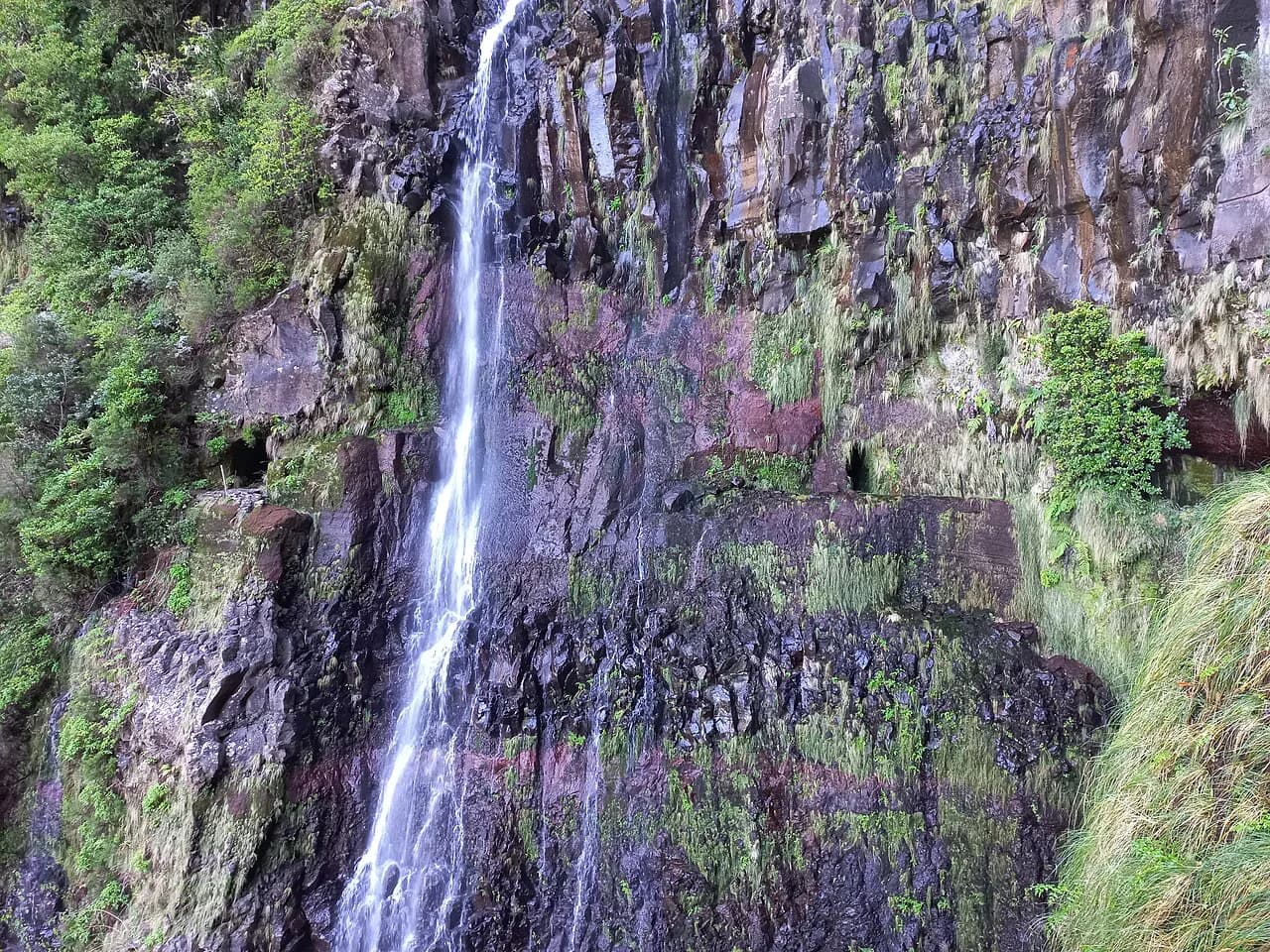
The signature moment is the waterfall on Levada Nova, where the path is cut into the cliff wall directly behind the falling water. You get a light shower as you pass through rather than a soaking, and it is an obvious place to stop for lunch.
Immediately after the falls the route enters a tunnel of about 200 m (656 ft) with a low roof, so a headlamp or a strong phone light is not optional kit. Take care with head height as well as footing: the passage is dark and the ceiling comes down faster than you expect.
Return along Levada Nova and back to the church
Past the tunnel, Levada Nova runs along the cliff toward the ocean, with the lower channel you walked out on visible beneath you. This is the most photogenic stretch and also the one that demands attention, because sections of the upper channel have no railing and a serious drop to the side.
The trail eventually delivers you onto the village streets a couple of blocks above the church; keep walking downhill and the church appears on your right. From there it is a short drive back to Ponta do Sol, Calheta or the Funchal road.
Exposure, footing and hazards on the upper levada
The upper channel has several stretches with a genuine abyss and no protection, which WalkMe flags in its description of the route. Keep children and nervous walkers on the inside of the path, single file where it narrows, and save the camera for the wider spots.
Rain changes the picture quickly on Madeira: the channels carry more water, the waterfall passage gets wetter and the gorge section becomes slippery rock rather than a dry crossing. Check conditions with the municipality of Ponta do Sol before setting out after heavy rain, and turn back at the gorge if the water is high.
When to go: weather, water levels and daylight
This is a year-round walk by Madeira standards, but the south coast is driest from late spring through early autumn. Spring and autumn give you the best mix of flowing water at the falls, comfortable temperatures and fewer people on the narrow channel paths.
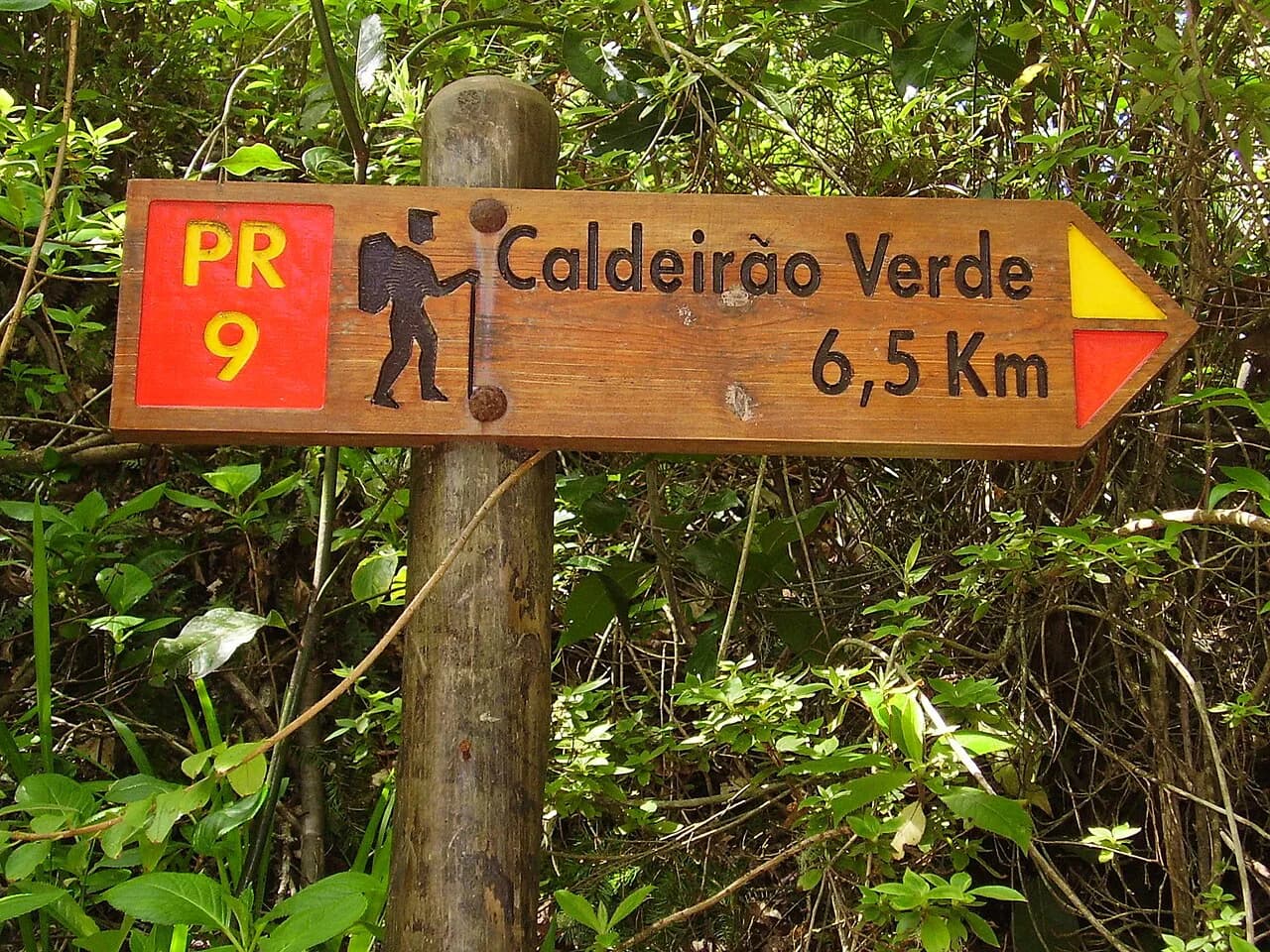
Winter days are shorter and the trailhead sits inland where cloud can settle in the afternoon. Start in the morning so the tunnel and the unprotected sections are behind you before the light fades, and check the Madeira regional forecast the evening before. If you want a longer day out on the same island, Levada do Caldeirão Verde offers a comparable channel walk with more distance.
Gear: headlamp, footwear and rain layer
A headlamp is the one item you cannot leave behind, because the tunnel needs both hands free on the low-roofed stretch. Add shoes with grip for the wet rock behind the waterfall and the stepping stones, and a light rain shell even on a clear morning.
Leave trekking poles in the car for the flat channel sections and carry them only if you plan the gorge detour, where they help on the climb back up. Water and snacks are not available along the route, so bring what you need for three hours.
Base villages for this hike: Ponta do Sol, Calheta and Funchal
Staying in Ponta do Sol puts you ten minutes from the trailhead and close to the coast for the rest of the day; Calheta works almost as well, on the far side of the village. Both are quiet bases where a car makes the most sense, and this short loop fits neatly into a rest day between bigger outings.
From Funchal, the drive down the south coast is longer but straightforward, and the city gives you the widest choice of places to stay and eat. If your trip is built around hut-to-hut or big mountain days, browse the wider set of levada walks Madeira has to offer and slot this loop in as an easy half-day.
Route shapes for a shorter outing
If you want a shorter outing rather than a longer day out, the Levada do Moinho - Levada Nova trail is a circular route of 8.50 Km with a moderate rating and a walking time of about 3h, starting and ending at the Church of the Lombada in Ponta do Sol. The route reaches a highest point of 410 m and a lowest point of 310 m, with 105 m of elevation gain and 106 m of elevation loss.
One way to cut the route short involves the stairs on your right-hand side. Walking the Levada do Moinho outbound, you come to stairs; going up them loops you straight around to the main waterfall and makes for a shorter route. The alternative keeps you heading down into the gorge, where at the end you can cross the dry riverbed and loop back up to join the Levada Nova, arriving on top of the route where the stairs would have taken you, having also passed the waterfall found down in the gorge. The outbound stretch follows the levada along the cliff-edge, secured by a hand-rail through most of the hike with a large drop-off to your right; obstacles along the way include rocky river crossings that were dry, stepping stones, stairs, dirt paths and cliff-side levadas without railing protection.
Parking sits right next to the church where the trail begins, and there is a toilet there too, so the trailhead is convenient. The trail actually begins behind the church: a little alley around the backside of the church sneaks you off and you quickly find yourself alongside the Levada do Moinho.
Plan Your Visit
The Levada Nova loop is the right choice if you want a waterfall, a tunnel and a cliff path in one short outing, and you are honest about how you handle unprotected drops. Build in three hours, start at the Church of the Lombada, and decide at the stairs whether you take the quick climb or the gorge detour.
Pair it with a ridge day or a longer channel walk elsewhere on the island, and travel with a headlamp in your pack regardless of the forecast. A morning here leaves the afternoon free for the coast road back toward Funchal.
Frequently Asked Questions
How long does the Levada Nova loop take?
Plan on about three hours for the full circuit, including stops at the waterfall and the tunnel. WalkMe gives 8.5 km (5.3 mi) and roughly 3 hours at walking pace, while other accounts put the round trip closer to 9 km (5.6 mi) with photo stops.
Where does the Levada Nova hike start?
It starts at the Church of the Lombada in the municipality of Ponta do Sol, with the path beginning behind the church. There is parking beside the church, and the trailhead sits above the coastal village of Ponta do Sol itself.
Can you walk behind the waterfall on Levada Nova?
Yes. The path on the upper channel is cut into the cliff so you pass directly behind the falling water, catching a light shower rather than a soaking. It is the main feature of the route and a natural lunch stop.
Is the Levada Nova hike difficult?
The climbing is modest and the gradients gentle, so fitness is not the limiting factor. Difficulty comes from narrow, exposed sections of the upper channel with no railing and from the dark, low-roofed tunnel, which need care rather than stamina.
Do you need a headlamp for the Levada Nova tunnel?
Yes. The passage is about 200 m (656 ft) long with a low roof, and you need both hands free, so a headlamp is far better than a phone light. Carry one even on a bright day.
Which is easier, Levada do Moinho or Levada Nova?
Levada do Moinho is the lower, gentler outbound channel, with handrails over most of its cliff-edge stretch. Levada Nova sits above it and is the more exposed of the two, with several unrailed sections, so the loop is best walked out on the lower channel and back on the upper.
Is the Levada Nova loop free?
The walk is along public channel paths and no ticket or reservation is part of the route. Any charge would come from parking or a private service, so ask locally or check with the municipality of Ponta do Sol if you are unsure.
Sources
Trail notes for your next trip
Optional updates when we add or revise hiking guides.
You might also like
Continue reading
More guides you'll find useful