Bidean nam Bian Hike: Glencoe's Highest Peak Route Guide
Plan the Bidean nam Bian hike in Glencoe: trailhead access, the Lost Valley approach, distance and ascent, terrain, and the best months for the Munros.
On this page
Bidean nam Bian is the highest ground in Glencoe and the anchor of the glen's southern wall, a mountain of ridges and deep corries rather than a single cone. It rewards hillwalkers who are comfortable with a long day, sustained climbing and rough, pathless ground high on the massif.
Two routes dominate planning. One works through the Lost Valley (Coire Gabhail) and over Stob Coire Sgreamhach before finishing on the main summit; the other climbs the northern spur of Stob Coire nam Beith for a quieter, more direct line. Whichever you pick, budget a full day and treat the weather on the tops as the deciding factor.
Why Bidean nam Bian suits confident hillwalkers
The massif gives you three Munros in one outing: Stob Coire nan Lochan, Stob Coire Sgreamhach at 1072 m (3517 ft) and Bidean nam Bian itself at 1150 m (3773 ft). A guided traverse of the summits and the Lost Valley is a recognised classic, and the return through the Hidden Valley is what lifts the day above a plain summit bagging round.
This is not a casual Glencoe stroll. The climbs are long, the upper slopes are rocky and indistinct in mist, and the ground between summits mixes scree, boulder fields and short hands-on steps. If you have not walked a Scottish Munro before, choose a gentler objective first and build up to this one.
Where Bidean nam Bian sits in Glencoe and how the massif is laid out
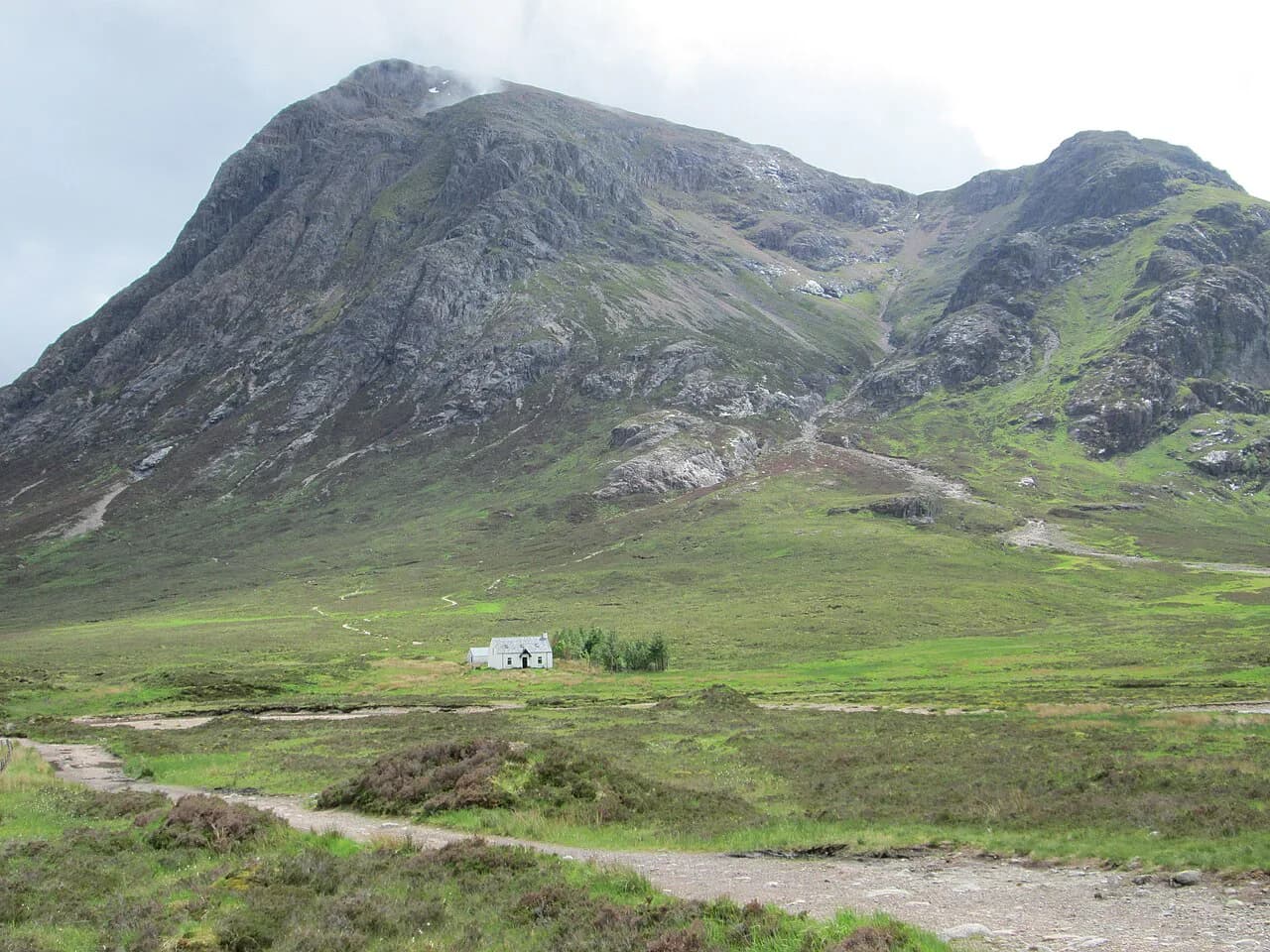
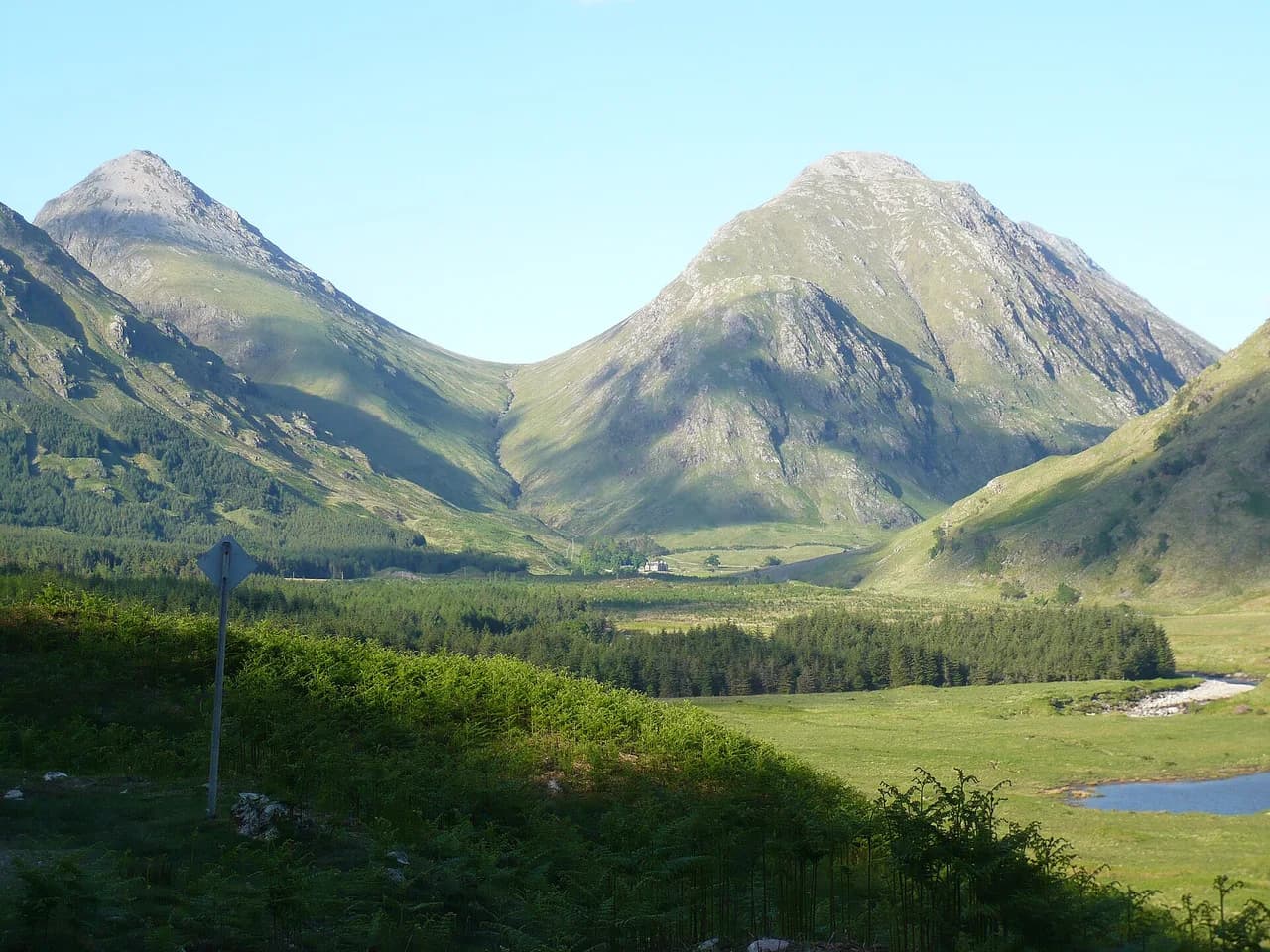
Bidean nam Bian stands on the south side of Glen Coe, the valley that runs from the head of the glen down toward Ballachulish in the Highlands. Its northern face is a wall of buttresses and corries above the road, while the southern side falls away into long, seldom-visited glens.
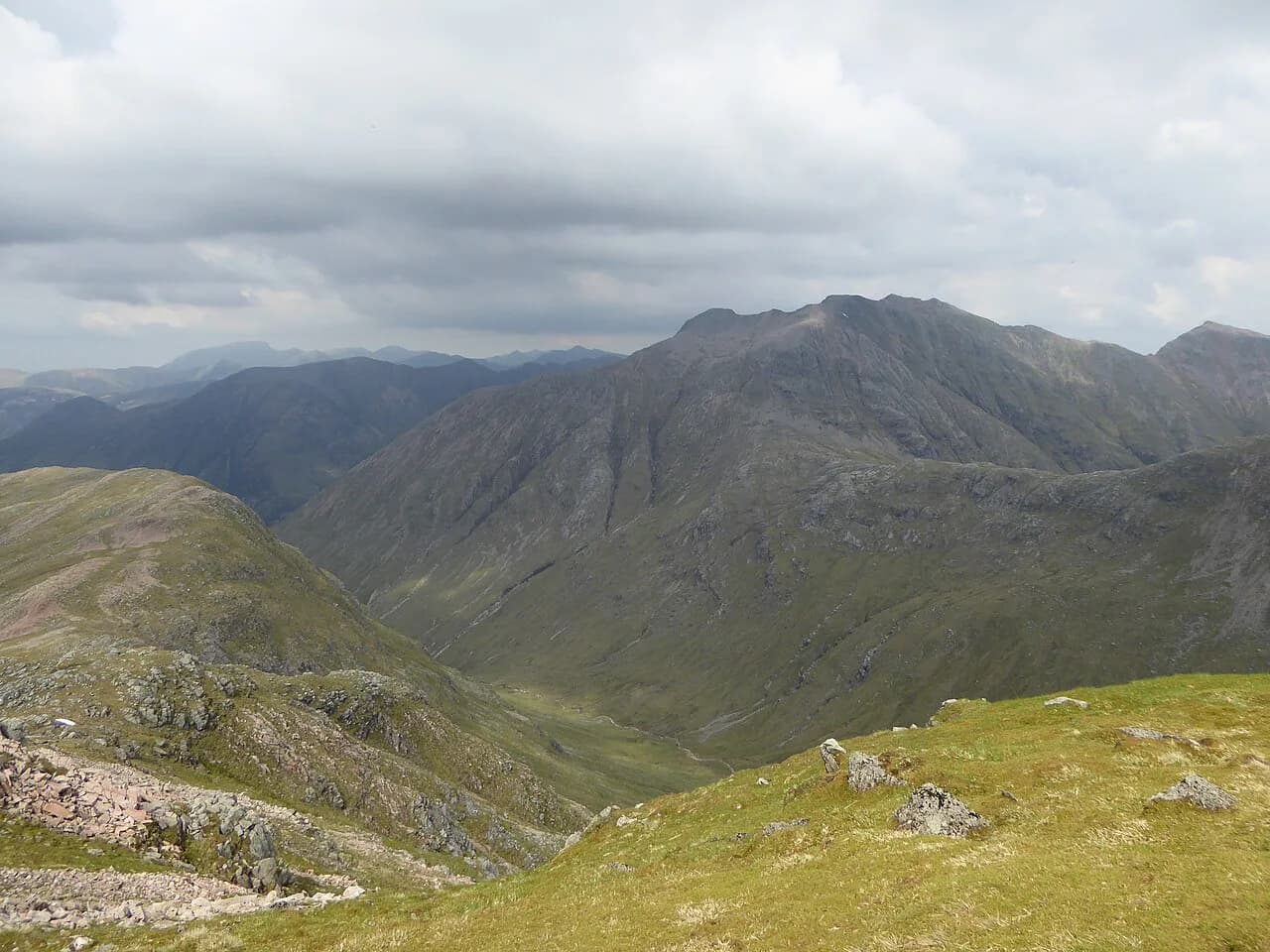
The summit ridge runs roughly east to west. Stob Coire nan Lochan is the northern outlier above the Lost Valley, Stob Coire Sgreamhach is the eastern summit, and Bidean nam Bian is the central high point. The northern approach uses Stob Coire nam Beith, a separate spur that rises directly from the glen floor.
Because the massif is a network rather than a single peak, the descent you choose shapes the day as much as the ascent. Coming down through the Lost Valley means a rough, bouldery finish; returning by the northern spur keeps the descent more direct but steeper underfoot.
Trailhead and access: parking in Glencoe and reaching the start
Both main routes start from the Glen Coe road, with parking in lay-bys and small car parks along the glen. Spaces are limited and fill early on fine summer weekends, so arriving in the morning gives you the best chance of a place and a full day on the hill. The Lost Valley walk is described as starting near Kinlochleven in one recorded track, which reflects how the glen road runs west toward that village.
Public transport along the glen is thin and the stops sit away from the main path entrances, so most hikers drive and park. Motorised access by lift or cable car does not serve this massif. Whichever way you arrive, the walk begins with a climb straight from the roadside.
Distance, ascent and walking time for the main routes
The circuit through the Lost Valley covers about 12 km (7.5 miles) and is a fairly strenuous outing from Glen Coe into the heart of the massif. The longer northern circuit, taking in Stob Coire nam Beith and Stob Coire nan Lochan, is recorded at 13.5 km (8.4 miles) as a circular route near Ballachulish.
Neither figure captures the day honestly on its own. The distance is short by Munro standards but the ground is slow, and the cumulative climbing across the ridges adds considerably to the effort. Plan on a full day out, with a turn-around time set before you leave the car so a slow descent does not run into darkness.
The Lost Valley approach: route section by section
The Lost Valley route begins on the glen road and climbs steeply beside a stream into Coire Gabhail, the hidden valley itself. The path is eroded and, in places, close to the water, and the final pull into the corrie involves a short rocky step where hands are useful.
Inside the valley the ground opens out, with the great walls of Gearr Aonach and Aonach Dubh a' Ghlinne rising on either side. From here the route climbs to the bealach between Stob Coire Sgreamhach and the main summit ridge, gaining height quickly on loose, steep ground.
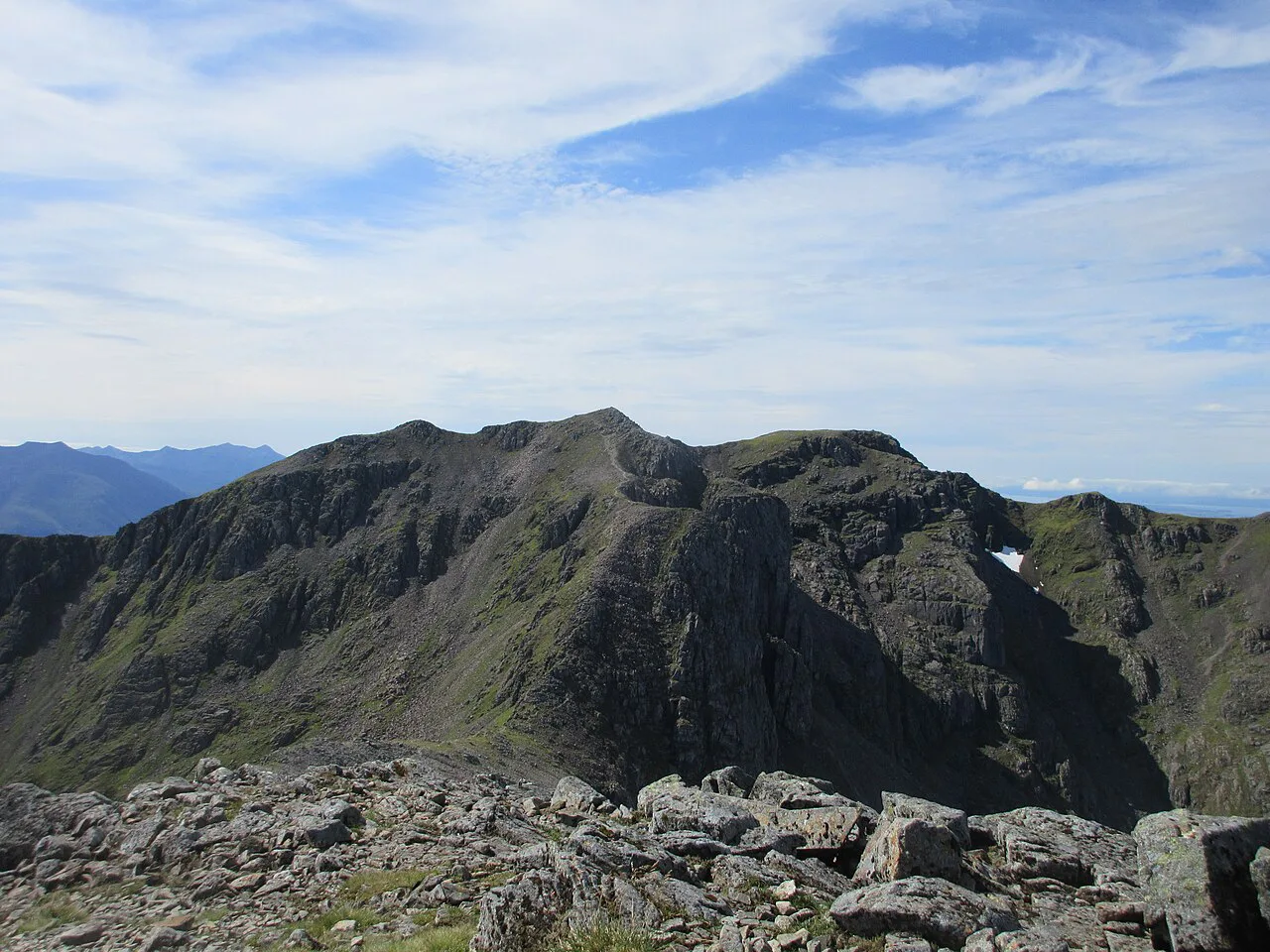
From the bealach, a short out-and-back reaches Stob Coire Sgreamhach at 1072 m (3517 ft). The ridge walk west to Bidean nam Bian is the finest part of the day, with the summit plateau of the massif opening ahead and long views back down the glen.
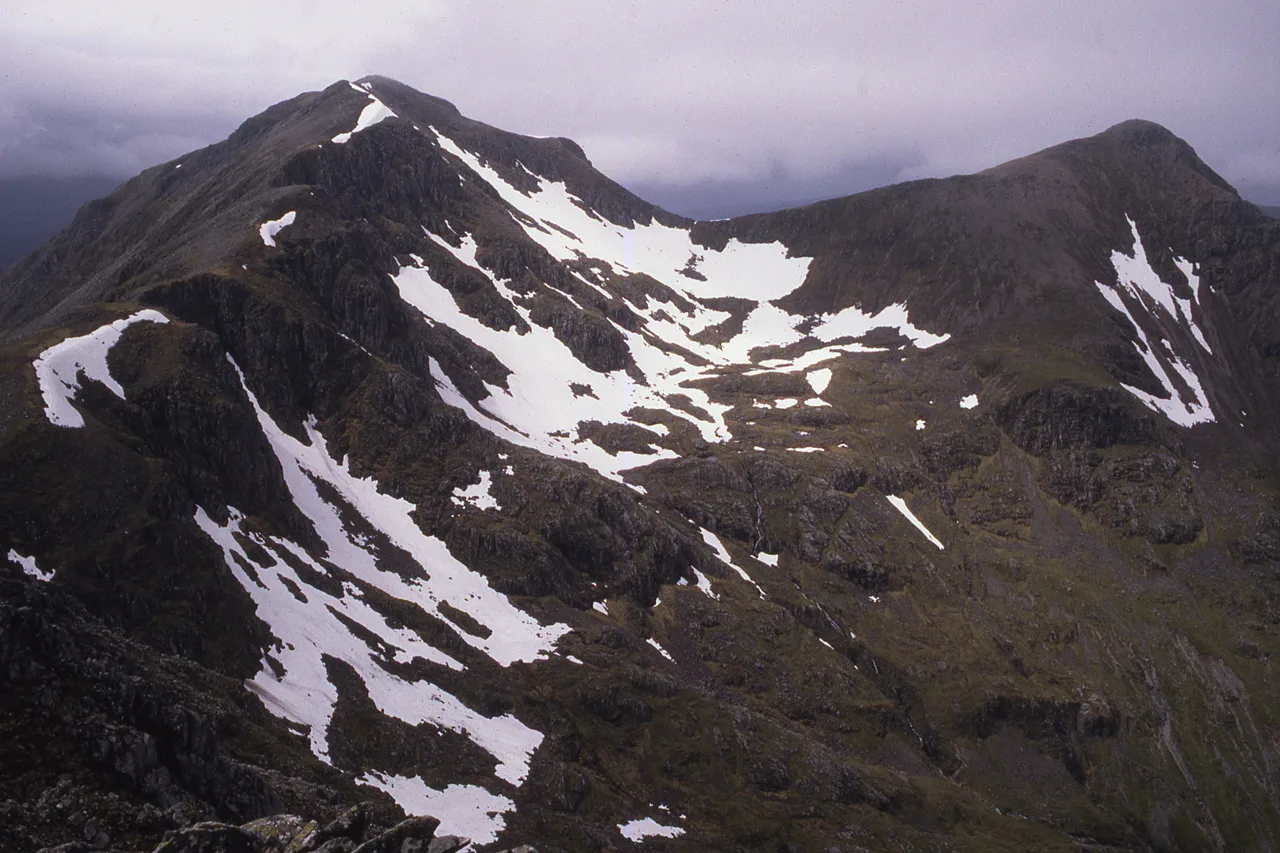
The ridge and summit section: Stob Coire nan Lochan, Stob Coire Sgreamhach and Bidean nam Bian
The ridge sequence is what makes this a big day rather than a simple ascent. Stob Coire nan Lochan anchors the northern edge above the corries; Stob Coire Sgreamhach sits at the eastern end; Bidean nam Bian is the high point between them. Walking the three in one circuit gives you the massif's full shape and its best viewpoints.
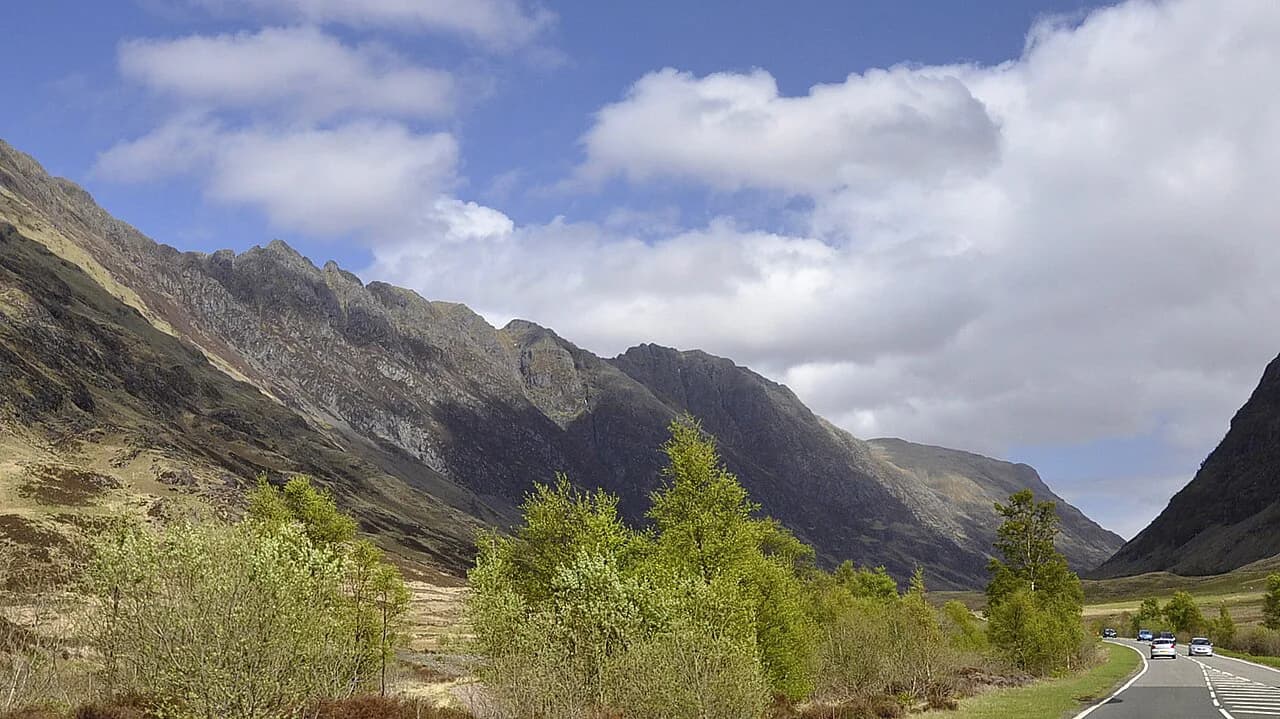
A worthwhile extension for experienced walkers is the Aonach Eagach Ridge, which runs along the north side of the glen. It is a very different proposition, with sustained scrambling and serious exposure, and should be treated as a separate outing rather than something to add on at the end of Bidean nam Bian.
On the descent, the ridge narrows above the northern corries and the ground turns to scree in places. In poor visibility, the gullies between the tops are the main trap; keep a map and compass handy and know which corrie your chosen descent follows.
The northern approach via Stob Coire nam Beith
The northern route climbs the spur of Stob Coire nam Beith directly from the glen, gaining height on a broad ridge that is far quieter than the Lost Valley path. It suits hillwalkers who want a shorter, more direct line to the summit and who are comfortable with steep, pathless ground in the upper section. The full circular version, taking in Stob Coire nan Lochan as well, is recorded at 13.5 km (8.4 miles).
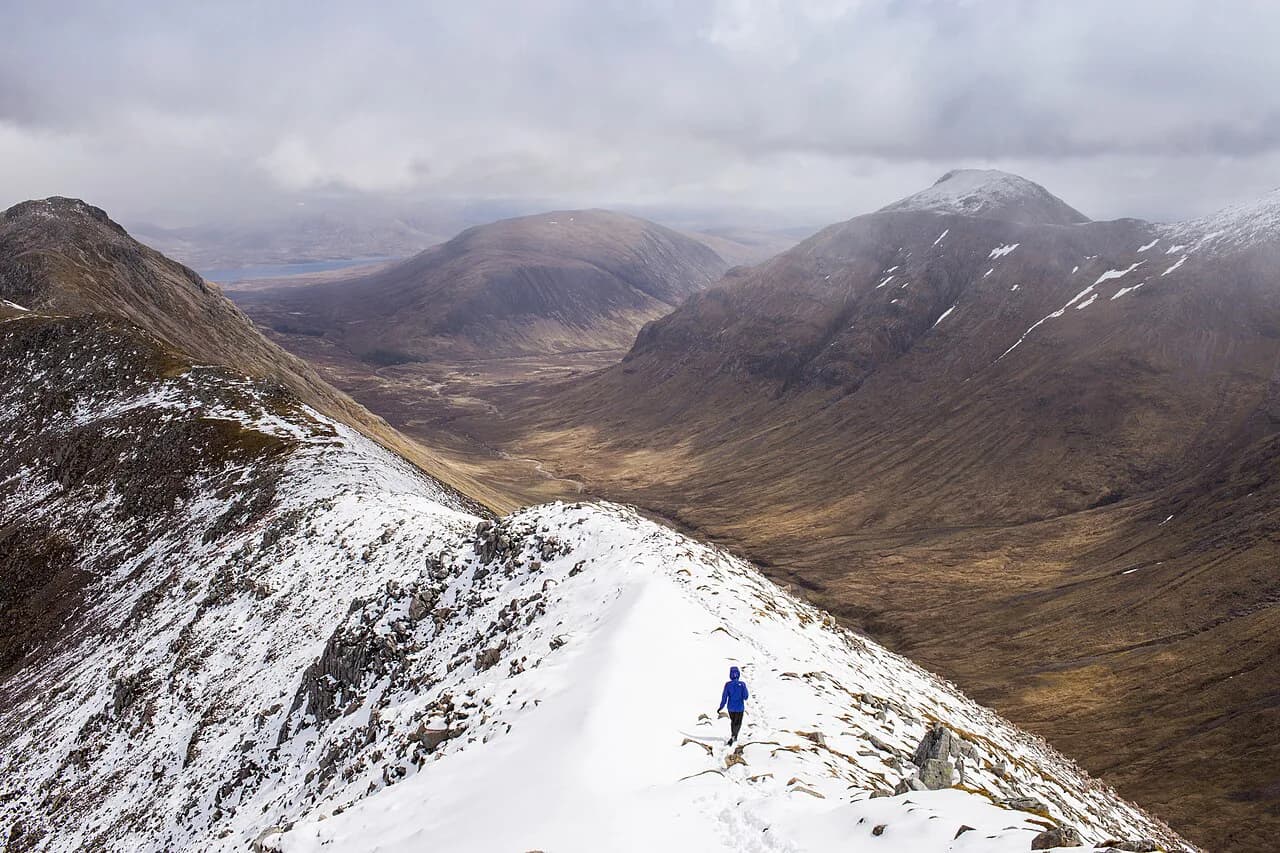
The spur itself is a steady grind, with the ground turning rockier and more broken as you near the summit ridge. In wet or wintry conditions the upper slopes hold snow longer than the glen floor, which changes the character of the walk entirely. Above the ridge line the views open across the glen to the northern mountains, including the distinctive profile of Buachaille Etive Mòr.
Choosing between the two routes is largely a question of what you want from the day. The Lost Valley circuit brings the hidden corrie and the eastern summit; the northern approach trades that for a quieter climb and a faster line to the main summit.
Terrain, exposure and scrambling on the route
The ground is a mix of eroded paths, boulder fields, scree and open hillside, with short hands-on steps on the steeper sections. There is no sustained technical scrambling on the standard routes, but the exposure on the ridge above the northern corries is real, and a slip in the wrong place matters.
Weather changes fast here. Snow can linger on the passes into spring and returns early in autumn, and afternoon rain squalls sweeping down the glen quickly reduce visibility on the tops. Carry waterproofs, a headtorch and a paper map, and turn back if the tops are clagged in and your route-finding is uncertain.
When to go: best months and conditions on the summits
One trail source suggests April through October as the walking season for the circuit near Ballachulish. Treat that as a suggested window rather than a rule, and judge each day on the actual forecast and the amount of snow on the tops.
Late spring and early summer tend to give the longest daylight and the driest ground, while autumn brings clearer, colder air and fewer walkers. Winter ascents are a serious undertaking with ice axes and crampons, and the north-facing gullies hold snow late into the season.
Huts, bothies and bases for the hike
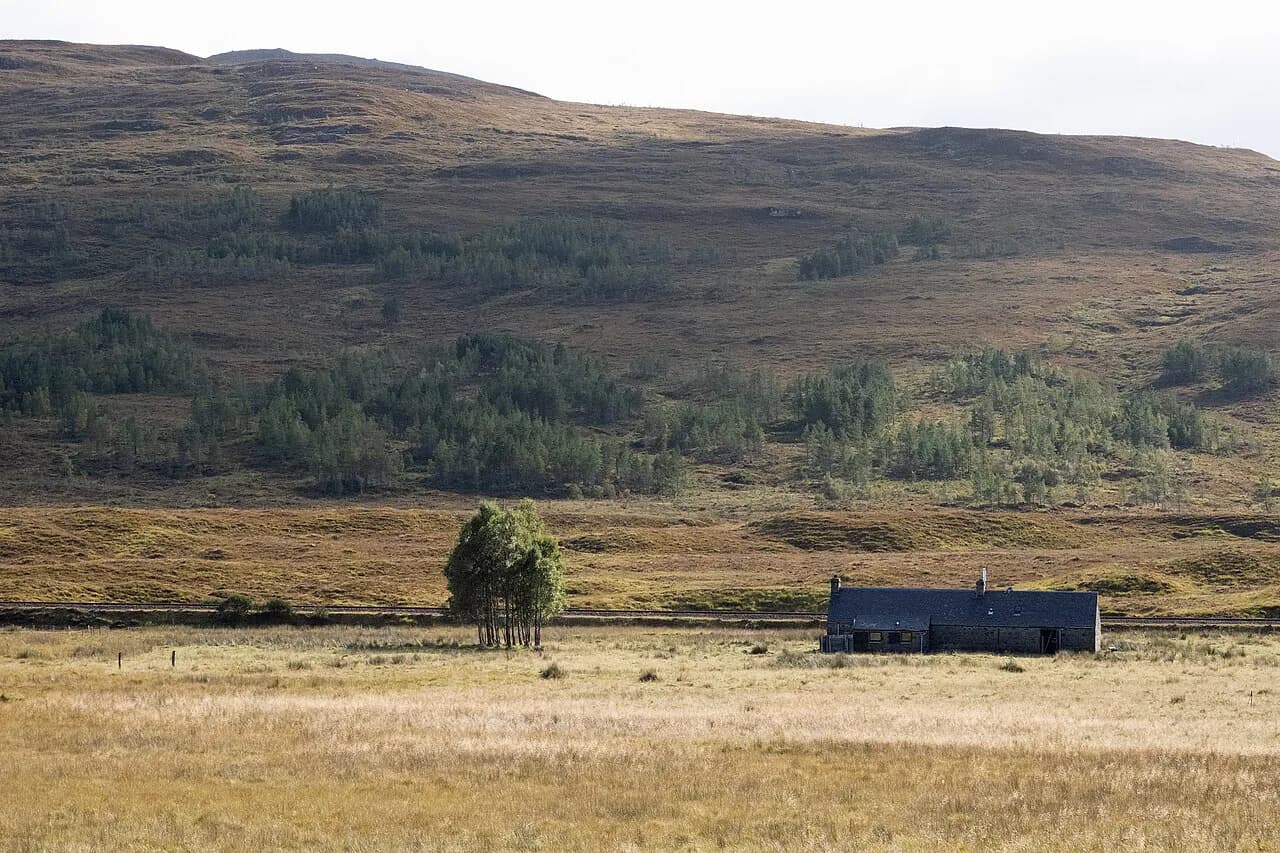
There are no maintained mountain huts on the Bidean nam Bian routes, so the walk is done as a single day out. The natural bases sit around the glen, with Ballachulish and Glencoe village offering the widest choice of accommodation and services close to the road.
If you want more Glencoe walking across several days, other objectives nearby give shorter alternatives. The Buachaille Etive Beag Hike makes a fine introduction on the north side of the glen, and the Pap of Glencoe offers a shorter, sharper climb for a half day.
Gear and hazards on a Glencoe winter or shoulder-season ascent
Standard kit for a Scottish Munro day applies: waterproof jacket and trousers, warm layers, spare gloves and hat, map, compass, headtorch and plenty of water and food. In winter, add an ice axe and crampons, and know how to use them on steep, icy ground before you set out.
The biggest hazards are the ones you manage rather than avoid: navigation in mist, steep ground when it is wet or icy, and losing daylight on the descent. Setting a strict turn-around time and telling someone your route are the simplest safeguards.
Guided options and who should take one
Several providers run guided walks across the summits and the Lost Valley, which removes the route-finding burden and adds local knowledge of the massif. This is a sensible choice if you are new to Scottish winter conditions, unsure of your navigation, or simply want the day to run smoothly.
If you prefer to go independently, the two routes described here cover the standard options. Combine them with other days in the glen, and read the Glencoe hiking guide for the wider set of objectives, including the bigger ridge walks and the neighbouring peaks; for longer trips beyond the glen, the Scotland hiking guide shows where else to base yourself.
Plan Your Visit
Bidean nam Bian is a full-day hillwalk for experienced hikers, with the Lost Valley circuit offering the more scenic line and the northern approach the quieter one. Pick your route by fitness, daylight and the forecast, and set a turn-around time before you leave the road.
Build in a spare day for Glencoe itself and match the weather to the objective; the glen rewards walkers who stay flexible.
Frequently Asked Questions
How difficult is the Bidean nam Bian hike?
It is a strenuous full-day outing on rough, steep and pathless ground in places, with several summits and sustained climbing. It suits experienced hillwalkers with solid navigation skills rather than beginners.
How long is the Bidean nam Bian hike?
The Lost Valley route covers about 12 km (7.5 miles), and the northern circuit via Stob Coire nam Beith and Stob Coire nan Lochan is recorded at 13.5 km (8.4 miles). The terrain is slow, so plan a full day.
Where does the Bidean nam Bian hike start?
Both standard routes start from the Glen Coe road, with parking in lay-bys and small car parks along the glen. The Lost Valley track is recorded as beginning near Kinlochleven.
What is the Lost Valley route on Bidean nam Bian?
It climbs into Coire Gabhail, the hidden valley, then gains the ridge at the bealach below Stob Coire Sgreamhach. From there it continues over the summits to Bidean nam Bian.
When is the best time of year to hike Bidean nam Bian?
April through October is suggested as the walking season, with late spring to early autumn giving the best conditions. Winter ascents require ice axe and crampons and experience of icy ground.
Sources
Trail notes for your next trip
Optional updates when we add or revise hiking guides.
You might also like
Continue reading
More guides you'll find useful