Buachaille Etive Beag Hike: Two Munros in Glencoe
Climb Buachaille Etive Beag in Glencoe for Stob Coire Raineach and Stob Dubh, with trailhead, distance, timing and ridge exposure details for your day.
On this page
Buachaille Etive Beag gives you two Munros in a day that fits comfortably between breakfast and late afternoon in Glen Coe. The ridge rises straight from the A82, climbing a clear stone path to a high bealach before offering the two summits of Stob Coire Raineach and Stob Dubh. It suits hikers with a steady head for heights and a reasonable hill fitness who want a proper Highland day without the length of the bigger Glen Coe rounds.
What the Buachaille Etive Beag ridge offers
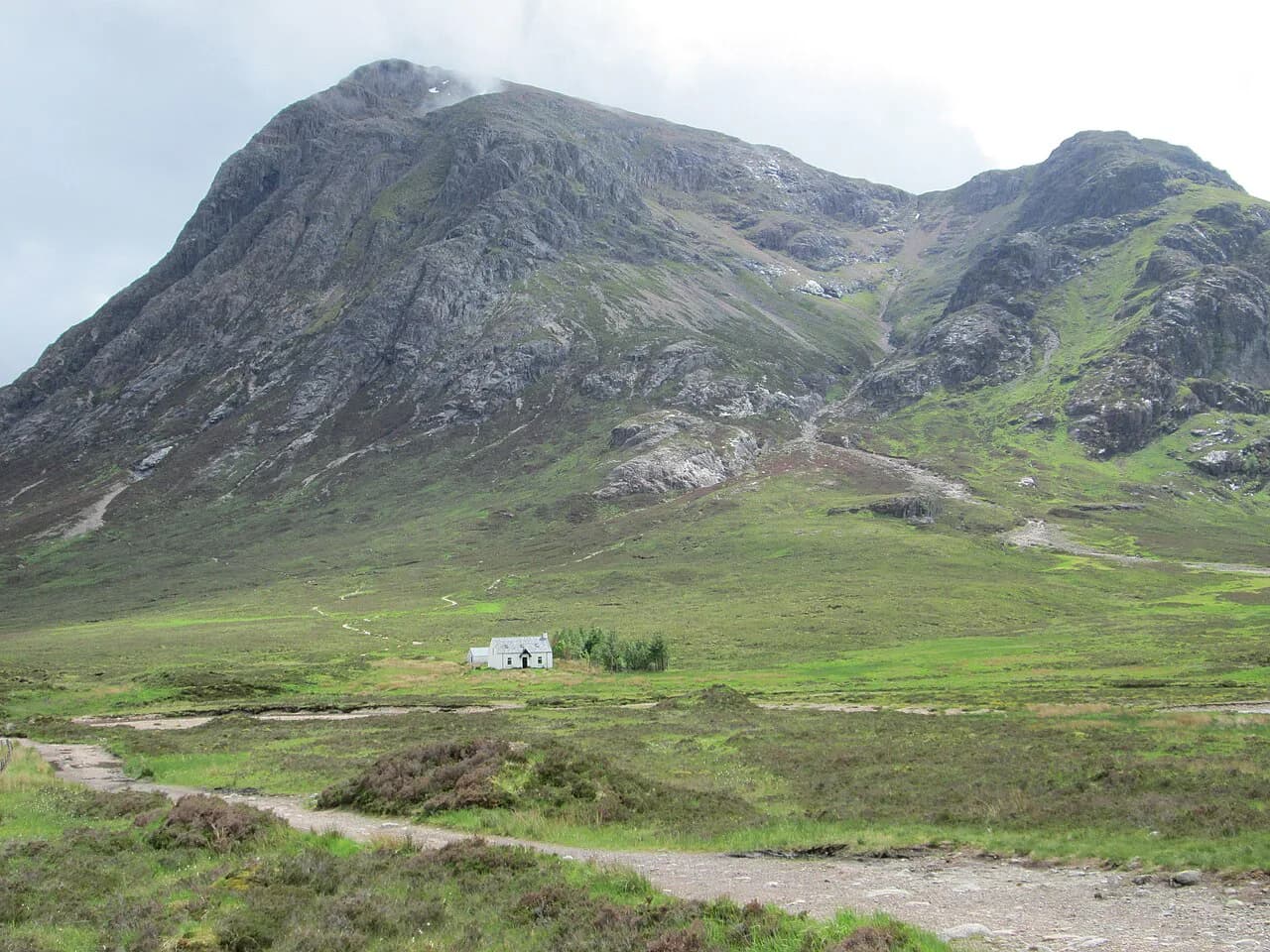
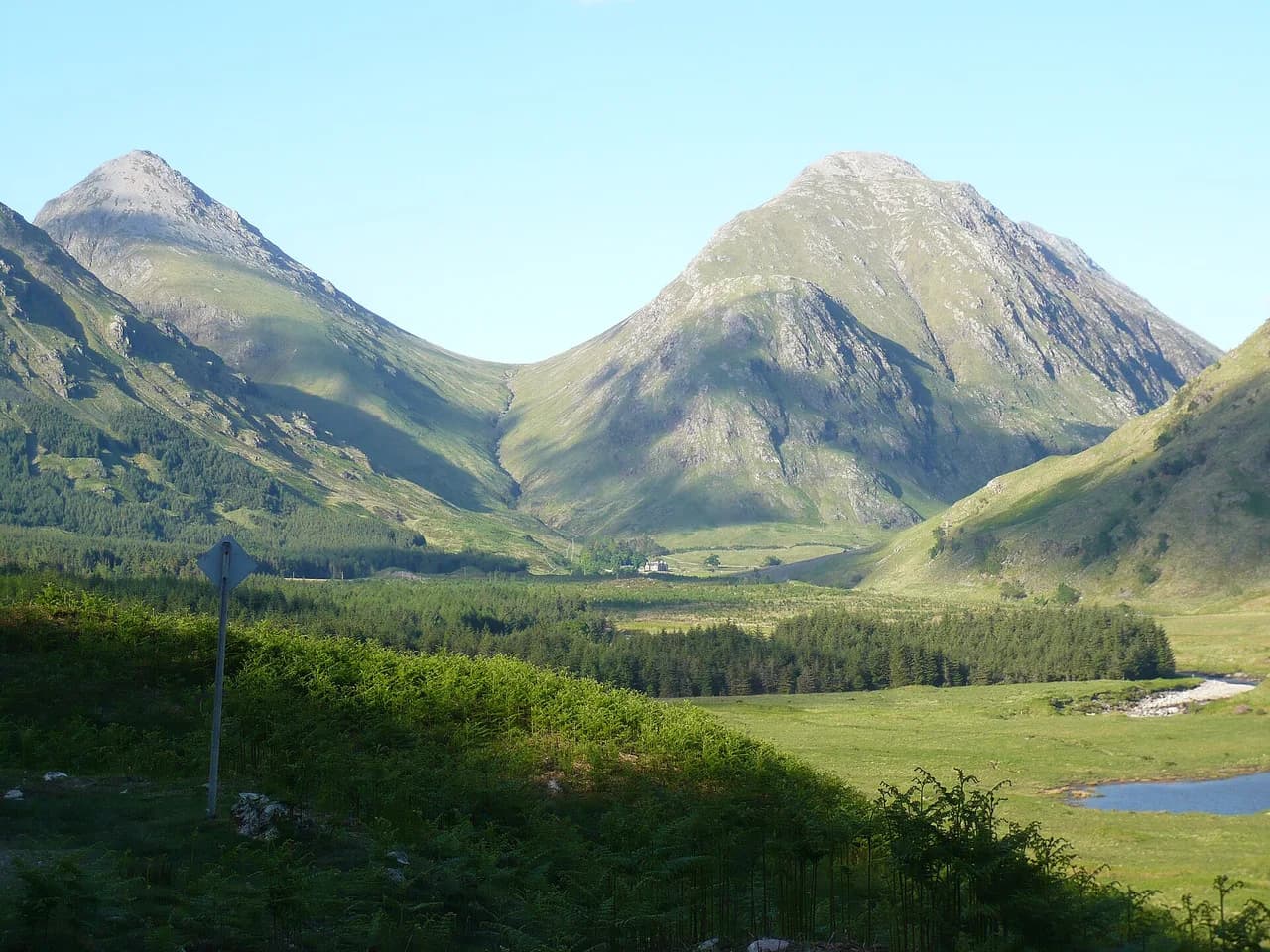
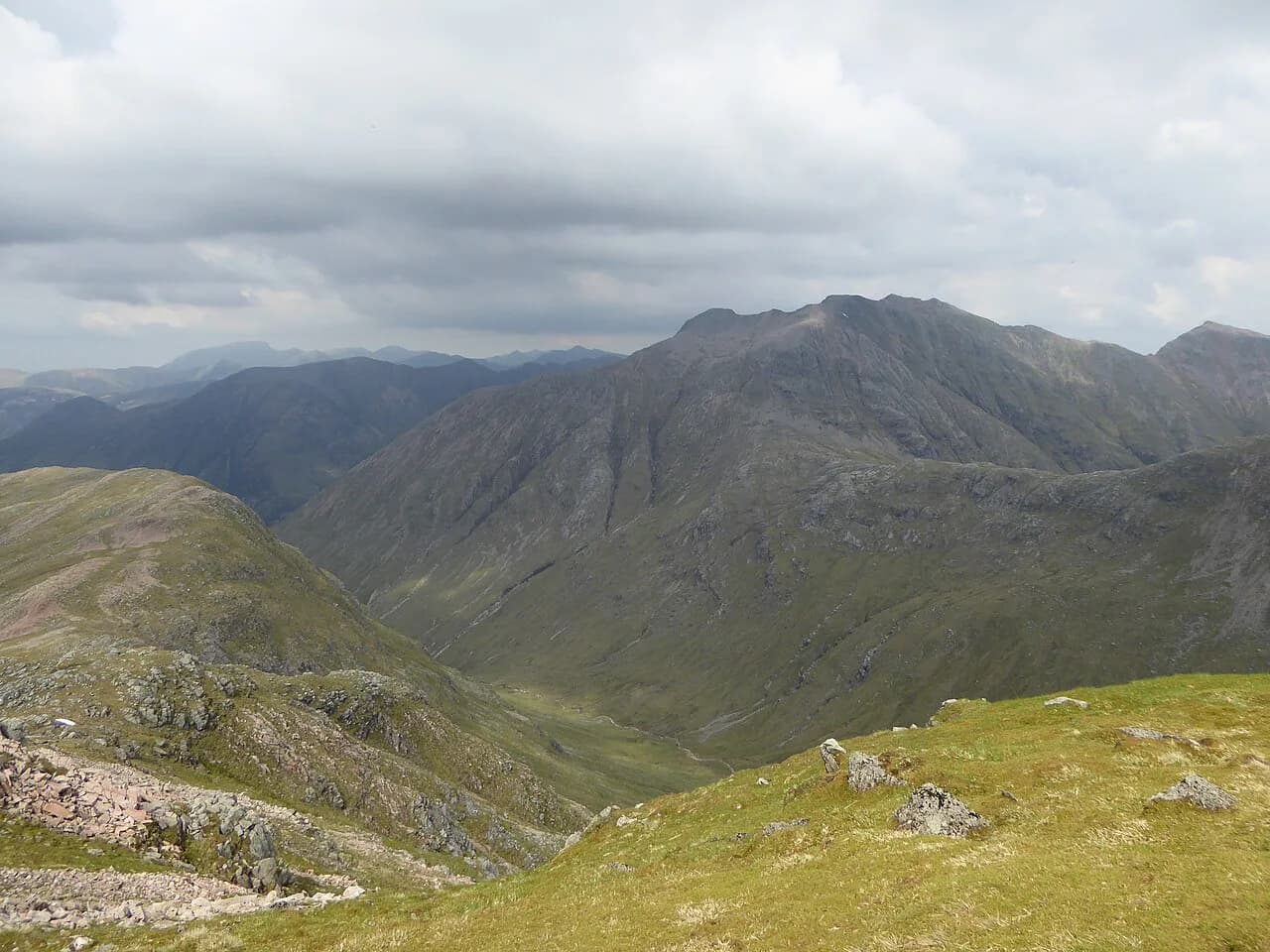
Buachaille Etive Beag is the little herdsman of Etive, a ridge lying south of Glen Coe and west of its more famous neighbour Buachaille Etive Mòr. Its highest point, Stob Dubh, reaches 958m (3,142ft) at the south-west end of the crest, while Stob Coire Raineach stands at 925m (3,034ft) above the bealach between them. Both are Munros, so the walk delivers two ticks for one approach.
From the car park the ridge looks a blunt, rocky wall, and that first climb is the steepest sustained work of the day. The reward is a summit shoulder above the road with clear views down Glen Coe, over to Ben Nevis and out along Glen Etive. Because the ridge is short and the path is obvious in good weather, it works well as a first Munro outing; it is also a sensible half-day for anyone planning a longer trip hiking in glencoe around several of the glen's big hills.
Compared with the long traverse of Bidean nam Bian or the scrambling on the Aonach Eagach Ridge, Etive Beag keeps the demands mostly to steep walking and a short exposed crest. That makes it the pick for a mixed group with one stronger walker and one who prefers a steady path.
Trailhead and parking
The Beag-only route starts from the small car park off the A82 opposite the beehive cairn in Glen Coe, near Ballachulish. The path leaves directly from the road, so there is no approach walk or second car needed. There are no facilities at the start, so sort out water, food and a last stop-off before you arrive. The access point appears among the route details in this write-up of the climb.
For the hills on the other side of the glen, the main parking area sits by the farm buildings at Altnafeadh on the A82, about 4km (2.5 miles) west of Kingshouse Hotel. It can be very busy in summer and at weekends, and additional parking lies 1km further west. That lay-by is the natural base for the combined round over both Etive ridges, not for the short Beag-only ascent.
Distance, ascent and time
The Beag out-and-back measures 8km (5 miles) with roughly 940m (3,080ft) of ascent, which works out at about 3 hours 40 minutes of walking. Add pauses on the bealach and on both summits and a realistic day stretches to four or five hours. The figures describe the two-Munro route only; they are not a figure for adding Etive Mòr.
Most walkers who stop for lunch on the top report a day closer to five hours, and you should build in extra time if the weather is slow, the ground is wet or you want to linger for photographs. A 10-year-old walking companion is noted on the same route, which tells you the climb is within reach of fit, motivated families rather than being an adults-only outing.
Route description
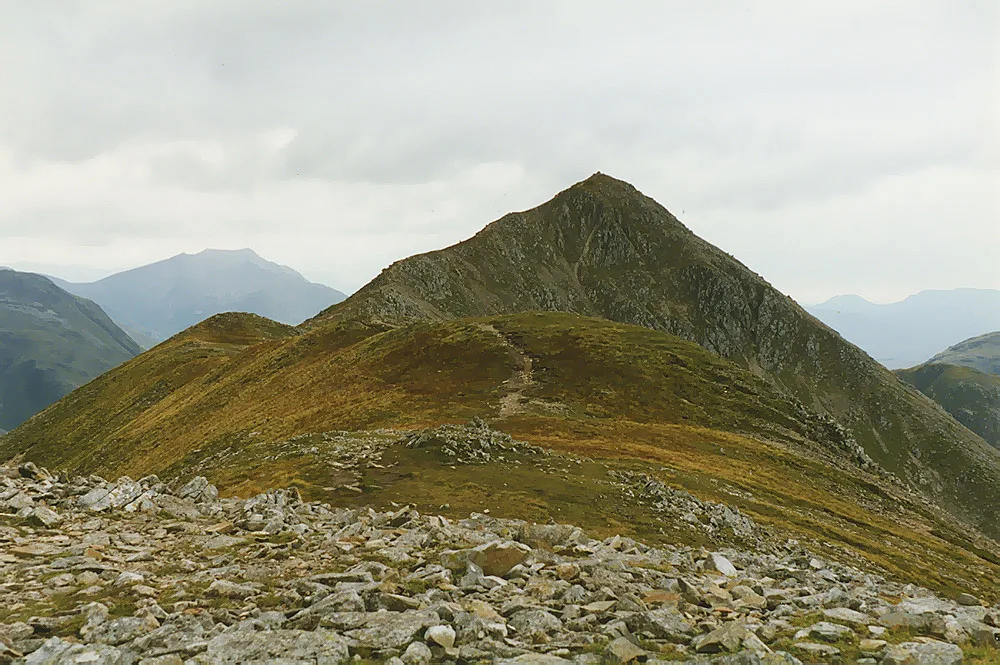
From the roadside car park the path climbs steadily as a clear stone track with steps in places, gaining height towards the Màm Buidhe bealach between the two tops. It is a slog rather than a scramble, and the bealach makes a sensible stop where you can reassess the weather before committing to either summit. From there, the north-east arm up Stob Coire Raineach is short and mostly straightforward, though the path fades across rocky ground near the summit.
Return to the bealach and take the south-west line towards Stob Dubh. The ground climbs over grass and loose gravel, levels off around 900m (2,950ft), and then narrows into a scrambly, airy crest below the top. There are no real difficulties in good weather, but the exposure is genuine on a windy day, so keep a firm line and turn back at the bealach if the gusts are pushing you around. The final summit cairn sits where a minor top blocks the view, so walk a few metres beyond it to a smaller cairn for the view over Loch Etive.
The return retraces the same path to the bealach and down to the road, so navigation is simple in clear visibility. In mist, the faint sections above the bealach and the bouldery crest are the places to keep a map and compass in hand rather than trusting the worn line. Budget for the descent taking nearly as long as the climb if your legs are tired or the rock is wet.
The two summits
Stob Coire Raineach gives the first big view of the day, looking over to Blackwater Reservoir and the surrounding peaks. Stob Dubh is the higher top, and its summit sits above Glen Etive, which is why the full panorama is best earned there. Together they make up the ridge described by the Gazetteer of Scotland, with Stob na Cabar at 810m (2,657ft) as the other named top.
If time or weather shortens your day, Stob Dubh alone is the stronger top to bag, because the ridge position and height give the more open outlook. Stob Coire Raineach alone is the quicker option from the bealach, and it still delivers a proper Munro with a long view down Glen Coe. Decide at the bealach rather than halfway along the crest.
Exposure and terrain
The ground varies from a constructed stone path low down to grass, scree and small boulders above, and the crest beneath Stob Dubh is the one section with a real airy feel. None of it is technical scrambling, but the narrow ridge is no place for a careless step in gusty wind. The safest practical habit is to move along the crest in calm spells and wait out the gusts.
Mist is the other factor: the path is easy to follow in clear weather and faint over the rocky top sections, so carry a paper map and compass even if you have a phone. Tell someone your route and expected return time, because help is a long way away above the road.
When to go
Late spring to early autumn gives the longest daylight and the best chance of the clear views that make the ridge worth the climb. Snow can linger on the crest and in shaded ground well into spring and return early in autumn, and it changes straightforward walking into a winter outing with an axe and crampons. Short winter daylight also means a start early enough to be off the ridge before dusk.
Wind is the seasonal hazard most likely to spoil the day, since the exposed crest can feel very different from the sheltered road. A settled high-pressure spell or a calm, clear morning gives the best conditions; a forecast of strong gusts is a good reason to save the second summit for another visit.
The Shepherds of Etive round
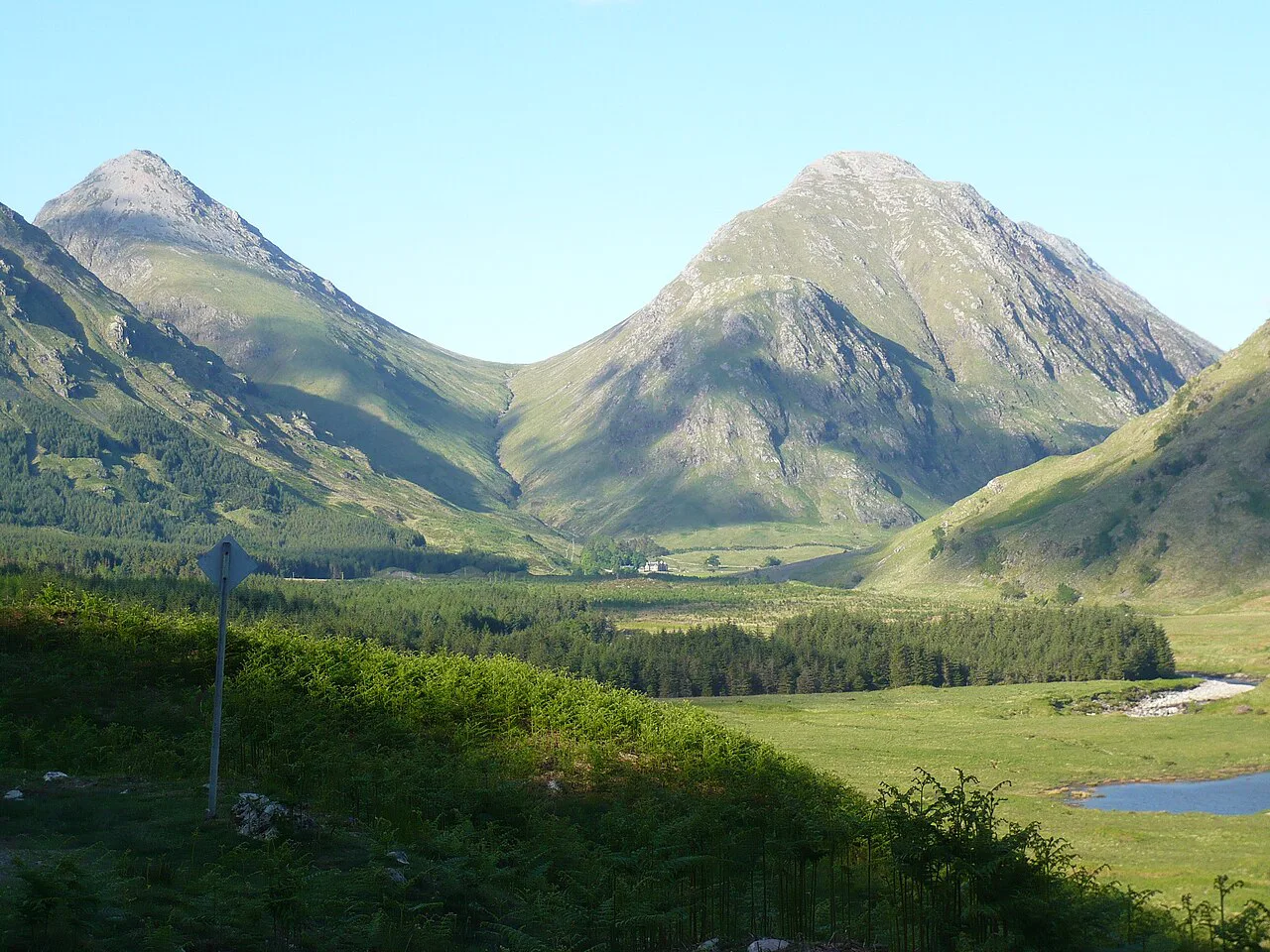
Strong, experienced hillwalkers can link both ridges as the Shepherds of Etive round, combining all four Munro summits on Buachaille Etive Mòr and Buachaille Etive Beag. That day covers 19km (12 miles) with 1,875m (6,150ft) of ascent and roughly eight hours of walking, starting and finishing at Altnafeadh. It is a far bigger commitment than the stand-alone Beag route and should only be attempted with hill fitness and navigation skills to match.
The combined route takes in the corries and crest of Etive Mòr, including the highest of its tops, Stob Dearg, and its southern Munro Stob na Broige. That is a full day of rough ground and there is no shortcut back from the far end of the ridge. If you want Etive Mòr on its own, the Buachaille Etive Mor Hike is the better starting point.
Where to base yourself
Glen Coe village and the Ballachulish area put you within a short drive of the beehive cairn car park, and they also work for the Pap of Glencoe Hike, which gives a shorter day with similar road access. Staying close to the glen cuts morning driving and lets you take advantage of a weather window rather than committing to a fixed plan.
Kingshouse and the eastern end of the glen are better placed for Altnafeadh and the longer Etive Mòr routes, so match your base to the walk you have planned. For a wider choice of bases and trails, the Scotland hiking guide covers other regions worth pairing with Glen Coe. Wherever you stay, plan at least one flexible day so you can shift the Beag climb to the clearest forecast of your trip.
Taking a dog on the Buachaille Etive Beag walk
The Buachaille Etive Beag route has been walked with a dog before: the writer of one account took Hols, who is 10, up with them on the 5.1-mile (8.2km) route over Stob Coire Raineach and Stob Dubh. That places the full circuit within what has already been done with a dog, though the same report notes that the walk took just under 5 hours with a lunch break at the top, and describes a steep climb that is rocky in places with a bit of a ridge walk.
Terrain matters more than distance when you have a dog with you. The path is a clear stone path with some steps in places leading up to the bealach between the two summits, and it becomes faint in places, especially in the rocky sections near the top of Stob Coire Raineach. The ridge north-west to Stob Dubh is a ridge walk, and the writer, who dislikes exposure, was glad to get back onto wider ground. The mountains are rocky in places and you will be a long way from help if you needed it.
Practical points from the route information: there are no facilities at the car park across from the beehive cairn on the A82 (Ballachulish PH49 4HX), so nothing to top up a water bowl or dispose of waste on site. The 5.1-mile route starts in the small car park just off the A82, across from the beehive cairn. The car park can be very busy in summer and at weekends, which matters more when you are unloading a dog, and additional parking is available 1km further west of Altnafeadh.
On timing, the account of the walk reports a time of 4-5 hours and advises allowing more time for exploring, while also suggesting 3-4 hours at least; with a dog, the longer end of that range is the one to plan around. The mountains are described as some of the easier Munros, but the writer's advice after taking a dog up was to check the weather before you go.
Plan Your Visit
Buachaille Etive Beag is the Glen Coe day for two Munros on a short, steep route: an honest climb to a high bealach, a choice of two summits and one genuinely airy crest. Treat the wind and the faint rocky ground above the bealach with respect, allow four to five hours and start with the clearest forecast you can find.
Frequently Asked Questions
Is Buachaille Etive Beag two Munros?
Yes. The ridge carries Stob Coire Raineach at 925m and Stob Dubh at 958m, and both are Munros. The usual route climbs to the bealach between them and visits each summit before returning the same way.
How long does the Buachaille Etive Beag hike take?
The out-and-back is about 8km with roughly 940m of ascent and around 3 hours 40 minutes of walking. Most hikers allow four to five hours once summit stops and a lunch break are included.
How hard is the climb?
It is a steep, sustained walk rather than a technical scramble, with a stone path and steps below the bealach. The crest below Stob Dubh is airy and the ground is rocky in places, so it suits hikers with decent fitness and a head for exposure.
Where do you park for Buachaille Etive Beag?
The short route starts from the small car park on the A82 opposite the beehive cairn. The larger Altnafeadh parking further west serves the Etive Mòr routes and the combined Shepherds of Etive round.
Can you combine Buachaille Etive Beag and Etive Mòr in one day?
Yes, as the Shepherds of Etive round: 19km with 1,875m of ascent and about eight hours of walking from Altnafeadh. It is a demanding day for experienced hillwalkers, not a step up from the short Beag route.
What is the best time of year to climb it?
Late spring to early autumn offers the longest daylight and the clearest views. Snow can linger into spring and return in autumn, and strong wind on the exposed crest is the main reason to postpone to another day.
Sources
Trail notes for your next trip
Optional updates when we add or revise hiking guides.
You might also like
Continue reading
More guides you'll find useful