Innsbruck Via Ferrata: The Klettersteig Above Nordkette
A practical guide to the Innsbrucker Klettersteig on the Nordkette: grade, cable car access, route sections, timing, gear and when to go.
On this page
The Innsbrucker Klettersteig is the rare via ferrata you can start an hour after leaving a city café. It climbs the Nordkette ridge above Innsbruck to a 2480 m (8,136 ft) summit cross, and the cable car from the city puts you at the foot of the climbing in minutes. It suits scramblers and climbers who have via ferrata gear and at least some exposed ground behind them, though the route report rates the C passages as easy for the grade.
What the Route Offers and Who It Suits
This is a graded C/D ferrata, so the climbing leans toward the lower end of the scale but the ground is steep and serious. The Innsbrucker route is often done as a short, views-first outing: it is not long, and on a good day you share it with very few people, which is unusual for a ferrata this close to a major city. If you are an experienced hiker who has never clipped into a cable, read up on the basics or take a course before committing to a graded route.
The strongest argument for the route is the position. You look straight down on Innsbruck's rooftops and the Inn valley, and the ridge throws up far better viewpoints than the crowded platform at the Top of Innsbruck. That lift ride is also the plan's weak point: it is expensive and busy, so the ferrata is the way to trade a crowded lookout for a quiet ridge.
Where It Runs: The Nordkette Ridge
The ferrata runs along the Nordkette, the limestone chain that walls in Innsbruck to the north. From the top cable car station the route follows the ridge over the Seegrubenspitze and on to the summit cross at 2480 m (8,136 ft), with the city and the Inn valley falling away below. Everything here sits on the Nordkette above Innsbruck, so you never leave the ridge line or descend into a neighbouring valley.
Getting to the Trailhead by Cable Car
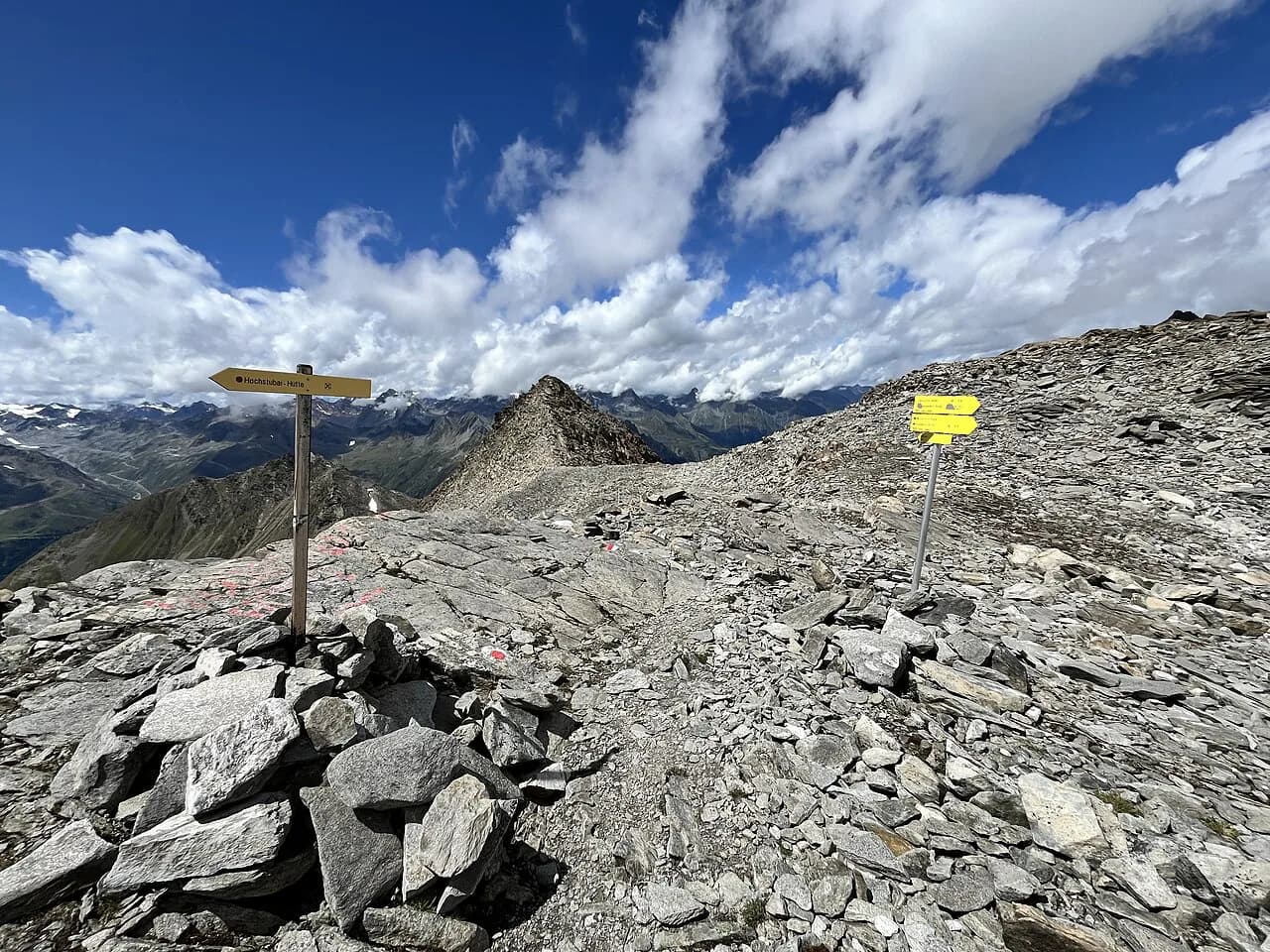
You reach the start by riding the cable car from Innsbruck's old town station up to the Nordkette, then walking a few minutes to the signposted entry. The sign at the start is obvious once you are there. Return tickets for the two lifts from the Altstadt station to the Nordkette and back cost 48.20 euros, a few euros cheaper than the standard non-ferrata ticket according to this route report, which also records the last lift down at 6:30 pm on the day it was hiked.
Treat the last descent as the hard deadline for your day. The ferrata itself is quoted at 5 to 6.5 hours on Bergsteigen, according to the same account, which leaves little slack if you start late or stop often for photos. Buy your ticket online in advance where the Nordkette lifts allow it and check the day's first and last lift times when you book, since a ferrata time of that length against a fixed last descent sets your whole schedule.
Grades and the Two-Part Layout
The route is graded C/D and split into two sections, and the first section carries the hardest climbing. Three C-grade passages come early on the first section, all of them short and, in the report's assessment, on the easy side for the grade. That order matters: the decision point is at the start, not halfway along, so you know within the first stretch of climbing whether the day suits you.
Past that opening, the route eases. A ladder marks the second C-grade passage and the first real taste of exposure, then gentler ground leads to a small hanging bridge before the final steep pull to the summit. Because the harder climbing comes first, a climber who found the start comfortable can expect the rest to go more easily, and one who did not can turn around without having committed to the full ridge.
Route Description From Start to the Summit Cross
From the Nordkette lift station, the route begins around the corner from the crowded viewing area and climbs steeply on metal pegs through the three C passages. You reach the Seegrubenspitze first, where a summit book sits by the cross, and then drop down and cross a ladder pitch with genuine exposure. The hanging bridge follows, and after it the ridge rolls up and down before the last climb to the main summit, where a summit cross and summit book wait at 2480 m (8,136 ft).
The finish is not the end of the work. From the summit you continue along the ridge to the end of section one, then walk back toward the Seegrube station on ground that is mostly downhill or flat but slick underfoot. Allow about half an hour for that link on paper and rather more in reality, and budget for wind and cold on the exposed ridge, where the temperature drops fast once you stop moving.
Distance, Ascent and Walking Time
For planning, the route is logged as a 6.6 km (4.1 mi) point-to-point trail from Innsbruck, rated moderately challenging. The technical climbing time is quoted at 5 to 6.5 hours for both sections, and that figure covers the ferrata itself rather than the walk back to the lift. Build a margin on top of both numbers: a late start, a long lunch on the summit or a slower partner can eat an hour without anyone noticing.
Exposure and the Character of the Climbing
This is a short route with outsized exposure in places. The ladder pitch after Seegrubenspitze is where the ground first feels properly airy, and the ridge beyond the hanging bridge stays steep. The climbing is sustained rather than technically extreme, so the real hazard is slipping or losing focus rather than an impossible move.
Weather changes the difficulty more than the grade does. Wind and cold on the ridge make the final stretch to the summit feel far longer than it is, and the descent path back to Seegrube turns slippery after rain. Start early, watch the cloud building over the Inn valley and turn around at Seegrubenspitze if the wind is rising or your hands are cold.
Gear for a C/D Ferrata
You need a proper via ferrata set with an energy-absorbing lanyard, a climbing harness, a helmet and stiff-soled shoes with secure edges. Gloves save your hands on the pegs, and a windproof layer belongs in the pack even on a warm city morning, because the ridge above 2000 m (6,560 ft) is another climate. The route report notes via ferrata rental alongside the lift, so you can arrange kit in Innsbruck rather than carrying it out, but check what is available before you travel.
If your kit or experience is thin, read a general primer on Austria via ferrata grading and self-rescue before you go, and practise clipping and unclipping on the ground first. Pack water and food for the full 5 to 6.5 hours; the summit is a fine lunch spot, and there are no huts on the climbing itself.
Whether a Guide Is Worth It
A guide makes sense if you have never used a via ferrata set, if you are unsure about C-grade climbing, or if you want to combine the ridge with a course on movement and rope work. Guides based in Innsbruck have run via ferrata days and courses across Tyrol since 2009, which suits a half-day introduction or a private day on the ridge. A guide is not necessary for experienced ferrata climbers, but it is the easiest way to do the route safely on a first visit.
If you would rather stay on foot, the easy hikes in Innsbruck around the Nordkette foothills and the classic Zirbenweg traverse make good rest-day alternatives without the steel.
When to Go
Plan for summer conditions with a settled forecast: the route is high, exposed and best on a dry, still day. The sources describe the lifts running into the evening in early September, with a 6:30 pm last descent, so late-season daylight is workable if you start in the morning. Snow can linger on the ridge early and late in the season, and afternoon storms build quickly over the Nordkette, so aim to be off the climbing by early afternoon.
Descent and the Return to Seegrube
From the end of section one the route leads back toward the Seegrube station on a path that is mostly downhill or flat, and slick when wet. Take the time to move carefully here: tired legs and polished stone are a poor combination, and the lift will not wait. From Seegrube, the cable car returns you to Innsbruck.
Practical Rules and Booking
Book the cable car in advance, particularly on fine weekends when the Top of Innsbruck crowds peak. Standard tickets and ferrata tickets are priced differently, so ask for the ferrata ticket at the counter if you are heading onto the steel. Check the lifts' season, first ascent and last descent for your date on the Nordkette pages before fixing your start time.
Other Options Around Innsbruck
If the Innsbrucker Klettersteig sounds like too much, the city still has plenty of walking. The Nordkette Hike from Innsbruck gives ridge views without the cables, and the Zirbenweg Hike is a gentler high traverse through pine forest. For a wider picture of bases and routes, start with hiking in Innsbruck.
Plan Your Visit
The Innsbrucker Klettersteig rewards a morning start, a full ferrata kit and a realistic read of your own comfort on exposed ground. Ride up early, judge yourself on the first C passages, and treat Seegrubenspitze as a legitimate finish if the wind or the clock turns against you. If the grade or the exposure gives you pause, book a guided day in Innsbruck first and come back to the ridge with the skills in place.
Frequently Asked Questions
How hard is the Innsbrucker Klettersteig?
It is graded C/D, so the climbing sits at the lower-middle of the via ferrata scale but stays steep and exposed. The hardest passages come at the start of the first section, which means you find out quickly whether the route suits you. Experienced ferrata climbers will find it short and manageable; complete beginners should get instruction first.
Can I do a via ferrata with no experience?
Not on your own on a graded route. A via ferrata set, harness and helmet are essential, and you need to know how to clip through anchors and move on exposed ground. A guided day or a course in Innsbruck is the sensible entry point before attempting the Innsbrucker Klettersteig independently.
How long does the Innsbruck via ferrata take?
The climbing time is quoted at 5 to 6.5 hours, and the walk back to Seegrube station adds roughly half an hour in theory and longer in practice. Add margin for the lift, photos and a summit stop, and set your turnaround against the cable car's last descent.
How do I reach the via ferrata from Innsbruck?
Take the cable car from the Altstadt station up to the Nordkette; the ferrata entrance is a few minutes' walk from the top station and clearly signposted. Buy the ferrata ticket rather than the standard return, and confirm the day's lift times before you set off.
Do I need a guide for the Innsbrucker Klettersteig?
Experienced via ferrata climbers can do it independently with their own kit. A guide is worthwhile if you are new to ferrata sets, unsure about C-grade ground, or want coaching on movement and rope work; Innsbruck has guiding outfits that run via ferrata days and courses across Tyrol.
Can you fall off a via ferrata?
Yes, and the Innsbrucker Klettersteig has real exposure on the ladder pitch after Seegrubenspitze and along the ridge. The via ferrata set is designed to arrest a fall, but you still need to clip correctly at every anchor, keep three points of contact and stay focused. Wind, cold and wet rock raise the risk, so pick a settled day.
Sources
Trail notes for your next trip
Optional updates when we add or revise hiking guides.
You might also like
Continue reading
More guides you'll find useful