Lagazuoi Tunnels Hike: Route, Cable Car and What to Expect
Hike the Lagazuoi tunnels above Passo Falzarego: how to reach the trailhead, the tunnel descent to the cable car, loop distances, ascent and when to go.
On this page
The Lagazuoi tunnels turn a mountain descent into a walk through the First World War: a rock gallery blasted by Italian troops on Piccolo Lagazuoi, now restored and walked by hikers heading between the summit hut and Passo Falzarego. The route suits fit walkers who are comfortable in the dark and on steep, low ground, and who want a summit day with history built in rather than a summit day alone.
You can ride the cable car up from Passo Falzarego and walk down through the tunnels, walk the whole thing from the pass on foot, or fold the tunnels into a longer circuit around Rifugio Lagazuoi. Each option differs sharply in distance and ascent, so the choice comes down to how much climbing you want under your boots.
What the Lagazuoi tunnels are
The tunnels are a network of military galleries cut into Piccolo Lagazuoi, the small summit of the Lagazuoi massif above Passo Falzarego. Italian troops drove them through the rock to reach and undermine Austro-Hungarian positions on the summit during the mountain war of 1915 to 1917.
The main tunnel is about 3 km (1.9 mi) long, and in 1996 it was restored and rebuilt at its original length along with the side tunnels, with help from both the Italian and Austrian military corps. Walking it today, you pass wartime utensils, weapons and information panels in the side passages, which is why the route works as an open-air museum rather than a plain shortcut.
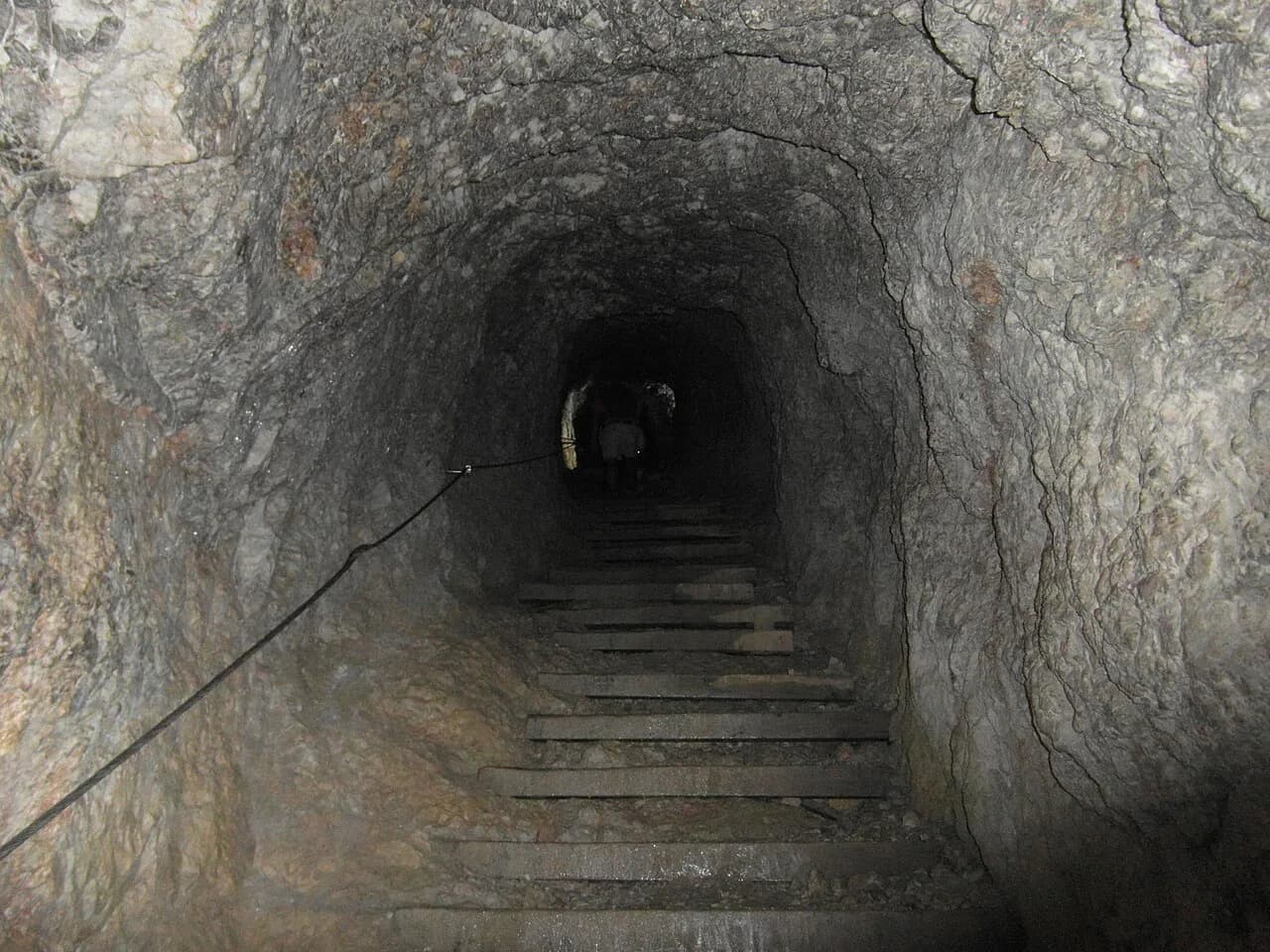
The most accessible and best-known section descends from the Lagazuoi cable car station. It is steep, dark and low, a fixed cable runs throughout, and the ceiling is low enough that most people hit their head at least once on the way down.
Where the tunnels sit above Passo Falzarego
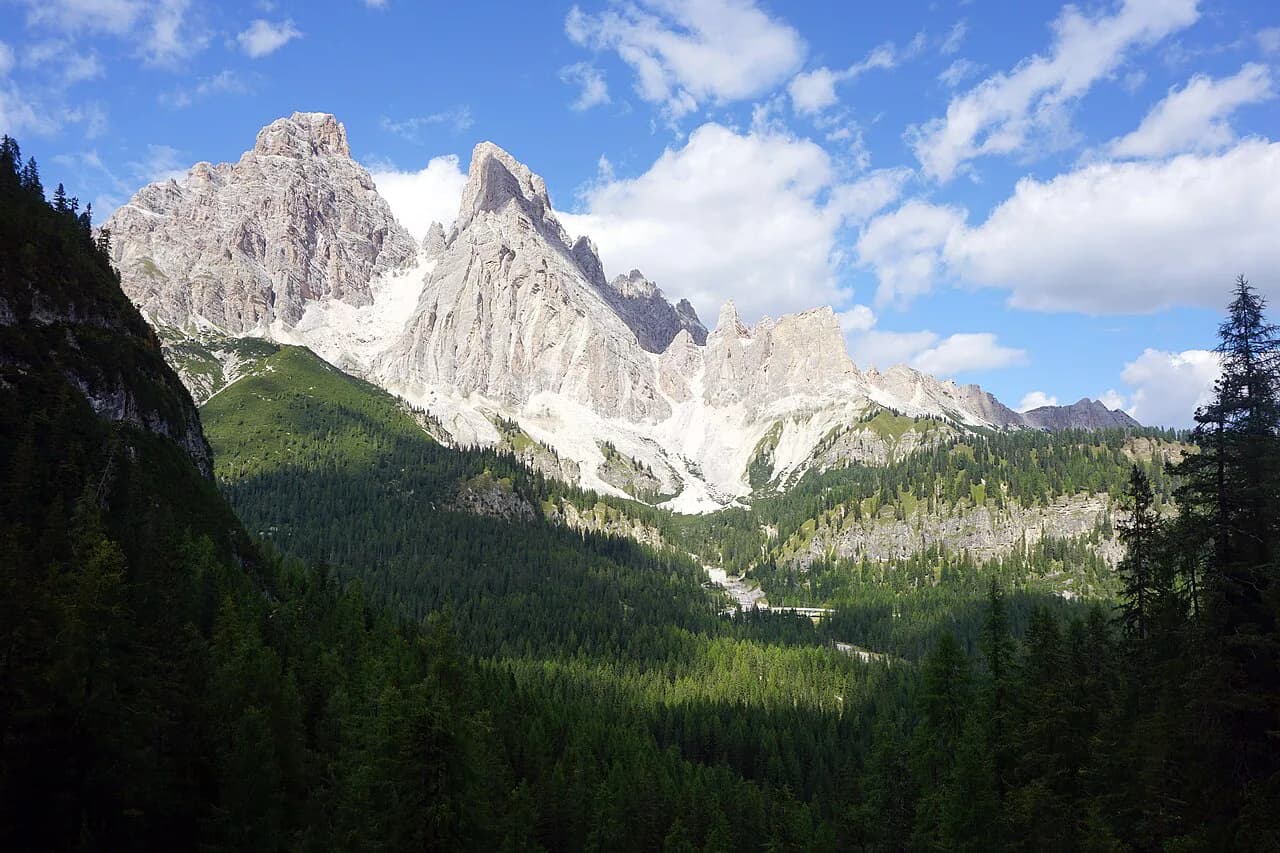
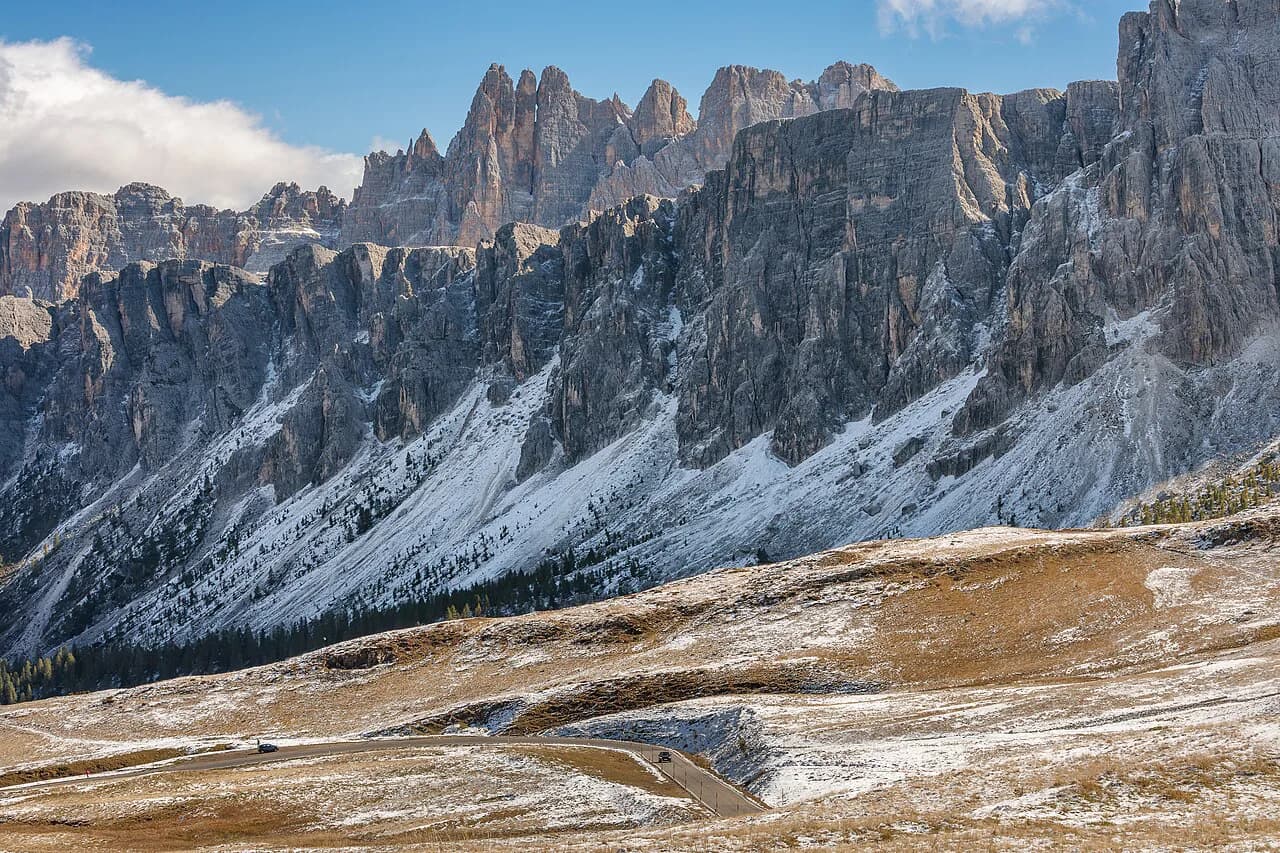
Piccolo Lagazuoi rises above Passo Falzarego, the road pass that separates Cortina d'Ampezzo from Val Badia. Rifugio Lagazuoi sits on the summit at 2,752 m (9,029 ft), the highest hut in the Ampezzo area, with a panoramic terrace facing the Cunturines, Cime di Fanes, Tofane, Odle and Marmolada.
That height is what makes the tunnel route so appealing: you gain a summit viewpoint with a huge sweep of Dolomite peaks, then drop back to the pass through the mountain instead of retracing a path in the open. It also means the weather at the top can differ from the pass, with wind and cloud arriving fast.
Trailhead and parking at Passo Falzarego
Passo Falzarego is the natural start for every version of the route, whether you walk up or ride the lift. The pass carries the road between Cortina d'Ampezzo and the Val Badia side, so it is reached by car or by road from either valley, and parking is at the pass itself. Arrive early on summer weekends, when the pass fills with walkers heading for the Lagazuoi and nearby paths. If you are basing yourself in town, the wider hiking in Cortina d'Ampezzo gives you the rest of the week.
From the base station of the Lagazuoi cable car, the lift climbs to the top station near the summit. From the top station, the tunnel entrance is about a 10-minute walk on an easy, well-signposted path, not from the pass itself, which is why the tunnel descent is usually paired with the lift on the way up.
Cable car and museum opening times
The museum area has published seasonal opening windows rather than year-round access. The stated periods are 25 December 2026 to 6 January 2027 and 16 June 2027 to 30 September 2027, daily from 10:00 to 13:00 and 14:00 to 17:00. These are the museum's hours, not the cable car's timetable, which the lift operator publishes separately.
Plan the trip around those windows: a winter visit means snow and cold on the summit, while the summer window lines up with the main hiking season on the Lagazuoi. Check the Lagazuoi lift's own operating dates and last descent times before fixing your day, since the tunnel descent only works if you can get up, or walk up, within the open hours.
Route description: the tunnel descent
The descent begins just below the top station, where the signposted path meets the tunnel entrance. Inside, the passage drops steeply through rock, with the fixed cable to hold and side galleries branching off to wartime positions and display panels. Headroom is limited and the floor is uneven, so keep your hands on the cable and your head covered.
You emerge from the tunnels above Passo Falzarego, close to the cable car base station and the road. From there it is a short walk back to the pass, where the car is parked or the bus stops. The exit position is what makes the loop so clean: you finish at the point you started without repeating the ascent.
If you would rather climb than descend through the galleries, the route works in reverse, but the low ceilings and steep steps make the descent the more natural direction. Either way, treat the tunnels as the crux of the day and keep energy for them rather than arriving at the entrance spent.
Route options, distance and ascent
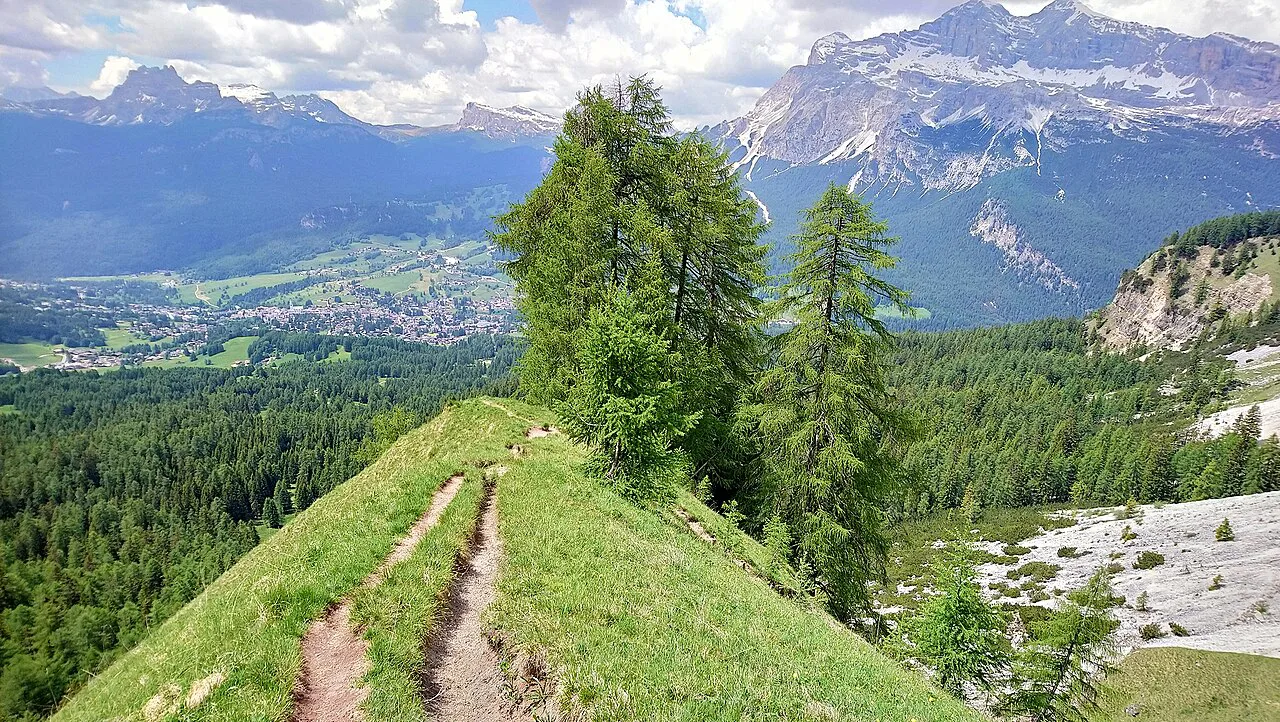
Three routes cover the realistic ways to do the tunnels. The Lagazuoi Tunnels loop from Falzarego Pass runs 6.04 km (3.75 mi) with 620 m (2,034 ft) of ascent and descent and takes about 3 h 36 min, the shortest and most focused option. The Rifugio Lagazuoi ring tour covers 8.74 km (5.43 mi) with 640 m (2,100 ft) up and 650 m (2,133 ft) down in about 4 h 21 min.
The longest is the Lagazuoi Hut to Lagazuoi Pass loop at 14.8 km (9.2 mi), with 960 m (3,150 ft) of ascent and descent and a time of about 6 h 33 min. It rewards very good fitness and sure footing over a full day. The shorter loops suit hikers with a half day and average fitness, while the long circuit is the one to pick if you want the pass, the hut and the summit all in one outing.
Rifugio Lagazuoi on the summit
Rifugio Lagazuoi stands at 2,752 m (9,029 ft) on the summit of Piccolo Lagazuoi, with a terrace looking across an ocean of peaks from the Cunturines to the Marmolada. It is the highest refuge in the Ampezzo area and takes overnight guests, with heating and a luggage transport service.
Staying the night changes the shape of the trip: you can walk up late, eat on the terrace as the light softens, and descend through the tunnels the following morning. Book directly with the hut, and ask about gear, because helmets and via ferrata sets can be arranged for pickup at the hut if you plan ahead.
Gear for the tunnels
A headlamp is essential, since the galleries are genuinely dark, and a helmet is strongly recommended because the ceiling is low. Helmets and via ferrata sets can be rented at the base of the cable car. Most people are comfortable without the set, because there is no exposure in the tunnels and a cable runs the whole way, but it makes sense for children or anyone who wants extra security.
Wear boots with grip for the wet, uneven floors, and carry a warm layer: the interior stays cold even on a summer day. If you skip the helmet, a padded winter hat or a hood takes the edge off the low ceiling.
Adding the Kaiserjagersteig
The Kaiserjagersteig is an easy via ferrata that retraces the Austro-Hungarian approach to the Martini Ledge, a rock band on Piccolo Lagazuoi where troops built barracks, a canteen and a medical post dug into the mountain. It is rugged, with some exposure, but the cables make it manageable for children with a via ferrata set.
Pairing the two makes a satisfying loop. From Rifugio Lagazuoi, descend the tunnels and, shortly before the cable car station, turn right to follow the Kaiserjagersteig. From Passo Falzarego, walk toward the mountain behind the base station, look for the sign to the Kaiserjagersteig on the left, climb to the summit hut and descend through the tunnels.
Keep a headlamp and helmet for the tunnel leg whichever direction you take. The ledge route and the tunnels together make a longer day than either alone, so start early enough to finish the descent in daylight.
Getting there without a car
Passo Falzarego is the road link between Cortina d'Ampezzo and the Val Badia side, so buses serving that corridor stop at the pass. From there, the cable car base station is at the pass itself, making the lift the simplest way to reach the tunnel entrance without a long approach on foot.
If you are based in Cortina, allow for the drive or bus ride up from the valley and check the return times before you set off, since a missed last connection leaves you on the pass. Staying on the Val Badia side works equally well, with the pass reachable from villages such as Corvara and La Villa.
When to go
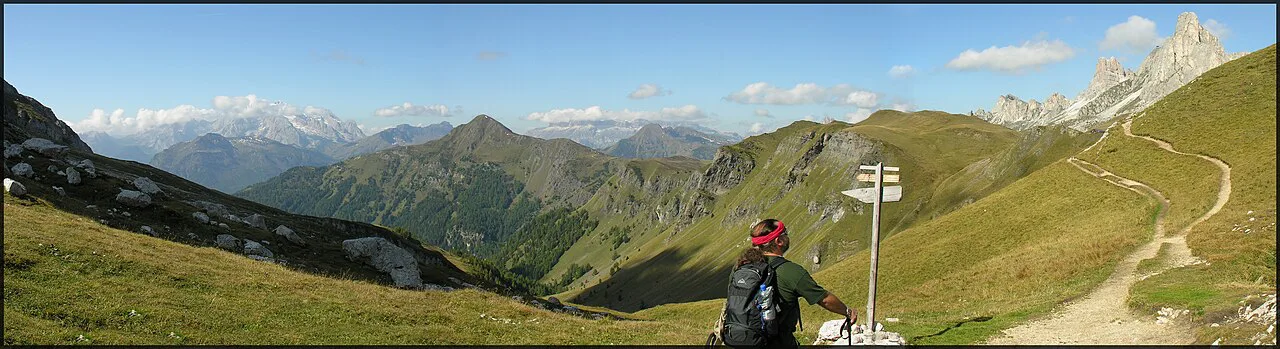
Summer and early autumn are the reliable months for the tunnel route, when the museum area is open and the paths to the summit are clear. The published summer window runs from mid-June to the end of September, which fits the walk up from the pass as well as the lift.
Snow lingers on the upper slopes and inside the galleries early and late in the season, so treat the shoulder months as colder and more slippery than the calendar suggests. In high summer, plan to be off the exposed summit by early afternoon, when storms build over the Dolomites and lightning on the ridge becomes the main risk.
Hazards and how to handle them
The tunnels themselves carry the main hazards: low ceilings, real darkness, steep floors and sections where you are stooping and holding a cable at the same time. Move slowly, keep one hand on the cable, and let faster groups pass in the wider side galleries rather than in the narrow passages.
Outside, the summit is exposed to wind and weather, and the ledge routes above the pass have drops beside the path. Take the Kaiserjagersteig and similar routes with a head for heights and a via ferrata set for anyone who wants the extra security.
Where to stay
Cortina d'Ampezzo is the obvious base on the Ampezzo side, with the pass a short drive or bus ride up the valley. It also puts you near other classic outings, including the Cinque Torri hike and the quiet paths of the Croda da Lago hike, so the Lagazuoi day can sit inside a longer trip.
On the Val Badia side, the villages of Alta Badia give access to the pass from the north and put the Ladin valleys on your doorstep. Either base works, but the Cortina side shortens the morning drive if you want to be at the pass before the crowds. If you are weighing a Ladin-valley base against the Ampezzo one, the Val Gardena hiking guide covers the same base-village decision a valley further west.
Plan Your Visit
Decide first whether you are riding the lift and descending the tunnels or walking the whole circuit from Passo Falzarego, because that choice sets your distance, ascent and start time. The tunnel descent is the highlight either way, so keep it for the middle of the day and leave margin for the low, dark passages.
Book the hut if you want the summit at sunset, carry a headlamp and helmet, and match your route to the published museum hours. From there, the Lagazuoi fits neatly into a Cortina itinerary alongside the quieter paths of Lago di Sorapis.
Frequently Asked Questions
How long are the Lagazuoi tunnels?
The main tunnel in the rock is about 3 km (1.9 mi) long. Side tunnels branch off it, with wartime equipment and information panels, so the distance you walk inside depends on how many galleries you explore.
Can you hike the Lagazuoi tunnels without the cable car?
Yes. You can walk up from Passo Falzarego to Rifugio Lagazuoi and descend through the tunnels, a route that climbs roughly 620 m (2,034 ft) on the shortest loop. The lift simply saves the climb and puts you at the entrance sooner.
How difficult is the Lagazuoi tunnels hike?
The short loop from the pass is a half-day walk of about 3 h 36 min over 6.04 km (3.75 mi), rated hard for its steep, dark tunnels and sure-footedness rather than for distance. The longest circuit runs 14.8 km (9.2 mi) with 960 m (3,150 ft) of ascent.
Do you need a helmet and headlamp for the Lagazuoi tunnels?
A headlamp is essential and a helmet is strongly recommended because the ceiling is low. Both can be rented at the base of the cable car, and a via ferrata set is optional, since there is no exposure and a cable runs throughout.
When are the Lagazuoi tunnels open?
The museum area publishes windows of 25 December 2026 to 6 January 2027 and 16 June 2027 to 30 September 2027, daily 10:00 to 13:00 and 14:00 to 17:00. The cable car keeps its own schedule, which the lift operator publishes separately.
Is there a via ferrata near Lagazuoi?
The Kaiserjagersteig is an easy via ferrata on Piccolo Lagazuoi that follows the Austro-Hungarian approach to the Martini Ledge. It pairs well with the tunnel descent to make a loop from either the hut or the pass.
How far is Rifugio Lagazuoi from the cable car station?
Rifugio Lagazuoi sits at 2,752 m (9,029 ft) on the summit, close to the top station, and the tunnel entrance is about a 10-minute walk from that station on a signposted path. From the pass below, the hut is a substantial climb or a lift ride away.
Sources
Trail notes for your next trip
Optional updates when we add or revise hiking guides.
You might also like
Continue reading
More guides you'll find useful