Hiking in Cortina d'Ampezzo: Best Day Hikes Guide
Plan hiking in Cortina d'Ampezzo with the best day hikes, distances, ascent, walking times, cable cars and bus access to each trailhead.
On this page
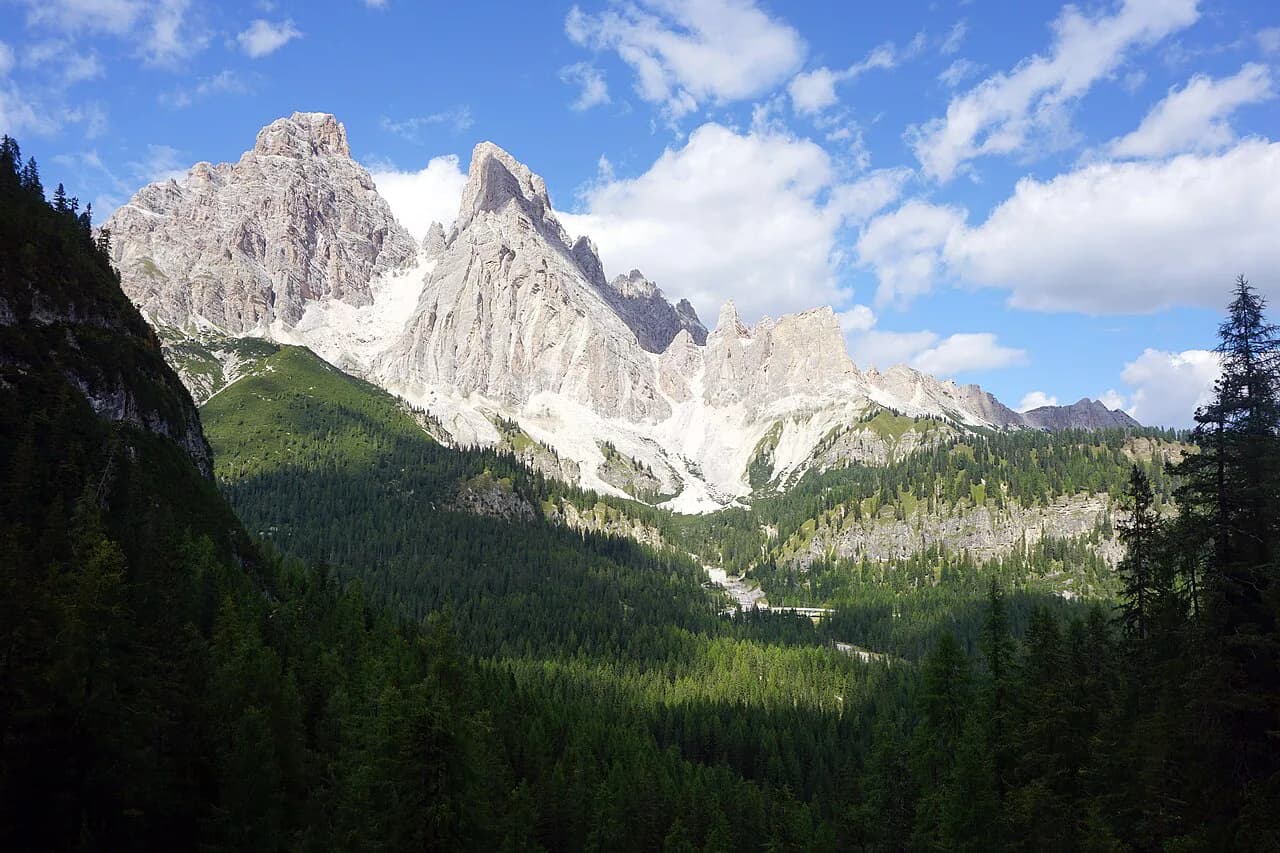
Cortina d'Ampezzo sits in the Ampezzo Dolomites, a bowl of limestone peaks ringed by marked trails, with several of the region's best day hikes starting within a half-hour of town. You can walk straight out of the center to Lake Ghedina, ride a bus to a pass, or drive a short valley road to a trailhead below Lago di Sorapis or Croda da Lago. That compactness is what makes the town such a workable base for a three- or four-day hiking trip.
The hikes here split neatly by effort. Lift-assisted and valley routes suit short days and mixed-ability groups, half-day classics like Lago di Sorapis reward a steady pace with cable-protected ledges, and the long Lake Ghedina to Ponte sul Fiume Boite circuit is a full mountain day for fit hikers. Grouping each walk by its trailhead lets you link two or three without backtracking through Cortina.
Why Cortina d'Ampezzo works as a hiking base
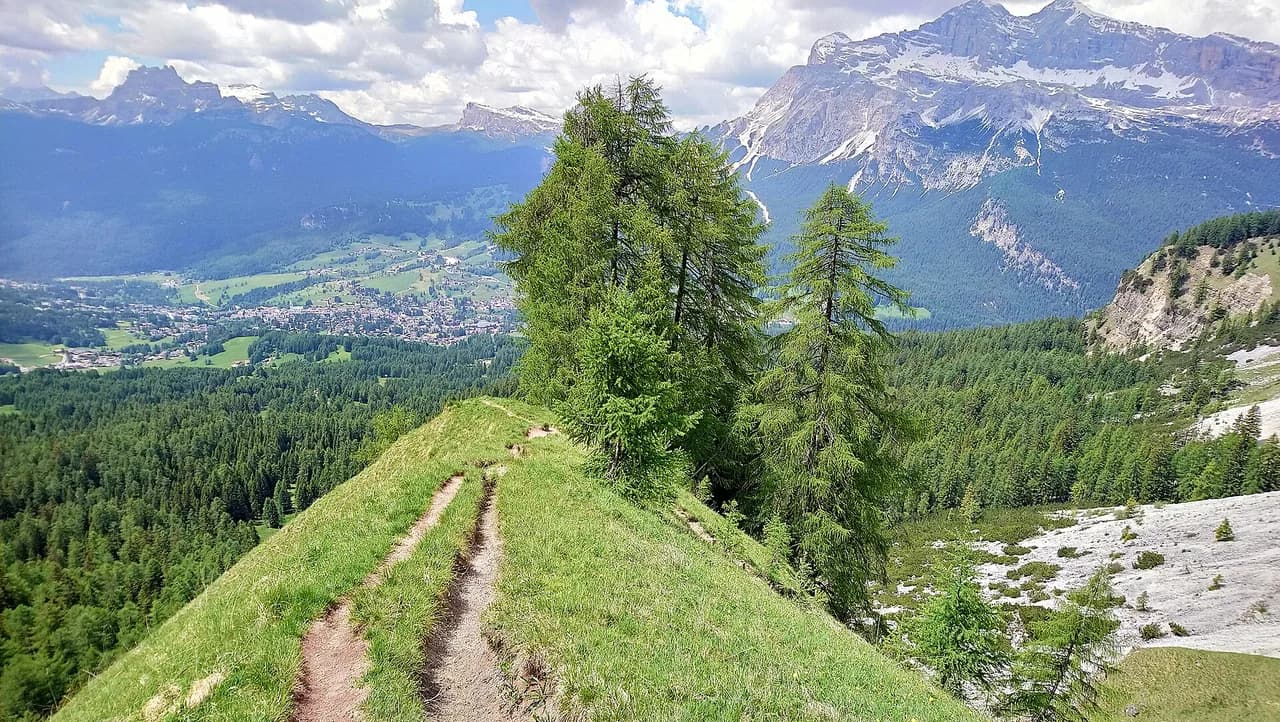
Very few Dolomite bases put a trail network and a town center in the same place. From Cortina's streets you can climb into forest above the Boite valley without a car, and the surrounding Ampezzo Dolomites hold well-marked paths toward the surrounding peaks, with higher, more alpine objectives for those who want them.
The trade-off is traffic. The headline lakes and passes are popular, so starting early is the practical way to get parking and quieter paths, and midweek days are noticeably calmer than weekends in July and August. Buses run to several trailheads from town, which takes the parking question out of the day entirely.
The main hiking areas around Cortina
Think of Cortina's hikes as five zones. East is Passo Tre Croci, gateway to Lago di Sorapis. North is Misurina and the Tre Cime toll road. Southwest are Croda da Lago and Lago Federa. West are Cinque Torri and the Nuvolau ridge. And northeast, above Misurina, is Monte Piana with its WWI trenches.
Planning by zone rather than by list saves driving. You can pair Sorapis with Monte Piana on consecutive days since both sit off the same Misurina side of the valley, or combine the Croda da Lago walk with a Cinque Torri afternoon without crossing town twice. The Cinque Torri Hike and the Nuvolau refuge are the natural short day in the west.
Easy and short hikes: Cinque Torri, Nuvolau and Lake Ghedina
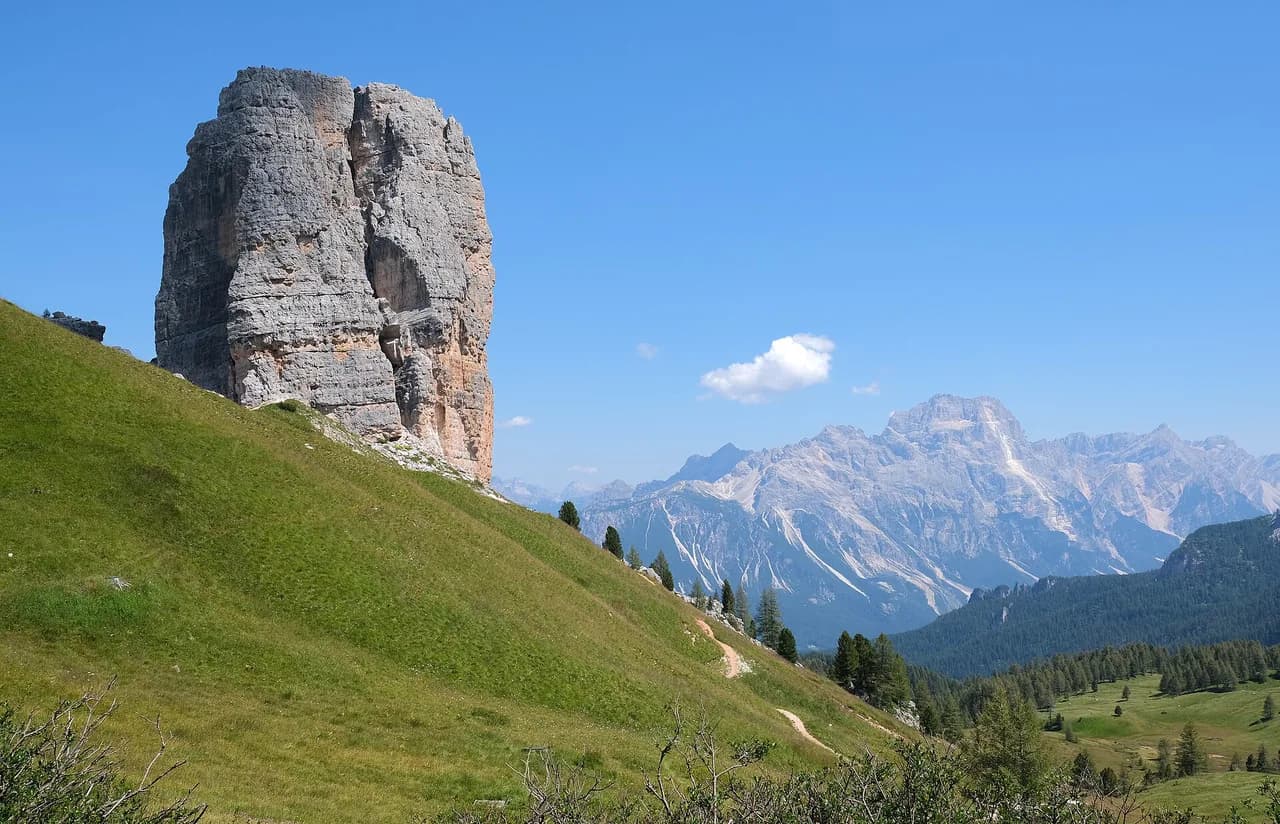
The Cinque Torri and Nuvolau loop starts at the Cinque Torri lift parking area, where the route begins around 2,361 m (7,746 ft) and tops out near 2,575 m (8,448 ft) at Rifugio Nuvolau, taking 5 to 6 hours at a moderate to strenuous grade. The trailhead is a 25-minute drive from Cortina or a 30-minute bus ride to Bai de Dones. Rifugio Scoiattoli and the Averau and Nuvolau huts break up the ridge and make a lunch stop easy.
Lake Ghedina is the walkable option: a loop from Cortina's town center through forest and past the lake, with views to Mount Cristallo and Croda Rossa and a crossing of the Boite river. It is 17.7 km (11 mi) with 762 m (2,500 ft) of ascent and takes 6 to 8 hours, so treat it as a full day rather than a stroll. Spring and late fall leave muddy and rocky patches on the descent, where poles help.
Lago di Sorapis: distance, ascent and the out-and-back
The out-and-back to Lago di Sorapis from Passo Tre Croci is 12 km (7.5 mi) with roughly 320 m (1,050 ft) of gain and takes 3 to 5 hours, while the full circuit runs 13.5 km with around 700 m of ascent and takes 5 to 7 hours. The lake sits below the Sorapiss group and is the reason to come. Plan your day around one variant so your timing and water carry match the route you actually walk.
The trailhead is Passo Tre Croci, a 15-minute drive or a 20-minute ride on bus line 30/31 from Cortina. Parking at the pass is free, with several lots and a shoulder area by the trailhead that fills early in summer. Starting at first light also gives you the still, cool hours on the ledges before the crowds arrive.
Route notes for Lago di Sorapis: trail 215, the lake and the loop descent
From Passo Tre Croci, trail 215 climbs for just over an hour on mostly easy ground, with a few narrow ledges and cable sections where you hold the wire and watch your footing. Rifugio Alfonso Vandelli sits a few minutes before the lake, and the source gives its season as 20 June to 20 September, so an early or late-season attempt means carrying all your own food and water. The lake's colour is brightest with early-summer snowmelt, lower by August and frozen by autumn, and entering the water is prohibited.
For the loop, continue around the lake and reconnect with trail 216 for a steep, loose climb with a couple of short scrambles to a summit cairn. The descent drops into Forcella Marcoira, then follows a rough, hard-to-follow line before joining trail 213 for the walk back to the pass. If your knees or your patience are in doubt, the out-and-back along 215 is the better day.
Croda da Lago and Lago Federa from Ponte Ru Curto
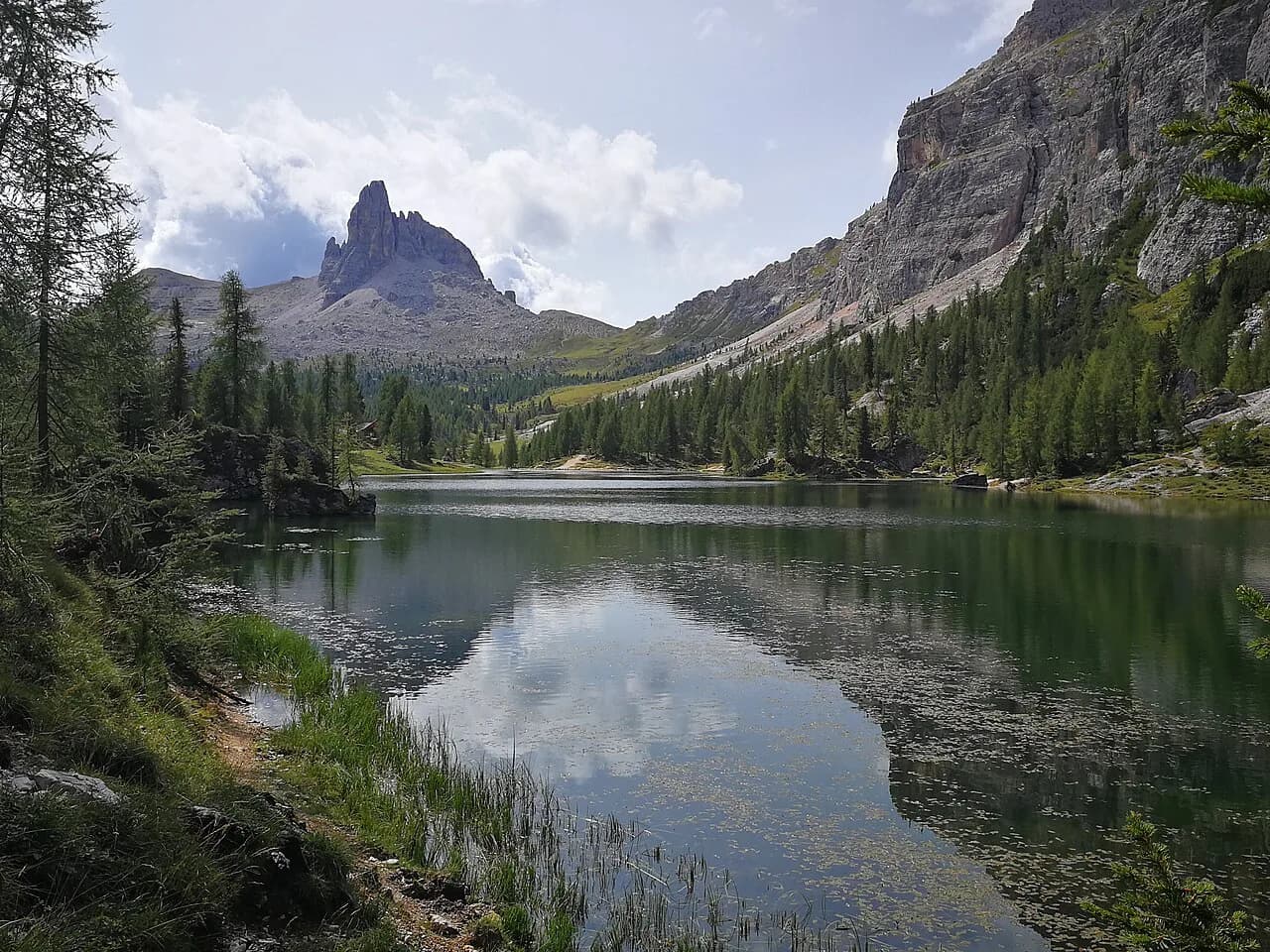
The walk to Lago Federa starts at Ponte Ru Curto, about a 20-minute drive from Cortina, and follows trail 437 uphill to a fork where you keep left for the switchbacks up to Val Negra. Rifugio Croda da Lago sits on the lakeshore, and the source puts the full return at 14 km with 800 m of ascent and 5 to 6 hours; other route descriptions put the circuit at 11.5 km, so read the signboards at the trailhead and pick a figure for your day rather than blending the two.
Continuing from the hut toward Forcella Ambrizzola and over the next saddle turns the outing into a harder circuit with scree and careful footing, which is where the exposure and loose ground sit. Autumn is the season to come for the larches turning gold around the lake. The Croda da Lago Hike from Cortina d'Ampezzo is the one to choose if you want one lake day with a hut lunch at the end.
Monte Piana loop from Verocai
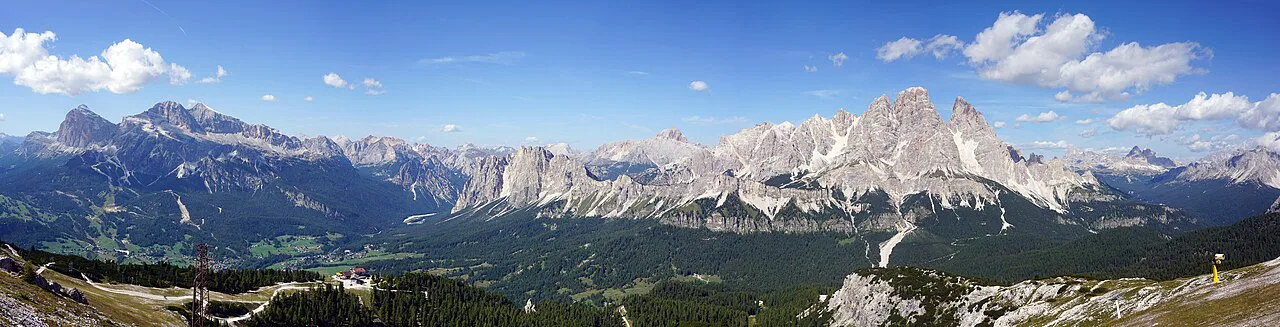
The Rifugio Monte Piana to Rifugio A. Bosi loop from Verocai is 13.5 km (8.4 mi) with 670 m (2,200 ft) of ascent and takes 4 to 6 hours at an intermediate grade. The route crosses preserved WWI trenches and memorials on the plateau, with long views to Tre Cime di Lavaredo, and the terrain mixes gravel paths with steeper rocky sections. Thin air at altitude makes a steady pace worthwhile.
Verocai is about a 25-minute drive from Cortina, or a shuttle from Misurina brings the total to 30 to 40 minutes from town, which makes this one of the easier big-view days without a car. Rifugio A. Bosi is the natural resting point at the top. Late spring to early fall is the sensible window, and the plateau's open ground offers little shelter when a storm builds.
Lifts and access above tree line
The Cinque Torri chairlift is the low-effort way onto the Nuvolau ridge, cutting out the forest climb and putting the rifugi within reach of hikers who want a shorter day. Check the lift operator's published season before you build a plan around it, since the chairlift does not run year-round. On the Misurina side, the Tre Cime approach road is a toll road open daily in summer, with payment machines available when the booths are closed, and closed outside posted hours in shoulder season and entirely in winter.
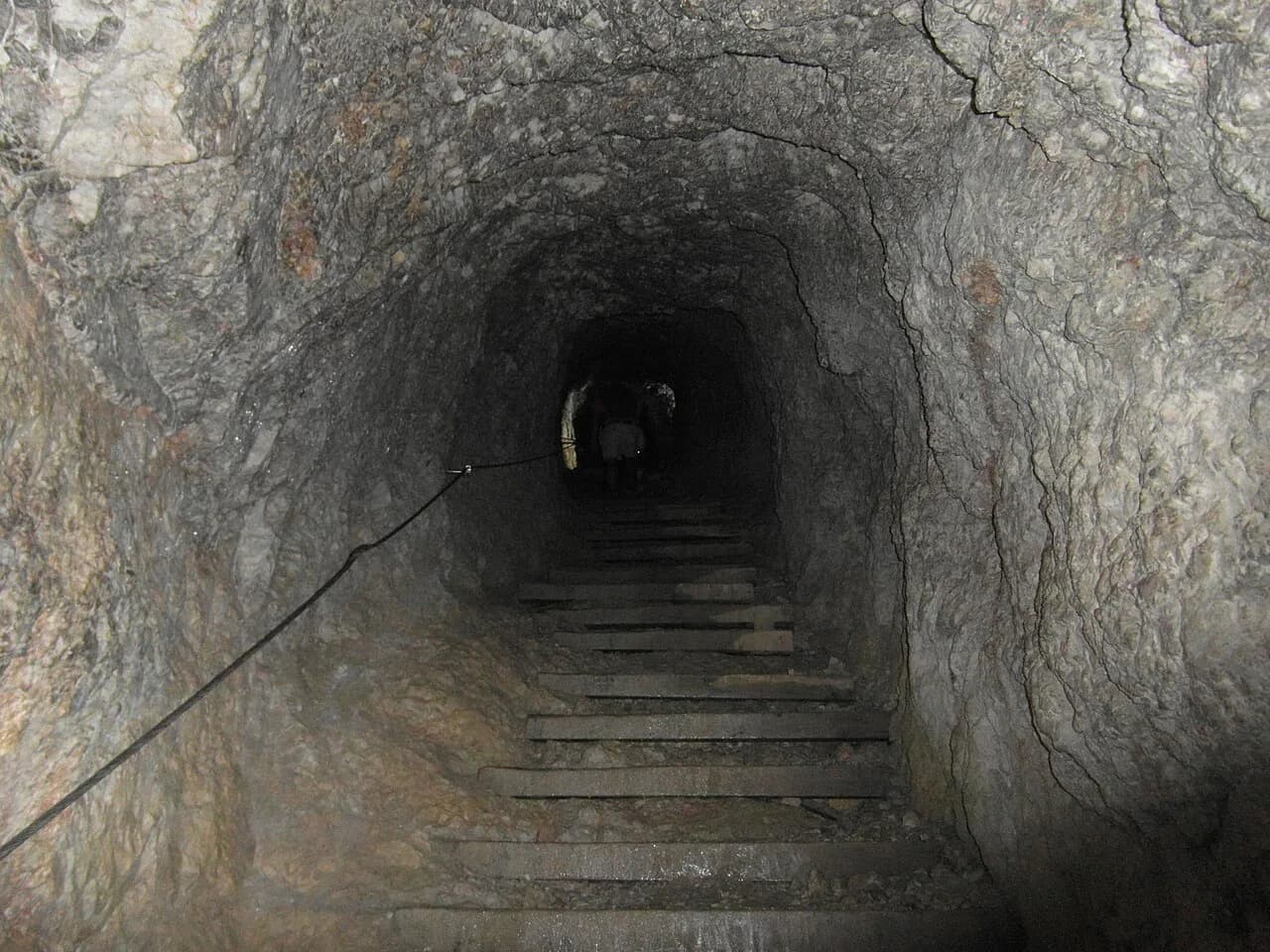
For the Tre Cime circuit itself, the 444 bus from Dobbiaco runs from late June to early October and takes about 45 minutes, with advance booking required from mid-July to mid-September. A car toll covers 12 hours and includes parking at Rifugio Auronzo, so a late start still leaves time for the loop. The Lagazuoi Tunnels Hike above Passo Falzarego is a separate high-mountain day if you want more lift-assisted altitude.
Getting to trailheads without a car
Bus line 30/31 connects Cortina with Passo Tre Croci in about 20 minutes, putting the Sorapis trailhead within walking distance of the stop, and the local operator's timetables are the place to build your day around. For Misurina and Monte Piana, a shuttle from Misurina extends the reach of the same trip. Cortina's compact center also means the Lake Ghedina loop needs no transport at all.
For Croda da Lago, the 30/4 Dolomiti bus runs from Cortina or Pescul to the Pian del Pantan stop from mid-June to mid-September. Outside that window, plan on the car park at Ponte Ru Curto instead. Where a bus does not run, a short taxi ride from town is the fallback.
Driving and parking
Passo Tre Croci has free parking in several lots plus roadside space at the trailhead, and it fills early in summer. Ponte Ru Curto has limited roadside spots along the valley road, so aim to arrive before 9am in high season. At the Cinque Torri lift, the parking area sits at the base station and is the simplest start for the Nuvolau loop.
For Tre Cime, the toll applies to cars and motorhomes, is valid for 12 hours and includes parking, and it is a 40-minute drive from either Cortina or Dobbiaco. The 444 bus is the car-free alternative when it is running. Outside its season, there is no road access up to Rifugio Auronzo.
Huts and rifugi on the routes
Each of Cortina's main day hikes has a named hut as its anchor. Rifugio Alfonso Vandelli serves Lago di Sorapis, Rifugio Croda da Lago sits on the Federa shore, Rifugio Scoiattoli, Averau and Nuvolau line the Cinque Torri ridge, and Rifugio A. Bosi waits at the top of Monte Piana. Tre Cime is the exception: in summer you pass five rifugi, most closing by mid-October, with paid toilets near Rifugio Auronzo outside the season.
Carry cash for huts and bring enough water for the climb, since several routes have no supply until the hut. On the Sorapis walk the Vandelli hut is the only facility on the mountain, so an out-of-season attempt means full self-sufficiency. Reserve beds directly with the rifugio if you plan to stay up high.
When to go
The core hiking season runs from late June through early October, with July and August giving the most reliable weather and the biggest crowds. September brings quieter trails and, by late fall, golden larches around Lago Federa. Late June and early October are cooler and can carry snow on the higher passes.
Shoulder-season snow lingers on north-facing passes and on the Sorapis ledges, where a dusting turns cable sections into careful, slow going; microspikes and an early start are the sensible response. Autumn colour is the payoff for accepting shorter days and colder mornings.
Weather, exposure and afternoon storms
Cortina's summer pattern builds cloud through the afternoon, and thunderstorms on exposed ridges and plateaus are the main hazard. Starting early gets you off the Cinque Torri ridge and the Monte Piana plateau before the weather turns, and gets you the best light on the lakes. Carry a shell even on clear mornings.
The Sorapis route's narrow ledges and cable sections demand sure-footedness, and the loop's rough descent is where most slips happen, so poles and a cautious pace pay off. On the Croda da Lago circuit, the Ambrizzola saddle brings scree and careful footing. Treat any wet rock as slower ground and keep your turnaround time fixed.
Which base suits which hikes
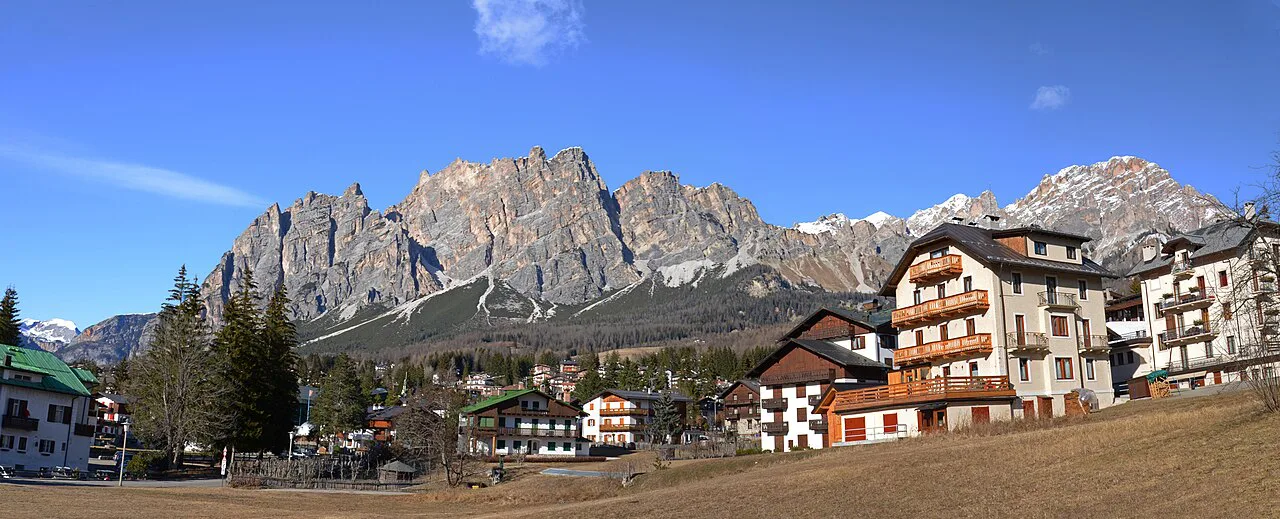
Cortina town is the best all-round base: walkable to Lake Ghedina, short drives or bus rides to every other trailhead, and the widest choice of beds and food. Misurina and the Passo Tre Croci area suit early starts for Sorapis, Monte Piana and Tre Cime, and cut your morning drive to minutes. A split stay of a few nights in town and one or two near Misurina covers the range without long transfers.
If you are hiking without a car, base in Cortina and lean on bus line 30/31 for Sorapis and the shuttle for Monte Piana. Drivers can spread out to Ponte Ru Curto and the Cinque Torri lift without much extra time. Either way, one rest day between the two longest walks keeps the trip enjoyable.
Gear for Cortina day hikes
Bring broken-in boots with real tread for the cable sections and scree, and trekking poles for the Sorapis loop descent and the Croda da Lago saddle. A light shell, warm layer and headlamp cover the afternoon change and a late return. Cash for huts, a refillable bottle and an offline map of the Ampezzo trails complete the kit.
Sunglasses, sun cream and a hat matter more than you expect at 2,500 m (8,200 ft), and a small first-aid kit covers blister and knee trouble. Pack light for hut lunches, and keep a dry layer in a stuff sack for the summit stops.
Plan Your Cortina Hiking Days
Build your trip around zones: one day east at Passo Tre Croci for Lago di Sorapis, one day west on the Cinque Torri and Nuvolau ridge, and one day southwest at Croda da Lago, with Lake Ghedina as the walk-from-town backup. Check the Sorapis forecast before you commit to the loop, and start early on every popular trailhead.
If you have a fourth day, choose between Monte Piana's trenches and the Tre Cime circuit. Both need an early start and either a car or the seasonal bus. Beyond Cortina, the wider Dolomites open up the Val Gardena lifts and the Alta Via routes for a longer stay, and our guide to hiking in Val Gardena covers a similar lift-and-trailhead setup in another valley.
Explore more Cortina d'Ampezzo hiking guides
Frequently Asked Questions
What are the best day hikes in Cortina d'Ampezzo?
Lago di Sorapis from Passo Tre Croci is the classic half-day, with cable-protected ledges and a turquoise lake. The Cinque Torri and Nuvolau loop is the best short ridge day and can be shortened with the chairlift. For larch-season colour, Croda da Lago and Lago Federa are hard to beat, and Monte Piana adds WWI history to a big-view plateau.
How many days do you need for hiking in Cortina?
Three or four days covers the main zones without rushing: one day east to Lago di Sorapis, one west on the Cinque Torri and Nuvolau ridge, one southwest to Croda da Lago, and Lake Ghedina from town. Add a day for Monte Piana or the Tre Cime circuit if you want a longer trip.
Can you hike in Cortina without a car?
Yes. Bus line 30/31 reaches Passo Tre Croci in about 20 minutes, and a shuttle from Misurina extends the trip toward Monte Piana. Lake Ghedina starts from the town center. Croda da Lago is served by the 30/4 Dolomiti bus only in high summer, so check the seasonal timetable before relying on it.
When is the best time to hike around Cortina?
Late June through early October is the main window, with July and August the most reliable and the busiest. September brings quieter trails and early autumn colour, and by late fall the larches around Lago Federa turn gold. Shoulder-season snow can linger on higher passes.
How hard is the Lago di Sorapis hike?
It is moderate to challenging. The out-and-back is 12 km with roughly 320 m of gain over 3 to 5 hours, with narrow ledges and cable sections that need sure footing. The loop extends to 13.5 km with about 700 m of ascent and a rough descent, so it suits hikers happy on loose ground.
Is hiking in the Dolomites expensive?
Day hiking itself is cheap, but lift tickets, toll roads and hut meals add up. Parking at Passo Tre Croci is free, while the Tre Cime approach road carries a toll valid for 12 hours. Check lift prices directly and budget cash for rifugi lunches.
Can I hike these trails solo?
Yes, the routes are well marked and commonly done alone. Start early to avoid afternoon storms, tell someone your plan, carry an offline map and a headlamp, and stay on marked trails in fog or snow. The cable sections on Sorapis deserve extra care when the rock is wet.
Are dogs allowed on Cortina's trails?
Dogs are allowed on most trails, but check signage at trailheads and ask before bringing a dog into a rifugio, as hut policies vary. On the via-style cable sections of Sorapis, a dog adds real difficulty, so choose the simpler valley or ridge routes instead.
Sources
Trail notes for your next trip
Optional updates when we add or revise hiking guides.
You might also like
Continue reading
More guides you'll find useful