Puig de Massanella Hike: Mallorca Peak Route Guide
Plan the Puig de Massanella hike in Mallorca's Serra de Tramuntana: trailhead access from Lluc, route, distance, ascent, scrambling and when to go.
On this page
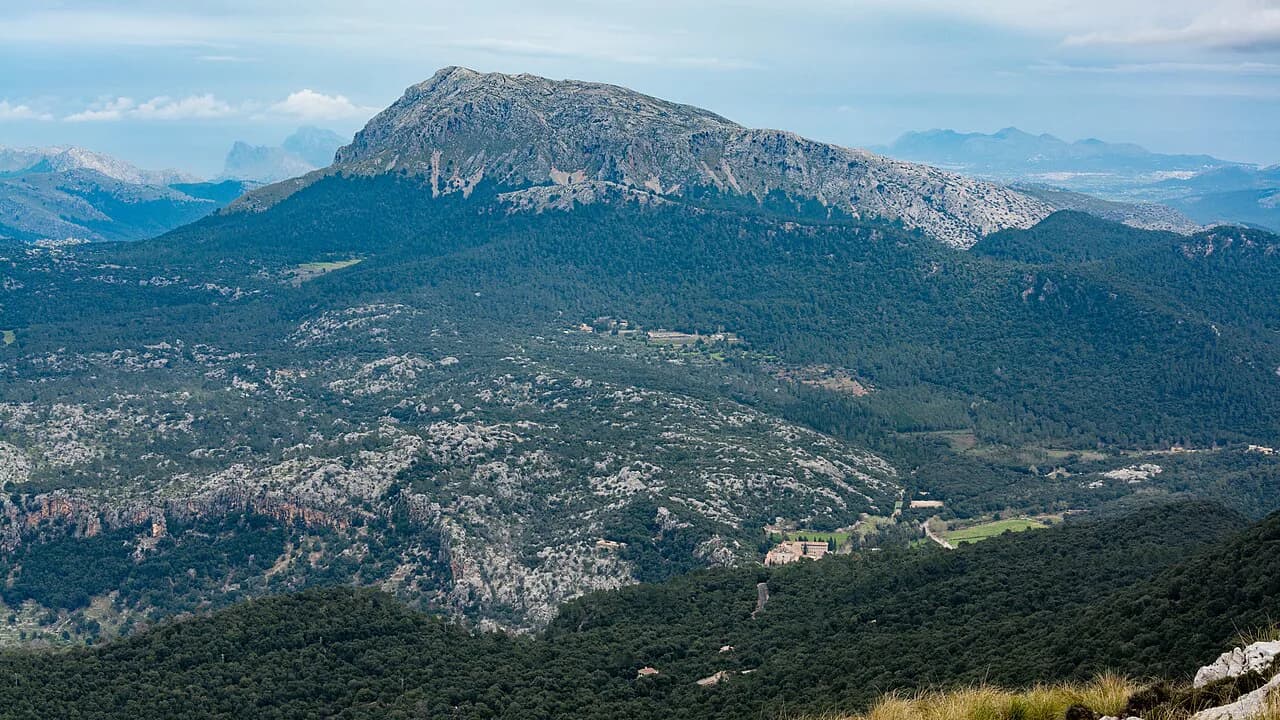
Puig de Massanella is the big summit day in the heart of Mallorca's Serra de Tramuntana, a long limestone climb that finishes on a broad plateau with the island's highest peaks and both mountain reservoirs spread out below. It suits hikers who are comfortable on loose ground, happy to use their hands for a short rocky step, and fit enough for a full half-day of continuous ascent and descent.
The standard approach starts at the Santuari de Lluc, which has road access, a bus connection and beds, making it the simplest base for an early start. A second option begins higher at the Coll des Pedregaret, cutting out the forest walk but adding a narrow mountain road and a gate that closes on Sundays and public holidays.
What the hike offers and who it suits
This is a mountain day rather than a stroll: expect hours of steady climbing, a section of path that demands attention on scree, and a short rocky passage where fixed aids help you up. The reward is a summit plateau with all-round views, including the peaks around Puig Major and the twin lakes of Cúber and Gorg Blau.
Choose Massanella if you already hike regularly in hills and are steady on uneven ground; if you want a shorter Tramuntana summit day, Puig de l'Ofre from the Cúber reservoir car park covers 12 km (7.5 miles) with around 520 m (1,705 ft) of ascent in four to five hours. That gives you a genuine peak with a fraction of the commitment. If you are weighing island summits more broadly, hiking in Tenerife offers a comparable mix of long climbs and shorter peak days.
Where Massanella sits in the range
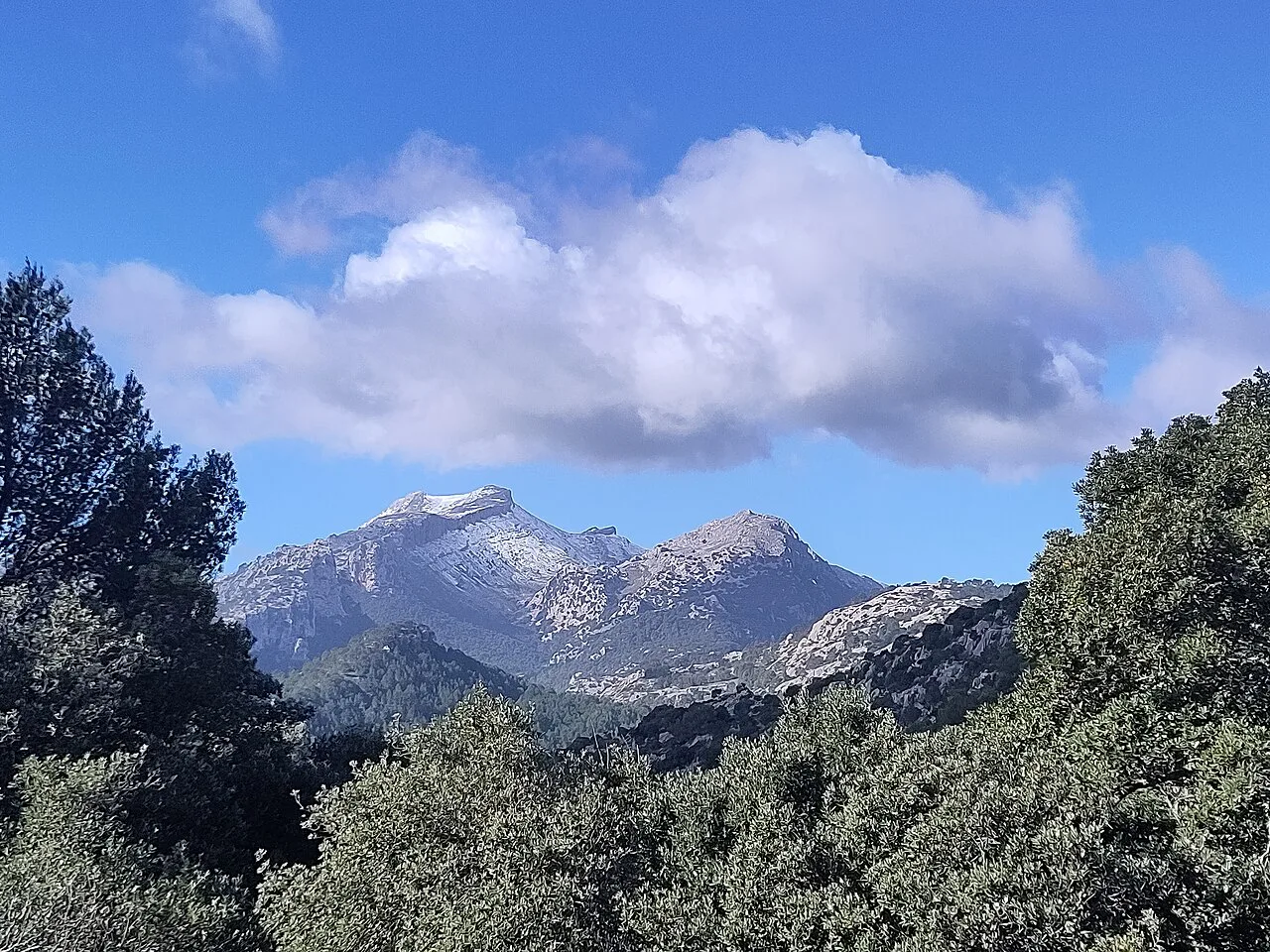
Puig de Massanella is commonly described as one of Mallorca's highest peaks, sitting just below the Puig Major massif. The 1,365 m (4,478 ft) figure often quoted for its high point comes from a single tourism listing, while other sources give the neighbouring Penyal des Migdia as the second-highest point of the island; treat any exact summit elevation as a label rather than a planning number.
The mountain lies between the Lluc basin to the north-east and the Cúber and Gorg Blau reservoirs to the south-west, which is why the classic route climbs from Lluc and why the reservoirs appear below you near the top. Puig Major itself is not the objective of this walk, and access to it is a separate question from anything on the Massanella path.
Trailhead and parking
The Lluc start puts you at the Santuari de Lluc, a monastery complex with a car park, café and accommodation, so you can park once and walk straight onto the trail. Arriving early matters more here than on short walks, because the day is long and the upper mountain is the part you want to climb in cool hours.
The alternative start is the Coll des Pedregaret, reached by a mountain road where a gate is closed to vehicles on Sundays and public holidays, adding roughly 2.5 km (1.5 miles) of asphalt each way if you arrive on those days. If you plan a weekend or holiday ascent, the Lluc approach avoids that constraint altogether.
Lluc is served by bus, which makes a car-free day realistic: you ride up from the Palma side or the Sóller valley, walk the route, and return from the same place. Check departure times for your date with the island transport operator before committing, since a missed last bus turns a fine day into a long wait.
Distance, ascent and time
From Lluc the ascent runs roughly 12 km (7.5 miles) of walking on the standard round trip described by local listings, with the summit plateau as the natural turn-around. Budget the full day rather than an afternoon, and treat the descent as the harder half once your legs are tired and the scree is loose underfoot.
For comparison, the GR 221 long-distance route across the Tramuntana totals about 135 km (84 miles) with around 6,160 m (20,210 ft) of ascent as plotted by one route survey, and most people spread it over seven to sixteen days. Massanella is not part of that through-route but shares its terrain, so anyone who has walked GR221 stages will recognize the gradient and the rocky path style.
Route description from Lluc
Leave Lluc on the path heading south-west, climbing through holm oak woodland and past the old terraced plots that mark the lower slopes. The gradient is steady rather than brutal here, so settle into a rhythm and gain height while the air is still cool; this is the section where you make your margin for the upper mountain.
Above the trees the path opens onto the Coll des Pedregaret saddle area, where the road approach joins and the character changes to open limestone and scree. From this point navigation is mostly visual, following cairns and worn path lines across pale rock, and the wind often picks up as soon as you leave the shelter of the oaks.
The upper mountain and the aided step
The final part of the climb crosses scree slopes and includes a short, steeper rocky step fitted with fixed aids, including cable and stirrup-style holds in places. It is not a via ferrata and needs no specialist kit, but it is the point where a head for heights and confident footing matter; in wet or icy conditions it is the first place to turn back.
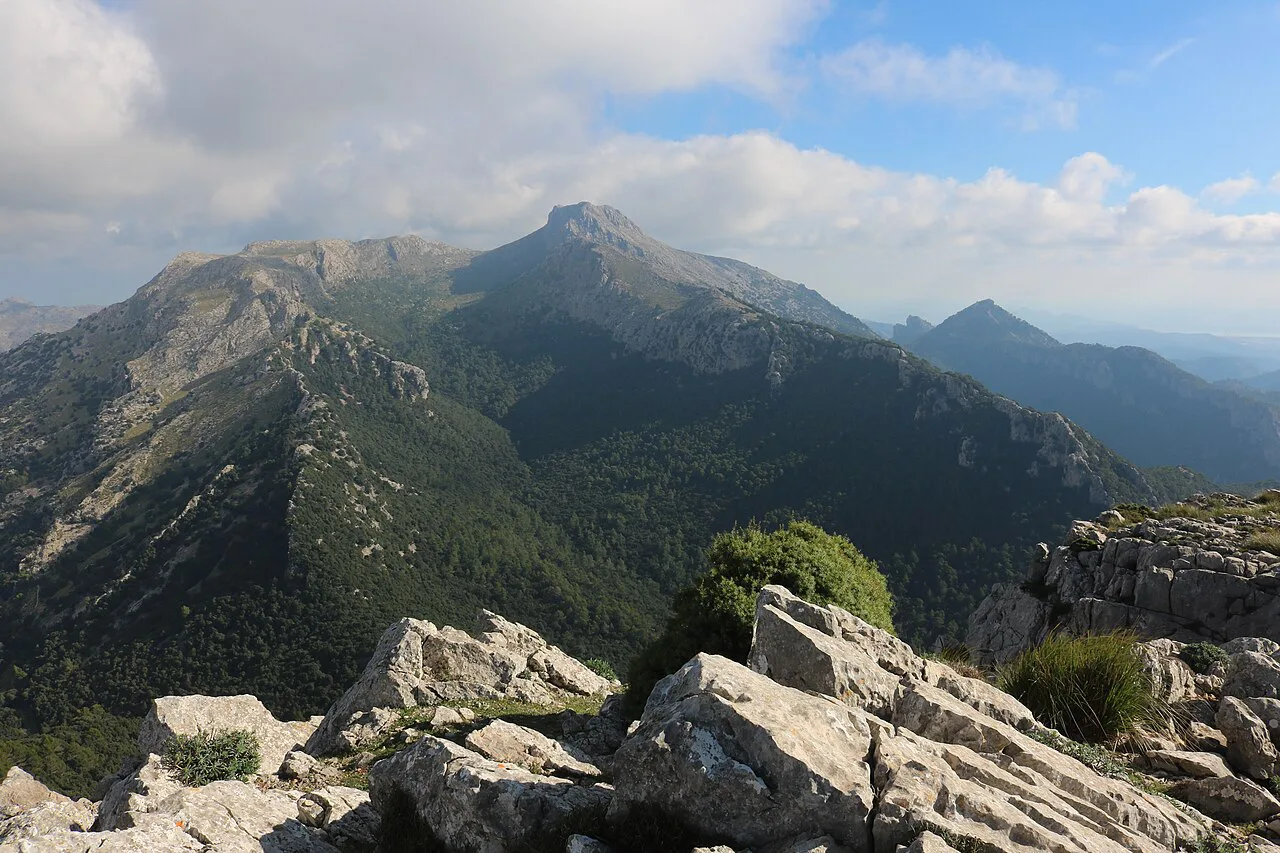
Above the step the angle eases onto a plateau that runs to the concrete summit marker, and the last stretch is gentle walking with the whole range in view. Because the plateau is exposed, plan to eat and turn around promptly rather than lingering if cloud is building on the surrounding peaks.
Views and landmarks from the top
From the summit, the Cúber and Gorg Blau reservoirs sit below to the south-west, with the Puig Major massif filling the skyline beyond them and the north coast visible on clear afternoons. The table-topped Puig de s'Alcadena is a distinctive shape on the horizon, useful for working out which way you are looking.
The terraced slopes you climbed through belong to a working dry-stone landscape that was recognized as an Asset of Cultural Interest in 1994, and the same olive terraces and stone walls continue across the valleys to the east. Walking here is as much about reading that hand-built countryside as about bagging the summit.
Scrambling, exposure and kit
The route is a hike with a scrambling move, not a technical climb: boots with stiff soles and ankle support are worth more than light trainers on the scree, and trekking poles save your knees on the long descent. Carry a shell and a warm layer even in high summer, because the summit plateau is exposed to wind and cloud that the Lluc basin rarely sees.
Snow and ice can linger on the upper slopes and the aided step well into spring after a wet winter, so late-season snow makes the crux the deciding factor for the day. If the rocky step is glazed or snow-covered, the honest choice is to walk the lower route and leave Massanella for another visit.
When to go
Spring and autumn give the most comfortable conditions, with cooler climbing and clearer air; a self-guided walking operator runs its Mallorca mountain itinerary between early March and the end of June and again from September into October, which reflects the usable season at this altitude.
Midsummer works only with a very early start, because the limestone holds heat and there is little shade above the treeline. Afternoon storms build quickly over the Tramuntana in the warm months, so aim to be off the summit plateau by early afternoon rather than gambling on an evening descent.
Late autumn and winter can be crisp and quiet, but short daylight and the possibility of ice on the upper step shrink your margin for error. Whatever month you pick, keep a day in reserve so you can move the climb to the better forecast.
Water, food and huts on the route
There is no hut or reliable water source on the Massanella route itself, so carry everything you need for a half-day mountain ascent from Lluc, where you can fill bottles and buy food before setting out. Plan your intake for the whole climb plus the descent, and keep an emergency share in your pack.
If you want a Tramuntana walking base with beds and meals at the start of the path, the Santuari de Lluc is the practical choice, while Sóller gives you a livelier town with a train link and a greater choice of hotels. Many hikers pair a Massanella day with a second summit such as Puig Tomir, whose path starts from the Coll des Pedregaret side and shares the same loose-stone character.
Other summits to pair with Massanella
A common multi-summit day from the Cúber reservoir links Puig de sa Rateta, Puig de na Franquesa and Puig de l'Ofre, covering about 12 km (7.5 miles) with roughly 520 m (1,705 ft) of ascent in four to five hours. The path is faint in places and marked mainly by cairns, so this is a route for hikers comfortable navigating without signs.
Lower down, the Barranc de Biniaraix offers a contrasting day of old cobbled steps and terraced olive groves rather than a summit, and the valley path from the Sóller side makes a good rest-day leg. If you want the classic traverse of the range instead of a single peak, the long-distance route is the better framework.
Where to base yourself
Lluc is the obvious base for the standard route, with the trailhead on the doorstep and a bus link for car-free hikers. Sóller suits anyone wanting town life, restaurants and a train connection, while Pollença and Inca work for drivers approaching from the north and east and combining the summit with other Tramuntana days.
If you would rather have logistics arranged, guided and self-guided formats differ mainly in how much planning they take off your hands; walking holidays typically move luggage and supply route notes, which suits hikers wanting consecutive days in the range without driving between bases. Compare what each format includes, including the company's own season and grading.
Plan Your Visit
Treat Massanella as the anchor of a short Tramuntana trip: start from Lluc for the full route, bring stiff boots and plenty of water, and keep the aided step as your decision point on the day. Add a gentler summit or a valley walk the next day so tired legs have a chance to recover.
Check the bus times back from Lluc with the island transport operator before you set off, since the last service shapes how late you can afford to be on the mountain.
Frequently Asked Questions
How long does the Puig de Massanella hike take from Lluc?
Plan most of a day. The standard round trip from Lluc runs roughly 12 km (7.5 miles) of walking with a long climb to the summit plateau, and the loose descent takes longer than the ascent suggests. Start early so you are off the exposed upper mountain before afternoon cloud builds.
How hard is the climb to Puig de Massanella?
It is a strenuous hike with one short scrambling passage. You need hill fitness for hours of continuous ascent, confidence on loose scree, and enough head for heights to climb the rocky step fitted with fixed aids. Hikers who dislike exposure or icy rock should choose a lower summit such as Puig de l'Ofre instead.
Where does the Puig de Massanella trail start?
Most hikers start at the Santuari de Lluc, which has parking, food and accommodation and is reached by bus. A higher start at the Coll des Pedregaret shortens the walk but uses a mountain road where a gate closes on Sundays and public holidays, adding about 2.5 km (1.5 miles) each way on those days.
Can you climb Puig Major in Mallorca?
No. The line runs between Miquel and the cache. Puig Major is a separate objective from Massanella, and nothing on the Massanella route takes you onto it. Plan around Massanella itself and use its summit views toward the Puig Major massif rather than treating the higher mountain as part of the day.
What is the best time of year to hike Puig de Massanella?
Spring and autumn give the best combination of cool climbing, clear views and long daylight, and organized mountain walking on Mallorca runs from early March to the end of June and again from September into October. Midsummer needs a pre-dawn start to beat the heat and afternoon storms, while winter brings ice on the upper step.
Do you need a guide for Puig de Massanella?
Most fit hikers do not. The route from Lluc follows a recognizable line with cairns on the upper mountain, and the only technical moment is the short aided step. A guide makes sense if you are new to scree and exposed ground, or if you want to link several Tramuntana summits without planning the logistics yourself.
Sources
Trail notes for your next trip
Optional updates when we add or revise hiking guides.
You might also like
Continue reading
More guides you'll find useful