Mallorca Walking Holidays: Self-Guided vs Guided Trips
Compare self-guided and guided Mallorca walking holidays in the Tramuntana Sierra, with sample daily distances, seasons, luggage transfer and who each format suits.
On this page
Mallorca's northwest corner packs an island's worth of walking into one compact mountain range: the Serra de Tramuntana, where old paved mule tracks link stone villages above citrus groves and the coast stays in view for much of the day. A walking holiday here means choosing a format as much as a route. Self-guided hotel-to-hotel trips, guided small-group tours and center-based stays each deliver a different balance of independence, logistics and company.
Most itineraries are built around four villages: Fornalutx, Sóller, Deià and Valldemossa, joined by well-waymarked trails that date back centuries. Daily distances on published trips sit largely between 5 and 12.5 kilometres (3.1 to 7.8 miles), with ascents that reach a few hundred metres rather than a full mountain day. That makes the range realistic for regular hikers who want scenery and villages rather than summit bagging, though the stone steps and cobbles are harder underfoot than the numbers suggest.
What a Mallorca walking holiday covers
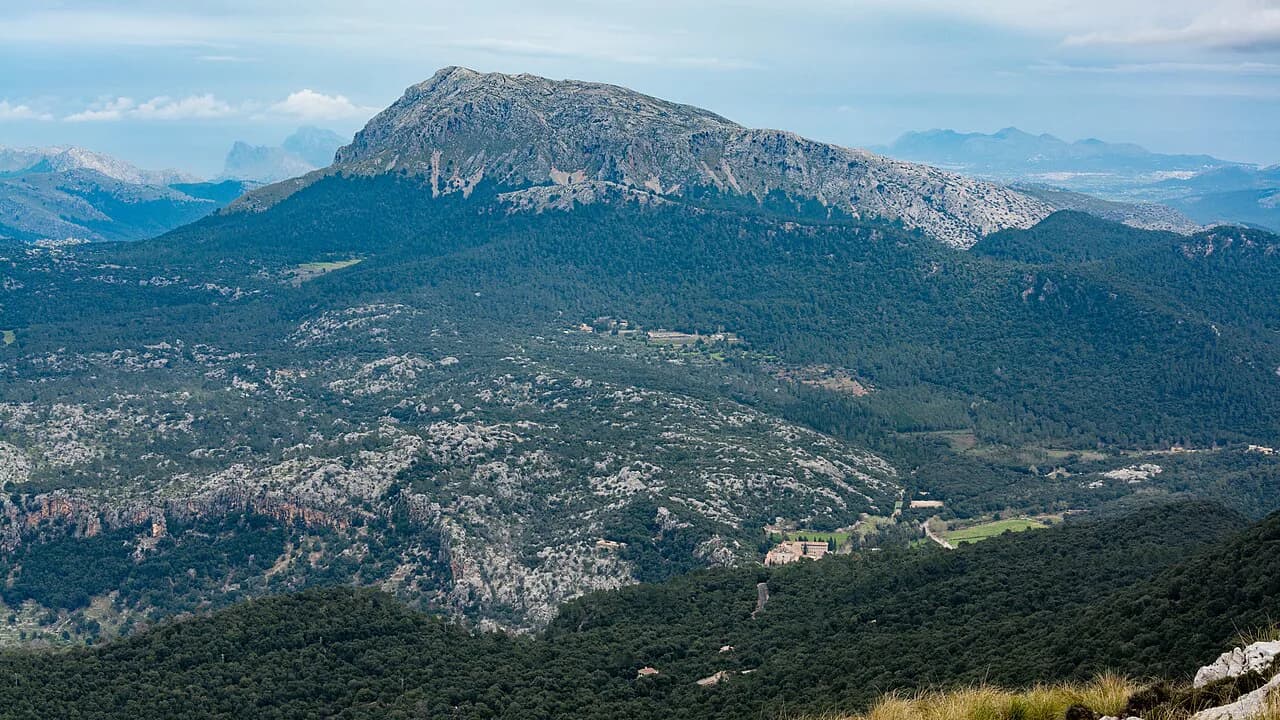
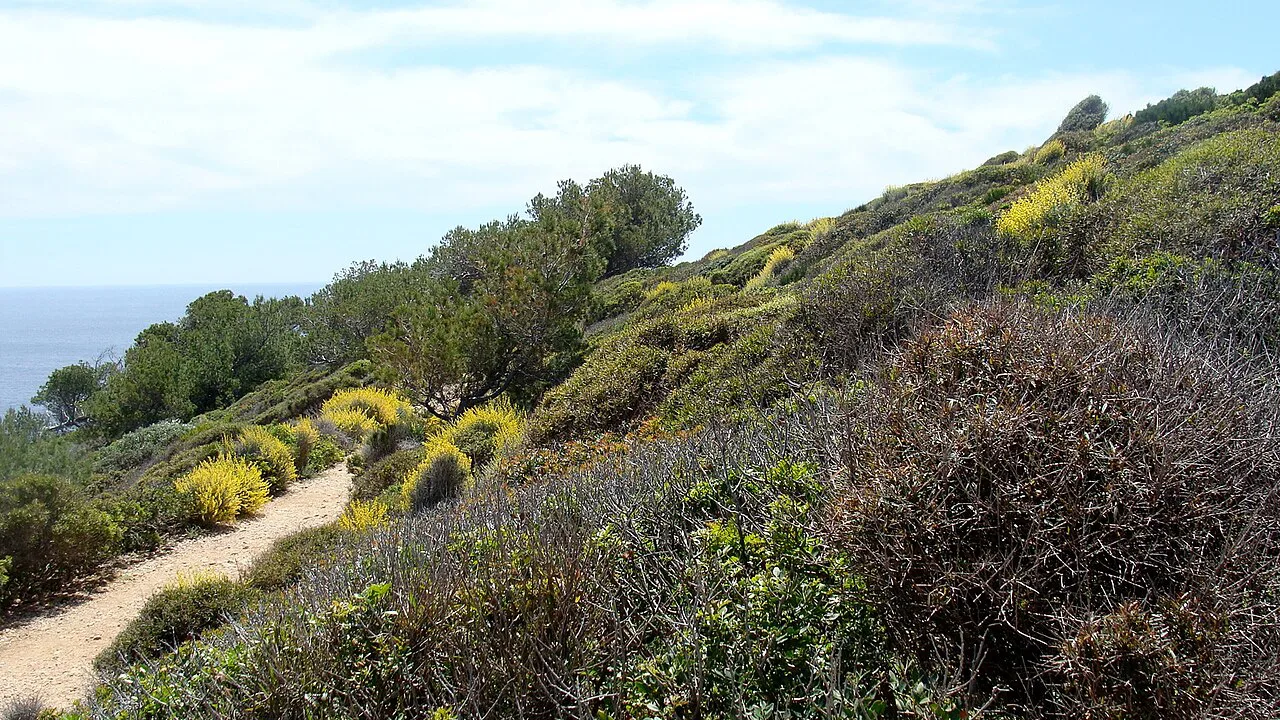
Nearly every Mallorca walking holiday is anchored in the Tramuntana Sierra, the UNESCO-listed cultural landscape of terraced slopes, olive and citrus groves and drystone walls that runs along the northwest coast. Villages such as Fornalutx, Sóller, Deià and Valldemossa sit on or near the old mule-track network and supply the beds, restaurants and buses that make point-to-point walking practical. Routes use these cobbled tracks rather than high summits, so the sea is usually the backdrop and the day's climbing is broken into many short pulls.
A holiday package bundles the walking with beds, breakfasts, route notes or guiding, and usually some form of luggage handling. The route notes matter more than they sound: the trails are waymarked, but junctions in the woods and around the villages reward a paper or GPS description. Inntravel's Mountains & Villages of Mallorca itinerary, for instance, includes route notes, GPS navigation and luggage transported between hotels across a seven-night, hotel-to-hotel week.
Self-guided hotel-to-hotel: luggage transfer and route notes
On a self-guided hotel-to-hotel week you walk between villages while a vehicle moves your bag ahead, so you carry only a daypack. Inntravel's published Mallorca itinerary runs seven nights across Fornalutx, Sóller and Valldemossa, with breakfast daily and the option to add rest days or sightseeing. You choose the start day and can extend nights, which suits hikers who want to set their own pace rather than follow a fixed group.
The trade-off is that you handle navigation and any local transport yourself, paying locally for buses, taxis, boats and trams used to link stages. The same operator grades this week as moderate, expecting roughly 10 to 15 kilometres (6.2 to 9.3 miles) a day over mountain paths and cobbled mule trails. Anyone comfortable reading a route description and adjusting a day for weather will find the format liberating; anyone who wants decisions made for them should look at a guided tour.
Guided small-group tours: group size, support and pace
A guided small-group tour puts a local leader in front and a support vehicle behind, and typically folds meals, tastings and cultural stops into the walking days. VBT's seven-day Mallorca Walking Tour caps the group at 18, includes 13 meals across six breakfasts, four lunches and three dinners, and carries walking sticks for guest use. Daily mileage is listed as 4 to 6 miles (roughly 6.4 to 9.7 kilometres) at an easy-to-moderate level, so the pace is gentler than many self-guided weeks.
Guided trips earn their keep on the extras: a walk through a Sóller Valley citrus orchard, the Painter's Path above Deià, a winery tasting in the Tramuntana and an empanada-making session before the farewell dinner on that itinerary. They also range beyond the Tramuntana villages to the southern coast, taking in the Cap Blanc lighthouse, Cala Pi and the salt flats at Es Trenc. The cost is less freedom over daily distance and start times.
Sample routes and the numbers behind them
Fornalutx makes a gentle start. A circular walk from the village through olive groves to Binibassi and Biniaraix covers about 6 kilometres (3.7 miles) with 265 metres (870 feet) of ascent and descent, taking around 2.5 hours. The harder alternative buses to Lake Cúber and climbs to the Ofre Pass, then descends the Biniaraix Gorge on a cobbled pilgrims' trail of almost 2,000 shallow stone steps, a 12.5-kilometre (7.8-mile) day with 340 metres up and 955 metres down.
The Fornalutx to Sóller stage climbs northwest to the Mirador de Ses Barques for views over the Port of Sóller and its lighthouse, then drops into town: 7.5 kilometres (4.7 miles), 3 hours, 330 metres up and 435 metres down. From Sóller, the Camí del Castello to Deià follows old mule tracks along the edge of the Muleta plateau with mountains to the left and sea to the right, 10 kilometres with 495 metres of ascent, before a bus or taxi carries you on to Valldemossa.
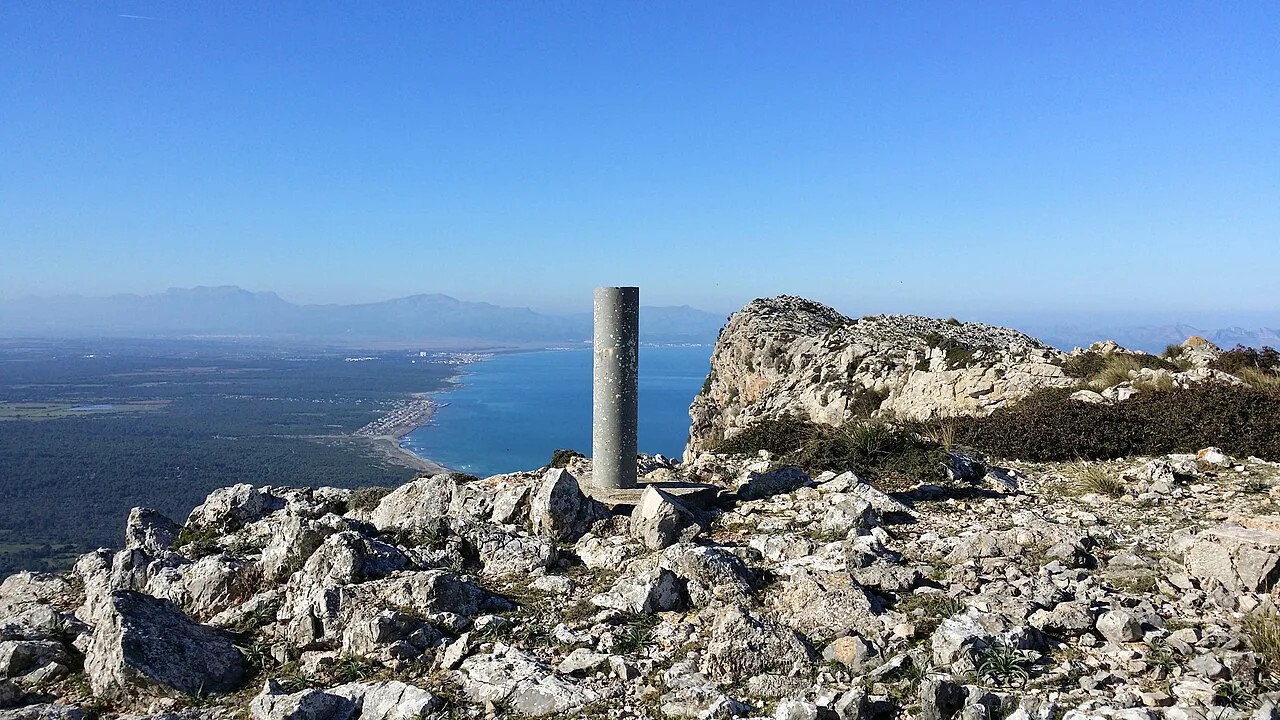
Longer options include Ses Barques to Cala Tuent, a 10-kilometre coastal walk with 325 metres of ascent and a 725-metre descent to the beach, returning by boat and tram when the boat runs. Around Valldemossa, the Puig Gros route climbs to the Cairats Refuge below the Teix (1,064 metres / 3,491 feet) for 11.5 kilometres and 575 metres of ascent, while the gentle Cami de s'Escolta loop covers 6.5 kilometres with only 120 metres of climbing.
Which base villages suit which hikes
Fornalutx is the best base for short olive-grove circuits and for reaching Lake Cúber by bus or taxi for the Ofre Pass crossing; its own cobbled lanes are a mild attraction in themselves. Sóller works for a cluster of half-day options, including the walk down to Port de Sóller (5 kilometres, 2 hours), the panoramic Refugi de Muleta circuit on the plateau above the port, and quieter shaded paths in the western hills.
Deià suits coastal cliff walking off the Camí del Castello and a swim at Cala de Deià before the climb into town. Valldemossa, the final stop on many itineraries, serves the Cairats Refuge and Puig Gros route and the escarpment miradors of the Cami de s'Escolta, with the Ermita de la Santíssima Trinitat as a picnic detour. Pick the base that matches your longest walk, then use buses and taxis for the rest.
Getting to the trailheads without a car
The Tramuntana villages are linked by a patchwork of public transport that lets walkers skip a car entirely. A narrow-gauge train runs from Sóller through the mountains to Palma, and an old-fashioned tram connects Sóller with Port de Sóller; both are useful for rest days and for returning from coastal walks. Buses and taxis fill the gaps to trailheads such as Lake Cúber and Ses Barques, paid locally on self-guided trips.
For the Cala Tuent walk, the return leg combines a boat along the coast with the tram, with a taxi as the fallback when the boat is not running. Because these services vary by season, plan each day around one fixed connection rather than two tight ones, and build in a spare hour at the coast. A short taxi ride is often the simplest fix when a bus timetable does not match your finish time.
When to go: spring and autumn in the Tramuntana
The published walking season for these itineraries runs from early March to the end of June and from September through October, which brackets the worst of the summer heat. Spring flowers appear from early March, and Inntravel's climate table for the area shows average maximum temperatures rising from around 13°C in March to the high 20s in midsummer, with October rainfall the wettest month on the chart. Late spring and early autumn give the best balance of warm days and comfortable climbing.
July and August are hot enough to make long descents and exposed coastal stretches unpleasant in the middle of the day, so hikers who travel then should walk early and keep days short. Winter is quiet, but some trailside facilities close: the restaurant at the Mirador de Ses Barques shuts in winter, for example, so carry your own food and water on that stage.
Fitness and terrain: cobbles, stone steps and daily ascent
The Tramuntana's mule trails are well graded but relentlessly stony, and the descents do the damage: the Biniaraix Gorge route drops almost 1,000 metres over old stone steps, and the Cala Tuent walk loses more than 700 metres on the way to the sea. Train for downhills as much as climbs, use poles on the steps, and expect a slower pace than the distance suggests.
A typical day on a moderate self-guided week covers 10 to 15 kilometres with a few hundred metres of ascent, which most regular hikers manage comfortably once the first day is out of the way. If that sounds like too much, choose a center-based week or a guided tour with daily mileage nearer 6 to 10 kilometres. The harder outings, such as Puig Gros or the Lake Cúber crossing, can be swapped for shorter loops on the same itinerary.
Huts, hotels and meals: what is included
Hotel-to-hotel weeks use small hotels and agroturismos in the villages, generally with breakfast included and other meals left to you. Inntravel's Mallorca week places guests in a mix of an agroturismo, a two-star hotel and a four-star hotel, with breakfasts included and luggage moved between stops. Dinner in the village restaurants becomes part of the holiday rather than an add-on.
Guided tours usually include more meals and some tastings; VBT's Mallorca tour lists 13 included meals and a support vehicle, with airfare and airport transfers excluded from the tour-only price. Refuges exist on the higher routes, such as the Cairats Refuge below the Teix, but these are day-hike waypoints rather than overnight stops on the village itineraries. Tour prices and departure dates change, so compare them on each operator's current booking page.
Who each format suits
Choose self-guided hotel-to-hotel if you want to walk at your own pace, start on any day and mix hiking with sightseeing and long lunches, and you are happy reading route notes and booking the odd taxi. Choose a guided small-group tour if you would rather have transport, meals and local interpretation arranged for you, and you value wine tastings and cultural stops as much as the trails; the trade-off is a fixed itinerary and a set group pace.
A center-based stay in one village suits hikers with less time or mixed abilities in a group, since everyone can pick a different circuit each day and regroup for dinner. Longer-distance walkers who want a continuous route along the range should look at the island's long-distance trail, the GR221, which follows the Tramuntana's drystone paths between refuges and villages.
Practical kit and mountain hazards
Pack for changeable weather: the proximity of mountains and sea means conditions can shift quickly even on a warm spring day, so a waterproof shell and a warm layer belong in the daypack on every stage. Storms build over the range in the afternoon in the warmer months, so plan exposed sections such as the Ofre Pass and the coastal cliffs of Deià for the morning.
Carry more water than you think you need on the long descents and coastal stretches, since fountains are sparse and trailside cafés close out of season. Sturdy shoes with a grippy sole are essential on polished cobbles and stone steps, especially when wet. Hikers heading for the higher limestone ground above Valldemossa or the Teix should expect rougher terrain and route-finding than on the village paths.
Plan Your Trip
Start by matching your daily appetite for walking to a format: 10 to 15 kilometres a day on a self-guided week, closer to 6 to 10 on a guided tour, or short 5-kilometre circuits from a single village base. Then book the season that fits, ideally late spring or early autumn, and plan each day around one reliable transport connection. Hikers who want the fullest picture of the range's trails can use the Mallorca hiking guide for route detail before committing to an operator.
Once dates are set, confirm current inclusions, departure dates, luggage arrangements and any local transport you pay on the ground directly with Inntravel or VBT before booking. Hikers comparing island options further afield can look at Tenerife walking holidays, which trade cobbled mule tracks for volcanic trails in Teide National Park.
Frequently Asked Questions
What is included in a self-guided walking holiday in Mallorca?
A typical self-guided week includes six or seven nights in village hotels, daily breakfast, route notes or GPS navigation, and luggage transported between stops. Local buses, taxis, boats and trams are usually paid separately on the day, and dinners are left to you.
How many kilometres a day do you walk on a Mallorca walking holiday?
On the published moderate self-guided itinerary, days range from about 5 to 12.5 kilometres (3.1 to 7.8 miles) with 95 to 955 metres of ascent or descent. Guided small-group tours tend to be shorter, around 6 to 10 kilometres a day.
When is the best time of year for a walking holiday in Mallorca?
The published walking season runs from early March to the end of June and from September through October. Late spring and early autumn offer warm days without the midsummer heat, and March brings the first spring flowers.
Do you need a car for a walking holiday in the Tramuntana?
No. The villages are linked by a narrow-gauge train from Sóller to Palma, a tram to Port de Sóller, and buses and taxis to trailheads such as Lake Cúber and Ses Barques. A boat and tram combination returns you from the Cala Tuent walk.
Is a guided or self-guided Mallorca walking holiday better for you?
Self-guided suits hikers who want flexible start days, their own pace and the freedom to swap a hike for sightseeing. Guided tours suit those who prefer meals, transport, local leaders and cultural stops arranged in advance, at the cost of a fixed itinerary.
Which villages in Mallorca are best for walkers?
Fornalutx suits gentle olive-grove circuits and the Lake Cúber crossing; Sóller is a hub for half-day walks such as the route to Port de Sóller; Deià works for coastal cliff paths; and Valldemossa serves the Puig Gros and Cami de s'Escolta routes.
How fit do you need to be for the Tramuntana trails?
Regular hikers manage the moderate village itineraries, but the stone steps and long descents are demanding. Train for downhill walking, use poles, and expect slower progress on cobbles than the distances imply.
Do I need special gear for Mallorca's mountain trails?
Bring a waterproof shell, a warm layer, sturdy grippy shoes and more water than you expect for long descents. Afternoon storms build over the range in warmer months, so start exposed sections early.
Sources
Trail notes for your next trip
Optional updates when we add or revise hiking guides.
You might also like
Continue reading
More guides you'll find useful