Tenerife Walking Holidays: Guided vs Self-Guided Trips
Compare guided and self-guided Tenerife walking holidays: daily distances and ascent, where trips are based, and which format fits your fitness and season.
On this page
Tenerife packs an active volcano, laurel cloud forest, ancient ridges and dry lava fields into one island, so a week on foot here covers ground that elsewhere would take three trips. Walking holidays suit hikers who would rather have daily routes chosen for them than plan transfers and trailheads themselves, and the choice comes down to whether you want a guide, a fixed base or a moving one. This comparison sets out the real trade-offs between the formats, with distances and ascent figures for the walks they include.
What a Tenerife walking holiday includes
Guided weeks generally bundle accommodation, breakfast and dinner, in-destination transport and a leader, with two route options on each walking day so a stronger and an easier group can split. Self-guided formats book your hotels and move your luggage, give you route notes, and leave the walking and the timing to you. If you prefer to set your own pace and stop for photographs without a group clock, the self-guided model fits better; if you want the geology and rural history explained as you walk, a guided week earns its cost.
Where walking holidays are based
The bases determine which landscapes you reach most easily. One guided format spends four nights in the UNESCO-listed town of San Cristóbal de La Laguna and three in Santiago del Teide on the west side, putting the Teno mountains and the western volcanic fields close at hand. A self-guided route instead threads Garachico on the north coast, Santiago del Teide, a coastal night and Vilaflor, Spain's highest village, so you unpack in a new place every couple of days. A third option stays put in Puerto de la Cruz on the north side for the whole week, with day drives to the parks.
Guided walking holidays: grades and daily structure
Guided holidays publish grades so you can match your fitness before booking. One operator's moderate grade describes full days of 15–16 km (9–10 miles) with around 460 m (1,500 ft) of ascent, while its challenging grade reaches 19–21 km (12–13 miles) with about 700 m (2,300 ft), and each walking day offers a choice between the two. That means a mixed-ability pair can walk together and split after breakfast. A single-base moderate week in Puerto de la Cruz runs shorter days, roughly 7.6–12.85 km with 369–730 m of ascent and up to 4.5 hours of walking, which suits hikers who want variety without long mountain days. If you are weighing islands as well as formats, the gran canaria walking holidays follow a similar guided-versus-self-guided split.
Read the small print on what the grade covers, because the same label can hide very different terrain and daily hours.
Self-guided walking holidays: stages and hotel moves
On a self-guided week the stages are set but the days are yours. One itinerary averages five to six hours of walking with no more than 1,000 m (3,280 ft) of ascent in a day, often on rocky paths, and includes a first day out of Garachico of 15 km (9 miles) with 960 m of ascent and 970 m of descent. Local buses fill the gaps where a linear route would otherwise leave you stranded, with transfers described to Los Silos and return buses from Masca. Luggage moves between hotels while you walk, so you carry only a daypack.
The walking areas trips cover
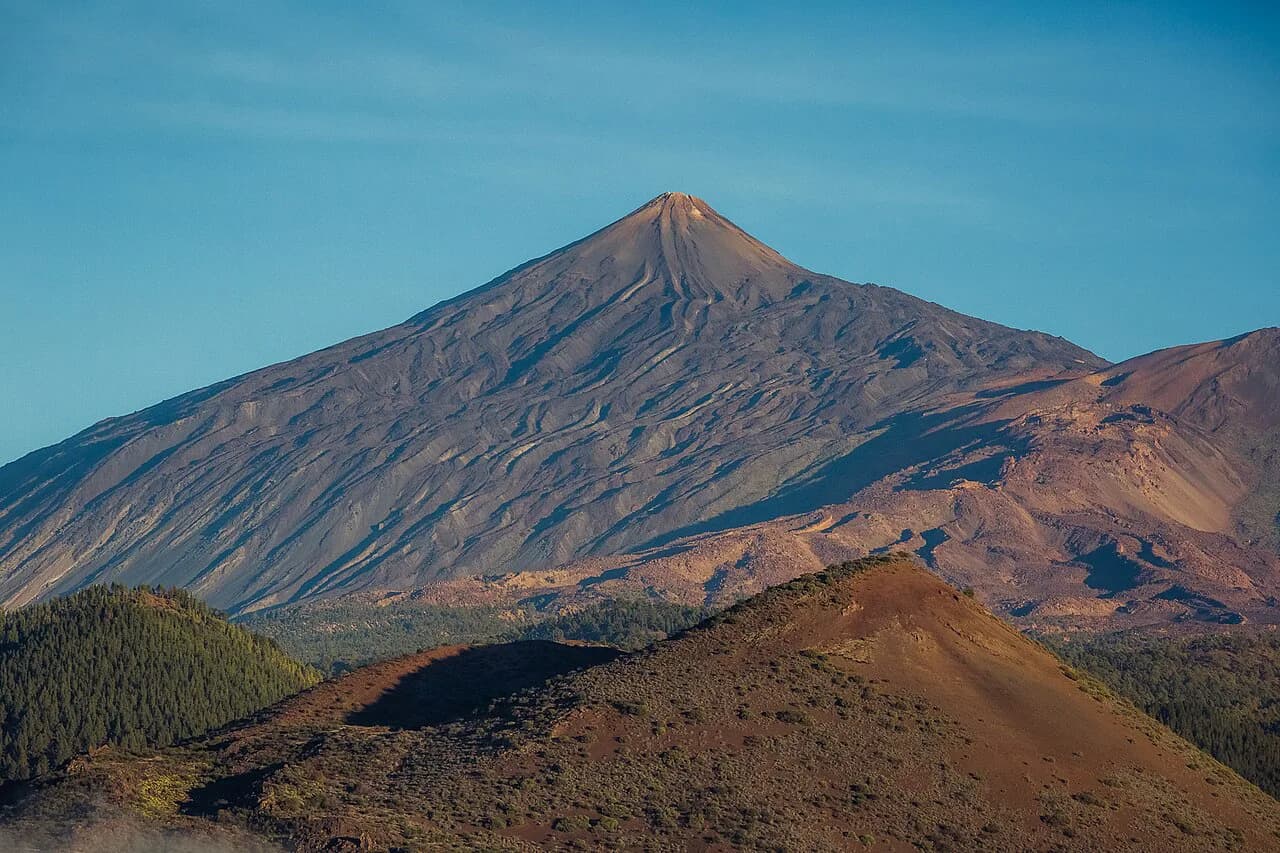
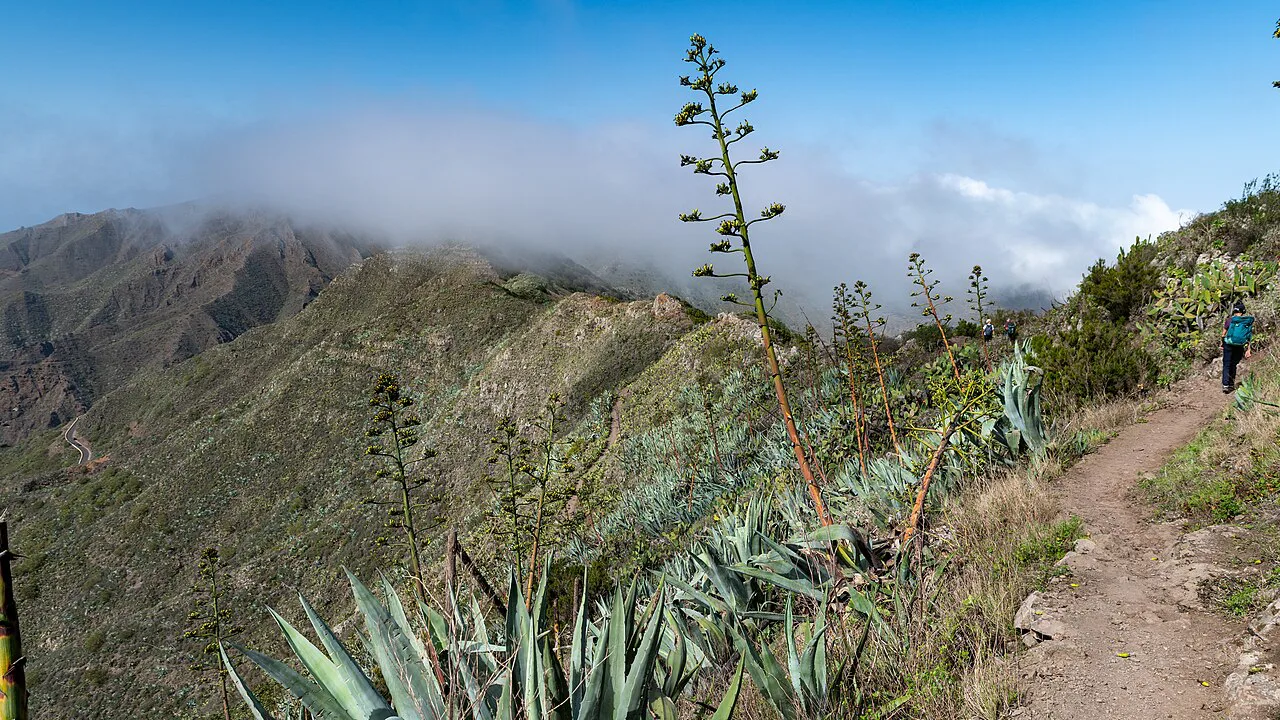
Most weeks touch four distinct zones. Teide National Park sits above 2,000 m (6,560 ft) in the island's center, with lava fields, black ash and pine forest around Spain's highest mountain; the Teno mountains on the west side combine laurel forest, deep barrancos and the ridge above Masca; Anaga in the northeast holds old laurisilva, cave hamlets and rugged coastline; and Corona Forestal wraps pine slopes with cave dwellings and old water channels. If you want one area in depth rather than a sampler, a self-guided route that lingers in the west is the better structure.
The national park rewards planning beyond the group itinerary. Independent walkers heading for the summit need a permit for the final stretch, which is worth sorting before you travel, and the wider park holds long ridge walks such as the climb to Guajara on the crater rim with 700 m (2,300 ft) of ascent over 10.5 km (6.5 miles).
Sample walking days: distance, ascent and time
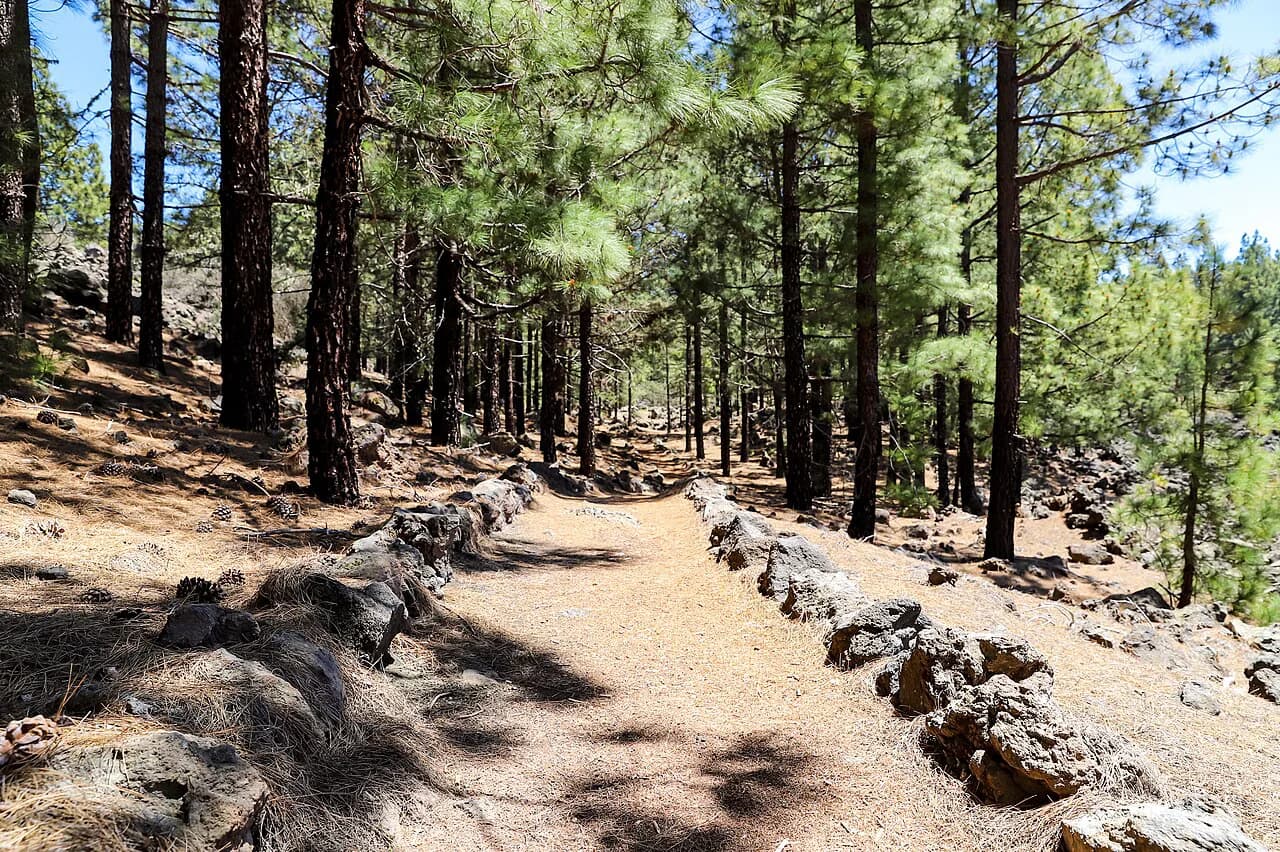
Arenas Negras and Chinyero, the island's two youngest volcanoes, make a classic half-day. From San José de Los Llanos a route of 13 km (8 miles) gains 400 m (1,300 ft) and loses the same through Canary pine and across the 1706 and 1909 lava flows, ending at the Ecomuseo Los Partidos; a longer version climbs out of Santiago del Teide over 14 km (8.5 miles) with 600 m (1,950 ft) of ascent. The terrain is rough lava underfoot, so wear boots with stiff soles rather than trail shoes.
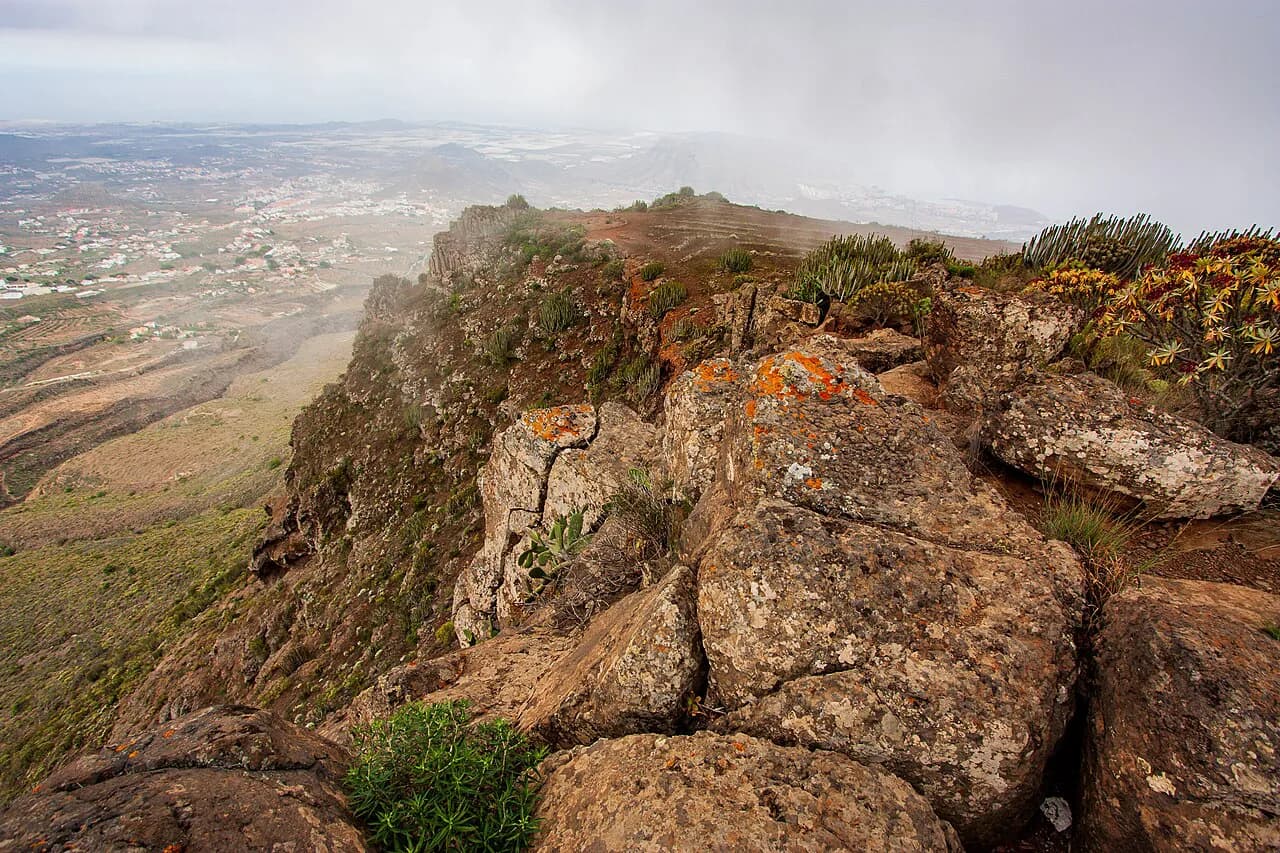
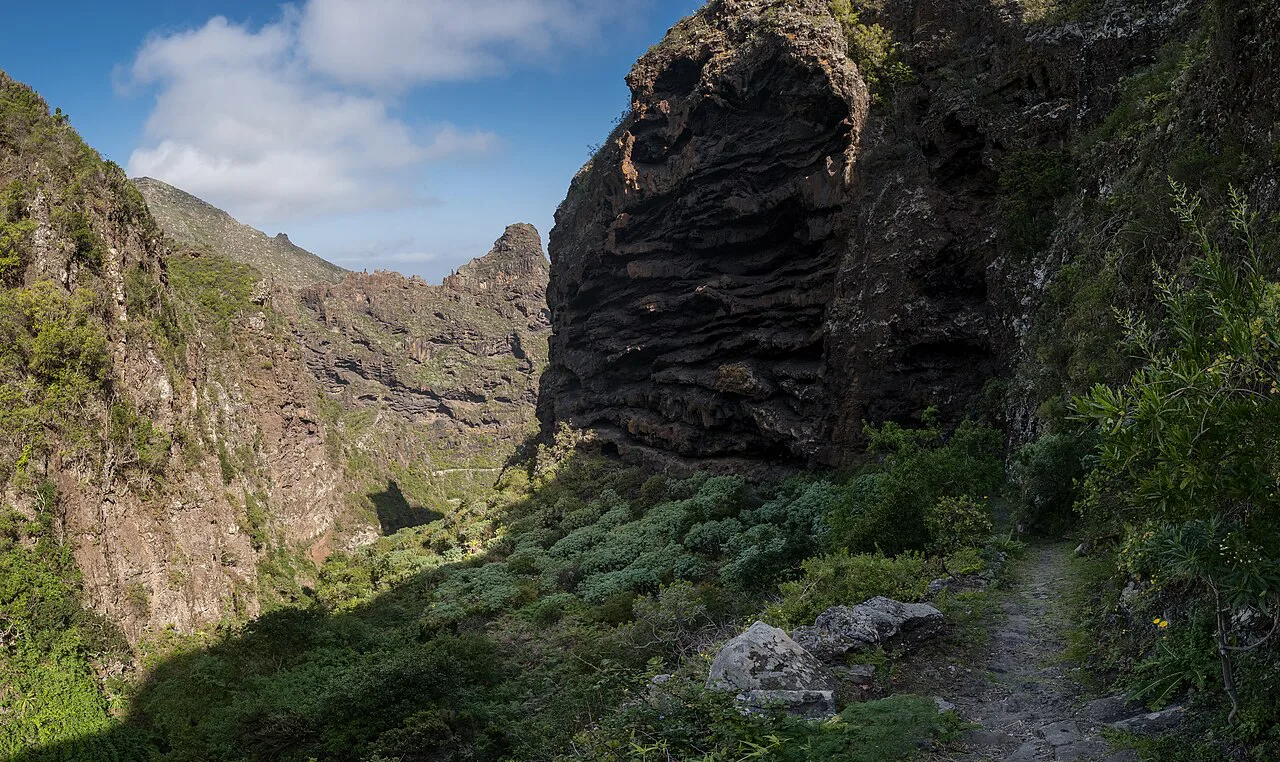
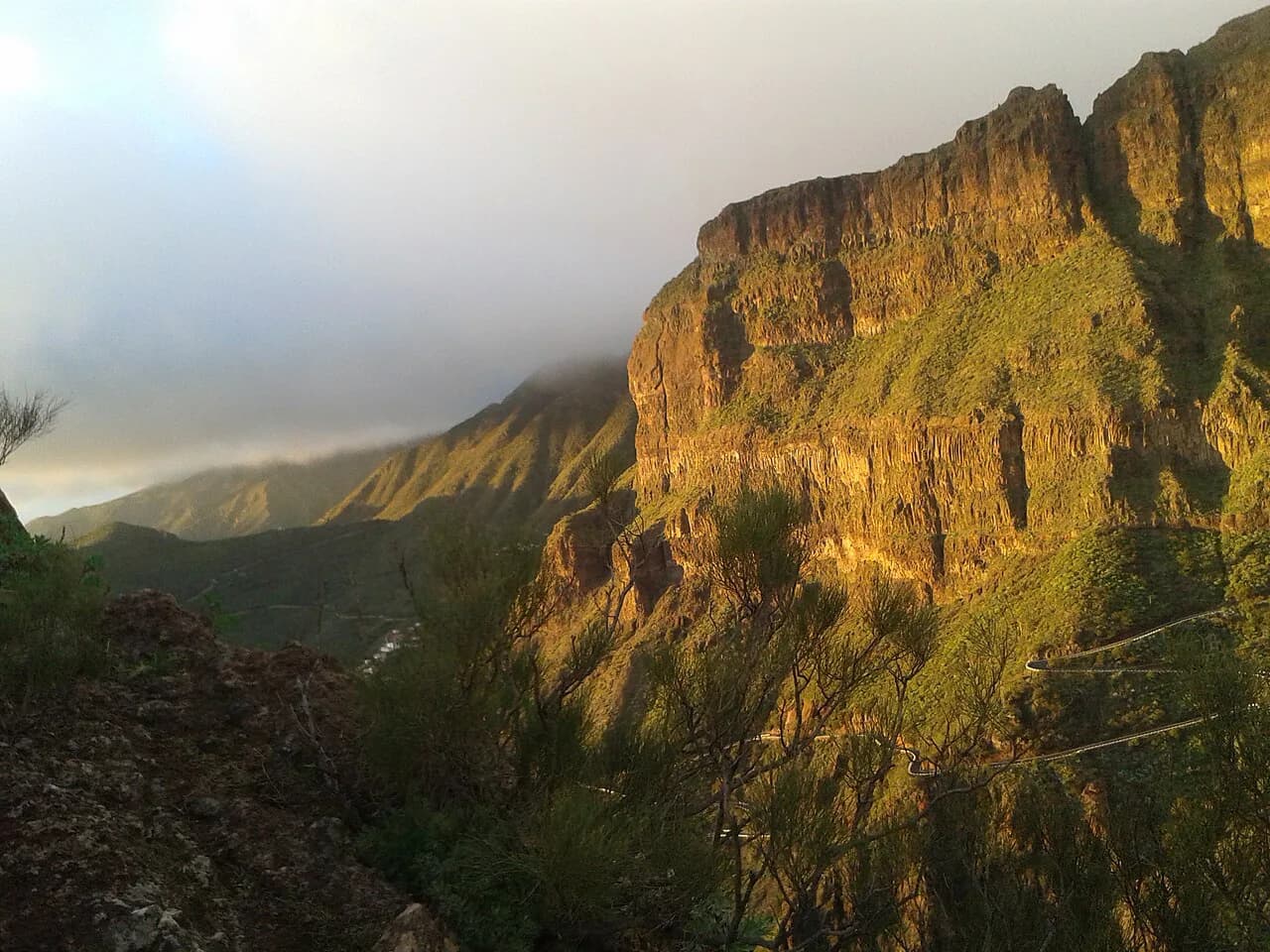
In Teno, the shorter ridge day runs 8 km (5 miles) from Erjos to Cruz de Hilda with 325 m (1,070 ft) of ascent and 550 m (1,800 ft) of descent, crossing the Monte del Agua laurel forest and following the crest above the Masca canyon and the Palmar valley. The harder option from Santiago del Teide covers 11 km (8 miles) with 600 m (2,000 ft) up and 750 m (2,450 ft) down, contouring Cruz de Gala at 1,354 m (4,442 ft) before dropping toward Masca hamlet. The Barranco del Infierno, a separate reservable gorge walk, is the other well-known descent in this part of the island.
Anaga's paths thread laurisilva, cave hamlets and rugged coastline. One guided week's Anaga day descends through native laurisilva to the cave hamlet of Chinamada and the Mirador de Aguaide; a separate operator's Anaga hike follows the historic Las Vueltas Footpath toward Taganana over 9.3 km with 730 m of ascent and about 4.5 hours of walking. Cobbled sections and long descents make poles useful here.
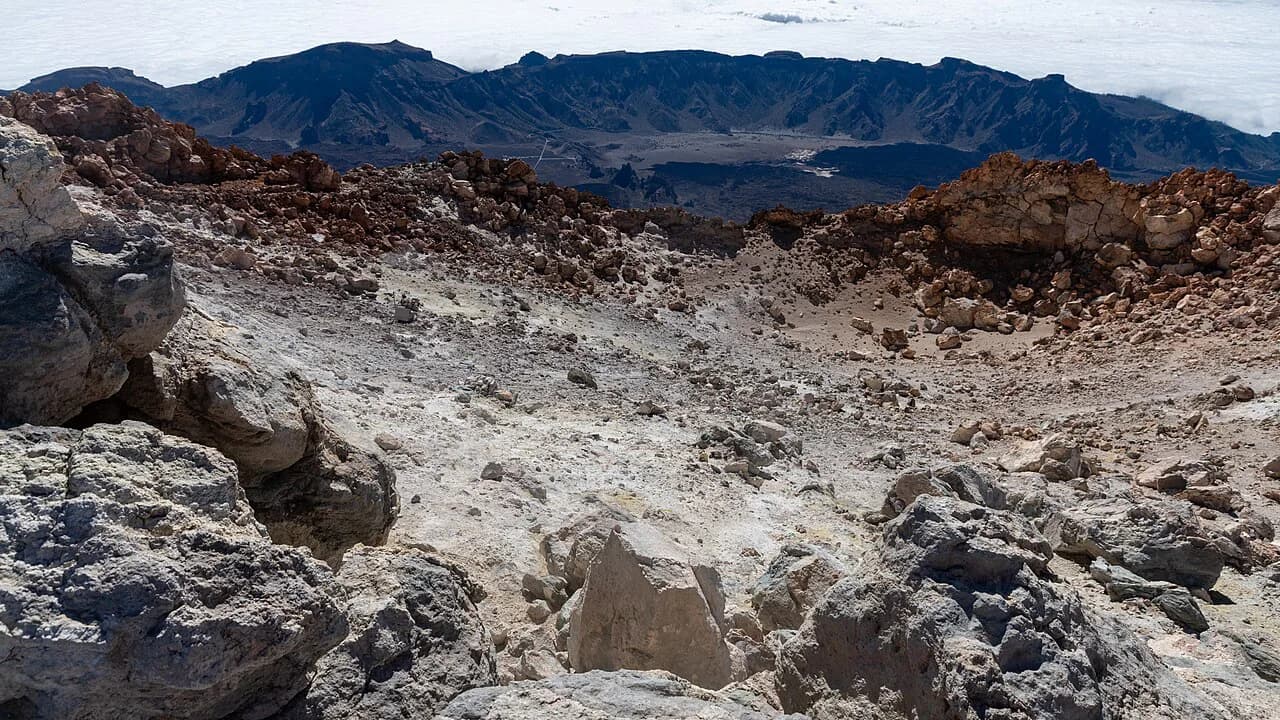
On the west side of the caldera, the Samara crater walk crosses dark tephra and lava flows with views of Teide and Pico Viejo, covering 10 km (6.2 miles) with 386 m (1,260 ft) of ascent in about 4.5 hours to the Boca Tauce lookout. A shorter guided option of 7.5 km (5 miles) gains 475 m (1,560 ft) among basaltic caves and black ash. The loose surface is slow going, so allow the stated time rather than a road-walking pace.
Matching the trip to your fitness
Be honest about consecutive days. A guided week with two grade options lets you drop to the shorter route on a tired day, which matters by day five or six; a self-guided itinerary has fixed stages, so a day of 15 km with nearly 1,000 m of ascent is non-negotiable unless you arrange a taxi. If your usual weekend is two to three hours on gentle paths, start with a single-base moderate week or a fixed-base guided holiday and build up before booking the moving-hotel format.
When to go
Tenerife walks year-round, and winter has a bonus: almond and fig trees blossom in the low western fields in January and February, so low-altitude days deliver color while the high caldera stays cold. Trips run through the year, but the 2,000 m plateau in Teide National Park can hold snow and ice in winter and spring, and the exposed Teno and Anaga ridges catch cloud and wind at any season. Spring and autumn give the most comfortable balance between lowland warmth and high ground.
Gear and mountain hazards
Pack for three climates in one day. A 2-litre water capacity, high-factor sunscreen, a warm layer and a waterproof shell are on the standard packing list for these trips; boots with grip matter on lava rock, which is abrasive and unstable in equal measure. On the high caldera, altitude and strong sun catch people out on what looks like a short walk, and afternoon cloud can swallow the ridge views in Anaga and Teno, so start early on exposed days.
Getting there and getting around
Guided holidays typically include flights and airport transfers, with in-destination transport by minibus to the trailhead and back, which removes the hardest logistics on a volcanically scattered island. Self-guided trips usually leave flights to you and use a mix of local buses for linear stages, with the option of an added group transfer timed to the set flight arrivals arranged by companies such as KE Adventure Travel. If you book land-only, make sure your arrival time matches the transfer before you commit to the hotel night.
Accommodation and meals
Half board is the norm on guided weeks: breakfast and dinner at the hotel, a packed lunch or cafe stop at midday, and one free day when you eat where you like. Self-guided formats tend toward bed and breakfast, leaving you to sample the guachinches and seafood restaurants of Garachico and the mountain villages. A free day in La Laguna or Puerto de la Cruz gives time for the old quarters, markets and gardens without walking boots. If you want an easier coastal day between mountain stages, the Roque del Conde in the south makes a shorter alternative with a big summit view.
Choosing your trip: five questions
Settle five points before you book. First, guided or self-guided; second, fixed base or moving hotels; third, whether you want two grade options each day; fourth, whether meals and transfers are included; fifth, which season suits your tolerance for cold at altitude and heat on the coast. Answer those and the shortlist narrows fast, and the published itinerary notes from HF Holidays and Outbounder will tell you what each day demands.
Plan Your Tenerife Walking Week
Choose a fixed-base guided week if you want the geology explained, transport handled and a shorter option on tired days; choose a moving self-guided route if you prefer your own pace and don't mind packing up every second night. Either way, train for consecutive days with real ascent, pack for cold at 2,000 m and warm sun on the coast, and book early if your dates fall in the winter blossom season.
Frequently Asked Questions
What do guided walking holidays in Tenerife include?
Guided weeks generally bundle hotel accommodation on half board, in-destination transport to and from trailheads, and a leader who walks with the group. Many formats offer two route options each day so stronger and easier groups can split, and some include flights and airport transfers from the UK. Check each operator's inclusions list, because land-only bookings usually leave flights and transfers to you.
Is Tenerife good for self-guided walking?
Yes, if you are happy with fixed stages and organizing some of your own logistics. Self-guided itineraries move your luggage between hotels and supply route notes, and they commonly use local buses to link linear sections such as Los Silos and the return from Masca. The trade-off is that a long day with close to 1,000 m of ascent cannot be shortened the way it can on a guided week.
Where is the best place to stay in Tenerife for hiking?
It depends which landscapes you want most. Santiago del Teide puts the Teno mountains and western lava fields on your doorstep, La Laguna gives easy access to Anaga and the high caldera, Puerto de la Cruz works as a single base for day drives to Teide and Anaga, and Vilaflor sits highest for the southern side of the national park. Garachico suits coastal walks and natural pools.
What is the best month to visit Tenerife for walking?
Spring and autumn give the most comfortable balance, with mild lowland temperatures and less chance of snow or ice on the 2,000 m plateau in Teide National Park. January and February bring almond and fig blossom in the low western fields, but the high caldera is cold and can hold snow. Midsummer heat on the coast makes early starts worthwhile.
How fit do I need to be for a Tenerife walking holiday?
You should be comfortable walking for four to six hours on consecutive days, with real ascent and rough ground underfoot. Moderate guided days run around 15–16 km with about 460 m of ascent, while challenging days reach 19–21 km and roughly 700 m. If your weekends are shorter than three hours on easy paths, build up before booking a moving-hotel self-guided week.
What is the best Canary island for walking?
Tenerife offers the widest range in one trip: high volcanic terrain in Teide National Park, laurel forest and ridges in Teno and Anaga, and pine slopes in Corona Forestal. Neighboring islands such as La Gomera appear as views from the Teno and Anaga ridges, and each Canary island has its own trail network, so choose Tenerife if you want variety within a single week of walking.
Sources
Trail notes for your next trip
Optional updates when we add or revise hiking guides.
You might also like
Continue reading
More guides you'll find useful