Teide Summit Permit: Routes, Booking and What to Carry
The Teide summit permit is a Tenerife ON reservation for the PNT 10 Telesforo Bravo trail. Here is how to plan around it, by cable car or on foot.
On this page
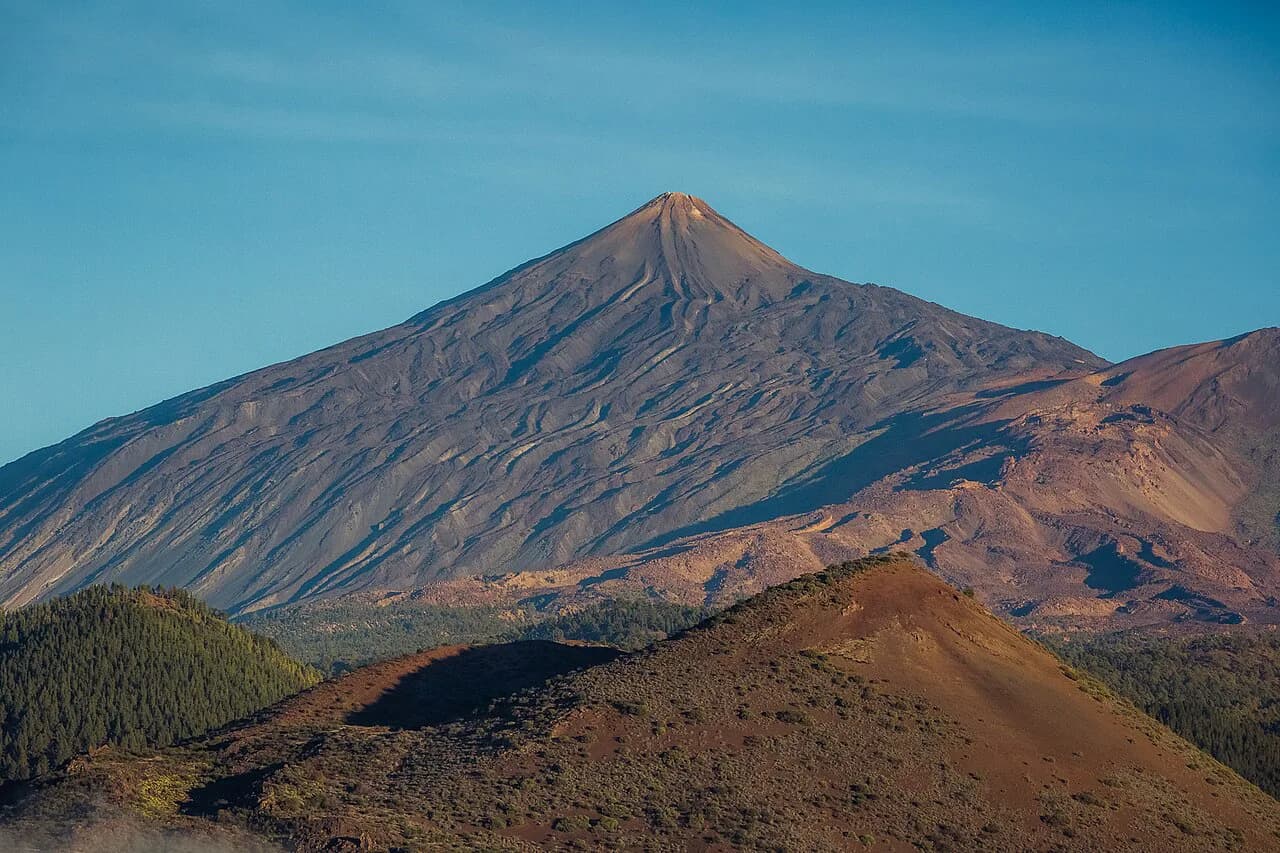
Reaching the 3,715 m (12,188 ft) summit of Mount Teide is the highest walk in Spain, but the last stretch is not a walk you can simply start. The final trail is a reserved, time-slotted route, and how you connect to it — by cable car or on foot from the road — changes the effort, the day length and the kit you carry.
This guide suits hikers who already know they want the crater and now need the logistics sorted: which permit applies to which path, how the cable car session interacts with it, and what happens to your day when ice or snow shuts the top trails. All of it sits inside Teide National Park, and every alternative finish stays on the same mountain.
What the Teide summit permit covers
The permit is the authorisation for the PNT 10 Telesforo Bravo trail, the short, brutally steep path from La Rambleta to the crater rim. Access to it is restricted, and it can only be walked with a prior reservation arranged through Tenerife ON, the Tenerife Island Council's booking system. The reservation is tied to a specific day and time slot and is only valid for that slot.
That permit is separate from the approach. If you walk up to La Rambleta rather than riding the lift, the approach trails — PNT 07 Montaña Blanca–La Rambleta among them — are regulated in their own right and need their own authorisation through the same system. Treat the two as separate bookings and confirm both before you travel.
Whoever you book with, the summit trail itself falls under the Island Council, not the cable car company. That division matters when plans change: your cable car seat and your crater slot are granted by different bodies with different rules.
The two routes to the crater rim
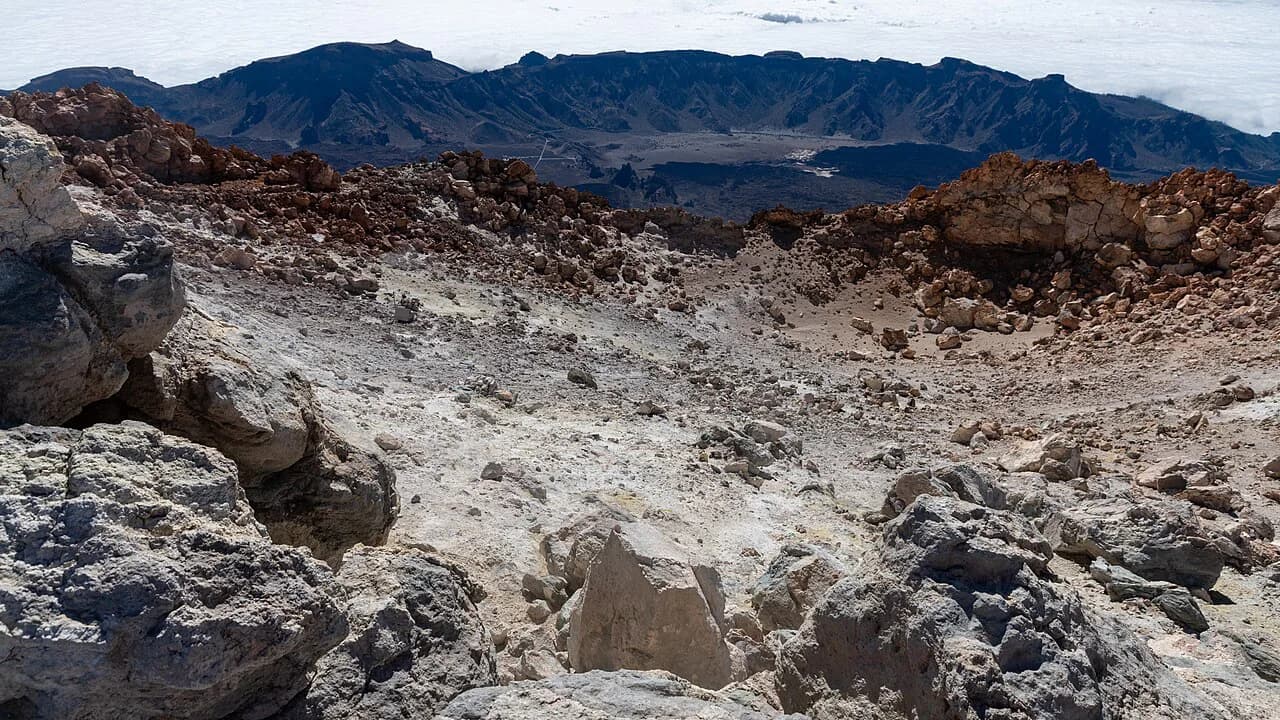
The lift-assisted route starts at the cable car base station on the TF-21 at 2,356 m (7,730 ft) and rises to the upper station at 3,555 m (11,663 ft) in under eight minutes. From La Rambleta above 3,500 m (11,480 ft), the PNT 10 trail climbs 0.69 km (0.43 mi) to the summit in roughly 45 minutes. Short does not mean easy: gradients reach 60 percent and the altitude is the real opponent.
The on-foot route is the PNT 07 Montaña Blanca–La Rambleta, a linear 8.2 km (5.1 mi) climb from beside the TF-21 that takes around 5 hours 30 minutes and is rated highly challenging for its elevation gain and altitude. It follows the old access path to the peak and passes the surroundings of Refugio de Altavista before joining La Rambleta. If you intend to continue to the crater, budget the extra 45 minutes and book the PNT 10 slot as well.
Choose by how your body handles altitude rather than by fitness alone. The lift gets you above 3,500 m (11,480 ft) within minutes and leaves you with a one-hour stay at the upper station, extended to two hours if you hold a crater permit and the trail is open. The walk gives you hours to acclimatise gradually but commits you to a long descent afterwards.
Booking the permit and the required equipment
Reservations run through Tenerife ON, where you pick the trail, date and time slot. Approval is not instantaneous in planning terms: you need the slot you actually want, and on busy dates the crater slots and the cable car sessions you can pair with them may not line up neatly. Book the two together, then build the rest of the day around whichever of the pair is fixed.
The Island Council's equipment rules are enforced at trail level under Resolution R0000136361 of October 2026. Everyone on the PNT 07, PNT 09, PNT 10, PNT 11 and PNT 12 trails must carry long trousers (worn or in the rucksack), a fleece or equivalent warm layer, and hiking boots.
PNT 07 and PNT 09 add a further list: a mobile phone with enough battery, an emergency thermal blanket, water or hydrating fluids, a hat and gloves, and a torch or head torch with spare batteries. Missing any item can mean being turned away, so pack against the list rather than against the weather forecast.
Cable car access and what the ticket does not include
Cable car tickets are sold online with an assigned session, and current prices start from €24.00 for an ascent-only ticket and €43.00 for a return, with guided and audio versions costing more. Arrive at the boarding area 20 minutes before your slot; late arrivals lose the right to board. The base station car park holds 220 spaces, and Volcano Teide asks drivers to arrive after 1.00pm to ease pressure on the small park car parks.
No cable car ticket includes the crater permit, and none includes permission to walk the trails down from the upper station. Buy the ascent-only ticket intending to descend on foot and you will be refused boarding unless you hold the required descent permit. Closed mountain footwear is compulsory; heels, platforms, beach shoes and open shoes are barred from the cabin.
The lift is not for everyone. People with heart problems, pregnant women and children under three are not permitted to ascend because of the altitude risk, and visitors with physical or motor impairments are also excluded because safe evacuation from the upper station cannot be guaranteed. If the lift fails, anyone already at the top descends on foot by steep mountain paths.
When the summit trails close
Ice, snow and other natural hazards can prompt the Island Council to close the trails leading from the upper station. When that happens, access is limited to the area around La Rambleta viewpoint next to the station and walking the trails is prohibited, so a booked crater slot cannot be used.
Your cable car ticket stays valid and is not refunded if the lift is running while the summit trails are shut. If the lift itself cannot operate, Volcano Teide emails or texts booked passengers at about 8.30am, and a delay of 90 minutes or more against your booked time can be claimed back in full if the ticket is unused; free changes and cancellations are possible until 6.00pm the day before.
When to go
Snow and ice on the upper mountain are the reason most summit plans fail, and they can arrive outside the calendar you would guess for a Canary Island. Build a spare day into the trip so a closed-trail morning does not end your attempt, and keep your crater slot flexible while booking changes are still free.
On foot, start early enough to climb 8.2 km (5.1 mi) at altitude and still reach La Rambleta inside your time slot. Afternoon conditions on the upper mountain are the usual constraint, and the required head torch on PNT 07 exists for a reason: descents regularly run into fading light.
Distance, ascent and time at a glance
Lift route: base station at 2,356 m (7,730 ft), upper station at 3,555 m (11,663 ft), then 0.69 km (0.43 mi) and about 45 minutes on PNT 10 with gradients up to 60 percent. Walk-up route: 8.2 km (5.1 mi) and roughly 5 hours 30 minutes on PNT 07 from the TF-21 to La Rambleta, rated highly challenging. Summiting from La Rambleta takes the same 45 minutes whichever way you arrived.
Both figures exclude the time you spend at the crater, the time you spend queuing for a cabin, and the descent. On the lift route your upper-station stay is capped at one hour, or two with a crater permit, so the summit visit is short by design.
If the permit is not available
When the crater slots are gone, La Rambleta itself still delivers the high-mountain experience: the viewpoint sits above 3,500 m (11,480 ft) beside the upper station, and the Pico Viejo and Fortaleza viewpoints run off the same hub on separate trails. The guided walk to the Pico Viejo viewpoint is a lower-commitment way to spend a booked session, and it is not suitable for children under five or people with mobility problems.
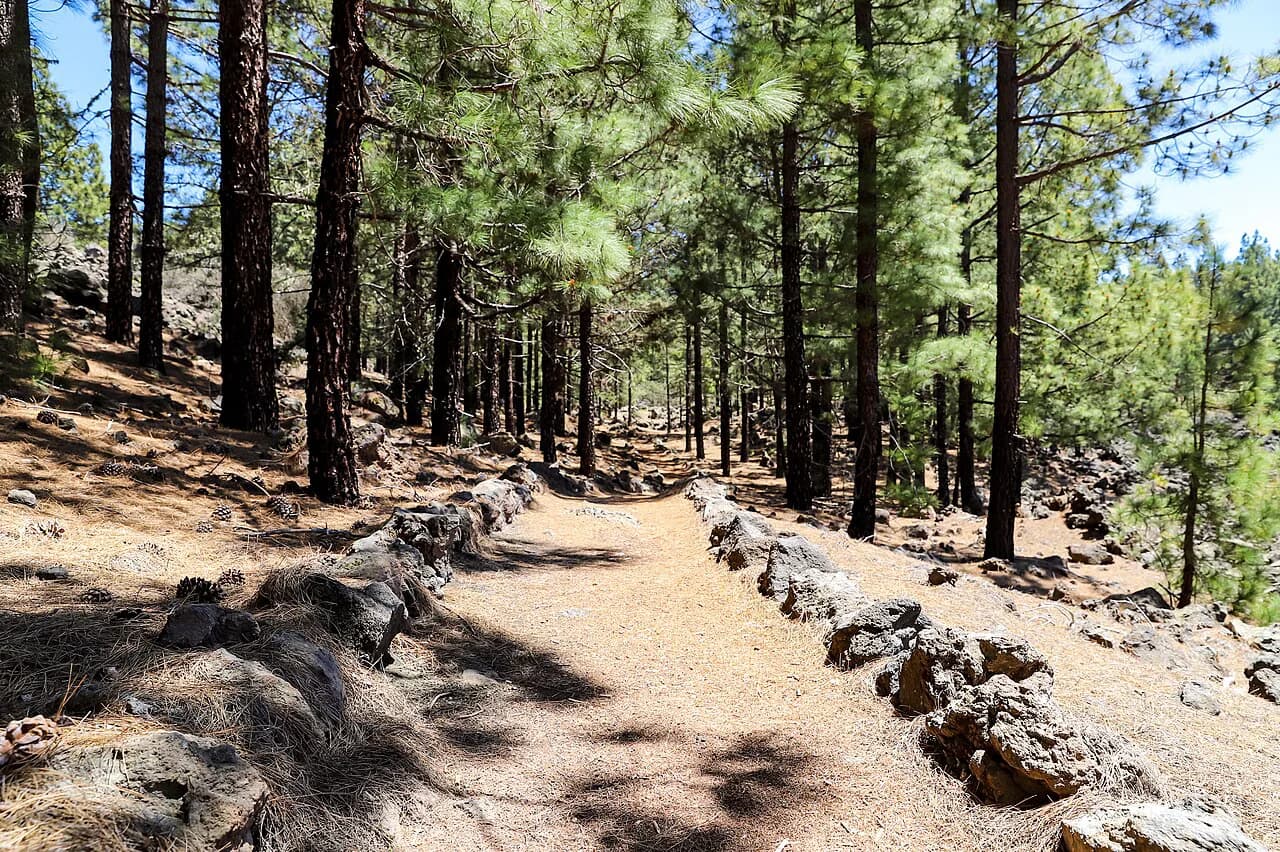
Lower down, the island offers warm-up days that keep you moving without the altitude: the Barranco del Infierno walk from Adeje is a gorge route in a protected reserve, and the pine forests of the corona forestal give shade and shorter climbs. Give the whole island's trails a look in the wider hiking in Tenerife guide before you lock the summit day in. If you are weighing other islands for a second trip, our guide to hiking in Gran Canaria covers similar high-mountain decisions.
Practical base towns and trailhead access
The TF-21 crosses the national park and serves both the Montaña Blanca trailhead and the cable car base station, so a car or an organized transfer gives the most control over an early start. Parking is deliberately scarce in the park; the 220 spaces at the base station fill, and Volcano Teide's advice to arrive after 1.00pm is worth heeding in high season.
For a bed at altitude, Refugio de Altavista sits beside the old path on PNT 07, but it is a landmark on the route rather than a service to plan around; arrange accommodation in the towns below the park and treat the refuge as scenery. If you would rather hand the planning to someone else, compare guided formats and walking holidays that include the transfer and permit steps.
Plan the Summit Day
Decide first whether you are riding or walking to La Rambleta, because that choice sets your day length, your start time and your kit list. Book the Tenerife ON slot you want before you buy the cable car session, and remember the crater permit and the cable car ticket are issued by different bodies.
Pack against the Resolution R0000136361 list, take the boots rule seriously, and keep one flexible day in reserve for ice or snow. Do that and the summit becomes a logistics exercise with a very good view at the end of it.
Frequently Asked Questions
Do you need a permit to reach the Teide summit?
Yes. The final path, PNT 10 Telesforo Bravo from La Rambleta to the crater rim, is restricted and can only be walked with a prior reservation for a specific day and time slot, arranged through Tenerife ON. If you walk up to La Rambleta instead of taking the cable car, the regulated approach trails such as PNT 07 Montaña Blanca–La Rambleta need their own authorisation through the same system, so plan for two separate bookings.
How much does the Teide summit permit cost?
The public sources for the summit trails describe the reservation process through Tenerife ON but give no fee, so read the permit cost off the booking page at the moment you reserve. The cable car is separate and priced by its operator; the current fare list sits on the official Volcano Teide ticket page, where each ticket type and its starting figure are listed.
Can you climb Teide without the cable car?
Yes. The PNT 07 Montaña Blanca–La Rambleta route is a linear 8.2 km (5.1 mi) climb from beside the TF-21 road that takes roughly 5 hours 30 minutes and is rated highly challenging because of the elevation gain and altitude. It passes the surroundings of Refugio de Altavista before reaching La Rambleta, where you still need a summit permit for the final 0.69 km (0.43 mi) to the crater.
How long does the Telesforo Bravo trail take?
The PNT 10 trail is 0.69 km (0.43 mi) from La Rambleta to the summit and takes about 45 minutes, but it is classed as highly challenging: gradients reach 60 percent and you are starting above 3,500 m (11,480 ft). Allow for the altitude and for stopping, and remember your upper-station stay is limited to one hour, or two with a crater permit.
What happens if the Teide summit trail is closed?
When ice, snow or other natural hazards lead the Island Council to close the trails from the upper station, access is limited to the area around La Rambleta viewpoint and walking the trails is prohibited. Your crater permit cannot be used that day, and if the cable car is still running, the ticket remains valid with no refund. Check trail status through Tenerife ON before you set out.
What equipment is required for the Teide summit trails?
Under Resolution R0000136361 of October 2026, everyone on the PNT 07, PNT 09, PNT 10, PNT 11 and PNT 12 trails must carry long trousers, a fleece or equivalent warm layer, and hiking boots. PNT 07 and PNT 09 add a charged mobile phone, an emergency thermal blanket, water or hydrating fluids, a hat and gloves, and a torch or head torch with spare batteries. Missing items can mean being refused access.
Is the cable car ticket valid if the summit trails are closed?
Yes. If the lift is operating while the summit trails are shut, the ticket stays valid and is not refundable. If the lift itself cannot run, passengers with bookings are contacted at about 8.30am, and free changes or cancellations are available until 6.00pm the day before the reserved date.
Who should not take the cable car to Teide's upper station?
People with heart problems, pregnant women and children under three are not allowed to ascend because of the altitude risk. Visitors with physical or motor impairments are also excluded, since safe evacuation from the upper station cannot be guaranteed. Closed mountain shoes with non-slip soles are compulsory; heels, platforms and open shoes are refused boarding.
Sources
Trail notes for your next trip
Optional updates when we add or revise hiking guides.
You might also like
Continue reading
More guides you'll find useful