Tour du Mont Blanc Huts: Refuges, Stages and How to Book
Plan the Tour du Mont Blanc huts: which nights are in mountain refuges, daily distance and ascent, dormitory expectations and when to reserve.
On this page
The Tour du Mont Blanc strings together a full circuit of the Mont Blanc range through France, Italy and Switzerland, and its huts are what make the loop walkable as a continuous journey rather than a series of day trips. A refuge-based version suits fit, independent hikers who can handle long days with big descents, sleep in dormitories and carry only what they need for the next stage. If you are still weighing the circuit against other options in the range, start with the broader mont blanc hiking planning before you commit to a hut sequence.
This guide follows one published 12-night refuge itinerary, which logs 170 km (106 mi) over 12 days of walking, with 3 hotel nights, 2 nights in auberges and 6 in mountain refuges. The figures below belong to that specific routing, so treat them as a template: shift a night and every distance changes. The full Tour du Mont Blanc stage overview covers the alternative ways to split the same ground.
What the Tour du Mont Blanc circuit involves
The route circles the massif clockwise from Chamonix, crossing the Col de la Seigne into Italy and the Grand Col Ferret into Switzerland before returning over the Col de Balme to France. That means two border crossings on foot, three languages of trail signage and a rhythm of climb, pass, descend that repeats almost daily. The refuge version is graded difficult for exactly this reason: it is not the altitude that breaks people but the cumulative descent.
Huts sit roughly a day's walk apart, so each night's bed dictates the next day's shape. A refuge itinerary booker at Mont Blanc Treks describes the sequence as demanding enough that its own self-guided refuge departure requires reserving at least 12 months ahead. Plan the calendar first, then the training.
If you would rather have someone else handle the bookings and the daily briefings, guided formats exist for the same circuit, and the mont blanc hiking tours comparison lays out what each style includes. Self-guided hikers get support materials and a briefing but walk alone.
Where the huts sit on the clockwise circuit
On this 12-night routing, six nights are in mountain refuges, two in auberges and three in hotels, with the first and last nights in Chamonix in lodge or hotel rooms. The refuges fall at Nant Borrant, Nova, Randonneur, Bertone, Boerne and on the final night above the Chamonix valley, while the auberge nights come at La Fouly and Trient. Knowing which nights are dormitory and which are private rooms changes how you pack and how well you sleep.
Ten of the nights on the tour come with half board, meaning breakfast plus a three-course evening meal, which removes the need to carry much food beyond lunch and snacks. Bag transfer is available as a supplement on the nights that are not in refuges, so your main luggage can move between valley accommodation while you carry a day pack over the passes. The tour du mont blanc self guided page explains how that support structure works in practice.
Distance, ascent and time: the day-by-day figures
Across the itinerary the published stages run from 10 km (6 mi) up to 23 km (14 mi), with height gain between 420 m (1,380 ft) and 1,300 m (4,270 ft). The longest day by distance is the crossing from Refuge Nova to Refuge Randonneur; the biggest single descent is on day one. Walking times are not published for each stage, so estimate from distance and ascent and add time for the pass crossings and photo stops.
The tour du mont blanc itinerary comparison is useful if you want to see how the same circuit is broken into shorter or longer stages. Fewer, longer days mean less time in huts but more exposure to afternoon weather on the high passes.
Chamonix to Les Houches via Planpraz and Brévent
The circuit opens with a cable car from Chamonix to Planpraz at 2,000 m (6,560 ft), then a high traverse to the Col du Brévent and the summit of Brévent at 2,525 m (8,280 ft) before a ridge descent to Refuge Bel Lachat. From there the route drops through the Parc Merlet to Les Houches. The day totals 13 km (8 mi) with 700 m (2,300 ft) of ascent and a 1,500 m (4,900 ft) descent.
That descent, not the climb, is the cruellest part of the opening day: 1,500 m of sustained downhill on rocky ground with unacclimatised legs. Trekking poles earn their place here, and starting early leaves margin for the slow, jarring sections near Les Houches.
Les Houches to Refuge Nant Borrant: Col du Tricot or Bionnassay
From Les Houches there are two lines to the Contamines valley, and a cable car to Bellevue at 1,802 m (5,910 ft) cuts some of the initial height gain. Via Bionnassay the day is 20 km (12 mi) with 845 m (2,770 ft) of ascent and 1,200 m (3,940 ft) of descent; via the Col du Tricot it is 19 km (12 mi) with 950 m (3,120 ft) of ascent and 1,300 m (4,270 ft) of descent. The Tricot line is shorter but climbs and descends more, and it passes the Chalets des Miage, a worthwhile refreshment stop. The night is in a refuge dormitory with dinner and breakfast.
Both options cross high pasture rather than rough rock, which makes this a gentler day than the opener despite the numbers. If your legs are still complaining from the Brévent descent, the Bionnassay line with the Bellevue lift is the kinder choice.
Over the Col du Bonhomme to Refuge Nova at Chapieux
The route climbs over the Col du Bonhomme and the Col de la Croix du Bonhomme before a steep descent into the wild Chapieux valley and the Refuge Nova. The stage is 15 km (9 mi) with 1,300 m (4,270 ft) of ascent and 900 m (2,950 ft) of descent, and much of the climbing is broken by gentler stretches. An early start matters more than a fast pace.
Snow can linger on these passes well into the season, and afternoon storms build over the ridges; crossing the cols before midday is the practical response. The refuge at Chapieux is a dormitory with evening meal and breakfast, so a change of clothes and earplugs are the only luxuries worth carrying.
Ville des Glaciers and the Col de la Seigne to Refuge Randonneur
A short bus ride from Refuge Nova to Ville des Glaciers saves road walking before the climb to the Col de la Seigne on the French–Italian border. From the col the route descends through the Val Veny and climbs again via the Vielle d'Arp to Refuge Randonneur. This is the longest day at 23 km (14 mi), with 1,300 m (4,270 ft) of ascent and 880 m (2,890 ft) of descent.
The Seigne col opens views across Italy and Switzerland at once, and it is worth pausing there rather than pressing on immediately. With 23 km to cover, though, the break has to be short.
Courmayeur and the climb to Refuge Bertone
The day begins with a descent into Courmayeur, where an Italian coffee is the obvious reward, before a steep climb to Refuge Bertone above the town. The stage is short at 10 km (6 mi), but it packs 800 m (2,620 ft) of ascent and 750 m (2,460 ft) of descent. The payoff is a terrace view of Mont Blanc and the Grandes Jorasses.
Because the distance is low, this is the stage to linger in Courmayeur for supplies or a proper lunch. The climb out is steady rather than technical, so slow and continuous beats stopping every ten minutes.
Refuge Bertone to Val Ferret, with a stop at Refuge Bonatti
A high balcony traverse above the Val Ferret keeps Mont Blanc and the Grandes Jorasses in view for most of the day, with a stop at Refuge Bonatti for refreshments before the descent to Arnuva. The figures are 16 km (10 mi), 550 m (1,800 ft) of ascent and 360 m (1,180 ft) of descent, making this one of the more relaxed stages.
The traverse is exposed to weather, so a waterproof and a warm layer belong within reach rather than buried in the pack. The night is again a refuge dormitory with half board.
Grand Col Ferret into Switzerland and down to La Fouly
A steep climb leads to the Grand Col Ferret on the Italian–Swiss border, with a long backward view down the Val Ferret towards the Val Veny and the Col de la Seigne. The descent into Switzerland is long but at an easy angle on a good path, past La Peule and on to Ferret and La Fouly. The day is 13 km (8 mi) with 500 m (1,640 ft) of ascent and 950 m (3,120 ft) of descent, ending in an auberge dormitory. From here the rest of the circuit stays on Swiss ground, so the Switzerland hiking guide is worth a look if you want to extend the trip.
La Fouly to Champex-Lac through the Swiss Val Ferret
This is the easiest stage on the itinerary: 15 km (9 mi) through the Swiss Val Ferret past Praz de Fort and Issert, with only 420 m (1,380 ft) of ascent and 570 m (1,870 ft) of descent, most of the climbing saved for the finish into Champex-Lac. A later breakfast is not a problem. The night is in a pension dormitory with half board.
Use the easy day to sort kit, dry boots and check the forecast for the Champex-Lac to Trient stage, which has the biggest decision on the circuit. The cafe at Issert is not open on Tuesdays, so plan lunch around that if your schedule lands there.
Champex-Lac to Trient: Bovine route or Fenêtre d'Arpette
The standard line climbs steadily to the Alpage Bovine at 1,987 m (6,520 ft) for views over Martigny and the Valais, then descends via the Col du Forclaz at 1,526 m (5,010 ft) to Trient: 18 km (11 mi), 750 m (2,460 ft) of ascent and 950 m (3,120 ft) of descent. The Bovine farm serves local food, and you can eat your own picnic on the terrace provided you buy a drink. The night is an auberge dormitory with half board.
The alternative over the Fenêtre d'Arpette is shorter at 15 km (9 mi) but far harder: 1,200 m (3,940 ft) of ascent and 1,350 m (4,430 ft) of descent, with views of the Trient Glacier from the col. It is a rougher, steeper crossing, so save it for settled weather, dry ground and legs that still have something left.
Trient to Refuge Boerne via the Col de Balme
From Trient you can head straight for the Col du Balme at 2,191 m (7,190 ft), or take the longer line through the alpine woodland above Tseppes and Catogne: 15 km (9 mi), 1,000 m (3,280 ft) of ascent and 1,000 m (3,280 ft) of descent, against 13 km (8 mi) and 900 m (2,950 ft) each way on the direct route. The Catogne line gives a high traverse with views over the Emosson dam and the Aiguilles Rouges. The Col du Balme marks the return to France, and the night is a refuge dormitory with dinner and breakfast.
The final day: Lac Blanc, Flégère and the cable car to Chamonix
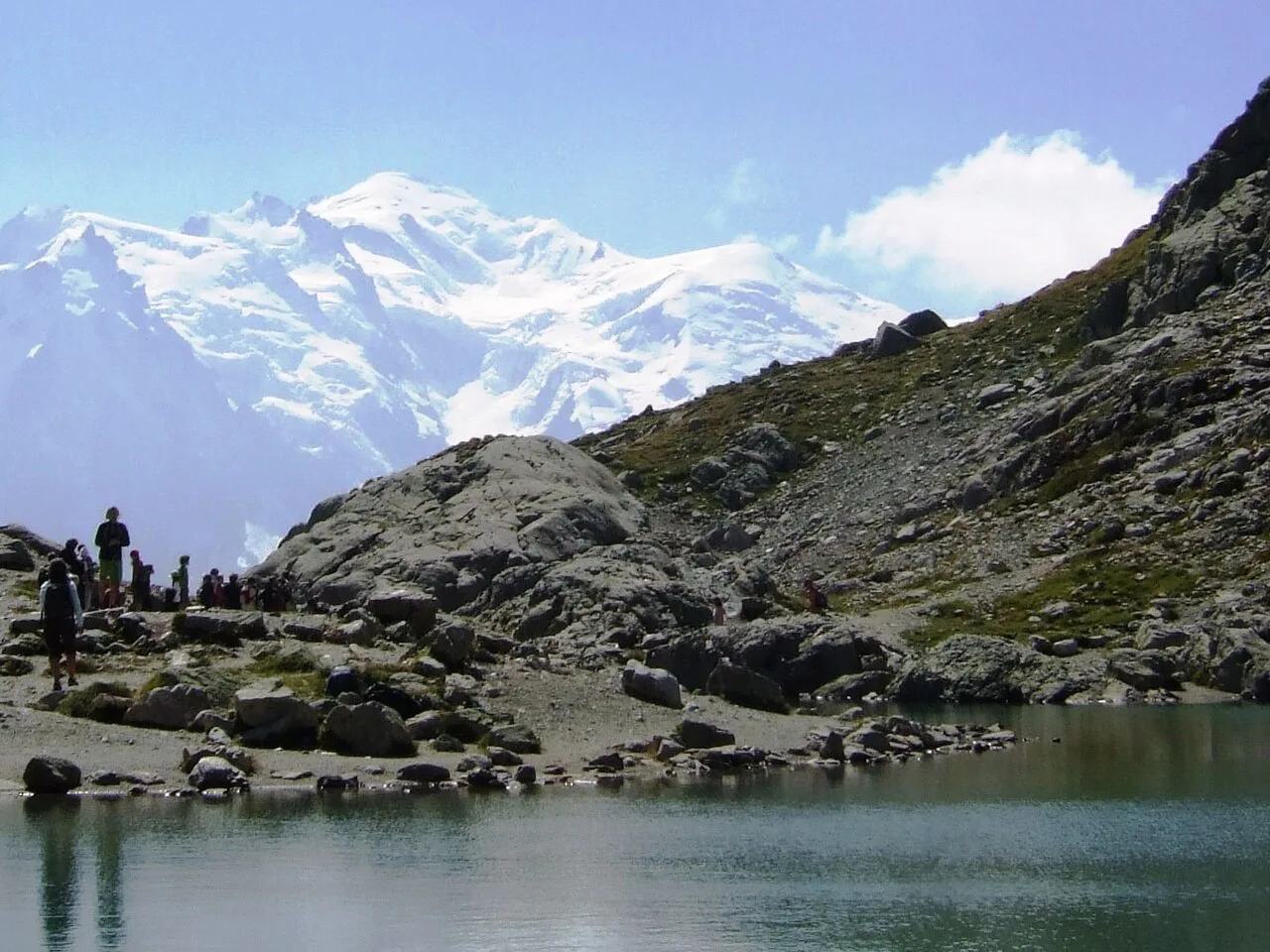
The last stage climbs through the Aiguilles Rouges nature reserve past Lac des Chéserys and Lac Blanc at 2,352 m (7,720 ft), then descends to Flégère and follows the balcony path above the Chamonix valley back to Planpraz. The figures are 14 km (9 mi), 1,000 m (3,280 ft) of ascent and 500 m (1,640 ft) of descent before the cable car returns you to Chamonix. On this itinerary, lift closures on the final descent are handled by walking down via Flégère instead.
Lac Blanc draws crowds of day walkers in August, so an early start keeps the lakeshore and the refuge terrace civilised. Carry cash for a drink at the refuge and keep a warm layer handy for the shaded balcony path.
Huts on the route: half board, dormitories and auberges
Mountain refuges on this circuit are dormitory accommodation with an evening meal and breakfast included, while auberges run on the same half-board basis with slightly more space. Hotels appear at Chamonix and Les Houches, where private rooms and single supplements are possible. Expect shared rooms, early dinners and lights-out hours set by the hut guardian rather than by you.
Walkers weighing up huts against hotels often point out that the hotel version takes just as long but changes the character of the trip, with more comfort and more valley time. The counter-argument is that sleeping high on the route is what keeps the stages manageable and the mornings short.
Self-guided tours that mix hut and hotel nights are a middle path: luggage moves on the valley nights, and you carry a day pack over the passes. The self guided options page sets out which nights typically fall into each category.
When to go and how far ahead to reserve
Refuge departures are published for 2027 and 2028, and Mont Blanc Treks notes that this hut-based itinerary needs booking at least 12 months in advance. Summer weekends and August are the busiest, so aim for late June or early September if your calendar allows. Confirm dates and availability directly with Mont Blanc Treks or the refuge before you build travel around them.
A shorter hut itinerary is a reasonable compromise if a year of lead time is too long: three nights in rustic huts on a classic routing gives the flavor without the full booking burden. The alternatives comparison explains how those shorter versions differ in effort and comfort.
Gear and exposure on the passes
The high points of the circuit, from the Col du Bonhomme to the Grand Col Ferret and the Col du Balme, are exposed to wind, rain and sudden electrical storms, and snow can sit on the passes early and late in the season. Carry a waterproof shell, insulation, a headlamp and trekking poles, and plan to be off the highest ground by early afternoon. On the Fenêtre d'Arpette variant, the steeper ground and the lingering snowfields make an ice axe and the ability to use it worth considering in a cold spring.
The sustained 1,500 m descent into Les Houches on day one is the other genuine hazard, and knees suffer more than lungs. Poles and a conservative pace on the rocky sections are the sensible response.
Plan Your Visit
Build the trip around the hut sequence first and the calendar second: the circuit only works when the refuges line up with your fitness and the passes line up with settled weather. On this routing, the six refuge nights, two auberge nights and three hotel nights give a clear picture of how much comfort you are trading for altitude.
Choose the Tricot line if you want the shorter, higher day, the Bionnassay line if you want the lift assist, Bovine for a sociable valley traverse and the Fenêtre d'Arpette only when conditions are firm. Book early, pack light and start early.
Frequently Asked Questions
Which refuges do you stay in on the Tour du Mont Blanc?
On the widely used clockwise refuge itinerary, the mountain hut nights fall at Refuge Nant Borrant, Refuge Nova at Chapieux, Refuge Randonneur, Refuge Bertone, a night above the Chamonix valley and Refuge Boerne, plus auberge nights at La Fouly and Trient. Different operators and independent bookings shuffle these names, so match your chosen route to the huts on that specific stage list.
How many nights of the Tour du Mont Blanc are in mountain huts?
A typical published refuge-based itinerary spends six nights in mountain refuges, two in auberges and three in hotels or lodges over twelve nights. The remaining nights are in Chamonix at the start and end. Booking a hotel-based version removes the hut nights entirely but keeps the same daily walking.
How far ahead should you book Tour du Mont Blanc huts?
The operator running the twelve-day refuge itinerary asks for reservations at least twelve months ahead because beds in the high huts are limited. If your dates are fixed to a holiday week in July or August, start planning even earlier than that.
How hard is the day from Champex-Lac to Trient over the Fenêtre d'Arpette?
The Fenêtre d'Arpette variant is 15 km with 1,200 m of ascent and 1,350 m of descent, against 18 km with 750 m of ascent and 950 m of descent on the Bovine route. The Arpette line is shorter but steeper and rougher, with views of the Trient Glacier from the col, so it suits settled weather and hikers confident on loose ground.
Do Tour du Mont Blanc huts include dinner and breakfast?
Yes on the refuge itinerary described here: ten nights come with half board, meaning breakfast and a three-course evening meal. In the huts this is served at a set time and shared at long tables. Carry lunch and snacks for the day, since the huts feed you at night and in the morning rather than at midday.
Can you do the Tour du Mont Blanc staying only in hotels?
Yes, hotel-based versions exist that follow the same circuit with valley accommodation each night instead of dormitories. They usually involve more time in villages and, on some stages, road transfers or valley descents. Luggage transfer is easier on hotel routes, but you lose the high-morning starts that hut nights provide.
Sources
Trail notes for your next trip
Optional updates when we add or revise hiking guides.
You might also like
Continue reading
More guides you'll find useful