Mont Blanc Hiking Tours: Guided vs Self-Guided on the TMB
Compare guided and self-guided Mont Blanc hiking tours: the 170 km Tour du Mont Blanc, daily stages, hut booking, luggage transfer and the best season.
On this page
Mont Blanc hiking tours all follow one line around western Europe's highest massif, and the choice between them is less about scenery than about how much logistics you want to hand over. The classic circuit is the Tour du Mont Blanc, a 170 km (105 mile) loop through France, Italy and Switzerland with about 9,500 m (31,200 ft) of climbing and descent around the 4,810 m (15,780 ft) mountain. Guided and self-guided versions cover the same passes and valleys; what changes is who books the beds, who reads the weather and how much you carry.
This comparison sets out the formats operators actually sell, the daily effort involved, the hardest climbs, the season and the lead times, so you can judge honestly whether your fitness and experience match the tour you are about to book. Distances, elevations and difficulty grades below come from operator route information and are cited where they appear.
What a Mont Blanc hiking tour covers
Every tour on this circuit circles the Mont Blanc massif rather than summiting it, crossing three alpine regions in France, Italy and Switzerland on a loop that normally starts and finishes in Chamonix and runs anticlockwise. One long-standing operator puts the full route at 170 km (105 miles) with roughly 9,500 m (31,200 ft) of cumulative ascent and descent. That total is spread over many days, with about 15 km and 1,000 m of ascent and descent on a typical day, so no single climb carries the whole figure even though the overall total looks severe.
The route is graded 3 on a four-point scale by at least one operator, described as difficult and physically demanding, with sustained ascent and descent on rugged mountain terrain day after day. Treat that grade as the baseline for any full-circuit tour, guided or self-guided. The Tour du Mont Blanc is the backbone of most Mont Blanc tours, and the company you book with mainly determines how the stages are split and where you sleep.
Daily effort on the standard itinerary
A typical day on a guided full circuit covers about 15 km (10 miles) with around 1,000 m (3,300 ft) of height gain and a similar amount of descent, according to operator route notes. That is a solid but repeatable day for a fit hiker with a light pack; multiply it by ten consecutive days and the cumulative load is what catches people out, not any single climb. Build your training around back-to-back days with ascent rather than one long walk.
Judge a tour by how many rest days it includes and how it splits the long climbs. A ten-day itinerary with 12 nights of accommodation, as one operator runs it, leaves little slack, so a tired day has to be walked through or absorbed by public transport to the next overnight stop. Shorter formats cut the number of consecutive days and suit hikers who are unsure about ten days of sustained effort.
Guided tours: group size and what a guide adds
Guided groups on the Tour du Mont Blanc are small, typically two to ten people, led by qualified mountain leaders holding the UIMLA international certification, which is the standard operators advertise for these treks. The guide handles navigation, pace and weather decisions, and on the high cols that judgment matters more than map-reading ability. If you have not walked a multi-day alpine route before, this is the format that removes the most risk from your trip.
The trade-off is cost and fixed dates. Guided departures run on set weeks through the season and the popular ones fill long before the walking starts, so one operator advises booking guided places roughly six months ahead. You also walk the group's pace and itinerary, which is an advantage on exposed passes and a constraint if you like long lunches. Ask before paying a deposit how many people are booked, what happens if a col is closed by weather, and whether the guide carries a first-aid qualification for the group size.
Self-guided tours: beds booked, you navigate
On a self-guided tour the company reserves your accommodation and meals and hands you the route material before you start, typically a detailed daily itinerary, route cards, topographic maps at 1:25,000 or 1:50,000 scale, and a briefing in Chamonix, with emergency support available through the trek. You walk the stages alone or with your own group and make the daily calls on pace, weather and shortcuts. Book the tour du mont blanc self guided format only if you already have multi-day navigation experience, since companies such as Mont Blanc Treks and Alpenwild expect self-guided clients to manage changing mountain weather themselves.
Self-guided suits experienced backpackers who want flexibility on rest stops and a lower overall bill than a guided departure. The catch is that you still depend on the company's bed reservations in the bottleneck villages, and you pay for that logistics work even though you carry your own map. If you would rather book every refuge yourself, look into availability in the key stops early and accept that the most constrained nights may decide your itinerary for you.
Hotel-based self-guided versions exist too, including routes built on three- and four-star hotels with private rooms, daily luggage transfers and shuttles to and from trailheads, as one operator describes its deluxe format. That style removes dormitory nights and heavy packs but not the climbing, and it costs more than a refuge-based trip. It suits hikers who want the circuit's scenery without shared bunkrooms.
Full circuit versus shortened formats
The full circuit takes about ten days of walking, and operators also sell a six-day Best of version that concentrates on the highlights, plus westerly and easterly halves: Chamonix to Courmayeur, or Courmayeur back to Chamonix. Shortened treks generally run four to six days. If you have a week, the Best of format gives you the classic cols without committing to ten consecutive walking days; if you have more time but want a rest day mid-trek, the halves are easier to build around a break in Courmayeur.
Choose the westerly half if you want the French approaches around Les Contamines and the climb to the Col du Bonhomme, which is among the hardest sustained ascents on the route. Choose the easterly half for the Italian Val Ferret and the climb to the Grand Col Ferret into Switzerland. Both halves keep the essential character of the circuit, but neither gives you the full three-country loop in one continuous walk. If you enjoy ridge and lake scenery as much as big cols, the Annecy hiking guide is a natural companion for the valleys just west of the massif.
Hut-to-hut versus hotel-based tours
Most full-circuit itineraries mix mountain refuges with valley guesthouses, and the refuge nights are where the character of the trip changes. Operators note that several key sections have very limited beds, often just one or two refuges, and that places like Les Chapieux, Val Ferret and Trient fill quickly each season. That scarcity is why tour companies reserve rooms many months ahead and why late planners end up on pre-set itineraries rather than their preferred dates.
Luggage transfer is the other practical split. Operators that offer bag transfer still cannot reach refuges with no vehicle access, so on those nights you carry an overnight bag with your essentials. Hotel-based tours avoid this by sleeping in road-accessible towns, but they still require you to walk the same stages between them. Decide which matters more before you compare prices, and read the tour du mont blanc huts guidance to see how refuge nights fit into a typical stage plan.
The hardest days and how to prepare for them
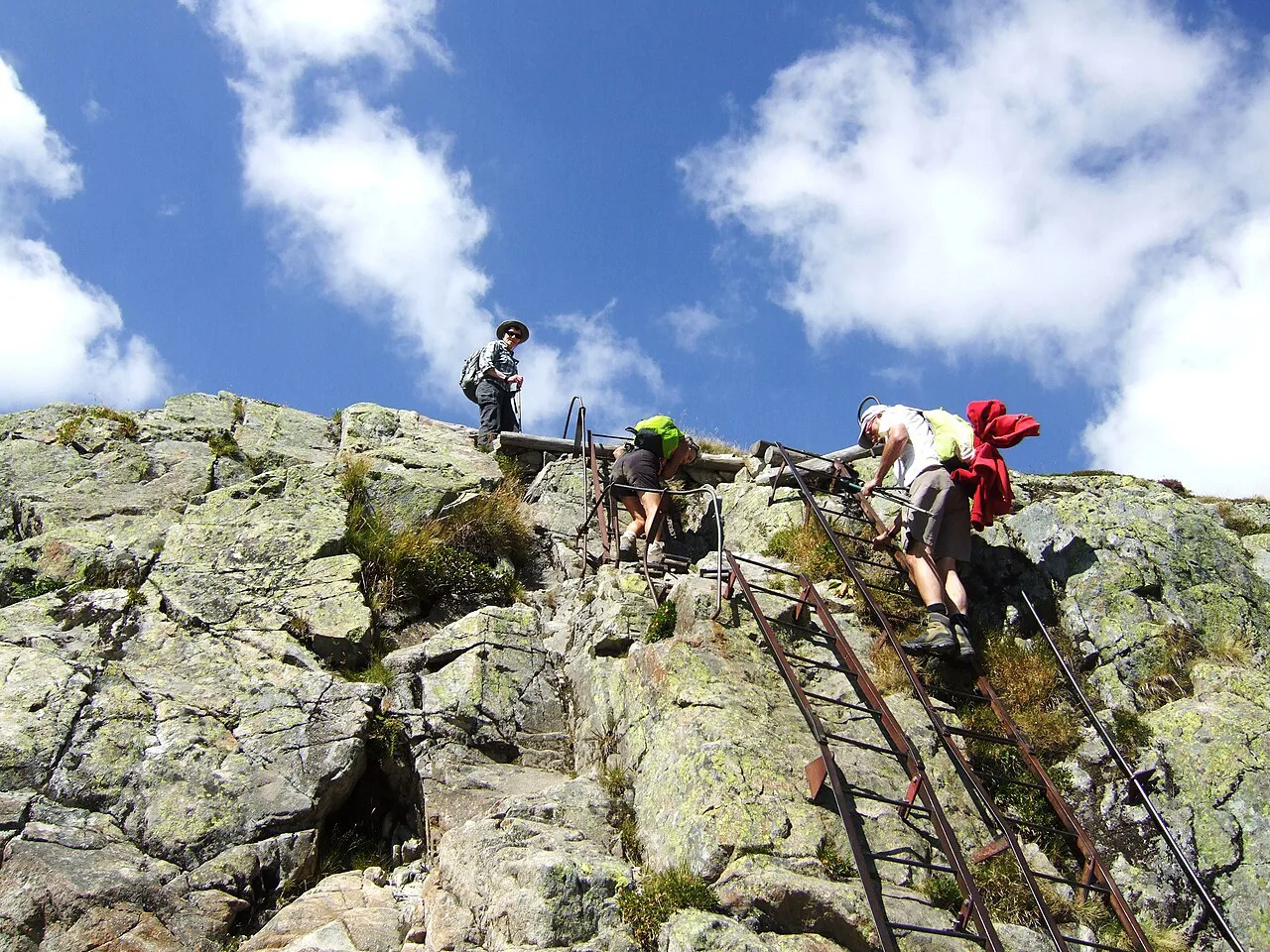
Three climbs stand out. The ascent from Les Contamines at 1,150 m to the Col du Bonhomme at 2,329 m, followed by the Col de la Croix du Bonhomme at 2,483 m, is long, exposed and often snowy early in the season before the descent to Les Chapieux at 1,549 m. The climb from Les Chapieux to the Col de la Seigne at 2,516 m marks the French-Italian border and can be windy, with a steep final push. The third is the sustained climb from Rifugio Elena at 2,062 m to the Grand Col Ferret at 2,537 m, exposed to cold and wind with snow possible early in the season, followed by a long descent into Switzerland.
Plan around those three days rather than the average. Carry layers and gloves even in August for the cols, start early on the Bonhomme day to keep the exposed section in settled weather, and treat afternoon storms as the main summer hazard on all high passes. If snow lingers, an early-season departure may need to reroute or use transport around a pass, which is a decision a guide makes quickly and a self-guided hiker has to make alone.
For a stage-by-stage plan that puts these climbs in order, use a detailed tour du mont blanc itinerary before you compare tours, since operators split the route slightly differently and the day before a big col determines how fresh you are for it.
When to go
The season runs from mid-June to mid-September, when the passes are normally free of snow and accommodation is open. June departures can still meet lingering snow on the high cols, and late-season September trips bring quieter trails and cooler weather. July and August are the busiest weeks and the ones that fill first, so if you want a specific departure, book it early.
Booking lead times
Lead times differ by format. One operator advises booking guided places no later than six months ahead, and self-guided or custom itineraries twelve to eighteen months ahead, because the bottleneck refuges have so few beds. If you are planning later than that, look for pre-set departure dates with fixed itineraries, which operators hold in order to sell complete routes to late bookers. Costs vary by format, season and hotel standard, so ask each operator for a current quote rather than comparing figures from different years.
Across operators, formats range from guided small groups to tailor-made self-guided trips, and each sells a different balance of support and independence, so shortlist two or three and compare what is actually included. Exodus Travels lists Mont Blanc hiking tours alongside its France program, which is a starting point for seeing how a large operator frames the trip.
Which format suits you
If this is your first long-distance trek, or you have never crossed a high alpine col, a guided tour is the safer choice: navigation, weather calls and bed bookings are handled, and the group size stays small. If you have completed multi-day routes with a map and compass and can judge when to turn back, self-guided gives you more freedom over rest days and daily timing at a lower cost. Those with limited holiday time should look at the Best of or half-circuit formats before deciding on guided or self-guided at all.
Getting to Chamonix and the start
The circuit normally begins and ends in Chamonix, which is the practical base for arrival, last-minute gear shopping and the pre-trek briefing many companies run. From there the route heads out through the Chamonix valley toward Les Contamines before crossing into Italy and Switzerland. Arrange your travel so you have a night in the valley before the first walking day, and ask your company where the group meets and how you reach the first trailhead.
If you want the valley's own day walks before or after the tour, day routes from Les Houches and Chamonix give you short options that use the same lifts and paths.
Choose Your Format and Book Early
Decide first how many consecutive walking days you can genuinely enjoy, then pick full circuit, Best of or a half. Only then choose guided or self-guided, because the guide question is about navigation and weather judgment, not about how much of the route you see. Match the format to your experience and the beds follow more easily.
Whatever you pick, the bottleneck is accommodation in Les Chapieux, Val Ferret and Trient, so start the conversation with companies well before your intended summer and ask what is already reserved on your dates. If you are late to plan, take a pre-set itinerary rather than forcing your own dates into a full season. Check departure availability and current costs directly with Mont Blanc Treks or Alpenwild, then train for back-to-back days with ascent.
Frequently Asked Questions
What is the best time of year to hike the Tour du Mont Blanc?
Mid-June to mid-September is the window when the high passes are normally clear of snow and accommodation is open. June departures can still meet lingering snow on the cols, while September brings quieter trails and cooler weather. July and August are the busiest and fill first, so book a specific departure early.
Can a beginner hike the Tour du Mont Blanc?
A beginner can complete the circuit with the right preparation, but the full route is graded difficult, with sustained daily ascent and descent over rugged terrain for around ten days. If you have not walked a multi-day alpine route, a guided tour is the safer entry point because navigation and weather decisions are handled. Shortened Best of or half-circuit formats reduce the number of consecutive walking days.
How long does it take to hike the Tour du Mont Blanc?
The full circuit takes about ten days of walking, and operators commonly run it as a ten-day trek with 12 nights of accommodation. Shortened versions include a six-day Best of itinerary and westerly or easterly halves, which generally run four to six days. Choose the format based on how many consecutive walking days your holiday and fitness allow.
What is the average cost of a Tour du Mont Blanc?
Tour costs depend on the format, the season and whether you sleep in refuges or hotels, and operators publish their own current rates rather than a market average. Ask each shortlisted operator for a quote covering accommodation, meals, guiding or route support and any luggage transfer. Compare what is included, not just the headline figure.
Is a guided or self-guided Tour du Mont Blanc better for a first long-distance trek?
For a first long-distance trek, a guided tour is generally the better fit: groups stay small, qualified mountain leaders handle navigation and weather calls, and beds are booked for you. Self-guided suits hikers with multi-day navigation experience who want more flexibility over rest days and timing. Either way, the route is the same circuit around the massif.
Sources
Trail notes for your next trip
Optional updates when we add or revise hiking guides.
You might also like
Continue reading
More guides you'll find useful