Blencathra Walk: Hall's Fell Ridge Route from Threlkeld
A practical guide to walking Blencathra via Hall's Fell Ridge from Threlkeld, with the rocky upper ridge, the Blease Fell descent and the best months to go.
On this page
Blencathra is the northern Lake District's great ridge mountain, and Hall's Fell Ridge is the line that puts hands on rock without committing you to the full exposure of Sharp Edge. It suits hikers who are comfortable on steep ground, happy to scramble short rocky steps, and want a summit day rather than a valley stroll. The reward is a narrow crest high above St John's in the Vale and wide views south toward the Helvellyn range and Derwentwater.
Where Blencathra is and how the summit ridges fit together
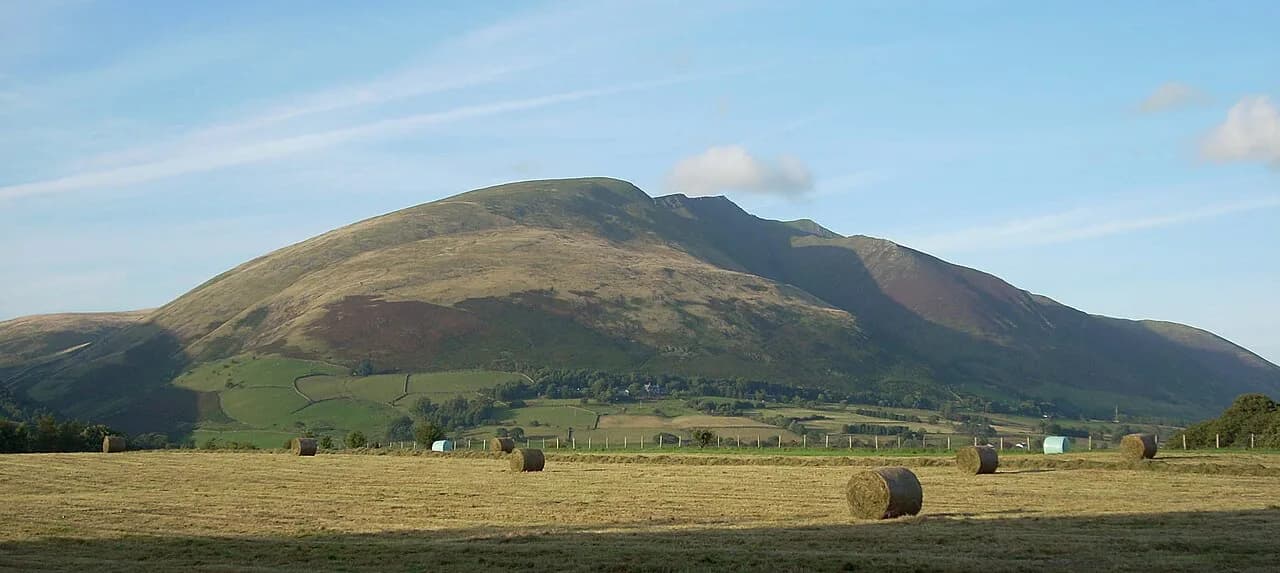
Blencathra, sometimes called Saddleback for its profile, stands north of Keswick between the A66 corridor and the Northern Fells. From the summit the ridges fan out in several directions: Hall's Fell and Blease Fell approach from the south and southwest above Threlkeld, while Sharp Edge and the other lines drop toward the east. The longer northern approaches come in from the Skiddaw House side.
For a first Blencathra visit, the key decision is whether you want a ridge that demands rock contact or a straightforward path with the same summit view. Hall's Fell Ridge belongs in the first category, and Blease Fell in the second, which is why the route below climbs one and descends the other. If you are still building a picture of the area, this hiking in lake district guide sets Blencathra alongside the southern fells.
Walkers who are working through the Lakeland summits will find Blencathra on the list, since the recognised fell rounds include it. If you are counting summits, the Wainwrights gives the context for how Blencathra fits into a longer campaign across the Lake District, and if that campaign takes you north of the border, the Scotland hiking guide covers the same summit-bagging mindset on higher ground.
Trailhead at Threlkeld
Threlkeld is the natural starting point for Hall's Fell Ridge, and the route leaves the village and reaches the foot of the fell in a short approach before the climbing begins. The village sits just off the A66, which makes it straightforward by car, and it is close enough to Keswick to be reachable by public transport. Parking in the village is the usual arrangement; plan to arrive early on fine weekends, when the spaces fill quickly.
A guided Blencathra day runs from near Keswick and is based on this side of the mountain, which confirms the village as the standard access point. Hiking Highs offers full and half-day routes from this base, so the trailhead does not require a long approach from elsewhere.
Distance, ascent and time
The full circuit from Threlkeld, climbing Hall's Fell Ridge and descending over Blease Fell, is 12 km (7.5 mi) with 655 m (2,150 ft) of ascent and takes roughly 6 to 7 hours at a steady pace. That time includes the scrambling on the upper ridge, which is slower than plain walking, and a reasonable stop on the summit. Add extra if you want to linger on the crest or photograph the views down Borrowdale.
The route is a circuit rather than an out-and-back, so you are on new ground for the whole descent. That makes it a more satisfying full day, and it removes any need to reverse the scrambling. Shorter guided half-days are available if you want the summit without the full loop.
Lower slopes: heather zig-zags to the base of Hall's Fell
From Threlkeld the path climbs through heather on good zig-zags, gaining height steadily before reaching the foot of Hall's Fell. The gradient is relentless but the ground is clean, and the views open as you rise, so the first hour is a warm-up rather than a technical section. Watch the wind here: even at this height it can push you off line, and on the day the guided party was climbing it had picked up enough to be worth sheltering on the lee side of the ridge.
Once the heather gives way, the character of the day changes abruptly. Below the rocky crest you are still walking; above it, you are choosing footholds. That transition is the point to decide whether the upper ridge is right for you.
The rocky upper ridge to Hall's Fell summit and Blencathra's top
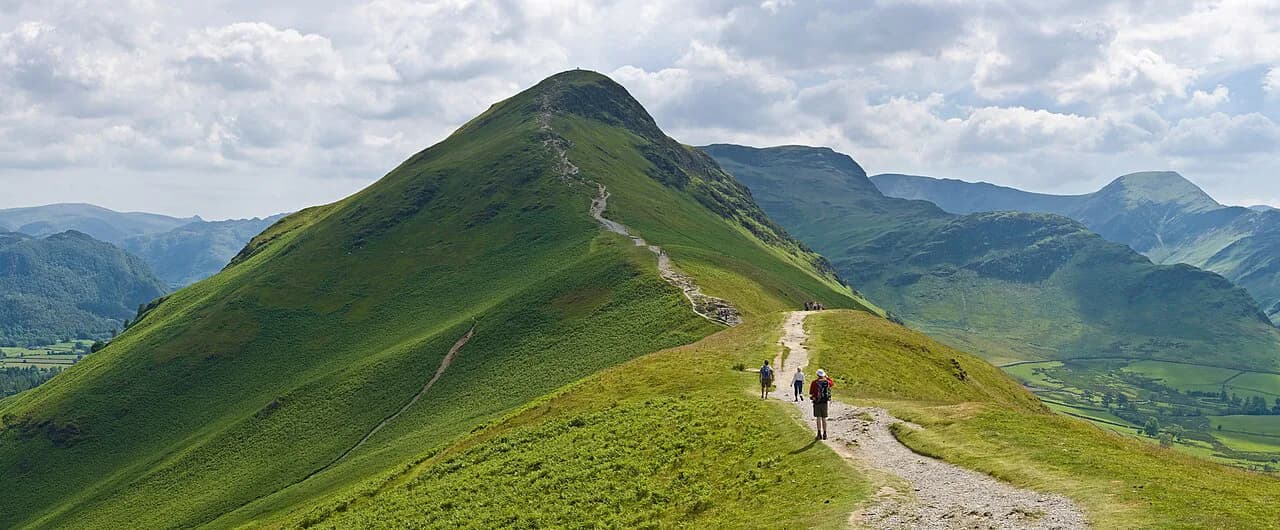
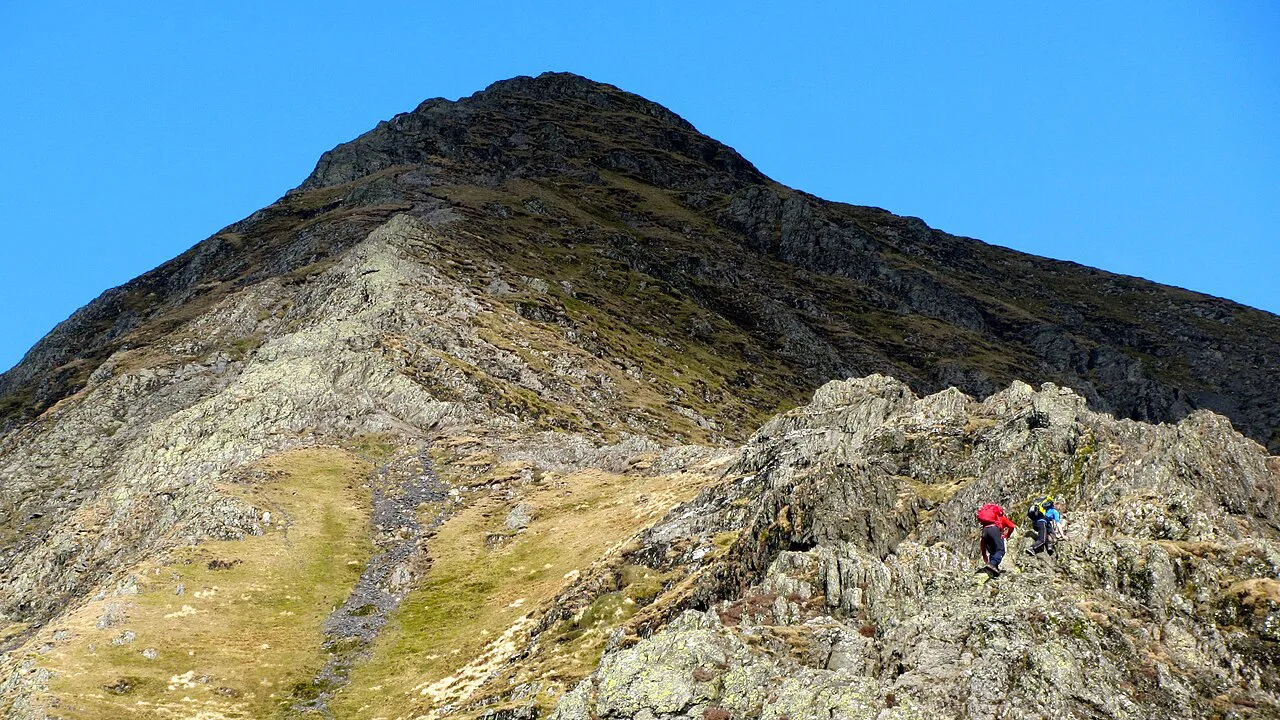
Higher up, the path becomes a rocky ridge and the scrambling begins in earnest: short clambering steps over solid mountain rock, with occasional exposure as the crest narrows. It is a genuine hands-on section where you will use your hands, and it is the reason Hall's Fell is described as a good beginners' scramble rather than a walk. In mist the drop below is hidden, which many people find easier; in clear weather, you see exactly what is beneath you.
The summit of Hall's Fell is reached before Blencathra's main top, and from there it is a short continuation to the highest point. The views stretch down St John's in the Vale and along the Helvellyn range, with Derwentwater visible when the cloud lifts. On a clear day you can pick out the Borrowdale fells from the summit.
If you want to compare Blencathra's rockier lines with other classic Lakeland ridges, striding edge on Helvellyn is the usual next step. It is a more sustained and more exposed traverse, so it is worth knowing how Hall's Fell feels before committing to it.
Descent over Blease Fell back to Threlkeld
The descent over Blease Fell is the gentler half of the circuit, and it puts you on open ground with wide views into St John's in the Vale. Wind direction shapes the choice: the guided party found this side sheltered enough to be pleasant on a day when the exposed ridge was buffeted. It is worth checking the forecast before you decide which way round to go, because the descent you choose should be the one that keeps the wind at your back or off your side.
From Blease Fell the path continues back toward Threlkeld, and the descent is straightforward walking rather than scrambling. The views remain open most of the way, so this is the half of the day to enjoy when the weather clears.
Sharp Edge and the other summit lines as harder alternatives
Sharp Edge is the other well-known ridge on Blencathra, and it is a different proposition from Hall's Fell: more continuous exposure and more sustained scrambling. Treat it as a separate objective, not a variation to add once you have done the main route. The easier Blease Fell line is the sensible alternative when the ridge is wet or windy.
The northern lines, including approaches from the Skiddaw House side, give longer days with less continuous scrambling. For a shorter, lower-level day on the other side of the range, catbells walk is a popular choice with its own ridge views over Derwent Water.
When to go: best months, mist and wind on the ridge
Late spring through early autumn gives the most reliable conditions on Hall's Fell Ridge, when the rock is dry and the days are long enough to allow for a slower scramble. Mist can arrive quickly on this side of the mountain, and the guided party had only intermittent views from the upper ridge, so a map and compass are not optional. Wind builds as you gain height, and the exposed crest is the place to turn back if it becomes stronger than the group is comfortable with.
Winter and early spring change the day entirely: snow and ice on the rocky steps demand proper equipment and experience, and a summer scramble becomes a winter climb. If your trip is fixed to a winter date, plan a lower route instead. For a waterfall walk on a poor-weather day, aira force walk near Ullswater is a useful backup.
Huts, water and facilities on the route
There are no mountain huts on the Hall's Fell circuit, so carry all the water and food you need for the day. Threlkeld has facilities at the start and end, and the upper ridge offers no shelter. Below the technical section, the heather zig-zags are the last easy place to turn back, so treat the base of the ridge as a decision point.
What to carry and how much scrambling experience you need
Hall's Fell Ridge is a beginner's scramble, but beginner here still means using your hands on steep ground with exposure. Approach shoes with good grip, a waterproof shell, a map and compass and plenty of water are the basics. A helmet is worth considering if you will be crossing ground where others might knock stones loose, especially in a group.
The guided operator notes rocky sections and occasional boggy ground on its Blencathra routes, mostly on the lesser-walked approaches. That means gaiters and quick-drying boots are more useful here than on the heather zig-zags. If you have never scrambled before, the upper ridge is best treated as the goal of a few practice days rather than a first outing.
Blencathra with a guide: when a paid day makes sense
A guided day is the right choice if you want the scrambling skills checked as you go, or if your group has mixed experience. Hiking Highs offers full-day Blencathra hikes from £240 for the first walker plus £50 for each additional walker up to eight people, and half-day routes from £180 for the first walker plus £50 per person. That pricing structure makes a guided day most economical for a small group rather than a solo walker.
A guided day also solves the navigation problem on a misty upper ridge, which is where the route is easiest to get wrong. If you are confident on rocky ground and comfortable with a map and compass, the circuit is well within reach as an independent day. The trade-off is flexibility: a guide sets the pace and the line, which is an advantage if you are learning and a constraint if you want to explore.
Plan Your Blencathra Day
Hall's Fell Ridge is the right Blencathra route if you want a scramble that is within reach of a fit hillwalker but still demands hands, care and a head for exposure. Climb it from Threlkeld, descend over Blease Fell and keep an eye on the wind, which decides which way round the day feels best. The 12 km circuit with 655 m of ascent is a full day, so start early and carry everything you need for the ridge.
Frequently Asked Questions
Is Hall's Fell Ridge a walk or a scramble?
It is a scramble with a walking approach. The steep heather zig-zags from Threlkeld are plain walking, but once the path gives way to rocky ridge you are clambering over the crest with your hands, and there is exposure in places. Treat it as a hands-on day rather than a hill walk and carry appropriate footwear.
How long does the Blencathra walk via Hall's Fell Ridge take?
Plan on around 6 to 7 hours for the full circuit from Threlkeld with the Blease Fell descent, covering 12 km with 655 m of ascent. Scrambling on the upper ridge is slower than walking, so allow extra time for a stop on the summit.
Which is harder, Hall's Fell Ridge or Sharp Edge?
Sharp Edge is the more sustained and more exposed line, with continuous scrambling and a narrower crest. Hall's Fell is the better first scramble on Blencathra, which is why it is often used as preparation for harder ridges and then for routes such as Striding Edge.
Do you need a guide to walk Blencathra?
No, the circuit is achievable for confident hillwalkers with map and compass skills. A guide is most useful if you are new to scrambling, want the line checked in mist, or are bringing a mixed-ability group; compare the per-group cost before deciding.
Sources
Trail notes for your next trip
Optional updates when we add or revise hiking guides.
You might also like
Continue reading
More guides you'll find useful