Hiking in the High Tatras: Trails, Huts and Lift Access
Plan hiking in the High Tatras, Slovakia: where to base, how to reach the trailheads, day hikes by difficulty, hut-to-hut stages and the best season.
On this page
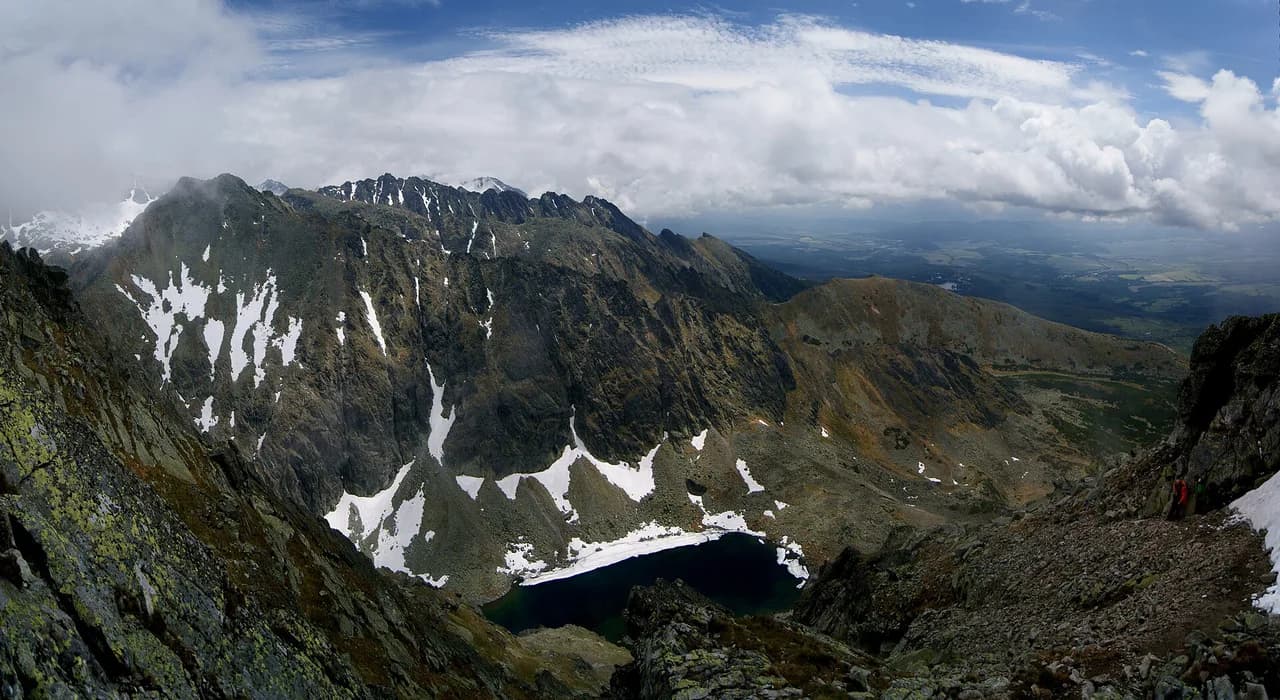
The High Tatras squeeze jagged peaks, emerald lakes and steel-cabled passes into a range you can cross on foot in days rather than weeks. That compactness is the appeal for hikers who want genuine high-alpine ground without a long approach, and it makes both half-day valley walks and a five-stage hut trek realistic on the same trip.
Use this guide to pick a base, decide how much altitude you want, and judge whether the hut loop to Téryho chata, Sliezsky dom and Chata pod Rysmi fits your experience. The trailheads described here sit in and around Tatra National Park in Slovakia's Prešov Region, with the Rysy summit and the Lysá Poľana approach on the Polish side of the same massif.
Why the High Tatras suit hikers who want high-alpine terrain in a compact range
A map makes the High Tatras look like a weekend errand, but the terrain turns serious quickly: steep rock paths, long valley pulls and, on the higher crossings, steel cables, chains and ladders. Freedom from vertigo and some alpine experience are the honest entry requirements for anything above the lake basins, while the valley floors stay genuinely family-friendly.
The trade-off is scale. Because the range is short, you can sleep in a hotel one night and a mountain hut the next, and a bad forecast rarely traps you far from a valley. The result is a destination where you pick your level day by day rather than committing to one style of hiking for the whole trip.
Where to base yourself: Štrbské Pleso, Tatranská Lomnica, Starý Smokovec and Popradské Pleso
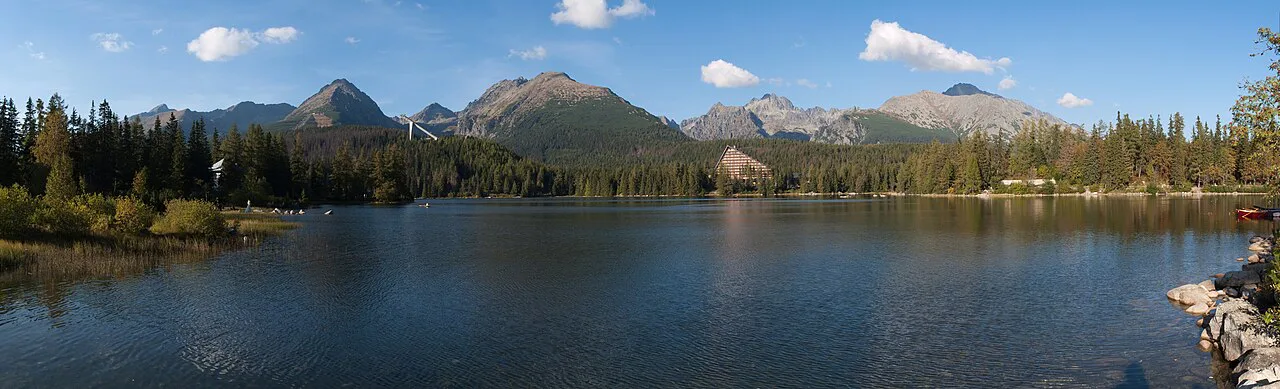
Štrbské Pleso, at 1,351 m (4,432 ft), sits beside an alpine lake and makes the gentlest base: a lakeside path for easy mornings, the boat hire tradition on the water, and the path to Popradské Pleso starting nearby. It suits hikers who want lake views and short walks more than exposed ridges.
Tatranská Lomnica is the practical base for the hut trek described below and for cable-car access to high trailheads, and it has the best onward transport links of the resort villages. Starý Smokovec works well for the valleys above the village and the funicular to Hrebienok.
Popradské Pleso, at 1,494 m (4,902 ft), is the one base that puts you above the tree line before breakfast: sleeping at the mountain hotel there shortens the climb to Chata pod Rysmi and the Rysy attempt, at the cost of a dormitory-style night. Pick it if the summit matters more than comfort.
Getting there and getting around: trains, buses and the cross-border approach
Tatranská Lomnica is well connected, and the resort villages are linked by rail and bus services that let you hike point to point without a car. The cross-border approach from Poland is cheap and straightforward: bus from Krakow to Zakopane, then to Lysá Poľana, cross the border on foot, and pick up a bus onward to Tatranská Lomnica.
If you plan to finish the hut trek at a different village from the one you started in, check the return connections before you set off, because mountain-hotel bus stops run on limited schedules. A rail replacement service can appear on the Popradské Pleso line, so build slack into any tight onward booking.
Easy and half-day hikes: Štrbské Pleso and the path to Popradské Pleso
The lake at Štrbské Pleso gives you a flat warm-up walk with mountain reflections, and hiring a wooden boat on the water has been a local tradition for over 130 years. A small boat costs 18 EUR for 40 minutes, which makes a pleasant rest day rather than a hike.
The path from Štrbské Pleso through wildflower meadows to Popradské Pleso is the classic half-day objective: a mountain lake with a lakeside restaurant where you can stop for soup before walking back. It is the right choice for a first day at altitude or for anyone hiking with children.
If you want a broader menu of gentle options before committing to a bigger day, these easy hikes in high tatras cover valley paths and lake loops that stay below the exposed ground, and they pair well with a base in Štrbské Pleso or Starý Smokovec.
A step up: the funicular to Hrebienok and the valleys above Starý Smokovec
From Starý Smokovec the funicular climbs to Hrebienok, a starting point that removes the forest haul and drops you into the glacier-carved valleys on the range's southern flank. From there you can link a waterfall valley walk with a ridge viewpoint and return by the same lift, or walk down to the village on foot.
Treat Hrebienok as the natural step between the lake paths and the high passes: the gradients are real but the ground is mostly walked trail, not cable-protected rock, so it is where you test your legs and boots before deciding on Priecne Sedlo. A spare day here also gives you a plan B when cloud sits on the summits.
The Zelene Pleso Hike in the High Tatras is a good example of this middle tier, taking you to a green tarn below the peaks with a steady climb and a clear path. It fits hikers who want a proper half day out without the exposure of the secured crossings.
Lift access to trailheads from Tatranská Lomnica
Cable cars from Tatranská Lomnica lift hikers toward the high mountain hotels and trailheads, which is how you gain altitude fast for a day on the ridges without a long pre-dawn start. Check the operating dates and last descent for the day you plan, because the lifts do not run year-round on a summer timetable.
Lift access changes the shape of a day: you can climb high, traverse, and drop to a valley station, or use the lift both ways and spend your energy on the ridge. It also means a sudden turn in the weather does not leave you with a two-hour descent to the road.
Above Tatranská Lomnica the terrain gets genuinely alpine, and the Lomnický štít stands as the range's famous high viewpoint rather than a casual walk. Understanding the lift system, its seasons and the difference between a cable-car sightseeing trip and a summit day is the key planning decision here.
Hut-to-hut trekking: the five-stage loop from Tatranská Lomnica
The classic High Tatras hut trek is a five-day loop from Tatranská Lomnica, covering roughly 55 km (34 mi) with about 3,800 m (12,467 ft) of ascent and the same again of descent. It is a challenging route, not a stroll between huts: the link stages pass through high-alpine ground with secured sections, and the Rysy attempt adds a summit day on top.
The loop format matters for logistics: you start and finish in the same well-connected village, so no complicated car shuttle is needed. The cost is that you retrace part of the route on the final day, descending via Popradské Pleso before the last stretch back to the village.
Stage by stage: Tatranská Lomnica to Téryho chata
Stage one runs about 12 km (7.5 mi) from Tatranská Lomnica up to Téryho chata at 2,015 m (6,611 ft), following the cable-car line before switching onto the Magistrale ridge path. On dry ground the terrain turns alpine quickly with wide views, and about five hours of walking gets you to the hut.
This is the stage to arrive early and settle in, because everything after it depends on the weather you meet on the pass. Book the hut in advance and expect a simple, clean dormitory room with dinner and breakfast included in the half-board rate.
Stage by stage: Priecne Sedlo, Sliezsky dom and down to Popradské Pleso
Stage two is the technical crux: roughly 11 km (6.8 mi) over Priecne Sedlo at 2,352 m (7,717 ft), with steel cables and chains on the climb and a direct, brutal descent from the pass using cables, chains and iron rungs. On ice this ground is genuinely dangerous, and crampons or at minimum Microspikes are the difference between a hard day and an unacceptable one.
Stage three continues about 8 km (5 mi) from Sliezsky dom at 1,670 m (5,479 ft) to Popradské Pleso, traversing rock and snow-covered ground with limited visibility in bad weather. Budget a full day even though the distance is short, and expect the mountain hotel at the lake to be a dormitory-style sleep.
The Rysy attempt: Slovakia's highest summit and the turn-around decision
Stage four climbs roughly 6 km (3.7 mi) from Popradské Pleso to Chata pod Rysmi at 2,250 m (7,382 ft), with the Rysy summit at 2,503 m (8,212 ft) as the optional prize. In October conditions, deep snow, gusts and ice can force repeated stops, and around 150 m (490 ft) below the summit a whiteout can leave no visible route and no markers.
Turning back there is the right call, not a failure: the summit will still exist next year. Plan the day with a turnaround time and stick to it, and agree with your group in advance that a poor forecast means the pass rather than the peak.
Stage five descends about 16 km (10 mi) back to Tatranská Lomnica via Popradské Pleso, with deep fresh snow making the iced sections with chains and ladders tiring rather than technical. Leave the hut early, and keep enough margin to catch the afternoon transport out of the village.
Huts on the route: booking, beds and what a night costs
Book all huts in advance for any hut-based itinerary, especially at weekends and in high season; even in October popular huts can be full. Hut accommodation with half board runs at roughly 25–50 EUR per person, and a room for two with dinner and breakfast came in at 74 EUR in autumn.
The huts vary a lot in comfort: Sliezsky dom is a comfortable hotel with good food and takes cards, Popradské Pleso sleeps guests in an eight-bed dormitory, and Chata pod Rysmi has no running water, no electricity and a communal dormitory where coffee, tea and dinner are cash only. Carry notes for the high hut nights.
If you want a different overnight objective at the same altitude, the Zelene Pleso Hike, High Tatras reaches a green tarn below the peaks and can be done as a day or linked into your schedule with an early start.
Gear and exposure: secured sections, crampons and ankle support
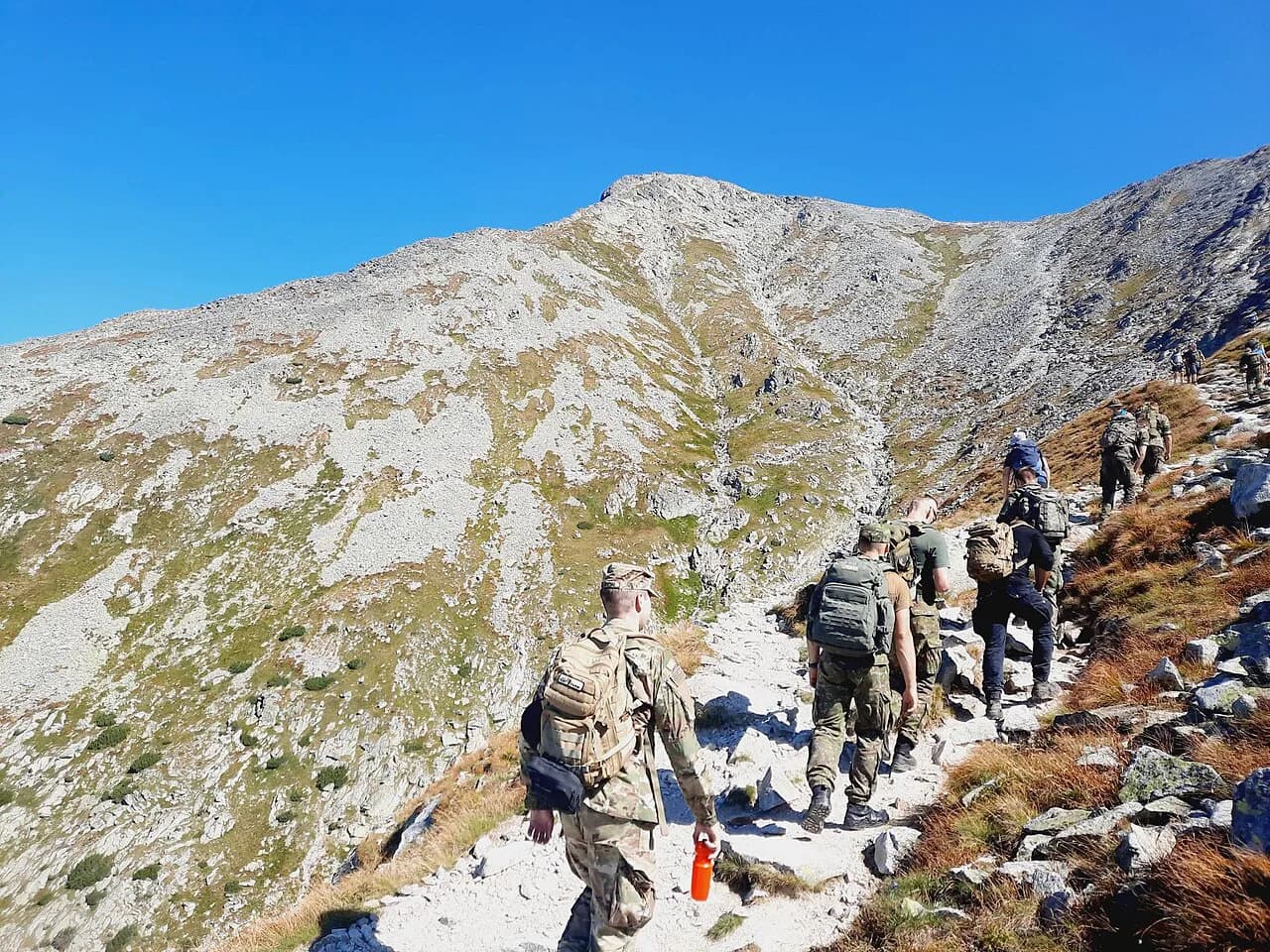
Sturdy mountain boots with ankle support are not optional on this route: light trail shoes are a poor match for the secured sections with ice and chains. Trekking poles make a real difference on the steep icy descents, and a windproof hardshell plus warm layers belong in the pack even in summer.
From October, plan on crampons or at least Microspikes; they can be rented on site at Popradské Pleso for roughly 5–10 EUR per day. Rent them before the Rysy day rather than hoping the snow will soften.
Navigation deserves its own line: the trails are well marked but hard to follow under snow, and GPS alone cannot orient you in a whiteout. Carry an offline map, and treat afternoon storm build-up on the passes as a reason to be down early rather than a reason to push on.
When to go: the June–September window and autumn snow
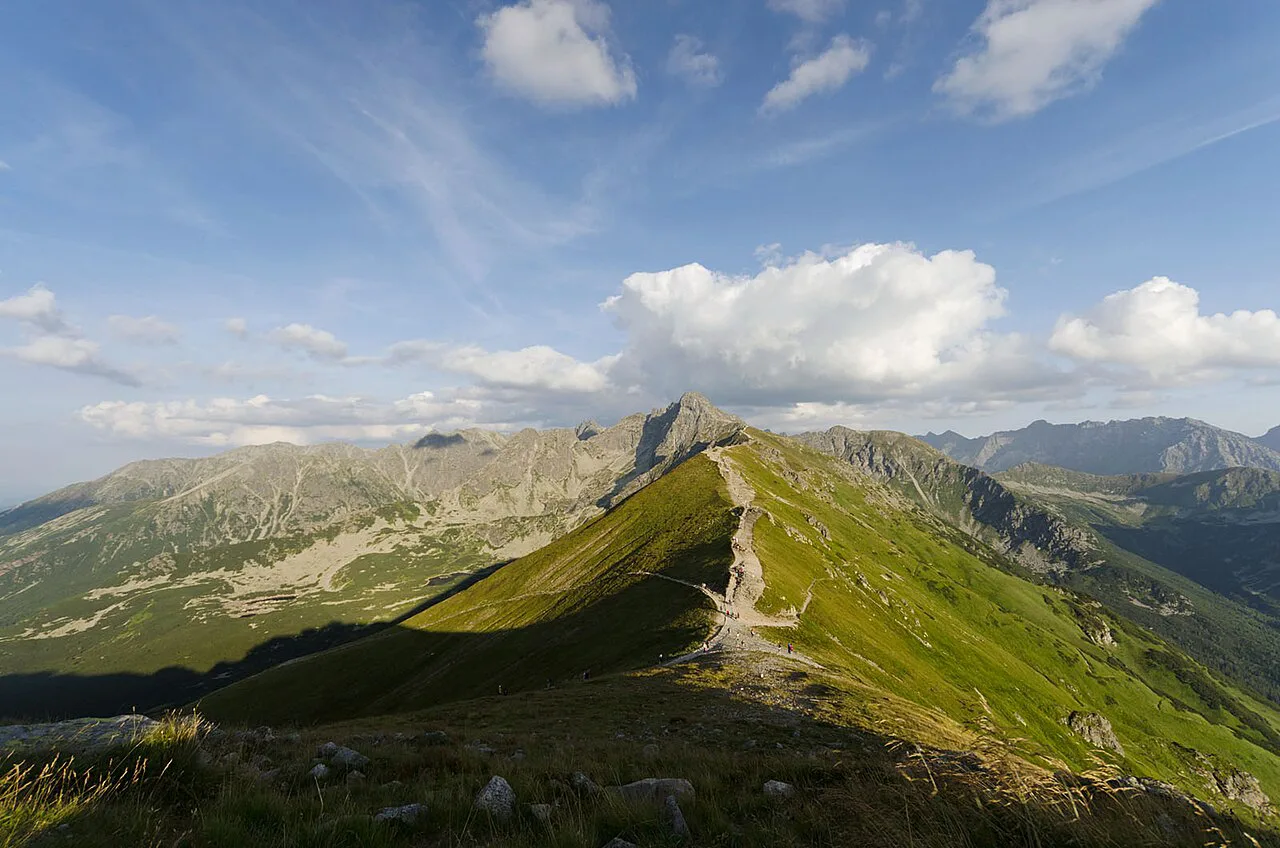
June to September is the recommended season, when trails are clear and the high passes are most likely to be in walking condition. October is possible but snow and ice on the passes are likely, and in winter the route is only suitable for experienced alpinists with full winter equipment.
Late September and early October already bring honest winter conditions to the higher crossings, so downgrade your objectives rather than your safety margin if you hike then. Spring is the mirror image, with snow lingering on the passes, so keep the lake and valley hikes in reserve.
Rules that affect your plan: camping ban and high-hut payment
Camping is strictly forbidden throughout Tatra National Park, so every night must be in a mountain hotel or hut along the route. Leave the tent and bivouac gear at home, and let the protected-area regulations on the park listing guide where you can walk.
The second rule is practical rather than legal: cards are not accepted everywhere up high, so carry cash for the summit huts. Check the payment situation of your first and last hut before leaving the village, since a cash-only evening with an empty wallet is a miserable end to a good day.
Travel logistics: arriving from Krakow and returning by rail
The most straightforward approach from the north is Krakow to Zakopane by bus, then on to Lysá Poľana, across the border on foot, and a bus to Tatranská Lomnica. The transport is cheap and well organised, and it works without a car for the whole trek.
On the way out, the descent from Popradské Pleso brings you to a station where a rail replacement service and a bus to Lysá Poľana connect with the last bus onward. Check the connections the day before you descend, and keep a plan B in the village if the last leg is cut.
A spare day inside the High Tatras
If weather cancels a high day, the lake at Štrbské Pleso and the meadow path to Popradské Pleso fill a spare day indoors without wasting it. Both keep you inside the range and close to transport, so you can switch back up the moment the cloud lifts.
Outside the High Tatras, the karst gorge country of the Slovak Paradise National Park lies a different day's drive away and suits hikers who want ladders and canyons rather than alpine rock. Keep it as a separate trip rather than padding a High Tatras itinerary with it.
Plan Your High Tatras Trip
Choose your base by the hiking you actually want: Štrbské Pleso for lakes and gentle paths, Starý Smokovec for the funicular valleys, Tatranská Lomnica for lifts and the hut trek. If you are still weighing ranges beyond these valleys, hiking in Tatra Mountains: Which Trail to Choose sets the options side by side. Book huts as soon as your dates are fixed, and treat the Priecne Sedlo crossing as the stage that decides whether the full loop is right for you.
Go between June and September if you want the passes clear, carry boots with ankle support and cash for the high huts, and set a turnaround time for Rysy before you leave the valley. The Slovak Paradise Hiking Guide covers the ladder-and-gorge hiking in the next range over if you want a second week of a different kind of ground.
Explore more High Tatras hiking guides
Frequently Asked Questions
What is the High Tatras area known for among hikers?
The range is known for high-alpine terrain in a compact footprint: emerald lakes, jagged peaks and secured ridge crossings with steel cables, chains and ladders, all linked by huts and resort villages. That mix lets you hike a half-day lake path one day and cross a 2,352 m pass the next.
How many days do you need for the High Tatras hut-to-hut trek?
The classic loop from Tatranská Lomnica runs five days, roughly 55 km with about 3,800 m of ascent and the same of descent, including a Rysy summit attempt. Add a buffer day for weather if you want the full traverse rather than a shortened version.
Do you need crampons for the High Tatras in October?
Yes, or at minimum Microspikes. Snow and ice on the passes are likely from October, and crampons can be rented at the Popradské Pleso hut. Footwear without ankle support is a poor match for the secured sections in those conditions.
Is camping allowed in Tatra National Park?
No. Camping is strictly forbidden throughout the national park, so overnight stays must be in mountain hotels and huts along the route. Leave the tent at home and book hut beds in advance.
Do you have to book High Tatras huts in advance?
Yes, especially at weekends and in peak season, and even in October popular huts can be full. Half-board rates vary by hut, with the high huts such as Chata pod Rysmi more basic and cash only.
How do you reach Tatranská Lomnica from Krakow?
Take a bus from Krakow to Zakopane, then to Lysá Poľana, cross the border on foot and continue by bus to Tatranská Lomnica. The connection is cheap and well organised and does not require a car.
What is the best time of year for hiking in the High Tatras?
June to September is the recommended window, when the high passes are most likely to be walkable. October is possible but brings snow and ice, and winter conditions are for experienced alpinists with full equipment.
Can you hike the High Tatras without a guide?
Yes. Trails are well marked, and in summer the hut trek is manageable independently for experienced mountain hikers. In snow or fog navigation becomes significantly harder, so carry an offline map and be ready to turn back.
Sources
Trail notes for your next trip
Optional updates when we add or revise hiking guides.
You might also like
Continue reading
More guides you'll find useful