Samaria Gorge Hike: Trail, Transport and Timing Guide
The Samaria Gorge hike descends 16 km from Xyloskalo to Agia Roumeli. Plan the bus, ferry, entry fee and timings for a full day out from Chania.
On this page
The Samaria Gorge hike delivers one of Europe's great one-way days: a steady 16 km (10 miles) descent through the White Mountains of southwest Crete to the Libyan Sea, with towering walls, the narrow Iron Gates and a swim at the end. It suits fit walkers who can manage a long downhill route on loose rock and who are happy to finish where no road reaches the village. This guide focuses on hiking in crete's most famous gorge, so you can plan the bus, the ticket and the ferry as one day.
Where Samaria Gorge is: Xyloskalo to Agia Roumeli
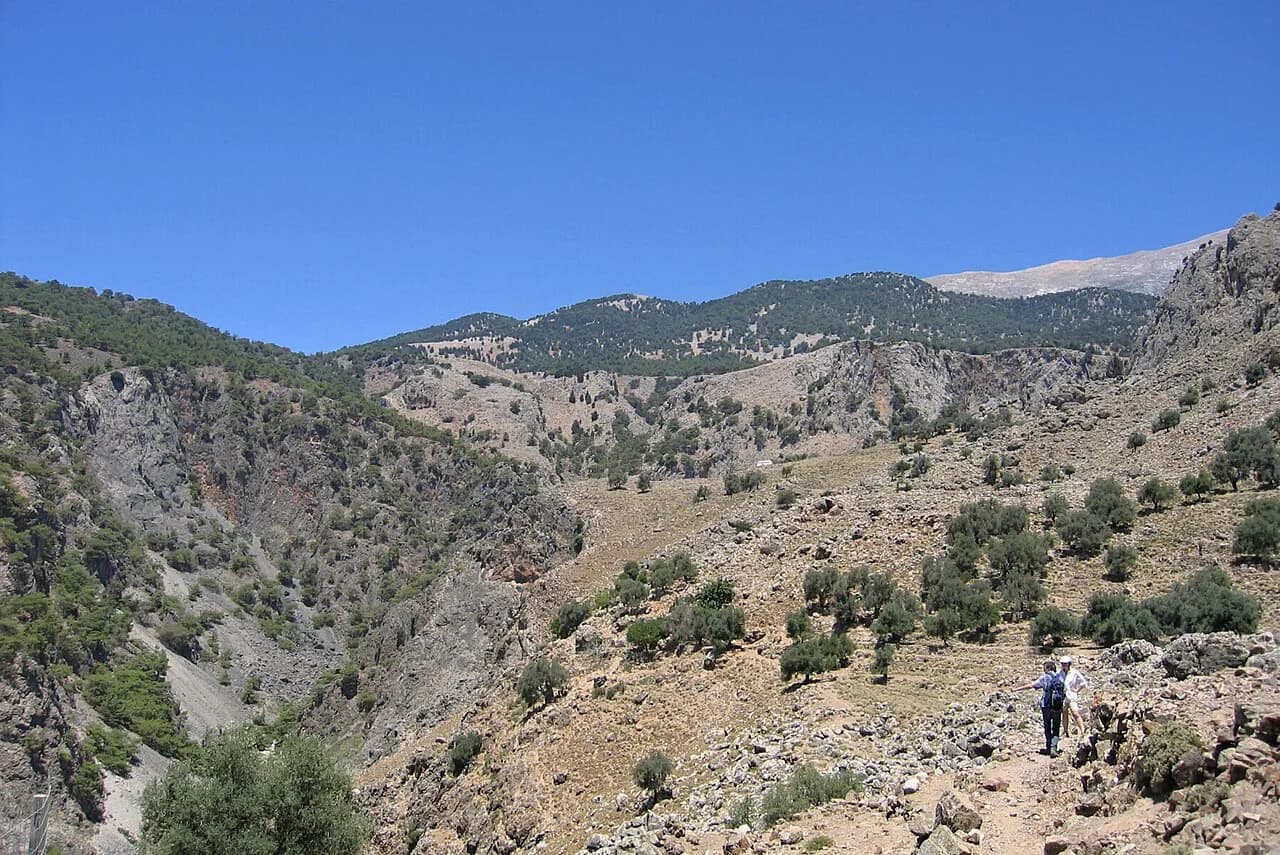
Samaria Gorge runs through Samaria National Park in the Lefka Ori, the White Mountains, in the Chania region of southwest Crete. The walk starts at Xyloskalo near the village of Omalos, at 1,250 m (4,100 ft), and ends at the coastal village of Agia Roumeli on the Libyan Sea. Because the trail is linear and the exit village has no road access, you cannot simply walk back to your starting point.
The route was protected as a national park partly to safeguard the Cretan wild goat, the kri-kri, and the abandoned village of Samaria inside the gorge is its best-known landmark. Watch the cliffs and the wooded sections for goats, especially around the old village where they sometimes wander close to the path.
Distance, descent and walking time
The full hike is 16 km (10 miles) with a total descent of about 1,100 m (3,600 ft) from Xyloskalo to the sea. Most walkers take 5 to 7 hours, depending on pace and how long they linger at the village and the Gates. The route is graded moderate: long and demanding on the legs, but not technical, with no scrambling and a well-marked path throughout.
Budget a full day from Chania, roughly 12 hours from boarding the bus to returning in the evening, and expect to be tired rather than frightened by the terrain. The descent is hardest on the knees and ankles in the middle section, where loose stones cover the path, so trekking poles earn their place.
Trailhead at Xyloskalo: parking, buses and the Omalos road
Xyloskalo sits at the edge of the Omalos plateau, where the road from Chania climbs through villages and mountain scenery. A small café at the entrance serves food and drinks, and the trail begins right by the parking area. Drivers can use the parking at the Xyloskalo trailhead and get back to it with a well-timed ferry and bus return via Sougia.
The public bus from Chania to Xyloskalo takes about an hour, with morning departures timed for hikers. Buy your ticket at the KTEL Chania bus station, where you can also buy your ferry ticket for the return leg in one stop.
Getting there from Chania, Sougia and Paleochora by bus
From Chania, buses to Xyloskalo leave early in the morning, with a second departure later in the morning for walkers who prefer a shorter day. From Sougia there is a morning bus to the trailhead, and from Paleochora a service runs on selected weekdays. The adult fare from Chania is 7.70 euros each way, with reduced fares for students and disabled passengers.
Book or at least check the KTEL Chania schedule for your date before you commit, since services are seasonal and the early bus fills in high season. If you are based in Sougia or Paleochora, the morning bus lets you start from Xyloskalo without a car, but you still finish at Agia Roumeli and return by ferry.
Getting back: ferry from Agia Roumeli and the evening bus
The ferry from Agia Roumeli leaves in the late afternoon, around 17:30, and you choose between two destinations when you buy the ticket: Sougia to the west or Chora Sfakion to the east. Chora Sfakion puts you on a different bus route back to Chania. The ferry costs 15 euros per adult, with half price for children aged 5 to 12.
Evening buses wait at both Sougia and Chora Sfakion for the ferry arrivals, then run back to Chania. From Sougia the bus also stops at Xyloskalo, which matters if you left a car there. The whole loop typically gets you back to Chania around 20:30.
If you drive: parking and the return by ferry to Sougia
Driving to Xyloskalo gives you a flexible start, but the return is fixed: from Agia Roumeli the only practical way back to your car is the ferry to Sougia followed by the public bus up to Xyloskalo. The boat and bus are timed to connect, and you should expect to reach your car in the evening rather than mid-afternoon.
Park in one of the attended lots at the entrance and keep your ferry and bus tickets with you. A taxi boat or taxi combination is possible from Agia Roumeli, but the scheduled ferry and bus remain the straightforward choice for most drivers.
Route description: the descent to the gorge floor
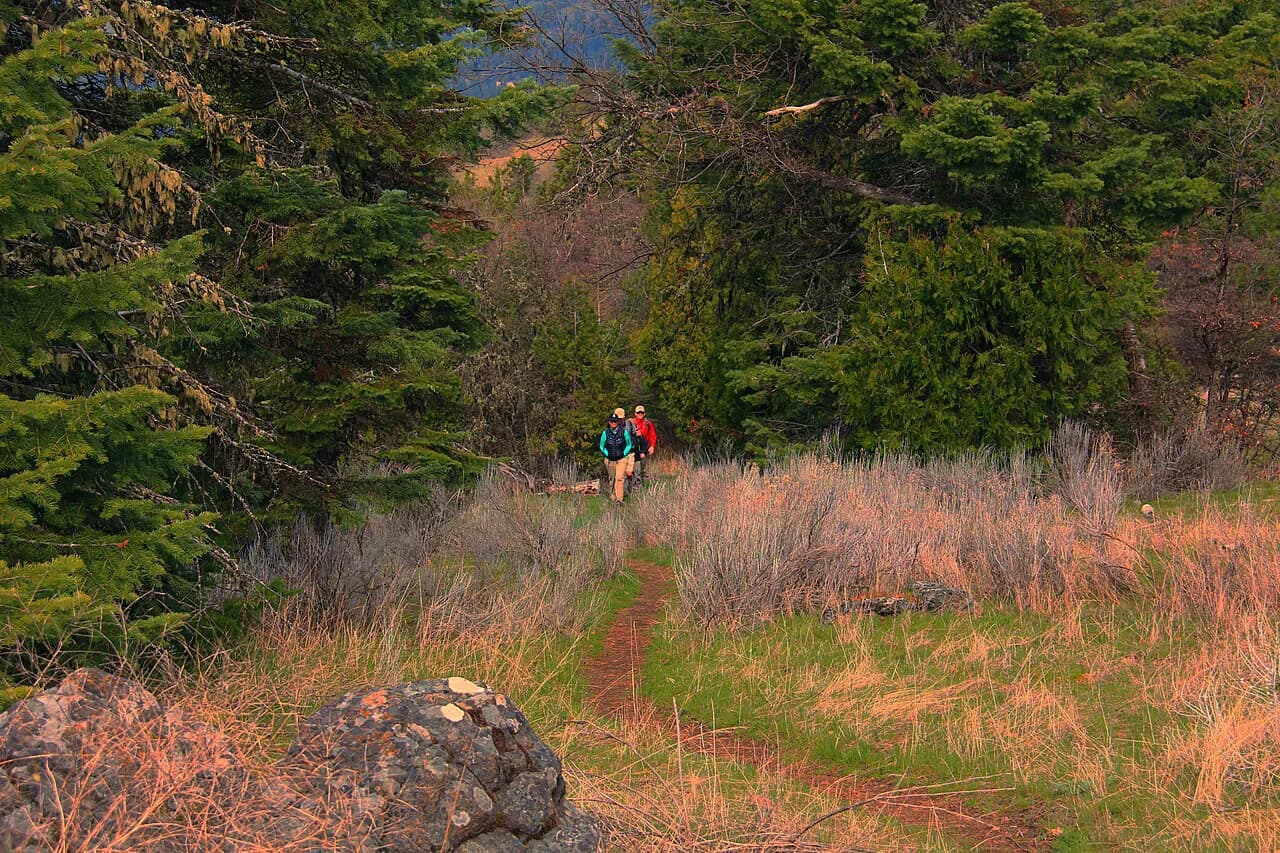
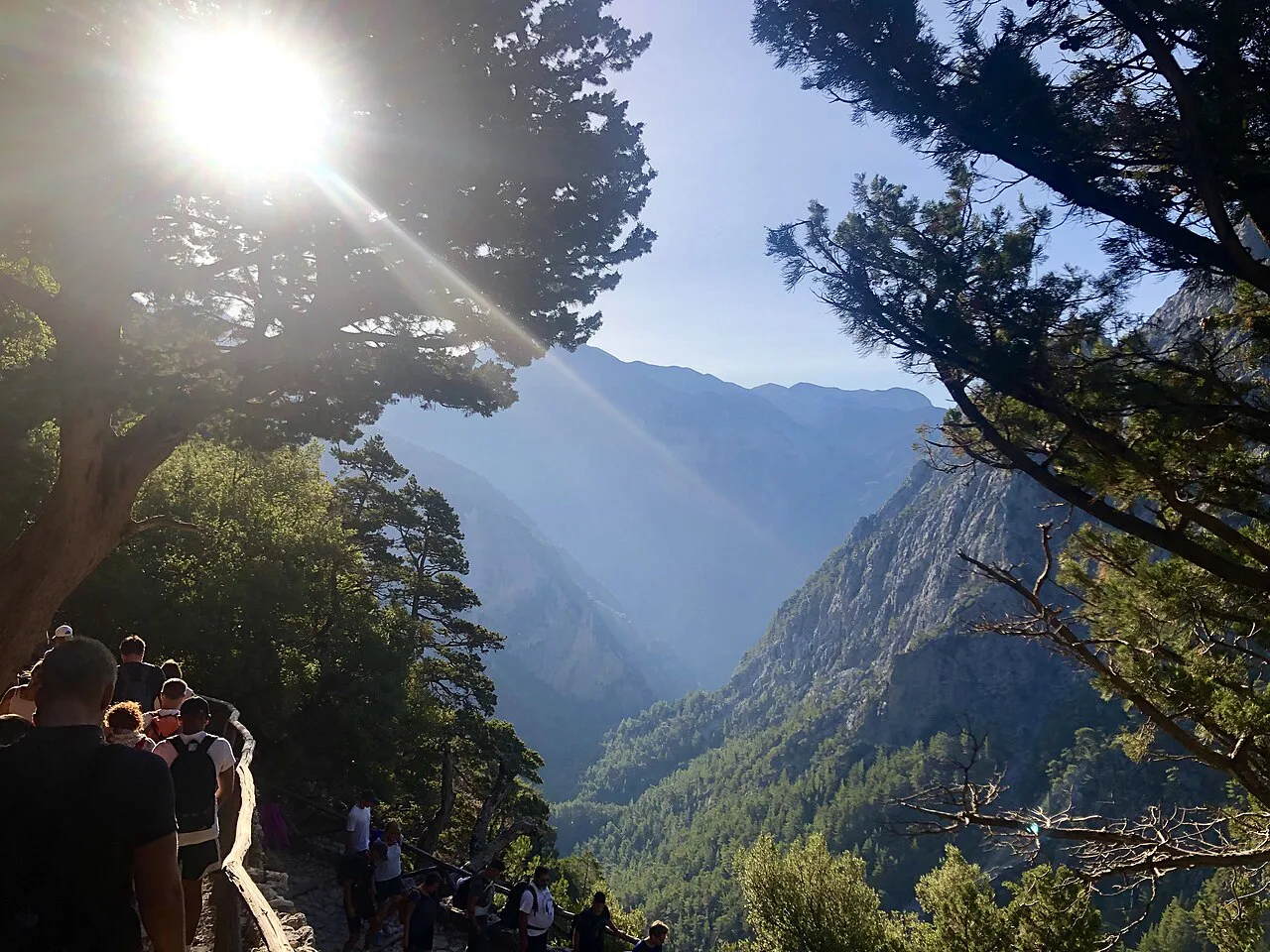
The first hour is a steep but well-built descent on steps and switchbacks, with railings in places, dropping toward the gorge floor. As the gradient eases you enter a shaded, wooded section where the cliffs are hidden by trees and small streams cross the path, usually dry by summer. This opening stretch is where you feel the height you have given up, so take it slowly and save your legs for the long middle.
Route description: the abandoned village of Samaria
About halfway along, the path reaches the abandoned village of Samaria, the settlement that gave the gorge its name. It is the natural rest stop: flat ground, shade and a chance to eat before the exposed section ahead. The village was abandoned in the early 1960s when the area became a national park, and its stone houses and a bridge over the stream are the main remains you pass.
Route description: the Iron Gates and the southern exit
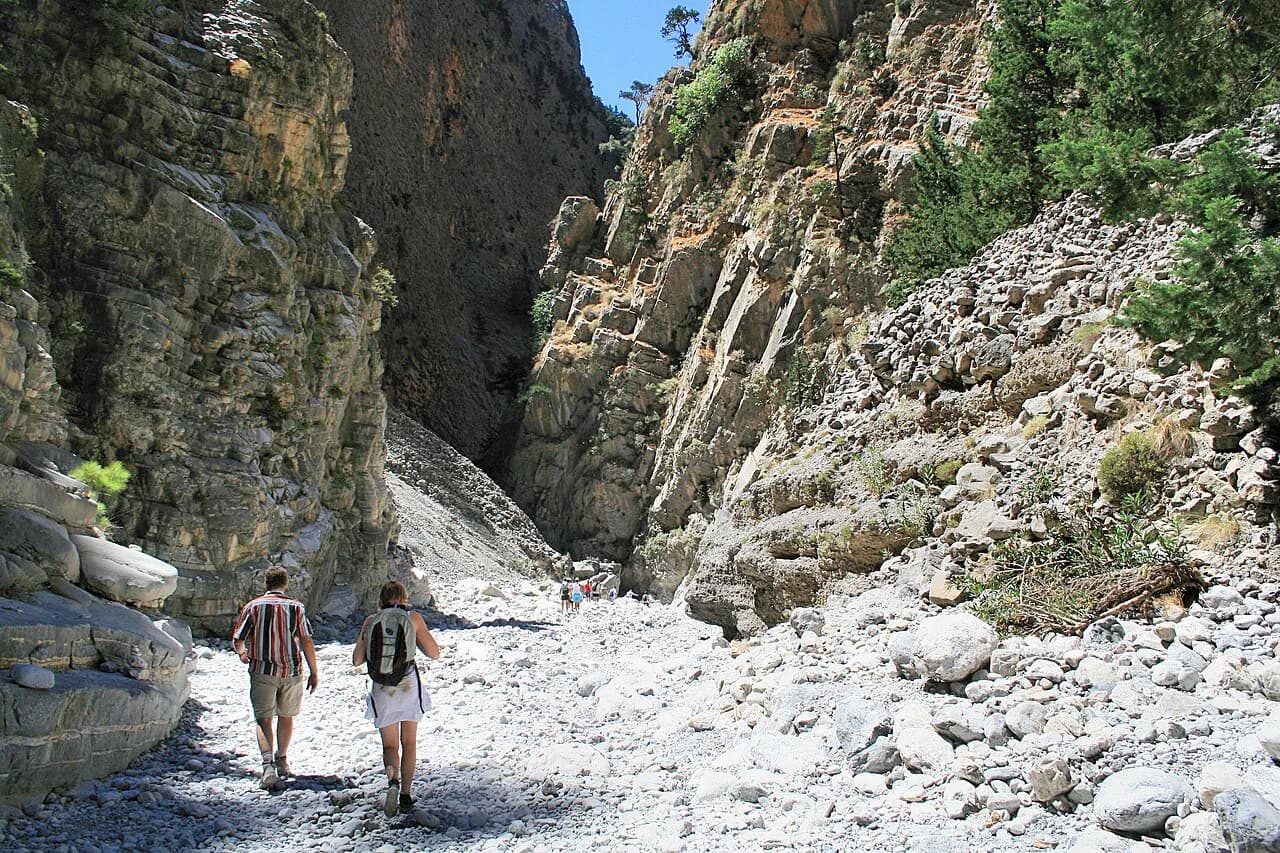
Below the village the gorge opens into its most dramatic section, with towering walls and a flat but rocky floor of loose stones underfoot. Here you reach the narrowest point, known as the Iron Gates or Portes, where the walls press close and the route squeezes through a gap a few meters wide. It is the highlight of the day and the most photographed spot, so expect other walkers to bunch up at the narrowest part.
Past the Gates the path continues to the southern exit checkpoint, where your entry ticket may be checked and small stands sell juice, coffee and cold drinks. From there it is a final 3 km walk to Agia Roumeli, or a short shuttle ride for 2 euros if your legs have had enough.
The final stretch to Agia Roumeli
The last section follows the stream out to the coast, with the sea in view and the vegetation changing to scrub and oleander. Agia Roumeli has a pebble beach, tavernas and cafés near the small harbor where the ferry docks. If you have time before departure, a swim is the best way to finish the day.
Walking the gorge from the Agia Roumeli end
You can also start at the southern end, from Agia Roumeli, walking up through the Iron Gates and back to the village. This lets you see the gorge's most dramatic stretch without committing to the full 16 km, and the uphill direction is the challenge. Walkers staying in Agia Roumeli overnight often do this, then take the ferry the next afternoon. For a shorter gorge day in the same region, compare the Agia Irini Gorge Hike, Crete, which is also accessed from the west. Walkers weighing a different island for a similar long-distance day can look at hiking in Corfu, where the long-distance trail offers its own point-to-point challenge.
When to go: season, opening hours and last entry
The park is open from early May to the end of October, and the best months for cooler weather are May, September and October. The park opens at 07:00, and entry for walkers planning the full crossing is allowed until 13:00; later arrivals are limited to a short walk of up to 2 km before turning back. Check the official opening status before you travel, since the park can close on days of heavy rain, storms or extreme heat.
Heat, loose rock and weather closures
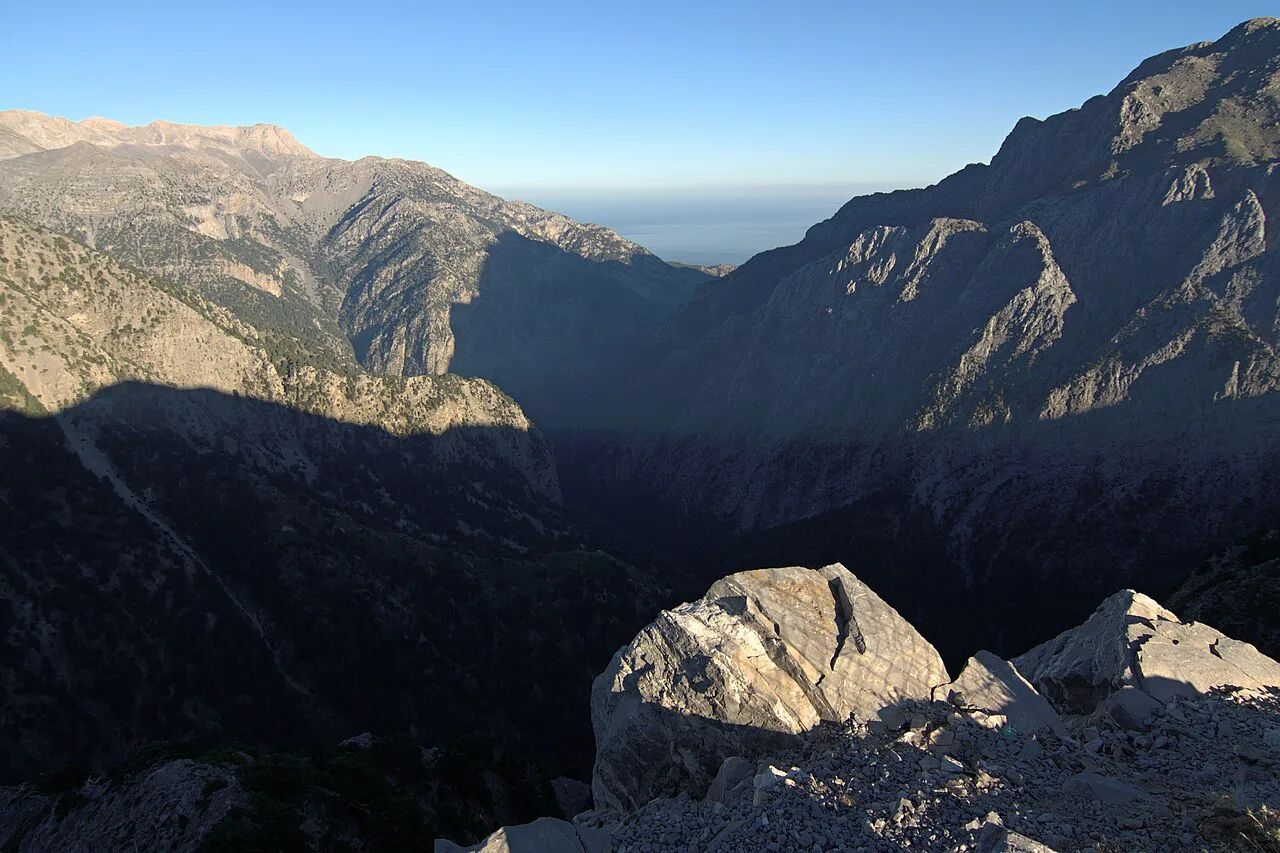
The gorge funnels heat, and the southern half is largely shadeless, so plan to be walking early and carry more water than you think you need. The path itself is a test for ankles, with loose stones and smooth river rock all the way to the exit. Storms bring rockfall risk, and the park closes when conditions are dangerous, so a flexible itinerary around your intended day is wise.
Water, springs and food on the route
There are nine natural springs along the trail with drinking water, though some may run dry late in the season. Carry at least 3 liters (about 100 fl oz) per person in summer and refill where you can. Food is not sold inside the park, so bring sandwiches, fruit and energy bars, and rely on the café at Xyloskalo and the tavernas at Agia Roumeli for real meals.
Entry fee, tickets and organised tours
The national park entry fee is 10 euros per adult, with reduced rates of 8 euros for groups and 6 euros for families. You can buy at the entrance or in advance online, but keep your ticket because it may be checked at the exit. A self-arranged day with bus, entry and ferry comes to roughly 40 euros per adult, while organised day tours from Chania that include transport and hotel pickup cost around 50 euros.
If you prefer a guided format, several local agencies in Chania and other western towns run the trip, and some use certified mountain guides. A self-guided hike is entirely feasible, since the route is well marked and popular. The trade-off is flexibility: tours handle the buses and tickets, but your pace and stops are set for you.
Gear and footwear for the gorge
Wear hiking shoes or boots with real grip, because the trail is rocky and uneven for hours, and add a hat, sunscreen and sunglasses for the exposed lower gorge. Trekking poles reduce the load on your knees during the long descent. Carry a light layer for the shaded morning start, and a dry bag or plastic bag for your ferry crossing.
Staying overnight in Agia Roumeli
Staying a night in Agia Roumeli removes the pressure of catching the ferry and lets you swim, eat and walk the next morning at your own pace. Rooms and tavernas cluster around the harbor and the beach, and ferries run the next day to Sougia or Chora Sfakion. This suits hikers who want the gorge as part of a slower itinerary, including those linking it with crete walking holidays elsewhere on the island.
If you need a bed before or after the hike and prefer a village base, Chania and Sougia make the most practical choices. Book ahead in high season, when Agia Roumeli fills with walkers arriving with the morning boats. The alternative, a second hike in the same area, is a full traverse of Samaria Gorge over two days, but most visitors tackle it in one.
Plan Your Visit
The Samaria Gorge hike works best as a one-way day: early bus to Xyloskalo, a steady descent to Agia Roumeli, then the late-afternoon ferry and evening bus back. Decide between Sougia and Chora Sfakion based on where you are staying, and if you drive, accept the extra ferry-and-bus return to your car. For other options in the region, the Aradena Gorge Hike and its Aradena bridge offer a shorter, quieter outing in the same White Mountains.
Frequently Asked Questions
How long does the Samaria Gorge hike take?
Most walkers take 5 to 7 hours to cover the 16 km from Xyloskalo to Agia Roumeli. From Chania, allow about 12 hours door to door, including the bus, the hike and the ferry.
How difficult is the Samaria Gorge hike?
It is graded moderate: long and hard on the legs because of the amount of descent and the rocky path, but not technical. Loose stones are the main hazard, so wear gripping footwear and take care on the middle section.
How do you get to the Samaria Gorge trailhead?
The trail starts at Xyloskalo near Omalos, reached by morning buses from Chania, Sougia and, on selected weekdays, Paleochora. The bus from Chania takes about an hour.
How do you get back from Agia Roumeli after the hike?
Take the late-afternoon ferry from Agia Roumeli to either Sougia or Chora Sfakion, then catch the evening bus back to Chania. From Sougia the bus also stops at Xyloskalo.
When is the Samaria Gorge open?
The park is open from early May to the end of October, opening at 07:00. Walkers doing the full route must enter by 13:00, and the park can close on days of heavy rain, storms or extreme heat.
Is there water along the Samaria Gorge trail?
Yes. There are nine natural springs with drinking water, though some may run dry late in the season. Carry at least 3 liters per person in summer and refill where you can.
Can you hike Samaria Gorge without a guide?
Yes. The route is well marked and busy, and most hikers do it self-guided. A guide is not required, but walking with others is sensible given the heat and loose rock.
Can you drive to Samaria Gorge and return to your car?
You can drive to Xyloskalo and park in the attended lots. To return to your car, take the ferry from Agia Roumeli to Sougia and the bus back up to Xyloskalo.
Sources
Trail notes for your next trip
Optional updates when we add or revise hiking guides.
You might also like
Continue reading
More guides you'll find useful