Agia Irini Gorge Hike, Crete: Trailhead, Distance and Route
Plan the Agia Irini Gorge hike in southwest Crete: where it starts, the 12 km route through the gorge, walking time and the coastal finish near Sougia.
On this page
The Agia Irini Gorge hike cuts through the western edge of Crete's White Mountains and ends close to the Libyan Sea, giving you a full day of gorge scenery with a swim and a taverna at the finish. It suits reasonably fit hikers who can handle a medium-grade trail and roughly five hours on their feet, and it rewards anyone willing to trade the fame of the Samaria route for a quieter path.
The walk is 12 km (7.5 miles) in total, with 7 km (4.3 miles) inside the gorge and 5 km (3.1 miles) on the open approach and exit, and it takes about five hours at a steady pace. This guide sets out how to reach the entrance, how the route unfolds section by section, and how the coastal finish shapes your day.
Where the Agia Irini Gorge hike is and who it suits
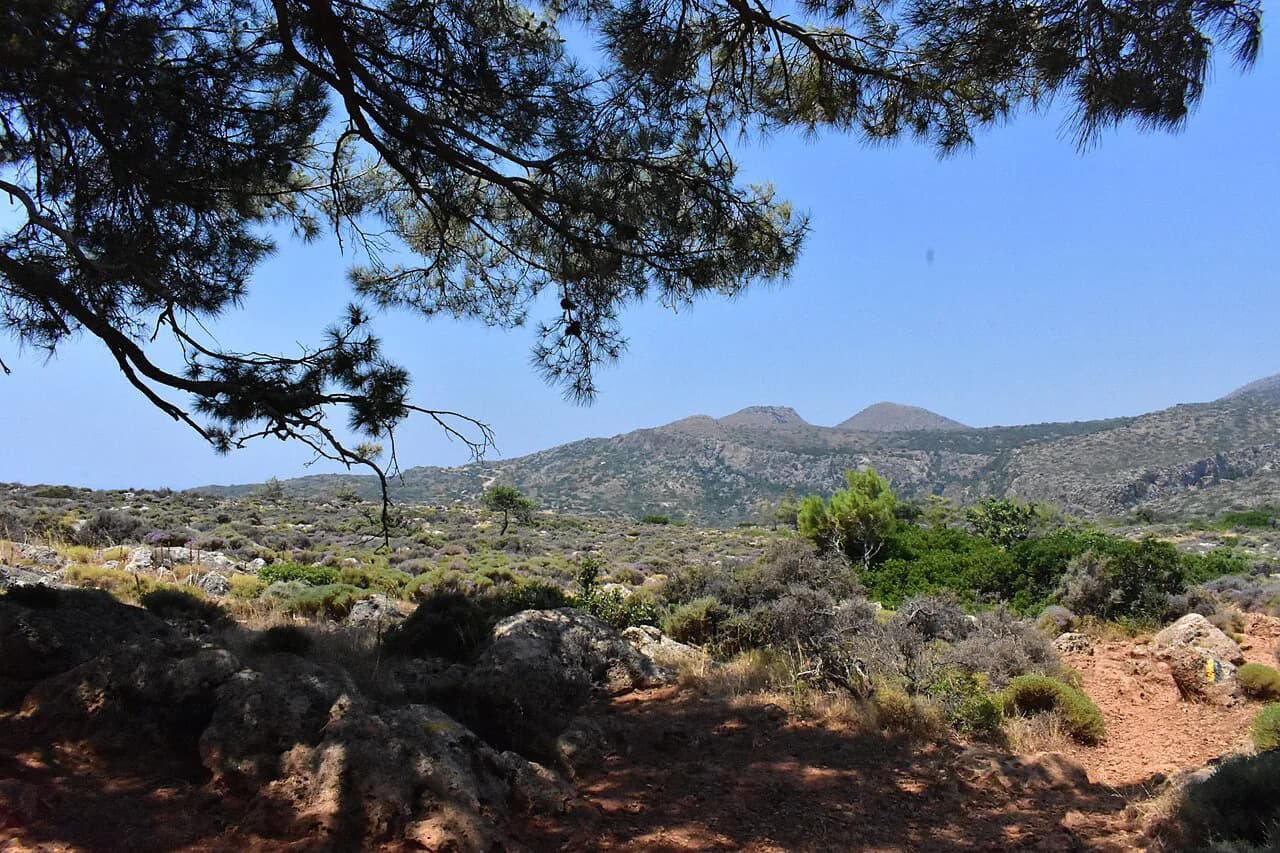
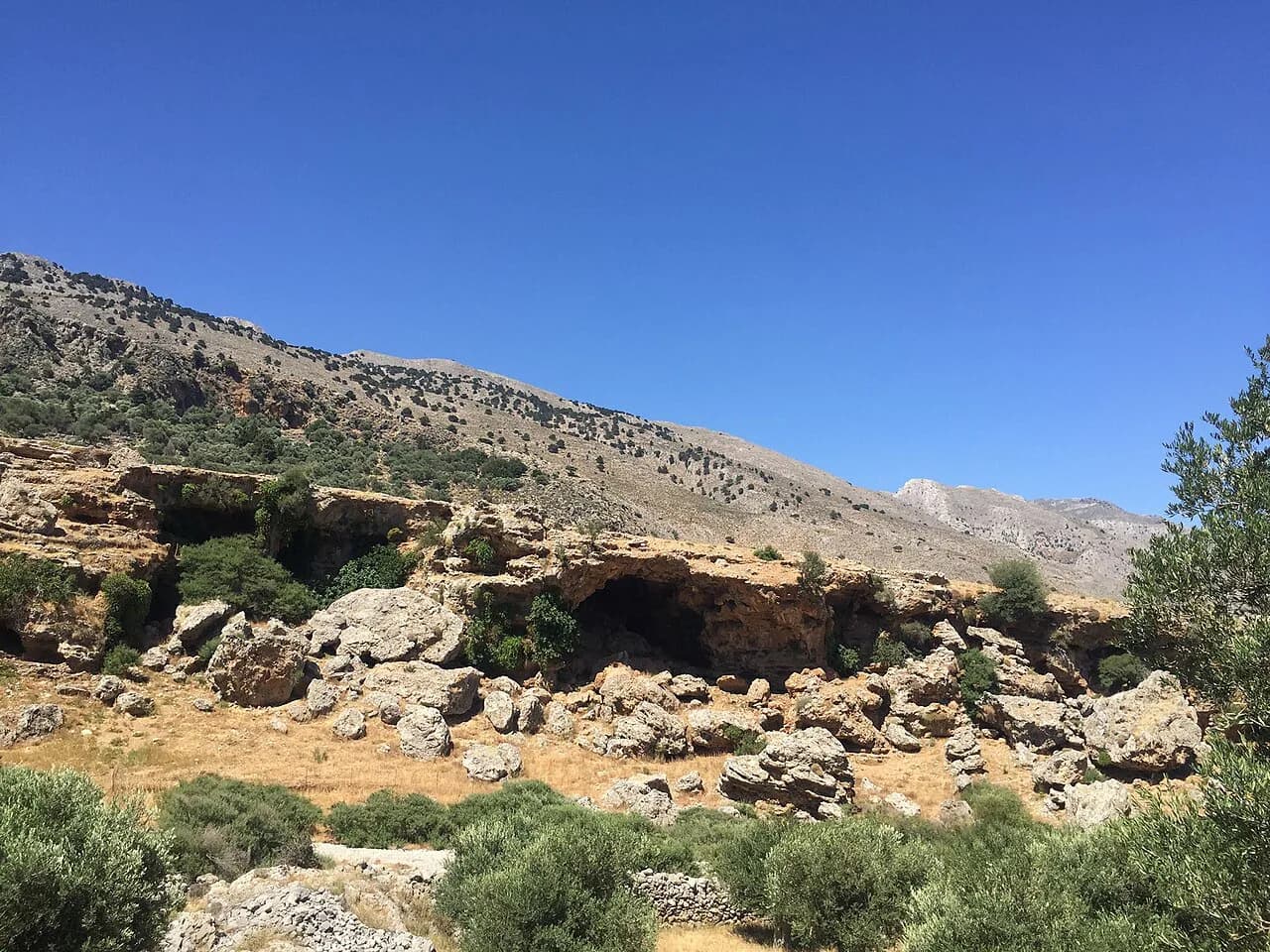
Agia Irini sits in the Chania regional unit of southwest Crete, on the road that runs south from the north coast toward Sougia and the Libyan Sea. The gorge drains the western White Mountains, so the walk combines shaded forest, narrowing limestone walls and a low, dry coastal exit rather than the high alpine terrain found further inland.
The trail is rated medium difficulty across its 12 km (7.5 miles), with roughly five hours of walking including the gorge section and the open stretch beyond it. That makes it a realistic day for hikers who walk regularly and can keep moving on uneven rock, but it is not a casual stroll in sandals.
It suits hikers who want a genuine gorge day without the logistics of a one-way national park route, since you finish near the coast at Sougia rather than at a remote mountain trailhead. If your group includes confident children or older walkers who manage rocky ground well, the medium grade and steady downhill direction work in your favor.
Trailhead and getting to the gorge entrance
The walk begins near the Agia Irini chapel and entrance on the Omalos–Sougia road, where the gorge trail leaves the roadside and drops between the first rock walls. Arriving early gives you the coolest hours in the narrow section and leaves time for the coastal finish before the afternoon heat builds.
Most hikers reach the entrance by road from Chania or from bases along the south coast, using a car, a taxi or an organized transfer, and the roadside entrance area is where vehicles stop. A GPS track for the route helps on the junctions where side paths branch toward the village of Agia Irini, particularly in the first kilometre.
Because the walk finishes at the coast rather than at the entrance, arrange your return before you set off: either park a second vehicle near Sougia, book a pickup, or join a private transfer that collects you at the coastal end. Private operators run this gorge as a self-paced hike with transport from your accommodation and a flexible finish, which removes the car-shuttle problem entirely.
Distance, ascent and walking time
The full route measures 12 km (7.5 miles), of which 7 km (4.3 miles) lie inside the gorge proper and 5 km (3.1 miles) fall outside it on the approach and the exit toward the coast. Plan on about five hours of walking for the complete traverse at a moderate pace, with breaks for photos and water on top of that.
The direction of travel is generally downhill from the mountain entrance toward the sea, so the gorge walls close in around you while your legs do the easier work. Treat the rock underfoot as the real difficulty: polished limestone, loose stones and short scrambles slow you down more than the gradient does, especially where the path is wet.
Build in extra time if you plan to walk the final open stretch to Sougia in the heat of the day, since the last kilometres leave the shade and cross exposed ground. Hikers who prefer a shorter day can arrange a pickup at the gorge exit instead of walking the full distance to the village.
Route description section by section
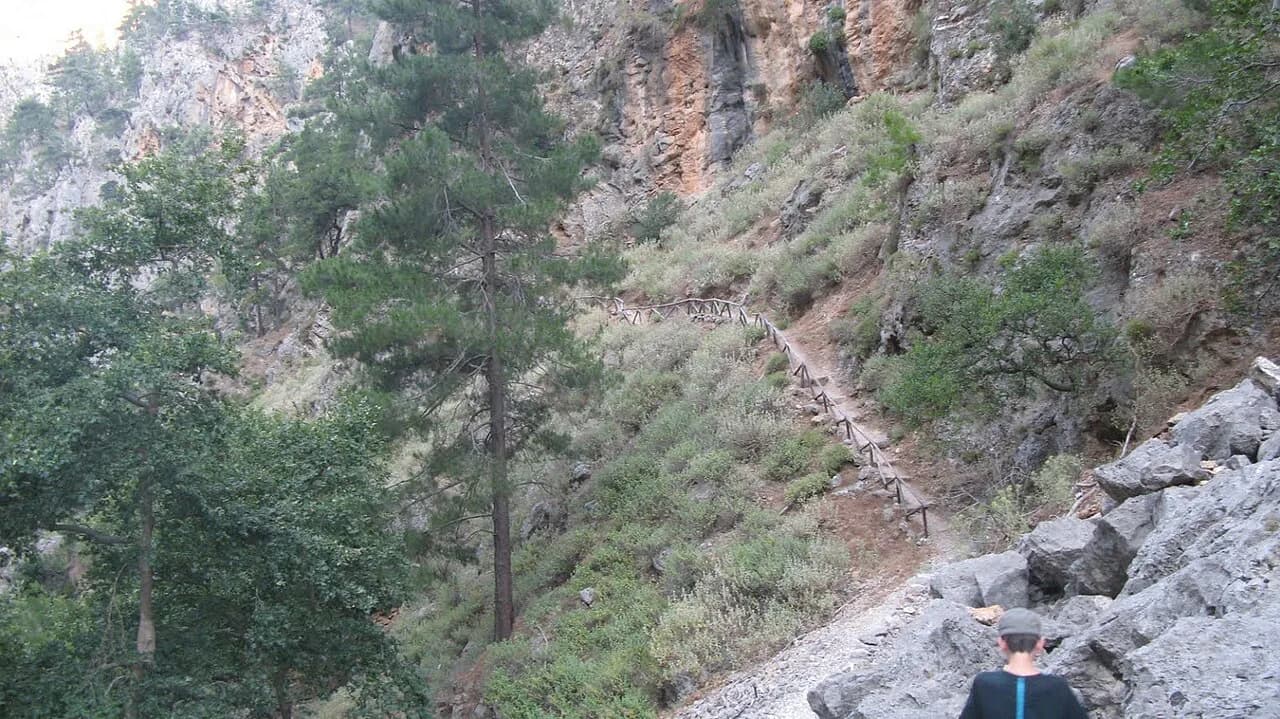
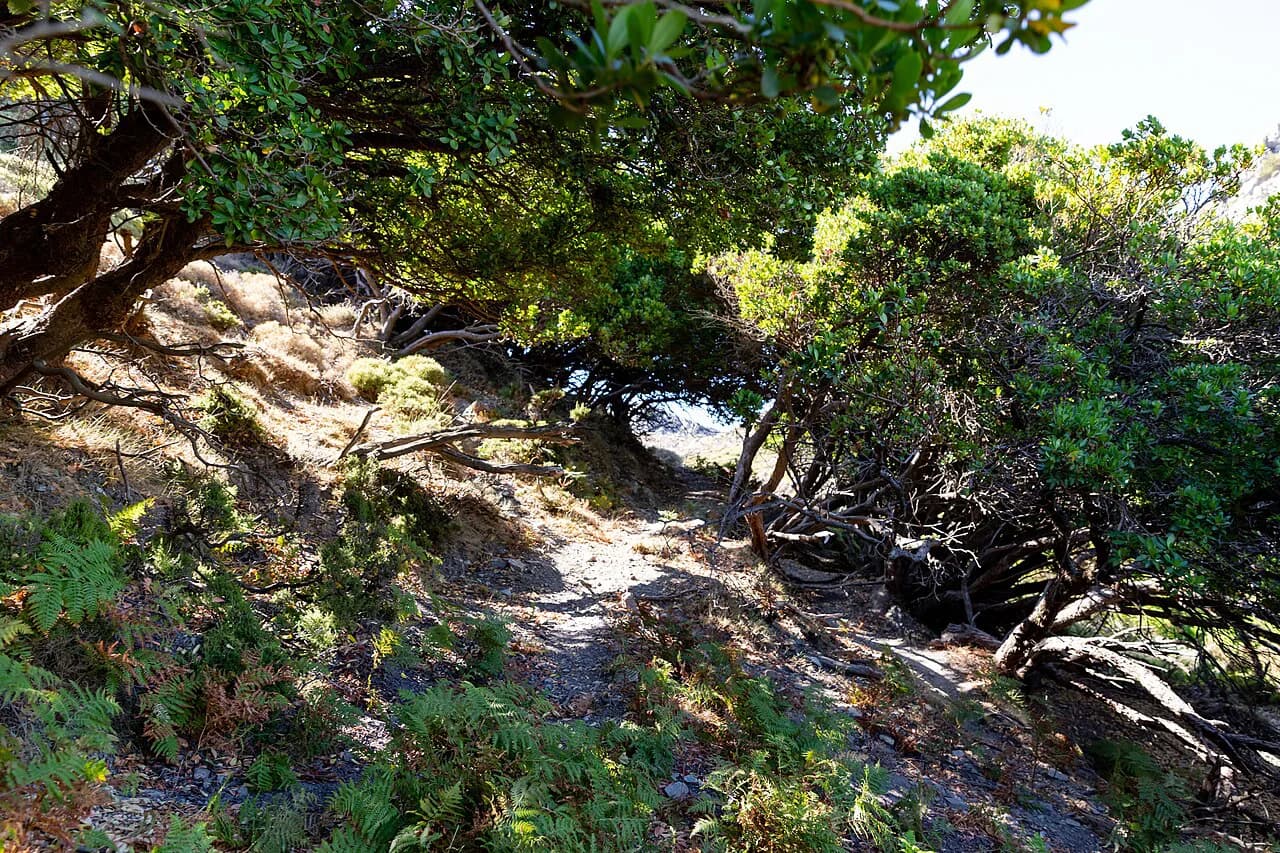
From the entrance the path descends steadily through pine and plane trees, with the walls rising gradually on both sides as you lose height. This first stretch is the most forested part of the walk, so it stays cool early in the morning and gives you a gentle introduction before the gorge narrows.
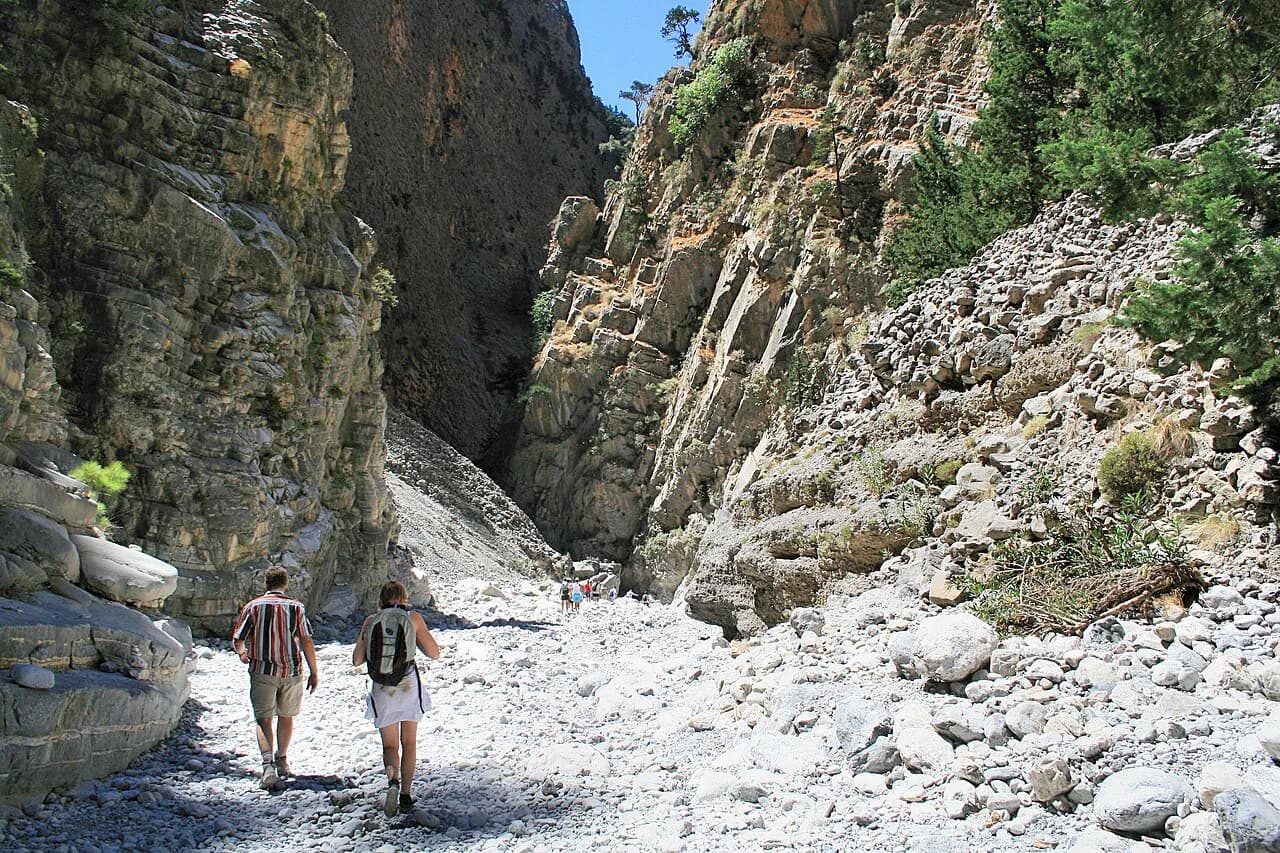
In the middle section the gorge tightens into a corridor of grey limestone, with short rocky steps and sections where you use your hands for balance. The walls shade much of the route, but side streams can leave the rock slick after rain, so take the scrambly corners slowly and keep your footing rather than your pace.
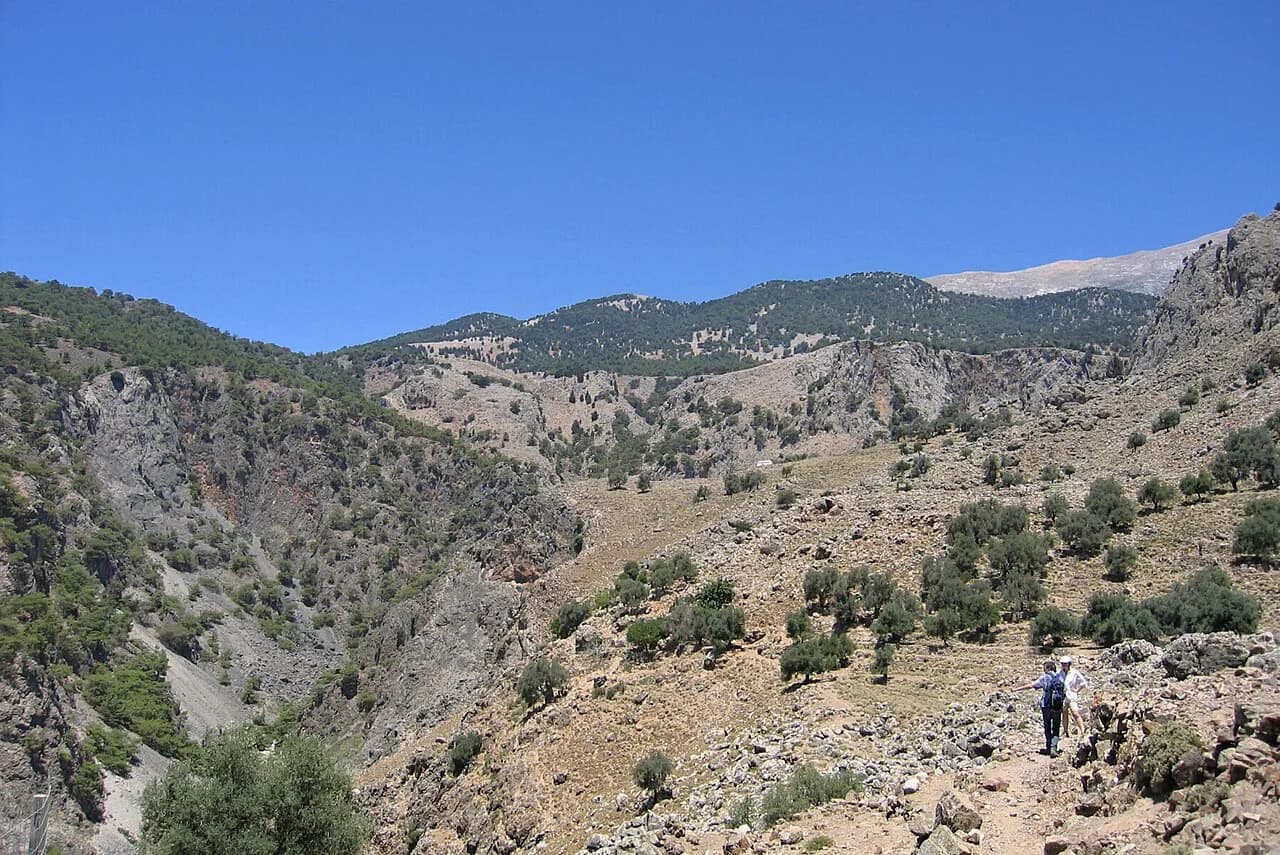
Toward the exit the walls open out and the vegetation turns drier and more Mediterranean, with the sea air arriving before the view does. The trail then meets the road corridor that leads down toward the coast, where the walking becomes easier but the sun exposure increases, so a hat and refilled water matter on this stretch.
The exit point near the coast is where most guided and private groups meet their transport, and it is also where you choose between walking on to Sougia or calling it a day. Note that the village of Agia Irini lends its name to the gorge but sits higher on the road, so read the trail junctions rather than following the village signposts.
The finish at the coast and the walk out to Sougia
The final 5 km (3.1 miles) outside the gorge bring you down to the coastal strip near Sougia, where the Libyan Sea and a pebble beach mark the end of the descent. Arriving at sea level is the reward for the day, and the water here is a genuine option for a swim once you have cooled down and changed.
Sougia itself is a small coastal village with tavernas along the seafront, making the finish easy to turn into a long lunch rather than a sprint back to the car. Private hiking experiences pair the gorge walk with time in Sougia for exactly this reason, adding a meal and a swim before the return transfer.
Sort out your return from Sougia before you start walking, whether that means a pre-booked transfer, a second car or a lift arranged with your accommodation. This is the single planning decision that most affects how relaxed the day feels at the coast.
When to go: seasons, heat and water in the gorge
Spring and early summer give the best balance of cool walking, running water in the gorge and long daylight for the coastal finish. Late autumn works well too, once the summer heat has eased, while high summer demands an early start to be out of the exposed sections before the afternoon sun peaks.
Winter rain can make the rock greasy and the side streams harder to cross, so check conditions locally after storms and be ready to switch to a lower, drier route. Crete's gorges are also prone to sudden thunderstorms in the shoulder months, and a narrow limestone corridor is the last place you want to be when water starts running.
Water sources inside the gorge should not be assumed, so carry enough for five hours of walking plus the open finish, and refill in Sougia rather than relying on springs along the way.
What to carry and how hard the ground is
Wear boots or grippy trail shoes with a proper sole, because the gorge floor is loose, stony and occasionally slick where water crosses the path. Trekking poles help on the scrambly middle section and spare your knees on the long descent toward the sea.
Carry at least two litres of water per person for a warm day, plus sun protection for the exposed final kilometres and a light layer for the shaded forest at the start. A headlamp is useful if you start late, since the narrowest parts of the gorge go dark well before sunset.
The ground is the main challenge rather than the distance: expect uneven steps, short hands-on moves and sections where you watch your feet instead of the view. Anyone with knee problems should plan for the downhill direction and consider poles, while hikers who dislike exposure to drops will find this gorge far more forgiving than the steeper Cretan alternatives.
Guided and private options for the gorge
Organized options for Agia Irini typically bundle transport from your accommodation, a guide or driver, water and snacks, and time at the coast afterward, with the walking itself left self-paced. That format suits hikers who want the logistics solved and the flexibility to stop for photos, swim or eat without worrying about the return car.
Expect a full-day commitment of roughly eight to nine hours including transfers, and check exactly what is included, since some packages cover lunch and others do not. Booking directly with the tour organiser lets you confirm the pickup point, group size and whether the price covers the full return journey, and check current dates and prices before you set out.
Independent hikers can replicate the day using a car shuttle or a taxi from Sougia back to the entrance, which is usually cheaper for groups of three or more. Either way, the gorge walk itself stays the same 12 km (7.5 miles) with about five hours of walking.
Agia Irini compared with Crete's busier gorge hikes
The Samaria Gorge is Crete's headline walk, longer and more heavily trafficked, with a one-way route through a national park and a boat or bus at the finish. Agia Irini offers a shorter day and a quieter path, trading some of that dramatic scale for easier logistics and far fewer people on the trail.
The Imbros Gorge is another lower-altitude option on the same side of the island, shorter and straighter than Agia Irini, which suits hikers who want a quick gorge fix rather than a full day ending at the sea. If you have time for two walks, pair Agia Irini's coastal finish with one of the inland gorges for contrast, and hikers weighing Greek island options beyond Crete can compare this day with hiking in Corfu on the Corfu Trail.
Hikers based in the White Mountains with more days can add the Aradena Gorge, a steeper and more serious descent reached from the Aradena bridge area, as a step up in difficulty from Agia Irini. For a broader look at how these routes fit together across the island, the Crete hiking guide sets out the main bases and seasons.
Plan Your Agia Irini Gorge Day
Agia Irini Gorge gives you a medium-grade, 12 km (7.5 miles) walk of roughly five hours that starts in mountain forest and ends at the Libyan Sea, with a swim and a taverna within reach at Sougia. Decide your return transport first, start early in warm months, and carry more water than you think you need for the exposed final kilometres.
If you want the coast finish without the car shuttle, a private transfer with time in Sougia solves the logistics, while independent hikers can arrange a pickup at the gorge exit. Either way, the narrow, rocky middle section rewards grippy footwear and a steady pace rather than speed.
Frequently Asked Questions
How long does the Agia Irini Gorge hike take?
Plan on about five hours of walking for the full 12 km (7.5 miles) route, which includes 7 km (4.3 miles) inside the gorge and 5 km (3.1 miles) outside it. Add time for breaks, photos and a swim at the coast, and start early in the warmer months to avoid the exposed finish.
Where does the Agia Irini Gorge trail start and finish?
The walk starts at the gorge entrance near the Agia Irini chapel on the Omalos–Sougia road and descends through the gorge before continuing on open ground toward the coast near Sougia. Because the finish is not at the entrance, arrange a pickup, a second car or a private transfer before you set off.
Is Agia Irini Gorge easier than Samaria Gorge?
Agia Irini is shorter and rated medium difficulty, with a gentler overall day than the long one-way Samaria route through the national park. It still involves rocky ground and short scrambles, so grippy footwear and reasonable fitness matter more than raw distance.
Can you swim at the end of the Agia Irini Gorge hike?
Yes, the route ends near the Libyan Sea coast by Sougia, where the pebble beach and clear water make a swim a natural end to the day. Bring a towel and a change of clothes if you plan to swim before the return transfer.
When is the best time to hike Agia Irini Gorge?
Spring and early summer offer cool walking, water in the gorge and long daylight, while late autumn is the other comfortable window once the heat has eased. In high summer, start at first light and carry extra water for the exposed final kilometres.
Do you need a guide for Agia Irini Gorge?
The trail is waymarked enough that many hikers walk it independently, and a GPS track helps at the junctions near the start. A guided or private option is worth it mainly for transport, since it solves the return from Sougia and adds a flexible coastal finish.
What should you carry for the Agia Irini Gorge walk?
Bring boots or grippy trail shoes, at least two litres of water per person, sun protection for the open finish and a light layer for the shaded forest. Trekking poles help on the rocky middle section and the long descent.
Sources
Trail notes for your next trip
Optional updates when we add or revise hiking guides.
You might also like
Continue reading
More guides you'll find useful