Crete Walking Holidays: Guided vs Self-Guided Tours
Compare Crete walking holidays: self-guided coast-to-coast routes through the White Mountains, guided group formats, daily distances and walking grades.
On this page
A walking holiday on Crete strings together three very different landscapes: the fertile farmed lowlands of Apokoronas, the high White Mountains, and a south coast reached through gorges. Operators package that arc as a multi-day route, either self-guided with luggage moved ahead or guided in a small group. This comparison focuses on what changes day to day between the two formats, so you can match one to your fitness, your tolerance for logistics and your travel dates rather than to headline price.
What a Crete walking holiday covers
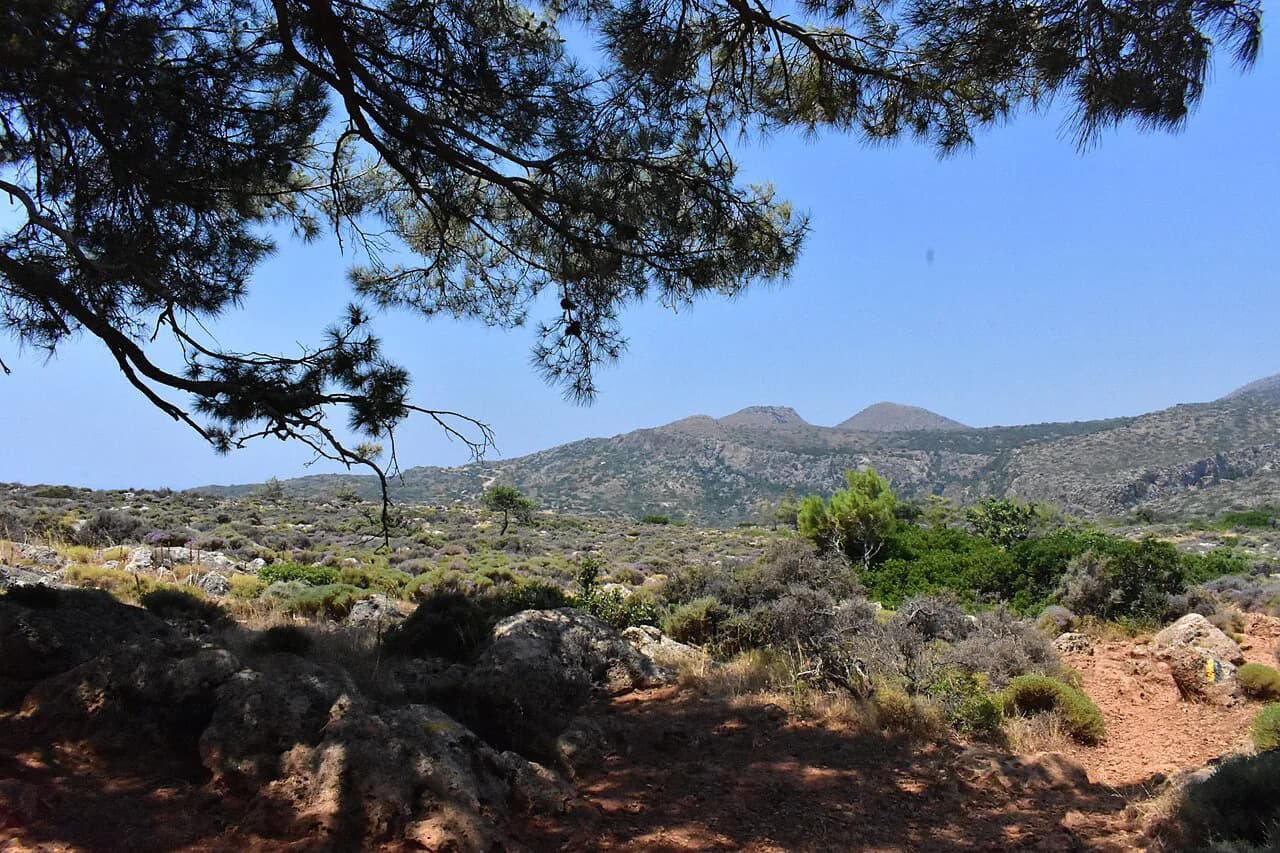
The standard Crete coast-to-coast product starts in Vamos, a traditional village east of Chania in the Apokoronas lowlands, where the walking is gentle and the days pass through farmland, olive groves and small settlements. From there the route climbs toward the White Mountains and the Askifou plateau, then descends through gorges to the Libyan Sea side of the island. That three-part structure matters when you compare operators: a tour heavy on the mountain middle section demands more climbing than one that lingers in the lowlands and finishes on coastal paths.
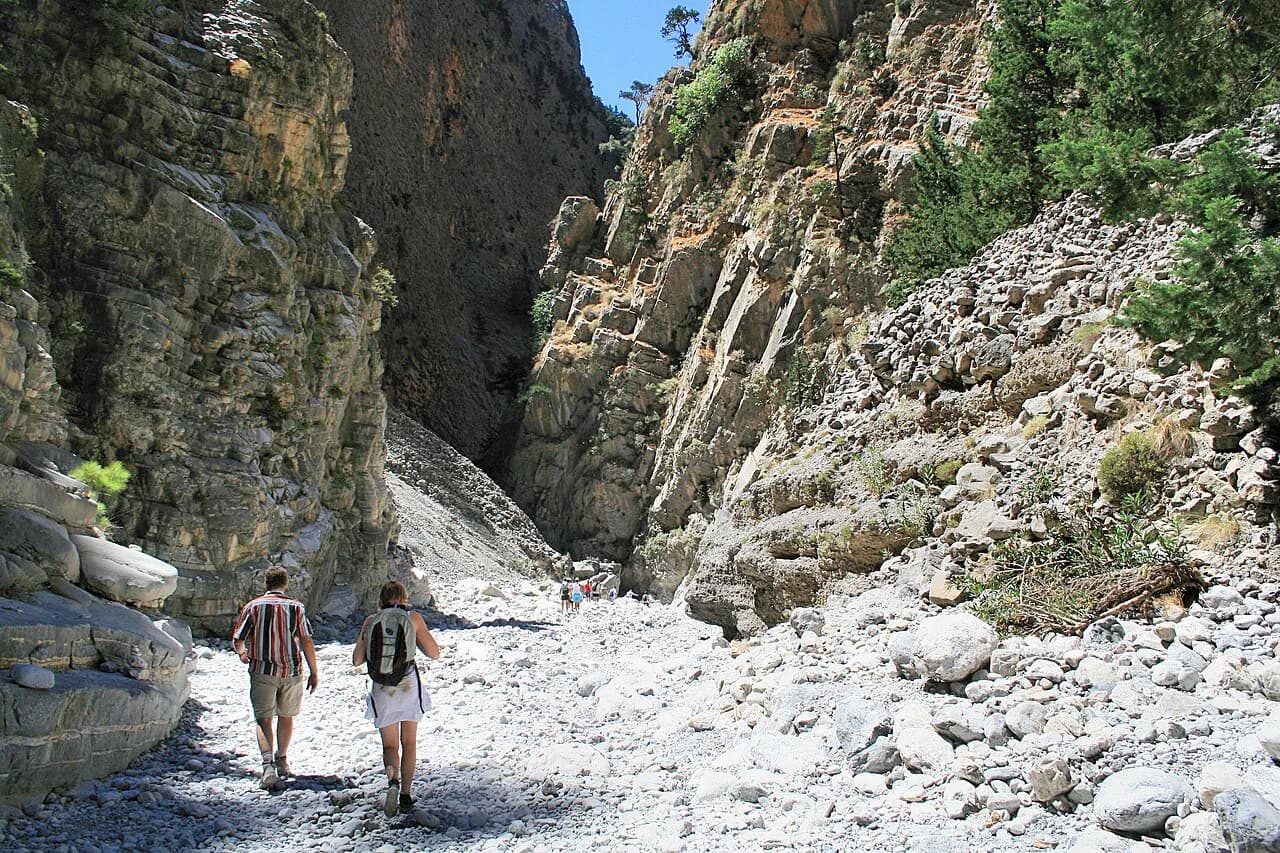
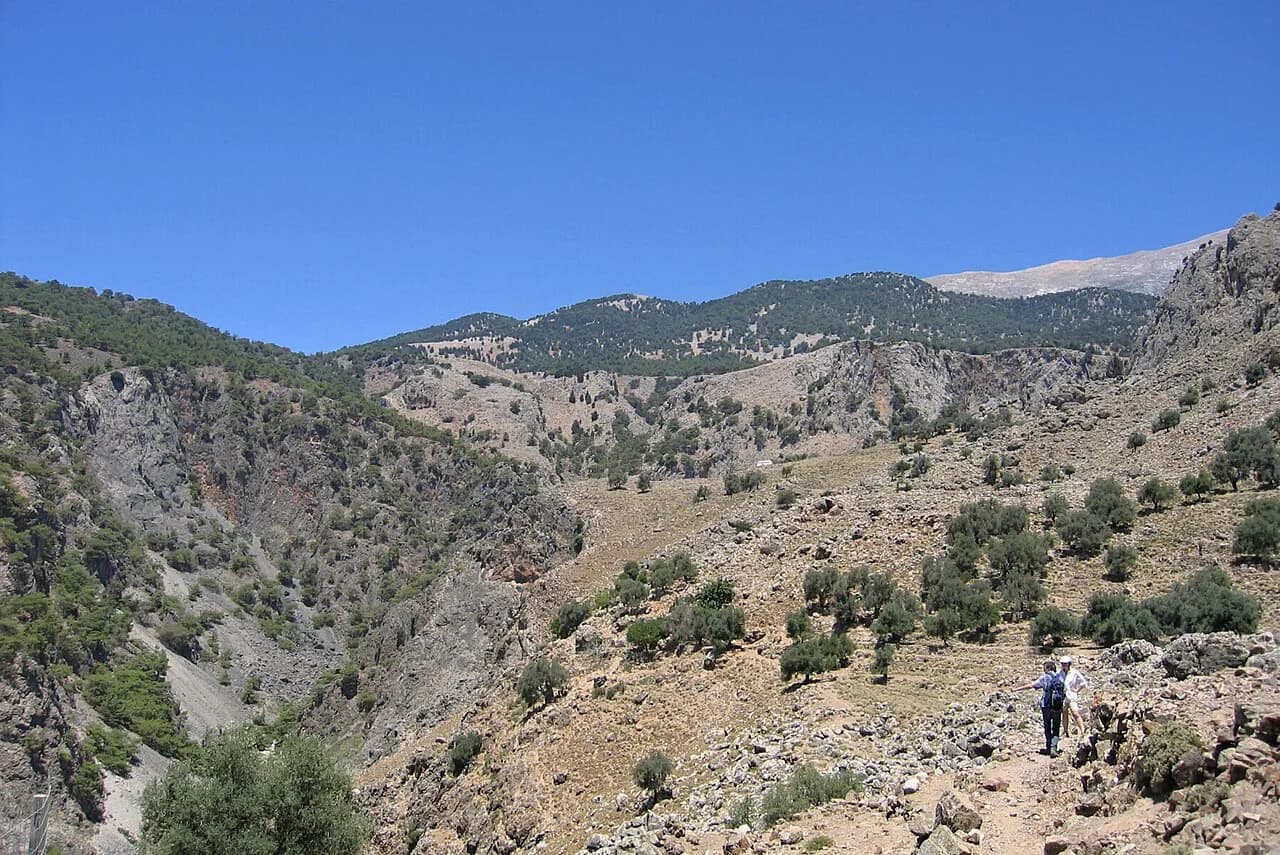
The gorges are the scenic centrepiece of most itineraries, and they are also where the terrain turns rough underfoot. Loose rock, shaded streambeds and steep-sided walls are normal, so footwear with a proper tread and poles earn their place on the mountain days. If you want the classic long gorge descent in detail, the Samaria Gorge hike is the benchmark route on the island and worth reading up on before you choose a tour that includes a gorge stage.
Self-guided versus guided: how each format works
On a self-guided tour you walk the route on your own using the company's route notes, maps and, increasingly, a navigation app, while it books your rooms and moves your bags between them. Ramble Worldwide's Crete Coast to Coast is sold on this basis as a bed-and-breakfast self-guided trip with handpicked accommodation and 24-hour support. The trade-off is independence against backup: you set your own start times and pace, but you handle navigation and weather decisions yourself.
A guided holiday puts a leader and a fixed daily schedule in front of you, with the group walking together and transport between stages arranged for you. That suits hikers who would rather not read a map at the end of a long day, or who are travelling alone and want company on the trail. S-Cape Travel markets its Greece walking range as self-guided, so its Crete product sits in the independent camp rather than the guided one.
Past guests on a Crete self-guided walking holiday describe the appeal as the mix of gorge walking and varied coastal paths, with friendly villages along the way. That feedback is useful for setting expectations: the reward is variety rather than a single headline summit, and the walking is a sequence of day routes rather than one continuous high-level traverse.
Self-guided coast-to-coast: the typical stage sequence
Operator itineraries for the Crete coast-to-coast follow a recognisable order: a first base in or near Vamos in Apokoronas, then a transfer or walk up to the Askifou area beneath the White Mountains, then mountain and gorge stages that drop you toward the south coast. Ramble Worldwide's day-by-day pages pair Vamos Village with a walking day of roughly 7.5 miles (about 12 km), around 4 hours and 400 m (1,300 ft) of ascent, then later a stay at Panorama Askifou with an 8.5-mile (around 13.7 km) day. Those are Ramble Worldwide's own figures for those stages, not a fixed standard for every tour.
S-Cape Travel lists its version as an 8-day Crete Coast to Coast coded GRSW001, running from Apokoronas via the White Mountains to the south coast, with a stated period of April to June and September to October. Comparing the two companies' stage lengths side by side is the fastest way to see which one paces the mountain days more generously. Longer mountain days mean more time on your feet above the villages, so look at how each splits the climbing when weighing up the two.
Daily effort: distances, ascent and walking grade
Ramble Worldwide grades this trip Grade 5, which it equates with Moderate: day walks averaging about 7 miles (11 km) with 650 m (2,130 ft) of ascent and descent, on generally decent paths and tracks with some steeper, rougher sections. That profile is the practical test of whether a tour suits you. If your regular weekend walk is a flat 5 miles, a week of 650 m climbing days will feel considerably harder than the grade label suggests.
Walking grades are not standardised between companies, so read the numbers behind the label rather than the word. Distance, total ascent, terrain description and the longest single day tell you far more than "moderate" on its own. Ask for the daily breakdown of each stage, including which days carry the most descent, because long gorge descents load the knees more than the climb does.
Crete's broader trail network, including the coastal and mountain paths beyond the classic gorges, is mapped out in our hiking in crete guide, which helps you put the tour stages in context. If your itinerary includes the famous national park stage, our Samaria National Park page explains the walk from the high plateau down to the coast.
Accommodation and luggage: what self-guided packages usually include
Self-guided packages on this route are typically sold on a bed-and-breakfast basis with rooms in village guesthouses and small hotels booked for you, and your main bag moved from one overnight stop to the next. Ramble Worldwide describes its itinerary as using handpicked accommodation including Vamos Village and Panorama Askifou, so accommodation quality varies by stage rather than staying constant. Pack for a day pack only, with your walking essentials on you and the heavy bag travelling separately.
Not every operator includes the same services, and luggage transfer is the item most worth confirming in writing. Ask whether transfers to and from trailheads are included, whether a navigation app or paper maps are supplied, and what support exists if a stage is cut short by weather. S-Cape Travel publishes guidance on how its self-guided trips handle luggage transport, trip documents, navigation and difficulty levels, which is a useful checklist for comparing any package.
When to go: spring wildflowers versus autumn walking months
Ramble Worldwide sells its Crete Coast to Coast from March to October, which is the widest window of the companies compared here. Early spring brings wildflowers across the lowland stages, but snow can linger on the higher White Mountains ground into the spring, so late spring is the safer bet for mountain days. Ask Ramble Worldwide what conditions to expect on the high stages at your chosen dates.
S-Cape Travel's stated period for its 8-day version is April to June and September to October, which avoids the full heat of midsummer. Autumn gives warm seas for a post-walk swim and generally settled weather, while summer heat makes long exposed climbs harder work. If your dates fall outside these windows, ask S-Cape Travel whether it runs a custom departure before assuming the route is unavailable.
Who each format suits
Self-guided suits confident navigators and couples or friends who want to walk at their own pace and stop when they like. It works less well for hikers who have never followed a route description in unfamiliar terrain, or for anyone who would find a wrong turn on a mountain day genuinely stressful. A guided group takes that pressure away and adds a leader's local knowledge, at the cost of a fixed schedule and less flexibility.
Solo travellers should weigh the single-supplement question before deciding: a guided group spreads the social side across the week, while self-guided solo travel means evenings on your own in village guesthouses. Mixed-ability parties often find self-guided formats easier to absorb, because a faster walker can go ahead and regroup at the next village. Ask your chosen company how it handles a party member who wants a shorter day on the mountain stages.
Gorges, villages and coastline: the terrain you actually walk
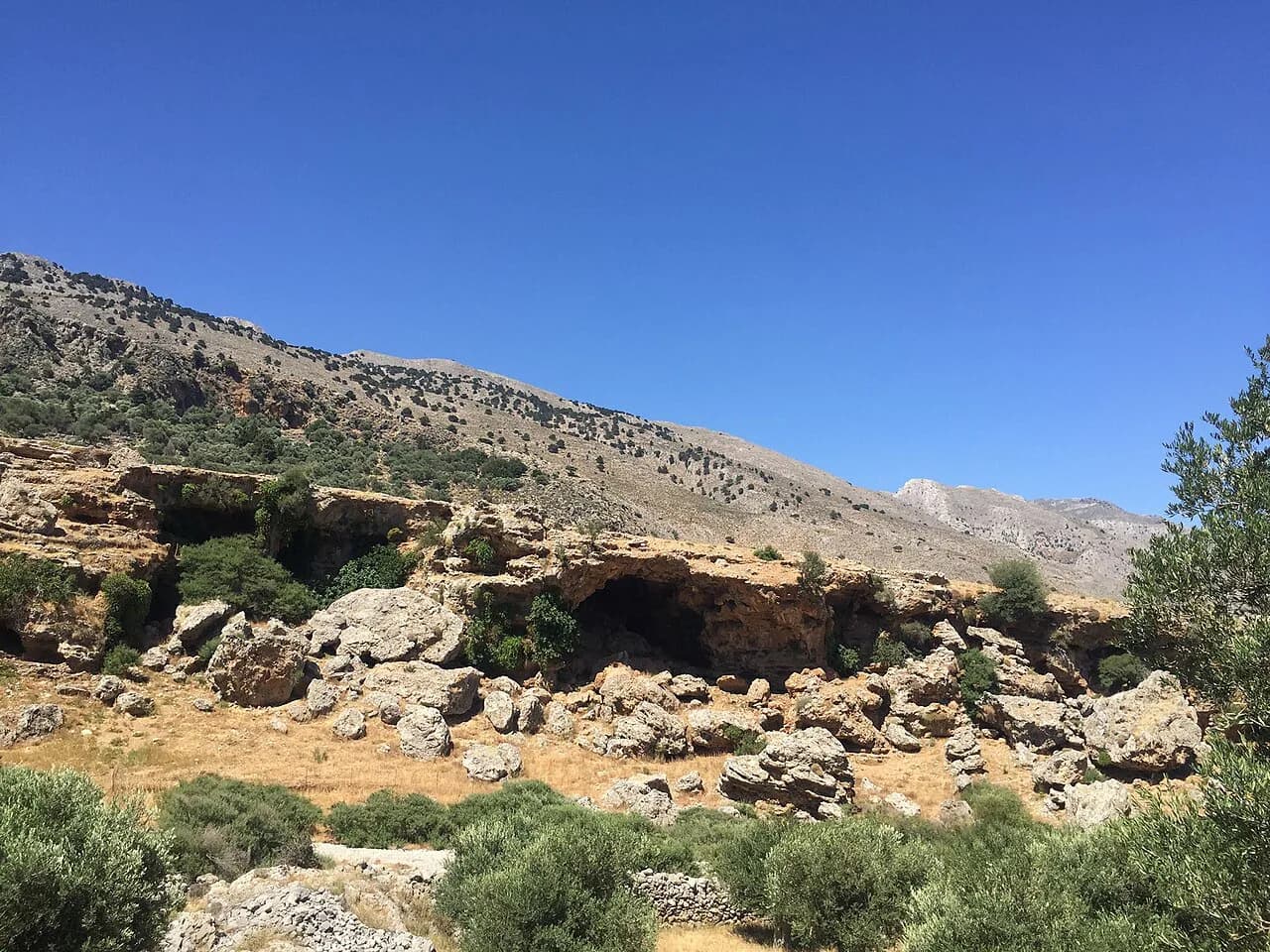
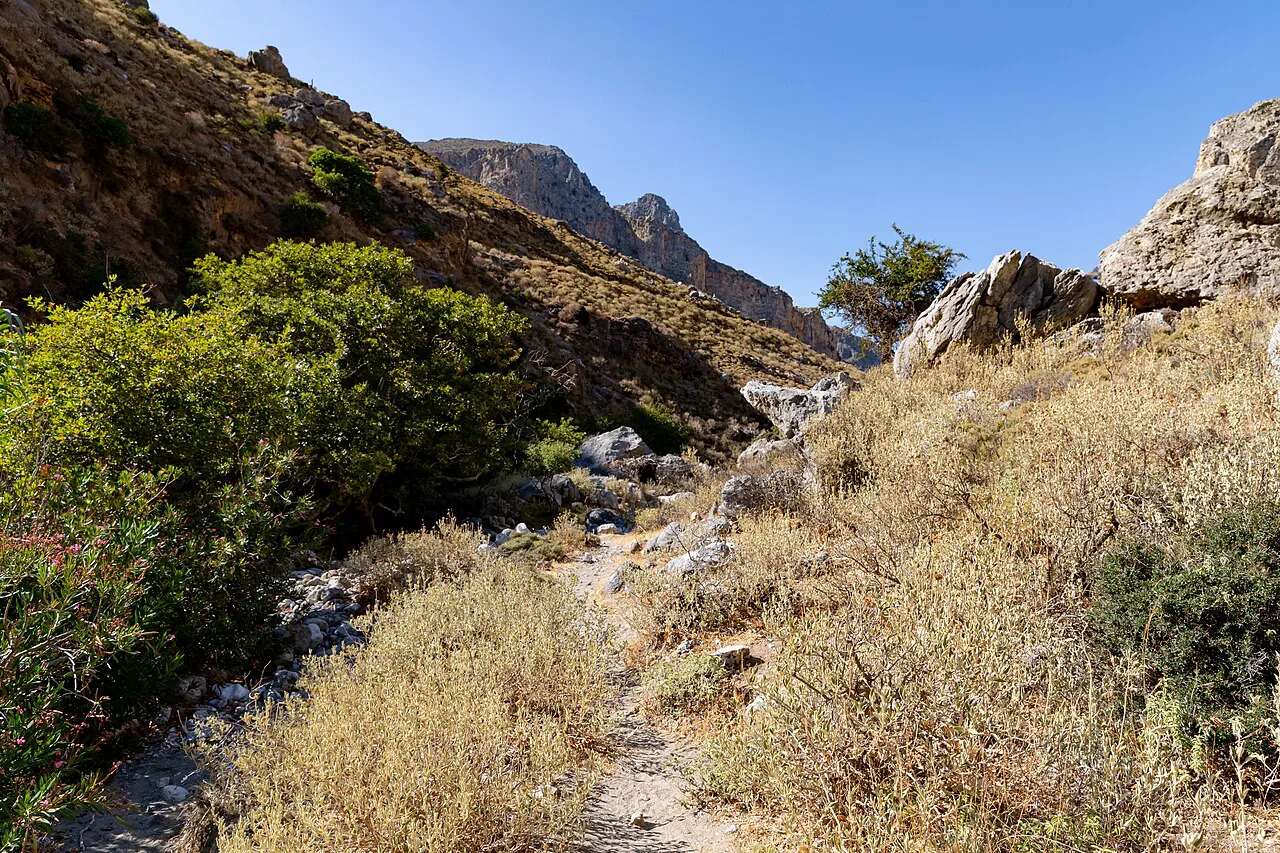
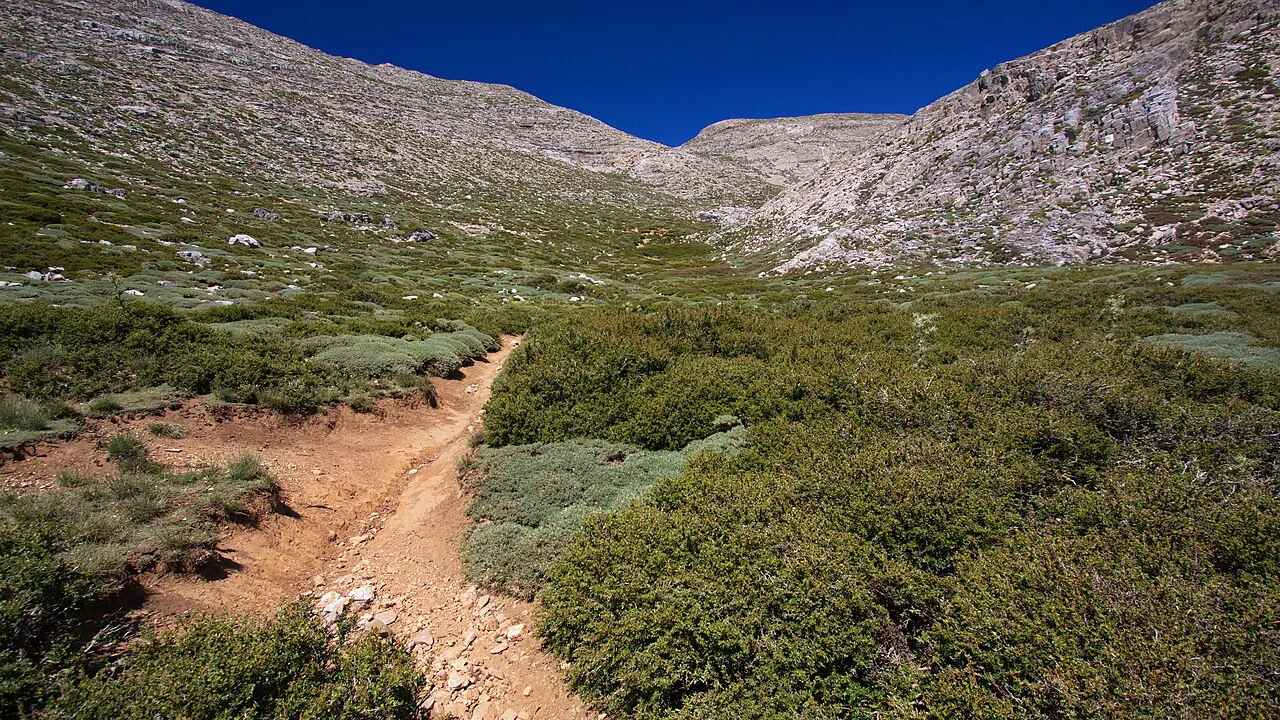
Expect three distinct surfaces across the week: farm tracks and lanes through Apokoronas, stony mountain paths and gorge floors beneath the White Mountains, and coastal paths on the south side. The gorge sections are the slowest going underfoot, with rock slabs and shaded streambeds that stay damp after rain. Allow more time than the quoted walking hours on those days if the ground is wet.
The villages are part of the walking, not just overnight stops: Vamos has cobbled lanes and a village life centred on its square, and the Askifou plateau opens wide views toward the mountain wall. Build in time to sit down for lunch rather than eating on the move every day. The south coast finish is deliberately remote, which is why some coastal settlements are reached only on foot or by boat.
Getting to the start and onward travel on Crete
The gateway is Chania, with Vamos in Apokoronas lying east of the city, and operator itineraries pair the start and finish with the accommodation they book. Ask your operator exactly where the trip begins, whether an arrival transfer is included, and how you are expected to reach the first hotel if it is not. That single question removes most of the friction from the first day.
Onward travel from the south coast finish back to Chania or to the airport needs planning in advance, because the finish point is not a major transport hub. Have your tour company state in writing what the final day includes, whether a transfer is part of the package, and how much time to allow before a flight. Book a late or next-day departure rather than gambling on a tight connection after the last stage.
Booking decisions: what to ask before you commit
Before booking, get the daily stage breakdown with distance, ascent and descent for each day, plus the longest and hardest day named explicitly. Confirm what the grade means in each company's own system, since Ramble Worldwide publishes a grade scale with stated averages and S-Cape Travel runs its own difficulty levels. Then check the inclusions: luggage transfer, trailhead transfers, maps or app access, and support arrangements.
Finally, pin down the travel window and the cancellation terms for mountain days that might be rerouted by weather. Operators publish departure dates and season windows on their tour pages, and prices vary by date and by whether flights are included, so read the booking page rather than a brochure headline. Ramble Worldwide, for example, quotes its trip price without flights on the tour page, so add your own airfare when comparing.
Choosing Between Guided and Self-Guided
Pick self-guided if you are comfortable following route notes, want to walk at your own pace and like the idea of bags moving ahead of you. Pick guided if you would rather someone else handled navigation, transport and the daily plan, or if you are travelling solo and want company. In both cases, match each company's daily ascent figures to your own recent walking rather than to the grade word on the brochure.
Whichever format you choose, the shape of the trip is the same: gentle Apokoronas opening stages, the climbing and gorge walking of the White Mountains, and a quiet south coast finish. If you are weighing up islands as well as formats, our comparison of Corfu walking holidays shows how the same guided-versus-self-guided decision plays out there. The same comparison carries over to hiking in Cyprus, where Troodos peaks and the Akamas coast raise equally different terrain questions. Get the stage-by-stage numbers, the season window and the transfer arrangements in writing, and the rest of the planning falls into place.
Frequently Asked Questions
What is included in a self-guided Crete walking holiday?
Self-guided packages usually include bed-and-breakfast accommodation booked for you, daily route notes or app access, and luggage transfer between overnight stops. Ramble Worldwide describes its version as using handpicked accommodation with 24-hour support, while S-Cape Travel publishes guidance on luggage transport, trip documents and navigation for its self-guided trips. Ask for the full inclusions list before booking, because trailhead transfers and maps are not automatic on every tour.
How hard is a Crete coast-to-coast walking holiday?
Expect moderate day walks with real climbing rather than flat coastal strolling once you reach the White Mountains. Ramble Worldwide rates its trip Grade 5 and describes daily walks averaging about 7 miles with 650 m of ascent and descent on generally decent paths and tracks, with some steeper, rougher sections. Long gorge descents are the knee-testing part of the week, so build up your downhill walking before you go.
How far do you walk each day on a Crete walking tour?
Daily distances vary by operator and by stage. Ramble Worldwide's itinerary quotes a walking day of roughly 7.5 miles with about 4 hours and 400 m of ascent near Vamos, and an 8.5-mile day later from Panorama Askifou. Its grade averages sit around 7 miles and 650 m of ascent and descent per day. Ask each operator for the stage-by-stage breakdown so you can see which days are the longest and which carry the most descent.
Sources
Trail notes for your next trip
Optional updates when we add or revise hiking guides.
You might also like
Continue reading
More guides you'll find useful