Corfu Walking Holidays: Guided vs Self-Guided Tours Compared
Compare guided and self-guided Corfu walking holidays by daily distance, ascent, terrain, luggage transfer and season, and pick the format that fits your pace.
On this page
A Corfu walking holiday gives you olive groves, cobbled mule tracks and long coastal views without the altitude of an Alpine trip, and the island rewards hikers who split their days between the quiet west coast and the greener, higher interior. The choice that shapes your week is format: a guided group tour with a leader and fixed stages, or a self-guided hotel-to-hotel route where you walk on your own notes and your bag moves ahead. Either way, the planning is really about matching daily distance and ascent to your fitness and picking a season that avoids the summer heat.
Corfu is a good Greek island for a walking holiday because the terrain ranges from gentle seaside paths to the island's highest summit, Pantokrator, without ever demanding technical climbing. Below, the daily figures come from named operator itineraries so you can compare real stages rather than vague grades.
What a Corfu Walking Holiday Covers
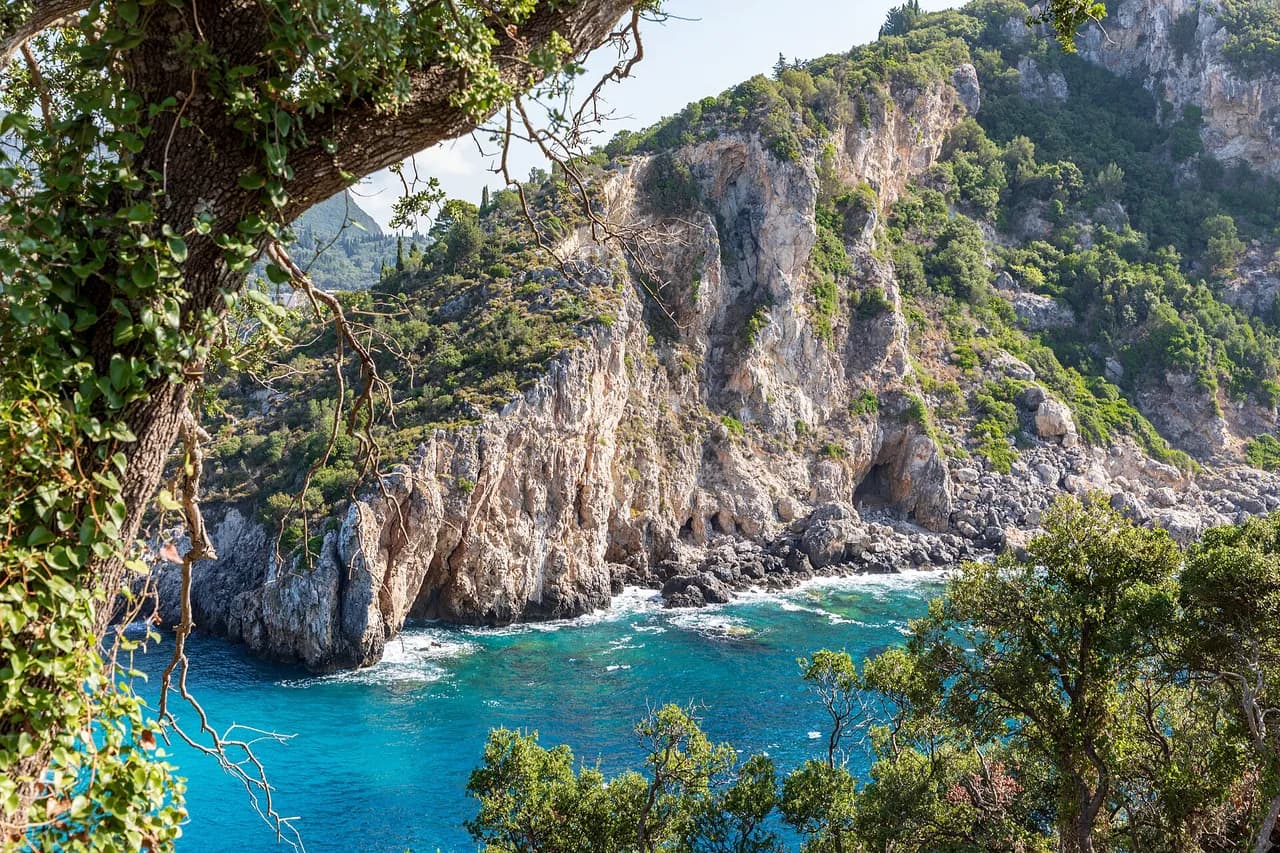
Most organised Corfu walking holidays draw on three landscapes: the west coast around Paramonas, Pelekas and Liapades, where footpaths link hill villages above sandy bays; the long-distance Corfu Trail, which threads the island north to south; and the higher interior, where Pantokrator and the karst plateau around it give the biggest views and the longest days. In the south and east, the Korission coastal lagoon and the villages above Benitses add flatter, wildlife-rich walking.
Self-guided trips tend to be hotel-to-hotel along the coast, with shorter stages and a rest day in Corfu Town, while guided group tours cover more ground and often finish with a summit day. A week rarely covers the whole Corfu Trail, so most trips take either the west-coast section or the northern half.
Guided Group Tours: Distance, Ascent and Group Size
A guided group format suits hikers who want the logistics handled and the company of a leader and a small group. One northern Corfu Trail trip runs eight days with a maximum group of 16 and an average of about 11, mixing four nights in comfortable hotels with three in simple pensions, and carries a Moderate and Challenging grade.
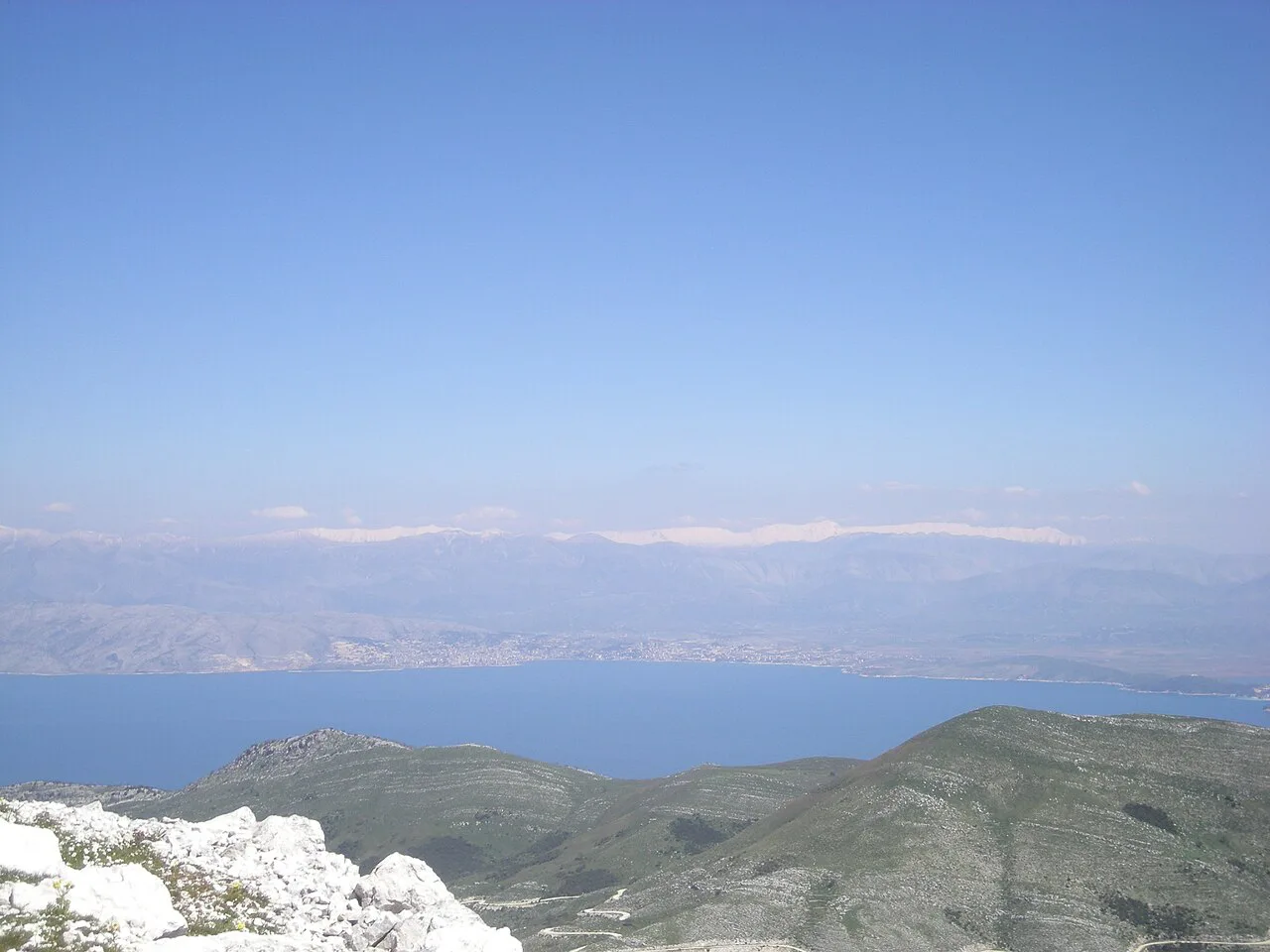
That grade matters: guided days are longer and include some strenuous sections or rougher terrain, so you should be comfortable walking most of a day with real ascent rather than treating the leader as a safety net for fitness. The reward is reaching the summit of Pantokrator and passing remote monasteries and hillside villages on the karst plateau, with views across the sea to Albania.
Published prices and departure dates change by season, and the self-guided walking holiday companies price the land arrangement and deposit separately from flights, so budget for airfare on top and check the current figure when you book.
Self-Guided Hotel-to-Hotel Tours: Luggage, Notes and GPS
Self-guided hotel-to-hotel walking puts you in charge of pace while a company moves your luggage and books the rooms. On a seven-night west-coast route, that means breakfast daily, several dinners and picnics, luggage transported between three small hotels, printed route notes and GPS navigation, plus a transfer on one of the days.
Self-guided works best if you are happy reading notes and following a GPS track on your own, and if you want flexibility to add rest days or shorten a stage. The trade-off is no leader to adjust the plan when weather or legs intervene, so you should be confident navigating waymarked paths and mule tracks before you go. Companies such as Inn Travel and Macs Adventure publish their season windows and per-person prices by date, so compare them with your own dates rather than assuming spring and autumn rates match.
West Coast Itinerary: Paramonas, Pelekas and Liapades
The west-coast route builds from south to north, starting with an introductory circuit above Paramonas to Mount Agios Matthaios (465 metres) for a panorama of southern Corfu: 11.5 km (7.1 miles), about 4.5 hours, with 500 m (1,640 ft) of ascent and descent.
Day two is shorter but gains height into the hill village of Pelekas: 9.5 km (5.9 miles), about 3.5 hours, with 345 m of ascent and 250 m of descent, following sections of the Corfu Trail through olive groves and the village of Sinarades to the Aerostato viewpoint above Agios Gordios bay. Pelekas then serves as a base for a relaxed 9 km circuit down to two beaches, with 375 m of ascent and descent.
The long day is Pelekas to Liapades at 19 km (11.8 miles), roughly eight hours, with 515 m of ascent and 680 m of descent through the Ropa Valley, a wooded nature reserve and the village of Giannades. The final walking day returns along the cliffs from Liapades via the cobbled trail to Lakones and down to Agios Georgios bay, 15 km with 480 m of ascent and 570 m of descent, with a taxi transfer back.
The descent into Liapades is on cobbles and stone tracks, which are slippery after rain, so keep something in reserve for the last hour of the long day. For the Paleokastritsa cliffs and the paths above them, see the Paleokastritsa hike guide and plan a shorter stage if you want time in the bay.
North and Inland: Pantokrator, the Karst Plateau and Monasteries
The northern guided route heads toward the coastal town of Kalami before crossing the karst plateau past remote monasteries and hillside villages to the summit of Pantokrator, Corfu's highest mountain, crowned by a 17th-century monastery. Days are graded Moderate and Challenging, so treat this as the fitter option: expect longer walking days, some strenuous sections and rougher ground underfoot than the coastal hotel-to-hotel route.
The plateau is open and exposed, with little shade between villages, so sun protection and plenty of water matter more here than in the olive groves below. For the summit path in detail, the Mount Pantokrator Hike, Corfu page breaks down the climb and the lines of approach.
This northern trip can be combined with a southern counterpart to walk the whole Corfu Trail over two weeks, which is the better choice if a week of coast and plateau leaves you wanting the lagoon and eastern villages too.
South and East: Korission Lagoon, Benitses and Sinarades
A southern itinerary starts from Messonghi on the east coast, a former fishing village with a sandy beach, and transfers you to Issos Beach beside Korission Lagoon for the first walk: 15 km (9.3 miles) with 118 m of ascent and 122 m of descent, climbing past olive groves and vineyards to Chlomatiana before dropping back to the coast.
From Messonghi a roughly 20-minute bus ride reaches Benitses, where a loop of 13.5 km with 522 m of ascent and descent climbs through forest to a 19th-century irrigation waterworks, the village of Agioi Deka and the church viewpoint of Agia Kyriaki. A further stage from Stroggili climbs the slopes of Agioi Deka (676 m), Corfu's second-highest peak, on mule tracks past mountain villages and a monastery to Sinarades, then continues to Corfu Town.
The lagoon section is flat and gentle, making it a good first or rest day, but the paths beside the water are also where you are most exposed to heat, so walk it early. The Benitses loop's steep forest descents are the technical part of this itinerary, particularly after rain.
Coastal Town Walking: A Corfu Town Rest Day
Corfu Town makes a sensible rest day that still keeps you on your feet: a self-guided walking tour of the old town covers about 6 km (3.7 miles) with only 55 m of ascent and 70 m of descent, wandering the narrow streets and Venetian architecture. A regular bus runs to Corfu Town, and the same day can extend to Vlacherna Monastery on its tiny island, reached by a jetty.
For anyone based at Liapades, an alternative short day is a linear walk from Paleokastritsa back to the village, 6.5 km with 290 m of ascent and 230 m of descent, starting with a taxi to the 12th-century monastery above the bay. Both options give your legs a break without losing a day of walking.
Distance, Ascent and Terrain: Matching a Grade to Your Fitness
Read the daily numbers, not just the grade label. On these itineraries, a moderate day is roughly 9 to 13 km with 350 to 520 m of ascent, while the hardest west-coast day is 19 km with 515 m of ascent and 680 m of descent, and the northern guided route is explicitly graded with strenuous sections.
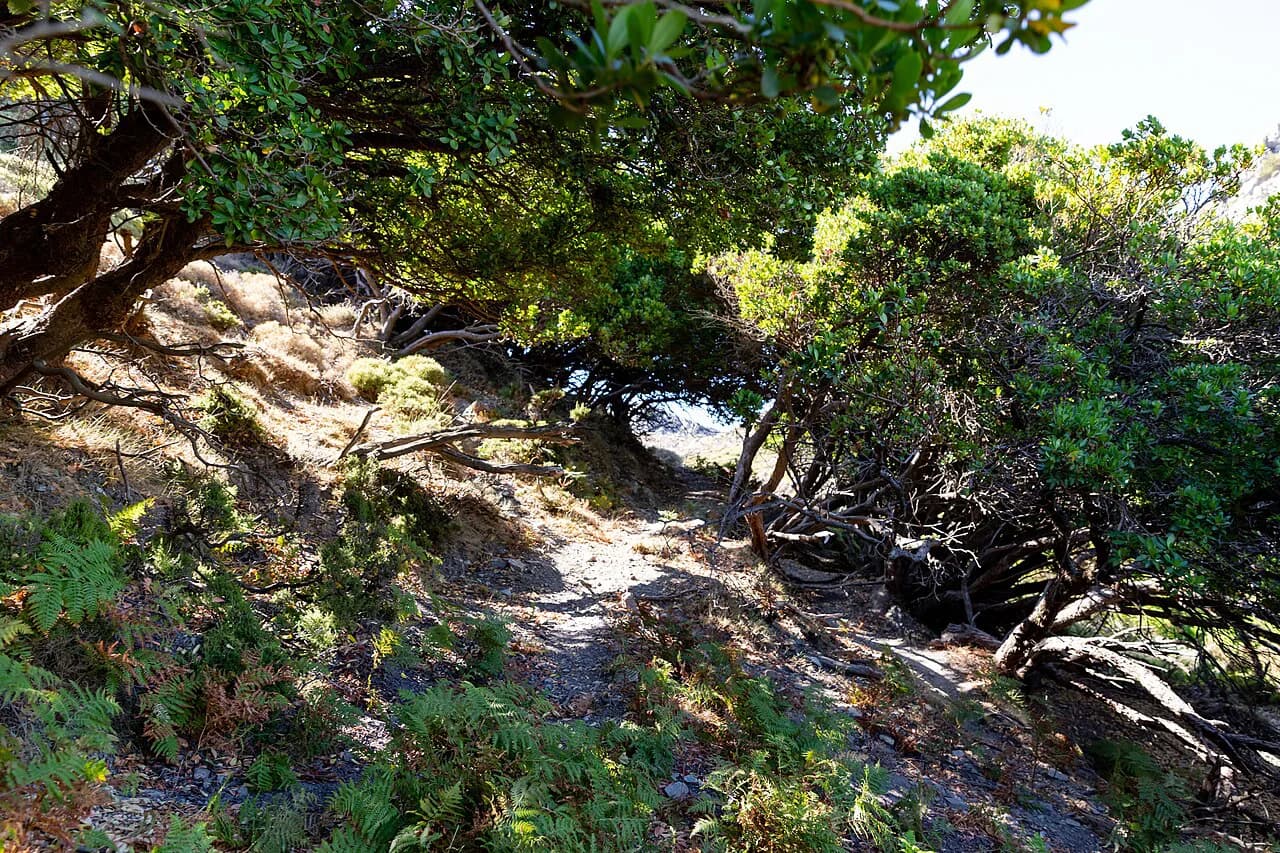
Terrain on Corfu is mostly cobbled mule tracks, olive-grove paths and country lanes, which are slower than smooth trail and hard on the feet in descent. The higher karst ground is rougher again. If your usual weekend walk is a flat 10 km, build hill sessions and longer days before booking a trip that includes a Pantokrator summit or the 19 km stage.
For the full picture of marked routes and how the sections link, the Corfu Trail guide is the place to start before you choose an operator itinerary.
When to Go: Spring and Autumn Windows
The organised seasons cluster around late spring and early autumn. The west-coast hotel-to-hotel route runs from 10 May to 30 June and from 1 September to 10 October in its published 2026 and 2027 windows.
Rainfall tells the same story: roughly 51 mm in May and 73 mm in September, against 14 mm in July, but with October back up to around 150 mm. Late May, June and September are the sweet spots for long walking days, and September sea temperatures still allow a swim at the end of a stage.
The southern self-guided itinerary is available May to June and September to October, so the same season logic applies whichever format you pick.
Hotels, Village Bases and Where to Stay
Corfu walking holidays use small hotels and village guesthouses rather than mountain huts, so there are no dormitory bookings or alpine-club reservations to make. On the west-coast route you sleep in Paramonas, Pelekas and Liapades, with the last three nights at a rural hotel a short walk from the village, and each base has a pool or garden for the afternoons.
A hill-top base such as Pelekas gives you sunset and sunrise views and quick access to the Aerostato viewpoint, while Liapades puts you within reach of Paleokastritsa, Lakones and Agios Georgios bay. Southern itineraries base you in Messonghi and Corfu Town, which give easy bus links along the east coast.
Getting There and Between Stages
Corfu is reached by air into the island's airport, with a short transfer to the first hotel; one southern itinerary puts the transfer to Messonghi at about 10 minutes. Between stages, operators use taxis, buses and included transfers rather than long trail approaches, and on the west-coast route a local bus connects the Liapades hotel with Corfu Town.
If you plan a rest day in the capital, the bus stop near the Liapades hotel is about 1.5 km from the door, and a taxi reaches Paleokastritsa for the short linear walk back. For the northern route, transfers and transport are part of the tour, so you do not need to arrange them yourself.
Which Format Suits Which Hiker
Choose self-guided hotel-to-hotel if you want short to medium days, luggage moved for you, a pool at the end of each stage and the freedom to add rest days; the published prices, season windows and included meals are set out by each walking holiday company. Choose the guided group format, such as Explore's Walking the Corfu Trail (North), if you want the longer days, the Pantokrator summit and company on the trail, and you are comfortable with a Moderate and Challenging grade.
If you are comparing island options, Crete walking holidays offer bigger mountains and longer trails in the White Mountains, but Corfu's appeal is different: gentler paths, coastal sunsets and village-to-village walking within a week. Families and new hikers generally do better on the west coast, while fitter walkers with hill mileage behind them will get more from the northern route.
Plan Your Corfu Walking Trip
Start with your realistic daily distance and ascent, pick the west-coast hotel-to-hotel route if you want shorter stages and luggage transfer, or the northern guided trip if you want the karst plateau and Pantokrator. Match your dates to the May to June or September to October window, then check the current price and departure of your chosen Inn Travel or Macs Adventure itinerary against your own travel dates before booking.
Whichever format you choose, pack for cobbled descents and exposed high ground, and give yourself a Corfu Town rest day as part of the plan rather than an afterthought.
Frequently Asked Questions
What is the difference between guided and self-guided Corfu walking holidays?
Guided trips put you in a small group with a leader, longer days and fixed stages, often including the climb to Pantokrator and the karst plateau. Self-guided hotel-to-hotel trips give you route notes, GPS navigation and luggage transfer, so you walk at your own pace on shorter stages between village hotels on the west coast.
How far do you walk each day on a Corfu walking holiday?
On the west-coast hotel-to-hotel itinerary, days range from about 9 km to 19 km, with ascent of roughly 250 m to 680 m depending on the stage. The northern guided route has longer and more strenuous days graded Moderate and Challenging, so compare the published daily figures.
When is the best time for a walking holiday in Corfu?
Late May, June and September offer the best balance of warm but manageable temperatures and low rainfall, while July and August are hottest. The published tour seasons run from May to June and September to October, so book within those windows and check the month's average highs and rainfall against your own heat tolerance.
Do Corfu walking holidays include luggage transfer?
Self-guided hotel-to-hotel tours do include luggage transported between your hotels, along with route notes and GPS navigation. Guided group tours generally move as a group with transport provided, so you carry only a daypack each day instead of planning transfers yourself.
Is Corfu a good Greek island for a walking holiday?
Yes, if you want varied terrain without technical climbing: coastal footpaths, olive-grove mule tracks, the long-distance Corfu Trail and the island's highest summit, Pantokrator. The main trade-off is that summer heat limits walking hours, so spring and autumn are the seasons to plan around.
Can you walk the whole Corfu Trail in a week?
No, a single week covers either the west-coast section or the northern half on the itineraries described here. The northern guided trip can be combined with a southern counterpart to walk the whole Corfu Trail over two weeks if you want the full island.
Sources
Trail notes for your next trip
Optional updates when we add or revise hiking guides.
You might also like
Continue reading
More guides you'll find useful