Slovenia Walking Holidays: Guided vs Self-Guided Choice
Compare guided and self-guided walking holidays in Slovenia by region, daily distance and base village, then match the Julian Alps or Soča Valley to your fitness.
On this page
Slovenia packs several distinct walking regions into a small country: the Julian Alps and Triglav National Park, the twin lakes of Bled and Bohinj, the alpine town of Kranjska Gora, the Soča Valley and the gentler Logar Valley. A week's holiday can reasonably combine two of them, which is why organized trips usually move base once or twice. This guide helps you choose a format and a region before you compare itineraries.
Most walking holidays in Slovenia are sold either as fully guided small-group trips with coach transfers, or as self-guided trips with route notes and transported luggage. The two formats produce very different days, and the region you pick matters more than the company you book with. Read the daily distances in each itinerary rather than the grade label alone.
Why Slovenia works for a walking holiday
The walking regions sit within a few hours of each other, so a single trip can pair lake walking with high alpine valleys. A guided itinerary can move you from Lake Bohinj to Kranjska Gora and out to the Vršič pass without you arranging anything. Self-guided trips tend to use two or three bases connected by pre-arranged transfers or a short bus ride.
Distances are modest, which keeps the days manageable. Slovenia's walking trips often involve a daily drive of an hour or less between bases, leaving the bulk of the day on foot.
The two formats: guided group trips vs self-guided holidays
A fully guided trip places you in a group of walkers with a local mountain guide, a coach that moves you between valleys, and usually half board at hotels. The appeal is that you never plan a route, carry a heavy pack or sort out transfers. The trade-off is a fixed departure schedule and a shared pace. Each walking day typically offers a moderate and a challenging route, so a mixed group can split up.
Self-guided holidays work to your own timetable, with detailed route notes and, on hotel-to-hotel trips, luggage moved ahead to the next guesthouse. You walk alone or with your partner, eat when you like and stop for as long as you want at a waterfall. The trade-off is that you must be confident reading a route description and handling a mountain day without a guide alongside you.
Both formats run on foot rather than on fixed hour-by-hour schedules. A guided day at Lake Bohinj and Bled might include a free afternoon between walks, and a self-guided day gives you the same freedom without a group waiting. Pick guided if you would rather not think about logistics; pick self-guided if you want the flexibility to change plans mid-trip.
Julian Alps and Triglav National Park
Triglav National Park is the core of most Slovenian walking holidays, and the Vrata valley gives one of the most direct approaches to the northern wall of Triglav, the country's highest peak. A guided moderate day along the Triglavska Bistrica trail covers 10 km (6.2 mi) with about 270 m (886 ft) of ascent in around four hours, passing Peričnik Falls and the galleries before reaching the Aljažev dom hut. A tougher option climbs from the same valley to Luknja, with 10 km and around 800 m (2,625 ft) of ascent.
For walkers who want a multi-day crossing rather than valley out-and-backs, there is a separate approach: see hut to hut hiking slovenia for stage-by-stage routes and hut booking.
Snow lingers on the high passes and shaded valley heads into late spring, and afternoon thunderstorms build quickly above the tree line in summer. Plan high stages for the morning and keep an eye on the sky by early afternoon.
Lake Bohinj and Lake Bled
Lake Bohinj is the wilder of the two lakes and sits inside Triglav National Park, making it a natural base for walking holidays that include guided days. From the village of Stara Fužina, the Mostnica gorge and Voje valley walk is a classic moderate day: 10 km (6.2 mi) with around 300 m (984 ft) of ascent in roughly six hours, following a stream that has cut a narrow gorge with walls up to 20 m (66 ft) high before opening into the Voje valley and its waterfall. A challenging version continues to the Uskovnica alpine pasture on the Pokljuka plateau, at 17 km (10.6 mi) and 600 m (1,968 ft) of ascent.
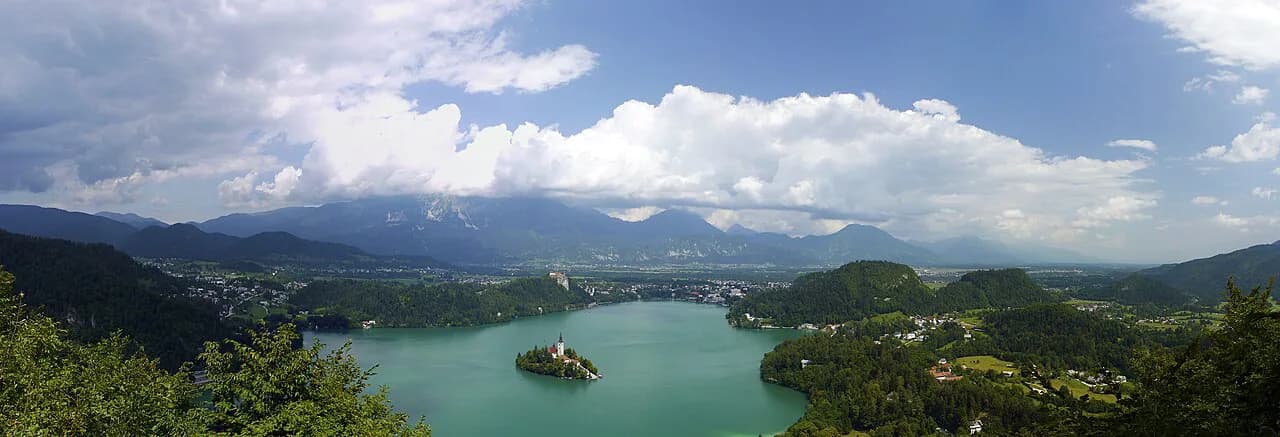
Around Lake Bled, the standard day combines the Vintgar gorge with a loop above the lake. The gorge, carved by the Radovna river, is about 1.6 km (1 mi) long with an elevated wooden trail ending above the 13 m (43 ft) Šum waterfall. A moderate route covers 10 km with about 200 m (656 ft) of ascent, while the challenging option adds the Ojstrica and Osojnica viewpoints above Bled for 13 km (8.1 mi) and around 300 m (984 ft). If you want to compare these routes with the rest of the area, the Lake Bled hiking guide sets out the alternatives.
Choose Bohinj if you want national park trails from the hotel door and quieter evenings; choose Bled if you want more restaurants and a short walk to the lake viewpoints. A self-guided trip that uses both lets you split the gorge days between the two.
Kranjska Gora and the Vršič pass
Kranjska Gora is an alpine town at the head of the Sava Dolinka valley, and the guided itineraries that move here use it as a springboard for the Martuljek waterfalls and the Vršič pass. The Martuljek day starts at Gozd Martuljek and climbs through the Jasenje planina pastures toward Mount Špik, where the upper waterfall drops in three tiers over a 100 m (328 ft) wall. The moderate version is 10 km (6.2 mi) with about 400 m (1,312 ft) of ascent; the challenging version loops back by Lake Jasna for 18 km (11 mi) and 500 m (1,640 ft).
The pass day is the scenic highlight for many walkers. A coach takes you up to the Vršič pass at 1,611 m (5,285 ft), from where the path crosses open plateau toward Slemenova Špica with views of Jalovec, Mangart and the Planica valley. Moderate walkers cover 10 km with roughly 300 m (984 ft) of ascent; a longer version climbs toward the Vršič peak before joining the Isonzo trail for 13 km (8.1 mi) and about 500 m (1,640 ft).
Soča Valley
The Soča Valley combines riverside walking with reminders of the First World War, and guided itineraries usually fold it into a day from the Vršič pass rather than a separate base. The small and great Soča gorges are short walks from the road, and the Kluže fortress above the Koritnica gorge gives a cultural stop. Walking beside the river is gentle; the surrounding slopes are where the climbing happens.
Self-guided trips based in Bovec or Kobarid cover the same valley at your own pace, with the advantage that you can linger at the gorges and walk the riverside trail in the late afternoon light. The valley sees more rain than the lakes, so pack a shell and plan the exposed ridge walks for clearer days.
Logar Valley and the Kamnik-Savinja Alps
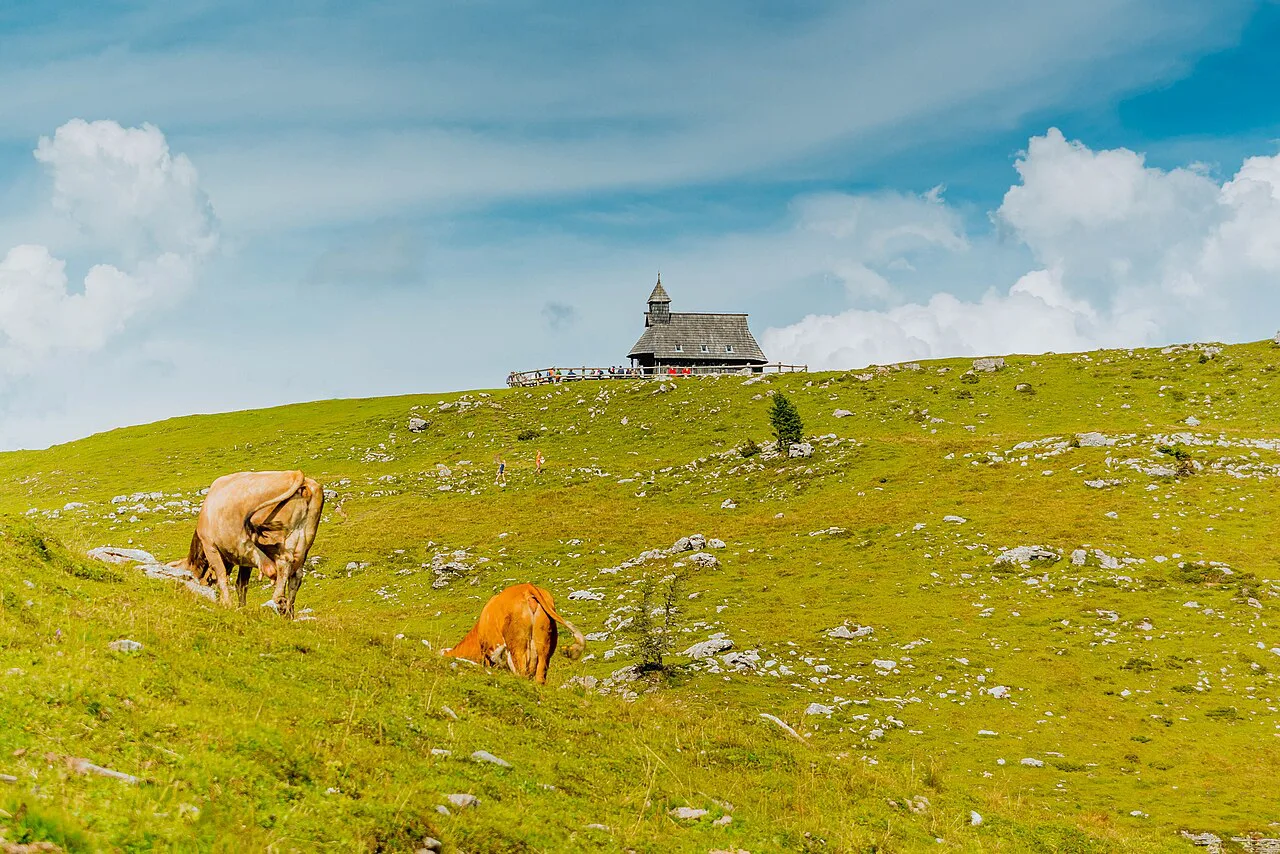
The Logar Valley is a green, quiet alternative to the Triglav National Park valleys, set in the Kamnik-Savinja Alps and free of the lake crowds. Single-centre trips here run gentle routes averaging about 7.5 km (4.7 mi), with limited ascent and plenty of valley-floor walking between meadows and farm buildings. It suits walkers who want scenery and short days over big vertical gain.
Because the valley is small and the hotel sits inside it, you can walk from the door each morning without a daily transfer. The trade-off is that the bigger alpine days in Triglav National Park are a longer drive away, so this is a base for slow walking rather than peak-bagging.
Daily distances by grade
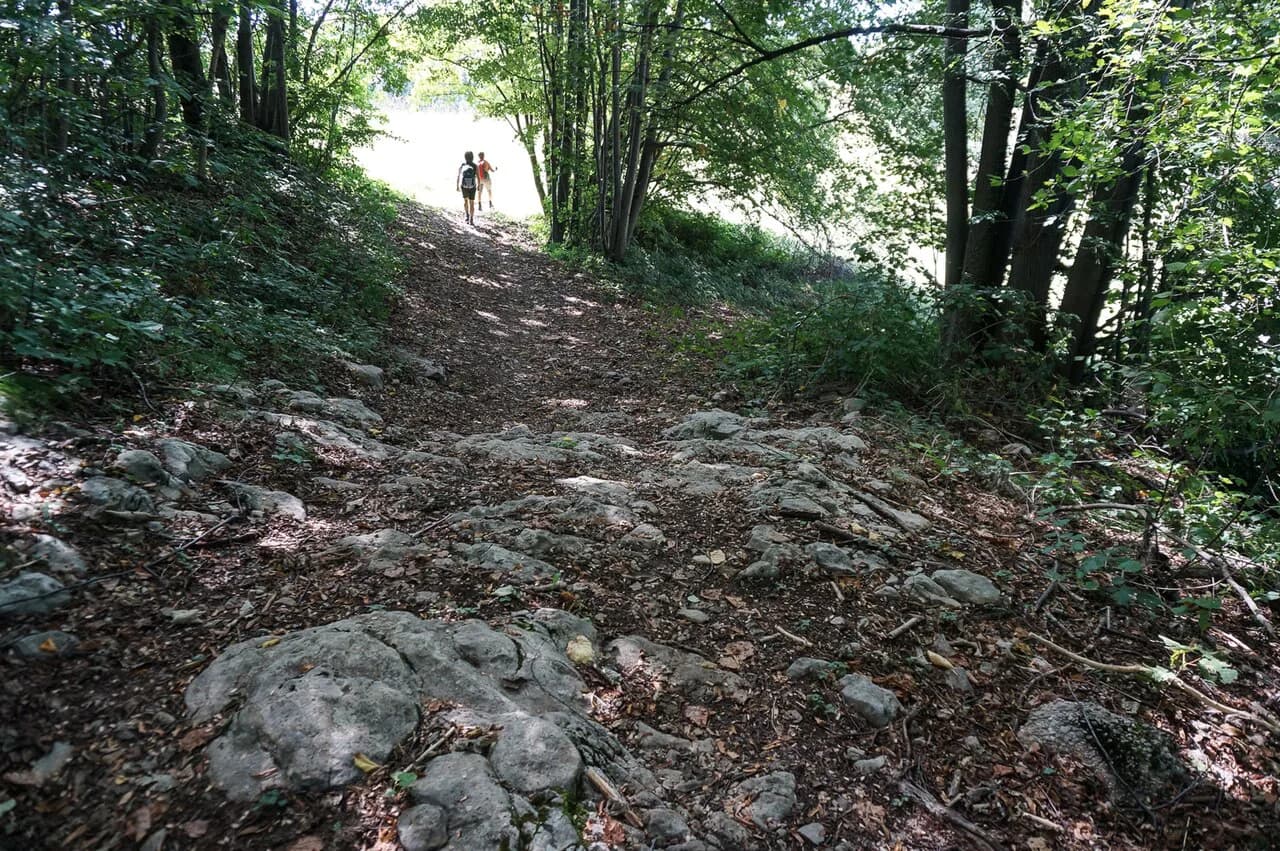
A moderate day on a Slovenian guided trip usually means 10 to 16 km (6.2 to 9.9 mi) with a few hundred metres of ascent and around four to six hours on foot. A challenging day pushes to 17 or 18 km (10.6 or 11.2 mi) and up to 800 m (2,625 ft) of climb, which feels very different when the ground is rocky.
Use that gap to choose your day honestly. If you walk regularly at home but rarely climb, the moderate day with 300 m of ascent is comfortable and leaves energy for photographs and the occasional swim stop. If you want to test yourself, the 800 m ascent to Luknja or the 18 km loop to Martuljek will feel like a real mountain day.
Bases compared
Bohinj is best for national park trails from the door: the Mostnica gorge and Voje valley walk starts from Stara Fužina without any transfer. Bled is the better base for the Vintgar gorge and the Ojstrica and Osojnica views, with more choice of restaurants. Read where to stay in slovenia for hiking for a fuller comparison of villages and hotels before you book.
Kranjska Gora puts the Martuljek waterfalls, Lake Jasna and the Vršič pass within a short drive, while a Logar Valley hotel puts gentle valley walking on the doorstep. On a one-week trip, two bases are enough; three means more time in the van and less on the trail.
What self-guided holidays include
Self-guided operators typically provide route notes, maps, a chosen hotel or guesthouse each night and luggage transfer to the next stop, so you walk with a day pack only. You choose your start date and can add extra nights to rest or explore a town. Breakfast is normally included, with dinners arranged at the hotels along the way.
The freedom that hotels rather than fixed group dates give you cuts both ways. If the route notes and luggage transfer are the main thing you want, a self-guided hotel-to-hotel trip will work; if you would rather someone else made every decision, book the guided version.
Huts and mountain lodging
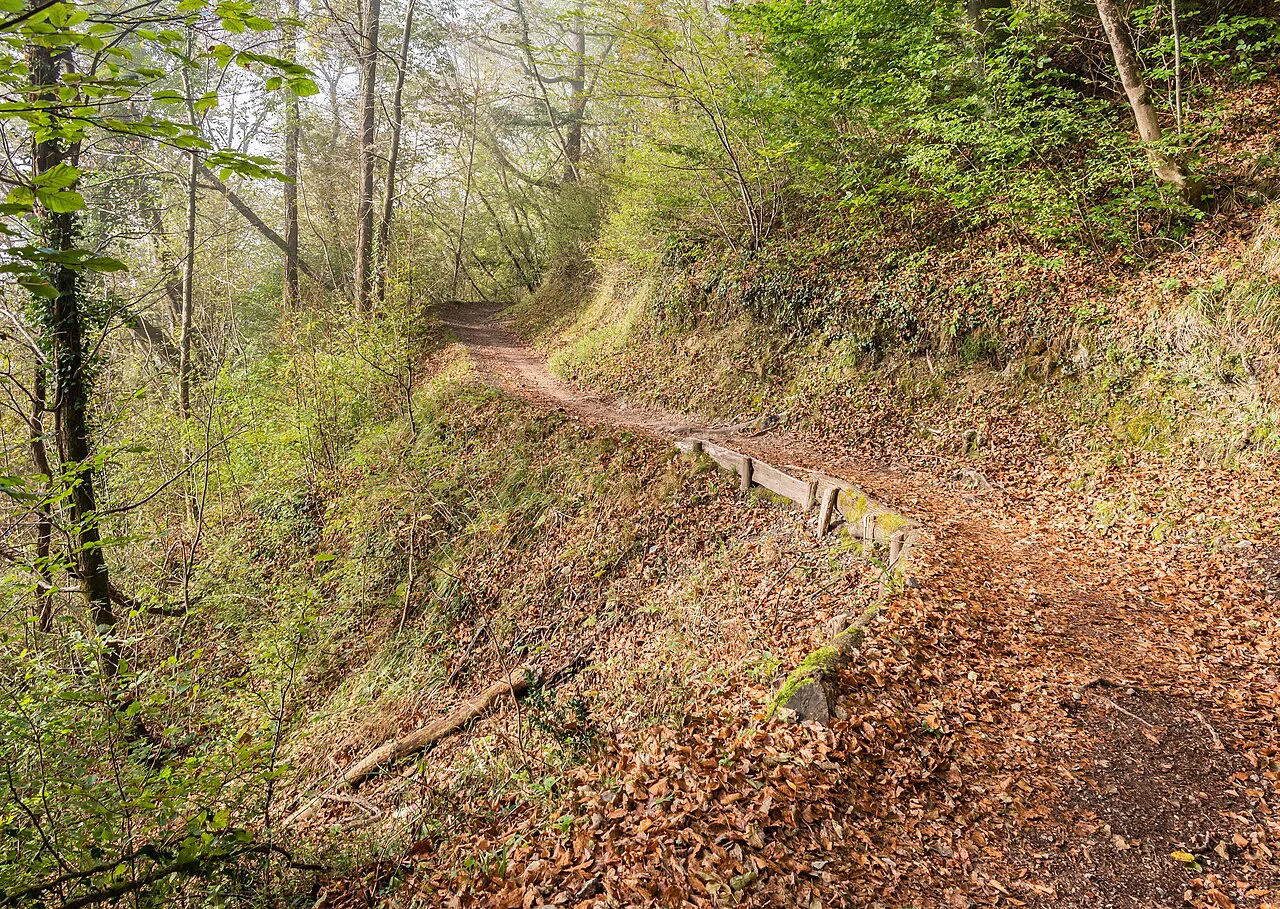
On guided trips, lodging is usually in hotels or guesthouses rather than mountain huts, with half board included across the week. On hut-to-hut self-guided routes you stay in alpine club huts and mountain lodges, where dormitory beds and shared facilities are normal. Hut opening periods are short in the high mountains and vary by hut; contact the alpine club or hut operator before you rely on one being open.
For planning a multi-day route with hut stops, read Hut to Hut Hiking in Slovenia before you choose your stages, then book beds as soon as your dates are fixed.
When to go
Late spring and early summer are the best months for lake reflections and wildflower meadows, with mild temperatures and fewer walkers on the trails. Summer is the busiest period at Bled and Bohinj, and afternoon storms are a real feature above the tree line. Early autumn is quieter and usually still warm enough for high valley walking.
Winter walking in the Julian Alps is possible around Bohinj for prepared walkers, but many high routes are snow-covered and the days are short. For hut-to-hut routes, check the individual hut's season, since the high huts open only through the summer months.
Getting there and between regions
Guided itineraries often fly into Venice in Italy and transfer by coach into Slovenia, with the drive to Lake Bohinj taking several hours plus comfort stops, then a later transfer of about an hour and a quarter from Bohinj to Kranjska Gora. Fly to Ljubljana if you want the shortest transfer into the lakes and Kranjska Gora.
Self-guided trips usually arrange private transfers or point you at buses between bases. Either way, plan on losing part of one day to the move between the lakes and Kranjska Gora; an overnight stop on the way spreads the journey out. For hiking beyond the guided routes, the fuller hiking guide to Slovenia covers the long-distance trail stages.
Gear, fitness and mountain weather
Bring waterproof layers, a warm mid-layer and proper walking boots, even for valley walks, because the weather turns quickly in the Julian Alps. Trekking poles help on the steep descents from the lakeside viewpoints and on rocky sections above the tree line. If you plan any fixed-rope sections, see which routes are suitable and whether guided help is advised.
Build up to the graded distances before you travel. A 17 km day with 600 m of ascent is a solid day out; walk hill routes at home in the weeks before departure so that the first mountain day doesn't come as a shock. Watch the cloud building over the ridge in the early afternoon and descend before the storm arrives.
Choosing Your Slovenia Walking Holiday
Decide first whether you want a guide and a group or route notes and your own timetable; that single choice narrows the shortlist more than any grade label. Then match the region to your fitness: Bohinj and Bled for lake and gorge walks, Kranjska Gora for waterfalls and pass views, the Logar Valley for gentle single-centre days.
Quote the daily distance and ascent for each option when you compare trips, and book high huts early once your dates are set. For the wider context of trails by region, start with the Hiking in Slovenia guide.
Frequently Asked Questions
What are some good walking holidays in Slovenia?
Common options include fully guided small-group trips through the Julian Alps staying at Lake Bohinj and Kranjska Gora, self-guided hotel-to-hotel routes in the lakes region, and single-centre holidays in the Logar Valley for shorter, gentler days. Choose by whether you want a guide and fixed dates or route notes and your own schedule.
What is the best month to visit Slovenia for walking?
Late spring and early summer bring wildflowers, mild temperatures and calmer lake reflections. Early autumn is quieter than high summer and usually still good for high valley walking. Snow and afternoon storms dictate how high you can go at the edges of the season.
How far do you walk each day on a Slovenian walking holiday?
Moderate days on guided trips typically run 10 to 16 km with a few hundred metres of ascent over four to six hours. Challenging options reach 17 or 18 km and up to 800 m of climb, which is a considerably tougher day on rocky ground.
Do self-guided Slovenia walking holidays carry your luggage?
On hotel-to-hotel trips, luggage is normally moved ahead to your next guesthouse, so you carry only a day pack. Confirm what is included when you book, because single-centre holidays usually involve no luggage transfer at all.
Is Slovenia suitable for hikers who are not experienced mountaineers?
Yes. Valley and lakeside walks around Bohinj, Bled and the Logar Valley need only basic fitness, and guided trips offer moderate routes alongside harder ones. Exposure and scrambling come with the higher passes and via ferrata routes, which you can simply skip.
Which base is best for a walking holiday in Slovenia?
Lake Bohinj suits national-park trails from the door, Bled gives easier access to the Vintgar gorge and the lake viewpoints, Kranjska Gora is best for the Martuljek waterfalls and Vršič pass, and the Logar Valley is the calm choice for easy single-centre days.
Sources
Trail notes for your next trip
Optional updates when we add or revise hiking guides.
You might also like
Continue reading
More guides you'll find useful