Hut to Hut Hiking in Slovenia: Routes, Huts and How It Works
Plan hut-to-hut hiking in Slovenia, from the Karawanks ridge to Julian Alps routes and Triglav National Park, with stages, huts and season basics.
On this page
Slovenia packs more than 450 peaks above 1,980 meters (6,500 feet) into a country you can cross in a morning's drive, and its brightly waymarked trails connect them with a dense chain of mountain huts. For hikers, that means a multi-day trek where you sleep high, eat a hot dinner and walk out the next morning with a light pack. The two areas that carry most hut-to-hut ambitions are the Karawanks ridge along the Austrian border and the Julian Alps in the northwest.
The choices split cleanly by ambition. A five-day traverse of the Karawanks suits a reasonably fit hiker who wants grassy ridgelines and short, manageable stages, while Julian Alps routes ask for more fitness and, on some paths, technical confidence. Below, the stages, hut names and formats are set out so you can match a route to your time and your legs.
What hut-to-hut hiking in Slovenia offers
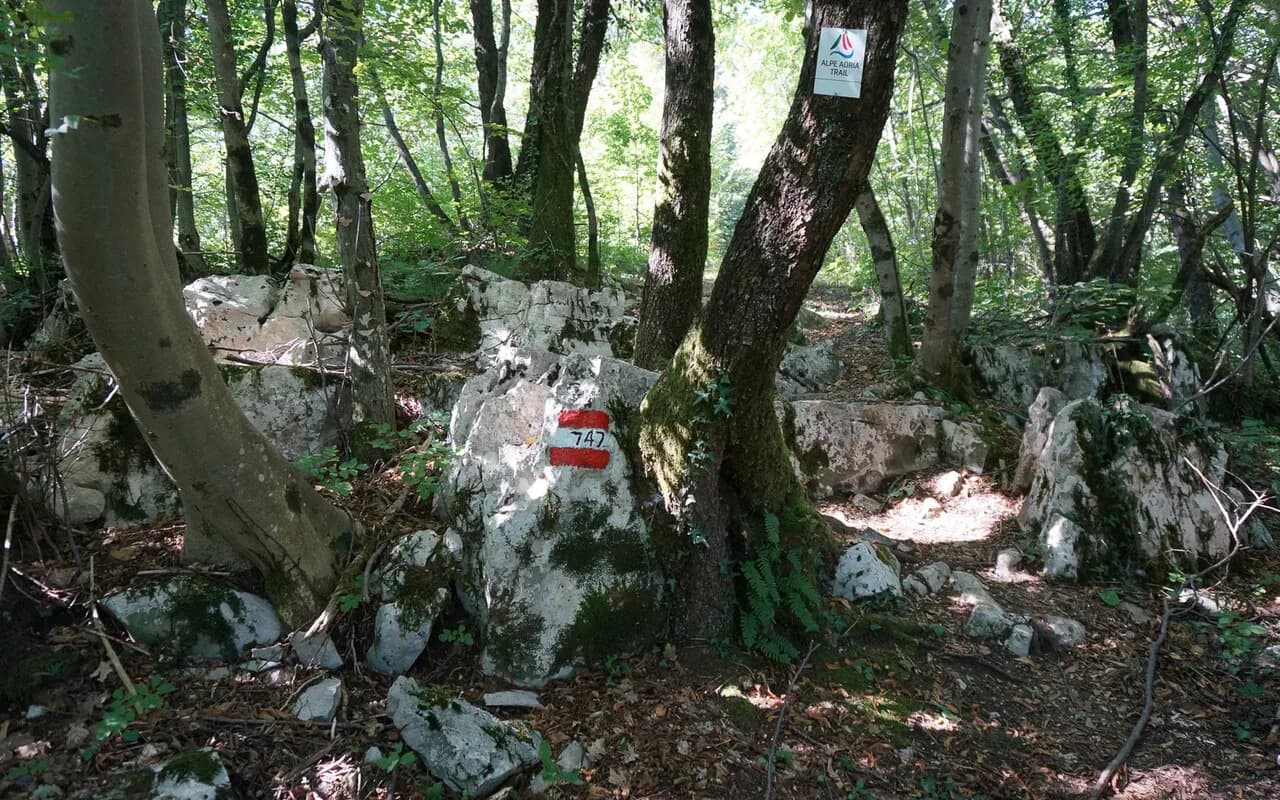
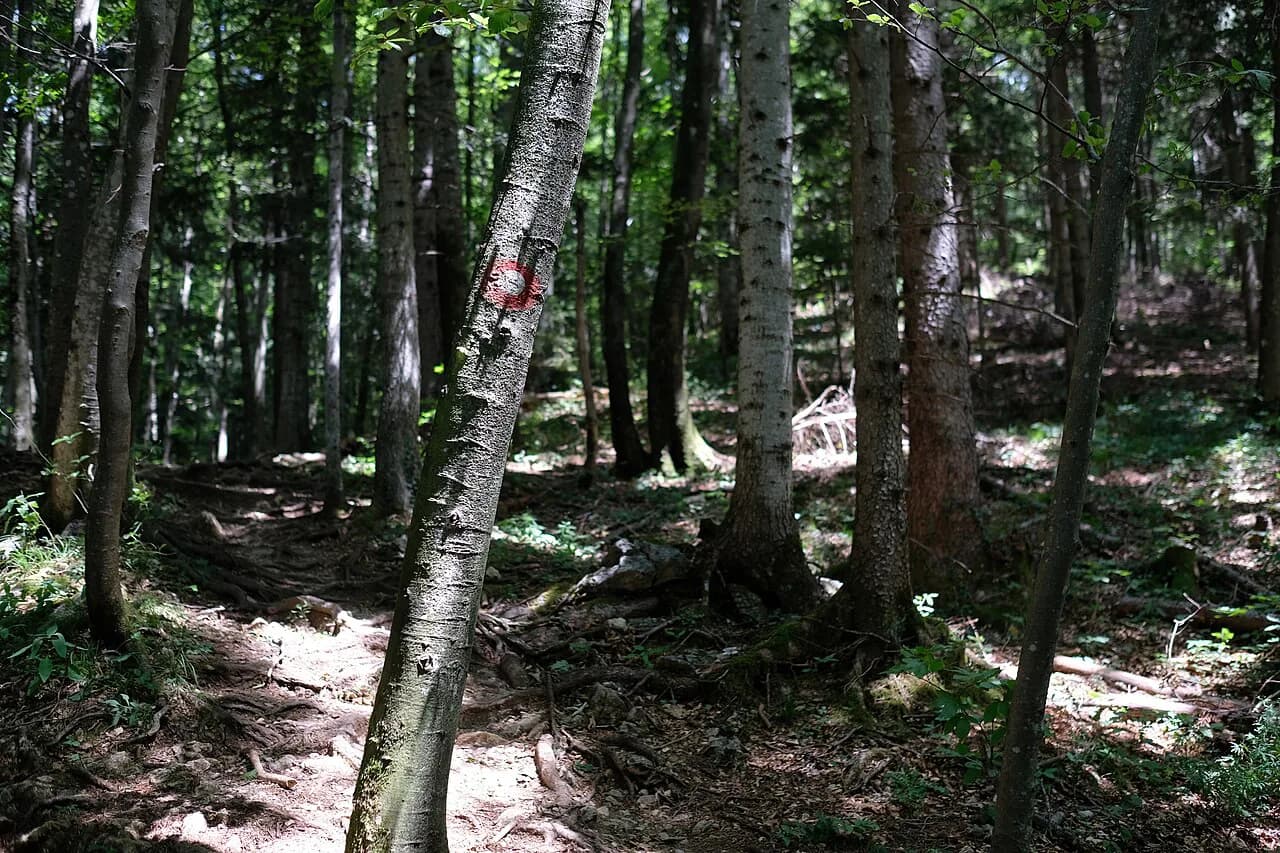
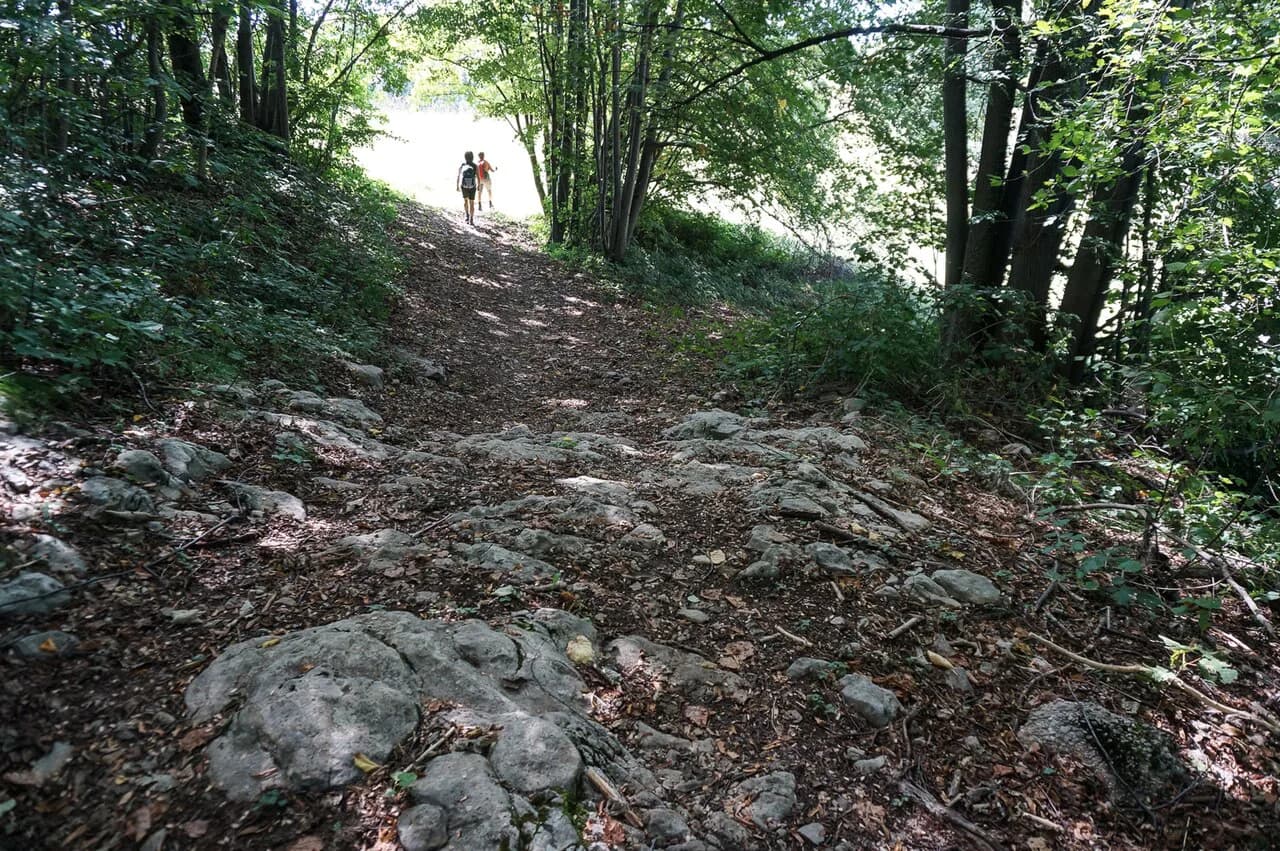
The country's hut system is the reason a through-hike works here. Trails are marked with the Knafelc blaze, a white dot inside a red circle painted on rock and bark, a century-old marking scheme that keeps navigation simple on waymarked paths. You walk between staffed huts where dinner, breakfast and a bunk are part of the arrangement, so you carry only a day's clothing, a sleeping bag liner and food for the trail.
Most treks link two or three valleys with a night on a ridge or shoulder in between, which keeps daily stages moderate and puts you at a summit for sunrise. The trade-off is comfort: dormitories rather than private rooms, shared tables, and a fixed dinner time. Hikers who want a bed and a shower every night should look at the low-level long-distance options instead.
The two main areas: the Karawanks ridge and the Julian Alps
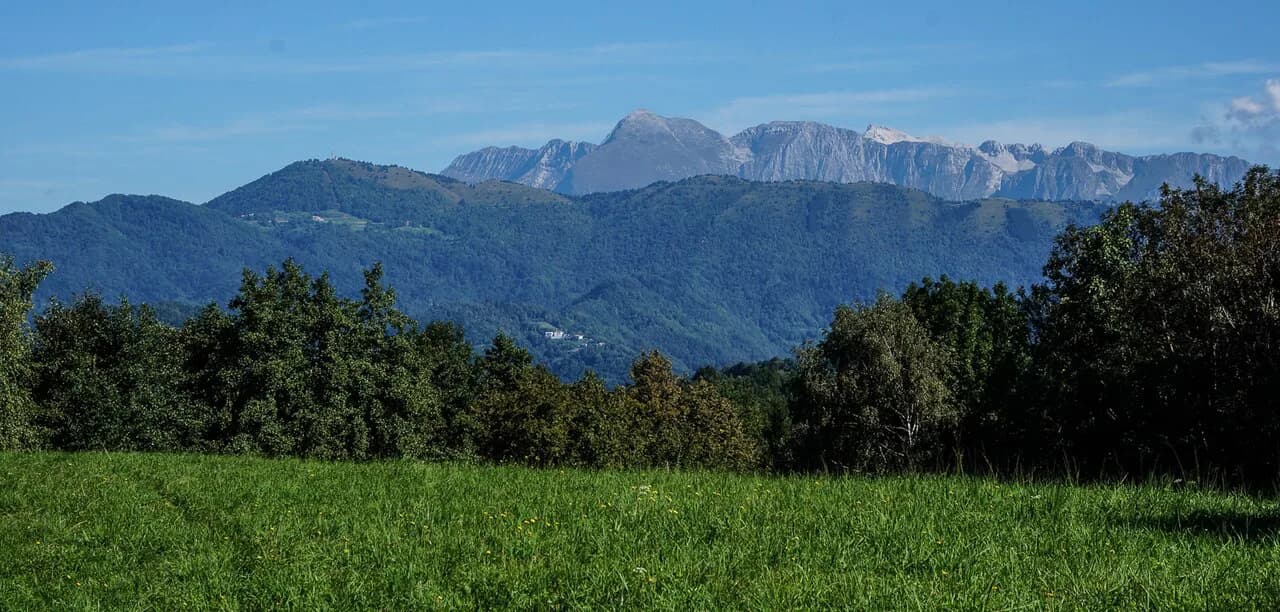
The Karawanks run east to west along the Austrian border for roughly 120 kilometers (75 miles). The range is often sheer on the Austrian side and slopes into grass and wildflower meadows on the Slovenian side, which is what makes the ridge walking feel open rather than claustrophobic. The treeline sits around 1,580 meters (5,200 feet); above it the ground turns to limestone pavement, scree and high pasture.
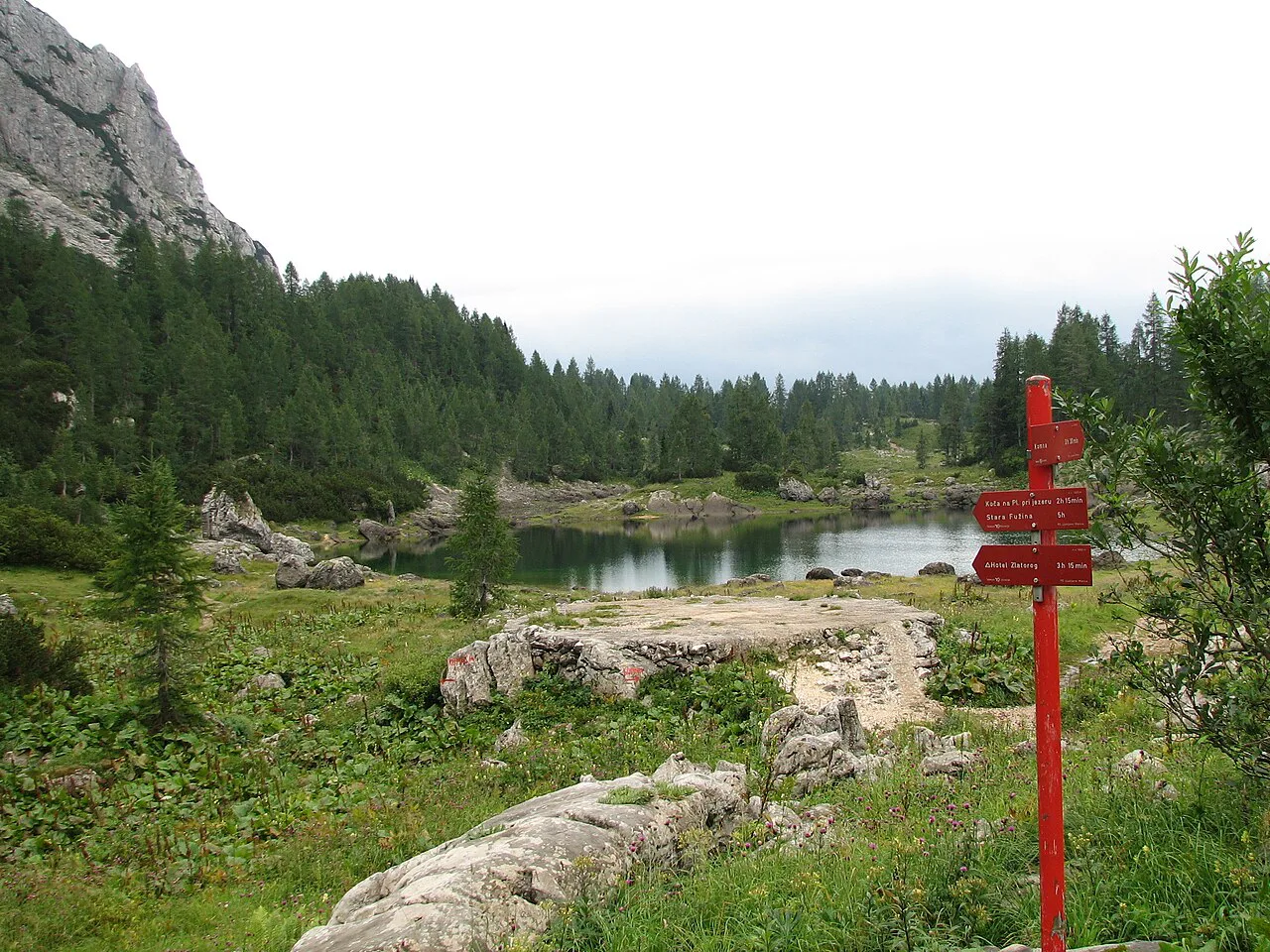
The Julian Alps occupy the northwest corner around Triglav National Park, home to Mount Triglav, the country's national symbol. Routes here include the Seven Lakes Valley, the approaches to Triglav's summit and traverses above the Soča Valley, all offered as guided or self-guided itineraries by operators based in the region. For a stage-by-stage look at the same format, see this guide to julian alps hut to hut routes and mountain huts. Plan on bigger daily ascents and more time on steep ground than in the Karawanks.
The Karawanks traverse: Tržič to Lake Bled in five days
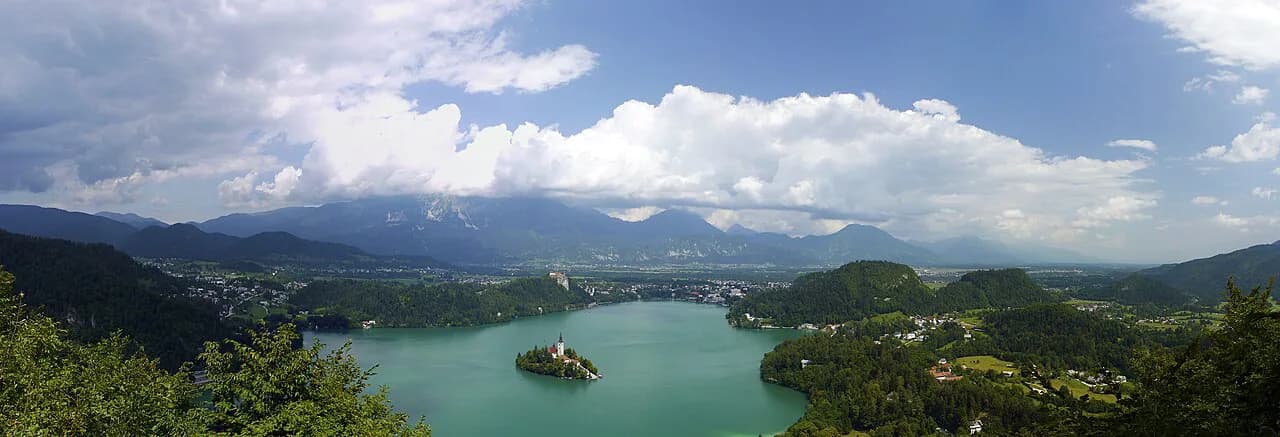
One established line runs about 56 kilometers (35 miles) in five days, starting from the riverside town of Tržič and finishing near Lake Bled. The opening day climbs from the valley through forest almost immediately, and the drama arrives fast: you gain height for hours before the first hut comes into view. Most hikers spend the first night at Planinski dom na Zelenici, a well-equipped cabin in a clearing below Mount Begunščica.
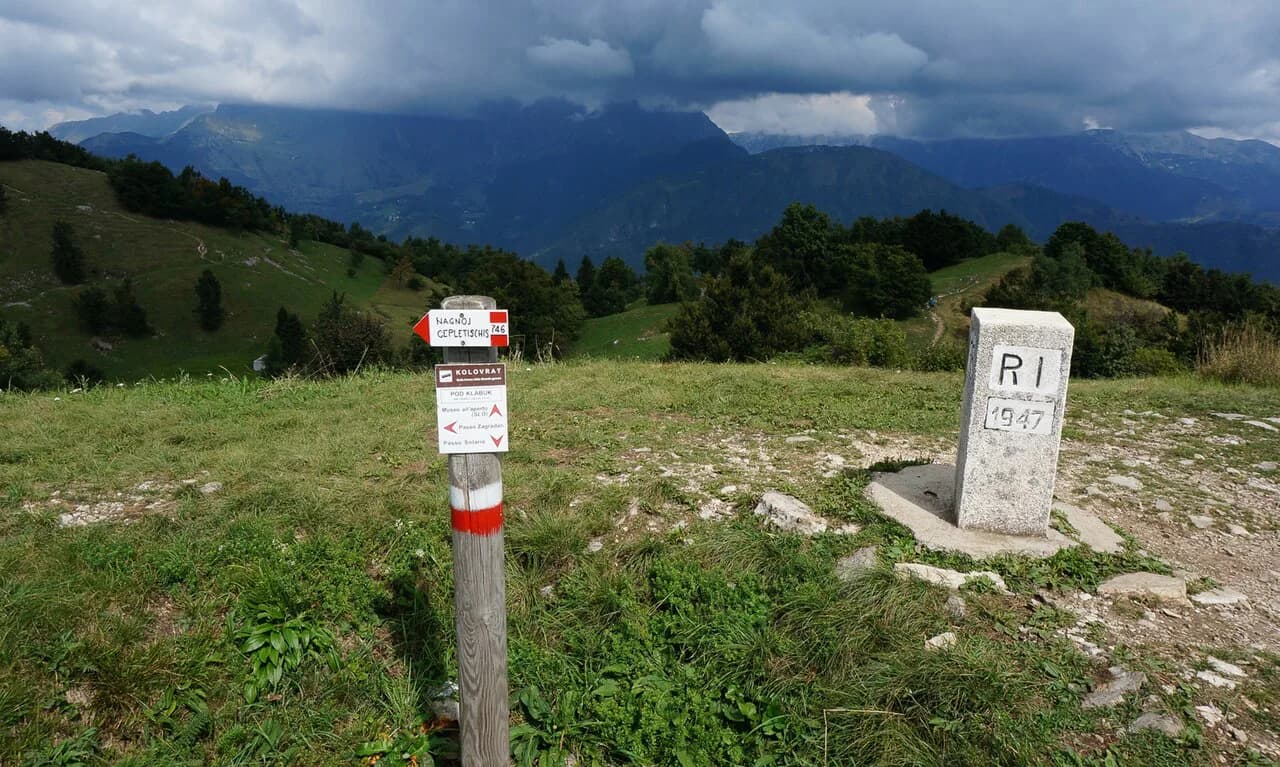
The second day crosses scree beneath Begunščica and then climbs toward Mount Stol, the range's highest point at 2,236 meters (7,336 feet). A short but demanding section of about 7 kilometers (4.5 miles) brings you to Prešernova koča na Stolu on an exposed outcrop just below the summit. The following morning, a steep craggy path takes you the last few hundred feet to the summit itself, where a limestone slab marks the Austrian–Slovenian border.
The best walking comes after Stol: about 16 kilometers (10 miles) of undulating ridge through sheep and horse pasture, with the whole of Slovenia laid out on one side and the Austrian lowlands on the other. The last mountain night is at Koča na Golici, a hut set on a spur beneath the 1,834-meter (6,017-foot) Golica that you watch approach for miles. The finish descends through woodland past a waterfall to the valley, with a short transfer to the lake.
Huts on the Karawanks route: Zelenica, Roblekov Dom, Prešernova koča na Stolu, Koča na Golici
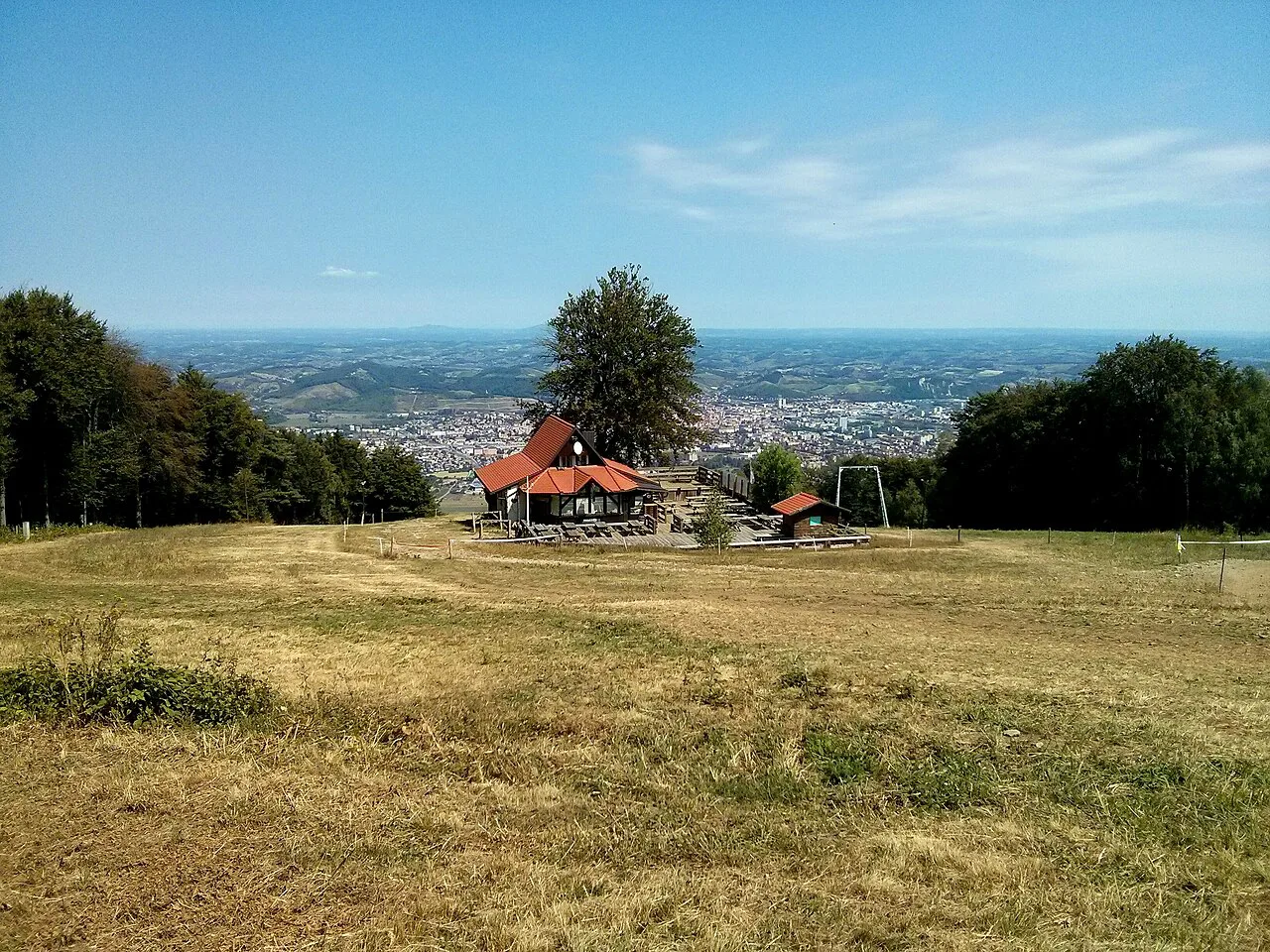
Each hut on the traverse has its own character. Roblekov Dom, a dark-wood building on a sunlit terrace on the southwest flanks of Begunščica, sleeps 30 and seats around twice that on its terrace, with views stretching from the Ljubljana plain past Lake Bled to the Julian Alps. Reachable by path from the valley and supplied by helicopter roughly every ten days, it is the kind of place where a quiet weekday can mean you and the hut manager alone.
Prešernova koča na Stolu was built in 1909, destroyed during the Second World War and rebuilt in the 1960s, with one communal room warmed by a large tiled stove. Koča na Golici closes the walk with a slender wooden balcony facing west, which is where hikers gather for sunset over the three-pronged silhouette of Triglav. Expect simple dorms, shared bathrooms and a menu of stews, strudel and local beer.
Julian Alps routes: Seven Lakes Valley, Triglav and the Soča Valley
In the Julian Alps, the Seven Lakes Valley is the classic introduction: a chain of tarns set beneath steep limestone walls, usually walked over three days with hut nights in between. Triglav itineraries run longer, typically five to six days, and combine the summit push with a traverse of the Soča Valley. Operators rate the Triglav and Soča combination at three out of five for fitness and five out of five for technical difficulty, which tells you the summit day involves secured or exposed ground.
If you want protection on the harder ground, a via ferrata day on the secured routes around Triglav National Park is the usual answer, with a guide advisable for a first outing. Either way, build in a weather day: afternoon storms are common in summer and the summit paths should be treated as early-morning objectives.
The Juliana Trail as a low-level long-distance alternative
The Juliana Trail is a long-distance route rather than an Alpine traverse, and operators package it as a 17-day walk rated five out of five for fitness and two out of five for technical difficulty. That combination of high endurance demand and low technical demand suits hikers who want to keep moving for weeks without exposure or scrambling. It also gives you a bed in a village each night instead of a dormitory bunk above the treeline.
The same operator runs a shorter Julian Alps and Soča Valley itinerary of five days at three out of five for both fitness and technical difficulty, a middle option for a first hut trek. Compare the daily foot mileage between the two before choosing, since a long low route and a short high one make very different demands.
How Slovenian mountain huts work: dorms, half-board, etiquette
Huts provide dormitory bunks, blankets, a hot dinner and breakfast, and the usual booking is half-board. Expect to strip your own bedding on departure, change into hut slippers at the door and share long tables with other walkers at a set dinner hour. Crocs or slippers are commonly provided precisely so you do not track hillside mud through the corridors.
Drinks and lunch are usually paid separately, and some huts prefer cash, so carry euros in small notes for the evenings. Hot water and charging points are limited on busy nights; charge devices during the afternoon lull rather than at bedtime. If you want a private room, ask when you book, since only some huts have one.
Hut booking and when huts open
The summer window is roughly April to September, with wildflowers in May and cooler air at altitude in July and August. Outside that season the constraint changes shape: between October and May many huts open at weekends only, which turns a late-autumn plan into a Friday-to-Sunday jigsaw. Operators such as Hut to Hut Hiking Slovenia run guided and self-guided trips with hut nights built in, which removes the booking puzzle.
What a hut night costs
Hut prices vary with elevation, facilities and whether you take a private room or a dormitory. A typical half-board night in a Slovenian mountain hut is around €50 per person, with treats, drinks and lunches on top. For a five-night self-guided Karawanks itinerary with airport transfers, maps, GPX files and half-board hut accommodation, one operator quoted £555 per person for a minimum of two, excluding flights.
Treat package prices as one operator's quote rather than a market rate; request a current written quote, with single-supplement and baggage-transfer terms spelled out. On a self-booked trek, budget for hut nights plus valley nights before and after, and keep some cash for huts that run a tab across dinner and drinks. Hut managers post their own half-board rates as the season approaches, so ask for the hut's current price list when you reserve rather than planning from a published figure.
Distances, ascent and walking time: what to expect each day
Karawanks stages are deliberately short. The five-day traverse covers about 35 miles in total, with the toughest day around 4.5 miles and the finest around 10 miles, so most walking days leave the afternoon free. That rhythm suits hikers new to hut-to-hut travel, because the pack stays light and the finish each day is early.
Julian Alps days run heavier. The Seven Lakes Valley trip is rated three out of five for fitness and three out of five for technical difficulty, while the longer Triglav and Soča Valley itinerary reaches five out of five on the technical scale. Read those ratings as a time budget: a five-out-of-five technical day takes longer than its distance suggests and should not be paired with a late start.
Getting to the start and back from the finish
Ljubljana is the transport hub. Tržič sits about a 30-minute drive north of the city, and Lake Bled, the finish of the Karawanks traverse, is reachable by taxi transfer from the valley town of Koroška Bela. Slovenia's bus network links the major towns, and coach services connect the larger cities with wifi on board.
Direct flights link London airports to Ljubljana in about 2 hours 10 minutes, making a long weekend of hut walking feasible from the UK. Book the valley transfer before you leave home, because mountain huts sit far from any bus stop and the last taxi of the day fills quickly in summer. If you are combining areas, choose a base town with a bus link and use it for both arrival and departure nights.
Guided versus self-guided formats
Guided trips include a mountain guide, who handles navigation, pacing and decisions about turning back when weather changes. Slovenia has only around 50 fully qualified mountain guides, so a guided departure buys real scarcity value on exposed summit days where route-finding matters. You pay for the company, the judgement and the shared logistics.
Self-guided trips hand you a map, GPX files and pre-booked huts, plus transfers to the trailhead and back from the finish, while you walk the route alone. That format suits hikers comfortable following waymarks and reading a map in cloud. A self-guided Karawanks itinerary of five nights is offered from £555 per person for two or more people, excluding flights.
Best months and conditions on high passes
April to September is the hiking season, with May bringing wildflowers and high ground offering relief when low valleys exceed 30°C in midsummer. Snow lingers on north-facing passes and in gullies into early summer, and returns in autumn, so an early-July or late-September plan should include an alternative low-level route. Check the forecast the evening before each stage rather than committing to a fixed hut schedule.
Hazards: scree, exposure, storms and early-season snow
Scree crossings are the recurring hazard on high routes: loose stone moves underfoot and rockfall can be triggered from above by chamois or other walkers, so cross one at a time and keep your spacing. The summit paths around Stol and Triglav are exposed, with steep drops close to the trail and ice or snow on shaded sections even in summer. On the Karawanks ridge you are on open ground with little shelter, so start early and be off the tops before the afternoon build-up.
Gear for a Slovenian hut trek
Pack for a hut night and for weather that changes fast: a light sleeping bag liner, hut slippers if the hut does not provide them, earplugs, a headlamp and cash. Add a waterproof shell, warm mid-layer and gloves even in July, since hail and snow squalls can hit high ground without warning. Trekking poles earn their weight on the steep descents that follow every ridge stage.
Base towns for before and after the hike
Tržič works as the start base for the Karawanks traverse, with cabins and guesthouses on the edge of town and the trailhead a short drive away. At the other end, Lake Bled and the surrounding villages offer hotels and resorts for a recovery night, though the lakeside is busy in summer. For Julian Alps routes, look at villages with bus links to the trailheads and a shop for last-minute supplies.
One area worth a day detour, outside these two ranges, is the Slovenian Mountain Trail, a long traverse of the country that can be joined for short sections. Base yourself within reach of a bus line and you can add a valley day without reorganizing the whole trek.
Plan Your Hut Trek
Choose the Karawanks if you want short stages, open ridge walking and a gentle introduction to hut life, and the Julian Alps if you want bigger days and summit objectives. Book huts or a package early for July and August, and keep a weather day in reserve. If you are still choosing between formats, compare the guides on Slovenia walking holidays before committing.
Frequently Asked Questions
What are the best hut-to-hut hikes in Slovenia?
The five-day Karawanks traverse from Tržič to Lake Bled is the classic introduction, with short stages, grassy ridge walking and named huts along the way. In the Julian Alps, the Seven Lakes Valley and the longer Triglav and Soča Valley itineraries offer the higher, harder experience, with the Juliana Trail as a low-level alternative.
How much do mountain huts cost in Slovenia?
Half-board rates differ with altitude, facilities and whether you book a dormitory or a private room, and huts publish their own price lists each season. Ask the hut directly for its current half-board rate when you reserve, and budget separately for drinks, lunches and any private-room supplement. Package quotes from operators are separate figures and should be requested in writing.
How many days do you need for hut-to-hut hiking in Slovenia?
The Karawanks traverse runs five days, and the Seven Lakes Valley is usually walked over three. The Triglav and Soča Valley combination takes six days, while the Juliana Trail is a 17-day long-distance route. Pick the number of days that matches your available leave and then choose the area.
Do you need to book Slovenian mountain huts in advance?
Yes for summer weekends and any popular hut on the main routes, where dormitory beds fill early. Ask about private rooms at the same time, since only some huts have one. For a self-guided trek, operators handle the hut bookings as part of the package, which is the simplest route for a first visit.
When are Slovenian mountain huts open?
April to September is the main hiking season, and between October and May many huts open at weekends only. That weekend pattern makes a late-autumn trek possible but rigid, so plan hut nights around it rather than walking a fixed daily schedule.
Is hut-to-hut hiking in Slovenia suitable for beginners?
The Karawanks traverse suits reasonably fit beginners: stages are short, trails are waymarked with the Knafelc blaze, and huts provide dinner and beds. The Julian Alps routes are harder, and the Triglav summit itineraries involve exposed ground. Start with the Karawanks or a guided Julian Alps trip and build experience.
How do you get to the start of a Slovenian hut-to-hut route?
Ljubljana is the hub, with Tržič about 30 minutes north by road and Lake Bled reachable by taxi transfer from Koroška Bela at the end of the Karawanks route. Direct flights from London take about 2 hours 10 minutes, and buses link the main towns. Arrange the valley transfer in advance, since huts sit well away from bus stops.
Sources
Trail notes for your next trip
Optional updates when we add or revise hiking guides.
You might also like
Continue reading
More guides you'll find useful