Dartmeet Walk: A Dartmoor River, Tor and Woodland Circuit
Plan the Dartmeet walk in Dartmoor: riverside paths, the climb to Combestone Tor and Brimpts Wood, with distances, timings, parking and seasonal notes.
On this page
Dartmeet is the point where the East and West Dart meet in a wooded valley in the heart of Dartmoor, and it gives you a choice that suits very different days out. A flat riverside loop works for families and short afternoons, while a longer circuit adds a tor summit and woodland climbing for hikers who want a few hours on their feet. Both start from the same riverside spot, so the decision is about time and fitness rather than transport.
The short round trip on the river covers about 5.6 km (3.5 miles) with roughly 113 m (371 ft) of ascent and descent, taking around 1.5 to 2 hours at an easy pace. Treat those figures as approximate, since the exact line you walk between the clapper bridges and the wooded banks affects both length and climbing. The longer tor and wood version is the one to pick for bluebells in late spring and open moor views.
What the Dartmeet walk offers and who it suits
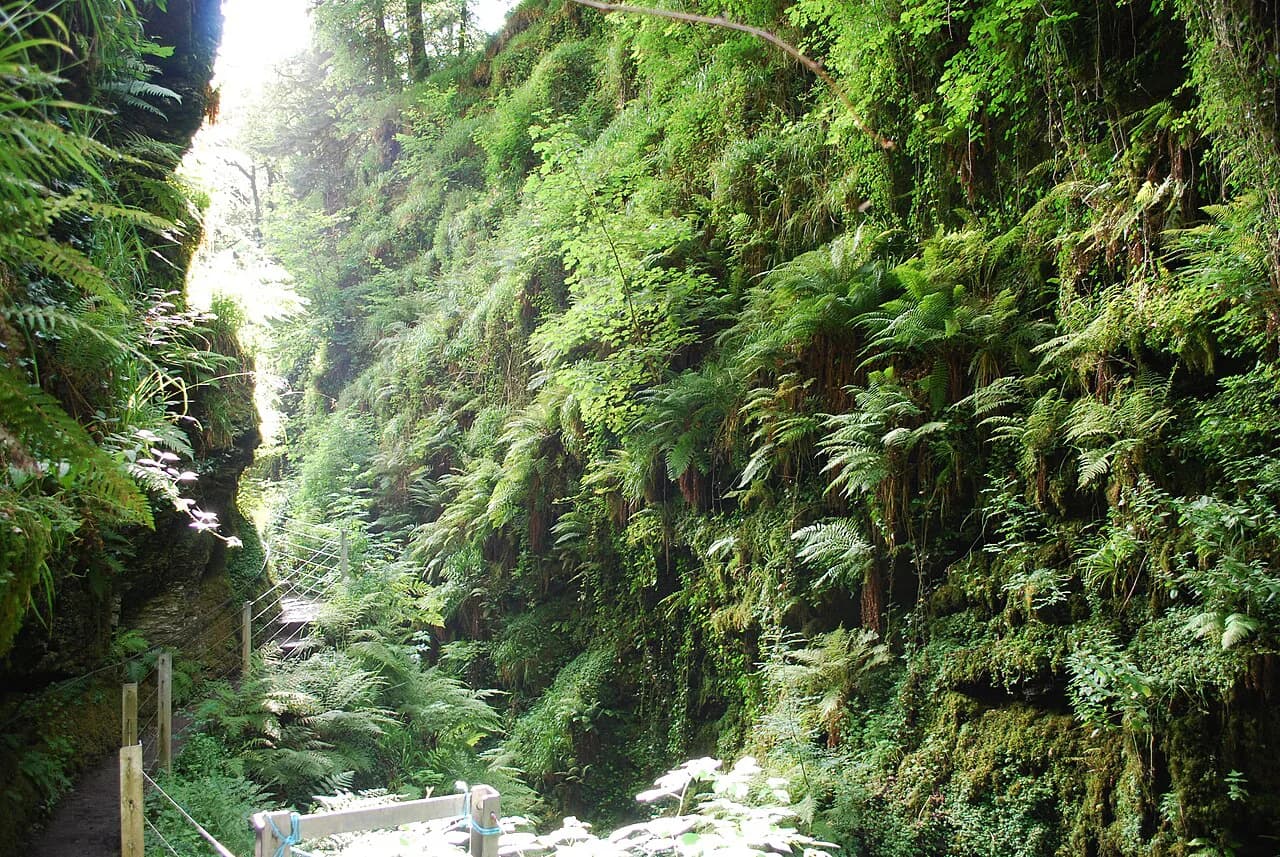
This is granite-country walking at its most varied: a river gorge with old clapper bridges and pools, wooded slopes, and a climb to a low tor with a wide view back over the moor. Hikers with a couple of hours get the river; hikers with half a day get the tor and the woods as well. The ground is never alpine, but it is often wet and uneven, so boots beat trainers after rain. If you enjoy this mix of river and open moor, hiking in Brecon Beacons offers a similar day out among its four ranges.
Families and casual walkers should stay with the riverside path, which has the most visual reward for the least effort and stays close to the car park throughout. Fit hikers wanting more should add the Combestone Tor and Brimpts Wood circuit, which mixes open moorland with plantation tracks above the valley. Dogs are welcome on both, but between 1 March and 31 July the law requires a lead on open moorland to protect ground-nesting birds, and livestock grazes here year round.
Where Dartmeet is and how to reach it
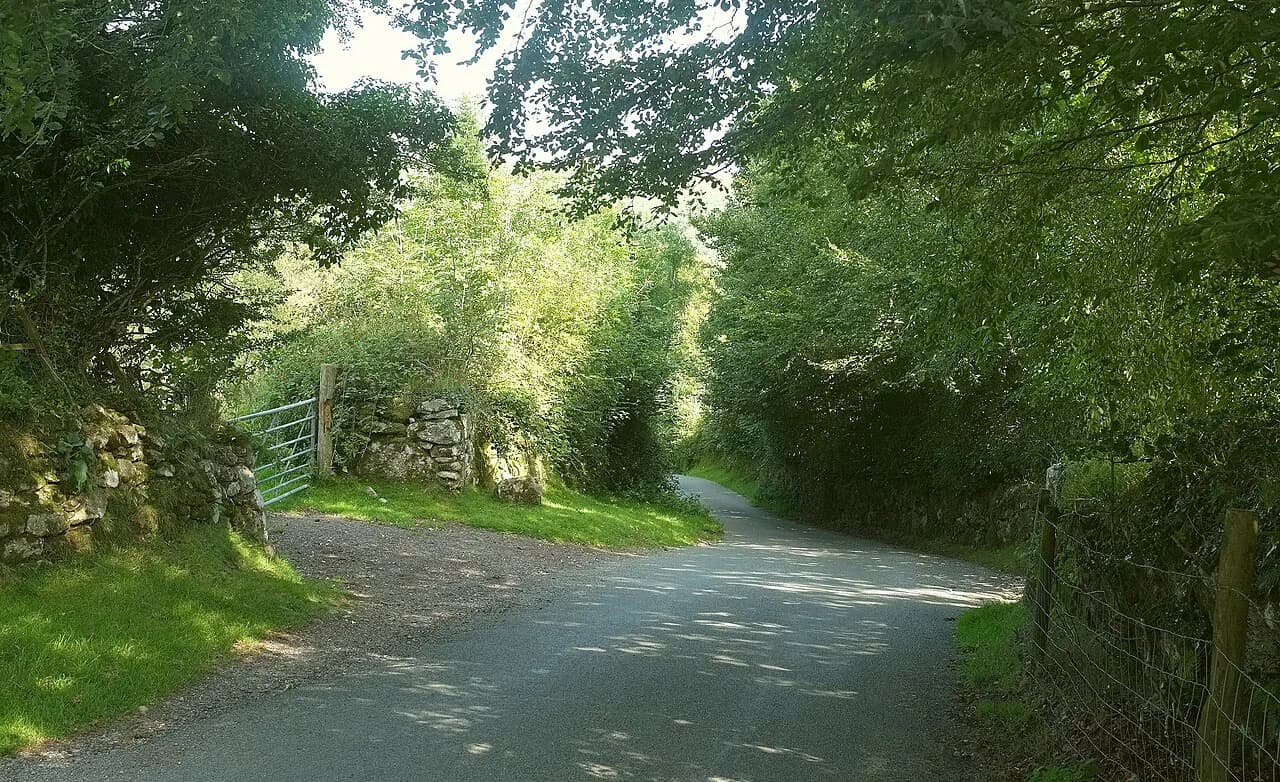
Dartmeet sits on a minor moorland road between Two Bridges and Ashburton, roughly midway between Princetown and Widecombe-in-the-Moor. The car park is right at the bridges, so unlike many Dartmoor walks you do not need to hike in from a distant roadside. That convenience is why the spot fills up on sunny weekends and in holiday season.
Public transport on the high moor is thin, and the routes that serve moor-edge towns such as Okehampton, Tavistock and Princetown change with the season, so there is no single service to plan around. If you want to arrive without a car, use a town on the moor's edge as a base and check current timetables before you set out. Drivers coming from the A38 have the easier approach via Ashburton; from Princetown the road is narrow and hedged in places.
Parking and facilities at Dartmeet
The Dartmeet car park sits beside the road at the bridges, and its closeness to the water is the reason this walk works for short visits. Charges and any seasonal restrictions are set by the landowner, so read the notices on arrival to see what applies on the day. On busy days arrive early, because the usable spaces are limited and the road below is too narrow for verge parking.
Facilities here are modest: a small cafe and toilets have served visitors by the bridges, but opening is seasonal and not guaranteed across the year, so carry water and food from Ashburton or Princetown as a fallback. Fill bottles before you leave the car, since the moor streams are not a reliable drinking source. Treat the visit as a half-day stop rather than an all-day base with services.
Distance, ascent and time options
The compact option is the Dartmeet riverside circuit, about 5.6 km (3.5 miles) with roughly 113 m (371 ft) of up and down and a comfortable 1.5 to 2 hours. That makes it a genuine short walk rather than a stroll: there is enough climbing to warm up but nothing sustained. Add the tor and woods and the day grows into a half-day outing with more climbing on plantation tracks and open slopes.
For a longer day of the same kind, the Dartmeet and Laughter Tor loop nearby runs about 11.7 km (7.3 miles) with around 280 m (919 ft) of ascent and roughly three hours twenty minutes of walking. Use it as a benchmark: if that total feels right, the tor-and-wood circuit at Dartmeet will suit you; if it feels long, keep to the river. Whichever you pick, add time for wet ground and for the stepping stones.
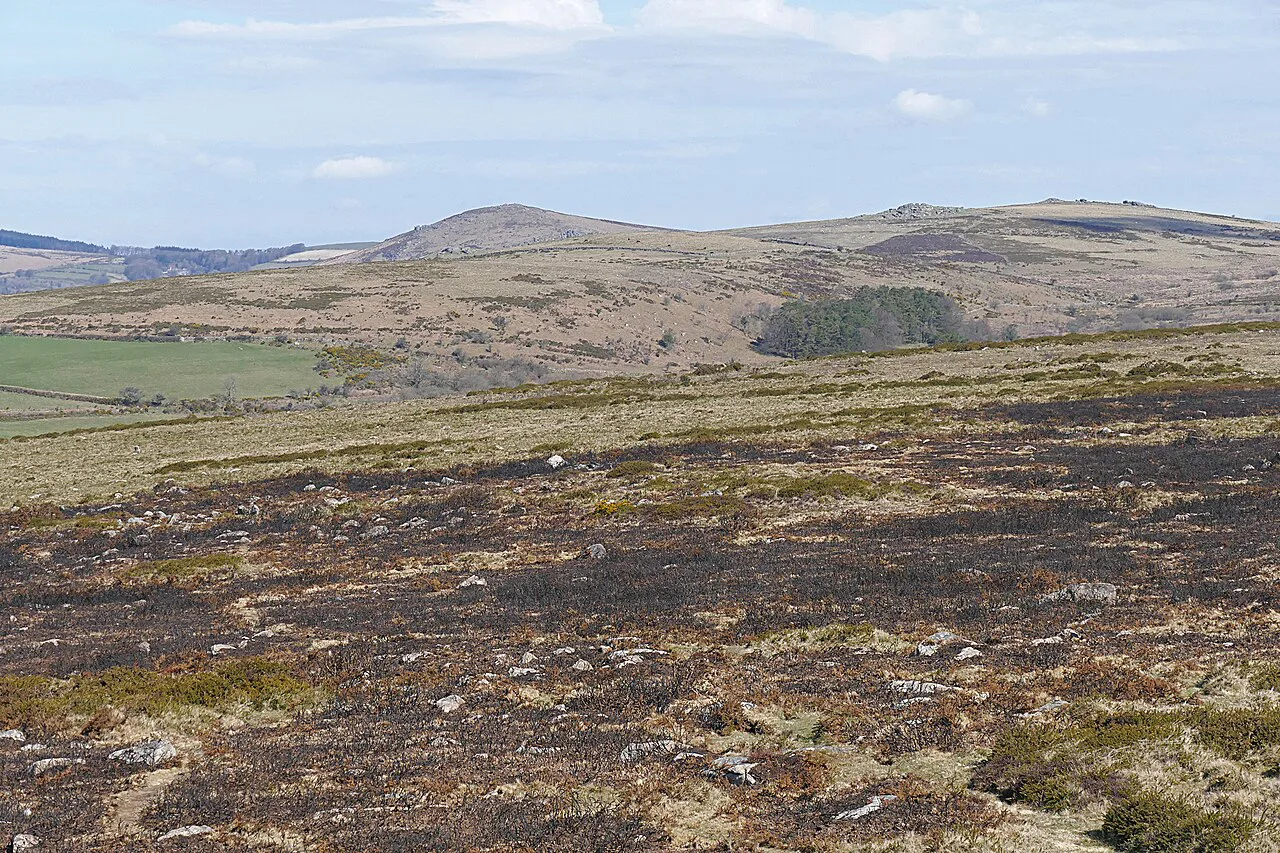
Route description: Dartmeet down the River Dart
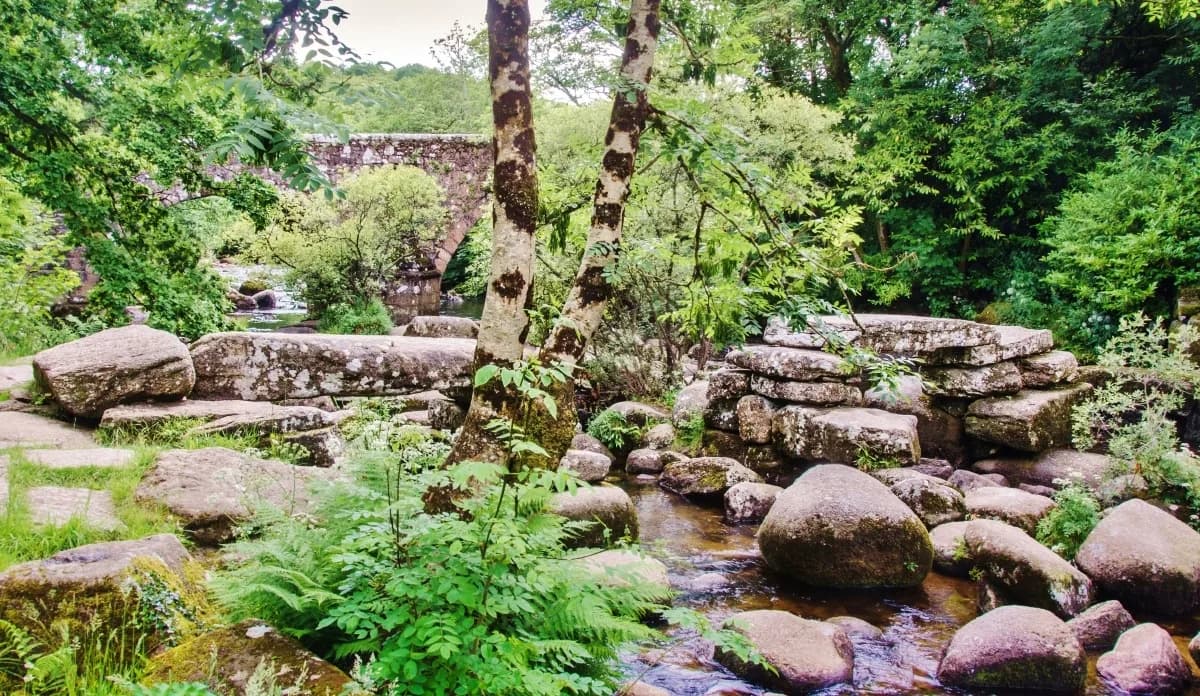
From the car park, the classic line follows the River Dart downstream on the wooded bank, passing the old clapper bridge and the meeting of the East and West Dart before the path turns and climbs gently back through the trees. It is a there-and-back-with-a-loop shape rather than a long linear route, which keeps the car park within reach the whole way. Pools and rapids below the path give the walk its character, especially after rain.
The Ramblers describe this stretch as riverside walking with tors, stepping stones and woodland, with some slight muddy sections and a river crossing to negotiate. That crossing is the one real decision on the short route: if the stones are submerged after heavy rain, turn back rather than wade, because the current is stronger than it looks. Boots with grip and a spare pair of socks in the pack make the difference on this bank.
The Combestone Tor and Brimpts Wood circuit
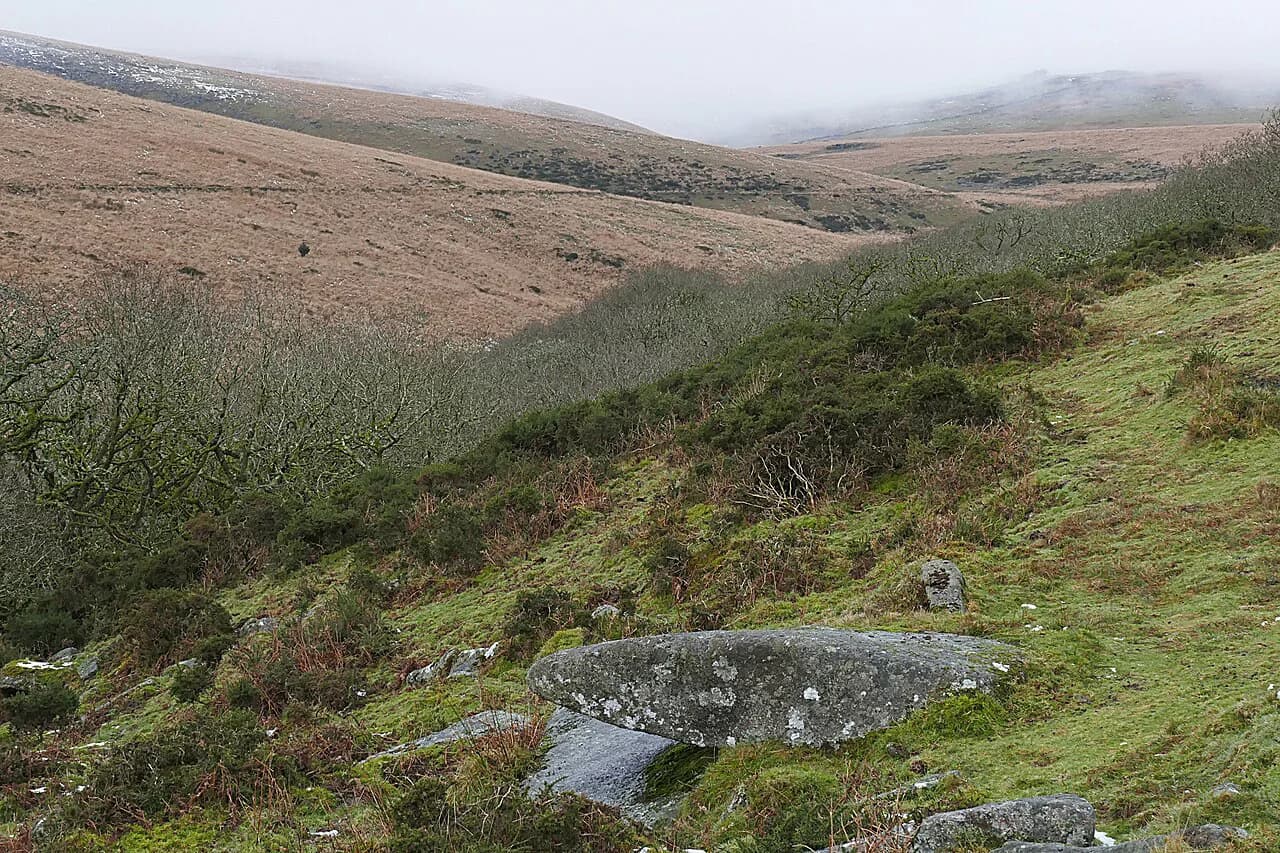
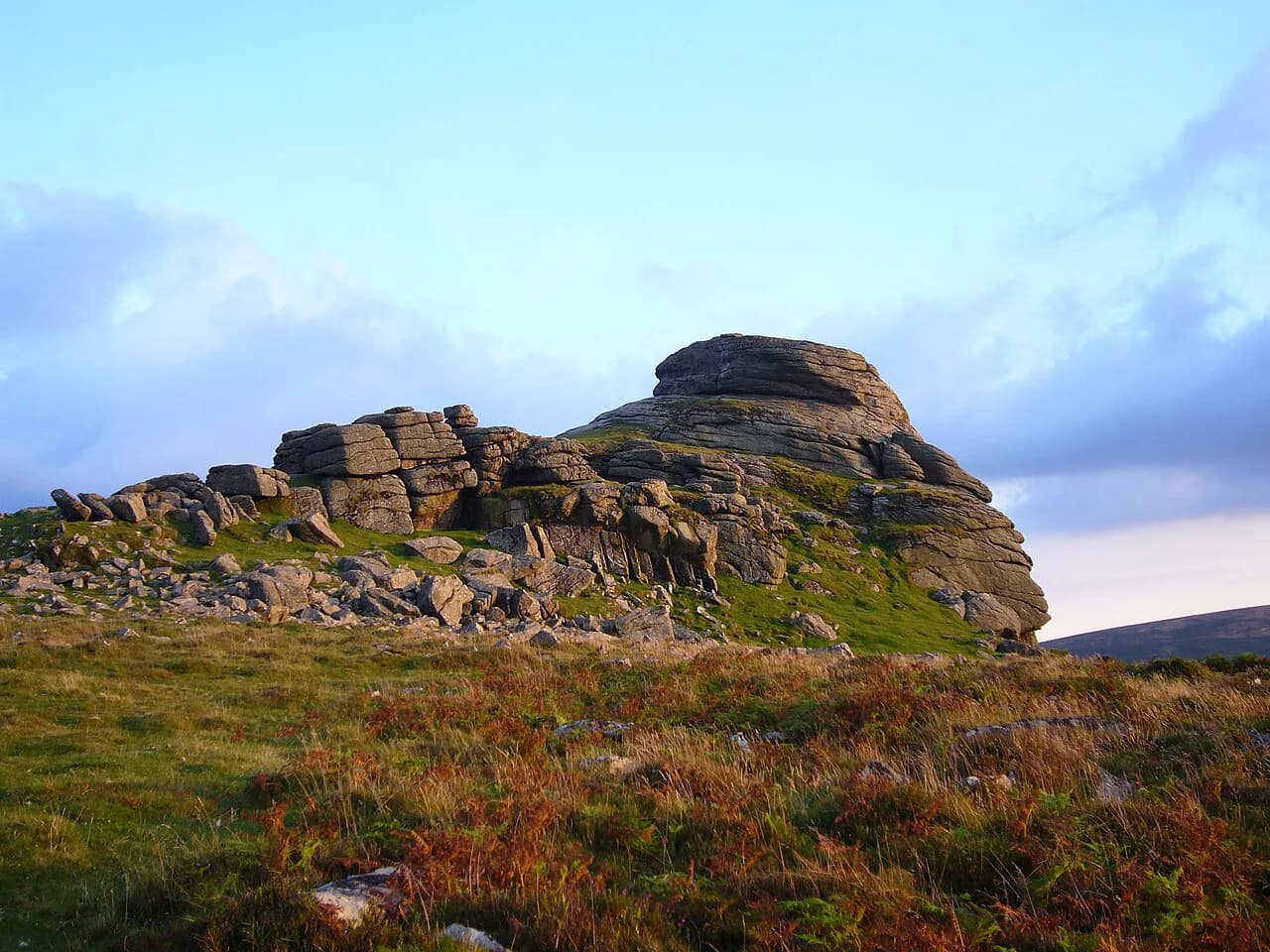
The longer version climbs away from the river to Combestone Tor, a granite outcrop on the open moor, then returns through Brimpts Wood above the valley. The tor gives the big view of the day; the plantation gives shade and, in late spring, bluebells under the trees. Expect a steady pull up, then a gentler descent on forest tracks back toward Dartmeet.
On the open section above the trees you are exposed to wind and sudden mist, and the moor paths braid and fade between the tor and the plantation edge. Carry a map and compass and know how to use them; phone signal is unreliable on the high ground. After rain the track into the wood turns slick and the moor ground holds water, so gaiters and boots earn their place here.
Stepping stones, muddy sections and river crossings
Dartmeet's riverside paths are low and close to the water, which means they collect mud and standing water through autumn and winter. Long stretches near the river can be waterlogged and boulder-strewn after wet weather, and the stepping stones become the hazard of the walk rather than its highlight. In those conditions, waterproof boots and sure footing are not optional extras.
Treat every crossing as a fresh decision: check the stones from the bank before committing, look for the shallowest line and never cross a spate river in flood. If the stones are slick or submerged, take the higher forest track or turn back. That single rule keeps the short walk safe and turns a potentially difficult day into a manageable one.
When to go: bluebells, summer crowds and winter ground
Late spring is the pick, when bluebells show in Brimpts Wood and the riverside hedges are green, and the moor is at its best into early summer. Autumn brings colour in the valley woods and quieter paths, while high summer fills the car park but keeps the longest daylight for a slow day with stops. April to October is the broad window for this kind of Dartmoor walking.
Winter is walkable but bleaker: the ground stays wet, the woodland tracks hold mud and the days are short, so start early and keep the route short. Dartmoor also takes far more rain than the coast and mist can close in fast on the moor above the valley, so pack waterproofs on every visit whatever the forecast. The stepping stones are at their most slippery in the colder months.
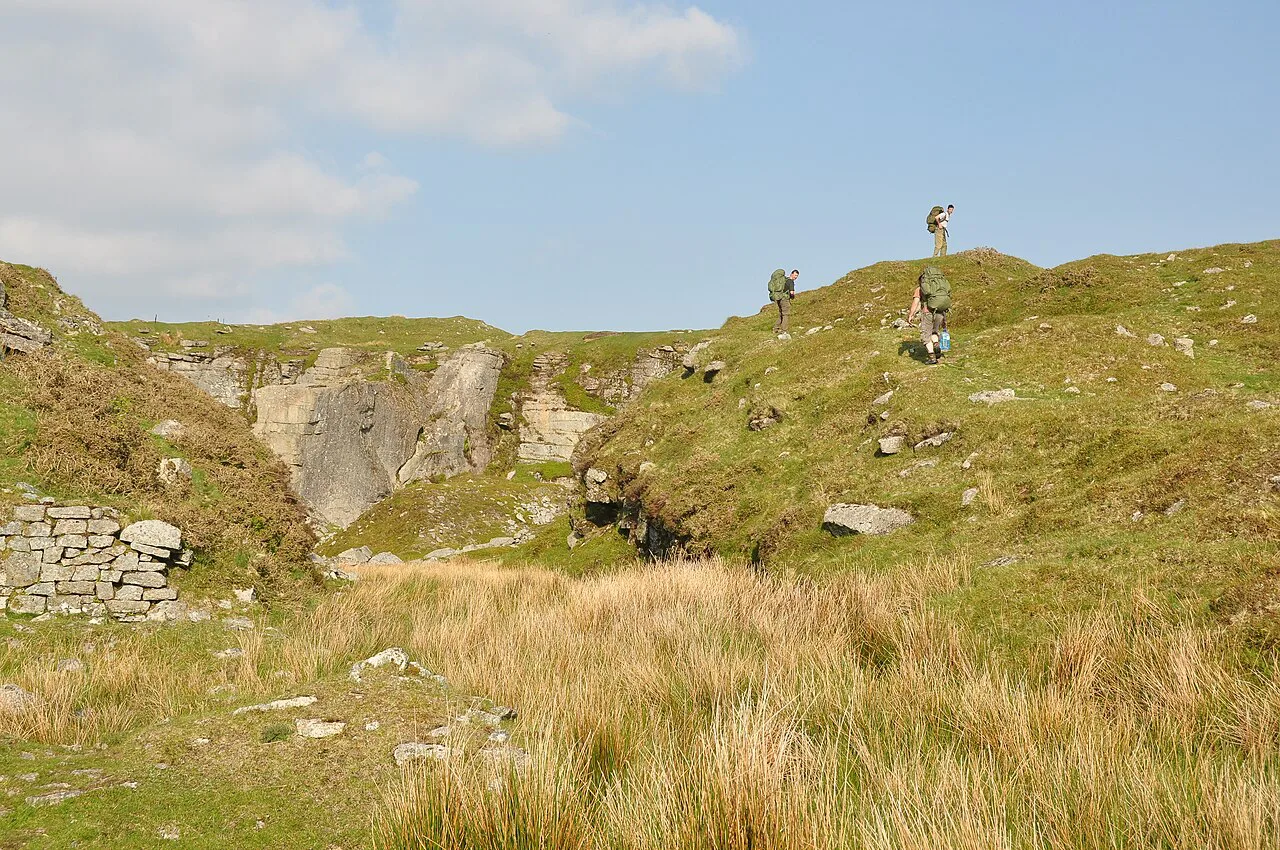
Huts, pubs and places to eat near the route
There are no mountain huts on Dartmoor, and the closest food stops are the settlements around the moor rather than the valley itself. Facilities at the bridges are modest, with a small cafe and toilets that have served visitors but whose opening is seasonal, so better provision is found at Widecombe-in-the-Moor, Ashburton and Princetown, each within a short drive of the car park. Plan your meal around those towns rather than expecting a pub on the path.
For a longer stay, base yourself in a town on the moor's edge where you can buy supplies and find a bed, and treat Dartmeet as a day out from it. That arrangement also solves the public transport problem, since the edge towns have the best of what limited services exist. The route is compact enough that one central base covers several days of walking.
Dartmoor rules that affect this walk
Wild camping on Dartmoor is not an open invitation: following a court ruling, landowner permission is required, and designated areas exist where camping is allowed. Check the Dartmoor National Park Authority's maps and current rules if you plan to sleep out, because the picture has changed and the old assumption that backpackers could camp freely no longer holds. For a day walk like Dartmeet, this matters mainly for planning an overnight before or after.
Dogs must be on a lead on open moorland from 1 March to 31 July, a legal requirement aimed at ground-nesting birds, and under close control elsewhere because livestock grazes widely. Keep to paths through the woodland and close gates behind you. Leave the river banks and archaeological features untouched, and you will be walking in line with how the national park expects visitors to behave.
Plan Your Visit
Choose Dartmeet for a short riverside walk if you have an afternoon, or the Combestone Tor and Brimpts Wood circuit if you have half a day and want the view. Both start from the car park at the bridges, so the only real planning is boots, waterproofs and an early enough arrival to find a space.
Bring food and water with you, expect mud and slick stones after rain, and keep the dogs on leads in the nesting season. Beyond that, the walk rewards anyone who keeps to its simple rule: at the river, the stones decide; above the wood, the weather decides.
Frequently Asked Questions
How long is the Dartmeet walk?
The riverside circuit at Dartmeet runs about 5.6 km (3.5 miles) with roughly 113 m (371 ft) of ascent and descent, which most walkers cover in 1.5 to 2 hours. Adding Combestone Tor and Brimpts Wood turns it into a half-day outing with more climbing. Ground conditions after rain slow you down more than the distance does.
Where do you park for the Dartmeet walk?
The car park sits beside the road at the clapper bridges, so the riverside path starts within a few steps of your car. Spaces are limited and the lane is too narrow for verge parking, so arrive early on sunny weekends and in holiday season. Read the notices on arrival for the landowner's current parking terms.
What is the best time of year to walk from Dartmeet?
Late spring is the strongest choice, when bluebells appear in Brimpts Wood and the riverside hedges are green. Autumn brings quieter paths and colour in the valley woods, while summer offers the longest daylight but a full car park. Winter walking is possible, though the ground stays wet and the days are short.
Can you wild camp on Dartmoor?
Landowner permission is required for wild camping on Dartmoor, and designated areas exist where camping is allowed. Check the Dartmoor National Park Authority's maps and current rules before planning an overnight, since the position has changed in recent years. For a day walk like Dartmeet, this only matters if you plan to sleep out before or after.
Is the Dartmeet walk suitable for dogs?
Dogs are welcome, but between 1 March and 31 July the law requires a lead on open moorland to protect ground-nesting birds, and close control applies elsewhere because livestock grazes year round. The riverside paths involve stepping stones and mud, so expect wet paws and a towel in the car. The woodland sections give shade on warm days.
Sources
Trail notes for your next trip
Optional updates when we add or revise hiking guides.
You might also like
Continue reading
More guides you'll find useful