Hiking in Albania: The Albanian Alps, Valbona to Theth and Best Seasons
Hiking in Albania centers on the Accursed Mountains, where the Valbona to Theth trail links two national parks. Here is how the stages, transport and seasons work.
On this page
Albania packs genuine high mountain country into a small, quiet corner of the Balkans. The northern Albanian Alps, also called the Accursed Mountains, rise to 2,694 m (8,839 ft) at Maja Jezercë and hold two national parks, Theth and Valbona, linked by a pass trail that most hikers walk in about half a day. If you want jagged limestone, wildflower meadows and family-run guesthouses rather than lift queues and crowded summits, this is the trip.
Where the hiking areas are
The Accursed Mountains form the highest section of the Dinaric Alps, the long limestone chain that runs through Albania into Kosovo and eastern Montenegro. Within Albania, the two hubs for hikers are Theth National Park in the south of the range and Valbona Valley National Park to the north, with Maja Jezercë as the range's high point. Both parks are villages-and-valleys country: guesthouses sit low, and trails climb from the valley floors toward passes and peaks.
Albania is mountainous across roughly three-quarters of its surface, so the Alps are not an isolated pocket of walking. They are simply the biggest and best-known one, and the one where a village-to-village route works without a car.
The Valbona to Theth hike
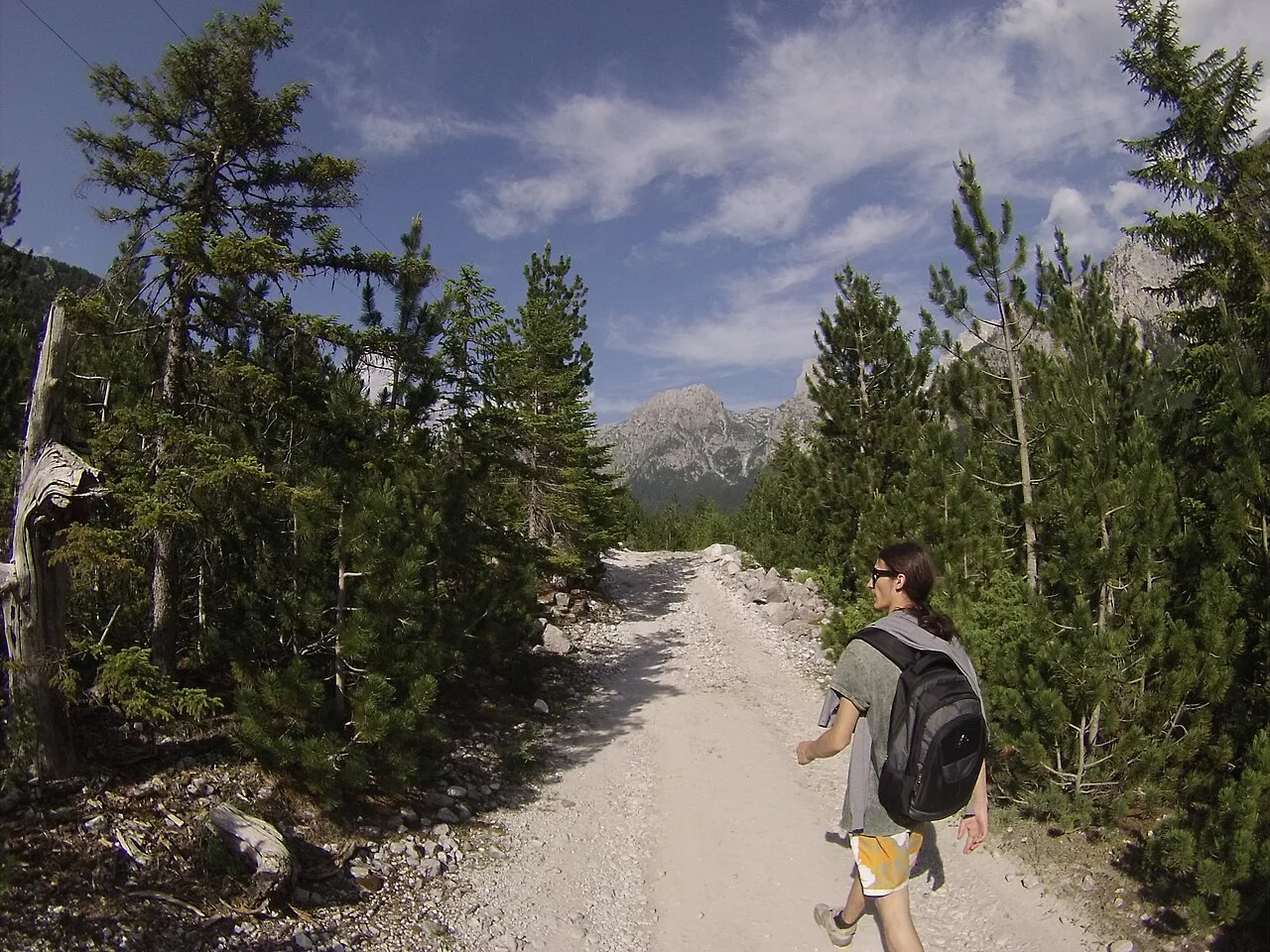
The classic Albanian Alps traverse runs between Valbona and Theth over the Valbona Pass. Hikers who walk it describe it as taking about half a day, which puts it in day-hike territory for fit walkers carrying a small pack. The route climbs from one valley to a high pass and drops into the other, so the pass is the natural midpoint and the place to watch the weather. If you are weighing a longer European traverse, hiking in Mont Blanc offers a well-waymarked comparison for scale and stage-planning.
Walk it from Valbona toward Theth. Transport up to Valbona takes longer to arrange than the bus out of Theth, so getting the harder logistics done first leaves you a simple minibus ride back to Shkoder at the end. The Valbona side is also the steeper approach to the pass, which is better done with fresh legs and a morning start.
Expect scrambling and route-finding on the pass and on the steeper routes above both valleys; these are not maintained, waymarked paths throughout. Carry at least 3 liters (about 100 fl oz) of water per person, because natural sources in the mountains are limited and the small refreshment stands near the trail are not reliably open or stocked. Afternoon storms build over the limestone in summer, so aim to be off the pass by early afternoon.
Getting to the trailheads without a car
Shkoder is the gateway for every Albanian Alps trip. The standard chain runs by minibus from Shkoder to the Komani Lake ferry port, a ferry crossing of roughly two and a half to three hours to Fierza, then another minibus from the ferry exit directly to your guesthouse in Valbona. Shkoder minibuses leave early in the morning, so plan to be at the pickup point well before departure rather than treating it as a relaxed start.
Coming back, a minibus from Theth to Shkoder takes around two hours and climbs over a mountain pass on a winding road. It is a scenic ride but a rough one for anyone prone to motion sickness. Book ferry and minibus seats in advance in summer, when both fill up.
Luggage storage in Shkoder makes the logistics much easier. Many hostels and hotels hold a bag while you hike the valleys, so you can carry a 30 to 35 liter pack on the traverse instead of everything you brought. Ask at your Shkoder accommodation before you leave for the ferry.
Driving yourself and the Komani Lake ferry
Bringing a car helps inside each valley, where guesthouses and trailheads are spread out and distances on foot add up. The problem is the link between the parks: with a car you must return to Shkoder via the Komani Lake ferry and then drive on to Theth, which can eat a full extra day of travel. The ferry carries only limited vehicle space and those spots need booking ahead, and the port itself is small and chaotic to maneuver around.
For most hikers, leaving the car in Shkoder and using the minibus-and-ferry chain is the better trade. You lose flexibility inside the valleys but gain the half-day walk between the parks instead of a long road detour.
Hikes around Theth
Theth works as a base for day walks rather than a single objective. The village church and the surrounding meadows are the orientation point, and short valley walks suit beginners and anyone recovering from the pass. The Blue Eye, a cold spring pool above the village, is the popular half-day outing and worth a swim in summer.
Beyond those, the terrain offers waterfalls, viewpoints and steeper routes toward the surrounding peaks. Ask your guesthouse owner which local paths are in condition, since many of the best options are known locally rather than marked on a map. Treat anything above the valley floor as needing a map, a clear head and an early start.
Hikes around Valbona
Valbona Valley is long and open, with guesthouses strung along the road and trails branching off toward the passes and peaks. Valley-floor walks are gentle and give you big views of the surrounding walls without much climbing. The steeper routes toward the passes are where the scrambling and route-finding begin, and they are the ones to attempt only in settled weather.
Because Valbona is spread out, distances between guesthouses and trailheads can be considerable. A guesthouse close to the trail you plan to walk saves a long road walk at either end of the day.
Difficulty, exposure and route-finding
The Albanian Alps are not a groomed trail network. Many routes in both parks are difficult, with scrambling, loose ground and sections where you follow cairns rather than a clear path. If you are new to that, stick to valley walks and the Blue Eye until you have a few days of local knowledge behind you.
Water is the constraint that catches people out. Carry your own supply, refill when you can at guesthouses, and do not count on the small stands along the Valbona to Theth trail. A water filter or purifier bottle is worthwhile for streams and taps in the villages.
When to go
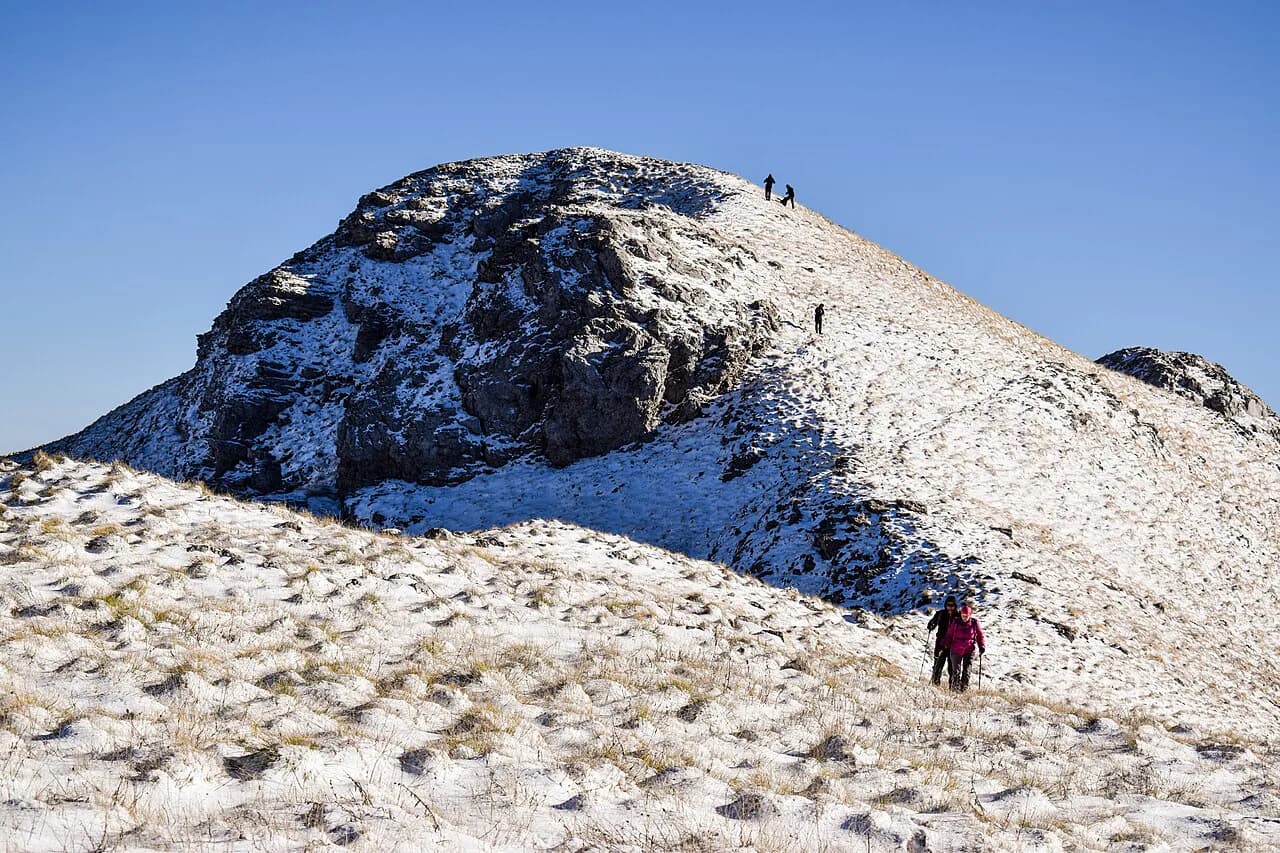
Snow arrives in Theth and Valbona from late October to early November and starts melting around late April to early May. The high ground usually loses its snow by late June, which is when the passes and higher routes open up properly. Winter visits are uncommon and need full cold-weather kit and avalanche awareness.
June and September are the sweet spots. June brings fewer people and cooler walking, with daytime temperatures around 17 to 22°C (63 to 72°F) and about 11°C (52°F) at night, and September mirrors it with autumn color. July and August are hot, dry and busy; at altitude the heat can still reach the mid-30s Celsius, which means starting at dawn and carrying more water than you think.
Where to stay in Theth and Valbona
Accommodation in both valleys is mostly locally owned, generational guesthouses, with a few more polished places appearing. Staying in a guesthouse puts you in the middle of the local food and hospitality that makes the region distinctive. Book ahead in summer, when rooms fill entirely.
Shkoder is the natural base before and after the traverse, and hostels there double as trip-planning desks. Staff can help arrange transport to the ferry and hold your extra luggage while you are in the mountains.
Guided options exist for hikers who want the logistics handled. A nine-day small-group trip covering Albania, Kosovo and Montenegro includes guesthouse nights, most meals and 4x4 transfers between trailheads, and is graded demanding, so it suits fit walkers who want the route-finding done for them.
Cash, food and water logistics
Once you are in the Alps, it is cash only. Bring enough for meals and any payment you make in person, and change money or withdraw in Shkoder before you go. There are no supermarkets in Theth or Valbona, only small stands here and there.
Plan to eat at your guesthouse, and ask in advance whether it offers a packed lunch for hiking days. Breakfast is usually included in the room rate, and most places will put together a lunch if you ask the evening before. Carry snacks from Shkoder as backup.
What to pack for spring, summer and autumn
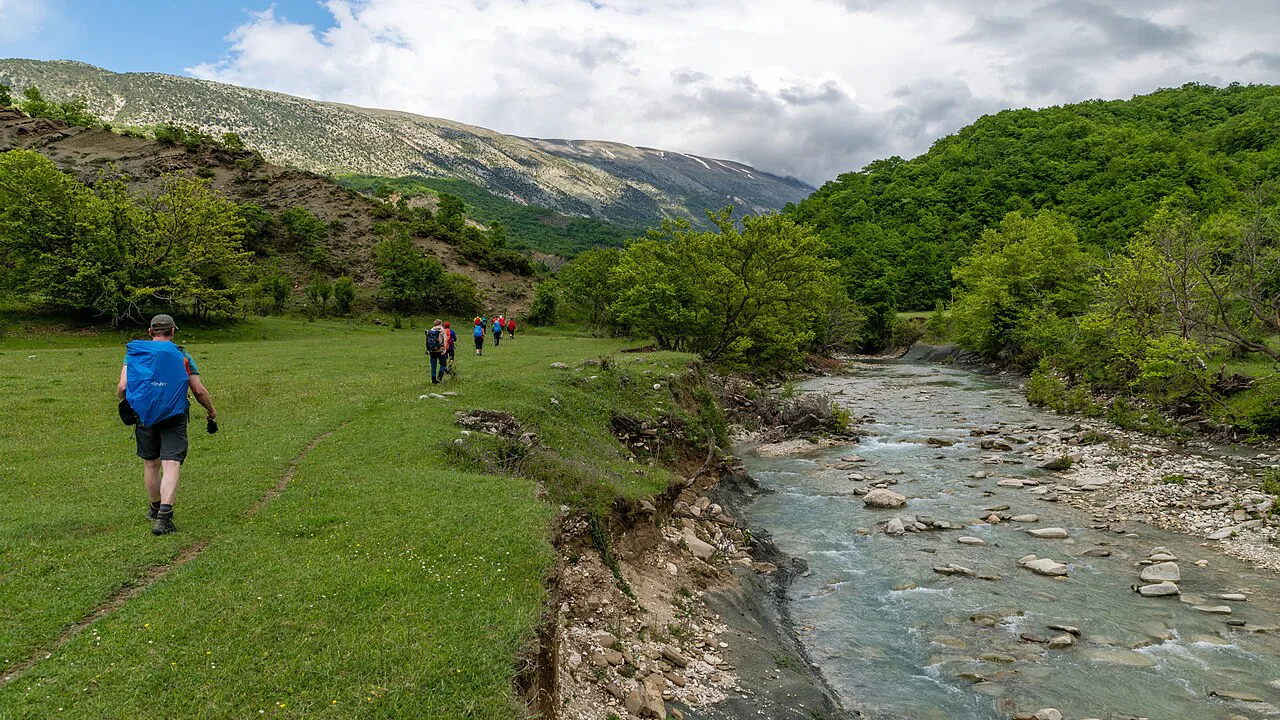
Spring and autumn in the valleys are cool, so pack trousers, a long-sleeve layer, a light jacket and warmer clothes for sleeping. Thin gloves and a hat are useful, and waterproof footwear helps in spring when snowmelt makes the ground muddy. A waterproof shell is worth carrying even though rain is unlikely.
Summer calls for shorts, light layers, sun protection and a swimsuit for the rivers and the Blue Eye. A 30 to 35 liter pack is about right for the traverse, with trail runners or hiking boots and camp shoes for the evenings. Water capacity of at least 3 liters matters more than almost anything else you carry.
Short itinerary shapes for a first trip
A simple first trip is three or four nights in the valleys: minibus and ferry to Valbona, two nights there walking the valley and a steeper route, the pass to Theth, one or two nights in Theth for the Blue Eye and the village walks, then the minibus back to Shkoder. That gives you both parks without rushing the crossing.
If you have a week, add a night on Komani Lake or the Shala River before or after the ferry, and use Shkoder as a buffer at each end. Extra days in Valbona let you attempt a higher route only when the weather holds, rather than forcing it on a fixed schedule.
Camping and luggage
Free camping is permitted in Albania, including near the Valbona to Theth trail. Pitch away from water sources, off private property and off the trail itself, and keep the site discreet. Backcountry gear is only worth carrying if you are set up for it.
Luggage storage in Shkoder is the practical alternative for most hikers. Leave the city clothes and the big bag behind, hike the valleys with a small pack, and collect everything on the way back through.
Other hiking regions in Albania
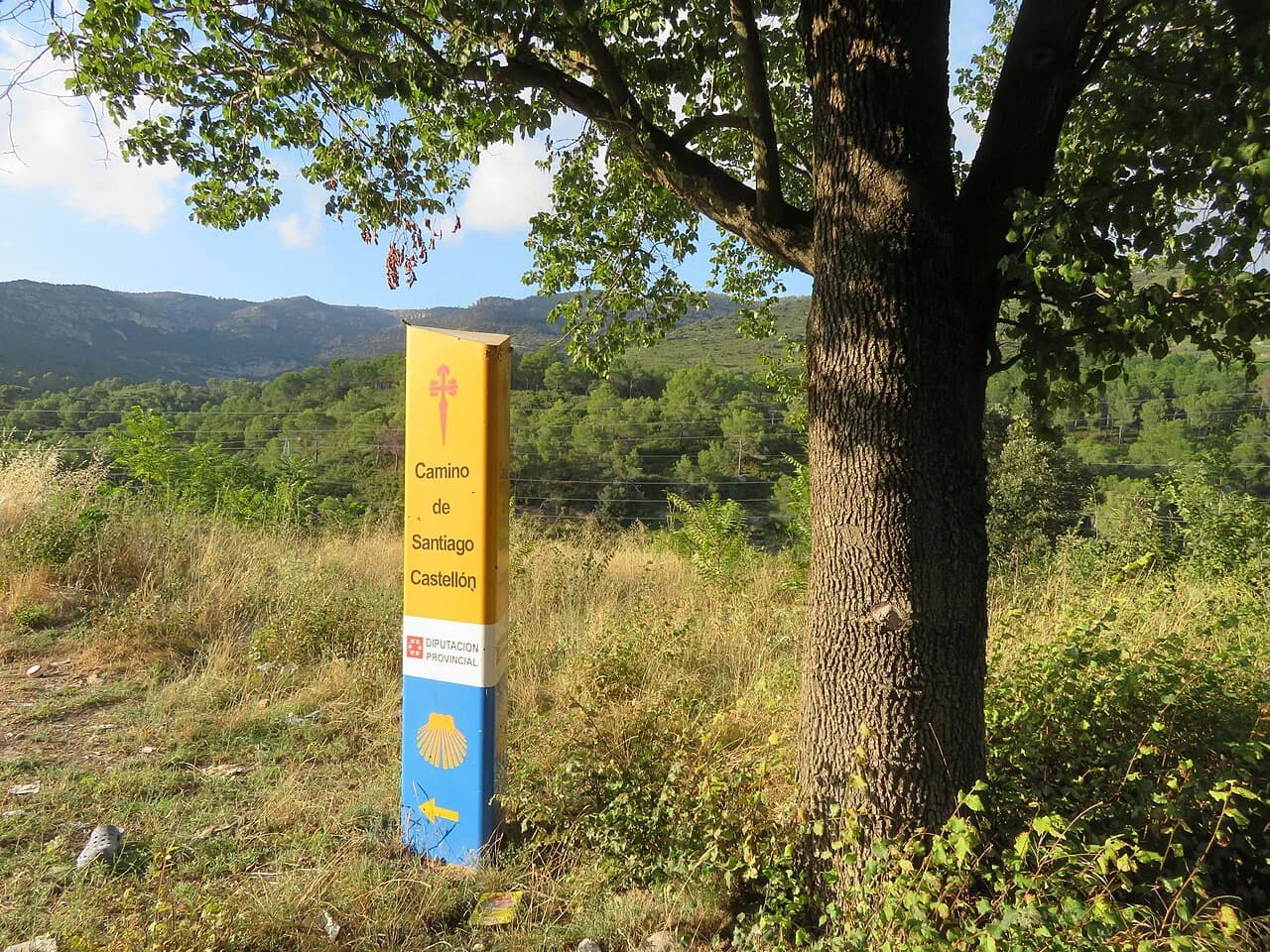
The Albanian Alps get the attention, but Albania has walking elsewhere, from the hills around Berat to the coast and the south. Those are worth a separate trip and are outside the scope of this guide. For a broader sense of how the Albanian Alps compare with long European routes, the best hikes in europe and the camino de santiago give useful context on scale and style.
Plan Your Albanian Alps Trip
Hiking in Albania comes down to one decision: give the Albanian Alps enough days to walk between Valbona and Theth properly. Base in Shkoder, take the ferry chain up to Valbona, cross the pass to Theth, and bus back. Book guesthouses and transport ahead, carry cash and water, and aim for June or September to get the mountains at their best.
Frequently Asked Questions
Is Albania good for hiking?
Yes, if you want high mountains without crowds. The northern Albanian Alps hold peaks above 2,000 m (6,562 ft), two national parks and a network of guesthouse villages, and much of the terrain is unspoiled compared with more famous European hiking areas.
What is the most famous hike in Albania?
The Valbona to Theth traverse over the Valbona Pass is the best-known route. It links Theth and Valbona Valley national parks and takes most hikers about half a day, which makes it the backbone of a first Albanian Alps trip.
Is the Valbona to Theth hike hard?
It is a solid day with real climbing to a high pass, and parts of the route involve scrambling and route-finding. Fit hikers with a small pack manage it in about half a day, but it is not a maintained, waymarked path throughout.
How do you get to Valbona and Theth without a car?
Start in Shkoder. Take an early minibus to the Komani Lake ferry, cross to Fierza, then take the minibus waiting at the ferry exit to your Valbona guesthouse. After walking to Theth, a minibus returns you to Shkoder in around two hours.
When is the best time to hike in the Albanian Alps?
June and September are the best months. Snow clears from the high ground by late June, June offers cooler walking and smaller crowds, and September brings autumn color with similar temperatures.
Are there hikes in Albania for beginners?
Yes. Theth and Valbona both have gentle valley walks, and the Blue Eye above Theth is a popular half-day outing. Leave the pass routes and anything above the valley floor until you have some scrambling experience.
Do you need cash in Theth and Valbona?
Yes, the valleys run on cash. Withdraw or change money in Shkoder before you go, since there are no supermarkets in Theth or Valbona and only small stands.
Is hiking in Albania safe?
The main risks are exposure on the passes, route-finding on unmarked ground and summer heat. Carry at least 3 liters of water, start early, watch the afternoon storms, and stick to valley routes if you are new to scrambling.
Sources
Trail notes for your next trip
Optional updates when we add or revise hiking guides.
You might also like
Continue reading
More guides you'll find useful