Lulworth Cove Walk: Durdle Door Route, Distance and Times
Plan the Lulworth Cove walk to Durdle Door on the South West Coast Path, with the cliff route, the 143 beach steps, the Fossil Forest and timing tips.
On this page
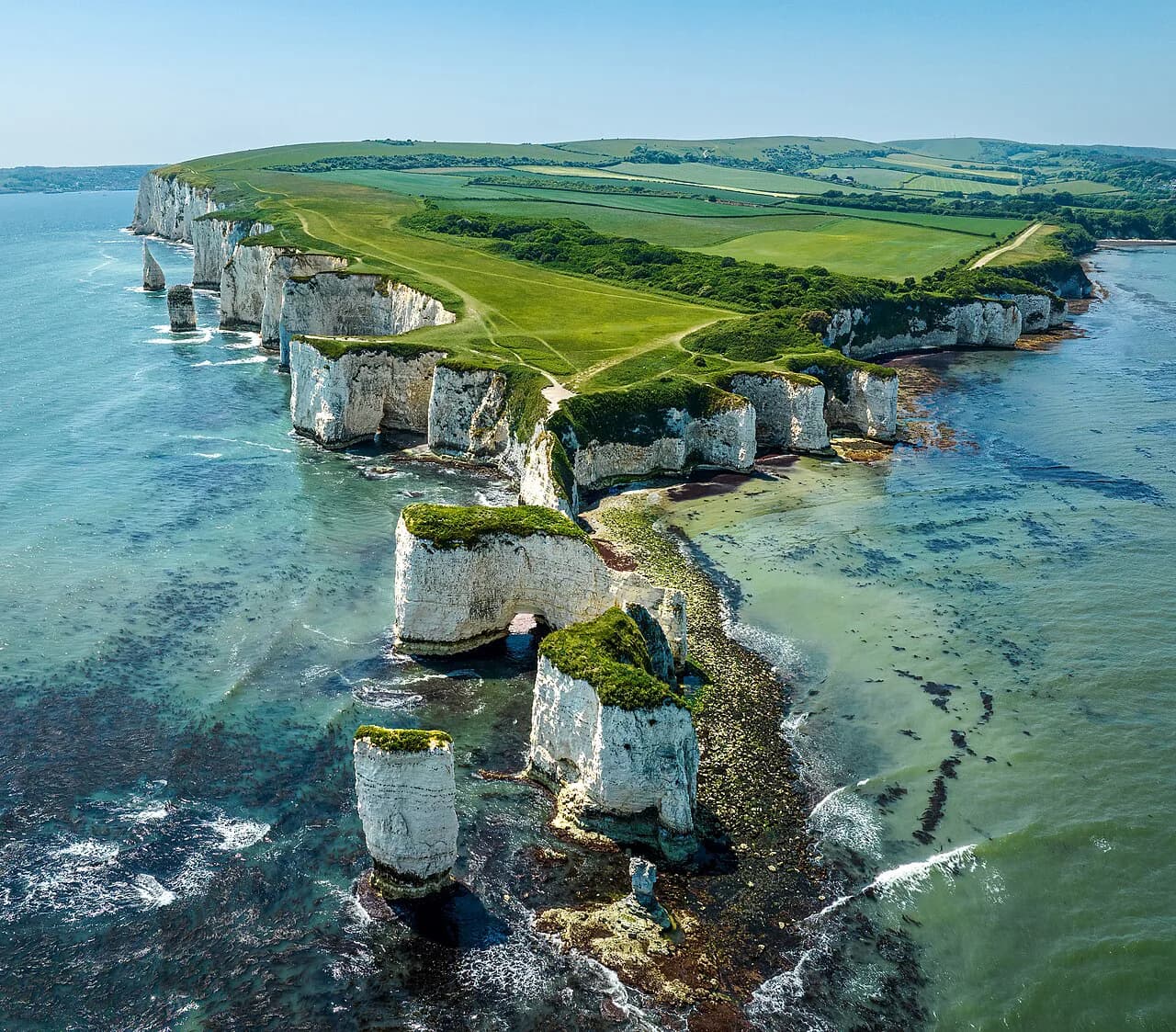
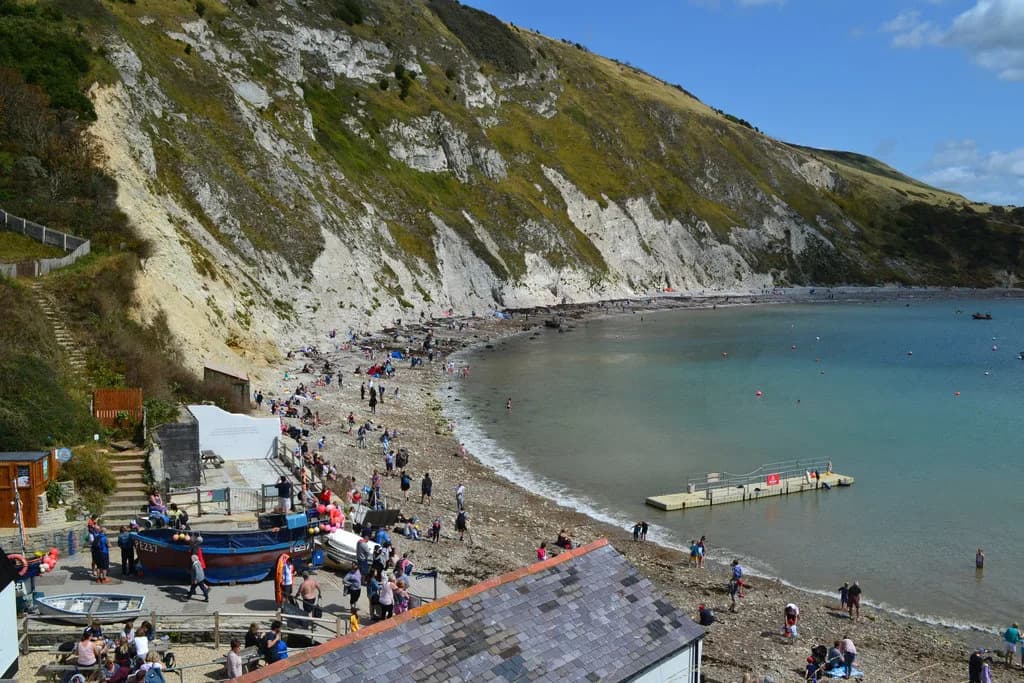
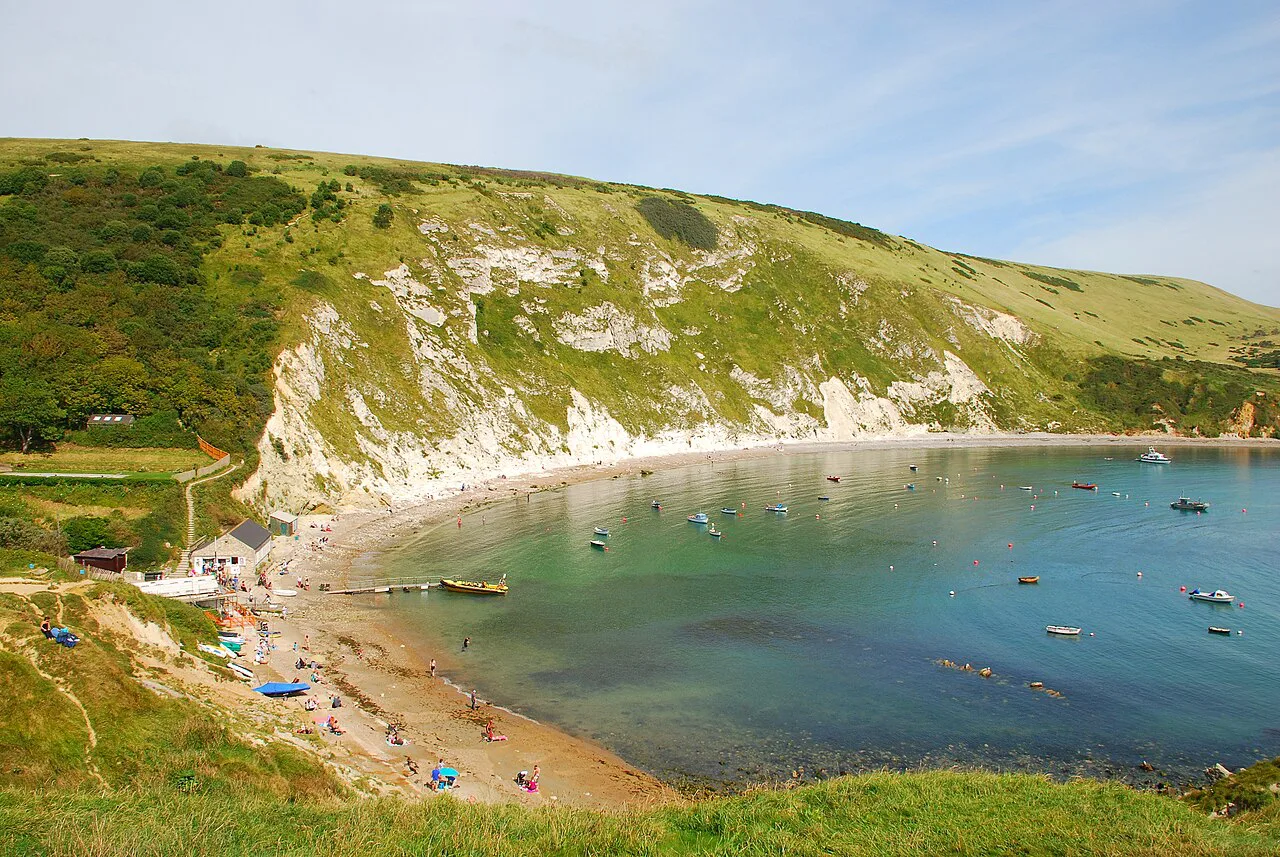
The Lulworth Cove walk puts you on the South West Coast Path between a near-circular chalk bay and a natural stone arch standing in the sea. It suits hikers with a half day and a taste for steep, short climbs: the cliff section between the two landmarks is neither long nor flat.
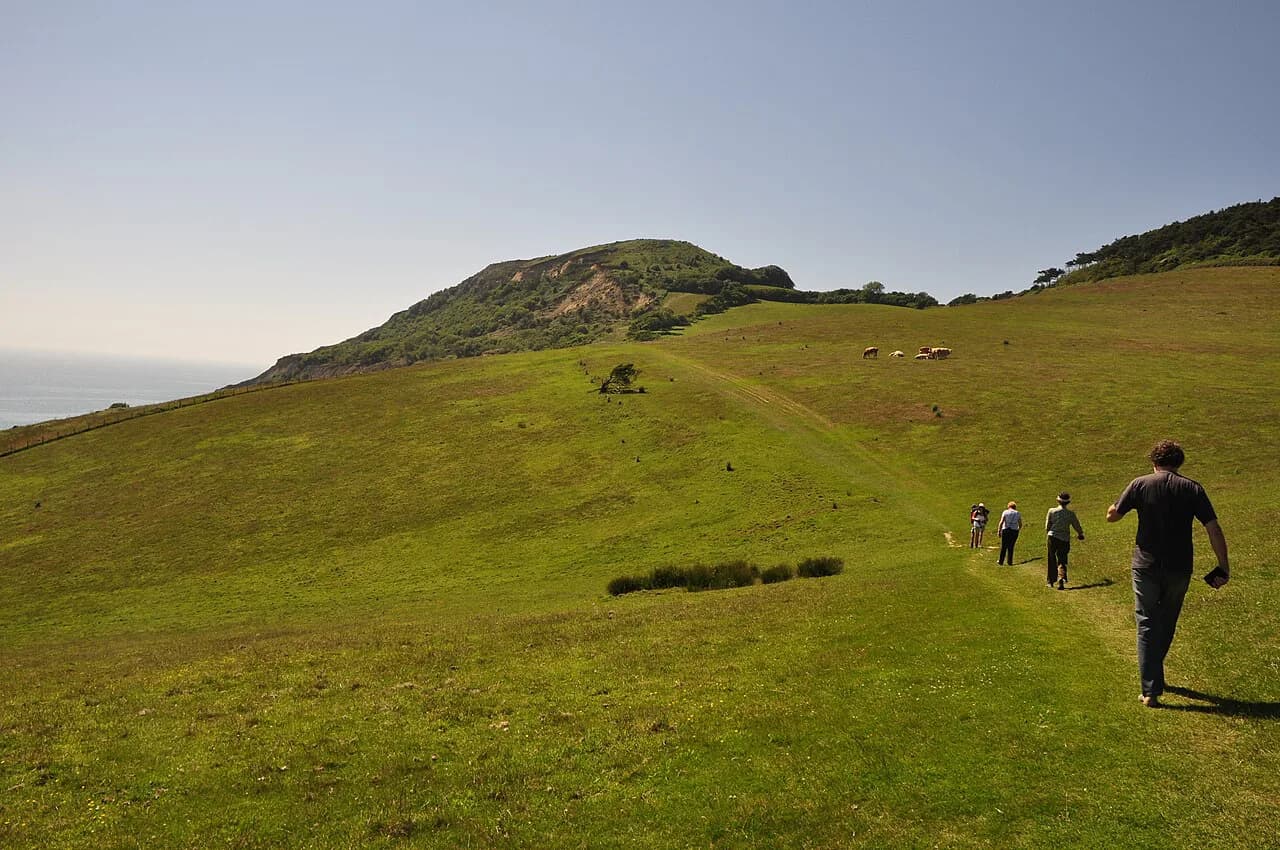
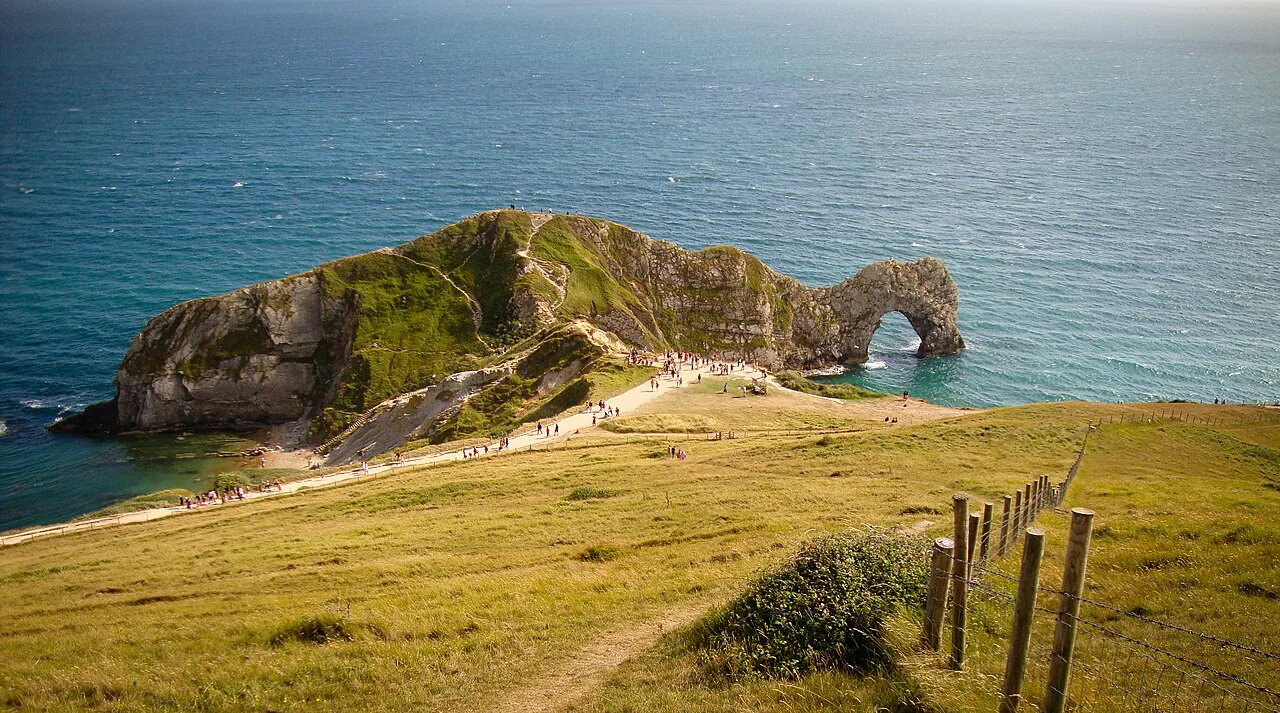
The reward comes early. You climb from the cove over open chalk downland, and the arch at Durdle Door appears below you before you have to commit to the descent. The journey back up from the beach is where the effort is spent, so plan your day around that climb rather than the walk out.
Trailhead and parking at Lulworth Cove
Start at Lulworth Cove, where the village sits just above the beach and the South West Coast Path passes through. The Lulworth area has toilets, parking and refreshments, and the visitor centre near the cove explains the geology you walk across, including the crumpled rock layers that give the bay its shape.
From the car park the cove is a short stroll, and the onward cliff path to Durdle Door begins west of the village. Wear stout footwear: the surface is natural chalk and dirt path, uneven underfoot and slippery after rain.
Distance, ascent and time
The South West Coast Path lists a Durdle Door and White Nothe walk of 7.0 miles (11.3 km) starting from Lulworth Cove car park, which takes in the arch and continues west along the cliffs. That figure covers the longer coastal outing, not the simple out-and-back to the arch.
For the core leg, treat the cove-to-arch section as a steep up-and-over rather than a flat stroll: the path climbs from sea level over the cliff tops and drops to the arch, then reverses on the way back. Allow more time than the map suggests, because the descent to the beach and the return climb are slow.
Route westbound: Stair Hole to the arch
Head west from the cove and the path passes above Stair Hole and the Lulworth Crumple, where the folded rock is visible from the path edge. The climb over the shoulder of the cliff is short but sharp, and the chalk grassland opens out with wide sea views. Keep to the main trodden line; short cuts across the grass accelerate erosion and are often loose.
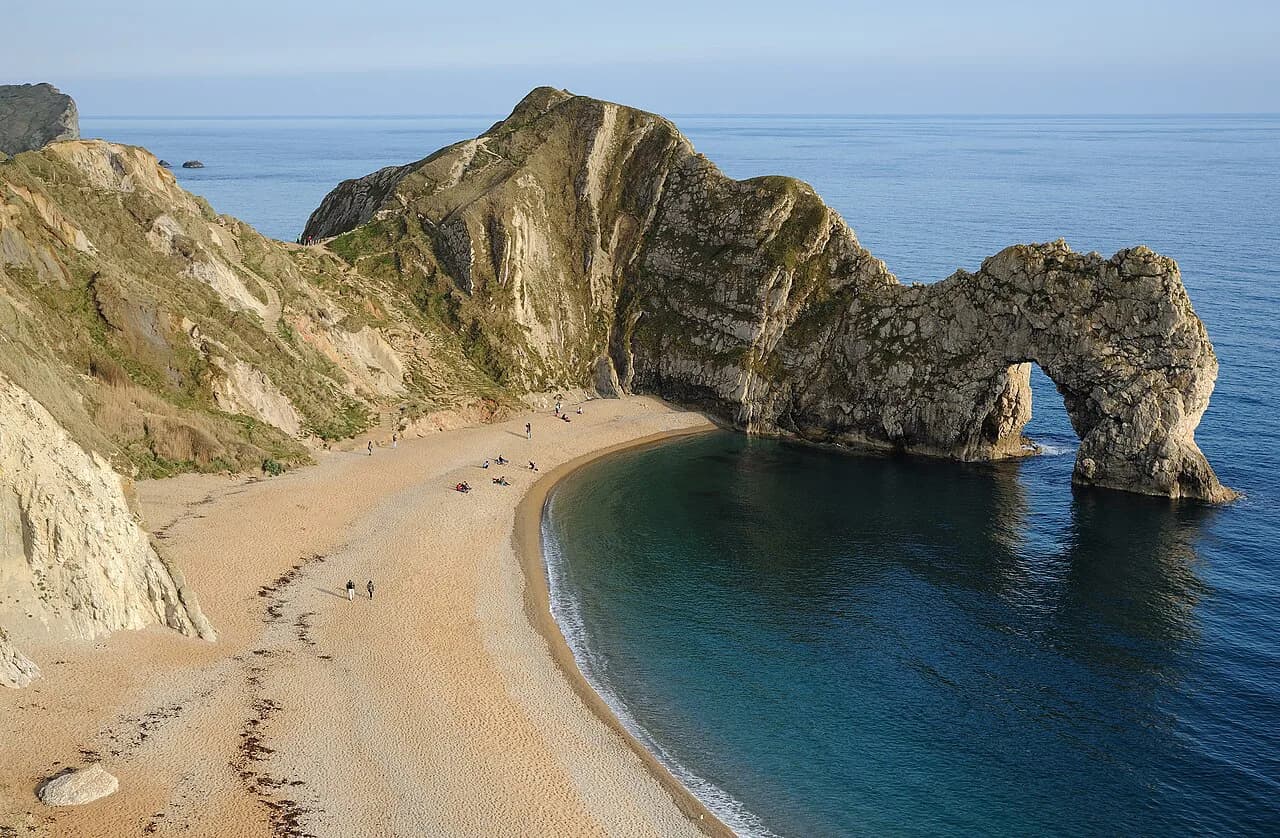
As you crest the rise, Durdle Door comes into view below, a Portland limestone arch pierced by the sea roughly 10,000 years ago. The final stretch descends towards the arch, and the path splits between the beach route and the higher line to Man O'War beach. Stay back from the cliff edge near the viewpoints, as the chalk crumbles.
Durdle Door beach and the steps
To reach the shingle at Durdle Door, follow the steep downhill path for about 15 minutes and then descend 143 steps onto the beach. Trainers or walking boots are needed, and the steps are the reason the return takes longer than the outward leg. The base of the chalk cliffs holds sea-carved caves, and you should not enter them because cliff falls are common.
An alternative line drops by steps to Man O'War beach, where the tilted Purbeck Beds are clearly visible from the shore. Whichever descent you choose, budget for the climb back up in the heat of a summer afternoon, when the steps are busiest.
Return options: back over the cliff or on to White Nothe
The simplest return is to retrace the clifftop path to Lulworth Cove. If you have the legs and the daylight, continue west towards Bat's Head and White Nothe, where the chalk gives way to steeper, quieter ground and the crowds thin out. That continuation is the reason the listed coastal walk runs to 7.0 miles (11.3 km) rather than a short there-and-back.
Beyond the arch the path climbs and falls repeatedly on grass and chalk, and the solitude is real within a hill of the main viewpoint. Turn around at a point you have chosen in advance, because the terrain offers few shortcuts back.
East from Lulworth: the Fossil Forest
East of the cove, the Fossil Forest lies inside the Lulworth Ranges, where the remains of 145-million-year-old trees show as round algal burrs around former trunks. Reaching it involves 97 steep steps down and back up, so it is a separate outing rather than an add-on to the Durdle Door leg.
The ranges are open most weekends and school holidays, and the firing notice published by the government is the place to confirm access before you set out. Time this walk for an open day, and do not assume the path east is passable on a weekday.
When to go and how busy it gets
Late spring and early summer bring wildflowers to the chalk grassland and reasonable walking temperatures. Summer weekends are the busiest, especially around the arch, where coach parties and beach visitors concentrate; start early or walk in the late afternoon to miss the worst of it.
A mile past the arch the path empties quickly, so if you want a quiet stretch, plan the extra distance rather than lingering at the viewpoint. Wind is the other variable, and the exposed cliff tops feel it even on a mild day.
Refreshments and where to base yourself
Lulworth village has cafes and a visitor centre within easy reach of the car park, and the beach at the cove is a sheltered spot for a break before or after the cliff leg. Durdle Door has facilities near its own car park, but nothing down on the shingle. Carry water for the clifftop section, as the climb back up is thirsty work.
West Lulworth makes the natural base, with the cove, the start of the cliff path and the village facilities all within a few minutes of each other. If you want a longer coastal day, link this walk with other jurassic coast walks rather than driving between viewpoints. Those who prefer to trade chalk cliffs for granite headlands and moorland edges can compare the same short-day formula in this Dartmoor hiking guide.
Hazards on the clifftop and the beach
The main risks are the cliff edges, loose chalk underfoot and the steep steps at the arch. Stay back from the rim at viewpoints, keep dogs and children close on the descent, and avoid the caves at the base of the cliffs because falls are common.
Afternoon sea fret and sudden wind can drop visibility on the open tops, so carry a map or phone route even for this short walk. On the beach, watch for waves and unstable shingle, and give the arch a wide berth if the tide is pushing in.
Where this walk sits on the Jurassic Coast
Lulworth and Durdle Door form one short, dramatic chapter of a coastline that runs west into Devon and east towards Poole Harbour. Most hikers treat the arch as a half-day target and build longer itineraries around it, stringing together cliff sections with village stops and bus rides back to the start.
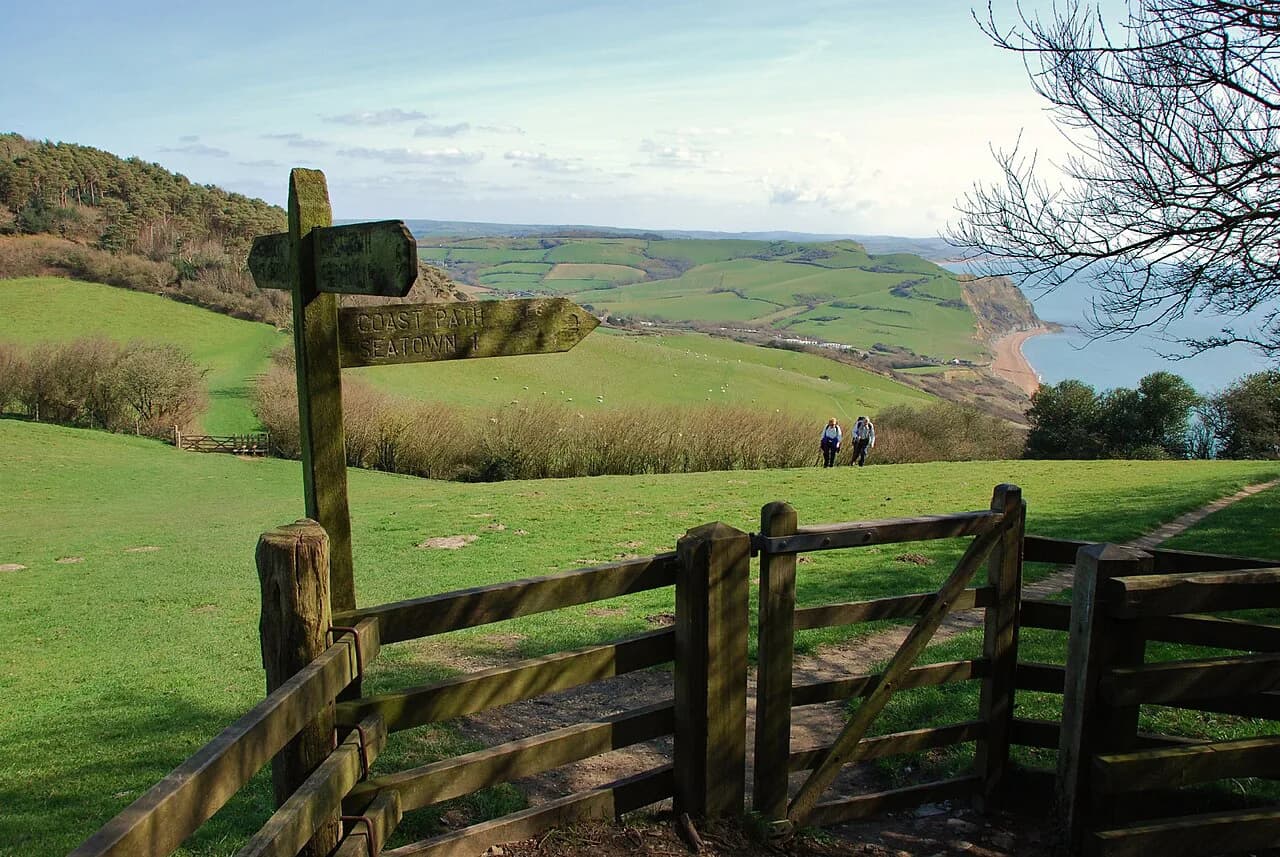
The path here is part of the South West Coast Path, a National Trail that runs for 630 miles (1014 km) around the southwest peninsula, with a height gain over its length that makes even short cliff sections feel bigger than the map suggests.
Further west, the Golden Cap walk climbs to the highest cliff summit on the south coast above Lyme Bay, a fuller day out for hikers who want a summit and a long ridge rather than a short arch-and-steps outing. It suits a different mood: more climbing, more distance, fewer ice-cream stops.
Plan Your Lulworth Cove Walk
Choose your day by effort level: the flat stroll to the cove and back, the steep cove-to-arch leg with its steps, or the longer coastal continuation west towards White Nothe. All three start from the same car park, so you can decide on the day once you see the conditions.
Build the walk around the return climb from Durdle Door beach, carry water and proper footwear, and start early if you are visiting in summer. Check the ranges firing notice before planning the Fossil Forest leg, and you will have the short, sharp Jurassic Coast day that this stretch does best.
Frequently Asked Questions
How difficult is the walk from Lulworth Cove to Durdle Door?
It is short but steep. The path climbs from the cove over the cliff tops and then drops to the arch, with 143 steps down to the beach at Durdle Door. The return climb is the hard part, so allow more time than the distance suggests.
How long does it take to walk from Lulworth Cove to Durdle Door?
Allow a half day for the round trip. The clifftop leg is undulating, and the descent and climb at the arch take far longer than the distance implies, especially when the steps are busy.
Is Durdle Door beach reached by steps?
Yes. The beach is reached by a steep downhill path of about 15 minutes followed by 143 steps onto the shingle. The same steps have to be climbed back up, so plan around your energy and the heat of the day.
What is there to see east of Lulworth Cove?
The Fossil Forest, with 97 steep steps down and back up, shows the remains of 145-million-year-old trees. It sits inside the Lulworth Ranges, which open most weekends and school holidays, so check the firing notice before you go.
Is Lulworth Cove worth visiting?
Yes, if you want a short coastal day with big scenery. The near-circular bay, the folded rock at the Lulworth Crumple and the arch at Durdle Door all sit on one path, and you can tailor the effort from a flat stroll to a steep clifftop leg.
Sources
Trail notes for your next trip
Optional updates when we add or revise hiking guides.
You might also like

Continue reading
More guides you'll find useful