Pyrenees Hut-to-Hut Hiking: Choose Routes and Book Huts
Plan a hut-to-hut hike in the Pyrenees: how guided and self-planned stages work, what a refuge night involves, daily effort, and which months suit high routes.
On this page
The Pyrenees give you something rare in European mountain trekking: a long chain of refuges spaced roughly a day's walk apart, spread across the Spanish and French sides of the range. You can string together high passes, glacial lakes and villages over several days without descending to a road, or sign onto a guided trek where the huts and route-finding are handled for you. This guide works through stage length, hut life, transport and season so you can pick a format that matches your navigation confidence and fitness.
Nothing here replaces the detailed route planning you will do for the specific traverse you choose; start with the broader hiking in the Pyrenees overview if you are still deciding where in the range to walk.
What hut-to-hut hiking in the Pyrenees involves
A hut-to-hut route in the Pyrenees moves you from one mountain refuge to the next on consecutive days, usually over one or more high passes. The Spanish side concentrates refuges in the Aragonese valleys, around Ordesa and the Tena Valley, and in the Catalan national parks, while the French side links huts along long-distance paths such as the GR10. Many routes mix both countries, so you should carry identification and expect signage to change language and style at the border.
The practical difference from a day-hike base is that your day ends where the day's walking ends, not at a car or bus. That makes stage ordering the central planning decision: a hut with limited beds fills early, and the pass you cross in the afternoon may be the one that sits in cloud by mid-day. Self-planned treks suit hikers comfortable reading a map, judging weather and booking each refuge in sequence; guided treks appeal to anyone who would rather walk with a certified leader handling logistics and terrain decisions. If you are weighing a warmer, island alternative to high refuges, hiking in Mallorca offers coastal and ridge trails with village accommodation between stages.
Guided formats in the Spanish Pyrenees run from four-day hut-to-hut outings to longer treks of around a week or more, with AEGM and UIMLA certified mountain guides leading the route, and departures listed across the warmer months.
The two sides of the range and how they change a route
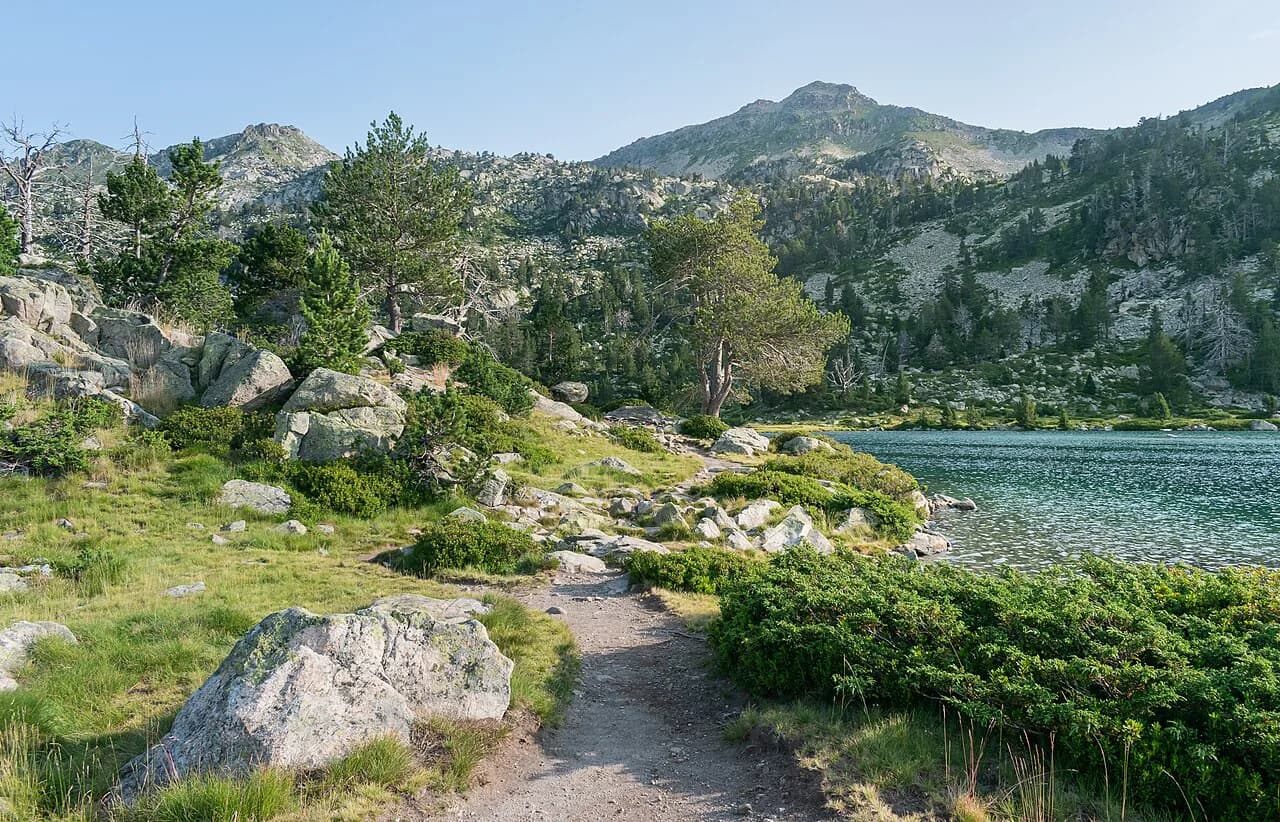
The Spanish Pyrenees divide broadly into the Aragonese range, with steep peaks and striking rock formations, and Catalonia, whose mountains hold the national parks and a strong regional culture. Long-distance routes in the Catalan mountains include the classic circuits around the Aigüestortes i Estany de Sant Maurici National Park, where lakes and forest sit beneath high peaks. Each side changes your daily rhythm: the wettest weather often arrives from the Atlantic along the northern and western crest, while the interior valleys can be sunbaked and stormy in the afternoon.
The carros de foc circuit is the best-known hut-to-hut loop in the eastern Pyrenees, linking a ring of refuges through the Aigüestortes i Estany de Sant Maurici National Park. Walkers who want a defined circuit take this format; those wanting a coast-to-coast line look to the GR10 or GR11, whose stages you plan around refuges and villages.
Trekking companies running the Senda de Camille describe a six-day trekking route in the Spanish Pyrenees as Intermediate grade, and list departures across June to September. Those labels help you shop for a format, but the daily effort below matters more for your own fitness decision.
Stage length, ascent and daily effort
On a guided Pyrenees itinerary, daily walking runs from roughly 3 to 11 miles (5 to 18 km) and climbs from about 400 to 2,900 ft (120 to 900 m), with the toughest options topping out near 2,900 ft of gain on a single day. That range tells you a Pyrenees hut-to-hut trek is rarely just a gentle amble: the middle days mix sustained climbs with descents over rough rock and, at times, snow.
Shorter days in a rugged range still carry bite because the terrain taxes your legs and ankles more than the distance suggests. Use a per-day figure rather than a total when you choose a route, and be honest about whether your longest days will be back-to-back with a heavy pack. The GR11 Guide covers the Spanish side of the through-route if you want a multi-week objective.
Huts and refuges: what a night on the route looks like
Mountain refuges in the Pyrenees range from staffed huts with bunks and meals to smaller, simpler shelters with fewer bunks. Expect communal sleeping, shared toilets and a set dinner; some refuges also sell drinks and snacks, and the staff may prefer cash. Beds are limited, so book ahead on popular circuits and treat the reservation as the anchor for your stage plan.
On the high routes, huts sit where the terrain allows, sometimes on exposed saddles or beside small lakes where you can refill water. Ask when you book about water and whether the hut has a spring or only tank supply, and plan your day's water around that answer. Bringing a water filter is a sensible hedge where plumbing is basic.
Long guided hut-to-hut formats and who each suits
The Senda de Camille, a hut-based circuit through the Spanish Pyrenees, is offered as a fully supported trek on which guides lead groups across the high stages and arrange hut nights. If you want a defined multi-day objective without the navigation, a guided format of this kind is the low-friction option: you carry a day pack, the leader handles weather calls and hut logistics, and the route mixes rocky passes with grassy valleys.
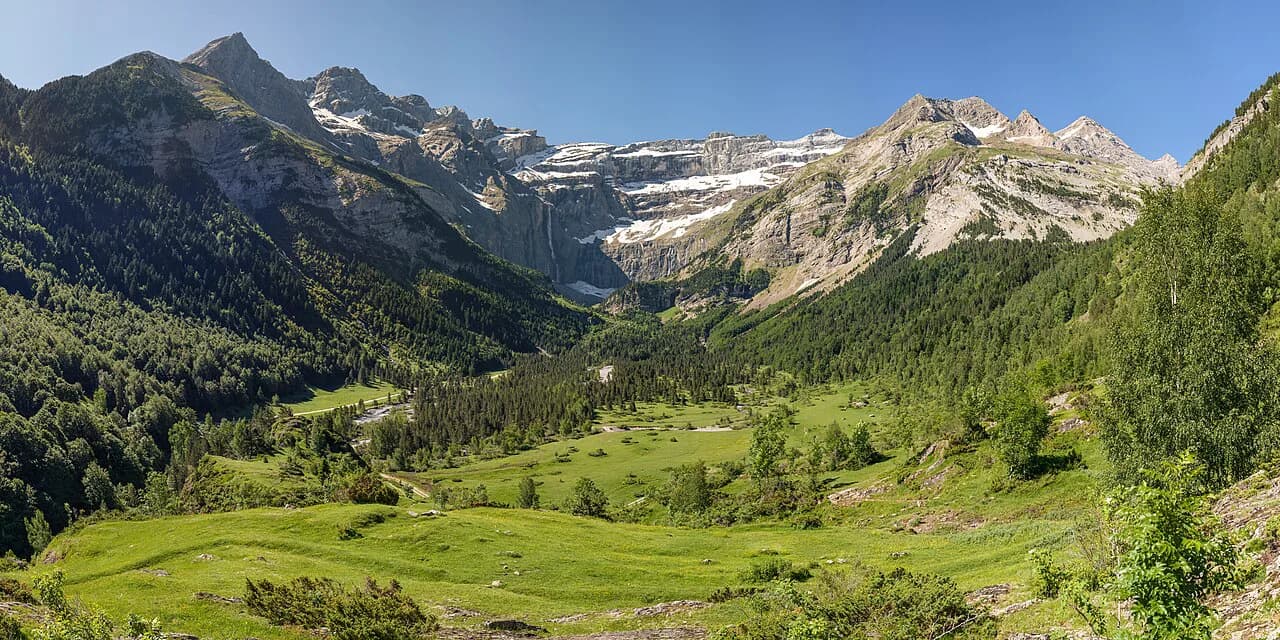
Long guided treks run from roughly four to thirteen days, with routes ranging from intermediate hut-to-hut weeks to longer traverses that join the French and Spanish sides; one listed thirteen-day option works through the Gavarnie and Ordesa biosphere reserve, and guided formats that hit three 3,000 m (9,843 ft) summits run across Spain, France and Andorra. Multi-day guided treks tend to cost the most because they bundle guides, hut nights and often meals; self-planned treks cost less but shift booking and safety decisions to you. Choose on how much you want to spend and how much route-finding you want to do.
Luggage transfer and lodge-to-lodge alternatives
If you want point-to-point walking without a heavy pack, lodge-to-lodge formats move your bags between hotels and lodges along the route. One Spanish Pyrenees lodge-to-lodge trip runs six days and five nights from Lárrede to Canfranc-Estación, walking segments of the GR11 through the Tena Valley, past the Ibón de Anayet and the Canfranc station building, with luggage transfers included. That mix of hotels, restaurants and guided transfers suits hikers who want comfort and a hot shower as much as the high passes.
The trade-off is cost and flexibility: lodge-to-lodge is typically the most expensive option, and the route is fixed by where the lodges sit. For a first trek in the range, that reliability can be worth it; for a long self-supported traverse, a tent and mixed hut nights may suit better.
Getting to the start and back from the finish
Most Pyrenees treks start near a valley town, then climb to the trailhead by road, lift or cable car. The Fuente Dé cable car is the classic way onto the eastern massif, carrying hikers from the valley to El Cable station above, and the station building at Canfranc-Estación marks the road and rail crossing toward France. On lodge-to-lodge departures, operators confirm the exact start and end points for each date, so book flights only once those are fixed.
Buses and trains link the main valley towns, but rural timetables thin out in summer and are often weekend-limited. To reach a trailhead on a weekday, check the local bus company's timetable and book any shuttle in advance; otherwise the bus may not align with your hut check-in. Alpine lift operating seasons vary year to year; plan your approach around the lift you intend to use rather than counting on it running outside its published dates.
When to go: season and snow on the passes
Late spring to early autumn is the main hut-to-hut window, with June through September allowing access to higher routes. Operators list hut-to-hut departures from June into October, and warmer conditions from May to October generally suit the higher sections; early and late in the season expect snow on north-facing passes and carry an ice axe and crampons if a route crosses them. Heat in July and August can make afternoon climbing tough, so start early.
Huts often open for the summer walking season only, and opening dates shift with the year, so confirm specific dates with the refuge you plan to sleep in before you lock flights. In shoulder months the days are shorter, which matters more than you think when you are route-finding on limestone.
Weather and terrain hazards on high stages
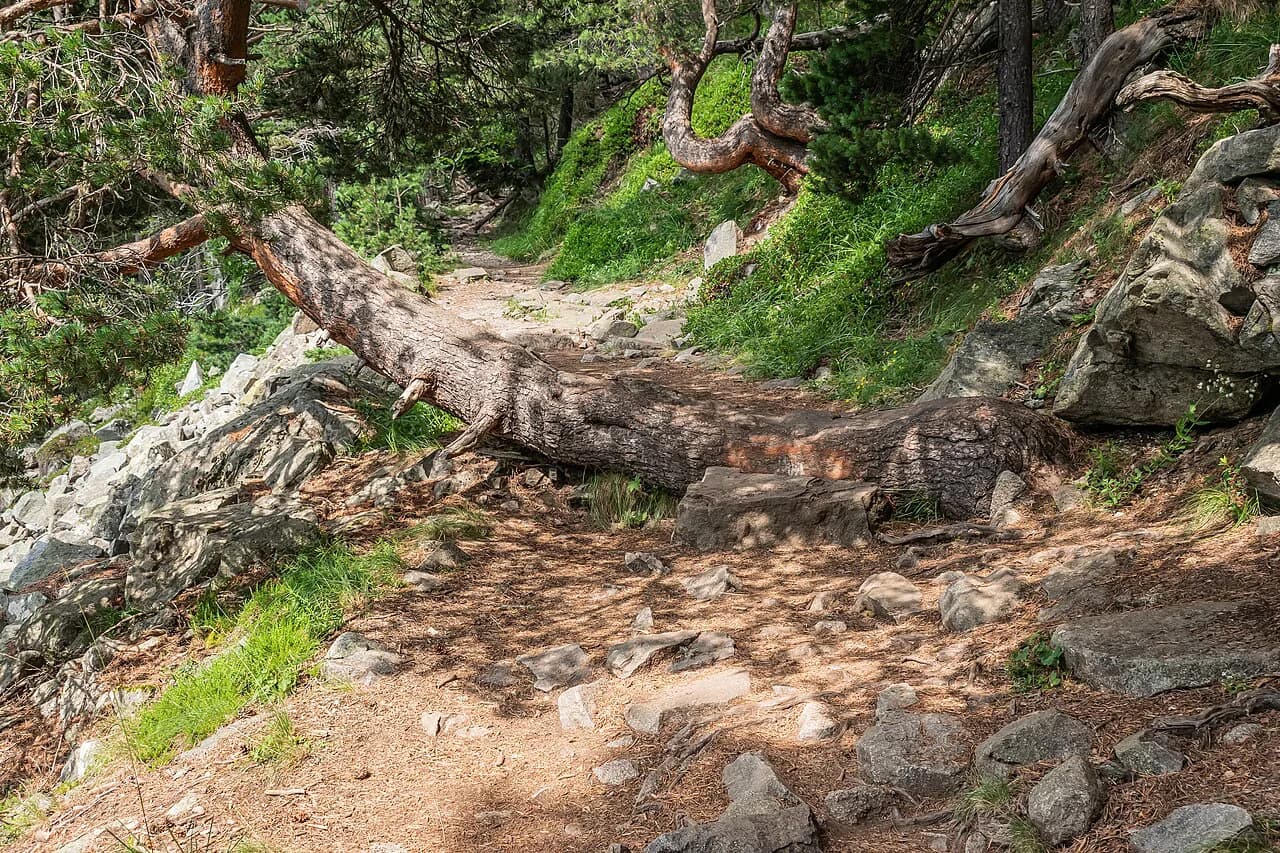
The Pyrenees are not gentle: high routes cross exposed ridgelines and traverse loose scree, and afternoon thunderstorms build quickly in summer. Plan to be over the highest pass by early afternoon and carry a shell and warm layer even when the valley is sunny. On the eastern limestone massifs, sharp edges, crevasses and faint paths demand careful navigation, and guides may reroute or abandon a stage when a storm rolls in.
Early and late in the season, snow lingers on north-facing slopes and can hide the path. Carry an ice axe and crampons for seasonal snow, and be ready to turn back if the pass is beyond your experience. On long traverses, treat weather as an itinerary variable rather than an afterthought, and keep a lower, valley-level option in reserve.
Gear for a multi-day hut route
Pack light but not minimal: a 30–40 litre pack, a three-season sleeping liner, a warm mid-layer and a waterproof shell cover most hut nights. Refuges vary in what they supply, so check whether bedding is included before you leave the liner at home. Add a water filter, cash for hut extras, a head torch and a paper map with a compass, since batteries and phone signal both fail on the high stages.
Boots with ankle support and broken-in soles are worth the weight on rocky descents. For scrambling sections and any via ferrata on the route, bring a helmet and harness or plan to hire a guide.
Fees, permits and hut reservations
Hut reservations are the critical booking, and popular refuges can fill weeks ahead in high season. Reserve directly with the refuge or through the trek company running your trip, and ask about any deposit rule and cancellation terms at the time of booking. National-park rules apply across the range, including restrictions on wild camping; read the specific park's visitor rules before you plan any bivouac.
Trek prices and hut rates vary by season and company, so check current charges with the refuge or the trek company rather than relying on an older guide. When a company lists a price, it is per person and depends on group size, so compare like for like.
Base towns for the first and last night
Good bases sit at the entrance to the higher valleys: Torla for Ordesa, Sallent de Gállego for the Tena Valley, Biescas for the western Aragonese valleys, and Canfranc-Estación at the Somport tunnel. On the Catalan side, Espot and Boí serve the Aigüestortes i Estany de Sant Maurici National Park. Book a first night at valley altitude so you sleep well before the climb, and a last night near your transport so a late finish does not leave you stranded.
If your route ends at a village rather than a town, arrange the return transfer before you start, since taxis and buses are thin in mountain areas. The Haute Route Pyrénées is a natural extension if you want a long traverse after a first hut-to-hut outing.
Plan Your Pyrenees Hut-to-Hut Trek
Decide first on format: guided or self-planned. Guided treks handle hut bookings and navigation and suit anyone new to multi-day walking; self-planned routes cost less and reward confident map readers. Then pick the side of the range that matches your weather window and stage length, and build your route around the huts you can actually book.
Book refuges early, train your legs on back-to-back days, and treat the highest passes with respect. With that groundwork, a Pyrenees hut-to-hut trek delivers exactly what draws hikers here: long days on high ground, a different hut each night and mountain views that just keep coming.
Frequently Asked Questions
How many days does a hut-to-hut hike in the Pyrenees take?
Most guided hut-to-hut routes run from about four to seven days, and longer week-plus traverses exist. Self-planned treks can be any length you want, since you choose the sequence of refuges.
Which months are best for hut-to-hut trekking in the Pyrenees?
June through September is the main summer window, when the high passes are usually clear of snow and refuges are open. Late spring and early autumn can still work but carry more snow and shorter days.
Do you need a guide for hut-to-hut hiking in the Pyrenees?
No, but it helps if you are new to multi-day routes or to high mountain navigation. Guided treks handle hut bookings, weather calls and route-finding, while self-planned treks demand solid map and compass skills.
How far do you walk each day on a Pyrenees hut-to-hut route?
Daily stages typically run from about 5 to 11 miles (8 to 18 km), with climbs from roughly 400 to 2,900 ft (120 to 900 m). Plan for the roughest terrain, not just the distance.
Can you do a lodge-to-lodge hike in the Pyrenees with luggage transfer?
Yes, some operators run lodge-to-lodge formats that move your bags between hotels. These trips are more expensive but give you a fixed route and a comfortable bed each night.
Which months are good for the high passes in the Pyrenees?
July and August usually give the most reliable conditions on high passes, while June and September are quieter and cooler with more chance of old snow. Check conditions with the refuges when you book.
What gear do you need for a Pyrenees hut-to-hut trek?
A 30–40 litre pack, a sleeping liner, a warm mid-layer, a waterproof shell and sturdy boots cover most routes. Add an ice axe and crampons if you cross snow, plus a map, compass and water filter.
Where should you stay before and after a Pyrenees hut-to-hut trek?
Valley towns near the trailheads work best: Torla for Ordesa, Biescas or Sallent de Gállego for the Tena Valley, and Canfranc-Estación near the Somport tunnel. On the Catalan side, Espot and Boí serve the national park.
Sources
Trail notes for your next trip
Optional updates when we add or revise hiking guides.
You might also like
Continue reading
More guides you'll find useful