Wales Walking Holidays: Guided vs Self-Guided Tours
Compare guided and self-guided walking holidays in Wales: how luggage transfer, route notes, daily distances and bases work, and which format fits your trip.
On this page
Wales packs mountain days, coastal clifftops and quiet border country into a small country, which is why walking holidays here range from a led week in Snowdonia to a self-guided traverse of the Llŷn coast. The format you choose decides how much of the logistics you handle yourself.
This guide compares the formats on the things that actually shape a trip: who moves your bags, whether rooms are pre-booked, how you reach a trailhead, and what a published day of walking looks like in distance, ascent and hours.
Three formats of a Wales walking holiday
A guided group tour fixes the dates and puts a leader at the front, often with minibus transfers between the day's start and finish. A self-guided inn-to-inn holiday books your rooms and moves your luggage while you walk with route notes and maps. A single-base stay, such as a week in Beddgelert or Aberdaron, keeps you in one bed and sends you out on day walks or short bus hops each morning.
The Edge of Wales Walk is a self-guided operation on the Llŷn Peninsula, running itineraries along the Llŷn Coastal Path and the western section of the North Wales Pilgrim Way, with accommodation, walking notes, maps and luggage transfer by the company's own minibus. Walkers can start on any day and choose a camping, guesthouse or hotel version.
Packages like these sit inside the wider network of long-distance routes covered in the guide to hiking in Wales, where the Wales Coast Path and the national trails fill in the map around the Llŷn section. If you want the coast path in its own right, the Wales Coast Path guide covers the full 870-mile (1,400 km) line from the border to Pembrokeshire and back up to the north.
Self-guided inn-to-inn: route notes, rooms and luggage
Self-guided means Edge of Wales Walk does the booking and the baggage logistics while you do the walking. On the Llŷn, the company takes care of accommodation, route notes, maps and daily luggage transfer, and lends a pre-programmed GPS unit so navigation stays simple on a linear trail.
A typical eight-day Welsh itinerary published by a walking-holiday company shows what the self-guided package looks like in practice: seven nights of bed and breakfast, daily luggage transfer, route notes and maps, plus travel details for trains and buses to the first accommodation and onward from the last. That itinerary also splits the week between two bases, Beddgelert in Snowdonia and Aberdaron on the Llŷn Peninsula, so you unpack twice rather than every night.
If you would rather not carry a pack between villages but still want the freedom to stop for photographs or detour to a beach, self-guided is the format that gives you both. The trade-off is that you walk alone, so a map-reading habit and the loaned pre-programmed GPS unit still matter on clifftop sections.
Guided groups: dates, a leader and minibus transfers
Guided trips fix the calendar and the pace. A leader handles navigation, the day's timing and the transport link between the trailhead and the accommodation, which matters on one-way coastal sections where the start and finish are miles apart.
Groups suit walkers who want company through the day and would rather not plan evening meals from a route note. They also work when you have one week, a fixed holiday window and no appetite for assembling train and bus connections to a remote trailhead in Snowdonia or on the Llŷn.
On the Llŷn, the practical advantage of an organized itinerary is that a taxi or minibus hop can be built in, as on the published day that starts with a transfer to the hamlet of Bryncroes before walking 16 km (10 miles) with 365 m (1,095 ft) of ascent into Aberdaron over roughly four to five hours.
A worked example of daily distances
Grades mean little until you see the numbers. One published Welsh self-guided week rates itself easy to moderate and strings together days of 11 km to 16.5 km (7 to 10.3 miles), with ascents of 160 m to 725 m (480 ft to 2,175 ft) and walking times of three to five hours.
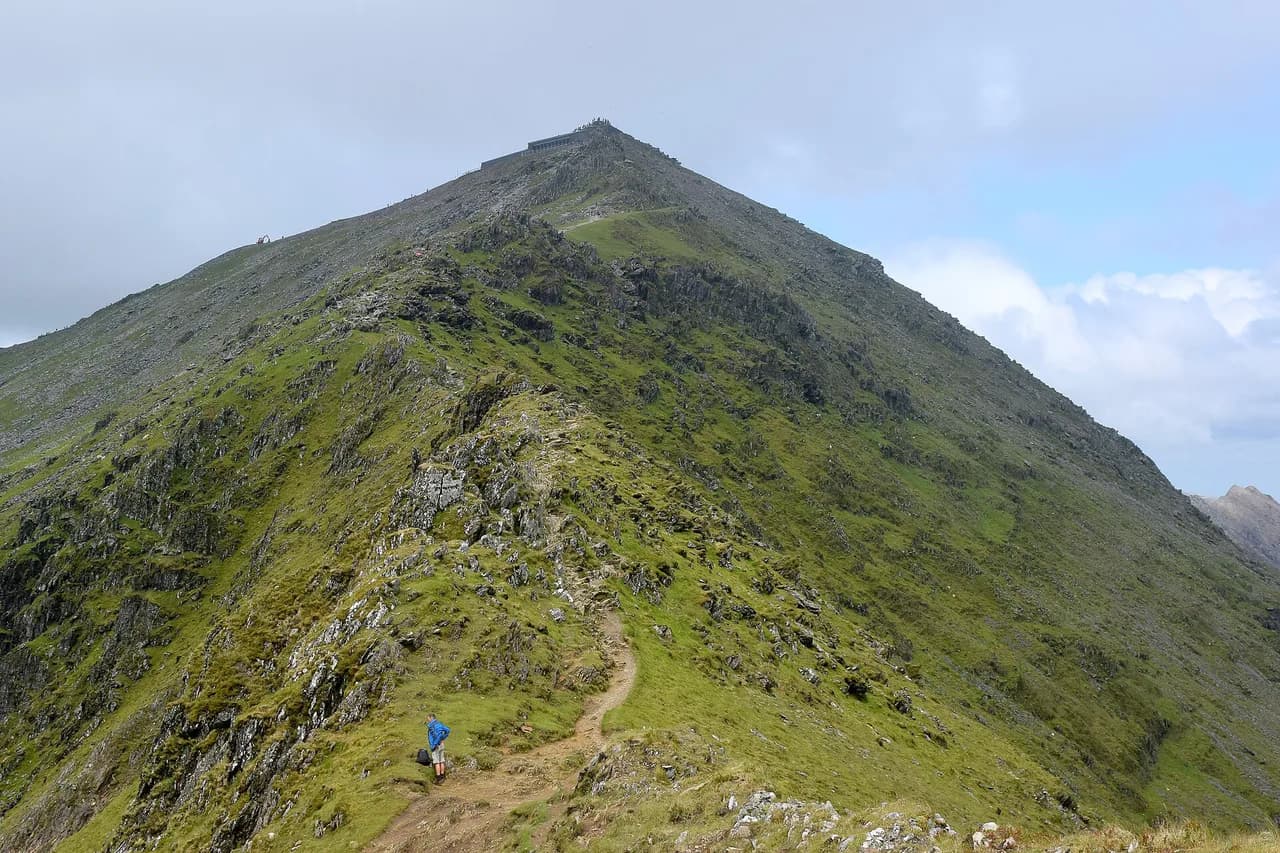
The classic Snowdon day is the hardest on that week's card: public transport to Pen-y-Pass, the Pyg Track along the old miner's route to the summit of Snowdon at 1,085 m (3,560 ft), then a descent either back to Pen-y-Pass or down to Llanberis by the railway track where buses return you to base. The route is 11 km (7 miles) with 725 m (2,175 ft) of ascent and three to four hours of walking.
The same week includes a gentler Beddgelert circuit through Llyn Dinas and Nantmor at 16 km (10 miles) and 320 m (960 ft) of ascent, and a coast day around Mynydd Mawr out of Aberdaron at 14.5 km (9.6 miles) and 585 m (1,755 ft) of climbing over four to five hours. Read together, those days show the real split in a Welsh week: one long, steep mountain day, several soft valley or coast days.
Snowdon's summit is exposed to wind and cloud in any month, and the Pyg Track crosses rocky ground where loose stone and sudden afternoon weather make an early start and full waterproofs sensible. Snow can linger on the upper slopes into spring.
Where the walking happens
Snowdonia holds the mountain days: the Pyg Track on Snowdon, valley circuits around Beddgelert, and routes such as the forest path above Betws-y-Coed to Llyn Elsi, the Miner's Bridge and Swallow Falls on a 13 km (8 mile) day with 360 m (1,080 ft) of ascent.
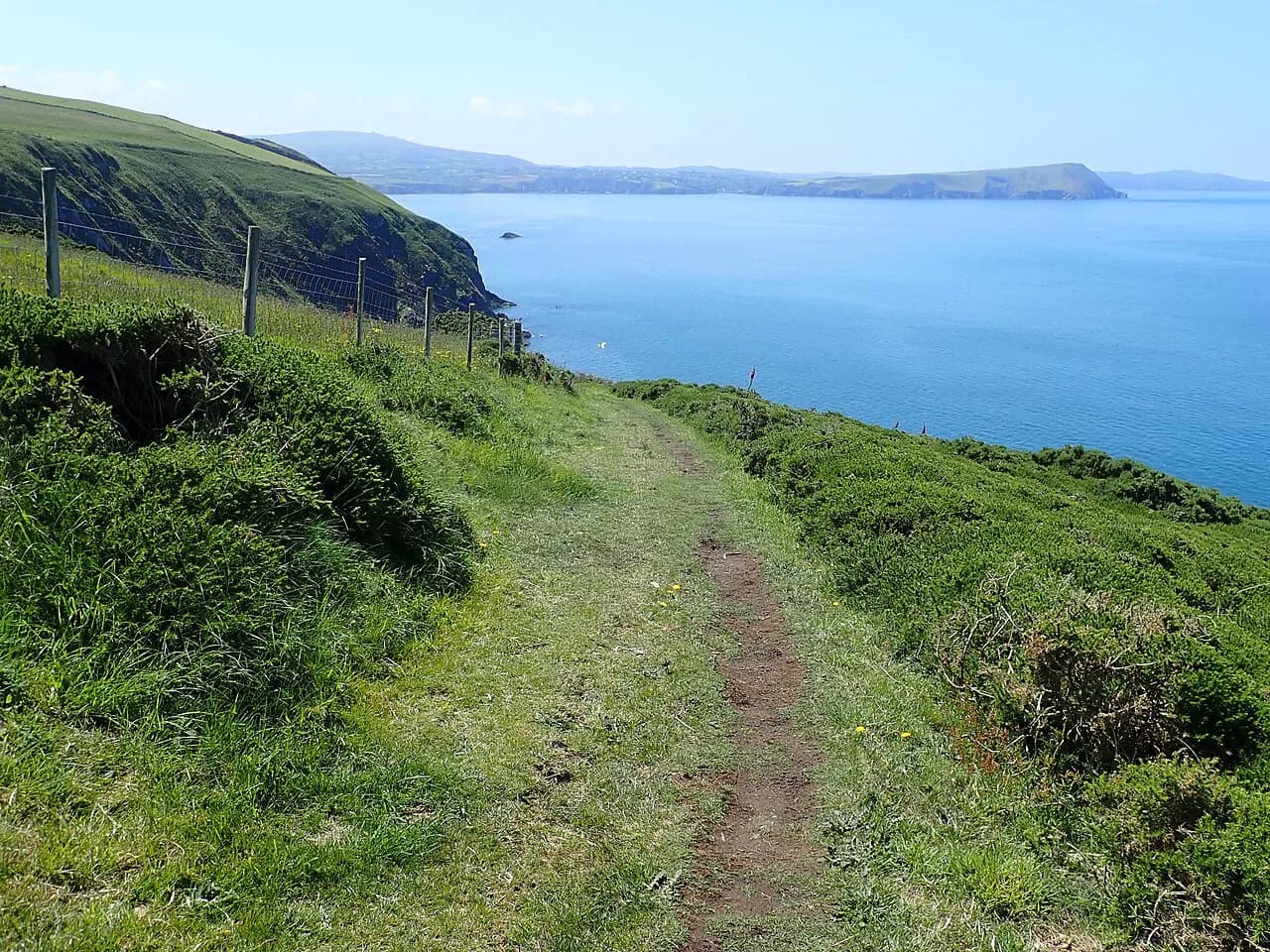
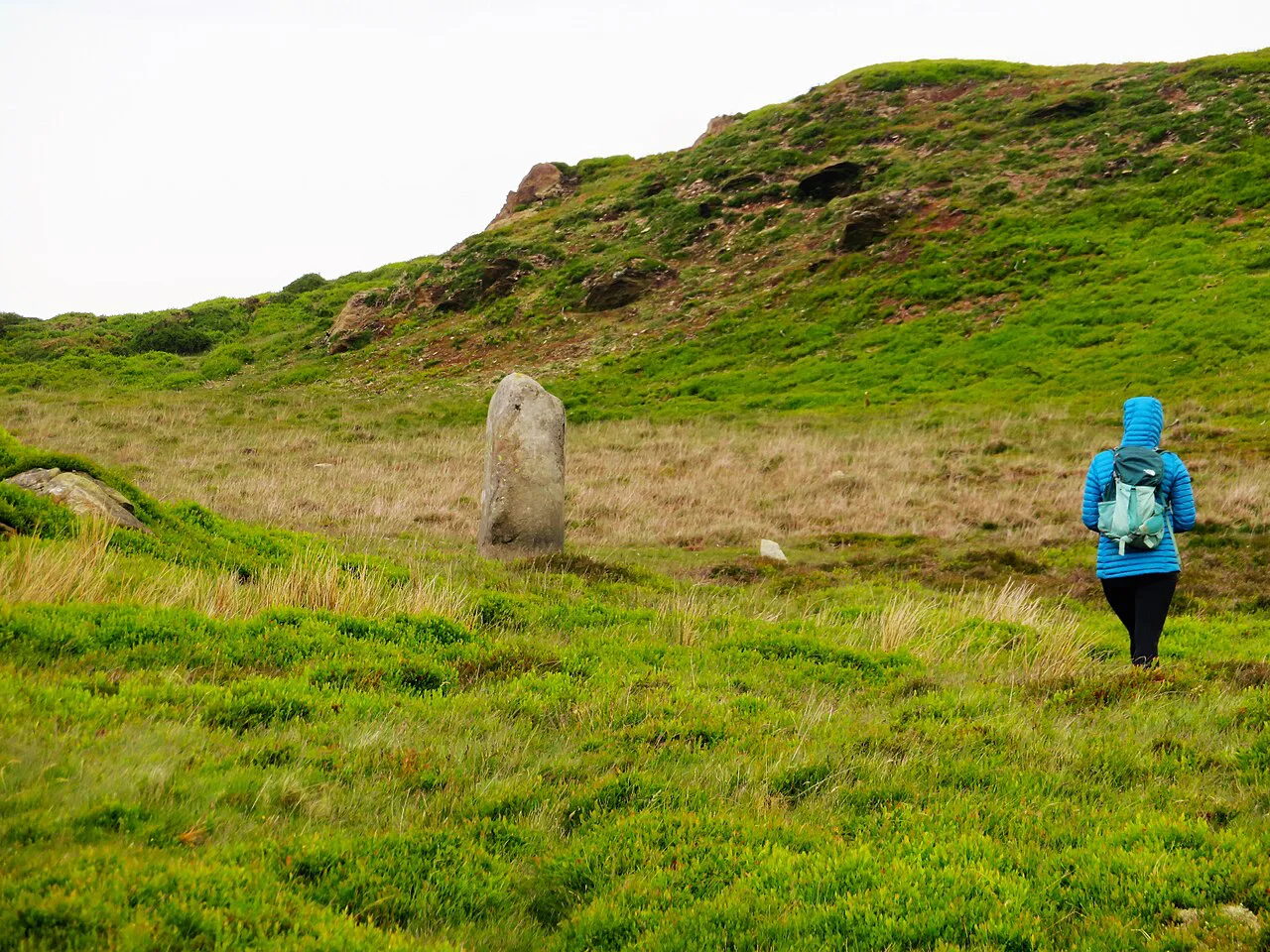
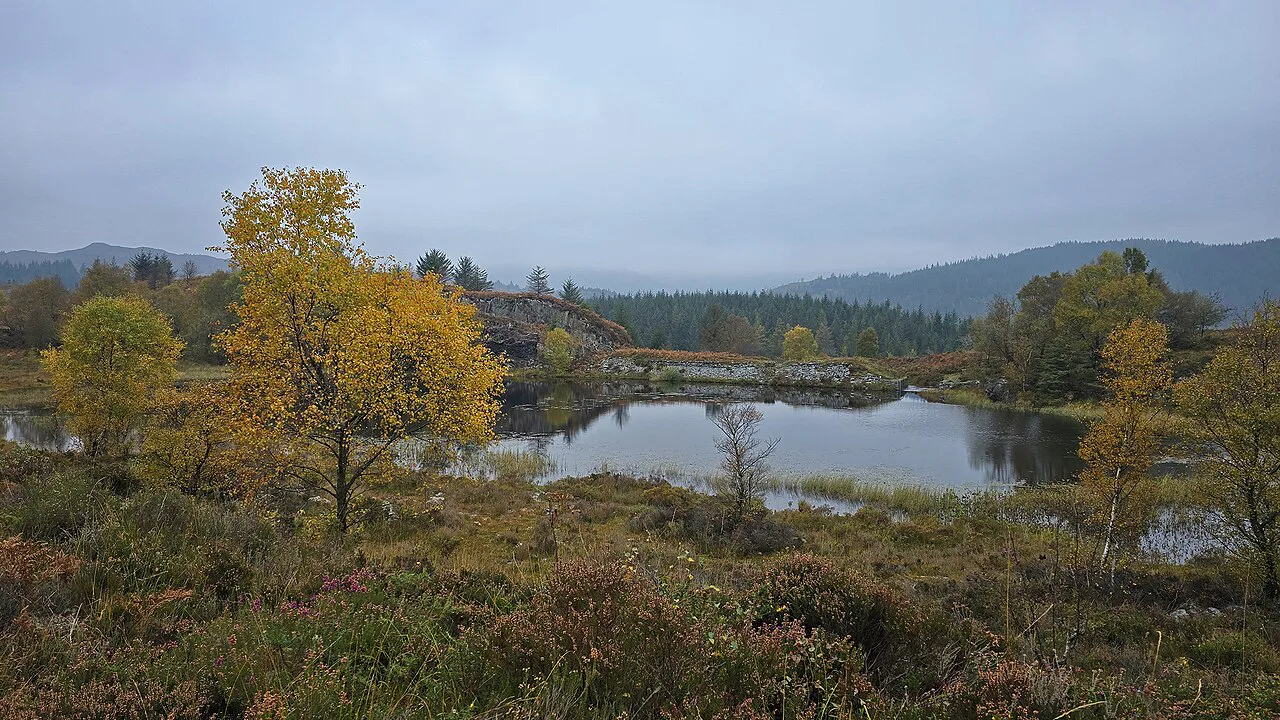
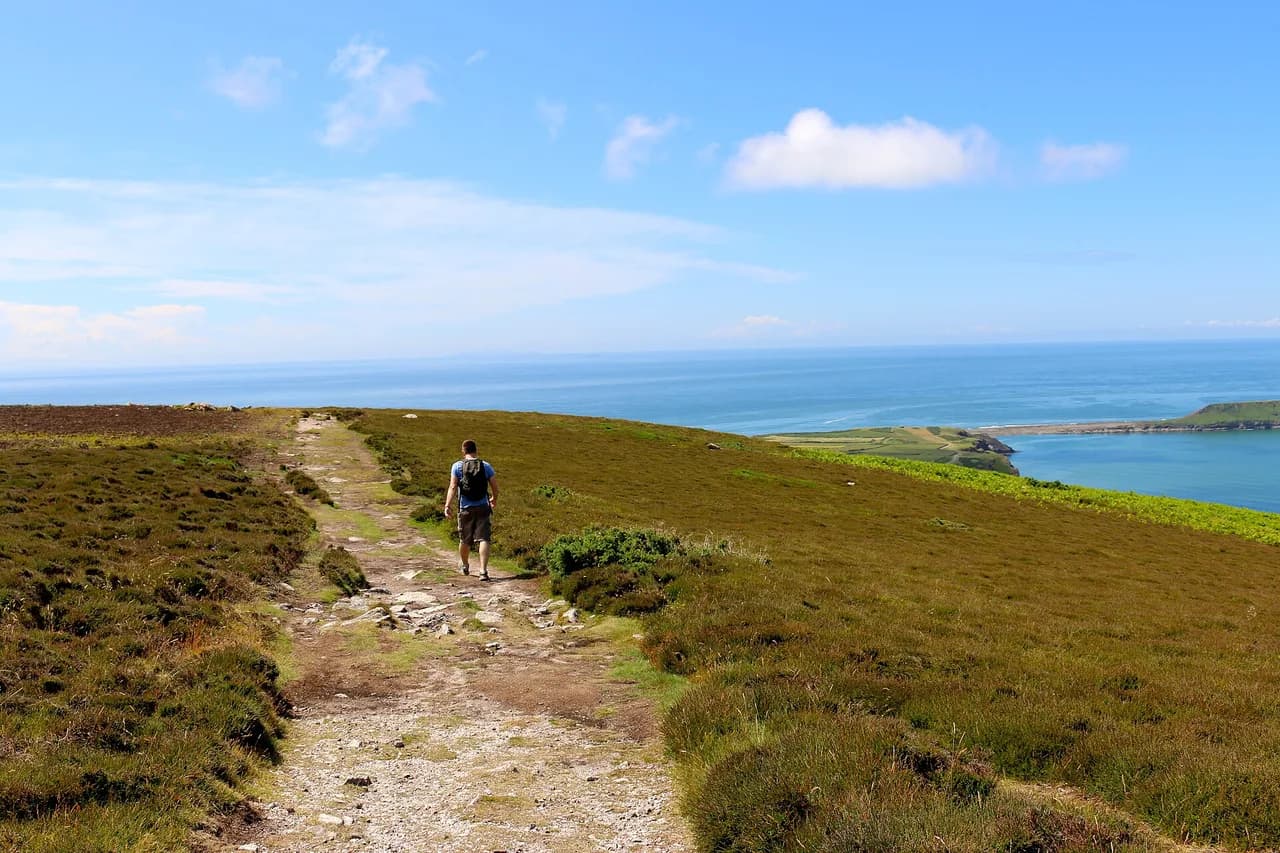
The Llŷn Peninsula supplies the coastal half, a long finger of cliff, lane and farmland running from Caernarfon around to Porthmadog, with Aberdaron as the obvious village base for the far end. The Pembrokeshire Coast Path National Trail, further south, offers a full week of clifftop walking in its own right.
Inland, the Welsh borders and mid-Wales give rolling hills and quiet drovers' routes for walkers who want farmland and moorland rather than summits. Each of these areas sits in a different kind of weather and needs a different set of kit choices.
One village base versus moving hotels
Moving nightly lets you cover a line: on the Llŷn you can push from Caernarfon to Porthmadog over several days and see the whole peninsula, with luggage waiting at the next guesthouse. It also means repacking every morning and a change of dinner table each evening.
A single base is the better fit for mixed abilities or a family group, because one driver, one kitchen and one set of drying space stay in place. In Beddgelert you can walk from the door to Llyn Dinas and Nantmor, or take a short bus to Pen-y-Pass for Snowdon; in Aberdaron you can head out to Mynydd Mawr and the coast without moving the car.
Many operators will mix the two, booking a base at one end of the week and a linear section at the other. Edge of Wales Walk adapts packages to individual needs and budgets, and lets you use your own car for part of the trip or rely entirely on their transport.
Mountain days versus coast days
Mountain days in Snowdonia give you the big ascents and the summit views, but they are the days that punish knees on the descent and demand a fixed start time. The Snowdon descent by the Llanberis path is long and steady, which is easier on the joints than steep scree, but it adds distance.
Coast days on the Llŷn are shorter in ascent but relentless in their undulations: the Mynydd Mawr circuit out of Aberdaron packs 585 m (1,755 ft) of climbing into 14.5 km (9.6 miles), most of it in short sharp pulls. The reward is the view across the Irish Sea to the Wicklow Mountains on a clear day.
If you have knee trouble, the valley and forest days are the ones to keep, and the coastal paths are better in spring and autumn when the ground is drier and the bracken lower. On any clifftop section, keep back from the edge in gusty weather and watch for slippery rock after rain.
Bardsey Island and the Llŷn coast
Bardsey Island, Ynys Enlli, lies about three kilometres (two miles) off the tip of the Llŷn and can be reached on a short ferry crossing from near Aberdaron, on one itinerary included in the package. The island is roughly 2.5 km (1.5 miles) long and 1 km (0.6 mile) wide, rising to Mynydd Enlli at 167 m (548 ft), and a full circuit on foot comes to about 12 km (7.5 miles) with 160 m (480 ft) of ascent over three to four hours.
The crossing runs to the boat operator's schedule, which changes with tides and weather, so the island day is the one to leave flexible inside a week. On the island itself, paths cross farmland and a national nature reserve, and ground-nesting birds mean staying on the marked line in spring.
The mainland coast path around Mynydd Mawr passes St Mary's Well, a spring that fills with fresh water despite sitting below high-tide level, and gives the best land views back to the island. This is also where the Llŷn Coastal Path forms part of the Wales Coast Path, so the waymarking is continuous.
Season and booking
Welsh walking holidays run year-round in principle, and the Llŷn self-guided option lets walkers start on any day at any time of year. Winter walking here means short daylight and wet ground rather than deep snow at low level, so plan shorter days and carry a headtorch.
The published eight-day Welsh itinerary runs from early spring to late autumn, which is when most operators schedule departures and when the island ferry is most reliable. If your trip depends on the Bardsey crossing or a specific guided date, book early in the year.
Room supply in villages like Beddgelert and Aberdaron is small, and self-guided companies block beds in advance, so a summer week is best reserved several months ahead. Ask what happens if a ferry or a transfer falls through, and get the cancellation terms in writing.
Getting to the start and back from the finish
Most Welsh walking holidays begin with a train to Bangor and a bus onward, which is how the published itinerary gets walkers from Liverpool or Manchester airports to Beddgelert on day one, and how it returns them from Aberdaron at the end. Operators supply the specific connections with the route notes.
Inside the week, public transport does a lot of work: buses reach Pen-y-Pass for Snowdon and return from Llanberis, and buses link Betws-y-Coed back to Beddgelert after a linear day. Where no bus fits, the tour company arranges a taxi, as on the transfer to Bryncroes; check current schedules when planning.
Check the timetables for the exact dates you plan to walk, since Sunday and winter services on rural routes are thinner. Keep a fallback plan for the last bus of the day on any mountain section.
What to pack
Welsh weather changes fast on the hills, so a waterproof jacket and trousers, a warm mid-layer and spare socks earn their place on every day, even a short coast walk. Add a map case or phone pouch, and carry water and food for the full day since facilities between villages are sparse.
For Snowdon and the rougher coast sections, boots with good grip beat trainers on wet rock and loose stone. A headtorch, a small first-aid kit and a charged phone with an offline map cover the rest, and trekking poles help on the long descents into Llanberis and Aberdaron.
If your trip includes the Pembrokeshire Coast Path or the border hills, the kit list barely changes, though the Pembrokeshire guide notes the clifftop exposure and the tidal sections that shape a day there.
Who each format suits
Self-guided inn-to-inn suits confident walkers who want the route and the bags handled but not the company, and Edge of Wales Walk pitches its Llŷn packages at people tackling a linear trail for the first time as well as those after a coastal challenge with a cultural edge.
Guided groups suit solo travelers and couples with different paces, because a leader can split the group and set meeting points. A single base suits families and older walkers who want shorter days and a fixed bed, while a moving itinerary suits anyone chasing a full long-distance line.
Solo walkers should ask about single supplements and solo-traveler charges before booking, since room pricing differs sharply between operators. If you are walking with a partner at a different speed, agree in advance on re-grouping points and carry your own copy of the route notes.
Plan Your Visit
Choose the format by what you want to spend your energy on: a guided week takes the logistics off your hands, a self-guided inn-to-inn holiday swaps hotels for you while you walk, and a single base keeps everything still. Beddgelert and Aberdaron make strong anchors for the mountain and coast halves of a Welsh trip. The same guided-versus-self-guided choice shapes Scotland hiking tours on long-distance routes like the West Highland Way.
Whichever you pick, lock in the season, the ferry day and the transport first, then build the walking around them. The walking holidays collection covers other UK options if you want to compare formats before booking.
Frequently Asked Questions
What is the difference between guided and self-guided walking holidays in Wales?
On a guided holiday a leader walks with the group, sets the pace and usually arranges minibus transfers between trailheads and accommodation. On a self-guided holiday the operator books rooms, moves your luggage and supplies route notes and maps, but you walk independently and manage your own day.
How far do you walk each day on a Welsh walking holiday?
Published Welsh itineraries commonly run from about 11 km to 16.5 km (7 to 10.3 miles) a day, with ascents from roughly 160 m to 725 m (480 ft to 2,175 ft) and walking times of three to five hours. Mountain days such as Snowdon via the Pyg Track sit at the harder end.
Do I need to carry my bag between villages?
No, on most inn-to-inn packages daily luggage transfer is included, so your bag moves by vehicle while you walk with a day pack. Confirm exactly what is transferred and what weight limit applies when you book.
Is the Bardsey Island ferry part of a Llŷn walking holiday?
Some Llŷn itineraries include a short ferry crossing from near Aberdaron to Bardsey Island and a walking day on the island. Crossings depend on tides and weather, so treat that day as flexible and ask how it is scheduled.
When is the best time to book a Wales walking holiday?
Late spring to early autumn is when most departures run and when island crossings are most reliable. Village accommodation is limited, so reserve a summer week several months ahead and get cancellation terms in writing.
Can solo travelers join these walking holidays?
Yes, both guided groups and self-guided packages accept solo walkers, but single supplements and solo-traveler charges vary. Ask for the solo rate and whether a single room is guaranteed before paying a deposit.
What should I pack for walking in Wales?
Waterproof jacket and trousers, a warm mid-layer, spare socks, boots with grip, a headtorch and a charged phone with an offline map cover most days. Carry food and water for the full day, since facilities between villages are sparse.
Sources
Trail notes for your next trip
Optional updates when we add or revise hiking guides.
You might also like
Continue reading
More guides you'll find useful