Hiking in Romania: Carpathian Trails, Bases and Seasons
Plan hiking in Romania's Carpathians: Bucegi, Piatra Craiului and Făgăraș trails, base towns, lift access, cabin food and the best months to walk.
On this page
Romania holds more than half of the Carpathian range, and the walking here rewards hikers who want forest valleys, limestone gorges and open plateaus without the crowds of the Alps. Most of the range sits below 2,000 m (6,560 ft), so the days are long and gradual rather than brutally steep, and one free day in Brașov or Sibiu can put you on a proper mountain path. This guide sorts the walking by fitness and time, then matches each area to a base town and a season.
The main hiking areas at a glance
Six areas cover most of what a first trip needs. The Bucegi Mountains above the Prahova Valley offer the easiest access from Bucharest, with resorts, a cable car and chairlifts on the southern side. Piatra Craiului National Park, reached from Zărnești, is a narrow limestone ridge with a valley approach; the Făgăraș Massif around Bâlea Lake holds the country's highest ground and its most serious terrain; Apuseni National Park near Cluj is cave country with lower summits; and the southwest gorges of Semenic and the Nera valley give shaded, Mediterranean-flavored walking.
The two sides of the Bucegi are the clearest trade-off in the range. On the Prahova Valley side you get developed infrastructure, tourist services and lift access from Sinaia and Bușteni; on the Bran-Moeciu side to the north there is no lift infrastructure, so walkers carry themselves up quiet trails. Rail travelers should build itineraries around the southern side, while drivers can pick either.
Easy and half-day hikes
The Turda Gorge, east of Cluj, is the most accessible introduction to Romanian limestone scenery. A recorded loop from the gorge car park runs 7.35 km (4.6 mi) with about 390 m (1,280 ft) of ascent in roughly two and a half hours, rated moderate but on easily accessible paths. A shorter variant from Petreștii de Mijloc reaches the Bat Cave in 5.34 km (3.3 mi) with 130 m (425 ft) of climb and takes around an hour and a half.
Above Brașov, the Zărnești Gorge gives a gentle valley walk into the Piatra Craiului foothills, but the full loop from Zărnești town is longer than it looks: 14.4 km (8.9 mi) and 690 m (2,260 ft) of ascent, about five and a half hours, on paths that require sure-footedness. Walk part of the gorge and turn back if you have a half day. Families with proper shoes manage the gorge trail itself; the rocky sections are the reason to leave sandals at the accommodation.
Around Cluj, Tarnița Lake has two marked trails, one easy and one moderate, that climb the wooded hills above the shore to viewpoints over the water. They suit a short afternoon rather than a full mountain day, and the lake itself is a local favorite for swimming and paddling in summer.
Moderate half- to full-day routes
The Bucegi plateau above Bușteni is the classic moderate day. From the town you can ride the cable car or walk up to the plateau, then follow the rim to the Sphinx and the Old Ladies, two eroded rock formations, before wandering further along the open top for 360-degree views. The formations draw crowds in summer, so continue past them for quieter walking; in June the slopes turn pink with rhododendrons.
The Mălăiești valley is the popular Brașov-side objective, with a cabin in one of the most beautiful valleys of the Bucegi Massif. A recorded loop from the marked guidepost covers 10.7 km (6.6 mi) with 770 m (2,530 ft) of ascent in about five hours, and the climb from the road outside Râșnov takes roughly four hours. Goats are frequent company on the upper slopes, so keep food packed away.
Near Poiana Brașov, a loop to Postăvaru Peak and a viewpoint over Lake Poiana Ruia runs 12.2 km (7.6 mi) with 750 m (2,460 ft) of climb in about four and a half hours. It is a good fit for a full day from a Brașov base, with forest most of the way and open views near the top.
The Ciucaș Mountains, reached from the Bratocea Pass on the Prahova–Brașov county border, mix open plateau, rock towers and single-track forest. No public transport serves the trailhead, so you need a car; drivers park on the roadside where other cars are gathered. The final approach to the ridge crosses blueberry fields for roughly half an hour.
Vulture Lake sits at 1,420 m (4,660 ft) above Siriu Lake, reached by a trail of shaded woods and open ground with a cabin at the top and tents in summer. Overnighting here is worth the extra weight for the sunrise, and the lake makes a natural turnaround for a day walk.
Hard routes and high ground
The Făgăraș Massif, based at Bâlea Lake at the top of the Transfăgărășan road, is a step up in seriousness. Trails start from the lake and range from one-day outings to multi-day traverses, and the massif holds the country's highest peak along with its most demanding ridges and passes. Treat this as terrain for experienced walkers with proper boots, and save a first visit for a shorter Bucegi or Piatra Craiului valley day. If you are weighing Romanian ridges against bigger ranges, hiking in Mont Blanc offers a useful comparison of scale and hut logistics.
The Seven Ladders Canyon near Timișu de Jos is the most dramatic short outing in the Piatra Mare Mountains, and the climb is a via ferrata in all but name. The approach climbs about 260 m (850 ft) over roughly four kilometers of streamside trail in under an hour and a half, then the route follows steel ladders and mesh walkways beside a 58 m (190 ft) waterfall. The third ladder rises 15 m (49 ft) almost vertically, and handrails are the only protection against the water below, so this suits confident hikers in grippy footwear and is no place for a fear of heights.
A recorded circuit linking Seven Ladders Canyon with Piatra Mare Cabin runs 17 km (10.6 mi) with 1,160 m (3,800 ft) of ascent over six and a half hours, which demands very good fitness. Entrance to the gorge is paid at the hut just before the ladders, where a signboard in several languages sets out the hazards, so bring cash.
Gorges, caves and the southwest
Apuseni National Park near Cluj is cave country, with several hundred caves and lower summits than the eastern Carpathians. The Turzii Gorge, the Vârtop Pass and Pietrele Mărunte Peak give easy to moderate days, and the Scărișoara Glacier Cave, Bear Cave and Vârtop Ice Cave are the underground stops most walkers aim for.
In the southwest, the Carașului Gorge in Semenic-Carașului Gorge National Park runs almost 20 km (12.4 mi), with about 10 km (6.2 mi) open to the public and walls up to 200 m (660 ft) deep. It is out of the way and quiet, and in August the nearby villages of Gărâna and Brebu Mic host an open-air jazz festival, which makes a good reason to time a visit.
The Nera-Beușnița National Reserve near the Serbian border stays three to four degrees cooler than its surroundings thanks to heavy shade, with easy trails past Bigăr Waterfall, the Nera Gorge and Bey's Lake. Sasca Montană, a former mining village, is the practical base. Further south, the Iron Gates section of the Danube has easy trails to the Ciucaru Mare and Ciucaru Mic peaks above the narrows known as the Danube Boilers.
The Măcin Mountains in the far southeast fall outside the Carpathians but belong on a Romanian walking list, with the country's oldest rock and a national park that hosts half of Romania's bird species. Autumn brings more than 10,000 birds through the area, and the highest summit reaches only 467 m (1,530 ft), so the walking is gentle and the wildlife is the draw.
Trailheads, trains and cable cars
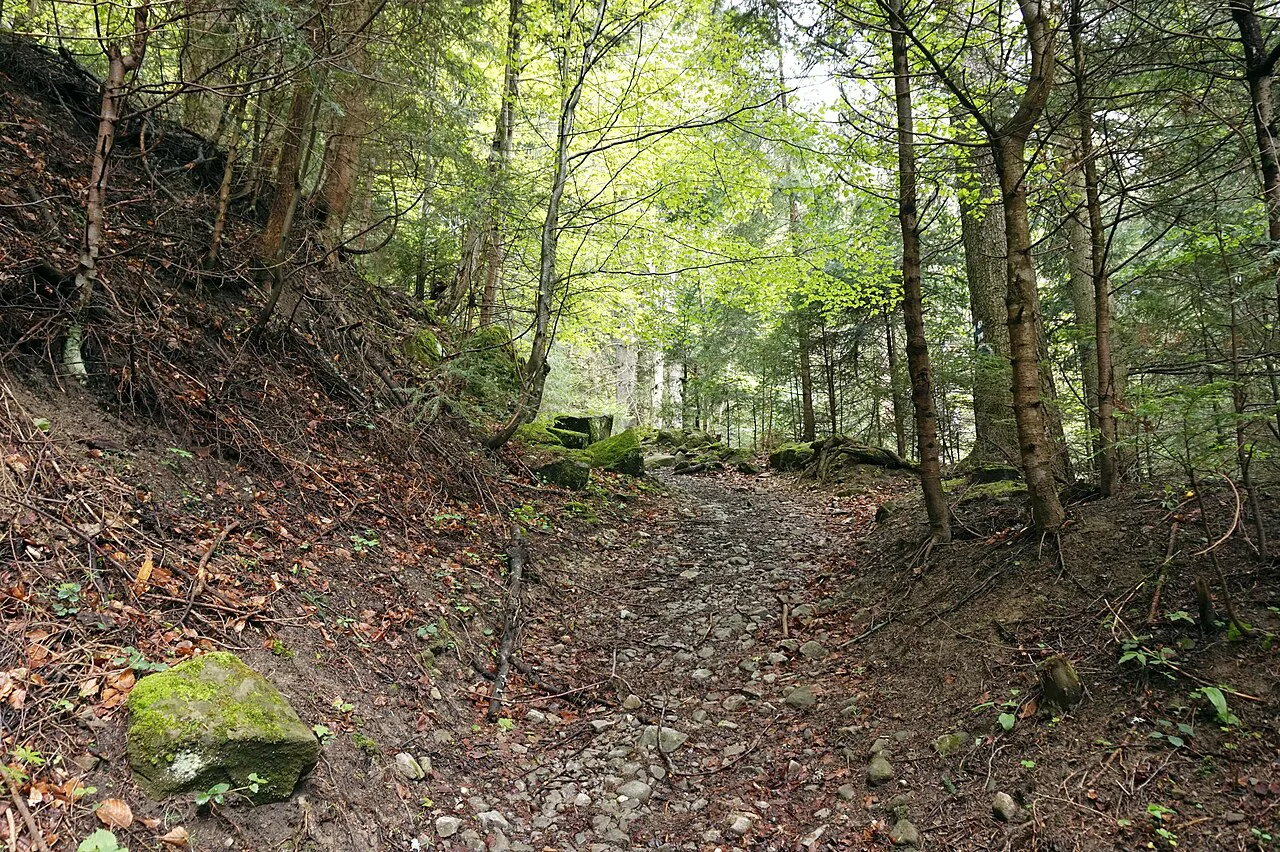
The Prahova Valley is the most rail-friendly mountain access in the country. Sinaia is about ninety minutes by train from Bucharest and serves as the gateway to the lower Bucegi, while staying on the train one more stop to Bușteni puts you under the cable car and the plateau trails.
For the Piatra Craiului, take the train or drive to Zărnești and walk in through the Zărnești Gorge toward Curmătura Cabin. For Bâlea Lake and the Făgăraș, the approach is by road up the Transfăgărășan, so a car or an organized transfer is part of the plan. Note that the Transfăgărășan is a high mountain road and is not open year-round; the road operator publishes the seasonal opening and closing, and you should confirm before booking a Bâlea base.
Train tickets can be bought in advance through the national rail operator, at stations, or on the train with a surcharge. Several trailheads, including Ciucaș and parts of the southwest gorges, have no public transport at all, so rail-based itineraries should focus on the Prahova Valley, Brașov and Sibiu.
Base towns and what each unlocks
Bucharest is the practical start for a short trip: a train to Sinaia or Bușteni puts you on Bucegi trails the same morning. Brașov sits under the Southern Carpathians and works for Bucegi routes from Râșnov and Poiana Brașov as well as Piatra Craiului. Sibiu has its own airport in the Carpathians and is the natural base for Bâlea Lake and the Făgăraș, while Cluj-Napoca serves Apuseni and Tarnița Lake.
Sighișoara suits a different kind of walking: the Saxon villages of Viscri, Criț, Meșendorf, Cloașterf and Bunești are linked by paths over hills and through forest, with little elevation but a lot of atmosphere. It is more stroll than summit day, and driving from Brașov or Cluj is easier than the train.
If you are extending a Romania trip into the rest of the continent, the Carpathians are a good warm-up for longer routes; the best hikes in europe range from week-long Spanish pilgrimages to Alpine traverses, and the contrast in scale is useful when you plan.
Cabins, food and mountain practicalities
Mountain cabins are the heartbeat of Romanian walking. Curmătura Cabin below the Piatra Craiului serves daily home-cooked food from its garden, and arriving before the pots run out is worth planning around. Mălăiești Cabin in the Bucegi is a tea-and-beer stop mid-walk, and Vulture Lake's cabin is a base for an overnight.
Cash matters here. In mountain areas and remote villages, cards are rarely accepted, so withdraw Romanian currency before you leave the city and carry enough for cabin meals, gorge entrance and any taxi out. A rain shell belongs in the pack in every month: on the Bucegi plateau you can pass through sun, rain, hail and sun again within a couple of hours.
Trail markings vary in quality, and forest junctions can be confusing. Carry a paper map or offline route on your phone and a power bank, and treat the marked paths as guidance rather than guarantee.
When to go: season, snow and storms
April to June and September are the sweet spots. Snow has generally melted by April and is not expected to return until October or November, while July and August can push past 30°C (86°F), which makes long ascents unpleasant.
The walking season across Romania runs roughly March to November, but high ground above 2,000 m (6,560 ft) is usually confined to late May to early October, with snow lingering on passes at either end. Afternoon storms build quickly on exposed plateaus, so start early and be ready to descend rather than push across open ridges late in the day.
Winter changes the picture entirely: snow is significant in the Romanian mountains, and trips in December to March are for winter-equipped walkers or guided groups. Several operators run winter walking and snowshoeing trips in the Carpathians.
Wildlife and staying safe on the path
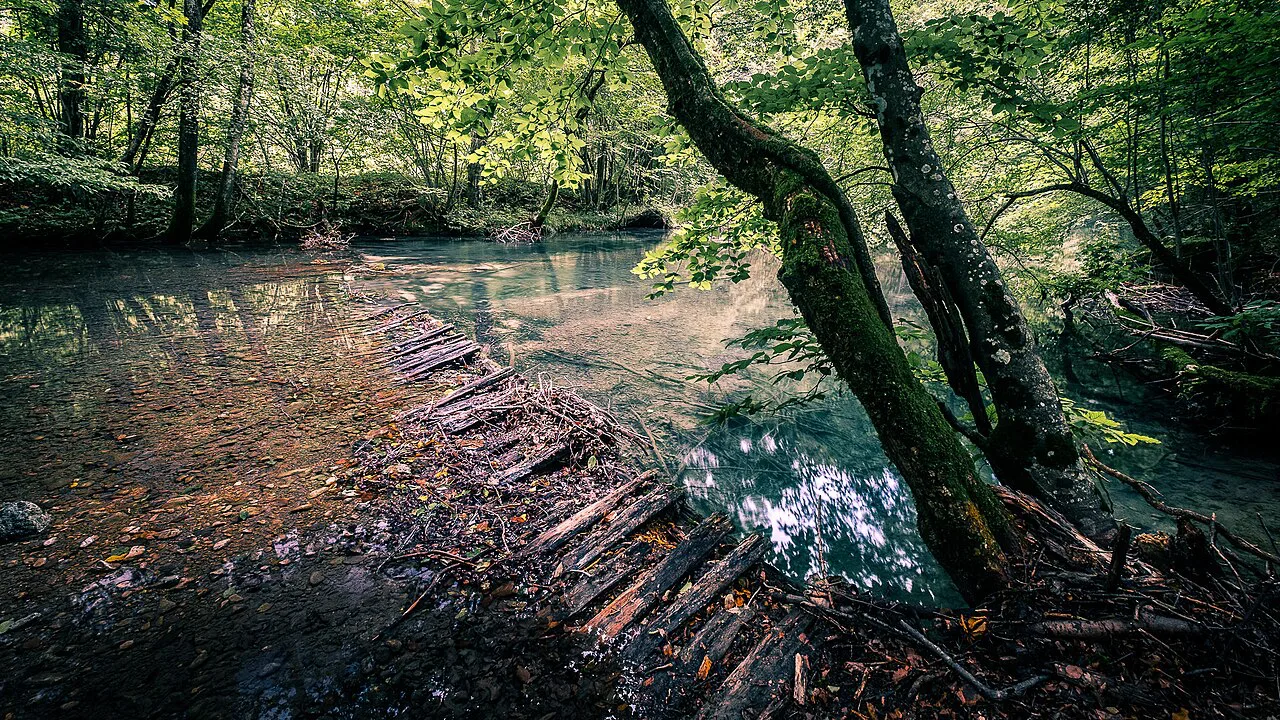
Romania holds the largest brown bear and wolf populations in Europe, and its forests are among the continent's largest and oldest. Encounters on marked trails are unusual, but you should still walk in company where you can, keep food sealed, and make noise in dense forest and on berry slopes.
Dogs must be kept under control in national parks and protected areas, where leashes are often required. Given bears and wolves in the same forests, a loose dog is a hazard to itself and to you.
Practical safety on Romanian trails comes down to a few habits: start early to avoid afternoon storms, carry a shell and warm layer even in July, carry cash, and turn back on exposed limestone if the rock is wet. The Seven Ladders ladders and the Făgăraș ridges deserve particular respect.
Guided and self-guided options
If you want logistics handled, small-group guided trips in the Carpathians cover wildlife tracking, winter walking and Retezat summits, typically with certified guides and fixed departure windows from spring to autumn. These suit solo travelers and anyone who wants the booking, transfers and route-finding done for them, at the cost of flexibility on the day.
Self-guided walkers get more freedom and lower cost, but need to handle train and car logistics, cabin bookings and their own route-finding. For a first trip, basing in Brașov or Sibiu and mixing day hikes with one cabin overnight is the simplest structure.
Where Romania fits a wider Europe trip
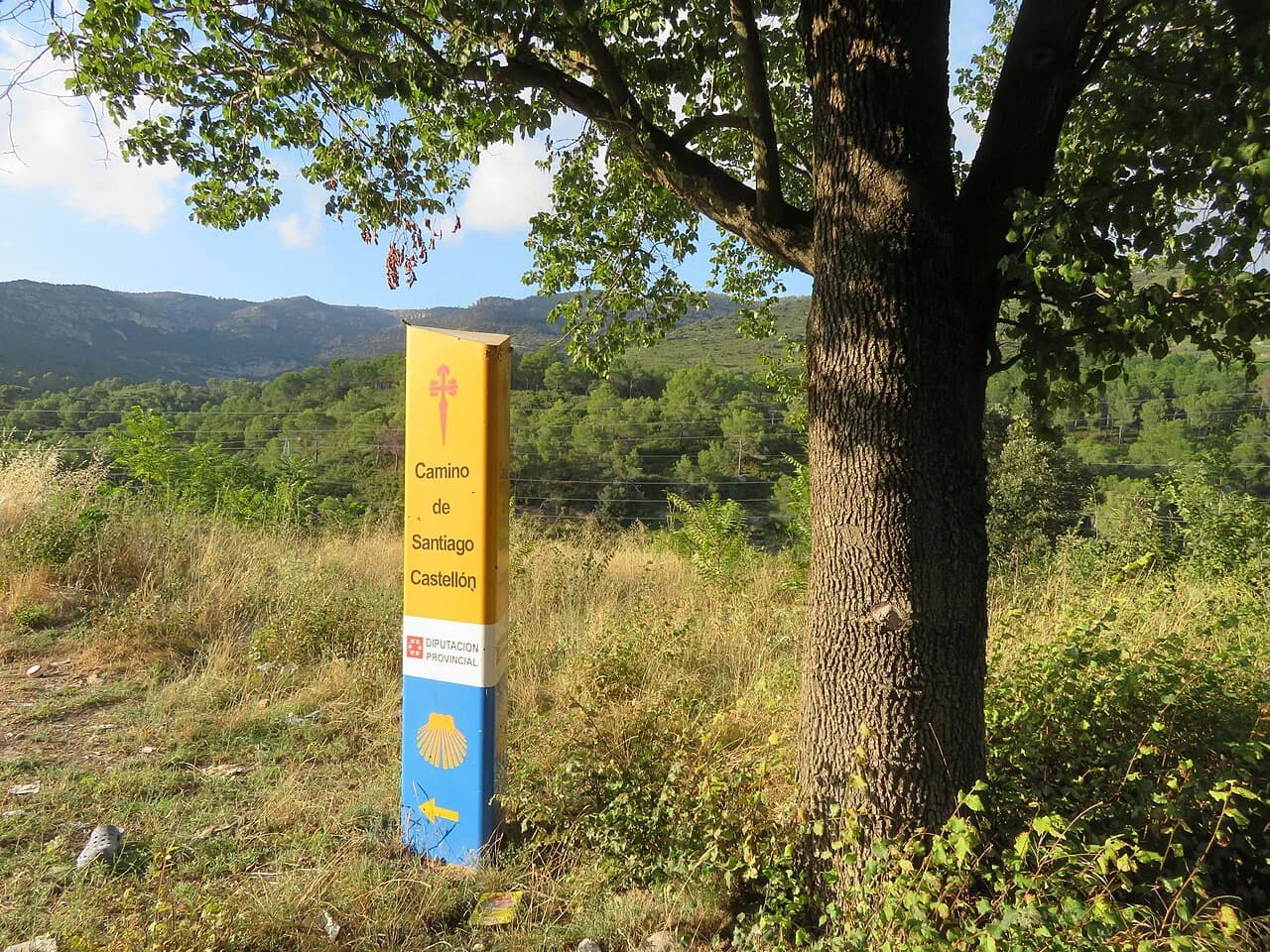
Romania works well as the wild, low-key half of a longer European walking holiday. Pair a week in the Carpathians with a classic long-distance route such as the camino de santiago, where village-to-village infrastructure and luggage logistics are more developed, or with a hut-to-hut traverse in the Alps.
If you prefer coastal paths and islands, walks in italy or the Fisherman's Trail in Portugal offer a very different rhythm. Romania's advantage is space and solitude, with most Carpathian trails well below Alpine altitudes and quieter than their western equivalents.
Plan Your Visit
Start with your base and your season, then pick the walk. Brașov or Sinaia with a Bucegi plateau day in early summer, Sibiu with a Bâlea Lake outing in September, or Cluj with a Turda Gorge loop and a Tarnița afternoon make three workable first trips. Leave the Făgăraș and the Seven Ladders for a second visit once you know how the Carpathians suit you.
Carry cash, a rain shell and a map, start early, and remember that the best days in Romania are often the quiet ones on the northern side of a ridge where no lift runs. That is the point of hiking here.
Frequently Asked Questions
When is the best time to go hiking in Romania?
April to June and September give the most comfortable walking, with snow mostly gone and temperatures below the summer heat. July and August can push above 30°C, and high ground above 2,000 m is usually confined to late May to early October.
How many days do you need for hiking in Romania?
Three to four days gives you one base and two or three good day hikes, which suits a first trip. A week allows a second base, such as Brașov plus Sibiu, or a cabin overnight in the Bucegi or Piatra Craiului.
Do you need a car to hike in Romania?
Not for the Prahova Valley, where trains from Bucharest reach Sinaia and Bușteni, or for Brașov and Sibiu, which work as bases for day hikes. You do need a car for Ciucaș, the Transfăgărășan approach to Bâlea Lake and several southwestern gorge trailheads.
Which Romanian mountain range is best for a first hiking trip?
The Bucegi Mountains are the most forgiving, with lift access and resorts on the Prahova Valley side and well-trodden plateau trails. Piatra Craiului is the natural next step, and the Făgăraș should wait until you have mountain experience.
Can you hike in the Romanian Carpathians without a guide?
Yes. Marked trails, cabins and clear route options make self-guided walking realistic, provided you carry a map, cash and a rain shell and start early. Guided trips make sense if you want wildlife tracking, winter conditions or a multi-day ridge traverse handled.
Are there mountain huts to stay in while hiking in Romania?
Cabins such as Curmătura in the Piatra Craiului, Mălăiești in the Bucegi and the hut at Vulture Lake serve food and offer simple overnight stays. Standards are basic, cards are rarely accepted, and booking ahead through the cabin is wise in summer and required on popular weekends.
Sources
Trail notes for your next trip
Optional updates when we add or revise hiking guides.
You might also like
Continue reading
More guides you'll find useful