Lake District Multi-Day Hikes: Routes, Stages and Planning
Plan a multi-day hike in the Lake District: village-to-village stages, the Coast to Coast section, daily distances, season and train access to the trailheads.
On this page
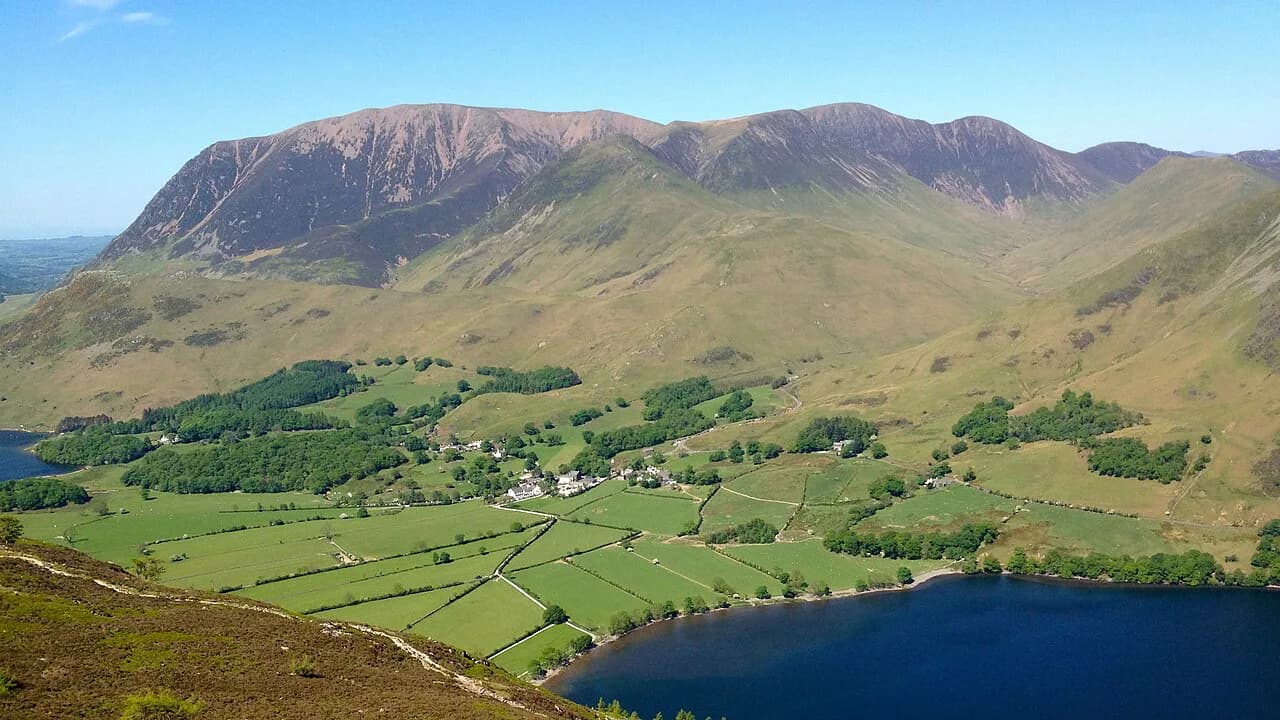
A multi-day hike in the Lake District gives you England's highest mountain, its deepest lake and a chain of stone-walled valleys in one continuous walk. The park covers more than 900 square miles (2,330 sq km) of Cumbria in northwest England, and its compact scale means you can sleep in a village most nights rather than carry a tent. This guide compares the formats worth planning around and shows how the stages fit together.
Unlike the Pennine Way or the West Highland Way, the Lake District has no single waymarked long-distance trail of its own. Multi-day trips are either organized village-to-village itineraries or stages you link yourself between valleys, and both approaches use the same network of bridleways, passes and fell paths. Anyone comfortable with full days on rough ground will find plenty of options; the deciding factors are how many days you have and whether you want the logistics handled for you. If you are weighing up a different northern English option before committing, the Peak District hiking guide makes a useful comparison of route styles and bases.
What a multi-day hike in the Lake District involves
Most multi-day routes here are linear walks from one valley village to the next, with a pass crossed in between. You walk from Ambleside over into Great Langdale, from Great Langdale across to Wasdale Head, or from Keswick over Honister Pass to Buttermere, and each day ends with a bed and a pub. That structure shapes everything: daily distance is set by where the accommodation is, not by a fixed stage list.
The terrain is short but steep. A 16-kilometre (10-mile) day with 900 metres (2,950 ft) of ascent takes far longer than the map suggests, because the paths climb straight off the valley floor and the descents are rough and loose. Plan daily targets on ascent and ground conditions rather than distance alone, and build in a shorter day after any long pass crossing.
Beyond the village-to-village format, two national routes cross the park: Wainwright's Coast to Coast and, for peak-baggers, the fell-ticking tradition of the Wainwrights. If you are still choosing your overall itinerary and want the full spread of day hikes, the hiking in lake district guide sets out the areas before you commit to a linear route.
The three multi-day formats compared
There are three practical formats. The first is a fixed seven-day itinerary from Ambleside to Keswick, marketed as the Lake District Trail, covering 50 miles (80 km) at a moderate grade over seven days and six nights. The second is a shorter, easier version based around Grasmere, Ambleside and Keswick, around 29 miles (47 km) in total. The third is the Lake District section of the Coast to Coast, part of a 190-mile (306 km) route that runs from the Irish Sea to the North Sea and crosses three national parks.
Choose the seven-day route if you want a week of walking with the valleys linked in a logical order and no route-finding decisions of your own. Choose the 29-mile option if you have three or four days, are new to consecutive full days, or want time for villages and shorter afternoons. Choose the Coast to Coast section if you want a national long-distance route and don't mind that the Lake District is one part of a much bigger walk.
The Lake District Trail: Ambleside to Keswick in seven days
This is the fullest single itinerary in the park: 50 miles (80 km) from Ambleside in the south to Keswick in the north, spread over seven days and six nights at a moderate grade. It works because the route threads the central valleys and passes rather than chasing summits, so the days stay walkable with a pack and the views open up over Windermere's shores on the southern stretches.
It suits hikers who want a week of continuous walking with luggage moved between stops and who are happy on rough fell paths in changeable weather. Days are built around village-to-village transfers, so you carry a day pack and finish each stage with local ales and a warm welcome in a valley inn. If you would rather climb peaks than cross passes, treat the summits as side trips on the shorter days.
Book the whole week or self-plan it: the itinerary needs accommodation in Ambleside, the Langdale valley, and Keswick at minimum, and a rest day at the midpoint keeps a seven-day plan comfortable for hikers stepping up from day walks. The same route is described in more detail, with the individual stages and transport, in the Hiking in the Lake District guide.
Heart of the Lake District: the shorter, easier option
At 29 miles (47 km), the Heart of the Lake District is the entry-level multi-day walk: an easy-graded itinerary that loops the best-known ground around Grasmere, Ambleside and Keswick. It suits hikers new to consecutive days out, couples with mixed fitness, and anyone with three or four days who wants scenery without committing to a full week.
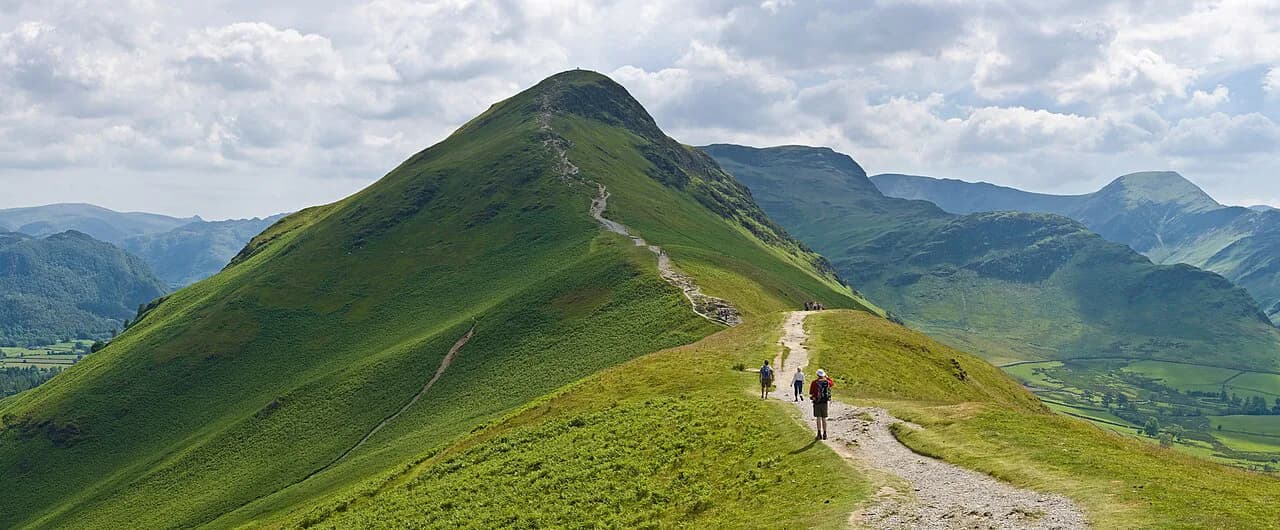
The walking is gentler and the days shorter, so the distances fit around village stops and the landscapes that inspired Beatrix Potter and William Wordsworth rather than long pass crossings. That makes it the better choice for a first multi-day trip, though the trade-off is that you see less of the high fells and fewer of the western valleys. Add a day walk from Keswick, such as the catbells walk above Derwent Water, if you want a summit without lengthening the itinerary.
The Coast to Coast through the Lake District
Wainwright's Coast to Coast runs 190 miles (306 km) from the Irish Sea to the North Sea, crossing three national parks, and its western stages are where it cuts through the Lake District. Only a section of the route lies inside the park, so if you want the Lake District section rather than the full traverse, plan to join and leave at valley points on the western side.
This is the hardest of the three formats on a daily basis: moderate to hard grading, longer days, and the expectation that you can handle exposed ground in bad weather. It suits experienced hikers who have already done multi-day walks and want the continuity of a national route, while first-timers will find the Lake District Trail or Heart routes a more forgiving introduction. The Wainwrights fell guide on this site is useful for anyone adding summit days to the traverse.
Linking stages village to village
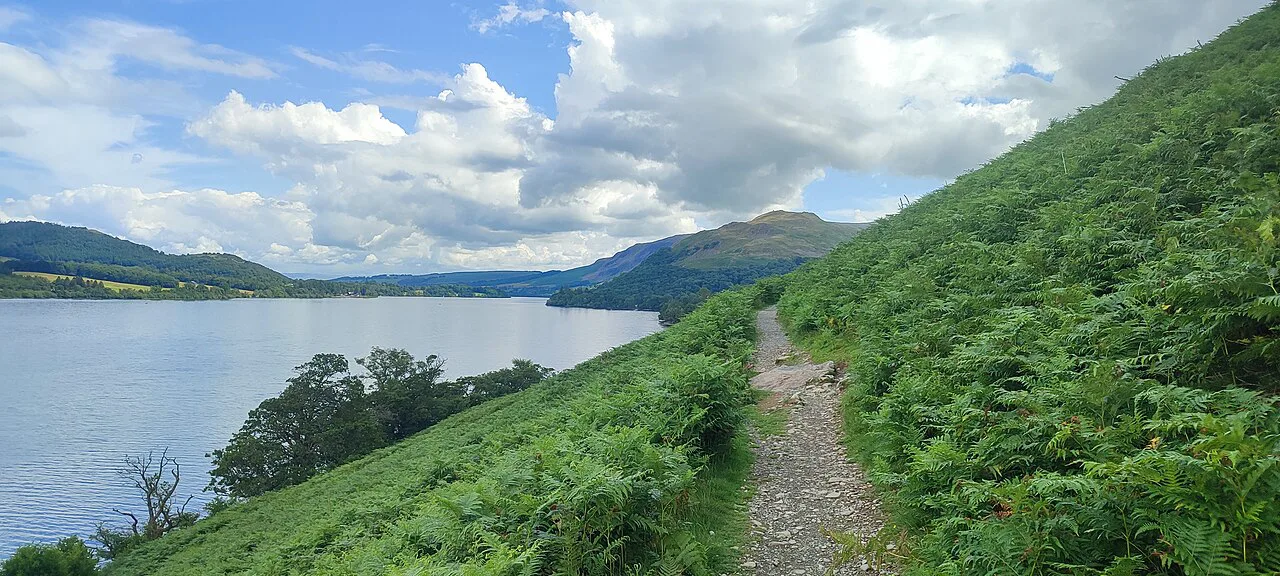
If you are assembling your own route, four staging points carry most multi-day plans. Keswick gives you access to the northern fells and Borrowdale; Buttermere sits beyond Honister Pass and offers quiet valley walking; Wasdale Head puts Scafell Pike and the high western fells within reach; and Great Langdale is the classic central base under the Langdale Pikes. Stringing Keswick to Buttermere, then over to Wasdale Head and on to Great Langdale makes a logical southbound traverse.
Each link has a natural route between the valleys, and the passes decide the character of the day: Honister is a road pass with a long climb, while the cross-fell lines to Wasdale Head are rougher and more committing. Plan the direction so the biggest ascent comes early and the descent into the village is on tired legs rather than the reverse. Book beds in Buttermere and Wasdale Head well ahead in summer, because both valleys are small and fill quickly.
Distance, ascent and time: setting daily targets
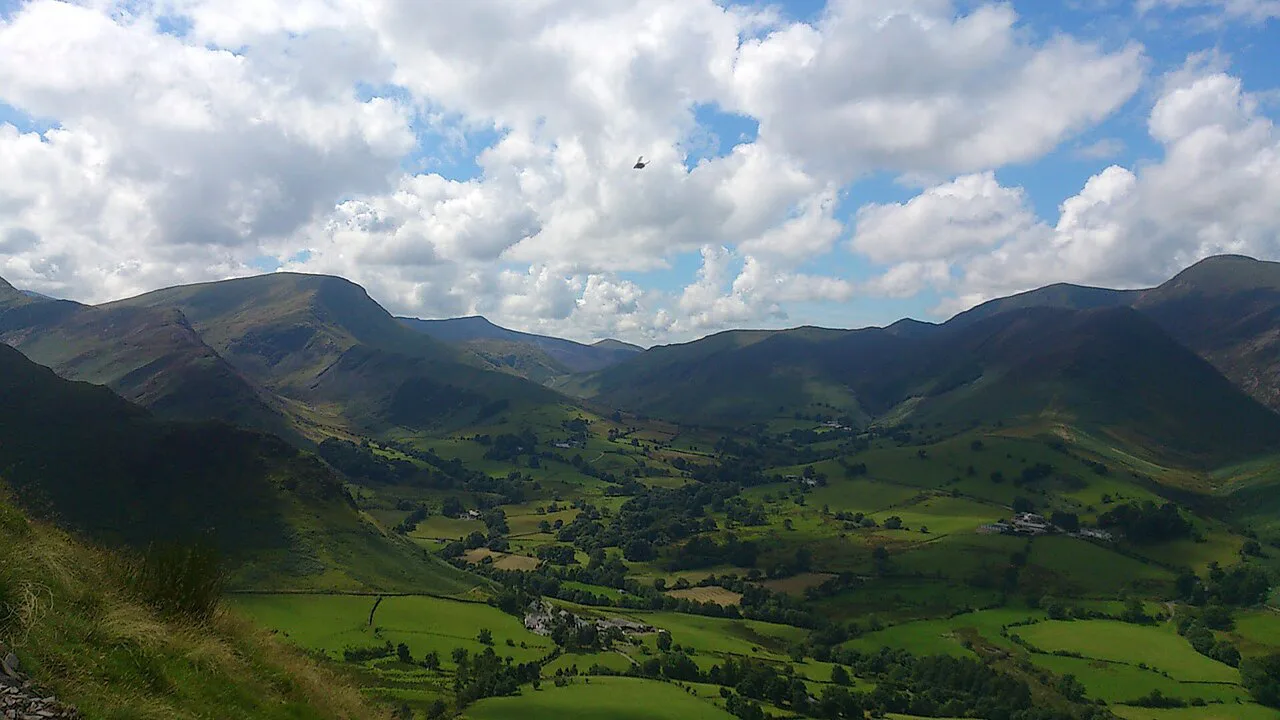
Never translate map distance directly into walking time on these fells. A valley track and a boulder-strewn pass can cover the same kilometres with completely different effort, so use ascent as your primary measure and aim for 600 to 900 metres (2,000 to 3,000 ft) of climbing per day if you want to finish before late afternoon. Naismith's rule, roughly one hour per 5 km (3 miles) plus one hour per 600 m (2,000 ft) of ascent, gives a realistic baseline, then add time for rough ground.
Build the week so the hardest pass day comes after a shorter day, and keep at least one half-day in any itinerary of four days or more. Weather here changes the calculation: wet rock and heather slow descents considerably, and low cloud removes the path-finding cues on open fell. The high-level routes such as striding edge are best kept as optional add-ons rather than the load-bearing spine of a multi-day plan.
Getting to the start and back without a car
The Lake District is one of the easiest national parks in England to reach by rail. From London Euston, take the direct train to Oxenholme and change for the short connecting service to Windermere; the whole journey takes around five hours. Windermere puts you at the southern end of the park, close to Ambleside for the start of the Lake District Trail.
From Manchester Airport there are about four direct trains a day to Windermere taking roughly two hours, with extra journeys via Oxenholme or Lancaster. From Glasgow, take the airport bus to Glasgow Central and the train onward, about two and a half hours including a change at Oxenholme. Plan the return leg from Keswick or Penrith, and allow a full afternoon for the connection back to a mainline station after your last walking day.
Buses link Windermere, Ambleside, Grasmere and Keswick along the main valleys, which makes a car optional for the central itineraries but awkward for the western valleys around Wasdale Head and Buttermere. If your plan uses those staging points, arrange a lift or a taxi transfer in advance; the Wainwrights guide includes more on how the western fells are reached.
When to go
Spring and autumn give the best balance for a multi-day walk: quieter trails, cooler walking, and fresh growth along Buttermere in April and May or crisp foliage from September. Summer brings the longest days and reliable daylight, but Catbells, Windermere and Buttermere are busy, so book accommodation early and start early on the popular stages.
Winter walking here is spectacular but short on daylight, with cold temperatures and long nights, and organized hiking trips in England are not offered in winter. That doesn't stop experienced parties, but a multi-day itinerary of any length is better placed between spring and autumn. If you have only a winter window, keep the trip to day walks from a single valley base.
Weather and terrain
The Lake District's reputation for rain is earned: paths turn to bog between showers, and the high passes hold cloud while the valleys are clear. Carry a waterproof jacket and packed layers on every stage, plus boots with real grip for wet rock, and treat any open summit day as a weather-decision day. Exposed sections such as the ridge lines off Helvellyn demand steady footing and a confident head for heights; skip them in wind or ice.
Plan around short daylight by starting early on the longest stage and knowing your escape route down to a valley road. Afternoon storms are common in summer, and the fell tops are the worst place to be when they arrive, so aim to be below the tops by mid-afternoon. A map and compass matter on open ground between valleys where the paths braid and fade.
Packing for a multi-day Lake District walk
If luggage transfer is part of your itinerary, you carry only a day pack of roughly 20 to 30 litres with waterproofs, warm layers, water, snacks, a map and a headtorch. That changes the trip completely: you walk to a schedule, eat in pubs, and need nothing more than a change of clothes for the evening. If you are self-planning without transfers, add a change of clothes and toiletries and expect to carry more on the pass days.
Pack for wet ground and cool summits whatever the forecast: quick-drying trousers, walking poles for the steep descents, and a refillable bottle that you top up in villages. Water sources on the fells are not reliable enough to plan around, so carry what you need for the day's high section and restock in the valleys. Boots broken in well ahead of the trip prevent the most common trip-ending problem.
Villages to base yourself in
Keswick is the most practical base for a northern multi-day plan: it sits on the doorstep of Borrowdale and Derwent Water, has the widest choice of beds and food, and is the natural finish for the Ambleside-to-Keswick route. Ambleside and Grasmere serve the central valleys and the southern start of longer itineraries, with Grasmere quieter and closer to the Wordsworth landmarks.
Buttermere and Wasdale Head are the western options: small, dramatic and short on beds, so good for a single overnight on a traverse rather than a week-long base. Great Langdale is the best compromise for the central fells, with the Langdale Pikes rising directly above the valley and Ambleside a short drive away. Match your base to the stage plan rather than the other way round.
Eating and drinking between stages
Each stage should end near a village with a pub or cafe, which is the point of the village-to-village format: you eat a proper dinner, dry your gear and start fresh. Keswick, Ambleside and Grasmere have the most choice of places to eat, while the smaller valley inns at Buttermere and Wasdale Head are limited and often need booking in summer. Carry lunch and snacks for the day itself, because the middle of a stage rarely has anywhere to buy food.
Plan Your Visit
Decide on the format first: the seven-day 50-mile Lake District Trail from Ambleside to Keswick if you want a full week of linked valleys, the 29-mile Heart of the Lake District if you have three or four days or are new to consecutive days, and the Coast to Coast section if you want a national route and harder days. Then fix the transport before the walking plan, arriving via Windermere, Oxenholme or Keswick by train and matching the start and finish to the stations you can reach.
Book beds in Buttermere and Wasdale Head early, keep the high ridges as optional add-ons, and set daily targets on ascent rather than map distance. With the stages set and a waterproof layer packed, the Lake District rewards you with England's highest ground and a valley inn at the end of every day.
Frequently Asked Questions
How many days do you need for a multi-day hike in the Lake District?
Allow three to four days for the short Heart of the Lake District format, which totals 29 miles (47 km), or a full week for the 50-mile (80 km) Ambleside-to-Keswick route spread over seven days and six nights. Longer national routes such as the Coast to Coast need considerably more time, though you can walk just the Lake District section.
Is there a long-distance trail that goes through the Lake District?
There is no single waymarked long-distance trail of the Lake District's own. Multi-day trips are either organized village-to-village itineraries or stages you link between valleys. Wainwright's Coast to Coast, a 190-mile (306 km) route from the Irish Sea to the North Sea, crosses the park and provides a national long-distance option.
Can a beginner do a multi-day hike in the Lake District?
Yes, if you choose the easier format. The Heart of the Lake District covers 29 miles (47 km) over easy-graded days around Grasmere, Ambleside and Keswick, which suits hikers new to consecutive days. Build up with day walks carrying a pack first, keep daily ascent moderate, and avoid exposed ridge routes until you are confident in changeable weather.
What is the best time of year for a multi-day Lake District walk?
Spring and autumn give quieter trails and cooler walking, with fresh growth in April and May and crisp foliage from September. Summer has the longest days but the busiest villages, so book accommodation early. Organized hiking trips in England are not offered in winter, when short daylight limits multi-day plans.
How do you get to the Lake District without a car?
Take the train from London Euston to Oxenholme and change to Windermere, a journey of about five hours. Manchester Airport has about four direct trains a day to Windermere taking roughly two hours. From Windermere, buses link Ambleside, Grasmere and Keswick, which covers most central valley-to-valley itineraries; for Buttermere and Wasdale Head, arrange a transfer in advance.
What is the difference between the Lake District Trail and the Heart of the Lake District?
The Lake District Trail runs 50 miles (80 km) from Ambleside to Keswick over seven days and six nights at a moderate grade, with more high ground and pass crossings. The Heart of the Lake District is the shorter, easier option at 29 miles (47 km), based around Grasmere, Ambleside and Keswick, with shorter days and gentler terrain.
Sources
Trail notes for your next trip
Optional updates when we add or revise hiking guides.
You might also like
Continue reading
More guides you'll find useful