Lake District Walking Holidays: Self-Guided vs Guided Trips
Compare self-guided and guided Lake District walking holidays by base, daily distance, difficulty and season so you pick the trip that matches your fitness.
On this page
A Lake District walking holiday lets you string together lakeshore paths, valley tracks and fell summits without planning each night's bed, and the first real decision is format rather than route. Self-guided inn-to-inn trips suit hikers who want to walk at their own pace with luggage moved ahead, while guided or hosted weeks from one house suit anyone who would rather have a leader handle navigation. Both styles draw on the same compact geography, where Windermere, Ullswater, Derwentwater and the valleys between them sit within short transfers of each other.
The area rewards planning by walking type: a lakeside ramble out of Ambleside and an exposed ridge day above Ullswater demand different fitness, gear and weather windows. Use the format comparison below to narrow the field, then match daily distance and ascent to what you actually walk at home.
What a Lake District walking holiday includes
Self-guided operators typically bundle accommodation, daily route instructions, a marked map and luggage transfer between inns, so you carry only a day pack. Muddy Boots Walking Holidays, for example, lists weather-proofed route notes, inn and hotel stays, bag transfers, a marked Ordnance Survey map and station transfers where needed on its Lake District trips. That package removes the two biggest time sinks of a DIY itinerary: booking a chain of beds in popular villages and arranging taxis between trail ends.
Macs Adventure describes a similar self-guided model, adding turn-by-turn directions and GPS files in its app alongside hand-picked routes and luggage transfers. Guided formats differ: you walk with a leader and a group, often based at one house for the week. Ramble Worldwide runs guided and self-guided walking at Hassness House on Buttermere, with volunteer leaders on the guided weeks and route plans supplied on the self-guided ones.
Choose self-guided if you want quiet starts, your own pace on climbs and the freedom to shorten a day when the cloud comes down. Choose guided if you are new to fell walking, prefer company, or want someone else reading the map in mist.
Self-guided inn-to-inn routes and luggage transfer
On an inn-to-inn route you walk from village to village while your bag travels by vehicle to the next night's accommodation. Muddy Boots spells out the practical chain: printed route instructions, accommodation in inns and hotels, bag transfer, and a transfer back to your first accommodation to collect your car where required. That last detail matters if you drive to the start, because point-to-point routes otherwise leave you stranded at the finish.
Luggage transfer changes what you pack, not how far you walk. You still need boots, waterproofs and warm layers on the hill each day, but you can leave a clean change of clothes and town shoes in the bag. Macs Adventure recommends sturdy hiking boots because trails are uneven and muddy after rain, which is the realistic standard for any multi-day Lakes route.
If you book independently, the same route shapes work, but you carry your pack and arrange each bed and taxi yourself. The trade-off is flexibility against admin: last-minute changes are easier, yet popular villages fill in summer and at weekends.
Guided and hosted options from a fixed base
A hosted week at a single house suits hikers who want a settled base and a daily choice of walks rather than a moving itinerary. Ramble Worldwide's Hassness House sits at Buttermere and offers guided walking with experienced leaders, self-guided walking, and activity breaks including navigation and hill skills courses. For a first Lakes visit, that structure gives you a known bed each night and a leader who adjusts the day to the weather.
Ramble Worldwide grades its holidays, with its moderate grade described as full days at a moderate pace on generally good paths, averaging around six miles (about 10 km) with roughly 500 m (1,640 ft) of ascent and descent, though Ramble Worldwide notes that specific trips vary. Read the individual holiday information sheet rather than the grade label alone, because a Lakeland moderate day can include rougher ground than the same grade elsewhere.
A leader's main contribution is judgment: route choice in low cloud, pacing a mixed group, and knowing when to turn back on an exposed ridge. If you already navigate confidently and prefer solitude, the guided premium buys you little.
Matching a trip to your fitness
Difficulty gradings only help once you translate them into daily distance and ascent. Muddy Boots rates its Lake District trips on a 10-point scale that varies by route option: the Heart of Lakeland at 4/10 to 9/10, Explore Ullswater at 5/10 to 9/10, Borrowdale and Derwentwater at 4/10 to 8/10, and the Coniston-to-Keswick Journey through the Lakes at 6/10 to 9/10. The ranges are wide because each trip offers gentler and harder alternatives on the same day.
Use the upper figure to test yourself. If 9/10 days include big fell ascents, you want recent experience of six-hour hill days with sustained climbing before booking, not a first outing. The lower figure shows what the easy alternative looks like, which is useful if you travel with a mixed-ability group.
As a rule of thumb, a lakeside or valley day keeps ascent modest and paths generally good, while a fell day adds several hundred metres of climbing and rougher ground underfoot. Ask the holiday company which named summits each option reaches so you can compare with routes you already know.
Walking areas holidays build itineraries around
Windermere and Ambleside anchor the southern lakes, with low fells such as Wansfell Pike above Troutbeck and quiet paths along Windermere's western shore. Muddy Boots' Heart of Lakeland trip starts on Windermere's northern shore near Ambleside before moving into Great Langdale, where options include the Langdale Pikes. This area suits hikers who want village comforts and views earned on half-day climbs.
Great Langdale gives you steep valley-head scenery and the Langdale Pikes, with Stake Pass providing the link north toward Borrowdale. The Coniston-to-Keswick route uses exactly that line, crossing from Coniston Water past Tarn Hows into the Langdales and over the pass.
Ullswater rewards a full circuit: Pooley Bridge at the northern end, Glenridding beneath the higher fells at the head of the lake, and waterfalls and lakeside paths between them. Muddy Boots' Explore Ullswater trip covers a complete circuit plus paths around the head of the lake, from rolling pasture into dramatic mountain country. Add the Aira Force walk from the Ullswater shore if you want a short waterfall outing on a rest day.
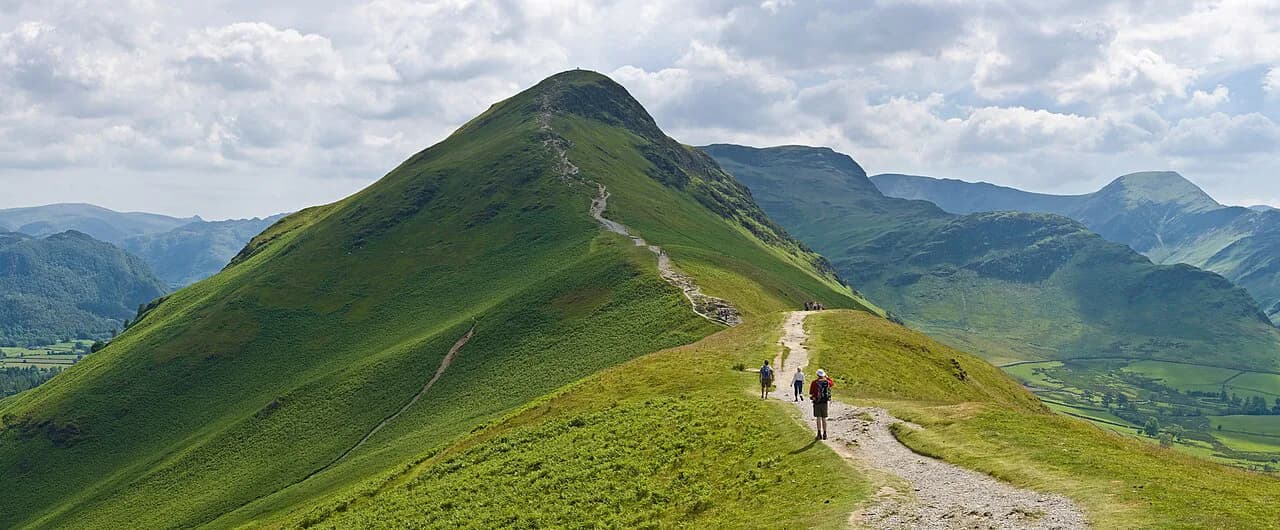
Borrowdale and Derwentwater form the most wooded, gentlest-looking corner of the Lakes, with linear paths on both sides of the lake and a valley head full of streams and waterfalls. The Catbells walk above Derwent Water is the classic short fell day here, gained from Hawes End. Keswick at the north end makes the natural base.
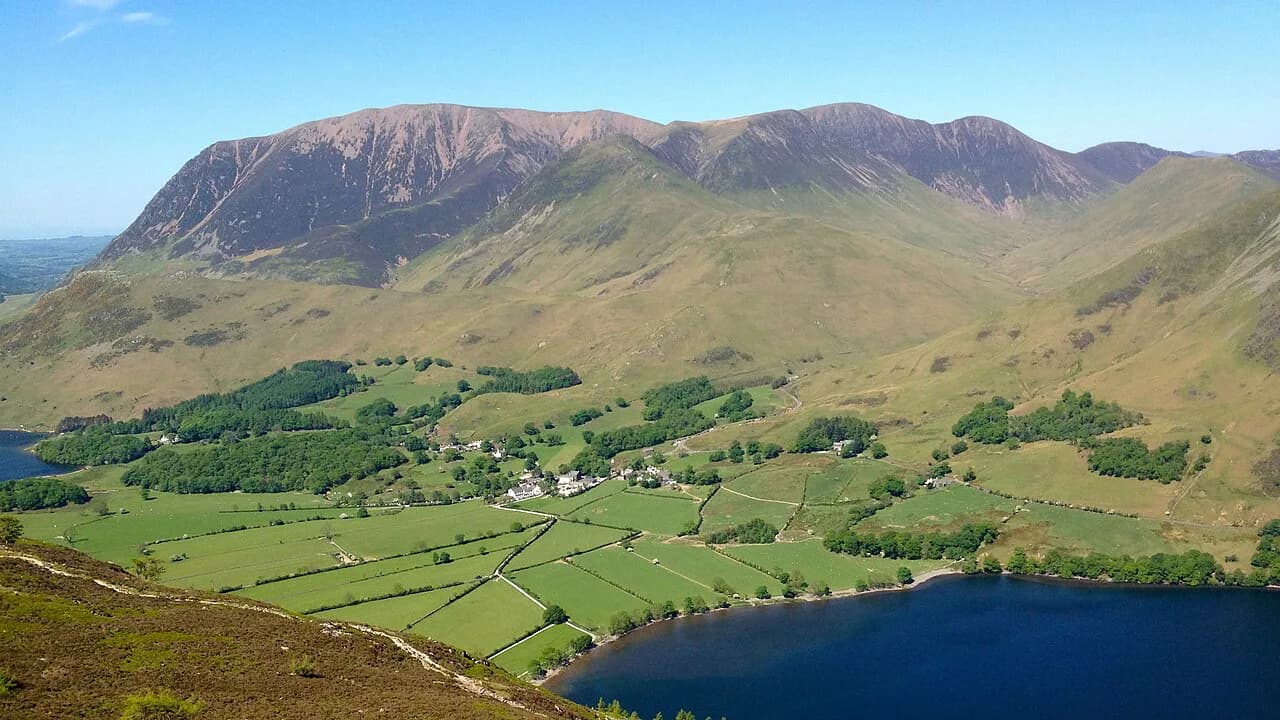
Buttermere sits west of the central fells, with Hassness House on its shore as a walking base and low-level circuits around the lake for poor-weather days. Coniston Water and Tarn Hows close the southern arc, where the Coniston-to-Keswick journey begins.
For context on the named summits these itineraries touch, The Wainwrights are the 214 fells catalogued by Alfred Wainwright, and many Lakes holidays deliberately sample a handful rather than chase a list.
Sample itinerary shapes
A heart-of-Lakeland route splits into two halves: nights near Ambleside on Windermere, then a move into Great Langdale, with day options ranging from the Langdale Pikes to a low-level walk to Wansfell Pike and Troutbeck. That shape suits hikers who want one dramatic upland day and several easier ones.
The full Ullswater circuit works from Pooley Bridge toward Glenridding and back along the opposite shore, giving a genuine sense of completion rather than an out-and-back. The Journey through the Lakes is the most ambitious shape: Coniston Water north past Tarn Hows, over Stake Pass, through Borrowdale and along Derwentwater to finish in Keswick.
The Allerdale Ramble, a long-distance path from Grune Point on the Solway Firth to Seathwaite in Borrowdale, is another multi-day option Ramble Worldwide builds a holiday around. Treat these as shapes to compare, then read Ramble Worldwide's day-by-day sheet for exact distances.
Lakeside rambles versus fell and ridge days
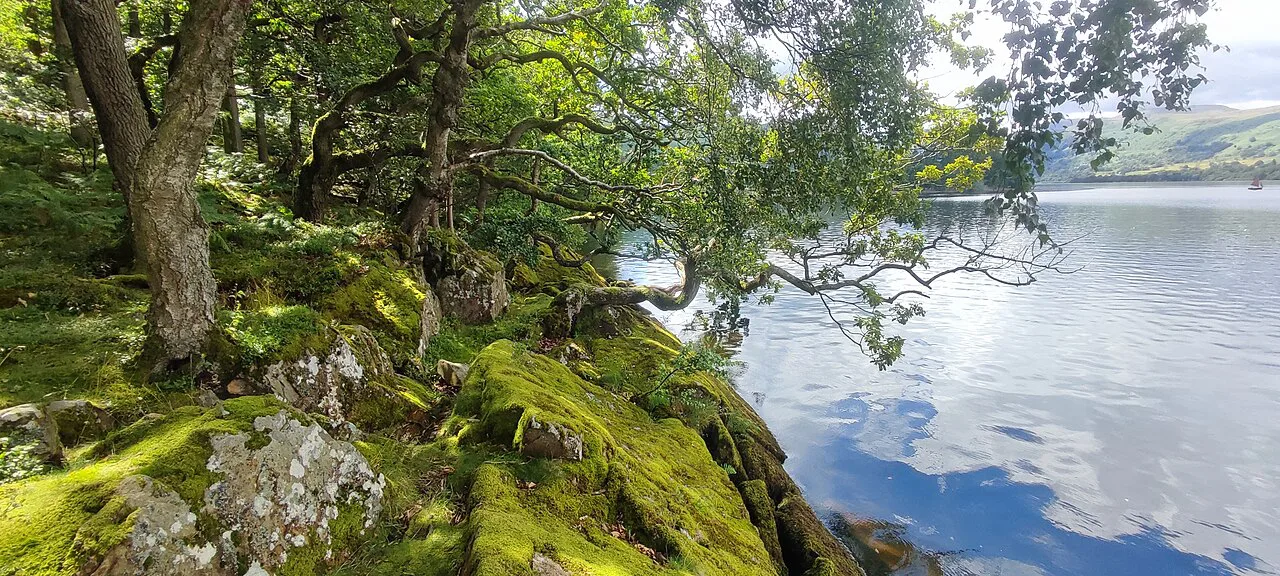
Lakeside paths are generally good underfoot, roll gently and keep escape routes short, which makes them the right choice in wind and rain or on a rest day. Fell days add sustained climbing and, on ridges, real exposure where a slip has consequences; Striding Edge on Helvellyn is the standard example, with scrambling and a head for heights required.
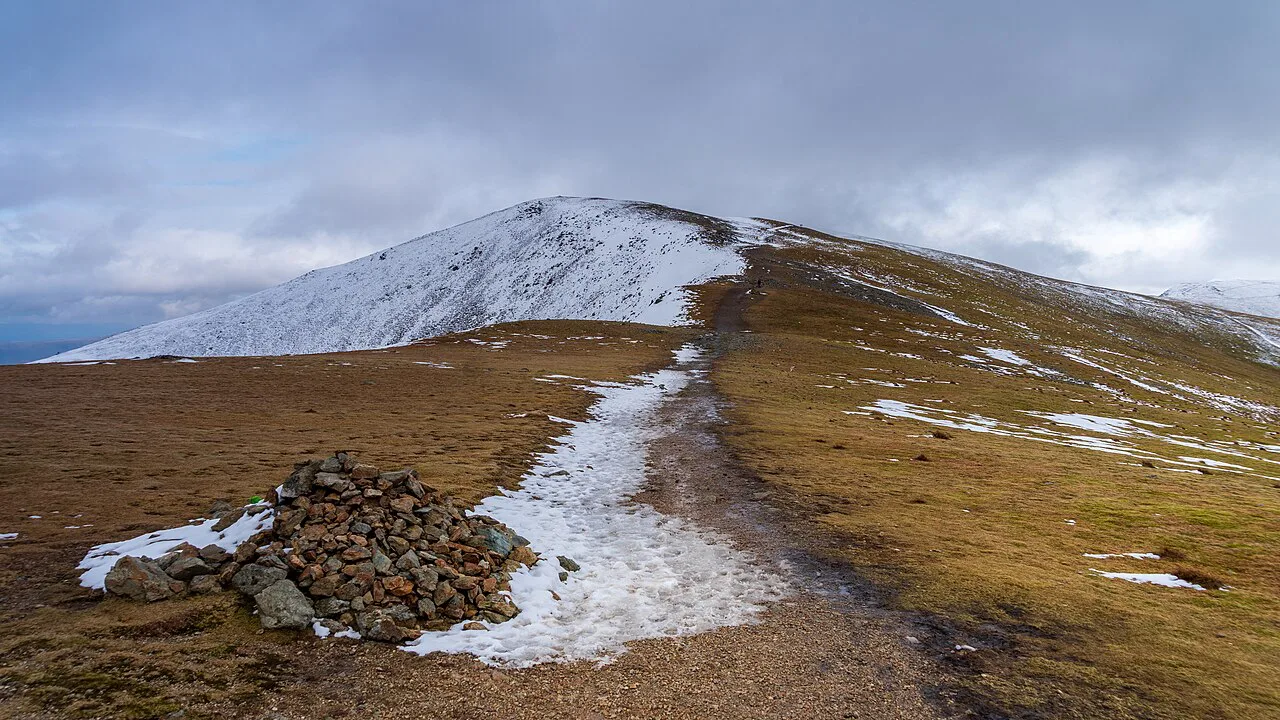
Gear follows the same split. Boots with grip, waterproof jacket and trousers, and a warm mid-layer cover most days, but add map and compass skills, an early start and a turn-back plan for ridges. Snow can linger on high passes in spring and return in autumn, so ask what the trip does if conditions are unsuitable.
Afternoon cloud and rain build quickly in the Lakes, so front-load the climb and aim to be off high ground by mid-afternoon. On any exposed section, wind is the deciding factor rather than distance.
Bases and villages
Ambleside and Grasmere suit hikers who want shops, cafés and short drives to the southern and central fells; Macs Adventure names Ambleside, Grasmere and Keswick together as strong hiking bases. Keswick serves Borrowdale and Derwentwater and puts you close to Catbells and the northern fells.
Glenridding and Pooley Bridge are the Ullswater bases, with Glenridding best placed for the higher fells at the head of the lake. Buttermere, with Hassness House on its shore, suits walkers who want quiet and low-level circuits.
Coniston works for the southern lakes and the start of the Coniston-to-Keswick line. Pick your base by the walks you want most, then let transfers or a short drive cover the rest.
When to book and walk
Spring from March to June and autumn from September to October give mild conditions and fewer crowds, which Macs Adventure names as its preferred hiking windows; summer brings long days but busier villages. Winter offers quiet, snow-dusted landscapes but short daylight, so plan shorter days and keep to lower ground.
Book guided and hosted weeks well ahead for spring and autumn dates, and self-guided trips once your dates are fixed, since village beds are the limiting factor. For up-to-date departure availability, contact the company running your trip directly.
Daylight determines winter planning more than weather: a short day means choosing a valley walk rather than a high traverse. In summer, the reverse applies, and long evenings let you start later or linger.
Getting there and station transfers
Macs Adventure describes the Lake District as about a three- to four-hour train ride from London, which puts Windermere and Oxenholme as the practical rail gateways from the south. Several self-guided operators include station transfers at the start and end of a route, sometimes at extra charge, which removes the taxi problem at small villages.
If you drive, confirm where your car stays for the week and how you get back to it, because point-to-point routes finish far from the start. Muddy Boots specifies a transfer back to your first accommodation to collect your car where required.
Inns, beds and bag logistics
On a self-guided trip the company books the inns, so your job is to read the accommodation list and flag any preference early. Ramble Worldwide's self-guided weeks at Hassness House use a fixed house rather than a chain of inns, which suits hikers who dislike repacking.
Independent walkers should book village beds in sequence and build in a spare night near the middle, because a missed connection on a point-to-point route is harder to fix than on a loop. Carry your bag or arrange a transfer service; the route itself does not change.
Bring a small dry bag for the day's essentials regardless of format, since Lakeland rain arrives fast and bag transfers only happen between nights.
Costs and what sits inside the price
Package prices vary by season, duration and accommodation level, and operator pages list current figures rather than fixed rates, so compare quotes for your own dates. Macs Adventure lists its Lake District trips with starting prices per trip, including a Heart of the Lake District itinerary and an upgraded In Style version, which shows how much accommodation standard moves the total.
Typically included are beds, route notes or GPS files and bag transfer on self-guided trips; typically outside are lunches, drinks, travel insurance and any station transfers charged separately. Ramble Worldwide notes additional charges may apply on some transfers, so read the inclusions list before comparing two quotes.
The honest comparison is total cost per walking day against the DIY version, where you book beds, taxis and maps yourself. Guided weeks cost more but include a leader, which is the item you cannot replicate cheaply on your own.
Planning mistakes to avoid
The commonest error is over-ambitious daily distance with underestimated ascent: a short day on the map can climb far more than expected. Check the day's total ascent, not just its length, and compare it with a hill day you have done recently.
Packing for the wrong season is the second trap. A summer weekend needs rain protection as much as sun cream, and a spring or autumn trip needs warm layers and the assumption of snow on high passes. Winter trips need a head torch and a shorter plan.
Finally, grading scales are not transferable between companies. Muddy Boots uses a 10-point scale, Ramble Worldwide uses gentle-to-challenging grades with its own definitions; read each company's own description of the day.
Further reading on trails and bases
Once you know your base, read up on individual routes. The Catbells walk and the Aira Force walk cover two short classics in Borrowdale and at Ullswater, while Striding Edge describes the scrambling on Helvellyn's ridge in detail.
If you are comparing northern regions, Peak District walking holidays follow a similar self-guided format in a lower, gritstone landscape. If you are weighing up the same self-guided versus guided decision north of the border, Scotland hiking tours cover both formats on routes such as the West Highland Way. The long-distance Coast to Coast crosses the Lake District on its western leg, and the Dales Way links the Lakes toward the Yorkshire Dales; both sit outside a single-base Lakes holiday.
Choosing Your Trip
Start with format: self-guided inn-to-inn if you want pace and solitude with bags moved ahead, guided or hosted if you want a leader and a fixed bed. Then pick your walking area, Windermere and Ambleside for village comforts, Ullswater for a full circuit, Borrowdale for wooded valleys and Catbells, and match the daily ascent to your recent hill days.
Book spring or autumn for better conditions and quieter villages, and ask the operator about station transfers and where your car stays before you commit. One email covering those points answers most of the questions a first Lakes holiday raises.
Frequently Asked Questions
What is included in a self-guided Lake District walking holiday?
Typically accommodation, daily route notes or GPS files, a marked map and luggage transfer between nights. Some operators also include transfers from train stations and a lift back to your car at the end of a point-to-point route, sometimes at extra charge, so read the inclusions list before you compare quotes.
How many miles a day do Lake District walking holidays cover?
It varies with the trip and the option chosen. Ramble Worldwide describes its moderate grade as full days averaging around six miles (about 10 km) with roughly 500 m (1,640 ft) of ascent and descent, and Muddy Boots rates its trips on a wide scale because each day offers gentler and harder alternatives. Check the specific day-by-day sheet.
Is a guided or self-guided Lake District walking holiday better for a first visit?
Guided or hosted weeks suit first-time fell walkers or anyone who would rather not navigate in low cloud, since a leader picks the route and sets the pace. Self-guided trips suit hikers who already read a map and want to walk at their own pace, with luggage moved ahead. Fitness and confidence on rough ground decide it more than experience of the area.
Which Lake District villages are the best bases for a walking holiday?
Ambleside, Grasmere and Keswick are all strong hiking bases, with Keswick best for Borrowdale and Derwentwater. Glenridding and Pooley Bridge serve Ullswater, Buttermere suits quiet low-level circuits, and Coniston works for the southern lakes and the start of the Coniston-to-Keswick line.
When is the best time of year for a walking holiday in the Lake District?
Spring from March to June and autumn from September to October offer mild weather and fewer crowds. Summer gives long daylight but busier villages, and winter is quiet with snow possible on the fells but short days, so plan lower and shorter routes.
Do Lake District walking holidays include luggage transfer?
Self-guided inn-to-inn trips usually do, so you walk with only a day pack between villages. Fixed-base hosted weeks do not need it, because you stay in one house. Independent walkers can carry their own bag or arrange a transfer service separately.
How do you reach the Lake District by train from London?
Macs Adventure describes the Lake District as about a three- to four-hour train ride from London, with Windermere the natural gateway for the southern and central lakes. Some self-guided operators include station transfers at the start and end of a route, sometimes at extra charge, so confirm what your trip covers before booking rail tickets.
Sources
Trail notes for your next trip
Optional updates when we add or revise hiking guides.
You might also like
Continue reading
More guides you'll find useful