Peak District Walking Holidays: Guided vs Self-Guided Tours
Compare guided and self-guided Peak District walking holidays, from centre-based breaks in Castleton and Hathersage to long-distance routes like the Limestone Way.
On this page
The Peak District packs two different landscapes into one national park: the limestone dales and green fields of the White Peak in the south, and the heather moorland and gritstone edges of the Dark Peak in the north. That variety is why walking holidays here range from two-night village breaks to week-long point-to-point trails.
Choosing between a guided and a self-guided format matters more than the destination itself. Guided trips fix your dates and hand route-finding to a leader; self-guided trips fix your route on paper but leave the pace, start times and lunch stops to you. The same guided-versus-self-guided choice shapes scotland hiking tours, so it is worth settling your preference before you compare routes.
What a Peak District walking holiday can be
Three formats dominate. Centre-based breaks put you in one or two villages with circular day walks from the door; linear trails move you from village to village and finish somewhere new; twin-centre itineraries split the week between two bases to reach more of the park without daily packing.
Operators describe these differently, so read the day-by-day itinerary rather than the brochure title. A "twin-centre" break might mean two circular walks from Hathersage followed by two from Edale, with the walks themselves 11 to 12 km (7 to 7.5 miles) a day.
The grade spread within a single operator's catalogue is wide. Contours lists short Castleton breaks of two nights alongside the 92-mile White Peak Way, rated from easy/moderate up to strenuous, so the label "walking holiday" tells you nothing about the daily load by itself.
Where the walking happens: White Peak and Dark Peak
The White Peak is limestone country: green fields, drystone walls, cliffs and dales, crossed by the Limestone Way from south to north and culminating near Cave Dale and Peveril Castle above Castleton. Walking here is generally on established paths through farmland and villages, with the climbs short and sharp rather than sustained.
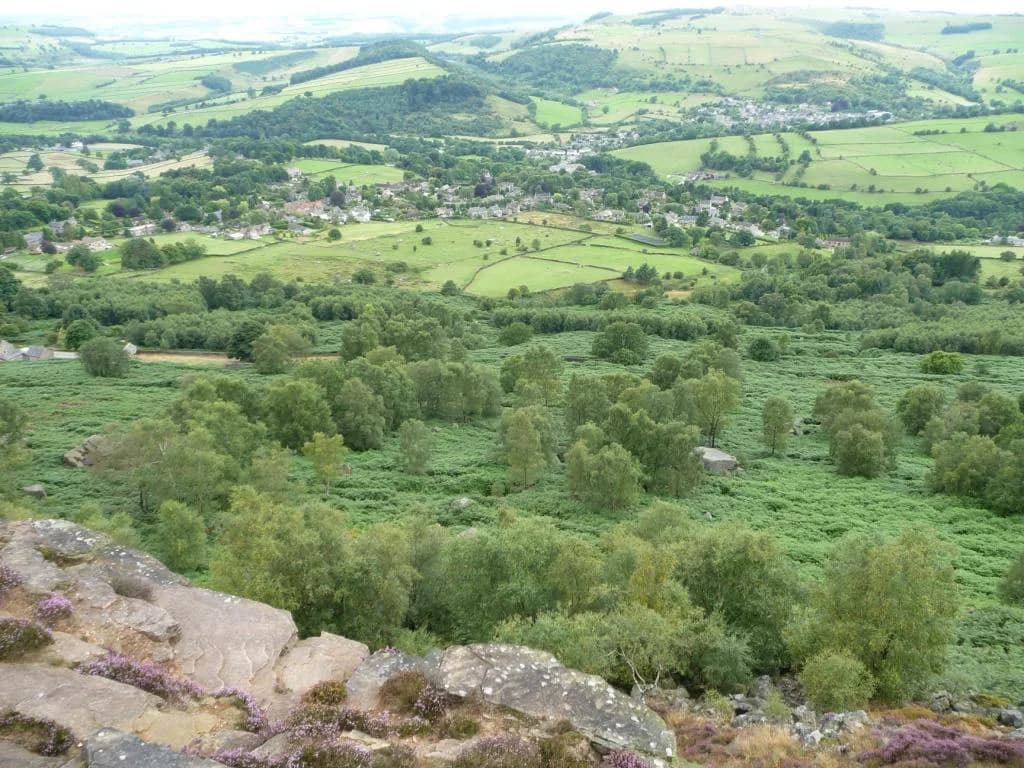
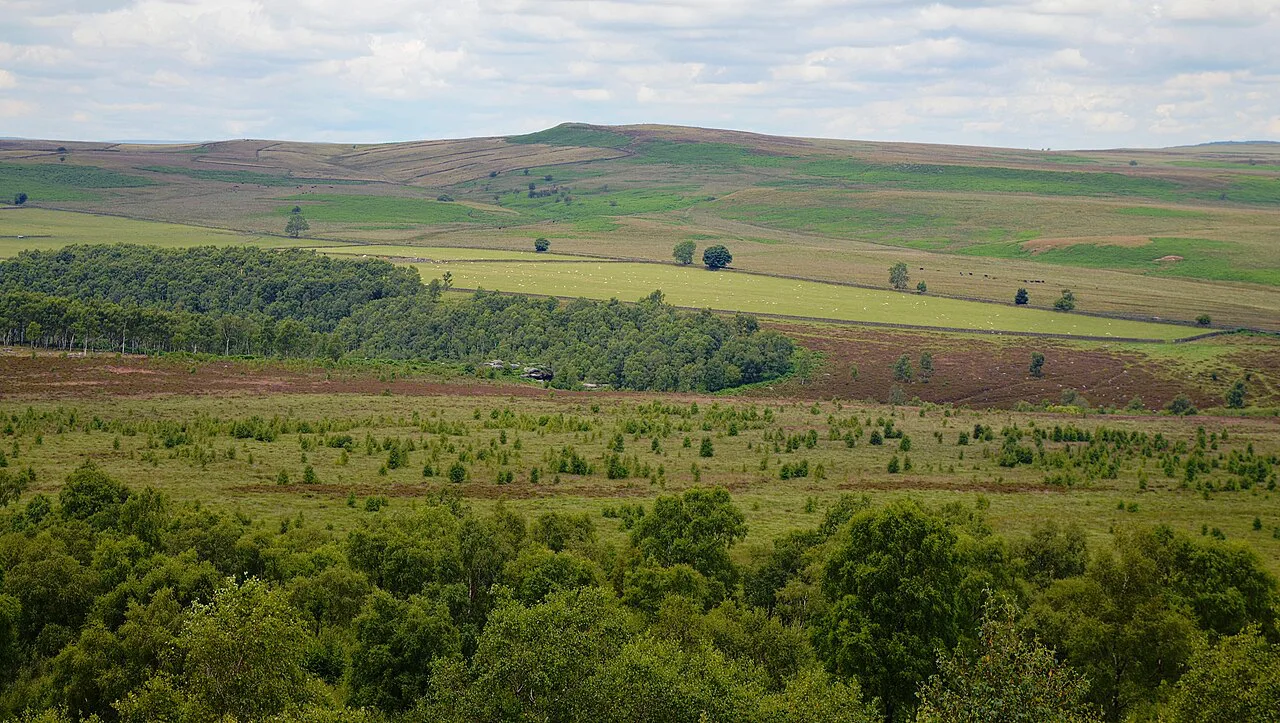
The Dark Peak is gritstone and moor: Froggatt, Curbar and Baslow edges above the Derwent Valley, the Hathersage moors around Higger Tor, and the high Kinder plateau. The edges give long views with relatively little ascent; the moor tops are wetter underfoot and more exposed to wind and rain.
If you want the park's classic ridge scenery, the Mam Tor walk along the Great Ridge is the most direct introduction, and the gritstone edges above Hathersage reward a short day of their own.
Guided walking holidays: daily grade choices and who they suit
Guided breaks based at a country house typically run several walks each day at different grades, with volunteer leaders and the freedom to switch grade from one day to the next. HF Holidays runs this model from its Peak District houses, with up to three daily options.
This format suits hikers who want the route, transport and evening meal handled, and who would rather walk in company than alone on open moorland. It also works for mixed-ability groups, since stronger and slower walkers can split in the morning and meet at dinner.
The trade-off is fixed dates and a fixed base. Published HF Holidays Peak District departures cluster in spring and autumn, with some summer sightseeing-oriented weeks, so a trip built around a specific trail has to fit the calendar rather than the other way round.
Self-guided walking holidays: route notes, luggage transfer and daily distances
Self-guided trips supply route notes, a GPS track and luggage moved between inns, so you walk with a day pack only. The company running the trip books the rooms and breakfasts and often dinner; you decide when to start and how long to linger at a viewpoint.
Daily loads on a typical self-guided week are moderate. One Chatsworth-area itinerary runs days of 12.5 km (7.5 miles) with 300 m (985 ft) of ascent and descent, 12 km (7.5 miles) with 360 m (1,180 ft) up and 430 m (1,410 ft) down, and a shorter 11 km (7 miles) day with 185 m (605 ft) of ascent.
That itinerary is graded easy-to-moderate for walkers happy with roughly 5 to 15 km (3 to 9 miles) a day plus the occasional hill, and it includes a multi-entry ticket to Chatsworth House as well as a transfer back to your car at the end.
Self-guided suits independent hikers who are comfortable navigating with notes and a GPS file, and who prefer a flexible start date to a fixed departure. It is less suitable if you have never read a route description against a map, since fog on the Dark Peak edges erases landmarks quickly.
Centre-based breaks from Castleton, Hathersage and Edale
Castleton works as a base for the White Peak's western edge: Cave Dale, the Limestone Way and the Great Ridge are all reachable on foot, and the village has show caves, pubs and shops for rest days. Contours sells a two-night Castleton break covering 15 to 28 miles depending on the mileage you pick.
Hathersage and nearby Grindleford unlock the gritstone edges and the Derwent Valley. A circular day from Grindleford follows the river to Hathersage, climbs to Higger Tor across Hathersage Moor, and returns through a wooded gorge, which is a good test of whether the Dark Peak's short steep climbs suit you.
Edale is the classic Dark Peak village and the southern start of the Pennine Way, with Kinder Scout and the Mam Tor ridge within easy reach. It is a better base for fit hikers chasing big moorland days than for anyone wanting gentle valley strolls.
Linear routes across the park
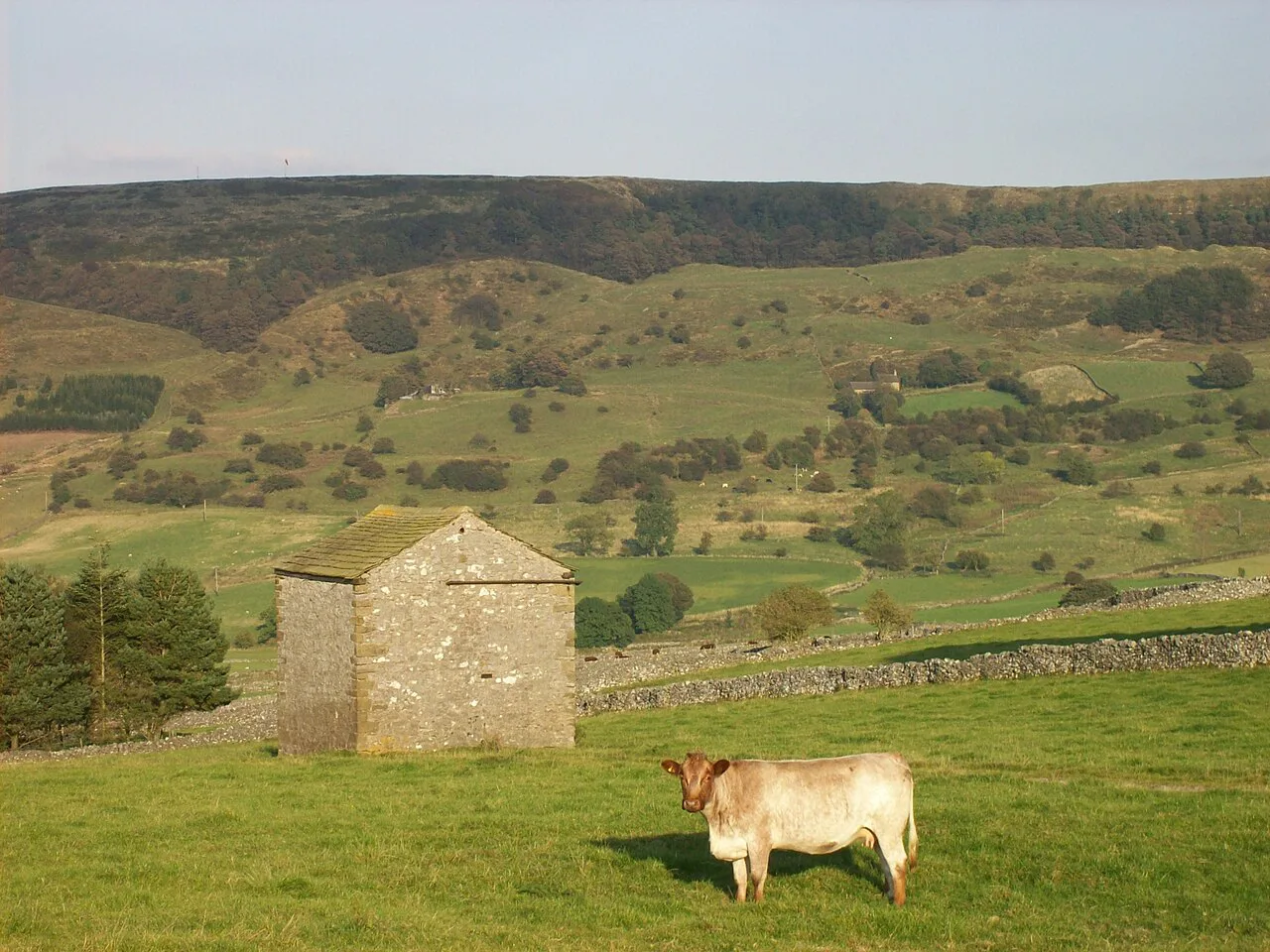
The Limestone Way crosses the White Peak south to north through fields, dells and old stone walls, finishing with Cave Dale and Peveril Castle. Contours runs it over 3 to 8 nights at 28 to 47 miles, rated easy/moderate to demanding depending on how you split the days.
The White Peak Way is the bigger proposition, at 28 to 92 miles over 6 to 12 nights and graded moderate to strenuous, linking gritstone edges, limestone cliffs, Buxton, Bakewell and the Chatsworth estate. The low end of that mileage range is a gentle week; the top end is a serious multi-week effort.
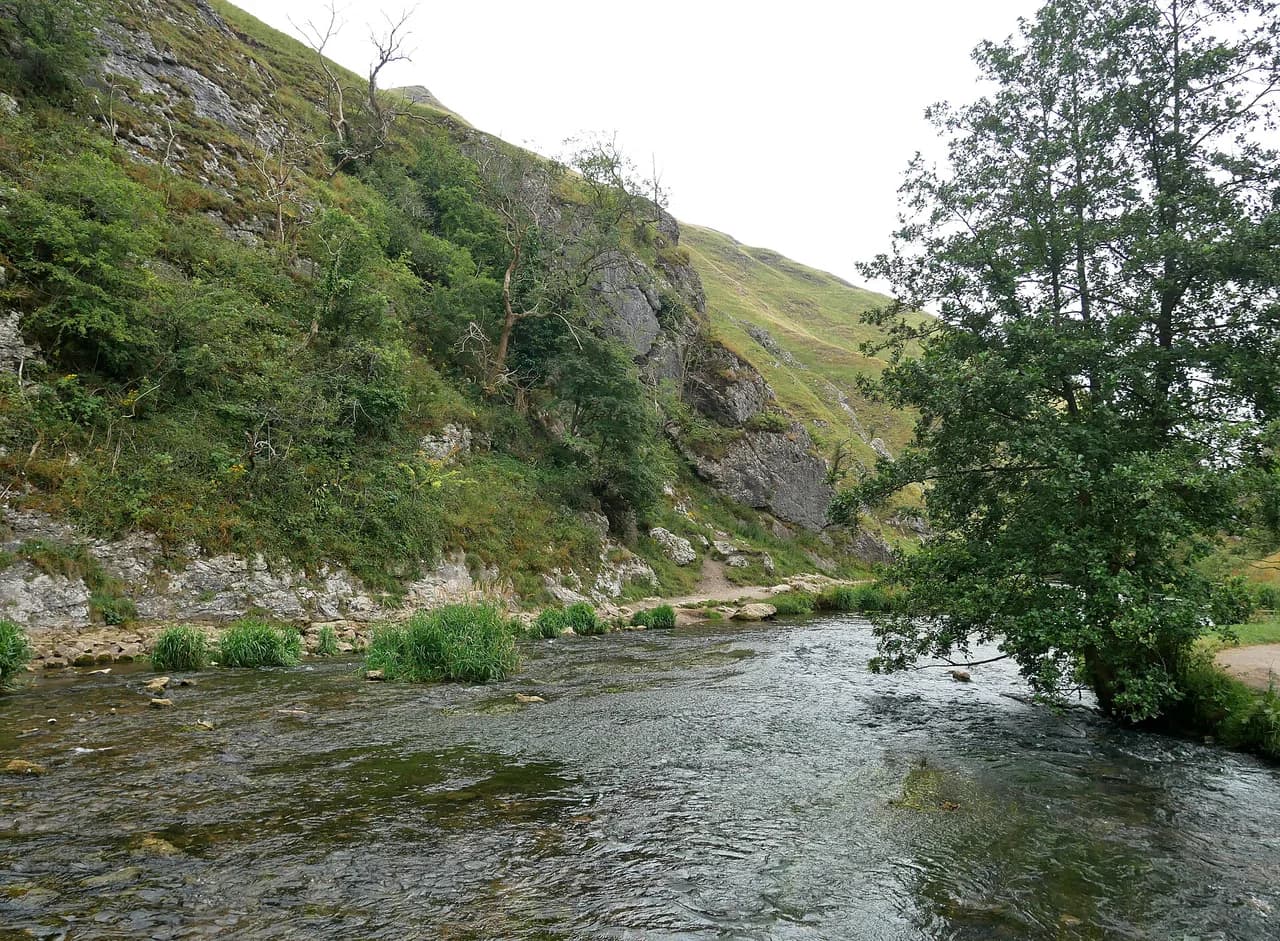
The Peak Pilgrimage is the low-level alternative, 34 miles over 4 to 6 nights following the River Dove through limestone dales and woodland between village churches, with an optional climb to gritstone edges on the final day into Eyam. Choose it if you want valley walking and village stops rather than moorland tops.
Trails that pass through rather than stay in the park
Some holidays sold as Peak District walks are really long-distance routes that only partly lie inside the national park boundary. The Pennine Way starts in the Dark Peak at Eyam and heads north past Jacob's Ladder, Kinder Low and Black Hill before continuing far beyond the park toward the Scottish border.
The Derwent Valley Heritage Way similarly begins at Ladybower Reservoir and follows the River Derwent south out of the park into Derbyshire, 55 miles over 4 to 7 nights, to reach the Derwent Valley Mills World Heritage Site. Book it as a valley and industrial-heritage walk rather than a high-moor trip.
If you want to sample the reservoir scenery without committing to the full route, a shorter Ladybower Reservoir walk makes an easy day from the northern Dark Peak bases.
Matching daily distance and ascent to your fitness
Read the ascent figure, not just the mileage. A 12 km (7.5 mile) day with 400 m (1,310 ft) of climbing on rough moorland takes longer than the same distance on limestone tracks, and the descent figure matters on steep gritstone edges where wet rock slows you down.
As a working rule for planning, treat self-guided days of 10 to 13 km (6 to 8 miles) with 200 to 400 m (655 to 1,310 ft) of ascent as comfortable for regular walkers carrying a day pack, and check any day above that against your usual weekend mileage.
Guided breaks let you test this in practice: pick the shorter grade on day one, then move up if the pace feels easy, which is harder to arrange on a self-guided itinerary with pre-booked rooms.
When to go: season, heather and weather
Late summer is the heather season, when the moorland above Froggatt and Curbar turns purple, and it coincides with the most reliable walking weather. Spring gives fresh green valleys and fewer people on the edges, while winter daylight is short and the high moors hold snow and bog.
One self-guided Chatsworth itinerary runs from late March to the end of October, which reflects when the accommodation and walking season operate rather than any restriction on the paths.
Pack for rain whatever month you pick, since the Dark Peak catches weather moving in from the west, and carry a map and compass on moorland sections where paths braid and mist removes the horizon.
Huts, inns and country houses: what accommodation comes with each format
The Peak District has no alpine-style hut network, so accommodation means inns, country hotels and country-house bases. Guided operators run house parties from a single property, sometimes with a second house opening later, which keeps evenings sociable and removes daily packing.
Self-guided operators move your bags between inns and hotels, often on estate-owned properties. On the Chatsworth itinerary, stays include a boutique hotel in Grindleford or Hathersage, an inn at Pilsley or the Cavendish Hotel at Baslow as an upgrade, and the Beeley Inn, with dinner included on most nights.
For linear routes, ask the walking holiday company which villages the overnights fall in, because the room list determines how the stages are split and whether any day becomes disproportionately long.
Getting to the Peak District and moving between bases
Rail access works through stations on the park's edges, with Grindleford and Hathersage serving the Derwent Valley and Edale serving the Dark Peak's Hope Valley line. Buses link the villages, and self-guided itineraries commonly use a short bus ride to reach a walk's start, paid locally rather than included.
Some packages include transfers: the Chatsworth itinerary includes a transfer to collect your car at the end and can arrange station transfers as an extra. Check what your operator includes before booking a separate taxi.
Costs and how the formats compare
Guided prices bundle accommodation, meals, leaders and usually transport to walk starts, and companies such as HF Holidays and Contours publish per-person rates by departure, with member discounts on some. A four-night guided HF Holidays break in the central Peak District is listed at a non-member rate from £929 and a member rate from £899. Check current prices and dates when you book.
Self-guided prices bundle accommodation, breakfasts, most dinners, luggage transfer and route materials. The Chatsworth itinerary is listed from £1,283 per person excluding travel, which includes the Chatsworth entry pass and the car-collection transfer.
Compare the two on a per-night basis and on what you would otherwise pay for meals and entries, not on headline price alone. Self-guided trips usually cost less per day but leave more decisions, and guided trips cost more but include leaders and group transport.
Choosing a format in three scenarios
First visit, two or three nights: take a centre-based break in Castleton or a guided short break, walk Cave Dale and the Great Ridge, and use the rest of the time on Chatsworth or Bakewell. This keeps transfers to a minimum and gives you a taste of both limestone and gritstone country.
A week with mixed fitness in the group: choose a guided house party where grades can be switched daily, so stronger walkers can take the long moorland day while others walk the valley.
An experienced hiker wanting a route with a finish line: book a self-guided linear trail such as the Limestone Way over three to eight nights, and add a rest day at Bakewell or Castleton rather than trying to walk every stage back to back.
Plan Your Trip
Start with the walking you actually want: dales and villages in the White Peak, or edges and moorland in the Dark Peak. That decision points you to Castleton or Bakewell on one side and Hathersage, Edale or Grindleford on the other, and only then should you decide between a guided and a self-guided format.
Match the daily distance and ascent figures to your regular weekend mileage, confirm what meals, transfers and entries are included in the quoted rate, and build a rest day into anything longer than five nights. Use the wider peak district hiking guide to fill gaps between booked walks, and read up on the monsal trail if you want a flat, traffic-free day on a former railway line between Bakewell and Blackwell Mill.
Frequently Asked Questions
What is included in a self-guided Peak District walking holiday?
Typically accommodation, breakfasts, luggage transfer between overnight stops, route notes and a GPS file, and often dinner. Some itineraries add attraction tickets, such as a multi-entry pass to Chatsworth House, and a transfer back to your car at the end. Ask for the exact inclusion list, since bus fares to walk starts are usually paid locally.
How many miles a day do Peak District walking holidays cover?
Self-guided days are commonly around 10 to 13 km (6 to 8 miles) with 200 to 400 m (655 to 1,310 ft) of ascent, while linear trail stages can be longer depending on how the route is split. The Limestone Way spans 28 to 47 miles across three to eight nights, so daily loads vary widely.
Is a guided or self-guided walking holiday better for the Peak District?
Guided suits hikers who want company, a choice of daily grades and everything organized, including mixed-ability groups. Self-guided suits independent walkers comfortable with route notes who prefer flexible start dates and their own pace. Neither is better in the abstract; the deciding factor is how confident you are navigating moorland in poor visibility.
Which Peak District villages make the best walking bases?
Castleton for Cave Dale, the Limestone Way and the Great Ridge; Hathersage and Grindleford for the gritstone edges and the Derwent Valley; Edale for Kinder Scout and the Pennine Way; and Bakewell for the Monsal Trail and Chatsworth. Twin-centre itineraries pair Hathersage with Edale to cover both characters in one week.
Can you do the Pennine Way as a Peak District walking holiday?
Only the southern section lies inside the park. The Pennine Way begins at Eyam in the Dark Peak and passes Jacob's Ladder, Kinder Low and Black Hill before continuing north far beyond the national park toward the Scottish border. Book it as a long-distance trail that starts here, not as a park-only holiday.
What should you pack for a Peak District walking holiday?
Waterproofs and a spare warm layer year-round, since Dark Peak weather changes quickly, plus a map and compass for moorland sections where paths braid and mist hides landmarks. Wear boots with grip for wet gritstone, and carry water for the day because refill points between villages are sparse on the high moors.
Sources
Trail notes for your next trip
Optional updates when we add or revise hiking guides.
You might also like
Continue reading
More guides you'll find useful